

P0301 on 2012-2014 Dodge Avenger: Cylinder 1 Misfire Causes and Fixes
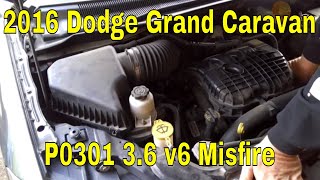
P0301 indicates a misfire in cylinder 1. On both the 2.4L and 3.6L engines, the most common cause is a worn spark plug or a failing ignition coil. This is a straightforward DIY fix, typically costing $25-$75 for parts. On the 3.6L V6, if a ticking noise is present, a more serious rocker arm failure is a known possibility.
- P0301 is a misfire on cylinder 1. Do not ignore it, especially if the check engine light is flashing, to avoid costly catalytic converter damage.
- The most likely cause is a bad spark plug or ignition coil, which are inexpensive and relatively easy to replace.
- Use the 'coil swap' method to quickly diagnose a faulty ignition coil at no cost.
- Cylinder 1 is on the passenger side for the 3.6L V6 and on the driver's side (belt side) for the 2.4L I4.
- If you have a 2012 model, check with a dealer about TSB #1810216, as a simple software update might be the fix.
What's Unique About the 2012-2014 Dodge AVENGER
For the 2012-2014 Dodge Avenger, the cause of a P0301 misfire depends heavily on the engine. On the 2.4L I4, it's almost always a simple ignition component like a spark plug or coil, though oil leaking into the spark plug tubes from a bad valve cover gasket is a common related issue. On the 3.6L V6 Pentastar engine, while ignition parts are still the most likely culprit, there are two well-documented mechanical issues. The first is a known issue with the left cylinder head that can cause persistent misfires (P0302, P0304, P0306), covered by TSB 09-002-14 Rev. B and warranty extension X56. While P0301 is on the right bank, this highlights the engine's valvetrain sensitivity. More directly related to P0301 is the known failure of rocker arms due to bad needle bearings, which can cause a ticking noise and lead to a persistent misfire on any cylinder.
Diagnostic Flowchart
Tap your situation to follow the diagnostic path that matches what you're seeing on this vehicle.
Symptoms You May Notice
- Rough or shaky idle
- Hesitation or stumbling during acceleration
- Noticeable loss of engine power
- Flashing or solid Check Engine Light
- Smell of unburned gasoline from the exhaust
- Decreased fuel economy
- Engine ticking or tapping noise (especially on 3.6L V6, indicating potential rocker arm failure)
- Replacing the crankshaft position sensor. While a failing crank sensor can cause misfires, it usually triggers a P0300 (random misfire) or its own specific code (like P0335) rather than a single cylinder misfire. One owner on DodgeForum.com replaced the crank sensor for multiple codes, but P0301 remained until other issues were addressed.
Most Likely Causes
- Worn or Fouled Spark Plug 🔴 High Probability Spark plugs are regular maintenance items with a finite life. On the 2.4L engine, oil leaking from the valve cover gasket can foul the plugs. On both engines, they are the most common starting point for any single-cylinder misfire.
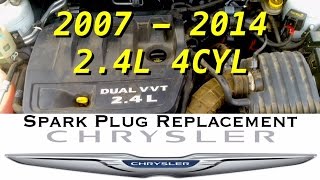
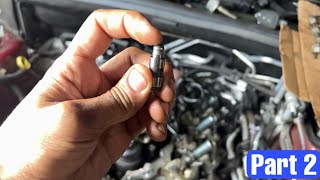
How to confirm: Remove the spark plug from cylinder 1. Inspect it for wear on the electrode, heavy carbon deposits, or oil fouling. The gap should also be checked against specifications; for the 2.4L, it is approximately 0.047 inches (1.2mm). 🎬 Watch this guide on removing spark plugs from the 2.4L engine.
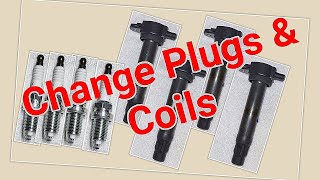
Typical fix: Replace the spark plug in cylinder 1. It is best practice to replace all spark plugs at the same time to ensure even performance, especially if they are near their 100,000-mile service life.
Est. part cost: $5-$20 per plug - Failing Ignition Coil 🔴 High Probability Ignition coils provide the high voltage needed to create a spark. Over time, heat and vibration can cause them to fail, leading to a weak or non-existent spark. Oil contamination from a leaking valve cover gasket can also damage the coil boot and cause failure.
How to confirm: The easiest way to confirm a bad coil is to swap the ignition coil from cylinder 1 with another cylinder (e.g., cylinder 3). Clear the codes and run the engine. If the code changes to P0303, the coil is faulty. Visually inspect the coil and its boot for oil saturation, cracks, or swelling.
Typical fix: Replace the faulty ignition coil. It is only necessary to replace the one that has failed, though it's wise to replace the spark plug at the same time.
Est. part cost: $30-$80 - Clogged or Faulty Fuel Injector 🟡 Medium Probability If the ignition system checks out, the fuel injector for cylinder 1 may be clogged or failing, preventing the correct amount of fuel from entering the cylinder. This can be caused by fuel contaminants or simply age.
How to confirm: A mechanic can perform a fuel injector balance test. A DIY method involves using a mechanic's stethoscope or a long screwdriver to listen to the injector; it should make a consistent clicking sound. You can also swap the injector with another cylinder (more involved on the 3.6L) and see if the misfire code follows.
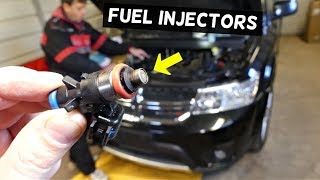
Typical fix: Replace the faulty fuel injector. On the 3.6L V6, the intake manifold must be removed, so it is often recommended to replace all six injectors at once to save on future labor costs. 🎬 See how to replace the fuel injectors on a 3.6L V6.
Est. part cost: $50-$150 - PCM Software Update Needed ⚪ Low Probability TSB #18-102-16 was issued for 2012-2014 models with the 3.6L engine to address overly sensitive misfire detection. The PCM may falsely trigger misfire codes, including P0301, which can be resolved with a software update.
How to confirm: A Dodge dealership or a qualified shop with a factory scan tool (wiTECH) can check your vehicle's current software calibration level against the latest available version mentioned in the TSB.
Typical fix: The dealer will re-flash the Powertrain Control Module (PCM) with the updated software.
Est. part cost: $0 if under warranty, otherwise $100-$200 for labor
Rare But Worth Checking
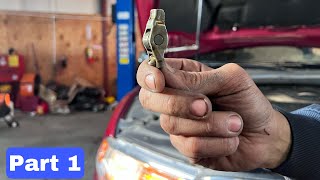
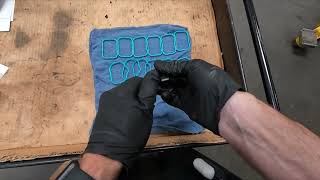
- Failed Rocker Arm/Lifter (3.6L V6): A known issue on the Pentastar V6 involves the needle bearings in the rocker arms failing, causing the arm to seize or break. This results in a loss of valve actuation, low compression, and a persistent misfire, often accompanied by a distinct ticking/tapping noise from the top of the engine. Diagnosis requires removing the valve cover for visual inspection. 🎬 Watch a walkthrough on replacing failed rocker arms and lifters.
- Low Cylinder Compression: This indicates a more serious mechanical engine problem, such as worn piston rings, a leaking valve, or a blown head gasket. A compression test is needed to diagnose this. On the 3.6L, a failed rocker arm is a common cause of low compression. A Reddit user with a P0301 on a 3.6L found a non-sealing intake valve via a leakdown test.
- Vacuum Leak: A vacuum leak near cylinder 1's intake runner can lean out the air-fuel mixture and cause a misfire. This is usually accompanied by a hissing sound and other lean codes. On the 3.6L, improperly seated upper intake manifold seals after a repair can be a cause.
- Leaking Valve Cover Gasket: While not a direct cause, a common problem is the valve cover gasket or spark plug tube seals leaking oil into the spark plug wells. This oil can saturate the ignition coil boot and spark plug, causing a misfire. If you find oil when removing the coil, the gasket must be replaced.
Diagnosis Steps
- Read the code with an OBD-II scanner to confirm P0301.
- Identify cylinder 1. On the 2.4L I4, it's the cylinder closest to the engine belts (passenger side). On the 3.6L V6, it's on the right (rear/firewall side) bank, closest to the front of the car (passenger side).
- Listen for a ticking noise from the top of the engine (3.6L V6). A distinct tick combined with P0301 strongly suggests a valvetrain issue like a failed rocker arm.
- Swap the ignition coil from cylinder 1 with another cylinder (e.g., cylinder 3). Clear the codes and drive. If the code changes to P0303, the ignition coil is bad.
- If the code remains P0301, remove the coil and inspect the spark plug well for oil. Oil presence indicates a leaking valve cover gasket that must be replaced.
- If no oil is present, swap the spark plug from cylinder 1 with another cylinder. If the code follows the plug, the spark plug is bad.
- If ignition components are good, inspect the wiring and connector for the cylinder 1 ignition coil and fuel injector for damage, corrosion, or looseness.
- Listen to the fuel injector with a stethoscope; it should have a steady clicking sound. Compare it to an adjacent injector.
- If the cause is still not found, perform a cylinder compression test to check for mechanical engine issues. Low compression could point to a bad valve, piston rings, or a failed rocker arm on the 3.6L.
- For 3.6L models, check with a dealer to see if TSB #18-102-16 applies and if a PCM update has been performed.
Parts You'll Likely Need
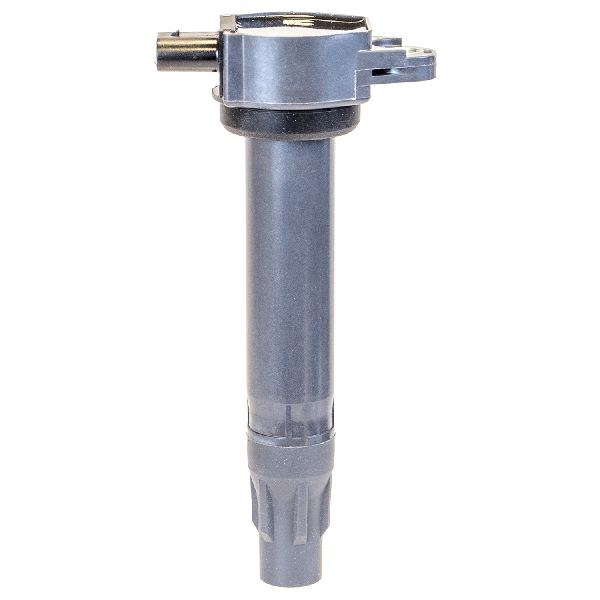
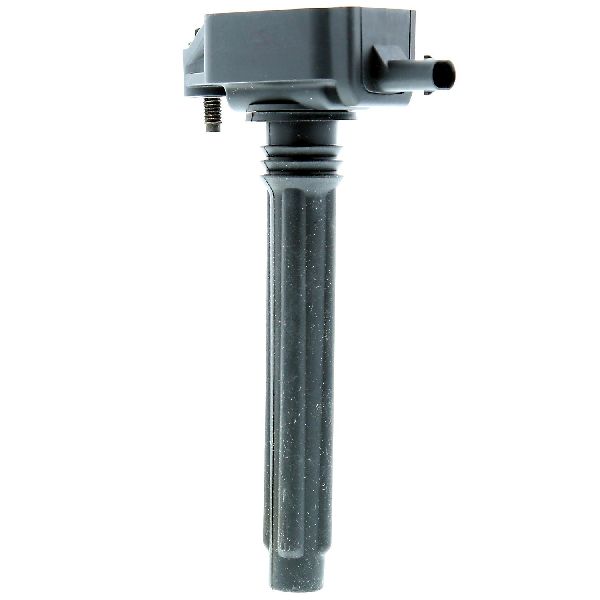
- Ignition Coil
(OEM #5149168AI (3.6L V6), 4606824AC (2.4L I4))— This is one of the most common failure points for a single-cylinder misfire. A simple swap test can confirm its failure.
Trusted brands: Mopar, NGK, Denso, Delphi
OEM price range: $50-$90
Aftermarket price range: $30-$60 - Spark Plug
(OEM #SP149125AE (3.6L V6, Iridium), SP00ZFR5AP (2.4L I4))— As a standard maintenance item, a worn or fouled spark plug is a very frequent cause of P0301.
Trusted brands: NGK, Champion
OEM price range: $15-$25
Aftermarket price range: $5-$15
Related Codes That Often Appear With This One
- P0300 — If the misfire is intermittent or starts to affect other cylinders, a P0300 (Random/Multiple Cylinder Misfire) may appear alongside P0301.
- P0302, P0303, P0304, etc. — If there's a systemic issue like low fuel pressure or a major vacuum leak, other cylinders may also log misfire codes.
- P0201 — This code for 'Injector Circuit/Open - Cylinder 1' points specifically to an electrical fault with the fuel injector or its wiring for cylinder 1, and would likely accompany a P0301 caused by a failed injector.
Technical Service Bulletins (TSBs) & Recalls
- 18-102-16: For 2012-2014 3.6L models, this TSB involves a PCM re-flash to improve powertrain diagnostics and correct for falsely set misfire codes, including P0301.
- 09-002-14 Rev. B: While not for P0301, this is a critical TSB for the 3.6L engine family, detailing the diagnosis and replacement of the left cylinder head for misfires on cylinders 2, 4, and 6.
Platform-Specific Known Issues
- TSB for False Misfire Codes (3.6L V6): For 2012-2014 models with the 3.6L engine, TSB #18-102-16 addresses false misfire codes that can be corrected with a PCM software update.
- 3.6L Pentastar Rocker Arm Failure: The 3.6L V6 is known for premature failure of rocker arms due to failed needle bearings. This causes a ticking noise and can set a misfire code like P0301. This is a more involved mechanical repair but is a very common issue for this engine family.
- 3.6L Pentastar Left Cylinder Head Issue: While the 3.6L Pentastar V6 had a known issue with the left cylinder head (cylinders 2, 4, 6) covered under an extended warranty (X56) and TSB 09-002-14 Rev. B, this P0301 code points to cylinder 1 on the right bank, making it an unlikely cause for this specific code, though it's a notable issue for the engine family.
- Oil Fouling on 2.4L Engine: The 2.4L engine can be prone to oil leaking from the valve cover gasket into the spark plug tubes, which saturates the ignition coil and spark plug, causing a misfire.
Mechanic-Grade Diagnostic Values
- Fuel Pressure (3.6L V6) — expected: 407 kPa +/- 34 kPa (59 psi +/- 5 psi). Failure: Pressure significantly below this range points to a weak fuel pump or clogged filter.
- Fuel Injector Resistance (3.6L V6) — expected: 12.0 - 16.0 Ohms. Failure: A reading significantly outside this range, or an open/short circuit, indicates a failed injector. One real-world failure showed a reading of 63.2 Ohms.
- Ignition Coil Primary Resistance (2.4L I4) — expected: 0.64 - 0.78 Ohms. Failure: A reading outside this range indicates a fault in the coil's primary winding.
- Ignition Coil Secondary Resistance (2.4L I4) — expected: 5.4 - 6.6 kOhms. Failure: A reading outside this range indicates a fault in the coil's secondary winding.
Hidden / Shadow Codes Worth Checking
- Mode $06 Misfire Count: This is not a hidden code, but a function within advanced scan tools that provides raw data from the PCM's onboard monitors. It shows the number of misfire events counted per cylinder during specific drive cycles, often before the count is high enough to set a formal DTC or illuminate the check engine light. (see via Use an advanced OBD-II scanner that supports Mode $06 data. The specific misfire monitor for cylinder 1 can be viewed to confirm if the PCM is actively detecting misfire events.)
Scan Tool Commands That Help
- wiTECH (Chrysler/Dodge/Jeep Factory Tool): View Misfire Counts — To isolate a misfiring cylinder when a general P0300 code is present or to confirm the specific cylinder logging misfires. The path is: Select PCM -> Monitors -> OBD II monitors -> 'Which cylinder is misfiring'. This will display a value block showing the live misfire count for each cylinder.
- wiTECH or equivalent professional scan tool: Clear All DTCs / Reset Adaptive Memory — After a repair is completed (e.g., replacing an injector or coil), it is critical to clear all fault codes. Some repairs, particularly those affecting fuel or air metering, may also benefit from resetting the PCM's adaptive memory to allow it to relearn parameters with the new components.
Wiring & Ground Locations
- Cylinder 1 Injector/Coil Wiring — On the 3.6L V6, Cylinder 1 is on the rear bank (firewall side), closest to the passenger side of the vehicle. On the 2.4L I4, it is the cylinder on the far passenger side, closest to the accessory belts.. The wiring harness to the coil and injector for cylinder 1 can be damaged by heat or chafing, causing an intermittent connection and leading to a P0301. The harness for the rear bank on the 3.6L is particularly susceptible due to its location.
- G300 / G301 — G300 is a primary body ground located under the driver's seat. G301 is located under the front passenger's seat (for 2011 model year, may be similar for 2012-2014).. Poor ground connections can cause a multitude of electrical issues, including erratic sensor readings and weak ignition spark, which can lead to misfire codes. While not a direct cause, checking major grounds is a valid step in advanced diagnosis.
- PCM (Powertrain Control Module) — Located in the engine compartment, typically on the driver's side near the shock tower or firewall.. All ignition coil and fuel injector control signals originate from the PCM. A poor connection at the PCM harness or, in very rare cases, a failed driver circuit within the module itself, can cause a misfire on a single cylinder.
Real Owner Repair Stories
- Reddit User / Go-Parts Article (2015 Jeep Wrangler 3.6L Pentastar (same engine and components as Avenger)) — P0303 (Cylinder 3 Misfire)
❌ Tried (didn't work) Swapped ignition coil from cylinder 3 to cylinder 5; the misfire code did not move., Swapped spark plug from cylinder 3 to another cylinder; the misfire code did not move.
✅ What actually fixed it An ohms test on the fuel injectors revealed the problem. A good injector measured ~12 ohms, but the faulty injector for cylinder 3 read 63.2 ohms. Replacing the high-resistance fuel injector resolved the misfire code.
OEM Part Supersession History
5149168AI→5149168AJ— Standard part revision and improvement by the manufacturer.
Heads up: The new part number (5149168AJ) is the correct service replacement for the 3.6L V6 ignition coil.4606869AB→4606869AD— Standard part revision and improvement by the manufacturer.
Heads up: The new part number (4606869AD) is the correct service replacement for the 2.4L I4 ignition coil.
Helpful Videos
Used OEM Parts in Stock


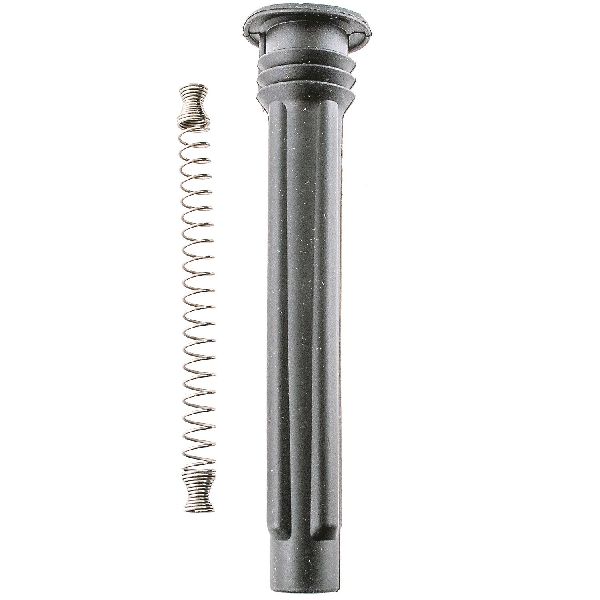
New Aftermarket Parts Available

The information in this article is provided for general reference and educational purposes only. Vehicle specifications, procedures, and part compatibility can vary by production date, trim level, and region. Always consult your vehicle's factory service manual and verify part numbers before purchasing or performing repairs. Safety-critical components such as airbags, seat belts, and braking systems should be installed by a qualified professional.
- Dodge AVENGER:
- 🎬 Helpful Videos
- 🛍️ Shop This Part
- What's Unique About the 2012-2014 Dodge AVENGER
- Diagnostic Flowchart
- Symptoms You May Notice
- Most Likely Causes
- Rare But Worth Checking
- Diagnosis Steps
- Parts You'll Likely Need
- Related Codes That Often Appear With This One
- Technical Service Bulletins (TSBs) & Recalls
- Platform-Specific Known Issues
- Mechanic-Grade Diagnostic Values
- Hidden / Shadow Codes Worth Checking
- Scan Tool Commands That Help
- Wiring & Ground Locations
- Real Owner Repair Stories
- OEM Part Supersession History
- 🎟️ Get 5% Off