

P0301 on 2018-2025 Chrysler Pacifica: Cylinder 1 Misfire Causes and Fixes
P0301 indicates a misfire in cylinder 1. On the Pacifica's 3.6L Pentastar engine, this is most often caused by a faulty ignition coil or a worn/defective spark plug. A DIY fix for these parts costs between $40 and $100. However, this code can also point to more serious internal engine problems like faulty rocker arms (a known issue per TSB #09-011-25) or, less commonly, head gasket issues.
- P0301 on a Pacifica means cylinder 1 is misfiring, most likely due to a bad ignition coil or spark plug.
- A flashing Check Engine Light is a critical warning to stop driving to prevent expensive catalytic converter damage.
- Use the 'swap test' for the ignition coil and spark plug as a simple, no-cost way to diagnose the most common causes.
- Be aware of the 3.6L Pentastar's known issues, such as failing rocker arms (ticking noise) and head gasket leaks (coolant loss), if simple fixes don't resolve the code.
- When replacing spark plugs, it's best to replace all six to ensure balanced engine performance and prevent future misfires.
What's Unique About the 2018-2025 Chrysler PACIFICA

The Chrysler Pacifica uses the 3.6L Pentastar V6, an engine used across many Chrysler, Dodge, and Jeep vehicles. While generally reliable, this engine family has a documented history of specific valve train and cylinder head issues that can lead to misfires. TSB #09-011-25 was issued for 2018-2025 Pacificas (among others) acknowledging that misfire codes can be caused by a 'manufacturing issue' with intake camshafts and/or rocker arms, often failing between 10,000 and 60,000 miles. Therefore, while a simple spark plug or coil is the most likely culprit, a P0301 code on a Pacifica warrants a cautious diagnostic approach to rule out these more serious, known engine issues.
Diagnostic Flowchart

Tap your situation to follow the diagnostic path that matches what you're seeing on this vehicle.
Symptoms You May Notice

- Rough or shaking engine idle.
- Flashing or solid Check Engine Light.
- Noticeable loss of power and poor acceleration.
- Hesitation or stumbling during acceleration.
- Increased fuel consumption.
- Smell of unburned fuel from the exhaust.
- Audible ticking or tapping noise from the top of the engine, which may indicate a valvetrain problem.
- Replacing the battery or alternator. While electrical issues can cause strange symptoms, a single-cylinder misfire like P0301 is almost always specific to that cylinder's ignition, fuel, or mechanical components.
Most Likely Causes

- Faulty Ignition Coil 🔴 High Probability Coil-on-plug systems are common failure points on many modern engines due to constant exposure to heat and vibration. The Pentastar is no exception, and this is a frequent cause of single-cylinder misfires.
How to confirm: Swap the ignition coil from cylinder 1 with another cylinder on the same bank (e.g., cylinder 3). Clear the codes and drive the vehicle. If the code changes to P0303, the coil is bad.
Typical fix: Replace the faulty ignition coil. It is often recommended to replace the spark plug at the same time.
Est. part cost: $30-$75 - Worn or Defective Spark Plug 🔴 High Probability A technical service bulletin (TSB #09-013-20 REV. A) was issued for 2020-2021 Pacificas due to a batch of spark plugs with internal cracks causing misfires across any cylinder. Beyond defects, spark plugs are a regular maintenance item that will cause misfires when worn.
How to confirm: Remove the spark plug from cylinder 1 and inspect it for wear (worn electrode), carbon fouling, oil contamination, or damage to the white ceramic insulator (cracks). Compare it to a new plug or check the gap.
Typical fix: Replace the spark plug. Per TSB 09-013-20 REV. A, if a defective plug is found, all six should be replaced. It is best practice to replace all six plugs at the same time 🎬 See this step-by-step Pacifica spark plug and coil replacement. for even performance.
Est. part cost: $10-$25 per plug - Faulty Fuel Injector 🟡 Medium Probability
How to confirm: If swapping the coil and plug doesn't resolve the P0301, the injector is a likely suspect. A DIY method is to listen for a consistent clicking sound from the injector using a mechanic's stethoscope; compare its sound to cylinder 3's injector. A multimeter can also be used to check the injector's resistance; a good injector should read around 12 ohms.
Typical fix: Replace the faulty fuel injector. This is more involved as it requires depressurizing the fuel rail.
Est. part cost: $50-$150 - Internal Engine Mechanical Failure (Rocker Arm/Lifter/Camshaft) 🟡 Medium Probability The 3.6L Pentastar engine has a widely documented issue with rocker arm bearing failures. TSB #09-011-25 confirms a 'manufacturing issue' can cause worn intake camshaft lobes and/or rocker arms, leading to misfires and valvetrain noise, typically between 10,000-60,000 miles. This is a known weak point for this engine across multiple vehicle platforms.
How to confirm: This often starts with an audible ticking sound from the top of the engine, especially from the rear bank. A definitive diagnosis requires removing the valve cover to visually inspect the camshaft lobes and rocker arms for scoring, metal shavings, or excessive wear.
Typical fix: Requires replacing the affected camshaft(s), all rocker arms, and all lifters on that cylinder head. TSB #09-011-25 specifies service kits for this repair. This is a significant and costly repair.
Est. part cost: $500-$1500+
Rare But Worth Checking
- Blown Head Gasket: While less common than other causes, some Pacifica owners on forums have directly linked persistent misfire codes to head gasket leaks allowing coolant into the cylinder. Symptoms often include a rough start that may smooth out, unexplained coolant loss, and sometimes white exhaust smoke. A mechanic can confirm this with a combustion leak tester or by finding coolant on the spark plug.
- Leaking Oil Filter Housing/Cooler: A very common failure on the 3.6L Pentastar is the plastic oil filter housing assembly, which can crack and leak oil and/or coolant down the engine valley. While this doesn't directly cause a misfire, a significant oil leak can foul wiring or sensors, and it's a critical issue to be aware of on this engine.
Diagnosis Steps
- Read the code with an OBD-II scanner to confirm P0301 and check for any other pending or active codes.
- Note if the Check Engine Light is flashing. If it is, avoid driving to prevent catalytic converter damage.
- Locate cylinder 1. On the Pacifica's transverse 3.6L V6, the rear cylinder bank is against the firewall and the front is by the radiator. The rear bank contains cylinders 1, 3, and 5 (passenger to driver side). Cylinder 1 is on the rear bank, passenger side.
- Swap the ignition coil from cylinder 1 with the coil from cylinder 3 (middle cylinder, rear bank). Clear the codes and run the engine. If the code changes to P0303, the ignition coil is the problem. This is the most common first diagnostic step. 🎬 Watch: A mechanic's guide to diagnosing a P0301 misfire.
- If the code remains P0301, move the spark plug from cylinder 1 to cylinder 3. If the code then changes to P0303, the spark plug was the issue.
- If the misfire still stays on cylinder 1, inspect the wiring and connector for the fuel injector and ignition coil for any damage, corrosion, or looseness.
- Listen to the fuel injector on cylinder 1 with a mechanic's stethoscope. It should have a steady, rhythmic clicking sound. Compare it to the sound of an adjacent injector.
- If a ticking noise is present from the top of the engine, this strongly suggests a valvetrain issue. The next step is to remove the rear valve cover to inspect the camshaft lobes and rocker arms for wear, which is a known issue on this engine per TSB 09-011-25.
- If you are losing coolant with no visible external leak, suspect a head gasket failure. A mechanic can use a combustion leak tester (which checks for exhaust gases in the coolant) or a borescope to look for coolant inside the cylinder.
- If the above steps do not identify the cause, perform a cylinder compression test and a cylinder leak-down test. Low compression can indicate a serious mechanical problem like a bad valve, worn piston rings, or a failed head gasket.
Parts You'll Likely Need
- Ignition Coil
(OEM #5149168AJ (replaces 5149168AH, 5149168AI))— This is one of the most common failure items for a single-cylinder misfire. Heat and vibration cause the internal windings to fail over time.
Trusted brands: Mopar, NGK, Denso, Delphi
OEM price range: $85-$120
Aftermarket price range: $30-$75 - Spark Plug
(OEM #SP149125AE (or superseding part SP149125AF))— Spark plugs are a routine maintenance part and a known cause of misfires on this engine, as documented in Chrysler TSB 09-013-20 REV. A for internal cracks.
Trusted brands: Mopar (Champion or NGK), NGK, Champion
OEM price range: $15-$30
Aftermarket price range: $10-$25 - Rocker Arm & Lifter Kit
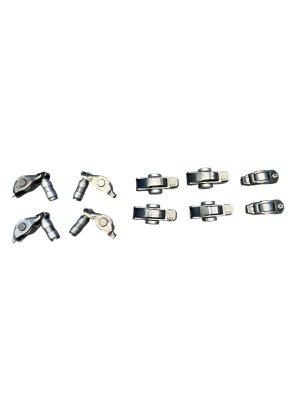
(OEM #Referenced in TSB 09-011-25 (e.g., Left Bank Kit 68661146AA))— Required for the known valvetrain failure on the 3.6L Pentastar engine. If a ticking noise is present with the misfire, this is a highly probable cause.
Related Codes That Often Appear With This One
- P0300 — If multiple cylinders are misfiring, you will see a P0300 (Random/Multiple Cylinder Misfire) along with codes for specific cylinders (P0301, P0302, etc.). This points to a problem affecting the whole engine, like a major vacuum leak or the beginning of a valvetrain failure affecting multiple rockers.
- P030X — Codes like P0302, P0303, P0304, P0305, or P0306 indicate misfires in other cylinders. Seeing multiple misfire codes is common if there's a systemic issue like bad fuel or a failing component that affects multiple cylinders, such as the issues described in TSBs 09-013-20 and 09-011-25.
Technical Service Bulletins (TSBs) & Recalls
- 09-013-20 REV. A: Addresses potential for misfire codes (P0301-P0306) on 2020 Pacificas due to internally cracked spark plugs, recommending replacement of all six.
- 09-011-25: Mentions P0301-P0306 as potential Diagnostic Trouble Codes that may illuminate the Malfunction Indicator Lamp (MIL).
Platform-Specific Known Issues
- Rocker Arm/Lifter Failure: The 3.6L Pentastar V6 has a documented history of premature failure of the rocker arm bearings, leading to a distinct ticking sound, camshaft damage, and misfire codes. This issue was the subject of a class-action lawsuit that included the 2016-2020 Pacifica.
- Cracked Spark Plugs: TSB 09-013-20 REV. A was issued for some 2020 Pacificas and other Chrysler models with the 3.6L engine due to a batch of faulty spark plugs that could develop internal cracks, causing misfires. The prescribed fix is to replace all six plugs.
Mechanic-Grade Diagnostic Values
- Fuel Injector Resistance — expected: Approximately 12.0 - 12.4 Ohms. Failure: A significantly higher reading (e.g., 24 Ohms) or an open circuit (infinite resistance) indicates a failed injector. Readings slightly out of spec (e.g., 11.4 Ohms) may also indicate a problem.
- Ignition Coil Primary Resistance — expected: Approximately 0.46 - 0.57 Ohms. Failure: A reading outside of this range indicates a faulty coil.
- Ignition Coil Secondary Resistance — expected: Approximately 9.5 - 15.7 kOhms. Failure: A reading outside of this range indicates a faulty coil.
- Fuel Pressure (Key On, Engine Off) — expected: Approximately 39 psi (269 kPa) with vacuum line disconnected from regulator.. Failure: Significantly lower pressure indicates a weak fuel pump or leak.
- Fuel Pressure (Engine at Idle) — expected: Approximately 31 psi (214 kPa) with vacuum line connected to regulator.. Failure: Pressure that doesn't respond to vacuum indicates a faulty regulator.
Hidden / Shadow Codes Worth Checking
- Mode 6, Test ID $53 (or similar): This function within a professional scan tool shows raw misfire counts per cylinder for the current and previous 10 driving cycles. It can reveal intermittent misfires on a specific cylinder even if they haven't occurred frequently enough to set a P0301 code yet. (see via A professional scan tool with Mode 6 capabilities, or the dealer-specific wiTECH tool under the OBD II monitors menu.)
Scan Tool Commands That Help
- wiTECH (Chrysler Dealer Tool): OBD II Monitors -> 'Which cylinder is misfiring' — This provides a live data view of misfire counts for all cylinders, which is essential for diagnosing intermittent misfires or confirming that a repair has been successful. It is particularly useful when a P0300 (random misfire) is present to pinpoint which cylinder is the primary offender.
- wiTECH (Chrysler Dealer Tool): Injector Kill — This bidirectional command allows a technician to manually disable the fuel injector for a specific cylinder. When cylinder 1's injector is disabled, there should be a noticeable drop in RPM. If there is no change in how the engine runs, it confirms that cylinder 1 was not contributing, pointing the diagnosis toward that cylinder's injector, spark, or compression.
Wiring & Ground Locations
- Cylinder 1 Ignition Coil/Injector Harness — The wiring for cylinder 1 (rear bank, passenger side) is part of the main engine harness that routes over the top of the engine and down the back of the intake manifold. The coils for the rear bank (1, 3, 5) are located under the upper intake manifold.. This harness is exposed to significant heat. The plastic conduit can become brittle and break, exposing wires to chafing. A short or open in the coil or injector wire for cylinder 1 will cause a persistent P0301.
- PCM Grounds (G304/G305) — Key engine and PCM ground points are typically located on the engine block or cylinder heads, and on the chassis near the battery. Specific ground locations for the PCM are often found on the inner fender or firewall.. A poor ground connection for the PCM or the ignition system can cause weak spark or erratic injector behavior, leading to misfires that can be difficult to diagnose as they may seem random.
Real Owner Repair Stories
- Reddit user in r/ChryslerPacifica (2018 Pacifica Touring Plus L, 74k miles) — Rough idle, Check Engine Light with P0301.
❌ Tried (didn't work) Replaced all spark plugs and ignition coils., Repaired oil leaks from valve cover gaskets and oil filter housing.
✅ What actually fixed it The P0301 code returned a couple of months later. The final diagnosis was a bad head gasket leaking coolant into cylinder 1. The repair was covered under an extended warranty for approximately $3500-$4000. - Reddit user in r/ChryslerPacifica (2017 Pacifica) — P0301 code, rough running especially at low RPM or under load, pool of oily liquid in engine valley.
❌ Tried (didn't work) Oil change was performed right before the issue started.
✅ What actually fixed it The user suspected a head gasket leak causing coolant and oil to mix and accumulate, leading to the misfire. While the final repair is not explicitly stated, the evidence strongly pointed to a head gasket failure as the root cause.
When the Usual Fixes Don't Work
- In several owner-reported cases, a persistent P0301 code on a 2018 Pacifica was not resolved by replacing the common culprits like ignition coils and spark plugs. The ultimate cause was diagnosed as a leaking head gasket, allowing coolant to enter cylinder 1 and cause the misfire. This is a much more severe and expensive repair than a typical ignition or fuel component replacement and highlights the importance of checking for coolant loss and performing a combustion leak test if the initial diagnostic steps do not solve the problem.
OEM Part Supersession History
5149168AH, 5149168AI→5149168AJ— Part revisions are common to improve reliability, change suppliers, or address known failure modes. The coil design for the Pentastar has been updated over the years.SP149125AE→SP149125AF— Supersession often occurs to address manufacturing defects or improve performance. TSB 09-013-20 REV. A, which pointed to internal cracks in spark plugs, likely prompted a part revision.
Model Year Variations Within This Range
- 2021-2025: The Chrysler Pacifica received a significant refresh for the 2021 model year, including updated exterior styling and a new Uconnect 5 infotainment system. While the core 3.6L Pentastar V6 engine remained the same, an all-wheel-drive (AWD) option was introduced for gasoline models. This adds a power transfer unit and rear driveshaft but does not fundamentally change the causes or diagnosis for a P0301 engine misfire code.
- 2018-2025 (Hybrid Models): The Pacifica Hybrid uses an Atkinson-cycle version of the 3.6L V6 engine, which has a higher compression ratio (12.5:1 vs 11.3:1) and is tuned for efficiency. It produces less total horsepower (260 hp). While the fundamental components causing a misfire (coil, plug, injector, valvetrain) are similar, the diagnostic approach must also consider the complex interaction with the hybrid system's high-voltage electronics and eFlite transmission.
Helpful Videos

We Have This Part in Stock


The information in this article is provided for general reference and educational purposes only. Vehicle specifications, procedures, and part compatibility can vary by production date, trim level, and region. Always consult your vehicle's factory service manual and verify part numbers before purchasing or performing repairs. Safety-critical components such as airbags, seat belts, and braking systems should be installed by a qualified professional.
- Chrysler PACIFICA:
- 🎬 Helpful Videos
- 🛍️ Shop This Part
- What's Unique About the 2018-2025 Chrysler PACIFICA
- Diagnostic Flowchart
- Symptoms You May Notice
- Most Likely Causes
- Rare But Worth Checking
- Diagnosis Steps
- Parts You'll Likely Need
- Related Codes That Often Appear With This One
- Technical Service Bulletins (TSBs) & Recalls
- Platform-Specific Known Issues
- Mechanic-Grade Diagnostic Values
- Hidden / Shadow Codes Worth Checking
- Scan Tool Commands That Help
- Wiring & Ground Locations
- Real Owner Repair Stories
- When the Usual Fixes Don't Work
- OEM Part Supersession History
- Model Year Variations Within This Range
- 🎟️ Get 5% Off