

P0301 on 2013-2015 Chevrolet Sonic: Cylinder 1 Misfire Causes and Fixes
P0301 on a Chevy Sonic most often means a bad ignition coil pack or a worn spark plug. Oil leaking from the valve cover gasket into the spark plug wells is a very common root cause of this failure. Expect to pay $50-$150 for a new coil pack and plugs.
- P0301 on a 2013-2015 Sonic is almost always an ignition issue: start with spark plugs and the ignition coil pack.
- Before replacing any parts, inspect the spark plug wells for oil. If oil is present, you MUST replace the valve cover gasket to fix the root cause.
- On 1.4L Turbo models, be aware of the complex PCV system. A hissing noise or a lean code (P0171) alongside the misfire points to a PCV failure.
- Do not drive if the Check Engine Light is flashing to avoid catastrophic damage to your catalytic converter.
What's Unique About the 2013-2015 Chevrolet SONIC

On the 2013-2015 Sonic, P0301 is frequently a direct result of another common platform issue: a leaking valve cover gasket. Both the 1.4L Turbo and 1.8L engines are known for the gasket failing, allowing engine oil to seep into the spark plug tubes. This oil soaks the ignition coil boot, causing it to degrade, swell, and fail, leading to a misfire. Additionally, the 1.4L Turbo engine has a complex PCV system integrated into the valve cover and intake manifold that can fail. A torn diaphragm in the valve cover or a missing check valve in the intake manifold creates a significant vacuum leak, which can cause multiple codes including P0171 (System Too Lean) and misfires like P0301.
Diagnostic Flowchart

Tap your situation to follow the diagnostic path that matches what you're seeing on this vehicle.
Symptoms You May Notice
- Rough or shaking idle.
- Hesitation or stumbling during acceleration.
- Flashing or solid Check Engine Light.
- Loss of power.
- Smell of unburned fuel from the exhaust.
- "Service StabiliTrak" warning light may appear along with the misfire.
- Audible hissing or whistling noise from the engine bay (if related to PCV failure on 1.4L).
- Replacing only the spark plugs when the ignition coil is also bad or when the spark plug wells are full of oil. The new plugs will quickly be fouled or the bad coil will continue to cause a misfire.
- Replacing the fuel injector when the problem is actually a much more common ignition system fault.
- Replacing the valve cover (for a PCV diaphragm failure) on a 1.4L Turbo without first checking for the missing check valve in the intake manifold, leading to a repeat failure of the new valve cover.
Most Likely Causes

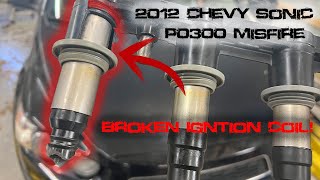
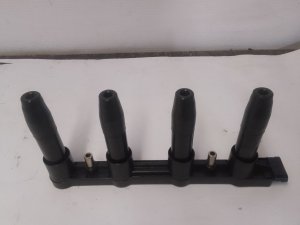
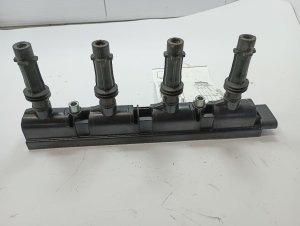
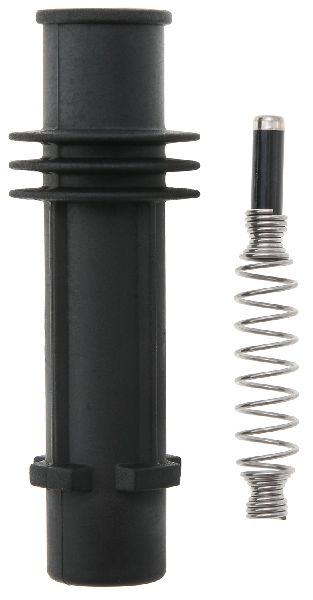
- Failed Ignition Coil Pack 🔴 High Probability The coil pack is a very common failure item, often failing after 100,000 miles. The failure is frequently caused by oil contamination from a leaking valve cover gasket, which degrades the coil boot material. Both the 1.4L and 1.8L engines use a single 'coil rail' or 'cassette' design, meaning the entire unit must be replaced even if only one cylinder's coil has failed.
How to confirm: Inspect the coil pack for cracks and the boot for cylinder 1 for swelling, oil saturation, or white/corroded terminals. Look for evidence of arc tracing (thin black lines) on the cylinder head near the spark plug tube, indicating the spark is jumping to ground. Since individual coils can't be swapped, it is often replaced as a primary diagnostic step after confirming the spark plugs are good.
Typical fix: Replace the entire ignition coil pack assembly. It is highly recommended to replace all four spark plugs at the same time and apply a small amount of dielectric grease inside each boot to prevent corrosion and ensure a good seal.
Est. part cost: $60-$150 - Worn or Fouled Spark Plugs 🔴 High Probability Oil from a leaking valve cover gasket can foul the spark plugs, causing a weak or non-existent spark. The 1.4L Turbo engine is particularly sensitive to spark plug condition. Even without a leak, spark plugs are a regular maintenance item that can simply wear out, typically recommended for replacement around 60,000 miles.
How to confirm: Remove the spark plug from cylinder 1. Inspect it for wear (worn electrode), carbon buildup, or oil fouling. A plug wet with oil is a clear sign of a leaking valve cover gasket. The correct spark plug gap for the 1.4L is typically 0.027" and 0.035" for the 1.8L.
Typical fix: Replace all four spark plugs. If oil was present, the valve cover gasket must also be replaced to prevent the new plugs and coil from failing. Ensure new plugs are gapped correctly, though many OEM-style plugs come pre-gapped.
Est. part cost: $20-$50 - Leaking Valve Cover Gasket 🟡 Medium Probability The gaskets on these engines are known to become hard and brittle with heat and age, failing and allowing oil to leak externally and, more critically, into the spark plug wells. This is a primary root cause for the frequent ignition coil and spark plug failures on this platform.
How to confirm: After removing the ignition coil pack, look for liquid oil pooled in the spark plug tube for cylinder 1 (and others). You may also see oil residue on the outside of the engine, particularly around the edges of the valve cover.
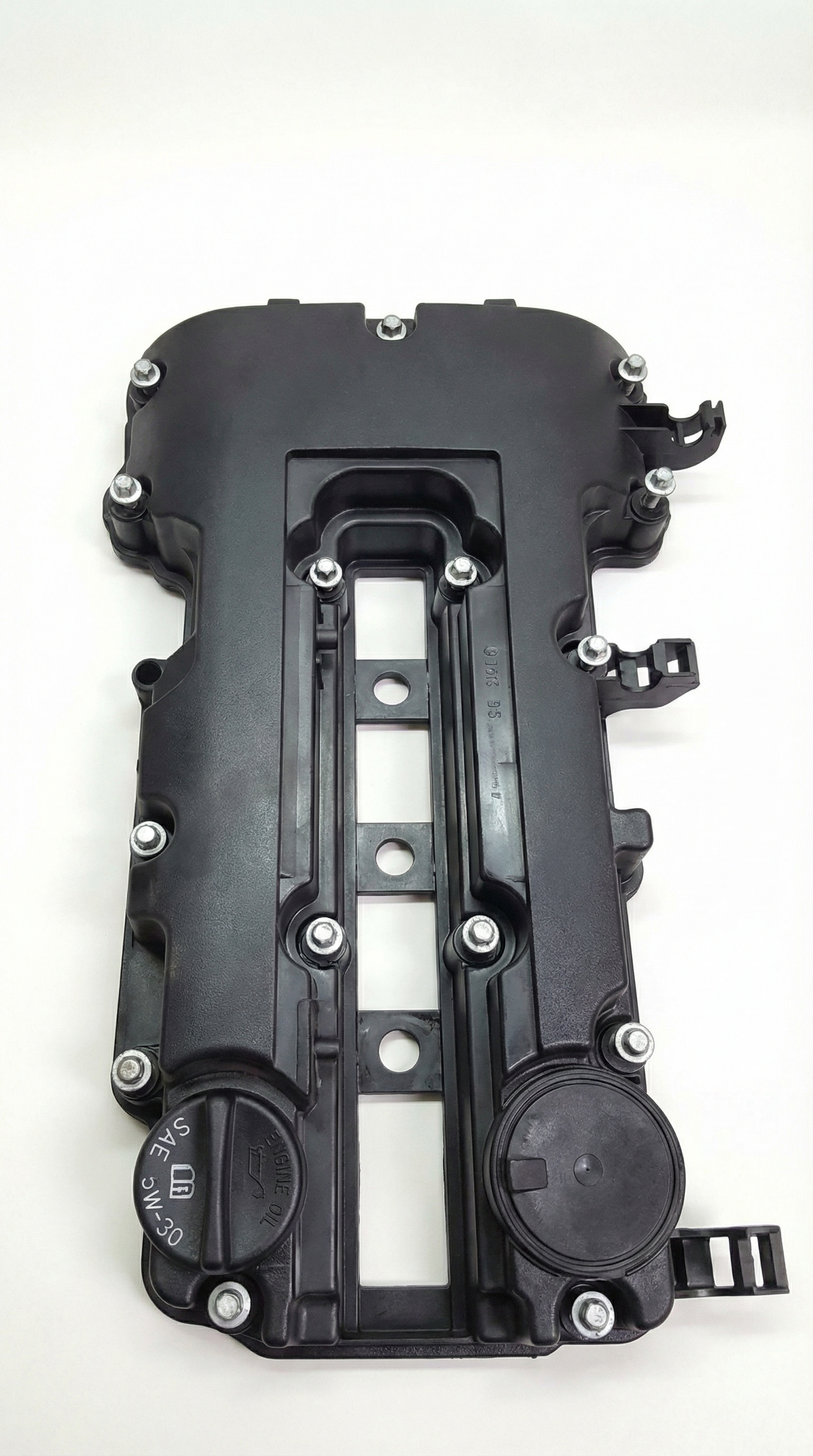
Typical fix: Replace the valve cover gasket and the spark plug tube seals (which are often part of the gasket set). On the 1.4L engine, the entire valve cover assembly, which includes the gasket and PCV diaphragm, is often replaced as a unit. Clean all oil from the spark plug wells before installing new parts.
Est. part cost: $30-$80 - Failed PCV System (1.4L Turbo Engine) ⚪ Low Probability The 1.4L Turbo engine has two critical PCV check valves. One is a small orange nipple in the intake manifold that can dislodge, and the other is a rubber diaphragm in the valve cover that can tear. A failure creates an unmetered vacuum leak, which can lead to lean conditions (P0171), rough idle, and misfires.
How to confirm: A loud hissing or whistling noise from the engine is a key symptom of a torn valve cover diaphragm. You can confirm by placing a finger over the small breather hole on the diaphragm cover; if the noise stops and the idle smooths out, the diaphragm is torn. The intake manifold check valve can be visually inspected by removing a PCV hose; if the orange nipple is missing, the manifold must be replaced or repaired.
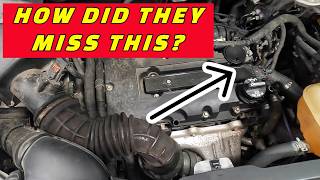
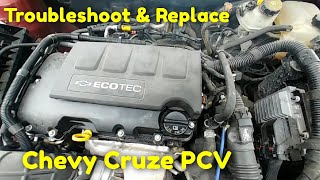
Typical fix: If the valve cover diaphragm is torn, the entire valve cover must be replaced. If the intake manifold check valve is missing, the intake manifold must be replaced or an aftermarket repair kit can be installed. 🎬 See this breakdown of 1.4L PCV issues and solutions. Failing to fix a missing intake check valve will cause the new valve cover diaphragm to fail prematurely.
Est. part cost: $80-$250 - Faulty Fuel Injector ⚪ Low Probability While possible, fuel injectors are a less common cause of misfires on the Sonic compared to ignition system components.
How to confirm: Listen to the injector with a mechanic's stethoscope for a consistent clicking sound. You can also swap the injector with another cylinder to see if the misfire code follows (e.g., changes to P0302). This is more labor-intensive than ignition component swaps and requires releasing fuel pressure.
Typical fix: Replace the faulty fuel injector. It is considered best practice to replace all four injectors as a set to ensure balanced fuel delivery, though it is not strictly required.
Est. part cost: $40-$90 per injector
Rare But Worth Checking
- Low Engine Compression: A mechanical issue like a burnt valve, worn/broken piston rings, or a damaged piston can cause a persistent misfire that isn't resolved by replacing ignition or fuel parts. A compression test followed by a cylinder leak-down test is needed to diagnose this. A YouTuber with a P0301 on a 1.4L Cruze found 100 PSI in cylinder 1 (vs. 200+ in others) due to a cracked piston.
- Fuel Contamination: GM TSB PIP3333C notes that on rare occasions, water or other contaminants in the fuel can get trapped in the fuel rail and cause an intermittent misfire on cylinder 1 during a left turn or cylinder 4 during a right turn.
- Collapsed Lifter / Worn Camshaft: In some cases, especially with high mileage or poor oil maintenance, a hydraulic lifter can collapse or a camshaft lobe can wear down, preventing the valve from opening correctly and leading to a misfire with zero compression.
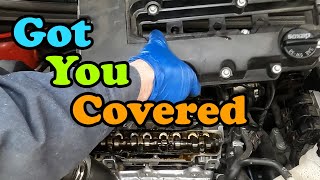
Diagnosis Steps 🎬 Watch this easy diagnosis and repair guide for Sonic misfires.
- Read the trouble codes with an OBD-II scanner to confirm P0301 and check for any other codes, such as P0171 or P0300.
- Remove the plastic engine cover and the ignition coil pack assembly (held by two T40 Torx bolts).
- Inspect the spark plug well for cylinder #1 (the cylinder closest to the passenger side on a transverse engine). If there is oil in the well, the valve cover gasket has failed and is the likely root cause.
- Remove the spark plug from cylinder #1. Inspect its condition. Replace if it is worn, corroded, or fouled with oil/carbon. It is best practice to replace all four plugs.
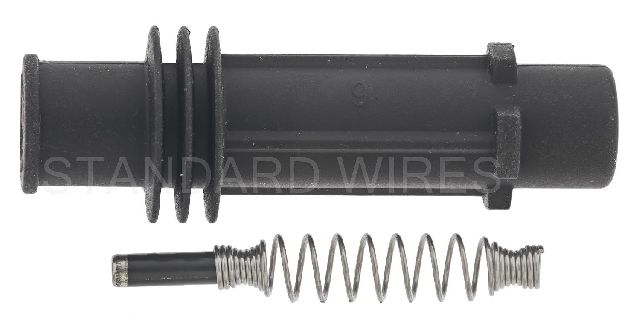
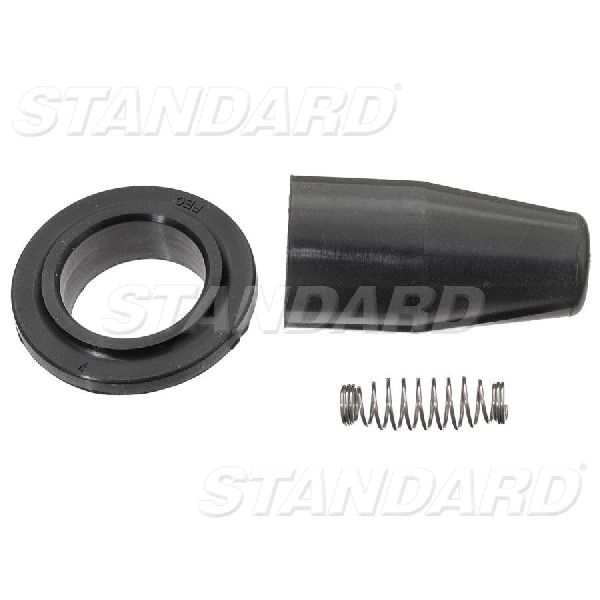
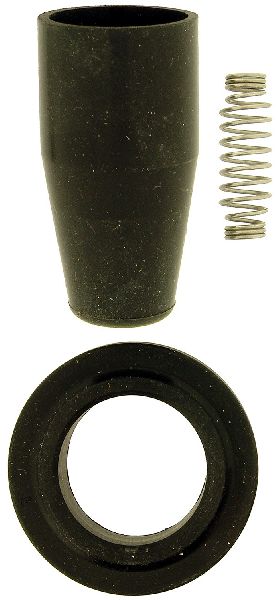
- Inspect the ignition coil boot for cylinder #1 for swelling, cracks, or oil damage. Check for corrosion on the spring terminal inside the boot. Since the coil is a single unit, you cannot swap it to test. If plugs and the gasket are replaced and the misfire persists, the coil pack is the next most likely culprit.
- For 1.4L Turbo models, with the engine running, listen for a loud hissing or whistling sound. Check for strong vacuum at the PCV diaphragm breather hole on the valve cover by placing your finger over it or seeing if it sucks a small piece of paper; any vacuum indicates a torn diaphragm.
Parts You'll Likely Need

- Ignition Coil Pack
(OEM #25198623 (Superseded by 55579072 for 1.4L))— This is the most common part to fail causing a P0301 misfire, often due to oil leaks or age.
Trusted brands: ACDelco, Delphi, NGK
OEM price range: $100-$160
Aftermarket price range: $60-$120 - Spark Plugs (Set of 4)
(OEM #ACDelco 41-121 (1.4L) or 55580961 (1.8L))— Worn or oil-fouled spark plugs are a primary cause of misfires and should always be replaced with the coil pack.
Trusted brands: ACDelco, NGK
OEM price range: $30-$60
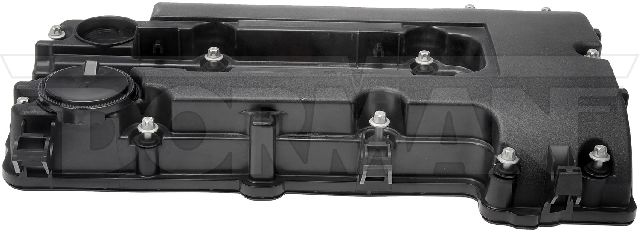
Aftermarket price range: $20-$40 - Valve Cover (1.4L Turbo)
(OEM #25198498 (Supersedes 55573746))— On the 1.4L engine, the PCV diaphragm is integrated into the cover and is a high-failure item. The cover is replaced as a complete assembly, which includes a new gasket.
Trusted brands: ACDelco (GM Genuine), Dorman
OEM price range: $100-$180
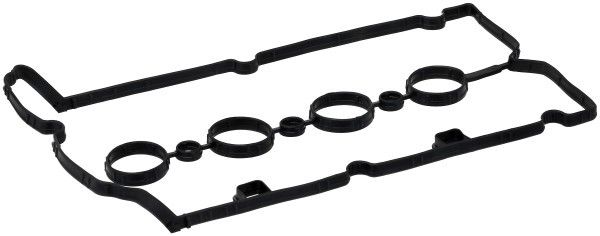
Aftermarket price range: $70-$120 - Valve Cover Gasket (1.8L)
(OEM #55354237)— The gasket for the 1.8L engine is sold separately and is a common failure point leading to oil in the spark plug wells.
Trusted brands: ACDelco, Fel-Pro
OEM price range: $30-$50
Aftermarket price range: $15-$30
Related Codes That Often Appear With This One
- P0300 — If the misfire is intermittent or affects multiple cylinders, a P0300 (Random/Multiple Cylinder Misfire) may be stored alongside P0301.
- P0171 — If the misfire is caused by a vacuum leak from a failed PCV system on the 1.4L engine, a P0171 (System Too Lean) code is often present.
- P0299 — On the 1.4L Turbo, a significant misfire can prevent the turbo from spooling correctly, leading to an underboost condition and a P0299 code.
- P1101 — This code for Intake Air Flow System Performance on the 1.4L Turbo is another strong indicator of a failed PCV system (torn diaphragm or missing intake check valve).
Technical Service Bulletins (TSBs) & Recalls
- PIP3333C: Notes that intermittent P0301 or P0304 codes can occur during turns due to fuel contamination in the fuel rail, though this is considered a rare cause.
- 19-NA-114: Details the diagnosis of a torn PCV diaphragm in the camshaft cover on 1.4L engines, which causes lean codes (P0171) and other airflow issues that can lead to misfires.
- 19-NA-090: Addresses P0300 on the 1.4L engine caused by broken piston ring lands leading to low compression, oil consumption, and misfires.
Platform-Specific Known Issues

- A known TSB for the 2013 Sonic, #PIP3333C, mentions intermittent engine misfires and codes P0300, P0301, and P0304, directing technicians to follow standard diagnostics.
- Oil from a leaking valve cover gasket pooling in the spark plug tubes is an extremely common problem that directly leads to ignition component failure and misfire codes.
- On the 1.4L Turbo engine, failure of the PCV system (either the diaphragm in the valve cover or the check valve in the intake manifold) is a well-documented issue that can cause vacuum leaks, lean codes, and misfires.
Mechanic-Grade Diagnostic Values
- Ignition Coil Primary Resistance (1.4L & 1.8L) — expected: 0.4 - 0.7 Ohms. Failure: A reading outside this range, especially an open circuit (infinite resistance), indicates a faulty coil.
- Ignition Coil Secondary Resistance (1.4L & 1.8L) — expected: 6,000 - 12,000 Ohms (6kΩ - 12kΩ). Failure: A reading outside this range suggests the coil's secondary winding is failing. One real-world failure was noted at 12.3 kΩ.
- Fuel Pressure (1.8L Engine) — expected: ~60 PSI. Failure: Significantly lower pressure indicates a weak fuel pump or clogged filter, which could cause a lean misfire.
- Crankcase Vacuum at PCV Diaphragm (1.4L Engine) — expected: 11 - 18 inches of H₂O (water). Failure: This is the target vacuum for a healthy system. A torn diaphragm will cause unmetered air to be sucked through the breather hole, which can be felt with a finger or seen by its effect on engine idle.
Hidden / Shadow Codes Worth Checking
- Mode 6, Test ID $A2: Misfire count for Cylinder 1. The ECU tracks misfires even before they are frequent enough to set a P0301 code. This data can reveal intermittent misfires or confirm which cylinder is the problem. (see via Requires a professional-grade OBD-II scan tool or app with Mode 6 diagnostic capabilities.)
Scan Tool Commands That Help
- GDS2 / Professional Bidirectional Scanner: Cylinder Power Balance / Misfire Graphic — Used to graphically display the relative power contribution of each cylinder in real-time. A cylinder with a consistent drop in performance is the likely source of the misfire, helping to confirm the issue is with cylinder 1 before tearing parts down.
- GDS2 / Professional Bidirectional Scanner: Fuel Injector Balance Test — This function allows the technician to individually activate each fuel injector and measure the corresponding drop in fuel pressure. It can be used to identify a clogged or non-functioning injector if ignition and compression are known to be good.
Wiring & Ground Locations
- G105 — On the frame rail, under the battery tray, to the left of the underhood fuse block.. This is a primary engine compartment ground. A GM TSB specifically mentions checking this ground for paint or weld slag causing a poor connection, which can lead to ignition problems.
- G106 / G107 — G106 is on the left rear of the engine block. G107 is on the lower left rear of the engine block.. These are critical engine block grounds. The ignition coil module and ECM rely on a solid ground path to the engine block and chassis. A loose or corroded connection here can cause erratic spark and persistent, hard-to-diagnose misfires.
- Ignition Coil Connector (Circuit 5290) — The electrical connector on the main ignition coil pack, which is located on top of the valve cover.. A GM TSB advises checking the power feed circuit (CKT 5290) from the underhood fuse block (UBEC) to the coil. An internal open in the fuse block has been found in some cases, cutting power to the coil and causing a no-spark condition.
Real Owner Repair Stories
- YouTube user '2018 Chevy Cruze cracked piston misfire cylinder 1' (2018 Chevrolet Cruze 1.4L Turbo (shared engine), 56k miles) — Bad misfire on cylinder 1, code P0301.
❌ Tried (didn't work) Swapping ignition coils, Replacing spark plugs, Swapping fuel injectors
✅ What actually fixed it A compression test revealed low compression in cylinder 1 (100 PSI vs. 200-210 PSI in other cylinders). The car was taken to a dealership where they confirmed and replaced a cracked piston in cylinder 1.
"I Checked Everything" — The Actual Cause
- On the 1.4L Turbo, a technician may correctly identify a torn PCV diaphragm in the valve cover (the 'symptom') because it creates a loud hissing noise or vacuum at the breather hole. They replace the valve cover assembly, and the code is resolved. However, the actual root cause is often a failed/missing check valve inside the intake manifold. This missing valve allows turbo boost pressure into the crankcase, which is what ruptured the diaphragm in the first place. Failing to inspect the intake manifold check valve will lead to the new valve cover's diaphragm failing prematurely.
OEM Part Supersession History
25198874→25209141— Standard part lifecycle update by GM.
Heads up: Applies to the 1.4L Turbo Valve Cover Assembly. The new part is a direct replacement for the old one.ACDelco D522C / GM 12638824→25206788— Standard part lifecycle update by GM/ACDelco.
Heads up: Applies to the 1.8L Engine Ignition Coil. The new part number is the current recommended replacement.
Model Year Variations Within This Range
- 2013-2015: No significant mechanical changes affecting the diagnosis of P0301 have been documented for the 1.4L or 1.8L engines within this model year range. All 2012-2020 Sonics used the same generation of 1.4L Turbo engine, making diagnostic procedures and common failures consistent.
Helpful Videos

Used OEM Parts in Stock
New Aftermarket Parts Available

The information in this article is provided for general reference and educational purposes only. Vehicle specifications, procedures, and part compatibility can vary by production date, trim level, and region. Always consult your vehicle's factory service manual and verify part numbers before purchasing or performing repairs. Safety-critical components such as airbags, seat belts, and braking systems should be installed by a qualified professional.
- Chevrolet SONIC:
- 🎬 Helpful Videos
- 🛍️ Shop This Part
- What's Unique About the 2013-2015 Chevrolet SONIC
- Diagnostic Flowchart
- Symptoms You May Notice
- Most Likely Causes
- Rare But Worth Checking
- Diagnosis Steps
- Parts You'll Likely Need
- Related Codes That Often Appear With This One
- Technical Service Bulletins (TSBs) & Recalls
- Platform-Specific Known Issues
- Mechanic-Grade Diagnostic Values
- Hidden / Shadow Codes Worth Checking
- Scan Tool Commands That Help
- Wiring & Ground Locations
- Real Owner Repair Stories
- "I Checked Everything" — The Actual Cause
- OEM Part Supersession History
- Model Year Variations Within This Range
- 🎟️ Get 5% Off