

P0301 on 2004-2011 Chevrolet Malibu: Cylinder 1 Misfire Causes and Fixes
P0301 on a 2004-2011 Malibu means cylinder 1 is misfiring. The most likely cause is a bad ignition coil or a worn spark plug. A DIY fix for these parts typically costs between $30 and $100. On 2.4L engines, also check for a chafed fuel injector wire near the alternator.
- P0301 means cylinder 1 is misfiring. Do not ignore it, especially if the check engine light is flashing.
- The easiest and most effective diagnostic step is to swap the ignition coil and then the spark plug from cylinder 1 to another cylinder to see if the problem moves.
- For the 2.4L engine, be aware that a faulty fuel injector is a more likely cause than on other engines.
- Always resolve the P0301 code before replacing expensive parts like oxygen sensors or the catalytic converter, as the misfire is likely the root cause of their failure.
What's Unique About the 2004-2011 Chevrolet MALIBU

For the 2004-2011 Malibu, especially models with the 2.4L Ecotec engine, a P0301 code is strongly linked to specific fuel injector and wiring issues, not just the usual spark plug or coil failure. An owner complaint filed with the NHTSA specifically reported a P0301 code alongside a P0201 (Injector Circuit Malfunction) on a 2010 Malibu 2.4L. This is further corroborated by GM Preliminary Information bulletin #PIP-4462B, which identifies a potential for the #1 fuel injector wiring harness to chafe against the alternator or upper radiator hose, causing a short and triggering P0301 and P0201. While ignition components are still primary suspects, this known wiring issue should be a priority check on 2.4L models.
Diagnostic Flowchart
Tap your situation to follow the diagnostic path that matches what you're seeing on this vehicle.
Generation note: This range covers two Malibu generations. The 6th generation (2004-2008) used 2.2L I4 and 3.5L/3.9L V6 engines. The 7th generation (2008-2012) used 2.4L I4 and 3.6L V6 engines. While the causes of a P0301 are similar across all engines, the 2.4L engine in the 7th gen has a documented pattern of fuel injector wiring harness chafing. The 3.6L V6 (LY7) can be prone to timing chain stretch at higher mileage, which can also cause misfire codes.
Symptoms You May Notice
- Rough or shaky idle
- Hesitation or stumbling during acceleration
- Noticeable loss of engine power.
- Check Engine Light is on and steady, or flashing in severe cases
- Smell of unburned gasoline from the exhaust
- Reduced fuel economy
- "SERVICE ESC" and "SERVICE TRACTION" warnings may appear on the dash along with the Check Engine Light.
- Replacing oxygen (O2) sensors before diagnosing the misfire. O2 sensors may report issues due to the misfire, but they are rarely the cause.
- Replacing the catalytic converter. A misfire will destroy a catalytic converter over time, but the converter itself does not cause the P0301 code.
Most Likely Causes

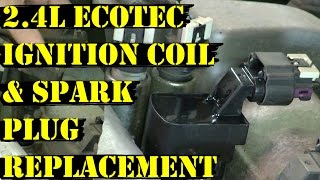
- Faulty Ignition Coil 🔴 High Probability Ignition coils are a very common failure item on many GM vehicles of this era, leading to misfires. The coil-on-plug design is subject to heat and vibration, causing the internal windings to fail over time.
How to confirm: Swap the ignition coil from cylinder 1 with another cylinder (e.g., cylinder 2). Clear the codes and drive. If the code changes to P0302, the ignition coil is faulty.
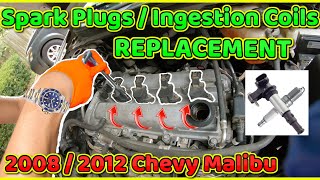
Typical fix: Replace the failed failed ignition coil. It's often recommended to replace all coils and spark plugs at the same time for preventative maintenance, especially on higher mileage vehicles.
Est. part cost: $25-$60 per coil - Worn or Fouled Spark Plug 🔴 High Probability
How to confirm: After trying the coil swap, swap the spark plug from cylinder 1 with another cylinder. If the misfire code follows the plug, the plug is bad. Visually inspect the plug for wear (worn electrode), oil fouling (wet and black), carbon tracking (a black line down the ceramic), or damage.
Typical fix: Replace the spark plug. It is best practice to replace all spark plugs as a set using OEM-recommended plugs (e.g., ACDelco Iridium).
Est. part cost: $5-$20 per plug - Faulty Fuel Injector 🟡 Medium Probability NHTSA complaints and GM bulletins suggest fuel system issues, including injectors, can be a problem, particularly on the 2.4L engine. An injector can become clogged with deposits or fail electrically.
How to confirm: Listen to the injector with a mechanic's stethoscope to ensure it's clicking. Test the injector's electrical signal with a noid light. You can also perform a resistance test on the injector with a multimeter. Swapping injectors between cylinders is also possible but more labor-intensive.
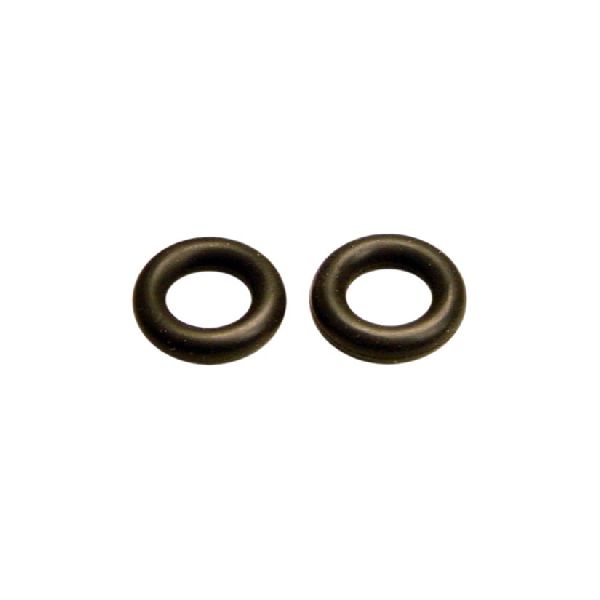
Typical fix: Replace the faulty fuel injector and its seals. Sometimes a professional fuel system cleaning can resolve a clogged injector.
Est. part cost: $50-$100 - Ignition Coil/Injector Wiring Damage 🟡 Medium Probability Specifically on the 2.4L engine, GM bulletin PIP-4462B warns that the wiring harness for the #1 fuel injector can chafe against the alternator or the upper radiator hose, causing a short to ground.
How to confirm: Visually inspect the wiring harness and connector going to the cylinder 1 ignition coil and, especially on 2.4L models, the fuel injector. Look for any signs of rubbing, melting, corrosion, or loose pins, paying close attention to the area near the alternator.
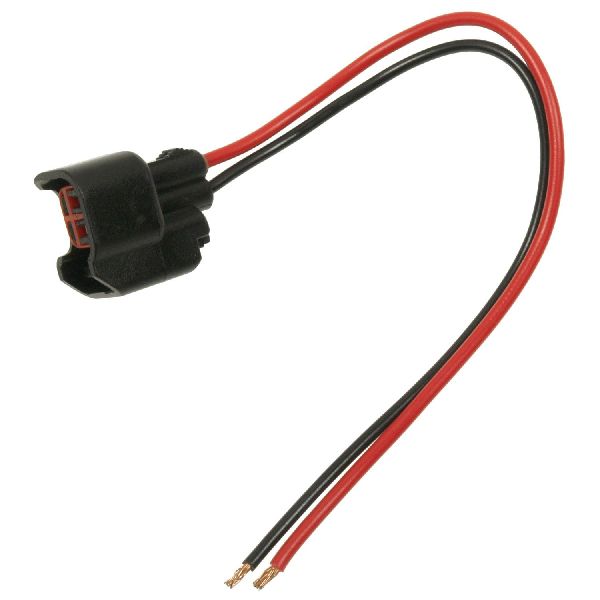
Typical fix: Repair the damaged section of the harness and protect it with convoluted tubing or re-route it to prevent future contact. Replace the connector pigtail if it's damaged.
Est. part cost: $15-$40 for a pigtail
Rare But Worth Checking
- Low Engine Compression: If ignition and fuel system checks don't find the issue, a mechanical problem like a bad valve, worn piston rings, or a head gasket leak could be the cause. A compression test is needed to confirm. One owner on a forum reported a bent exhaust valve was the ultimate cause after replacing plugs and coils.
- Intake Manifold Gasket Leak: A vacuum leak near the cylinder 1 intake runner can lean out the air/fuel mixture enough to cause a misfire isolated to that cylinder. This can be diagnosed with a smoke machine.
- Carbon Buildup on Valves: According to GM TSB 16-NA-383, excessive carbon buildup on intake and exhaust valves can cause them to stick, leading to misfires (P0301-P0308). This can be caused by fuel quality or other engine issues. A top engine cleaning procedure may be required.
Diagnosis Steps
- Read the code with an OBD-II scanner and confirm P0301 is present. Note any other codes, especially P0201 or P0300.
- Locate cylinder 1. On I4 engines, it's the cylinder furthest from the transmission (driver's side). On V6 engines, it's the front-most cylinder on the bank closer to the radiator.
- Swap the ignition coil from cylinder 1 with the coil from cylinder 2.
- Clear the codes and drive the vehicle until the check engine light returns.
- If the code is now P0302, the ignition coil is bad and needs replacement.
- If the code remains P0301, swap the spark plug from cylinder 1 with cylinder 2 and repeat the process.
- If the code is now P0302, the spark plug is bad.
- If the code is still P0301, and you have a 2.4L engine, carefully inspect the wiring harness for the cylinder 1 fuel injector, especially where it passes near the alternator and upper radiator hose, for signs of chafing.
- Use a noid light to confirm the fuel injector is receiving a pulse from the ECM.
- If ignition, plugs, and wiring appear good, consider a fuel system issue. Listen to the injector for a consistent clicking sound.
- If all else fails, perform an engine compression test on cylinder 1 to check for mechanical issues like bad valves, piston rings, or a failed head gasket.
Parts You'll Likely Need
- Ignition Coil
(OEM #12638824 (ACDelco D522C))— This is the most frequent cause of a single-cylinder misfire. Part number 12638824 (also known as D522C) supersedes 12629646 and fits the 2.2L and 2.4L I4 engines. V6 engines use a different part number.
Trusted brands: ACDelco, NGK, Denso
OEM price range: $45-$70
Aftermarket price range: $25-$50 - Spark Plug
(OEM #ACDelco 41-103 (for 2.4L))— Spark plugs are a routine maintenance item and a common cause of misfires as they wear out. Using the correct Iridium plug is recommended for longevity.
Trusted brands: ACDelco, NGK
OEM price range: $10-$20
Aftermarket price range: $5-$15 - Fuel Injector
(OEM #12613163)— A known issue, especially on the 2.4L engine, that can cause P0301, sometimes accompanied by P0201 due to electrical failure or clogging.
Trusted brands: ACDelco, Bosch
OEM price range: $80-$110
Aftermarket price range: $40-$75
Related Codes That Often Appear With This One
- P0300 — If the misfire is intermittent or begins to affect other cylinders, a P0300 (Random/Multiple Cylinder Misfire) may be stored as well.
- P0201 — This code for "Injector Circuit/Open - Cylinder 1" points directly to a problem with the fuel injector or its wiring. GM bulletin PIP-4462B specifically mentions this code appearing with P0301 on 2.4L engines due to a chafed harness.
- P0420 — If the misfire is ignored, unburned fuel will damage the catalytic converter, eventually leading to a P0420 (Catalyst System Efficiency Below Threshold) code.
Technical Service Bulletins (TSBs) & Recalls
- PIP-4462B: Not an official TSB but a Preliminary Information bulletin for technicians. Specifically calls out the 2.4L engine for a P0301/P0201 caused by the #1 fuel injector wiring harness chafing on the alternator or radiator hose.
- PIP3333C: Addresses intermittent engine misfires (P0300, P0301, P0304) that can occur during turns. It suggests fuel contamination may be the cause and recommends inspecting the fuel rail and tank.
- 16-NA-383: A general GM bulletin for various models/engines from 2000-2018. It notes that rough idle and misfire codes (P0300-P0308) can be caused by major carbon buildup on intake/exhaust valves, requiring a top engine cleaning procedure.
Platform-Specific Known Issues

- Fuel Injector Wiring Harness Chafing (2.4L Engine): GM issued a Preliminary Information bulletin (PIP-4462B) for 2008-2011 Malibus with the 2.4L engine regarding P0301/P0201 codes. It instructs technicians to inspect the #1 fuel injector wiring for chafing against the alternator or upper radiator hose. This is a specific, known failure point that should be checked early in the diagnosis.
- Fuel Contamination Misfi
Mechanic-Grade Diagnostic Values
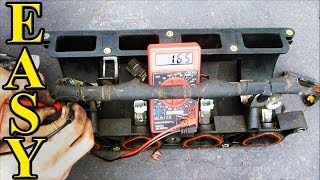
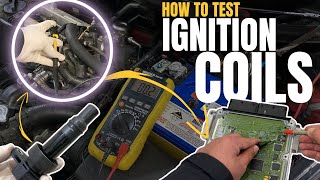
- Ignition Coil Primary Winding Resistance — expected: 0.4 to 2.0 Ohms. Failure: A reading outside this range, or an open loop (OL) reading, indicates a faulty coil.
- Ignition Coil Secondary Winding Resistance — expected: 6,000 to 10,000 Ohms. Failure: A reading significantly outside this range points to a failure in the secondary windings.
- Fuel Injector Resistance (Port Injection, e.g., 3.5L V6) — expected: 11 to 14 Ohms. Failure: A reading significantly different from the specification, or one that differs by more than 0.5 Ohms from other injectors, indicates a problem.
- Fuel Pressure (Port Injected Engines, e.g., 2.2L, 3.5L) — expected: 40.5-47 PSI (key on, engine off). Failure: Pressure below this range can cause a lean condition and misfires.
- Fuel Pressure (Direct Injected Engines, e.g., later 2.4L) — expected: 58-62 PSI (low-pressure side, from in-tank pump). Failure: Low pressure from the in-tank pump will starve the high-pressure fuel pump, causing misfires and other fuel system codes.
Scan Tool Commands That Help
- GM Tech2 / GDS2: Cylinder Power Balance Test — This function allows the technician to sequentially disable each fuel injector while monitoring the RPM drop for each cylinder. If disabling cylinder 1 causes little or no change in RPM compared to other cylinders, it confirms that cylinder 1 is not contributing power, isolating the fault.
- GM Tech2 / GDS2: Fuel Injector Balance Test — This test fires a single injector for a specific duration and measures the corresponding drop in fuel rail pressure. By comparing the pressure drop for cylinder 1 against the others, it can identify a clogged or weak injector that isn't flowing enough fuel.
- Professional Scan Tool: View Misfire Counters (Mode $06) — Before a misfire is bad enough to set a code, the ECM tracks it. Viewing the live or historical misfire counts for each cylinder can confirm that cylinder 1 is the sole source of the issue, even if the Check Engine Light is not currently on.
Wiring & Ground Locations
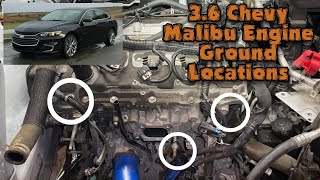
- G107 — On the lower left side of the engine block (for 2.4L engine).. This is a primary engine ground. A loose or corroded connection here can disrupt the ECM and ignition system's ground path, causing erratic behavior, sensor misreadings, and misfires.
- G106 — On the left rear of the engine block (for 2.4L engine).. Another critical engine ground point. A poor connection can cause unstable voltage to sensors and the ECM, contributing to misfire detection.
- G103 — On the cowl at the left rear of the engine compartment, near the brake booster.. This ground serves the Body Control Module (BCM) and the underhood fuse block. While less direct, a fault here can cause widespread electrical issues that may manifest as engine management problems.
- Cylinder 1 Injector/Coil Harness — On 2.4L engines, the harness runs near the alternator and upper radiator hose.. This is a known chafe point per GM bulletin PIP-4462B. The harness can rub through, causing a short in the injector or coil circuit, directly leading to a P0301 and often a P0201.
Real Owner Repair Stories
- YouTube video comment/forum discussion paraphrase (2009 Chevrolet Malibu 2.4L) — P0301 misfire code, rough idle.
❌ Tried (didn't work) Replaced spark plug for cylinder 1, Replaced ignition coil for cylinder 1, Swapped fuel injectors between cylinders
✅ What actually fixed it The plastic intake manifold was found to have a small crack near the runner for cylinder 1. This created a vacuum leak isolated to that cylinder. Replacing the intake manifold resolved the P0301 code. - ChevyMalibuForum.com user reports (2011 Chevrolet Malibu 2.4L, high mileage) — Intermittent P0301, P0300, hesitation, and eventually codes P0011/P0014.
❌ Tried (didn't work) Replaced spark plugs and ignition coils.
✅ What actually fixed it The issue was a failing intake Variable Valve Timing (VVT) solenoid. It was sticking, causing incorrect valve timing for that bank, which led to misfires. Replacing both the intake and exhaust VVT solenoids and performing an oil change fixed the problem.
Model Year Variations Within This Range
- 2008-2012: The 2.4L Ecotec engine underwent a significant change. Early models (approx. 2008-2009, RPO code LE5) used conventional multi-port fuel injection. Later models (approx. 2010-2012, RPO codes LAF/LEA) switched to direct injection (DI). This changes the fuel system diagnosis; DI engines have both a low-pressure in-tank pump and a high-pressure, cam-driven pump on the engine.
- 2009+: For the 2009 model year, the 2.4L engine was paired with a more efficient 6-speed automatic transmission (the 6T40), replacing the previous 4-speed automatic. This does not directly affect the cause of P0301 but is a key vehicle difference.
Helpful Videos


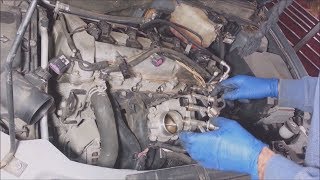
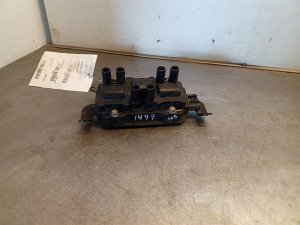
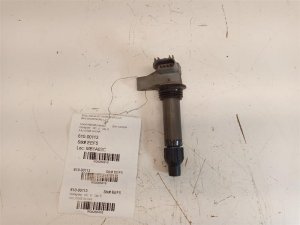
Used OEM Parts in Stock

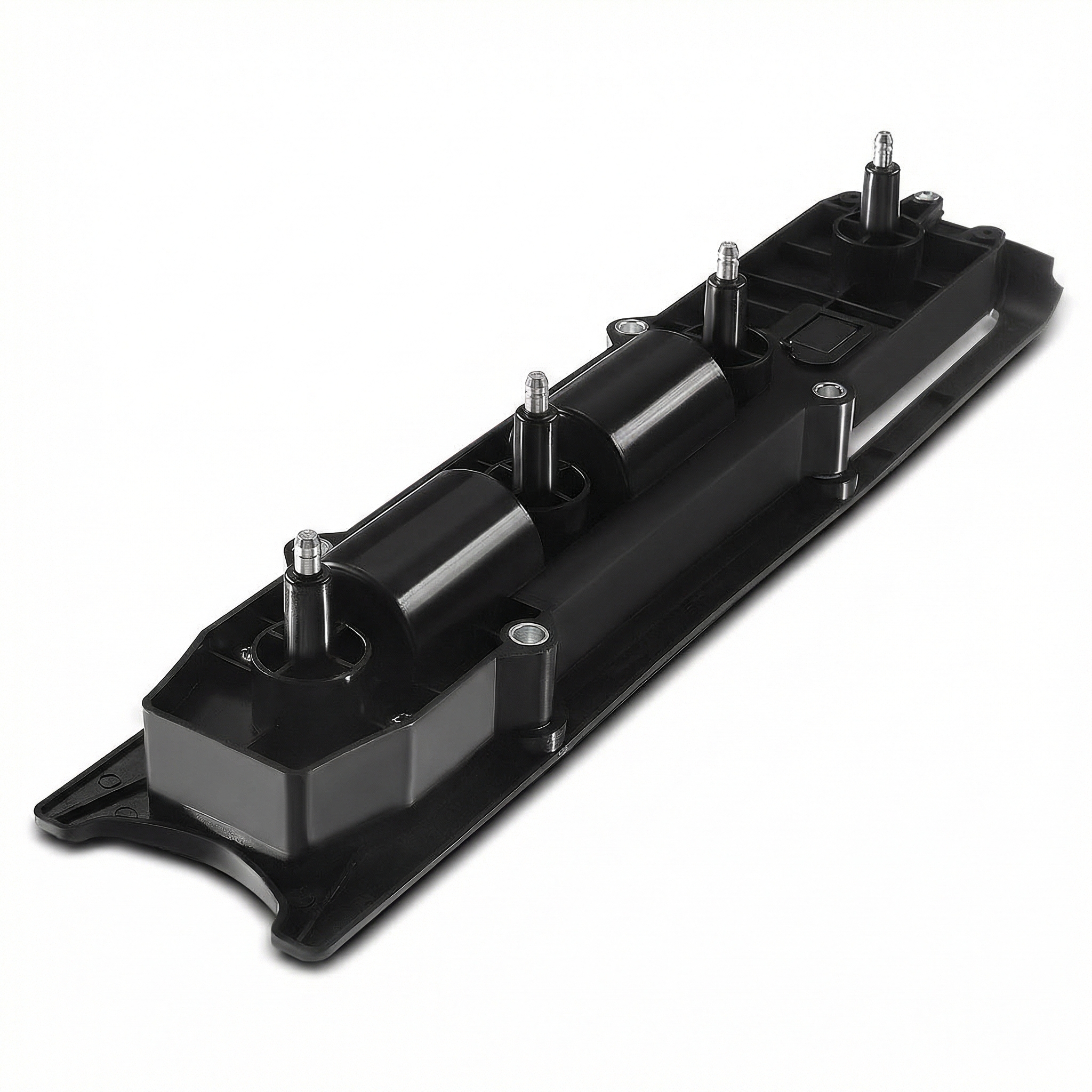


New Aftermarket Parts Available


The information in this article is provided for general reference and educational purposes only. Vehicle specifications, procedures, and part compatibility can vary by production date, trim level, and region. Always consult your vehicle's factory service manual and verify part numbers before purchasing or performing repairs. Safety-critical components such as airbags, seat belts, and braking systems should be installed by a qualified professional.
- Chevrolet MALIBU:
- 🎬 Helpful Videos
- 🛍️ Shop This Part
- What's Unique About the 2004-2011 Chevrolet MALIBU
- Diagnostic Flowchart
- Symptoms You May Notice
- Most Likely Causes
- Rare But Worth Checking
- Diagnosis Steps
- Parts You'll Likely Need
- Related Codes That Often Appear With This One
- Technical Service Bulletins (TSBs) & Recalls
- Platform-Specific Known Issues
- Mechanic-Grade Diagnostic Values
- Scan Tool Commands That Help
- Wiring & Ground Locations
- Real Owner Repair Stories
- Model Year Variations Within This Range
- 🎟️ Get 5% Off