

P0301 on 2011-2015 Chevrolet Cruze: Cylinder 1 Misfire Causes and Fixes
On a 2011-2015 Chevy Cruze, P0301 is most often caused by a faulty ignition coil pack or a worn spark plug. For the 1.4L Turbo engine, a failed PCV system in the valve cover is also a very common culprit. Replacing the coil pack and spark plugs is a straightforward DIY fix.
- P0301 on a Chevy Cruze means cylinder 1 is misfiring.
- For a quick diagnosis, swap the spark plug from cylinder 1 to cylinder 2. If the code changes to P0302, you need a new spark plug.
- The most common parts to fail are the ignition coil pack and spark plugs. Replace them together.
- On the 1.4L Turbo engine, always check the PCV system. A hissing sound from the valve cover or a missing check valve in the intake manifold are common causes of misfires.
- Do not ignore a flashing check engine light, as it can lead to costly catalytic converter damage.
What's Unique About the 2011-2015 Chevrolet CRUZE

The 2011-2015 Chevrolet Cruze, especially the popular 1.4L Turbo model, has specific weak points that often lead to misfire codes like P0301. The Positive Crankcase Ventilation (PCV) system is integrated into the valve cover, and a rubber diaphragm inside is known to tear, creating a large vacuum leak that causes misfires. Additionally, a small check valve in the intake manifold can fail and get ingested by the engine, leading to similar issues. These PCV-related failures are a very common root cause for misfires on this platform, often more so than on other vehicles, and frequently trigger a P0171 (System Too Lean) code alongside the misfire code.
Diagnostic Flowchart
Tap your situation to follow the diagnostic path that matches what you're seeing on this vehicle.
Symptoms You May Notice

- Rough or shaky idle.
- Engine hesitation or stumbling during acceleration.
- Noticeable loss of power.
- Flashing or solid Check Engine Light.
- Reduced fuel economy.
- Smell of unburned gasoline from the exhaust.
- Service StabiliTrak or Traction Control warning lights may appear.
- Audible hissing or whistling sound from the top of the engine at idle.
- Increased oil consumption.
- High-pitched chirp from the crankcase seal area at idle.
- Replacing only the spark plugs when the ignition coil pack is the actual cause of failure.
- Replacing the valve cover for a PCV issue without checking for the missing check valve in the intake manifold, leading to a repeat failure of the new valve cover diaphragm.
Most Likely Causes

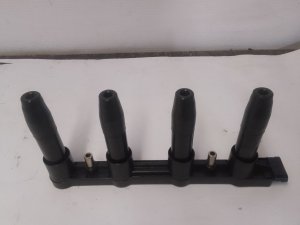
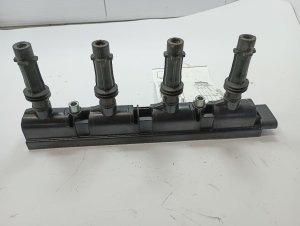
- Failed Ignition Coil Pack 🔴 High Probability The single 'cassette' style coil pack used on both the 1.4L and 1.8L engines is a very common failure item, often after 100,000 miles. Heat from the engine can cause the internal electronics to fail or the boots to degrade, leading to arcing and misfires.
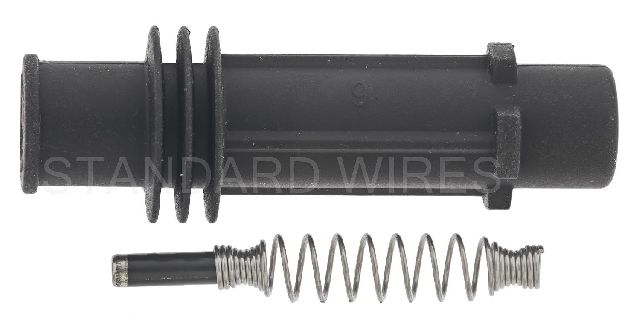
How to confirm: Inspect the coil pack boot for cylinder 1 for signs of corrosion, oil contamination, or white/brown 'arc tracking' marks, which indicate electricity is escaping. Since individual coils cannot be swapped for testing, replacement of the entire pack is the most common diagnostic step after checking spark plugs.
Typical fix: Replace the entire ignition coil pack assembly. It is highly recommended to replace all spark plugs at the same time and apply a small amount of dielectric grease to the inside of the new coil boots.
Est. part cost: $60-$150 - Worn or Fouled Spark Plug 🔴 High Probability Spark plugs are a regular maintenance item. On the 1.4L turbo engine, oil leaks from a failing valve cover gasket can foul the plugs in their wells, causing a misfire.
How to confirm: Remove the spark plug from cylinder 1 and inspect it. Look for a cracked insulator, heavy carbon buildup, or oil fouling. A simple diagnostic test is to swap the cylinder 1 spark plug with the one from cylinder 2, clear the codes, and see if the misfire code changes to P0302. If it does, the spark plug is the problem.
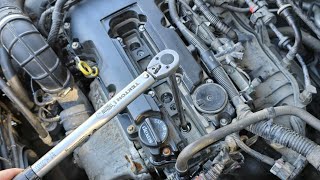
Typical fix: Replace the spark plug. It is best practice to replace all four spark plugs as a set. 🎬 Watch: Step-by-step guide to replacing your spark plugs and coil pack. For the 1.4L Turbo, the recommended gap is 0.028 in (0.7 mm) and the torque spec is 18 lb-ft. For the 1.8L, the official gap is also ~0.028 in, with a torque spec of around 18-20 lb-ft (25 Nm).
Est. part cost: $20-$50 for a set of four - Failed PCV System (Valve Cover or Intake Manifold Check Valve) 🔴 High Probability This is a well-documented design flaw on the 1.4L Turbo engine. A diaphragm in the valve cover tears, or a check valve in the intake manifold fails, creating a large vacuum leak. This lean condition often triggers a P0171 code alongside misfire codes. This issue is so prevalent that GM issued TSB PIP5197J covering the diagnosis.
How to confirm: With the engine running, listen for a loud hissing or whistling noise from the top of the valve cover. You can also try to remove the oil filler cap; if it's held on by strong vacuum, the diaphragm is torn. To check the intake manifold valve, remove the PCV hose connecting the valve cover to the intake manifold and look inside the port for a small orange or black check valve; if it's missing, the intake manifold has failed internally.
Typical fix: If the diaphragm is torn, the entire valve cover must be replaced. If the intake check valve is missing, the official fix is to replace the intake manifold. A popular, more permanent alternative is to install an aftermarket external PCV fix kit (e.g., from CruzeKits.com) which bypasses the faulty internal valve.
Est. part cost: $60-$200 for a valve cover, $150+ for an intake manifold, $40-$80 for an external PCV kit. - Faulty Fuel Injector 🟡 Medium Probability
How to confirm: Listen to the injector with a mechanic's stethoscope to ensure it's clicking. You can also swap the cylinder 1 injector with another cylinder's injector to see if the misfire follows. This may also be accompanied by a specific injector circuit code, like P0201.
Typical fix: Replace the faulty fuel injector.
Est. part cost: $40-$100
Rare But Worth Checking
- Low Engine Compression: Some 1.4L Turbo engines were susceptible to cracked pistons, which would cause a complete loss of compression and a persistent misfire. A compression test showing very low or zero PSI in cylinder 1 after ruling out other causes points to a serious internal engine problem. This can also be caused by burnt valves or failed lifters/rocker arms.
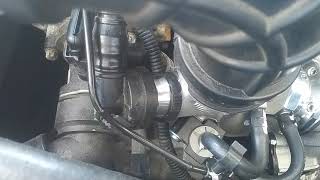
- Leaking Thermostat Housing Connector: An aftermarket thermostat housing can leak coolant into the engine coolant temperature sensor connector, which can travel down the wiring harness and short out the ignition coil, causing it to melt or fail repeatedly on cylinder 1. 🎬 Watch: How a leaking thermostat housing can melt your coil rail.
Diagnosis Steps
- Retrieve the trouble codes with an OBD-II scanner. Note if any other codes like P0171 or P0351 are present.
- Determine if the Check Engine Light is solid or flashing. A flashing light indicates a severe misfire that requires immediate attention to prevent catalytic converter damage.
- Swap the spark plug from cylinder 1 with another cylinder (e.g., cylinder 2). Clear the codes and drive the vehicle. If the code changes to P0302, the spark plug is faulty.
- If the code remains P0301, inspect the ignition coil pack. Check the boot for cylinder 1 for damage, corrosion, or oil. If suspect, replace the entire coil pack and all spark plugs.
- For 1.4L Turbo engines, inspect the PCV system. With the engine running, listen for hissing and check for strong vacuum at the oil filler cap (it will be difficult to remove).
- Remove the PCV tube from the intake manifold and visually inspect for the presence of the orange or black check valve inside the port. If it is missing, the intake manifold has failed.
- If ignition and PCV systems are good, check the fuel injector on cylinder 1. Listen for its operation and consider swapping it with another cylinder to see if the misfire moves.
- If all else fails, perform an engine compression test on cylinder 1 to check for internal mechanical problems like bad valves or a cracked piston.
Parts You'll Likely Need
- Ignition Coil Pack
(OEM #25198623 (for 1.4L), 55561655 (for 1.8L))— This is one of the most common failure points for a P0301 misfire on both the 1.4L and 1.8L engines.
Trusted brands: ACDelco, Delphi
OEM price range: $100-$150
Aftermarket price range: $60-$100 - Spark Plugs (Set of 4)
(OEM #25193473 (ACDelco 41-103 Iridium for 1.4L))— Spark plugs are a routine wear item and are often the simplest fix for a single-cylinder misfire. They should always be replaced when installing a new coil pack.
Trusted brands: ACDelco, NGK
OEM price range: $40-$60 (set of 4)
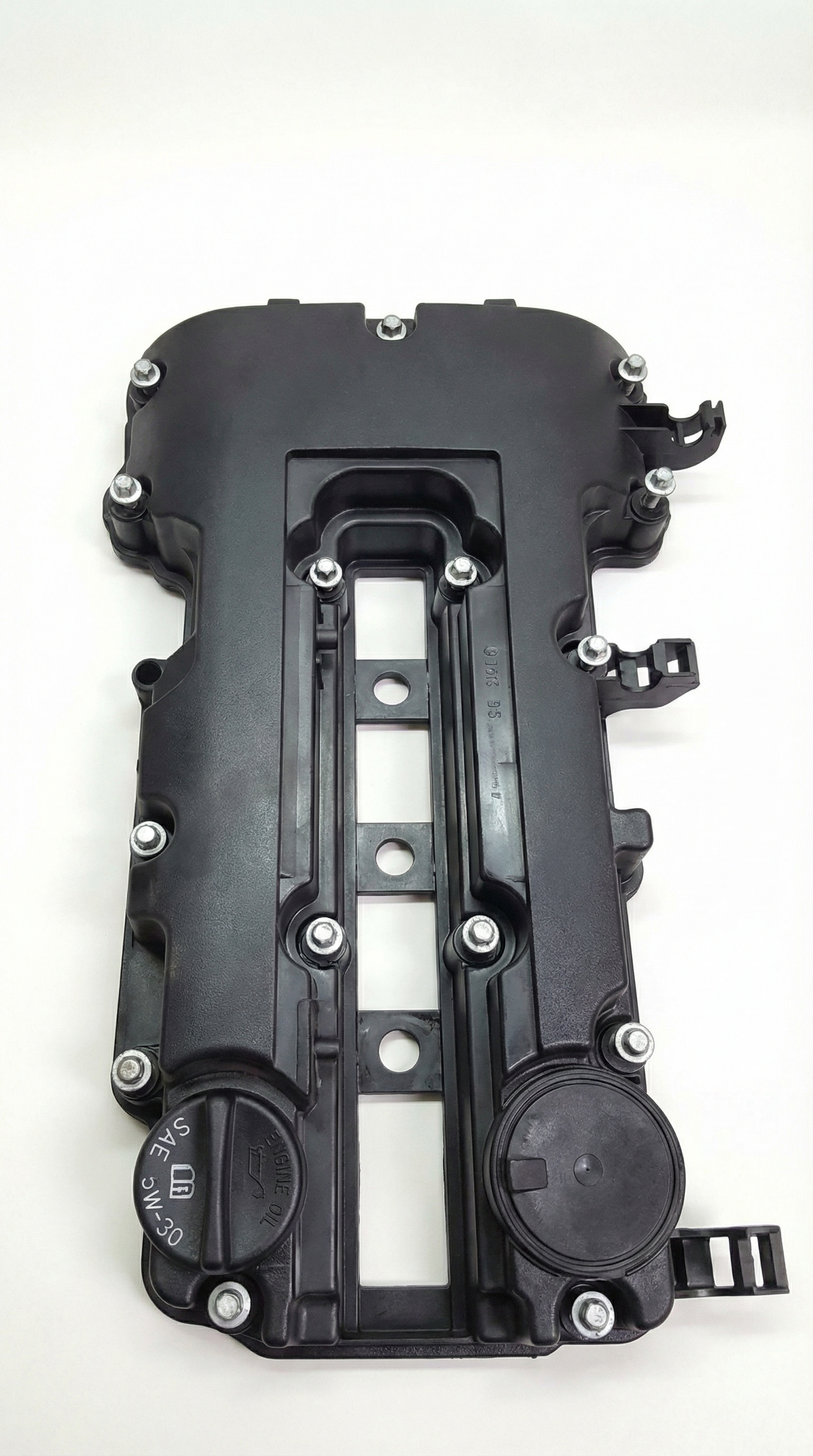
Aftermarket price range: $20-$40 (set of 4) - Valve Cover / Camshaft Cover (1.4L)
(OEM #25198874 (latest design))— The integrated PCV diaphragm is a known high-failure part on the 1.4L Turbo, causing a vacuum leak that leads to P0301 and P0171 codes.
Trusted brands: ACDelco (GM Genuine), Dorman
OEM price range: $120-$200
Aftermarket price range: $60-$100
Related Codes That Often Appear With This One
- P0300 — If the underlying issue, like a vacuum leak from the PCV system, becomes severe enough, it can cause misfires on multiple cylinders, leading to a P0300 (Random Misfire) code.
- P0171 — This code for 'System Too Lean' is very commonly seen with P0301 on the 1.4L Turbo engine. It's a strong indicator that the misfire is caused by a vacuum leak, most likely from the PCV system in the valve cover or intake manifold.
- P0351 — This code indicates a fault in the ignition coil 'A' (Cylinder 1) primary or secondary circuit. It often appears with P0301 and points directly to a problem with the ignition coil pack or its wiring connector.
Technical Service Bulletins (TSBs) & Recalls
- A GM Preliminary Information bulletin addressing concerns of oil consumption, smoke, and various DTCs including P0171 and P0300 on 1.4L LUJ/LUV engines. It details checking the PCV system, including the camshaft cover (valve cover) orifice and the intake manifold non-return valve, as a primary diagnostic step for these issues.
- A GM TSB that addresses intermittent engine misfires with codes P0300, P0301, and/or P0304. It instructs technicians to follow standard diagnostics first, implying these codes can have common causes.
Platform-Specific Known Issues
- A Technical Service Bulletin (TSB), #PIP3333C, was issued for intermittent engine misfires and codes including P0301 on 2011-2014 models, indicating that if standard diagnostics do not find the cause, further investigation is required.
Mechanic-Grade Diagnostic Values
- Low-Pressure Fuel Pump Pressure — expected: 85.5 - 89 PSI (590 - 614 kPa). Failure: Pressure below this range can indicate a weak fuel pump, causing lean conditions and misfires.
- Ignition Coil Primary Resistance — expected: ~1.0 Ohm. Failure: A reading significantly higher or lower than 1.0 Ohm suggests a fault in the coil's primary windings.
- Ignition Coil Secondary Resistance — expected: ~12,000 - 13,000 Ohms (12-13 kOhms). Failure: Readings outside this range indicate a failure in the secondary windings, which will result in a weak or no spark.
- Scan Tool Fuel Trims (with PCV failure) — expected: Normal Short Term (STFT) and Long Term (LTFT) are close to 0%.. Failure: With a PCV-related vacuum leak, fuel trims will be very high at idle (often +20% or more) and will decrease as engine RPM increases.
Hidden / Shadow Codes Worth Checking
- P0316: Misfire Detected on Startup (First 1000 Revolutions). This code often accompanies a primary misfire code like P0301. (see via Standard OBD-II scanner. It helps pinpoint if the misfire is most prominent when the engine is cold.)
Scan Tool Commands That Help
- GDS2 / Tech2 (or advanced aftermarket scanner): Misfire Graphic / Misfire Counters — Use this to view live and historical misfire counts for each cylinder. This is crucial for confirming that the misfire is isolated to cylinder 1 and for verifying that a repair has been successful.
- GDS2 / Tech2 (or advanced aftermarket scanner): Crankshaft Position (CKP) Variation Learn — This procedure should be performed after any major engine work, including replacing the crankshaft sensor, to allow the ECM to learn the new sensor's tolerances and accurately detect misfires. Failure to do so can sometimes cause false misfire codes.
Wiring & Ground Locations
- G103 / G105 — Located on the left (driver's side) shock tower in the engine compartment.. These are primary ground points for the engine control module (ECM) and various engine sensors. A loose or corroded connection here can cause erratic sensor readings and phantom codes, including misfires.
- Ignition Coil Connector — The 7-pin connector on the ignition coil pack itself.. The wires in this connector can become brittle and break. More critically, corrosion within the ECM connector (where the other end of the harness plugs in) can short the primary control circuit for cylinder 1, causing codes P0301 and P0351 and destroying the new coil pack.
- Negative Battery Cable/Ground — The main ground cable from the battery to the chassis and engine block.. A known issue on the Cruze is a faulty negative battery cable, which contains an integrated sensor. A failure can cause a wide range of electrical issues, including StabiliTrak warnings and random, hard-to-diagnose misfire codes.
Real Owner Repair Stories
- Reddit user in r/cruze (2012 Chevy Cruze LT 1.4L with 300,000 km) — Flashing check engine light, shaking engine.
❌ Tried (didn't work) Replaced spark plugs, Replaced ignition coil pack
✅ What actually fixed it The issue was diagnosed as a severe internal engine problem. A compression test revealed 0 PSI in cylinder 1, while other cylinders were 125-150 PSI. The likely cause was a burnt valve or a cracked piston, requiring engine disassembly to fix. - YouTube video from Automotive Test Solutions (2015 Chevy Cruze 1.4L) — P0301, P0351, and P2301 codes stored.
❌ Tried (didn't work) Initial diagnosis pointed towards a bad coil pack.
✅ What actually fixed it Corrosion inside the ECM connector was shorting three terminals together. This short damaged the ignition module (coil pack). The final fix required cleaning the corrosion from the connector AND replacing the ignition coil pack that was damaged by the short circuit. - YouTube video from 'CHEVY CRUZE MISFIRE FIX' (2014 Chevy Cruze) — Repeatedly melting the new ignition coil on cylinder 1.
❌ Tried (didn't work) Replacing the ignition coil pack (it failed twice).
✅ What actually fixed it The root cause was an aftermarket thermostat housing that was leaking coolant into the engine coolant temperature sensor connector. The coolant wicked down the wiring harness and shorted out the ignition coil circuit for cylinder 1. The fix was to replace the thermostat housing with an OEM part and clean the contaminated connector.
When the Usual Fixes Don't Work
- In some high-mileage cases (over 180,000 miles / 300,000 km), owners have replaced the common culprits—spark plugs, ignition coil, and even the valve cover for the PCV system—only to find the P0301 misfire persists. A subsequent compression test then reveals 0 PSI in cylinder 1. The actual cause in these instances was a catastrophic internal engine failure, such as a cracked piston or a burnt valve, which requires a major engine teardown or replacement to fix.
OEM Part Supersession History
55573746→25198498, then 25198874— Revisions to the valve cover assembly, likely to improve the durability of the integrated PCV diaphragm that is a common failure point.
Heads up: The latest part number, 25198874, is the recommended replacement for all 2011-2015 1.4L Cruze models to get the most updated design.
Model Year Variations Within This Range
- 2011-2012: Early models were more prone to some of the initial design flaws. For example, the USB port was optional in 2011-2012 but became standard in 2013. While the core engine issues are similar across the range, later models (2015) are reported to have fewer overall complaints.
Helpful Videos
Used OEM Parts in Stock

New Aftermarket Parts Available


The information in this article is provided for general reference and educational purposes only. Vehicle specifications, procedures, and part compatibility can vary by production date, trim level, and region. Always consult your vehicle's factory service manual and verify part numbers before purchasing or performing repairs. Safety-critical components such as airbags, seat belts, and braking systems should be installed by a qualified professional.
- Chevrolet CRUZE:
- 🎬 Helpful Videos
- 🛍️ Shop This Part
- What's Unique About the 2011-2015 Chevrolet CRUZE
- Diagnostic Flowchart
- Symptoms You May Notice
- Most Likely Causes
- Rare But Worth Checking
- Diagnosis Steps
- Parts You'll Likely Need
- Related Codes That Often Appear With This One
- Technical Service Bulletins (TSBs) & Recalls
- Platform-Specific Known Issues
- Mechanic-Grade Diagnostic Values
- Hidden / Shadow Codes Worth Checking
- Scan Tool Commands That Help
- Wiring & Ground Locations
- Real Owner Repair Stories
- When the Usual Fixes Don't Work
- OEM Part Supersession History
- Model Year Variations Within This Range
- 🎟️ Get 5% Off