

P0301 on 2006-2010 Chevrolet Cobalt: Cylinder 1 Misfire Causes and Fixes
A P0301 code on a 2006-2010 Chevy Cobalt almost always points to a bad spark plug or a failed ignition coil for cylinder 1. On 2.2L models, the entire ignition module/cassette assembly is a common failure point. Replacing all four spark plugs and the single faulty coil (or cassette) is a common, affordable DIY fix.
- P0301 means cylinder 1 is misfiring; this is the cylinder on the far left (passenger side) of the engine.
- The most likely causes are a bad spark plug or a failed ignition coil.
- A simple diagnostic step is to swap the ignition coil from cylinder 1 with another cylinder to see if the misfire code follows it.
- Do not ignore a flashing check engine light, as this indicates a severe misfire that can quickly damage your catalytic converter.
- Always replace spark plugs as a full set to ensure even performance.
What's Unique About the 2006-2010 Chevrolet COBALT

The 2006-2010 Cobalt uses the Ecotec engine family, but the ignition system design varies significantly by year and engine, which is critical for diagnosis. The 2006 2.2L L61 engine uses a single ignition cassette that houses two coils and an integrated Ignition Control Module (ICM). This entire assembly is a notorious failure point due to heat soak. 🎬 Watch: How to test and replace the 2006 ignition module. A failure often causes misfires on paired cylinders (1 and 4, or 2 and 3). Starting in 2007, the 2.2L L61/LAP and the 2.4L LE5 switched to an individual coil-on-plug (COP) system, though they still use a separate ICM that is prone to failure. The 2.0L LNF turbo engine in the SS also uses a COP system. This design difference means that on a 2006 2.2L, you cannot swap a single coil to diagnose a misfire, whereas on 2007-2010 models, you can.
Diagnostic Flowchart
Tap your situation to follow the diagnostic path that matches what you're seeing on this vehicle.
Symptoms You May Notice
- Rough or shaky idle
- Hesitation or stumbling during acceleration
- Solid or flashing Check Engine Light
- Reduced fuel economy
- Smell of raw fuel from the exhaust
- Engine jerking or bucking under load
- Loss of power
- Replacing oxygen (O2) sensors. An O2 sensor will report the effects of a misfire (like a rich or lean condition), but it is not the cause of a single-cylinder misfire code like P0301.
Most Likely Causes

- Worn or Fouled Spark Plug 🔴 High Probability Spark plugs are regular wear items. An old plug with a wide gap or carbon/oil fouling can fail to produce a strong enough spark. The recommended OEM plugs are typically ACDelco Iridium models. Using incorrect plugs or failing to check the gap can lead to misfires.
How to confirm: Remove the spark plug from cylinder 1 and inspect it. Look for a worn electrode, heavy carbon deposits, oil fouling, or a cracked insulator. Compare it to the plugs in other cylinders. The correct gap for the common ACDelco 41-103 Iridium plug is 0.043 inches.
Typical fix: Replace all four spark plugs. It is recommended to replace them as a set. Use OEM-spec Iridium plugs for longevity.
Est. part cost: $30-$60 for a set of four Iridium plugs - Failed Ignition Coil or Ignition Control Module (ICM) 🔴 High Probability The Cobalt's ignition system is a frequent failure point. For 2006 2.2L models, the entire coil/ICM cassette fails as a unit. For 2007+ models with individual coils, either a single coil or the separate ICM can fail due to heat and vibration. It's common practice to replace the ICM and coil pack together on cassette-style systems.
How to confirm: For individual coil systems (2007+), swap the coil from cylinder 1 with another cylinder (e.g., cylinder 2). Clear the codes and drive. If the code changes to P0302, the coil is bad. This test is not possible for 2006 2.2L cassette-style systems; if plugs are good, the entire cassette/ICM assembly is the next suspect.
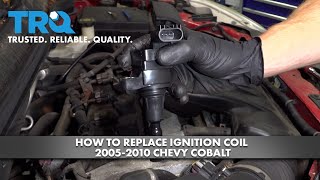
Typical fix: For 2007+ models, replace the single faulty ignition coil. 🎬 See this walkthrough for replacing an individual ignition coil. For 2006 2.2L models, replace the entire ignition coil and module assembly.
Est. part cost: $40-$150 - Clogged or Faulty Fuel Injector 🟡 Medium Probability Fuel injectors can become clogged with deposits over time, especially if lower-quality fuel is used. This prevents them from delivering the correct amount of fuel to the cylinder.
How to confirm: A more involved diagnostic step is to swap the fuel injector from cylinder 1 with another cylinder (e.g., cylinder 2). Clear the codes and drive. If the code changes to P0302, the injector is faulty. This is more labor-intensive than swapping a coil. Be aware that on LNF engines, the injector seals should be replaced anytime an injector is removed.
Typical fix: Replace the faulty fuel injector. It's good practice to replace the O-rings and seals on any injectors that are removed.
Est. part cost: $50-$100 - Vacuum Leak ⚪ Low Probability A leak in the intake manifold gasket or a vacuum hose near cylinder 1 can introduce unmetered air, leaning out the air-fuel mixture and causing a misfire. The injector O-rings can also be a source of a vacuum leak if they are old and brittle.
How to confirm: With the engine running, carefully spray carburetor cleaner or starter fluid around the intake manifold gasket and fuel injector base near cylinder 1. If the engine RPM changes or stumbles, a leak is present. A professional smoke test is the most definitive method.
Typical fix: Replace the leaking gasket or hose. If the injector O-rings are leaking, they should be replaced.
Est. part cost: $10-$60
Rare But Worth Checking
- Low Engine Compression: If ignition and fuel components are confirmed to be good, a mechanical issue like worn piston rings, a leaking valve, or a failing head gasket could be the cause. A compression test is needed to diagnose this. One forum user with a persistent P0301 after swapping parts was advised to perform a compression/leak-down test next.
- Faulty Crankshaft Position Sensor: A failing crankshaft position sensor can send incorrect timing information to the PCM, leading to intermittent misfires. This will often be accompanied by other codes (like P0300) or stalling issues.
- Fuel Contamination: TSB PIP3333C specifically notes that intermittent misfires on cylinder 1 (especially during left turns) can be caused by fuel contamination becoming trapped in the returnless fuel rail. The fix involves cleaning the fuel system and advising the owner to use Top Tier gasoline.
Diagnosis Steps
- Read the trouble codes with an OBD-II scanner and note any other codes present. Freeze frame data can show engine conditions when the misfire occurred.
- Inspect the spark plug in cylinder 1 for wear, damage, or fouling. If it's old, incorrect, or in poor condition, replace all four plugs with OEM spec plugs (e.g., ACDelco 41-103) and ensure they are gapped correctly.
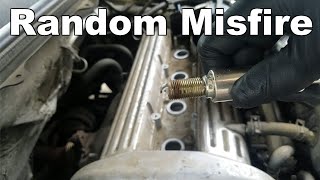
- If the vehicle is a 2007 or newer model, swap the ignition coil from cylinder 1 to cylinder 2. Clear the codes and see if the misfire code moves to P0302. If it does, the coil is bad. 🎬 Watch a mechanic diagnose a misfire on a 2007 Cobalt. If the vehicle is a 2006 2.2L, this step is not possible.
- If the misfire remains on cylinder 1 (or if it's a 2006 2.2L), inspect the wiring and connector for the ignition coil and fuel injector for any visible damage, corrosion, or looseness.
- Check for vacuum leaks near the cylinder 1 intake runner and fuel injector base by spraying carb cleaner and listening for RPM changes.
- If the issue persists, swap the fuel injector from cylinder 1 to cylinder 2. Clear the codes and see if the misfire moves to P0302. If it does, the injector is bad.
- If the misfire still remains on cylinder 1, perform an engine compression test on all cylinders to check for mechanical engine problems. Compare the reading from cylinder 1 to the others. A cold compression test on a Saturn Ion with a P0301 showed 190 PSI across all cylinders, indicating the next step would be a hot compression test.
Parts You'll Likely Need

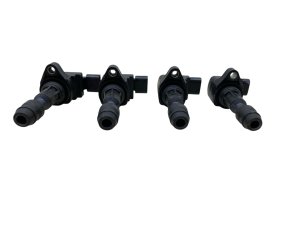
- Ignition Coil (Individual, Coil-on-Plug)
(OEM #12629646 (Supersedes 12578224), ACDelco UF491)— For 2007-2010 models, this is a top cause of P0301. The coil provides high voltage for the spark plug.
Trusted brands: ACDelco, Delphi, NGK, Denso
OEM price range: $45-$70
Aftermarket price range: $30-$55 - Spark Plugs (Set of 4)
(OEM #ACDelco 41-103 (Iridium))— Spark plugs are a maintenance item and a worn or fouled plug is a very common cause of a single-cylinder misfire. The 41-103 is the specified Iridium plug for many Cobalt engines.
Trusted brands: ACDelco, NGK
OEM price range: $8-$15 per plug
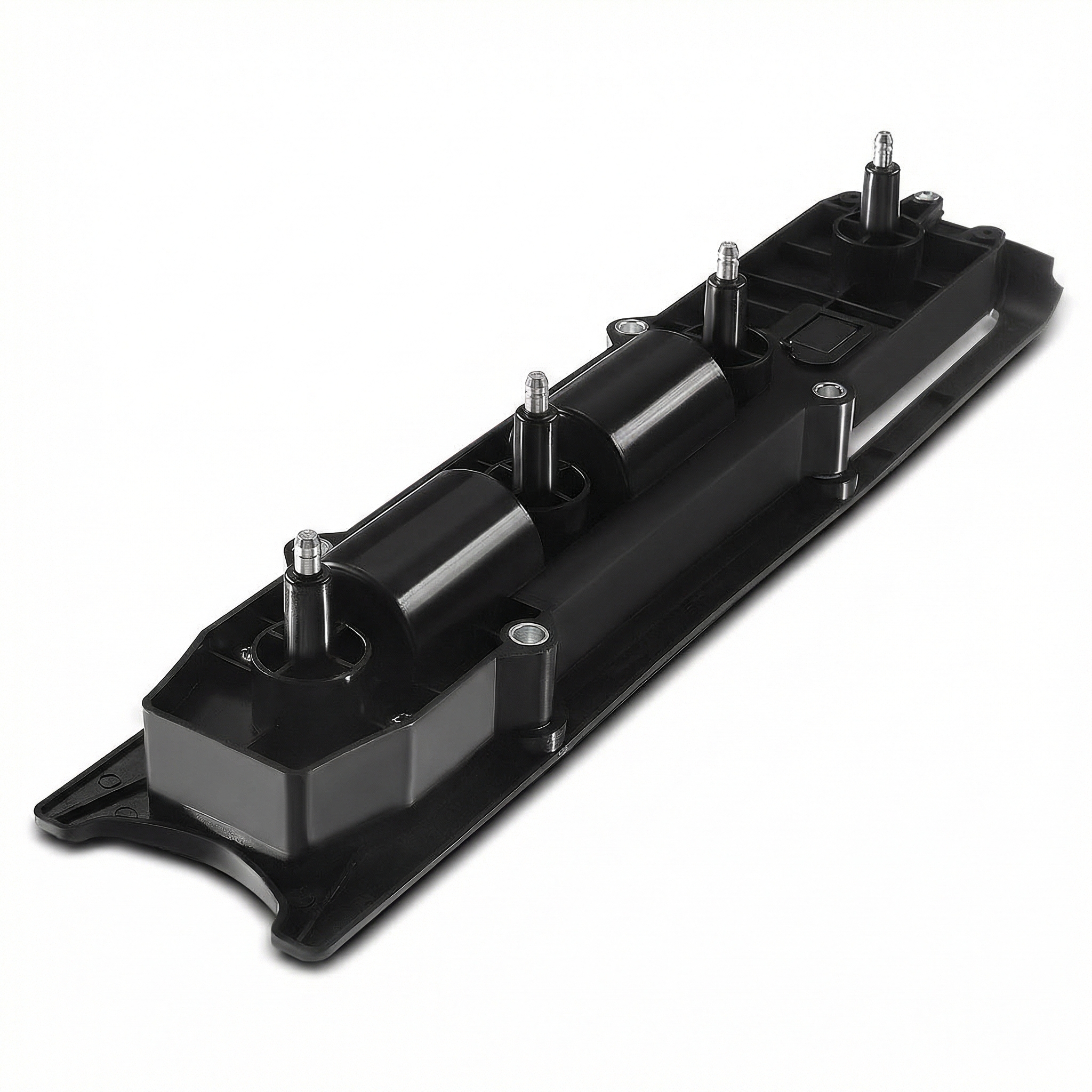
Aftermarket price range: $5-$10 per plug - Ignition Coil and Module Assembly (Cassette Style)
(OEM #ACDelco D597A (Coil Pack), ACDelco D521C (ICM))— On 2006 2.2L models, the entire cassette with the integrated ICM is a very common failure point causing misfires. It is often recommended to replace both components together.
Trusted brands: ACDelco, Delphi
OEM price range: $100-$180 for assembly
Aftermarket price range: $70-$120 for assembly - Fuel Injector
(OEM #217-1634 (ACDelco #))— If the ignition system is working correctly, a clogged or failed fuel injector is the next most likely cause.
Related Codes That Often Appear With This One
- P0300 — If the misfire is intermittent or affects multiple cylinders, a P0300 (Random/Multiple Cylinder Misfire) may be stored alongside P0301. This can point to a failing ICM on models where it controls multiple coils, or a widespread issue like a vacuum leak or fuel delivery problem.
- P0302, P0303, P0304 — If other cylinder-specific misfire codes are present, it points towards a problem common to all cylinders, such as low fuel pressure, a major vacuum leak, or poor quality fuel.
Technical Service Bulletins (TSBs) & Recalls
- PIP3333C: Addresses intermittent engine misfires (DTCs P0300, P0301, P0304) that may occur during turns. The cause is identified as potential fuel contamination in the returnless fuel system. The recommended procedure involves cleaning the fuel tank, lines, and rail.
Platform-Specific Known Issues
- The NHTSA references Technical Service Bulletin #PIP3333C, which notes the potential for intermittent misfires on cylinder 1 (P0301) that may occur specifically during or after a left turn. This is attributed to fuel contamination becoming trapped in the fuel rail, and the suggested fix is a fuel system cleaning and use of Top Tier gas.
- On 2006 2.2L L61 engines, the integrated Ignition Control Module (ICM) and coil pack cassette is a very common failure point. Many owners on forums report solving persistent misfire codes only after replacing this entire assembly, as heat soak causes it to fail intermittently.
Mechanic-Grade Diagnostic Values
- Ignition Coil Primary Resistance — expected: 0.4-2.0 ohms. Failure: A reading outside this range indicates a faulty coil.
- Ignition Coil Secondary Resistance — expected: 6,000-15,000 ohms (6-15 kOhms). Failure: A reading outside this range suggests the coil's secondary winding has failed.
- Fuel Injector Resistance — expected: 10-16 ohms. Failure: Resistance outside this range points to an electrically failed injector.
- Fuel Pressure (Key On, Engine Off) — expected: 48-58 PSI. Failure: Pressure below this range indicates a potential fuel pump, filter, or regulator issue.
- Engine Compression (2.2L/2.4L) — expected: 180-200 PSI per cylinder, with less than 10% variation between cylinders.. Failure: Significantly lower pressure in cylinder 1, or a large variance from other cylinders, points to a mechanical engine problem (valves, rings, head gasket).
Hidden / Shadow Codes Worth Checking
- Mode 6, Test ID $A2-$AB: Mode 6 data allows access to non-continuous monitor test results. For misfires, a technician can view the raw misfire count for each specific cylinder (e.g., Test ID $A3 for Cylinder 1) for the current and last 10 driving cycles. This is extremely valuable for confirming an intermittent misfire on a specific cylinder even if the check engine light is not on. (see via A professional-grade OBD-II scanner with Mode 6 capability is required.)
Scan Tool Commands That Help
- Tech2 / GDS2: Crankshaft Position Variation Learn — This procedure is required after replacing the crankshaft position sensor, ECM, or performing major engine work. Failure to perform the relearn can result in a P0300 or other misfire codes because the ECM cannot accurately detect misfire events. The procedure involves warming the engine, applying the brake, and accelerating to wide-open throttle until the fuel cut-off is triggered.
- Tech2 / GDS2: Misfire Graphic — This function provides a real-time display of misfire counts per cylinder, allowing a technician to see which cylinder is misfiring and under what engine load and RPM conditions it occurs.
- Tech2 / GDS2: Fuel Injector Balance Test — This bidirectional test allows the technician to command each injector to fire for a set period while monitoring the corresponding drop in fuel pressure. A smaller pressure drop for cylinder 1 compared to others would confirm a clogged or failing injector.
Wiring & Ground Locations

- G102 — On the front crossbar in the engine compartment, near the left (driver's side) front of the engine bay.. A poor ground at this location can cause a variety of engine control issues, including erratic sensor readings that could contribute to misfire detection problems.
- G105 — On the lower left front of the transmission case.. This is a critical ground for the Engine Control Module (ECM). A loose or corroded G105 is a known cause of intermittent no-start conditions, erratic gauge behavior, and can cause misfires or incorrect misfire detection due to unstable power to the ECM and its related sensors.
- ECM Connector C2, Pin 22 — At the Engine Control Module (ECM), which is located in front of the underhood fuse block.. For 2007+ models with individual coils, Pin 22 on connector C2 is the ignition control (IC) signal wire for the cylinder 1 ignition coil. A technician can test for a square wave signal at this pin to verify the ECM is commanding the coil to fire. A break in this wire (purple) between the ECM and the coil would cause a P0301.
Real Owner Repair Stories
- Reddit user /u/ThatBuilder15 on r/ChevyCobalt (2009 Cobalt LT, 157k miles) — Slight misfire with P0301 code that would return about 75 miles after being cleared. No tachometer bounce or backfires.
❌ Tried (didn't work) Compression test (all cylinders good), Leak-down test (no leaks found), Checked for vacuum leaks (none found), Replaced coil packs, Replaced spark plugs, Checked wiring to coils
✅ What actually fixed it The fuel injector for cylinder 1 was clogged. After swapping the injector, the problem was resolved. - Chevy HHR Network forum user (2007 2.2L (similar Ecotec platform)) — Intermittent P0301, especially on cold start-up.
❌ Tried (didn't work) Compression test (all cylinders 195 PSI), Replaced spark plugs, Swapped ignition coil from cylinder 1 to cylinder 4 (code remained P0301)
✅ What actually fixed it Swapped fuel injectors between cylinder 1 and 4. The code did not return for over a month after the swap, suggesting the issue was either a partially clogged injector that was cleaned during the process or carbon on the valves that was cleared by running Seafoam in the fuel tank simultaneously.
OEM Part Supersession History
12578224→12629646, 12638824 (ACDelco UF491)— Internal design and material improvements to enhance durability and resistance to heat-related failure.
Heads up: All versions are interchangeable for the 2007-2010 Coil-on-Plug systems.
Model Year Variations Within This Range
- 2006 vs 2007 (2.2L L61): The 2006 2.2L L61 uses a 7x crankshaft reluctor wheel, a waste-spark ignition cassette, and an older ECM that is not tunable. The 2007 2.2L L61 switched to a 58x reluctor wheel, individual coil-on-plug ignition, and a new E37 ECM. This means engine components, particularly the crankshaft and entire ignition system, are not interchangeable between these two years despite both being designated 'L61'.
- 2009-2010 (2.2L): The base engine was updated from the L61 to the LAP for the 2009 model year. The LAP engine added Variable Valve Timing (VVT) for improved power and efficiency. While many ignition components are similar to the 2007-2008 models, diagnostics involving camshaft position sensors or timing may differ.
Helpful Videos

Used OEM Parts in Stock



New Aftermarket Parts Available



The information in this article is provided for general reference and educational purposes only. Vehicle specifications, procedures, and part compatibility can vary by production date, trim level, and region. Always consult your vehicle's factory service manual and verify part numbers before purchasing or performing repairs. Safety-critical components such as airbags, seat belts, and braking systems should be installed by a qualified professional.
- Chevrolet COBALT:
- 🎬 Helpful Videos
- 🛍️ Shop This Part
- What's Unique About the 2006-2010 Chevrolet COBALT
- Diagnostic Flowchart
- Symptoms You May Notice
- Most Likely Causes
- Rare But Worth Checking
- Diagnosis Steps
- Parts You'll Likely Need
- Related Codes That Often Appear With This One
- Technical Service Bulletins (TSBs) & Recalls
- Platform-Specific Known Issues
- Mechanic-Grade Diagnostic Values
- Hidden / Shadow Codes Worth Checking
- Scan Tool Commands That Help
- Wiring & Ground Locations
- Real Owner Repair Stories
- OEM Part Supersession History
- Model Year Variations Within This Range
- 🎟️ Get 5% Off