

P0301 on 2004-2008 Chevrolet Aveo: Cylinder 1 Misfire Causes and Fixes
On a 2004-2008 Aveo, P0301 is almost always caused by a worn-out spark plug, a failed ignition coil pack, or a leaking valve cover gasket that has allowed oil to foul the spark plug well. Replacing plugs, the valve cover gasket, and the coil pack is a common, affordable DIY fix, typically costing between $75 and $200.
- P0301 on a 2004-2008 Aveo means cylinder #1 is misfiring.
- The most likely culprits are bad spark plugs or a failed ignition coil pack. Start your diagnosis there.
- Do not ignore this code. A flashing check engine light indicates a severe misfire that can quickly destroy your catalytic converter, leading to a much more expensive repair.
- For a DIY fix, always replace spark plugs as a full set. If you replace the coil pack, replacing the plugs at the same time is highly recommended.
What's Unique About the 2004-2008 Chevrolet AVEO
The 1.6L E-TEC II engine in the first-generation Aveo uses a single ignition coil pack that provides spark to all four cylinders via spark plug wires and boots. This design makes the coil pack and its connections a very common failure point. A frequently cited issue is the valve cover gasket leaking oil directly into the spark plug wells, which soaks the boots and shorts out the spark, causing a misfire. While a recall for degraded spark plug boot connections existed for later models (2009-2011), owners of 2004-2008 models frequently report similar ignition component failures leading to misfires.
Diagnostic Flowchart
Tap your situation to follow the diagnostic path that matches what you're seeing on this vehicle.
Generation note: This covers the entire first generation of the Chevrolet Aveo (T200 and the T250 facelift). The engine and ignition system design remained consistent regarding the causes of this code. The issue is also common on its platform mates, the Pontiac G3/Wave and Suzuki Swift+.
Symptoms You May Notice
- Rough or shaky idle
- Engine hesitation or stumbling during acceleration
- Noticeable loss of power
- Flashing or solid Check Engine Light
- Reduced fuel economy
- Smell of unburned gasoline from the exhaust
- Hard starting
- Replacing only the spark plug without inspecting the coil pack or checking for oil in the plug well. Often, a leaking valve cover gasket is the root cause that fouls the plug and may damage the coil boot.
- Replacing the catalytic converter for a P0420 code when a P0301 is also present. The P0420 is a symptom of the misfire; fixing the misfire first is essential.
Most Likely Causes
- Worn or Fouled Spark Plugs 🔴 High Probability Spark plugs are a regular maintenance item. Due to the age of these vehicles, they are often overdue for replacement. More commonly, the valve cover gasket leaks oil into the spark plug tubes, fouling the plugs and causing a misfire.
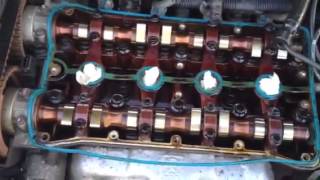
How to confirm: Remove the spark plug from cylinder 1 (closest to the timing belt on the passenger side of the engine). Inspect for wear, black carbon buildup, or white/oily deposits. Crucially, check for liquid oil pooled in the spark plug well 🎬 Watch: How to check for oil on your spark plugs. before removing the plug.
Typical fix: Replace all four spark plugs. If oil is present in the wells, the valve cover gasket and tube seals must be replaced 🎬 See this step-by-step valve cover gasket replacement walkthrough. at the same time. It is best practice to replace plugs as a set.
Est. part cost: $15-$40 - Failed Ignition Coil Pack or Spark Plug Wire/Boot 🔴 High Probability The single coil pack design is a known weak point. Heat and age cause the internal windings or the spark plug boots to degrade, leading to a weak or non-existent spark for one or more cylinders. Oil saturation from a leaking valve cover gasket accelerates this failure.
How to confirm: With the engine running, you can sometimes hear a 'snapping' sound of electricity arcing from a crack in the coil pack. A more definitive test is to swap the position of the #1 and #2 spark plug wires at the coil pack; if the code changes to P0302, the coil pack is faulty.
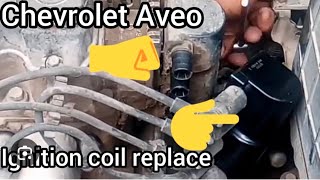
Typical fix: Replace the entire ignition coil pack and spark plug wire set. 🎬 Watch: How to replace the ignition coil and wires. This is often done along with the spark plugs and valve cover gasket.
Est. part cost: $50-$120 - Leaking Valve Cover Gasket 🔴 High Probability The valve cover gasket and integrated spark plug tube seals on the E-TEC II engine are notoriously prone to failure. This allows engine oil to fill the spark plug wells, shorting the connection between the coil boot and the spark plug.
How to confirm: Visually inspect the spark plug wells for the presence of liquid oil. This is a definitive sign of a failed gasket/seal. The middle two cylinders are often the first to show significant oil pooling.
Typical fix: Replace the valve cover gasket and the spark plug tube seals. While the cover is off, clean all oil from the wells and inspect/replace the spark plugs and coil boots.
Est. part cost: $20-$50 - Clogged or Defective Fuel Injector 🟡 Medium Probability Fuel injectors can become clogged with deposits over time, preventing the correct amount of fuel from being delivered to cylinder 1. TSB PIP3333C notes that fuel contaminants in the returnless fuel rail can slosh during turns and temporarily clog the cylinder 1 injector.
How to confirm: Swap the fuel injector from cylinder 1 with the injector from cylinder 2. Clear the codes and drive the vehicle. If the code changes to P0302 (Cylinder 2 Misfire), the injector is the problem.
Typical fix: Replace the faulty fuel injector. It's often recommended to replace the O-rings for the other injectors at the same time.
Est. part cost: $30-$80
Rare But Worth Checking
- Vacuum Leak: A leak in a vacuum hose or the intake manifold gasket can introduce unmetered air, leaning out the air-fuel mixture and causing a misfire. This would often be accompanied by a rough idle and possibly other codes like P0171.
- Low Engine Compression: This is a more serious mechanical issue, such as a burnt valve, worn piston rings, or a leaking head gasket. A compression test is needed to diagnose this. This is the last thing to check after ruling out fuel and spark issues. The 1.6L E-TEC II is an interference engine, so a failed timing belt can also cause bent valves and zero compression.
Diagnosis Steps
- Read the trouble codes with an OBD-II scanner. Note any other codes present.
- Visually inspect the spark plug well for cylinder 1 (passenger side). If oil is present, the valve cover gasket is bad and is the likely root cause.
- Remove the spark plug from cylinder 1. Inspect for wear, damage, or fouling (carbon or oil). If it looks bad, replace all four plugs.
- Inspect the ignition coil pack and spark plug wire for cylinder 1. Look for cracks, corrosion, or oil contamination from a leaking gasket.
- If plugs are okay and no oil is present, swap the #1 and #2 spark plug wires at the coil pack. Clear the codes and see if the misfire moves to cylinder 2 (P0302). If it does, the ignition coil pack is bad.
- If the misfire remains on cylinder 1, the next step is to test the fuel injector. Swap the fuel injectors between cylinder 1 and cylinder 2. If the code changes to P0302, the injector is faulty.
- If the misfire still persists on cylinder 1 after swapping ignition and fuel components, check for a vacuum leak near the intake manifold for cylinder 1.
- As a final step for persistent issues, perform an engine compression test on all cylinders to check for mechanical problems like a bad valve or piston rings.
Parts You'll Likely Need
- Ignition Coil Pack
(OEM #25182496 / 96253555 (ACDelco D519C))— This is the most frequent point of failure for ignition-related misfires on the Aveo. It's a single unit that provides spark for all cylinders.
Trusted brands: ACDelco, Delphi, NGK
OEM price range: $90-$150
Aftermarket price range: $50-$100 - Spark Plugs (Set of 4)
(OEM #NGK BKR6E-11)— These are a routine maintenance item and the first thing to check. A worn or oil-fouled plug is a very common cause of a single-cylinder misfire.
Trusted brands: NGK, Bosch, Denso
OEM price range: $25-$50
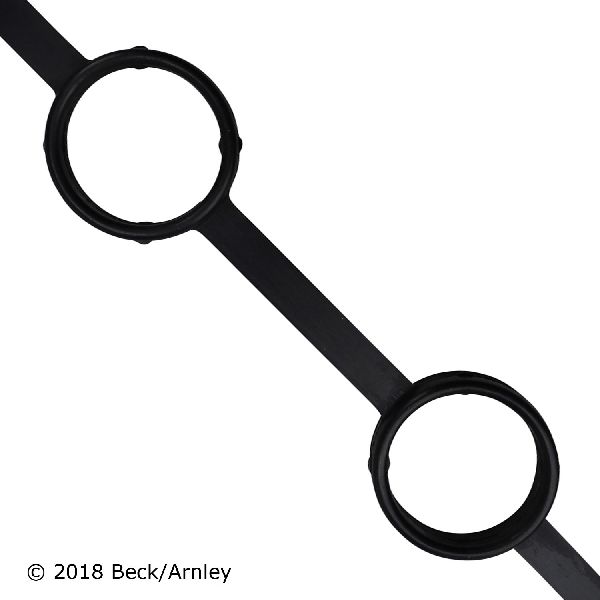
Aftermarket price range: $15-$40 - Valve Cover Gasket Kit (with Tube Seals) — A leaking valve cover gasket is a primary cause of misfires on this engine by allowing oil to pool in the spark plug wells.
Trusted brands: Fel-Pro, ACDelco, Mahle
OEM price range: $30-$60
Aftermarket price range: $20-$40 - Fuel Injector — If spark components are good, a clogged or failed fuel injector is the next most likely cause.
Trusted brands: Bosch, Standard Motor Products (SMP)
OEM price range: $70-$120
Aftermarket price range: $30-$80
Related Codes That Often Appear With This One
- P0300 — Indicates a random, multiple-cylinder misfire. If the coil pack is failing broadly or a valve cover gasket leak has filled multiple plug wells with oil, you may see P0300 along with P0301.
- P0302, P0303, P0304 — Indicates misfires in other specific cylinders. Seeing these alongside P0301 strongly points to a common component like the coil pack or a widespread issue like a vacuum leak or low fuel pressure.
- P0420 — Catalyst System Efficiency Below Threshold. This code appears when the catalytic converter has been damaged by prolonged exposure to unburned fuel from the misfiring cylinder.
Technical Service Bulletins (TSBs) & Recalls
- PIP3333C: Intermittent engine misfire and Service Engine Soon Malfunction Indicator Lamp.
Platform-Specific Known Issues
- The official GM TSB #PIP3333C from 2014 acknowledges issues with intermittent engine misfires (P0301) that can occur during turns on 2004-2011 Aveos. It suggests that fuel contaminants in the returnless fuel system can slosh and temporarily block the #1 injector during a left turn.
- A recall for 2009-2011 Aveos addressed a 'degraded connection between the spark plug boots... and the spark plugs' causing misfires. While not for the 2004-2008 range, it highlights a known design sensitivity in the ignition system that is also reported by owners of earlier models.
Mechanic-Grade Diagnostic Values
- Ignition Coil Primary Resistance — expected: Approximately 1.0 Ohm. Failure: Significant deviation from 1.0 Ohm.
- Ignition Coil Secondary Resistance — expected: Approximately 5200 Ohms (5.2 kOhms). Failure: Significant deviation from 5.2 kOhms. Check for cracks in the coil case.
- Fuel Injector Resistance — expected: 11 - 14 Ohms. Failure: A reading of infinite resistance (Open) or near zero (Shorted), or a reading significantly different from the other injectors.
- Fuel Pressure at Fuel Rail — expected: Approximately 55 PSI. Failure: A significant drop in pressure, especially under acceleration.
- Voltage to Ignition Coil — expected: +12 VDC at Pin B (middle pin) of the coil connector with key on.. Failure: Significantly lower voltage (e.g., 6V) indicates a wiring or fuse box issue.
Scan Tool Commands That Help
- GM Tech2: Misfire Graphic Display / Misfire Data List — To monitor misfire counts per cylinder in real-time, even if a P0301 code has not been formally set. This helps identify an intermittent issue before it becomes severe. Note that minor counts can be normal due to road imperfections.
- GM Tech2: Crank/Cam Correlation Relearn Procedure — After replacing a crankshaft/camshaft sensor, reprogramming the PCM, or on higher mileage engines to improve the accuracy of misfire detection and reduce false misfire counts.
- GM Tech2: Injector Balance Test — To test a specific fuel injector's performance. This requires a fuel pressure gauge to be used in conjunction with the scan tool command to measure the pressure drop for each injector.
Wiring & Ground Locations
- G101 — Under the Engine Control Module (ECM) on the left side of the engine compartment.. This is a primary ground for the ECM. A poor connection here can cause erratic sensor readings and incorrect commands to the ignition coil and fuel injectors, leading to misfires.
- G103 — On the engine starter motor mounting bolt.. Provides a key grounding point for the engine block. A loose or corroded connection can affect the electrical return path for various engine components.
- G104 — Located on the front of the vehicle, behind the right-side headlamp.. This is a chassis ground point. While less directly related to the engine itself, poor chassis grounds can create unpredictable electrical problems throughout the vehicle.
Real Owner Repair Stories
- AveoForum.com user (2007 Pontiac Wave (Aveo platform mate)) — Misfiring under load (accelerating, hills), CEL with codes P0300, P0301, P0302, P0303, P0304.
❌ Tried (didn't work) Dealer replaced leaking valve cover gasket., Misfire returned; independent mechanic replaced valve cover gasket and spark plugs again., Timing belt replaced, but installed incorrectly (off by one tooth), causing poor running., Timing was corrected, but misfire returned yet again.
✅ What actually fixed it The third replacement of the valve cover gasket, this time with added sealant on the spark plug tube seals, finally stopped oil from fouling the spark plugs. The root cause was a recurring leak that made other fixes seem to fail. - AveoForum.com user (Chevrolet Aveo (year not specified)) — P0301 Misfire Cylinder 1, poor performance.
❌ Tried (didn't work) User did not report trying other fixes first.
✅ What actually fixed it The problem was solved by replacing the spark plugs as part of a general tune-up.
Model Year Variations Within This Range
- 2004-2005 vs 2006-2008: The PCV system was changed; later engines (06-08) have an internal PCV system, while earlier ones (04-05) are external. This affects engine block and head compatibility. Additionally, the Crankshaft Position Sensor and Knock Sensor may differ between these year ranges, requiring the use of the original sensors from the vehicle's model year when swapping engines.
Helpful Videos
Used OEM Parts in Stock

New Aftermarket Parts Available


The information in this article is provided for general reference and educational purposes only. Vehicle specifications, procedures, and part compatibility can vary by production date, trim level, and region. Always consult your vehicle's factory service manual and verify part numbers before purchasing or performing repairs. Safety-critical components such as airbags, seat belts, and braking systems should be installed by a qualified professional.
- Chevrolet AVEO:
- 🎬 Helpful Videos
- 🛍️ Shop This Part
- What's Unique About the 2004-2008 Chevrolet AVEO
- Diagnostic Flowchart
- Symptoms You May Notice
- Most Likely Causes
- Rare But Worth Checking
- Diagnosis Steps
- Parts You'll Likely Need
- Related Codes That Often Appear With This One
- Technical Service Bulletins (TSBs) & Recalls
- Platform-Specific Known Issues
- Mechanic-Grade Diagnostic Values
- Scan Tool Commands That Help
- Wiring & Ground Locations
- Real Owner Repair Stories
- Model Year Variations Within This Range
- 🎟️ Get 5% Off