

P0301 on 2009-2016 Cadillac Escalade ESV: Cylinder 1 Misfire Causes & Fixes
P0301 on a 2009-2016 Escalade ESV indicates a misfire on cylinder 1. The most common causes are a bad spark plug, ignition coil, or spark plug wire. However, a failed Active Fuel Management (AFM) lifter is a known, more serious issue on these 6.2L V8 engines that can also cause this code, often requiring major engine repair.
- P0301 is a misfire on cylinder 1 (front, driver's side).
- Always start diagnosis by swapping the ignition coil and then the spark plug to another cylinder to see if the misfire code follows. This is a fast, free, and effective way to rule out the most common culprits.
- Do not ignore a flashing check engine light, as this can lead to catalytic converter damage costing thousands of dollars to repair.
- Be aware that a persistent P0301, especially when accompanied by a ticking engine noise, may be a failed AFM lifter—a known and serious issue with these engines requiring professional repair.
What's Unique About the 2009-2016 Cadillac ESCALADE ESV
The 6.2L V8 engines in this generation of Escalade are equipped with Active Fuel Management (AFM), which deactivates cylinders to save fuel. This system is a notorious weak point, and its specialized lifters (specifically for cylinders 1, 4, 6, and 7) are prone to failure. A collapsed or stuck AFM lifter is a very common cause for a P0301 code that goes beyond simple ignition parts. In some cases, the lifter can fail without the classic 'ticking' noise, making diagnosis more difficult. This makes diagnosing a P0301 on this platform more complex, as it could signal a simple fix or a major mechanical failure requiring engine disassembly.
Diagnostic Flowchart
Tap your situation to follow the diagnostic path that matches what you're seeing on this vehicle.
Generation note: This range covers the end of the third generation (2009-2014, GMT900 platform) and the start of the fourth generation (2015-2016, K2XX platform). The 3rd gen uses the 6.2L Vortec V8 (L92/L94), while the 4th gen uses the 6.2L EcoTec3 L86 with direct injection. Both engine types feature the Active Fuel Management (AFM) system, which is a primary source of mechanical misfire issues across both generations.
Symptoms You May Notice
- Rough or shaking idle
- Hesitation or stumbling during acceleration
- Reduced engine power
- Flashing or solid Check Engine Light
- Engine ticking, chirping, or squeaking noise (strongly indicates lifter failure 🎬 Watch: How to diagnose and fix that engine knocking noise.)
- Smell of unburnt fuel from the exhaust
- Service Stabilitrak message appearing on the dash
- Replacing the oxygen (O2) sensor. A misfire will cause the O2 sensor to report abnormal readings, but it is the symptom, not the cause of the P0301 code.
- Assuming the problem is always a simple spark plug or coil. On this platform, it is critical to consider AFM lifter failure early in the diagnosis, especially if a ticking noise is present or if ignition part swaps do not resolve the issue.
Most Likely Causes
- Worn or Fouled Spark Plug 🔴 High Probability TSB #PIP4525D specifically mentions inspecting spark plugs for oil fouling and cracks as a cause for P0301. Oil consumption issues can lead to fouled plugs, causing a misfire. A heavily fouled or oil-soaked plug on cylinder 1 can be a clue to a more serious internal engine problem like worn piston rings.
How to confirm: Remove the spark plug from cylinder 1 and inspect it for wear, carbon buildup, oil fouling, or cracks in the white porcelain insulator. Compare it to a new plug.
Typical fix: Replace the spark plug. It is recommended to replace all 8 spark plugs at the same time for even performance.
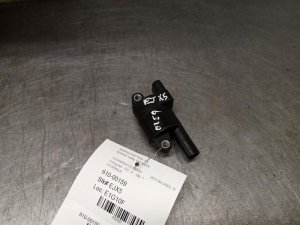
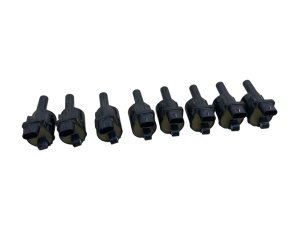
Est. part cost: $8-$20 per plug - Faulty Ignition Coil 🔴 High Probability Coil-on-plug ignition systems are subject to high heat and vibration, leading to eventual failure.
How to confirm: Swap the ignition coil from cylinder 1 with another cylinder (e.g., cylinder 3). Clear the codes and drive. If the code changes to P0303, the coil is faulty. This is a free and definitive diagnostic step.
Typical fix: Replace the faulty ignition coil. The common OEM part is ACDelco D510C (GM 12713668).
Est. part cost: $40-$90 - Failed Active Fuel Management (AFM) Lifter 🟡 Medium Probability The AFM system lifters are a well-documented failure point on GM's 6.2L V8 engines, leading to misfires. Cylinder 1 is one of the AFM-controlled cylinders. The failure can be a lifter that is mechanically collapsed, stuck, or one that unlocks at the wrong time.
How to confirm: A distinct ticking or tapping sound from the top of the engine is a strong indicator. However, some failures are silent. A mechanic can confirm by removing the valve cover to check if the rocker arms for cylinder 1 are moving. A compression test may also show low or zero compression on the affected cylinder.
Typical fix: This is a major repair requiring replacement of the failed lifter, the lifter guide, and often the camshaft if it has been damaged. 🎬 See this walkthrough of a 6.2L AFM lifter replacement. Many owners opt to replace all AFM lifters or install an AFM-delete kit which also requires ECU reprogramming. 🎬 Watch: Step-by-step guide for a complete AFM/DOD delete. The Valve Lifter Oil Manifold (VLOM) is also often replaced.
Est. part cost: $500-$1500+ for parts alone, including lifters, gaskets, and potentially a camshaft. - Bad Spark Plug Wire 🟡 Medium Probability
How to confirm: Inspect the wire for cylinder 1 for any visible damage, burns, or looseness at the coil and spark plug, as mentioned in TSB #PIP4819A. You can also test its resistance with a multimeter or swap it with another cylinder's wire.
Typical fix: Replace the spark plug wire. It's best practice to replace the entire set with a quality brand like ACDelco.
Est. part cost: $50-$100 for a set - Clogged or Faulty Fuel Injector ⚪ Low Probability
How to confirm: Use a mechanic's stethoscope to listen for a consistent clicking sound from the injector. A more definitive test is to swap the injector with another cylinder, but this is more labor-intensive than swapping a coil. A professional scan tool can perform an injector balance test.
Typical fix: Replace the faulty fuel injector.
Est. part cost: $70-$150
Rare But Worth Checking
- Intake Manifold Gasket Leak: A vacuum leak near the cylinder 1 intake runner can lean out the air/fuel mixture for that cylinder only, causing a misfire.
- Low Engine Compression: Internal engine damage such as a burnt valve, worn piston rings, or a damaged cylinder head can cause a loss of compression and a persistent misfire. A compression test and cylinder leakage test are needed to diagnose this.
- Sheared Camshaft Sprocket Pin: GM TSB #19-NA-218 describes a rare condition where the camshaft sprocket locating pin can shear, causing the camshaft to stop turning, which can lead to various symptoms including misfires or a no-start condition.
Diagnosis Steps
- Read the codes with an OBD-II scanner to confirm P0301 and check for any other codes, such as P0300 or P3400.
- Check if the Check Engine Light is steady or flashing. A flashing light indicates a severe misfire that risks catalytic converter damage.
- Swap the ignition coil from cylinder 1 with another cylinder (e.g., cylinder 3). Clear the codes and run the engine. If the code changes to P0303, the ignition coil is the problem.
- If the misfire stays on cylinder 1, inspect the spark plug. Look for heavy carbon fouling, oil saturation, or cracks in the porcelain insulator. If in doubt, swap the plug with another cylinder to see if the misfire follows.
- Inspect the spark plug wire for cylinder 1 for damage or a loose connection as per TSB #PIP4819A.
- Listen carefully for a ticking, tapping, or chirping noise from the engine, which strongly suggests a mechanical issue like a failed AFM lifter.
- If ignition components are good, consider removing the driver's side valve cover to visually inspect the valve train for cylinder 1. Check if both rocker arms are moving while the engine is cranked. No movement indicates a collapsed/stuck lifter.
- If the cause is still not found, perform a compression test and a cylinder leakage test on cylinder 1 to check for mechanical engine problems like bad valves or piston rings.
Parts You'll Likely Need
- Spark Plug
(OEM #ACDelco 41-162 (GM 19417055))— Spark plugs are a routine maintenance item and a primary cause of misfires due to wear or fouling. The recommended plug is an Iridium type for longevity and performance.
Trusted brands: ACDelco, NGK, Denso
OEM price range: $12-$20
Aftermarket price range: $8-$15 - Ignition Coil
(OEM #ACDelco 12713668 (replaces 12611424))— Ignition coils are a common failure point that directly causes a lack of spark and misfire on a specific cylinder.
Trusted brands: ACDelco, Delphi, Duralast
OEM price range: $60-$90
Aftermarket price range: $40-$70 - Active Fuel Management (AFM) Lifter Kit
(OEM #12639516 (AFM Lifter), 12570427 (Standard Lifter))— This is a known mechanical failure point on the 6.2L V8 engine that results in a misfire. If one has failed, it must be replaced. Repair often involves replacing all lifters on the affected bank or the entire engine, along with lifter guides and gaskets.
Trusted brands: General Motors, ACDelco, Michigan Motorsports, Mahle
OEM price range: $40-$60 per lifter
Aftermarket price range: $30-$50 per lifter
Related Codes That Often Appear With This One
- P0300 — If the misfire is severe or starting to affect other cylinders, a P0300 (Random/Multiple Cylinder Misfire) may be stored alongside P0301.
- P3400 — This code indicates an issue with the Cylinder Deactivation System (AFM). If a P0301 is caused by a failed AFM lifter, it's common to see this code as well, pointing directly to the root cause.
Technical Service Bulletins (TSBs) & Recalls
- PIP4819A: Advises inspection of spark plug wires for looseness, which can cause misfires.
- PIP4525D: Points to oil-fouled spark plugs as a cause for P0301, potentially linked to oil consumption issues.
- 19-NA-219: A diagnostic tip for various engine noises and misfires (P0300-P0308), listing potential causes like worn cam lobes, sticking valves, broken valve springs, and collapsed AFM lifters.
Platform-Specific Known Issues
- Active Fuel Management (AFM) Lifter Failure: This is the most significant vehicle-specific issue. The specialized hydraulic lifters for the AFM system can collapse or become stuck, preventing the valve from opening and causing a dead misfire on an AFM cylinder (1, 4, 6, or 7). This is a common and expensive repair, often accompanied by a ticking noise, but can also occur silently. Repeat failures are possible if underlying oil pressure issues or the VLOM are not addressed. A class-action lawsuit was filed against GM regarding this widespread issue.
- Oil Fouled Spark Plugs: TSB #PIP4525D notes that P0301 can be caused by oil fouling on the spark plug. This can be a symptom of excessive oil consumption from worn piston rings or other internal engine issues, which can lead to a misfire by ruining the plug.
- Loose Spark Plug Wires: TSB #PIP4819A advises technicians to check for loose or poorly connected spark plug wires at both the coil and the plug, as this can cause an intermittent connection and trigger a misfire code.
Mechanic-Grade Diagnostic Values
- High-Side Fuel Pressure (2015+ L86 Engine) — expected: Up to 150 bar (2,175 psi). Failure: Significantly lower pressure indicates a failing high-pressure fuel pump (HPFP).
- Short-Term Fuel Trim (STFT) — expected: Fluctuating between -10% and +10%. Failure: Sustained readings above +10% suggest a lean condition (e.g., vacuum leak); readings below -10% suggest a rich condition (e.g., leaking injector).
- MAP Sensor Voltage at Idle — expected: Approximately 1.5V to 1.7V. Failure: A significantly higher voltage at idle can indicate low engine vacuum, which is a symptom of a misfire.
- Misfire History Counters (GDS2 Scan Tool) — expected: Zero or very low numbers.. Failure: A high or rapidly increasing number for cylinder 1 confirms an active or recent misfire on that specific cylinder.
Scan Tool Commands That Help
- GDS2/Tech2: Power Balance Test — To confirm a non-contributing cylinder. The tool disables fuel to each cylinder one by one. If disabling cylinder 1 causes no change in engine RPM, it confirms cylinder 1 is the source of the misfire.
- GDS2: Injector Balance Test — To diagnose a potentially clogged or faulty fuel injector, especially on direct-injection L86 engines (2015+).
- GDS2: Cylinder Deactivation System Test — To test the functionality of the Active Fuel Management (AFM) solenoids and system when a lifter failure is suspected.
Wiring & Ground Locations
- Cylinder 1 — Front-most cylinder on the driver's side (left bank) of the engine.. This is the physical location for all cylinder-specific components (spark plug, coil, wire, injector, valves) that need to be inspected for a P0301 code.
- G102 — Located at the left rear of the engine.. This is the main grounding point for all eight ignition coils. A poor connection here could potentially cause ignition issues, including misfires.
- G103 — Located on the engine compartment cowl, above the brake booster.. This ground serves the Engine Control Module (ECM) and the Data Link Connector (DLC). A fault at this location can cause a wide range of unpredictable electronic issues, including false sensor readings or codes.
Real Owner Repair Stories
- Tahoe/Yukon Forum User (GMC Yukon with 6.2L V8 (similar platform)) — Persistent P0301 misfire.
❌ Tried (didn't work) Replacing spark plugs, Replacing fuel injectors
✅ What actually fixed it The final cause was a collapsed intake lifter on cylinder 1. This was visually confirmed after removing the valve cover and observing that the rocker arm was not moving. - Alex The Car Doctor (YouTube) (2016 Cadillac Escalade) — Severe engine skip (misfire), P0301. The initial ticking noise had disappeared.
✅ What actually fixed it A lifter on cylinder 1 had completely disintegrated, which also damaged the camshaft and scored the lifter bore. The repair involved having a machine shop repair the lifter bore and then reassembling the engine with a new camshaft and a new set of Melling lifters. - Reddit user comment (2018 Cadillac Escalade) — Lifter tick noise.
✅ What actually fixed it The owner, a mechanic, replaced the failed lifters and also replaced the camshaft at the same time as a preventative measure to ensure the damaged lifter hadn't compromised the cam lobes.
When the Usual Fixes Don't Work
- While P0301 is often caused by simple ignition parts like a spark plug or coil, on the 2009-2016 Escalade, these should not be the only items considered. Multiple owner and technician reports confirm that a failed Active Fuel Management (AFM) lifter is a frequent root cause. In many documented cases, owners replaced spark plugs and ignition coils, but the misfire on cylinder 1 persisted until a major mechanical repair to replace the collapsed lifter (and often the camshaft) was performed. Ignoring the possibility of a mechanical lifter failure, especially if a ticking noise is present, can lead to repeated failed repairs and unnecessary expense.
OEM Part Supersession History
12611424→12713668— Standard part revision and update by manufacturer.
Model Year Variations Within This Range
- 2015-2016: The 2015 model year introduced the 6.2L EcoTec3 L86 engine with direct injection. This creates two potential causes for P0301 not present on earlier models: 1) Failure of the high-pressure fuel pump, and 2) Carbon buildup on the intake valves, which are no longer cleaned by fuel spray.
Helpful Videos
Used OEM Parts in Stock

New Aftermarket Parts Available


The information in this article is provided for general reference and educational purposes only. Vehicle specifications, procedures, and part compatibility can vary by production date, trim level, and region. Always consult your vehicle's factory service manual and verify part numbers before purchasing or performing repairs. Safety-critical components such as airbags, seat belts, and braking systems should be installed by a qualified professional.
- Cadillac ESCALADE ESV:
- 🎬 Helpful Videos
- 🛍️ Shop This Part
- What's Unique About the 2009-2016 Cadillac ESCALADE ESV
- Diagnostic Flowchart
- Symptoms You May Notice
- Most Likely Causes
- Rare But Worth Checking
- Diagnosis Steps
- Parts You'll Likely Need
- Related Codes That Often Appear With This One
- Technical Service Bulletins (TSBs) & Recalls
- Platform-Specific Known Issues
- Mechanic-Grade Diagnostic Values
- Scan Tool Commands That Help
- Wiring & Ground Locations
- Real Owner Repair Stories
- When the Usual Fixes Don't Work
- OEM Part Supersession History
- Model Year Variations Within This Range
- 🎟️ Get 5% Off