

P0301 on 2013 Audi S4: Cylinder 1 Misfire Causes and Fixes
On a 2013 Audi S4, a P0301 code is most often caused by a failed ignition coil or a worn spark plug in cylinder 1. A single ignition coil costs around $40-$80, and a new set of spark plugs is about $90-$150, making this a common and relatively affordable DIY repair. If these simple fixes don't work, the cause could be a clogged fuel injector, carbon buildup on the intake valves, or a leaking supercharger intercooler.
- P0301 on a 2013 S4 indicates a misfire in the front passenger-side cylinder.
- The most probable cause is a bad ignition coil or a worn spark plug, which are both straightforward DIY fixes.
- The fastest diagnostic step is to swap the cylinder 1 ignition coil with another cylinder's coil to see if the misfire code follows it.
- If new plugs and coils don't solve the problem, suspect underlying platform-specific issues like carbon buildup on the intake valves or a leaking supercharger intercooler.
- Do not ignore a flashing check engine light, as it can lead to costly damage to the catalytic converters.
What's Unique About the 2013-2013 Audi S4
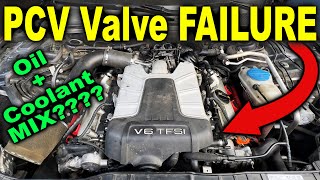
The 2013 Audi S4 is equipped with the B8.5 generation 3.0L TFSI supercharged V6 engine (EA837). This engine uses direct injection, which makes it highly prone to carbon buildup on the intake valves over time. This buildup can restrict airflow and cause misfires, particularly under heavy load. Additionally, the PCV (Positive Crankcase Ventilation) system is a known weak point that can fail, leading to vacuum leaks, increased oil consumption, and fouling of spark plugs, which is another common trigger for misfire codes on this platform. A failed PCV is a labor-intensive repair as it is located under the supercharger.
Diagnostic Flowchart
Tap your situation to follow the diagnostic path that matches what you're seeing on this vehicle.
Symptoms You May Notice
- Flashing or solid Check Engine Light
- Rough or shaky idle, sometimes described as sounding 'cammed'
- Engine hesitation or stumbling during acceleration
- Noticeable loss of power
- Smell of unburnt fuel from the exhaust
- Ticking noise from the engine bay
- Replacing oxygen (O2) sensors or the mass air flow (MAF) sensor before checking the basic ignition components (spark plugs and coils) for the specific misfiring cylinder.
- Assuming a persistent misfire is always a plug or coil, when on the 3.0T it could be carbon buildup, a leaking intercooler, or a failing fuel injector.
Most Likely Causes
- Faulty Ignition Coil 🔴 High Probability Ignition coils are a common wear item on many modern engines, including the 3.0T. High voltage and repeated heat cycles eventually lead to internal failure, causing a weak or absent spark.
How to confirm: Swap the ignition coil from cylinder 1 with another cylinder (e.g., cylinder 2, the middle cylinder on the passenger side). Clear the codes and drive the car. If the code changes to P0302, the ignition coil is faulty.
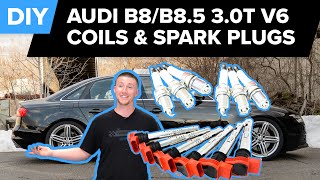
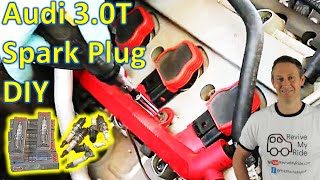
Typical fix: Replace the faulty ignition coil. It is often recommended to replace all six coils at the same time 🎬 Watch: Step-by-step guide to replacing coils and spark plugs. for preventative maintenance, especially on higher mileage vehicles or if they are original.
Est. part cost: $40 - $80 per coil for an OEM-quality brand like Bosch or NGK. - Worn or Fouled Spark Plug 🔴 High Probability The service interval for spark plugs on the 3.0T engine is typically every 55,000 miles, but can be shorter on tuned vehicles. Issues like a failing PCV valve or carbon buildup can cause them to foul prematurely with oil or carbon deposits.
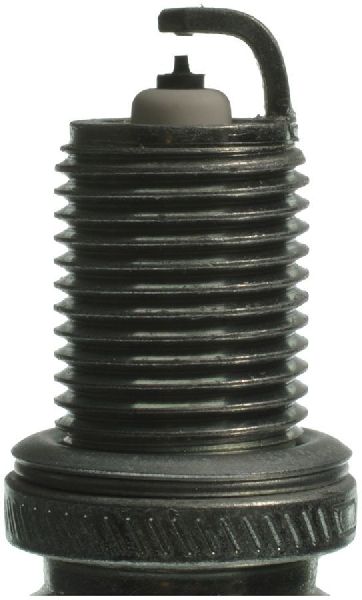
How to confirm: After confirming the coil is good, remove the spark plug from cylinder 1. Inspect it for wear on the electrode, cracks in the porcelain, or fouling from oil, fuel, or carbon deposits. The correct gap is crucial for performance.
Typical fix: Replace the spark plug. It is best practice to replace all six spark plugs as a set to ensure consistent performance. Ensure they are gapped correctly.
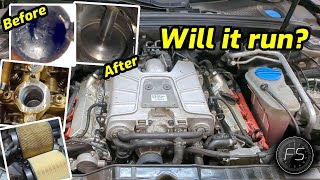
Est. part cost: $90 - $150 for a set of six OEM-quality plugs (e.g., NGK PFR8S8EG). - Carbon Buildup on Intake Valves 🟡 Medium Probability As a direct-injection engine, fuel is sprayed directly into the cylinder, so it does not wash over the intake valves. Oil vapor from the PCV system can bake onto the hot valves, forming hard carbon deposits that restrict airflow. This is a very common issue on the 3.0T and often causes misfires under load at higher RPMs.
How to confirm: This requires a visual inspection using a borescope inserted into the intake ports, which typically involves removing the supercharger for a clear view.
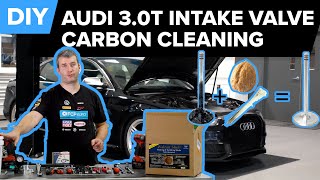
Typical fix: The intake valves need to be manually cleaned, most commonly through walnut shell blasting. 🎬 See how to perform a professional walnut blast carbon cleaning. This is a labor-intensive job, often costing $600-$1200 at a shop.
Est. part cost: $50 - $100 for gaskets - Faulty Fuel Injector ⚪ Low Probability While less common than ignition issues, direct fuel injectors operate under high pressure and can become clogged or fail electronically, preventing the correct amount of fuel from being delivered to cylinder 1. A user on Reddit with a B8.5 S4 suspected injectors after plugs and coils didn't solve the issue.
How to confirm: This is a more advanced diagnostic step. A technician can use a scan tool like VCDS to monitor fuel trims and injector balance. Swapping the injector with another cylinder is the definitive test but requires removing the fuel rail.
Typical fix: Replace the faulty fuel injector. It's recommended to replace the injector seals at the same time. This is a more involved DIY job.
Est. part cost: $100 - $200 per injector
Rare But Worth Checking
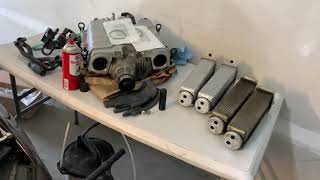
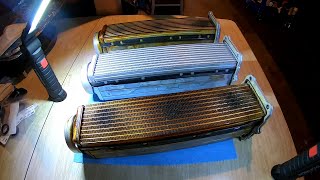
- Leaking Supercharger Intercooler: The supercharger has two integrated intercoolers (charge air coolers) that can develop internal coolant leaks. On the passenger side bank, a leak can drip coolant directly into cylinder 1, 2, or 3, fouling the spark plug and causing a persistent misfire. Key symptoms are mysterious coolant loss with no visible external leaks and sometimes white, sweet-smelling exhaust smoke. This requires removing and disassembling the supercharger to replace the faulty intercooler core.
- Low Engine Compression: A mechanical issue like a worn piston ring, a burnt or chipped valve, or scored cylinder walls can cause a loss of compression, leading to a misfire. This is diagnosed with a compression and leak-down test. An AudiWorld forum member shared a story of a 2017 Q7 with the 3.0T engine that had a P0301 code and low compression, ultimately diagnosed as a chipped exhaust valve requiring a full engine replacement.
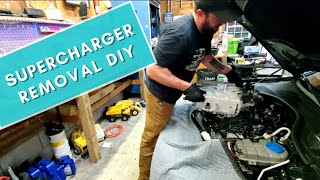
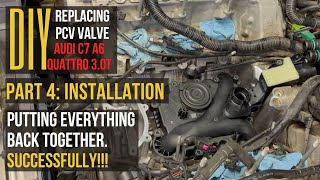
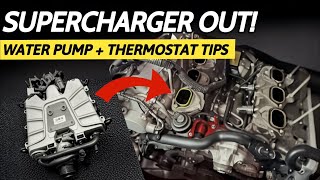
- Failed Thermostat or Water Pump: While less direct, a failing thermostat or water pump on the 3.0T can cause overheating issues that may lead to misfires. These components are common failure points and are located under the supercharger, often replaced at the same time as the PCV valve or during a carbon cleaning service. 🎬 Watch: How to replace the PCV, water pump, and thermostat.
Diagnosis Steps
- Use an OBD-II scanner (a VAG-specific tool like VCDS is recommended) to confirm the P0301 code and check for any other pending or stored codes like P130A. Note the freeze frame data to see when the misfire occurs (e.g., cold start, high load).
- To quickly test the ignition coil, swap the coil from cylinder 1 with the coil from cylinder 2 (the middle cylinder on the same passenger-side bank).
- Clear the codes, start the engine, and drive the car to replicate the conditions that caused the misfire. Re-scan for codes.
- If the code has moved to P0302, the ignition coil from cylinder 1 is faulty and needs to be replaced.
- If the code remains P0301, the coil is likely good. Proceed to inspect the spark plug in cylinder 1. Remove it and look for excessive wear, carbon fouling, or oil/coolant contamination.
- If the spark plug is old or fouled, replace all six plugs as a set. Ensure they are the correct type (e.g., NGK PFR8S8EG) and gapped correctly for your vehicle (stock or tuned).
- If the plug and coil are good, the issue is more complex. Check for coolant loss, which could indicate a leaking intercooler core.
- Advanced diagnostics are needed for further issues. This may include a borescope inspection for carbon buildup, testing the fuel injector, or performing an engine compression and leak-down test to check for mechanical engine health.
Parts You'll Likely Need
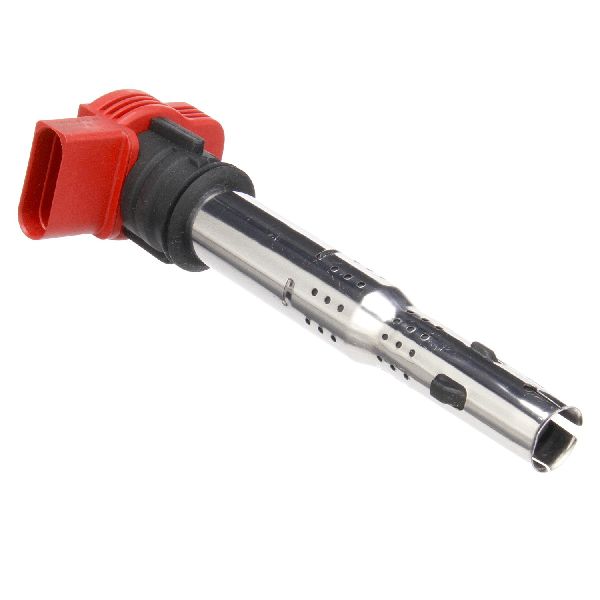
- Ignition Coil
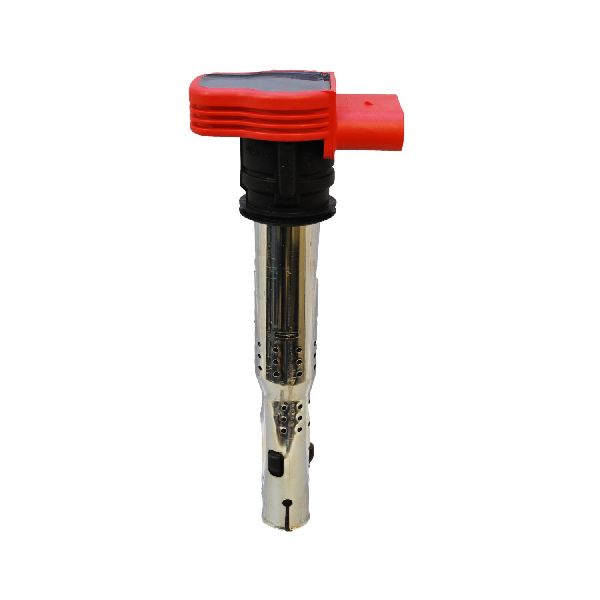
(OEM #06E905115G)— This is the most common failure point for a single-cylinder misfire. They are relatively inexpensive and easy to replace during a tune-up.
Trusted brands: Bosch, NGK, Eldor, Genuine Audi
OEM price range: $60-$80
Aftermarket price range: $40-$60 - Spark Plug
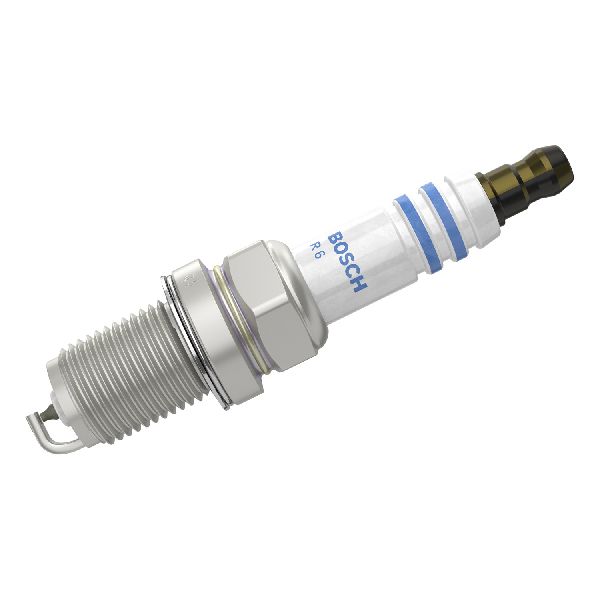
(OEM #101905631G (NGK PFR8S8EG))— Spark plugs are a regular maintenance item and can become worn or fouled, leading to a weak spark and misfires. Using the correct plug is critical on these engines.
Trusted brands: NGK, Bosch
OEM price range: $20-$30 per plug
Aftermarket price range: $15-$25 per plug - PCV Valve / Oil Separator
(OEM #06E103547Q)— A failing PCV is a very common issue on the 3.0T engine that leads to vacuum leaks and oil consumption, which fouls spark
Related Codes That Often Appear With This One
- P130A — As cited in NHTSA TSB #01138920337681 and discussed on Ross-Tech forums, this code for 'Cylinder Disabling' is often stored alongside a P0301-P0306 fault. The ECM intentionally shuts off the fuel injector to the misfiring cylinder to protect the catalytic converter from raw fuel. This code is a result of the misfire, not a separate problem.
- P0300 — If the cause of the misfire (like a major vacuum leak from the PCV, or severe carbon buildup) affects multiple cylinders, a P0300 (Random/Multiple Cylinder Misfire) code may appear along with P0301.
- P0302, P0303 — If other cylinders on the same bank (passenger side) are also misfiring, you may see their corresponding codes. This could point to a systemic issue on that bank, such as a leaking intercooler core or a camshaft timing issue.
Technical Service Bulletins (TSBs) & Recalls
- Bulletin #01138920337681: States that a cylinder misfire fault (DTC P0301 – P0306) with DTC P130A is stored in the engine control module (ECM). Forum discussions suggest this TSB is often related to misfires under load caused by carbon buildup.
- TSB 2069038/4: While related to newer engines, this TSB for P0300-P0306 codes highlights that Audi sometimes resolves misfire detection issues with an ECM software update, indicating the logic can be overly sensitive.
Platform-Specific Known Issues
- The 3.0T engine is known for PCV valve failure, which can cause a high-pitched whistling noise at idle, excessive crankcase vacuum (suction on the oil cap), and high oil consumption, leading to fouled spark plugs.
- Carbon buildup on intake valves is a common long-term issue for all direct-injected Audi engines, including this one, and is a known cause of misfires that aren't resolved by new plugs and coils, especially under load.
- The intercoolers located within the supercharger assembly can leak coolant internally, dripping onto the intake valves of cylinders 1, 2, 3 (passenger side) or 4, 5, 6 (driver side), causing misfires that are often mistaken for head gasket issues. This is often accompanied by slow, untraceable coolant loss.
Mechanic-Grade Diagnostic Values
- Live Misfire Count (Cylinder 1) — expected: 0 counts at idle and under normal load.. Failure: A rapidly increasing number for cylinder 1 confirms an active misfire.
- High-Pressure Fuel Pump (HPFP) pressure after hot soak — expected: Pressure should climb steadily to 110-120 BAR after shutdown and hold.. Failure: Pressure climbs slowly or plateaus at a lower pressure (50-90 BAR), which can indicate a failing pump leaking into the crankcase.
- Ignition Coil Primary Resistance — expected: 0.49 - 0.57 ohms (general specification).. Failure: A reading outside of this range indicates a faulty primary winding in the coil.
- Ignition Coil Secondary Resistance — expected: 9.5 - 11.1 kilohms (general specification).. Failure: A reading outside of this range indicates a faulty secondary winding in the coil.
Scan Tool Commands That Help
- VCDS (VAG-COM): Engine -> Measuring Blocks -> Group 014, 015, 016 — Use this to monitor the live misfire counter for each individual cylinder. Group 015 will show counters for cylinders 1-3. This is essential for confirming an active misfire on cylinder 1 and verifying if a repair was successful, even before the Check Engine Light is triggered.
- VCDS (VAG-COM): Engine -> Advanced Measuring Values — On newer UDS-based controllers, use this function to search for and log misfire counts per cylinder against variables like engine speed and load. This helps determine the exact conditions under which the misfire occurs.
- VCDS (VAG-COM): Engine -> Output Tests -> Fuel Injector N30 (Cylinder 1) — After ruling out spark-related issues, this test can be used to command the fuel injector for cylinder 1 to cycle. A technician can listen for an audible click from the injector to help confirm it is being actuated by the ECM, which helps differentiate a wiring/ECM issue from a mechanically failed injector. Note that the module may only allow the test to be run once per ignition cycle.
Wiring & Ground Locations
- Engine Ground Strap — On the 3.0T engine, a primary ground strap is located on the right (passenger) side of the engine compartment, connecting the engine block to the frame rail, often near the alternator.. A corroded or loose ground strap can cause intermittent and hard-to-diagnose electrical issues, including weak spark from the ignition coils, which can lead to misfires. This should be checked if ignition components are replaced but misfires persist.
Real Owner Repair Stories
- AudiWorld Forums user (2012 Audi S4 3.0T (same B8.5 engine family)) — EPC light, rough running, P0305 (Cylinder 5 Misfire).
❌ Tried (didn't work) Replacing spark plugs, Replacing ignition coils
✅ What actually fixed it The mechanic found coolant leaking from one of the internal supercharger intercooler cores directly into the cylinder. The fix was to replace the faulty intercooler cores inside the supercharger assembly. - Reddit user r/AudiS4 (2014 Audi S4 B8.5) — Intermittent P0301, shaky idle, 'cammed' sound, ticking noise.
❌ Tried (didn't work) Replacing spark plugs (which fixed a P0304 code but P0301 returned)
✅ What actually fixed it The user was still diagnosing, with the community suggesting the next steps were to check the fuel injector or for a leaking intercooler brick, after confirming the coil pack was good by swapping it. - YouTube video by 'HumbleMechanic' (Audi C7 (A6/A7) 3.0T) — Misfire in cylinder 3.
❌ Tried (didn't work) Swapping ignition coils (misfire stayed on cylinder 3)
✅ What actually fixed it The creator diagnosed a leaking supercharger intercooler core by observing that the coolant level in his separated intercooler reservoir was low with no external leaks. The coolant was leaking into the combustion chamber.
OEM Part Supersession History
06E905115E, 06E905115F→06E905115G— Ongoing revisions by the manufacturer to improve reliability and performance. The 'G' revision is often a red-topped coil also used on the Audi R8 and is a common upgrade.
Heads up: Older revisions (E, F) are compatible but the latest 'G' revision is considered the most robust.06E103547F, 06E103547Q→06E103547AC— Later versions were designed to address oil consumption issues by changing the internal crankcase pressure regulation.
Heads up: While the parts may physically fit, using the correct revision for your specific engine code is important as the crankcase pressure settings were changed.
Helpful Videos
Used OEM Parts in Stock

New Aftermarket Parts Available


The information in this article is provided for general reference and educational purposes only. Vehicle specifications, procedures, and part compatibility can vary by production date, trim level, and region. Always consult your vehicle's factory service manual and verify part numbers before purchasing or performing repairs. Safety-critical components such as airbags, seat belts, and braking systems should be installed by a qualified professional.
- Audi S4:
- 🎬 Helpful Videos
- 🛍️ Shop This Part
- What's Unique About the 2013-2013 Audi S4
- Diagnostic Flowchart
- Symptoms You May Notice
- Most Likely Causes
- Rare But Worth Checking
- Diagnosis Steps
- Parts You'll Likely Need
- Related Codes That Often Appear With This One
- Technical Service Bulletins (TSBs) & Recalls
- Platform-Specific Known Issues
- Mechanic-Grade Diagnostic Values
- Scan Tool Commands That Help
- Wiring & Ground Locations
- Real Owner Repair Stories
- OEM Part Supersession History
- 🎟️ Get 5% Off