

P0301 on 2013-2020 Audi Q7: Cylinder 1 Misfire Causes and Fixes
On a 2013-2020 Audi Q7, P0301 is most often caused by a failed ignition coil or a worn spark plug in cylinder 1. A DIY coil swap to another cylinder is the fastest way to diagnose. Expect to pay $40-$80 for a single OEM-quality coil. Less common but platform-specific issues include carbon buildup on intake valves and a failed PCV valve, especially on 3.0T engines.
- P0301 means cylinder 1 is misfiring. Do not drive if the check engine light is flashing.
- The most likely cause is a bad ignition coil or spark plug. Diagnose by swapping the coil from cylinder 1 to another cylinder.
- If the ignition system is good, the problem could be a fuel injector or, unique to these engines, significant carbon buildup on the intake valves.
- On 3.0T V6 models, a failed PCV valve can also cause misfires, but this is a very labor-intensive repair.
- Always use high-quality fuel and follow the recommended service intervals for spark plugs to minimize the risk of misfires.
What's Unique About the 2013-2020 Audi Q7

For the Audi Q7 in this year range, particularly those with Direct Injection engines (FSI/TFSI), P0301 can be more than just a simple spark plug issue. These engines are known for significant carbon buildup on the intake valves, which can disrupt airflow and cause misfires, especially on cold starts or under load. Additionally, on the common 3.0T V6 supercharged engine, the PCV (crankcase ventilation) valve is a known failure point that can cause misfires. It is buried under the supercharger, making it a very labor-intensive repair that requires removal of the supercharger itself. Some owners have noted that a failing PCV can also cause excessive oil consumption, which can foul spark plugs and lead to misfires.
Diagnostic Flowchart

Tap your situation to follow the diagnostic path that matches what you're seeing on this vehicle.
Generation note: This range covers two generations of the Audi Q7. The first generation (Typ 4L, 2013-2015) and the second generation (Typ 4M, 2016-2020). Engines varied, including a 3.0L supercharged V6 (3.0T), a 3.0L turbocharged V6, and a 2.0L turbocharged four-cylinder (2.0T). While the primary causes of a misfire are consistent, component locations and specific issues like PCV valve access can differ between engines. The supercharged 3.0T is particularly known for the difficult PCV valve replacement and carbon buildup issues. The later 3.0T 'CREC' engine, used in the 4M generation, added port injection to help mitigate carbon buildup but has been noted by some technicians to have its own issues with oil consumption and PCV design.
Symptoms You May Notice

- Flashing or solid Check Engine Light
- Rough, vibrating, or shaking idle
- Hesitation or stumbling during acceleration
- Noticeable loss of engine power
- Reduced fuel economy
- Extended cranking or hard starting
- Smell of gasoline from the exhaust
- High-pitched whistling or sucking noise at idle (indicative of PCV failure)
- Replacing only the spark plug without testing the ignition coil first. The coil is a more common failure point and easy to test by swapping its position.
- Using fuel additives to clean carbon buildup. On these direct injection engines, fuel additives will not clean the intake valves as the fuel is injected past them.
- Replacing an oxygen sensor. While an O2 sensor can cause fuel trim issues, it will typically set its own specific codes and affect an entire bank of cylinders rather than just one.
Most Likely Causes

- Faulty Ignition Coil 🔴 High Probability Ignition coils are a very common failure item on modern VW/Audi products. Heat and vibration cause the internal windings to fail over time, leading to a weak or non-existent spark.
How to confirm: Swap the ignition coil from cylinder 1 with another cylinder (e.g., cylinder 2). Clear the codes and drive. If the code changes to P0302, the coil is confirmed bad. This is the standard diagnostic procedure recommended by many owners. 🎬 Watch: How to diagnose a misfire on the 3.0T engine
Typical fix: Replace the faulty ignition coil. It is best practice to replace all coils at the same time, especially on higher mileage vehicles, to prevent future failures.
Est. part cost: $40-$80 per coil for OEM/OES brands like Bosch, Eldor, or NGK. - Worn or Fouled Spark Plug 🔴 High Probability Spark plugs are a regular maintenance item. High cylinder pressures in turbocharged/supercharged engines can shorten their effective lifespan. Oil consumption from other issues like a bad PCV can also foul the plugs, causing misfires.
How to confirm: After ruling out the coil, inspect the spark plug from cylinder 1. Look for wear on the electrode, fouling (black and wet with oil/fuel, or white with ash deposits), or an incorrect gap. You can also swap the plug to another cylinder to see if the fault follows.
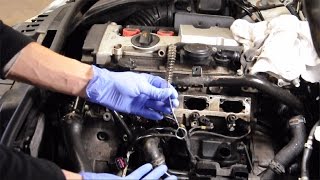
Typical fix: Replace the spark plugs. They should always be replaced as a complete set with the correct type 🎬 See this DIY guide for replacing coils and spark plugs (e.g., NGK Iridium) and gapped properly if not pre-gapped.
Est. part cost: $15-$35 per plug for OEM-spec NGK or Bosch plugs. - Clogged or Faulty Fuel Injector 🟡 Medium Probability Direct injection systems operate under very high pressure and can be sensitive to fuel quality. Injectors can become clogged with deposits or fail electronically. An AudiWorld forum member with a new Q7 reported a P0301 on a cold start that was ultimately diagnosed by the dealer as a leaking fuel injector after plugs and coils were ruled out.
How to confirm: This is more difficult to diagnose. After confirming spark is good, the injector is the next likely cause. A technician can measure injector performance, or a skilled DIYer can swap the injector from cylinder 1 to another cylinder to see if the misfire moves.
Typical fix: Replace the faulty fuel injector. It's often recommended to replace the seals for all injectors on that fuel rail when one is replaced.
Est. part cost: $100-$250 per injector - Carbon Buildup on Intake Valves 🟡 Medium Probability Direct injection (FSI/TFSI) engines spray fuel directly into the cylinder, so gasoline with detergents never washes over the intake valves. Oil vapor from the PCV system bakes onto the hot valves, restricting airflow and causing misfires, especially under load or on cold starts.
How to confirm: Requires a borescope inspection of the intake ports with the intake manifold removed. Symptoms like misfires under heavy load that disappear after a restart can point to this.
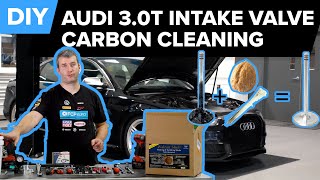
Typical fix: The intake valves must be manually cleaned, typically through walnut shell blasting. 🎬 Watch: How to walnut blast and clean your intake valves This is a labor-intensive service offered by dealers and independent specialists. Chemical cleaners added to fuel are ineffective for this issue.
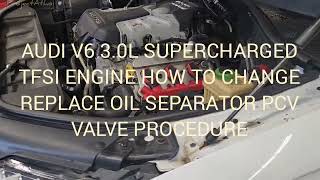
Est. part cost: $0 (service, not a part). Expect shop costs of $600-$1200+ for the labor. - Failed PCV Valve / Vacuum Leak ⚪ Low Probability The PCV (Positive Crankcase Ventilation) system's diaphragm can tear, creating a large, unmetered vacuum leak that leads to a lean air-fuel mixture and misfires across multiple cylinders, though it can present on just one. On the 3.0T engine, this part is notoriously difficult to access, located in the engine valley beneath the supercharger.
How to confirm: A high-pitched whistling noise at idle is a common symptom. You can also try to remove the oil cap with the engine running; if there is extreme suction holding it down, the PCV has likely failed. A smoke test can also confirm a vacuum leak.
Typical fix: Replace the PCV valve assembly (also called an oil separator). On the 3.0T engine, this is a very difficult job requiring removal of the supercharger, fuel rails, and more. It is often done concurrently with carbon cleaning or a thermostat replacement.
Est. part cost: $150-$300 for the part, but labor can be 5-8 hours.
Rare But Worth Checking
- Low Engine Compression: While rare, if ignition and fuel issues are ruled out, a compression or leak-down test is necessary. This indicates a serious internal engine problem like a bad valve, piston ring failure, or head gasket leak. An owner complaint to the NHTSA with code P0301 on a 2017 Q7 mentioned a subsequent catastrophic engine failure. Another owner on a Ross-Tech forum reported a bad engine after getting P0301 and P130A codes.
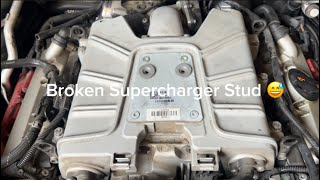
- Leaking Supercharger Intercooler Cores: On the 3.0T supercharged engine, the intercoolers (which are air-to-water) are housed within the supercharger unit. They can develop leaks, allowing coolant to enter the intake air stream and be ingested by the cylinders. This can cause misfires and mysterious coolant loss with no external drips. One owner on an AudiWorld forum with a P0305 misfire found the cause to be a leaking intercooler after plugs and coils were replaced.
Diagnosis Steps
- Read the fault codes with an OBD-II scanner to confirm P0301 and note any other codes, especially P0300 or P130A.
- Locate cylinder 1. On the V6 engines, it is the front-most cylinder on the passenger side (Bank 1). The firing order is 1-4-3-6-2-5.
- Swap the ignition coil from cylinder 1 to an adjacent cylinder (e.g., cylinder 2).
- Clear the fault codes and start the engine. Let it run or drive it until the Check Engine Light reappears.
- Re-scan the codes. If the code is now P0302, the ignition coil is faulty and needs replacement.
- If the code remains P0301, the coil is good. Pull the spark plug from cylinder 1. Inspect for fouling (wet with fuel/oil), damage, or heavy deposits. Oil fouling can indicate a larger problem like a fai
Parts You'll Likely Need
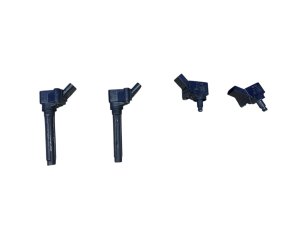
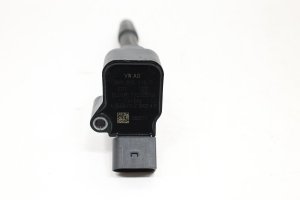
- Ignition Coil
(OEM #06E905115E / 06E905115F / 06E905115G (verify by VIN))— This is the most frequent cause of a single-cylinder misfire on Audi Q7s and is the easiest to diagnose and replace.
Trusted brands: Bosch, NGK, Eldor
OEM price range: $50-$80
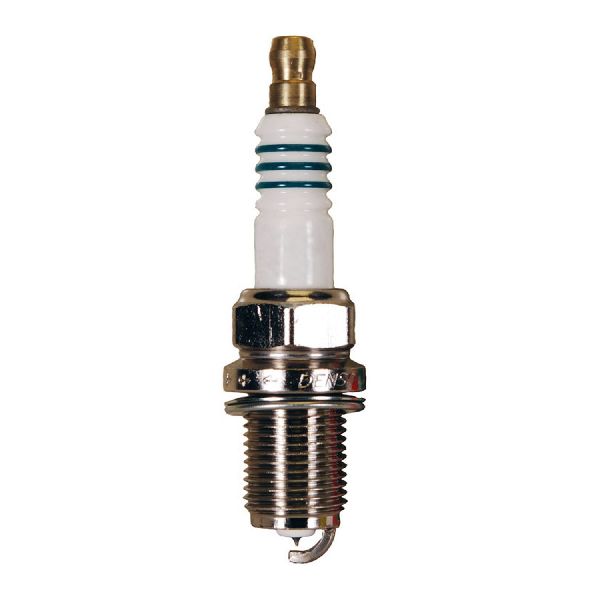
Aftermarket price range: $30-$60 - Spark Plug
(OEM #101905611G / PFR8S8EG (for 3.0T, verify by VIN))— A routine maintenance item that is a common cause of misfires when worn or fouled. Often replaced with ignition coils.
Trusted brands: NGK, Bosch
OEM price range: $20-$35
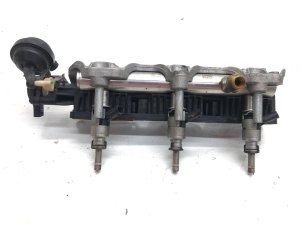
Aftermarket price range: $15-$25 - Fuel Injector
(OEM #06E906036 (Varies significantly by engine, verify by VIN))— The next most likely component after ruling out the ignition system. More common on higher-mileage vehicles.
Trusted brands: Bosch
OEM price range: $150-$250
Aftermarket price range: $70-$150 - PCV Valve / Oil Separator
(OEM #06E103547AE / 06E103547T (for 3.0T, verify by VIN))— A known failure point on 3.0T engines that causes vacuum leaks and misfires. A very involved repair.
Trusted brands: Audi Genuine
OEM price range: $200-$300
Aftermarket price range: $100-$180
Related Codes That Often Appear With This One
- P0300 — If the misfire is intermittent or affects multiple cylinders, a P0300 (Random/Multiple Cylinder Misfire) may be stored alongside P0301. This often points to a systemic issue like a vacuum leak (PCV), fuel delivery problem, or severe carbon buildup.
- P0302, P0303, P0304, etc. — If other cylinder-specific misfire codes are present, it may point to a systemic issue like a failing fuel pump, major vacuum leak, or widespread carbon buildup affecting multiple cylinders.
- P130A — A manufacturer TSB (01-13-89 / 2033768/1) specifically mentions that a cylinder misfire fault (P0301-P0306) may be stored with DTC P130A ('Hide Cylinder' or 'Cylinder Deactivation'). This code is set by the ECM as a protective measure when a persistent, damaging misfire is detected. The ECM intentionally cuts fuel to that cylinder to prevent damage to the catalytic converter. Its presence alongside P0301 strongly suggests a hard fault (like a dead coil, plug, or injector) rather than an intermittent issue.
Technical Service Bulletins (TSBs) & Recalls
- A0124212069038_5: General TSB for MIL on with cylinder misfire codes P0300-P0306.
- 01138920337681: TSB linking a single cylinder misfire (P0301-P0306) with code P130A (Cylinder Deactivation), indicating the ECM is shutting down the cylinder to prevent damage.
Platform-Specific Known Issues
- PCV Valve Replacement Under Supercharger (3.0T): The PCV valve on the 3.0T supercharged V6 is a common failure item that causes vacuum leaks and misfires. Unlike on many engines, it is located in the 'V' of the engine, underneath the entire supercharger assembly. Replacing it is a 5+ hour job that requires removing the supercharger, fuel rails, and various hoses. Many DIY guides and forum posts exist to walk through this complex process.
- Carbon Buildup and Walnut Blasting: Due to the direct injection design, all engines in this range are susceptible to carbon buildup on the intake valves. This restricts airflow and is a very common cause for misfires that don't seem to be related to ignition or fuel components. The only effective fix is a manual cleaning, with walnut shell blasting being the industry-standard method.
Mechanic-Grade Diagnostic Values
- Low-Pressure Fuel Pump (LPFP) Pressure — expected: Roughly 4 to 6 bar (58 to 87 PSI). Failure: Significantly lower pressure indicates a failing in-tank pump, which can starve the high-pressure pump.
- High-Pressure Fuel Pump (HPFP) Rail Pressure at Idle/Load — expected: Up to 200 bar (2,900 PSI) depending on engine load and factory components. Upgraded pumps can exceed 240 bar (3,480 PSI).. Failure: Inability to maintain requested fuel rail pressure under load, which can be observed with a scan tool, points to a weak HPFP.
- Fuel Injector Resistance — expected: While specific OEM values are hard to publish, a general rule is that all injectors should have a resistance within 0.5 ohms of each other. A known good range for similar Bosch injectors is often 12-17 ohms.. Failure: An injector with a significantly different resistance reading (either much higher or lower) than the others is likely faulty.
Hidden / Shadow Codes Worth Checking
- Misfire Counters in Measuring Blocks/Advanced Measuring Values: The ECU actively counts misfire events per cylinder, even before they are frequent enough to set a P030x code. This allows a technician to see which cylinder is having minor, intermittent misfires. (see via Using VCDS (VAG-COM) or ODIS. For older controllers, navigate to Engine (01) -> Measuring Blocks (08) -> Groups 014, 015, 016. For newer UDS controllers, go to Engine (01) -> Advanced Measuring Values and search for 'misfire'.)
Scan Tool Commands That Help
- VCDS (VAG-COM) or ODIS: Engine (01) -> Output Tests -> Fuel Injectors — This function allows a technician to manually activate each fuel injector one by one. You should hear a distinct clicking sound from the injector being tested. If an injector is silent, it indicates a failure in the injector itself or its wiring. This is a definitive way to test injector electrical function without removal.
Wiring & Ground Locations
- G600 / G601 — Earth point on the right (G600) or left (G601) cylinder head.. The ignition coils are grounded through the engine harness, which ultimately connects to these main earth points on the cylinder heads. A loose or corroded ground at this location can cause intermittent and hard-to-diagnose misfires on one or more cylinders on that bank.
- Injector Wiring at ECU Connector — At the main 94-pin or 60-pin connector for the Engine Control Module (J623).. For diagnosing a suspected wiring fault, a technician can perform a continuity or resistance test from the injector's electrical plug directly to the corresponding pin at the ECU. For example, on some models, the wire for Injector 1 (N30) is located at a specific pin on the ECU connector. This definitively rules out a break in the engine wiring harness.
Real Owner Repair Stories
- AudiWorld Forums user 'pissedoffaudiowner' (New Audi Q7 (MKII, V6 Turbo)) — Major cylinder #1 misfires (P0301) under cold start conditions. Flashing check engine light.
❌ Tried (didn't work) Initial dealer diagnosis of 'bad fuel', Troubleshooting spark plugs and ignition coils
✅ What actually fixed it The dealer, after consulting with Audi engineering, performed compression and leak-down tests which passed. The final diagnosis was a leaking fuel injector on cylinder 1. Replacing the fuel injector resolved the cold start misfire. - AudiWorld Forums user (2012 Audi S4 3.0T (same engine family)) — EPC light, rough running, P0305 (Cylinder 5 Misfire).
❌ Tried (didn't work) Replacing spark plugs, Replacing ignition coils
✅ What actually fixed it After removing the supercharger, the mechanic found coolant leaking from one of the internal intercooler cores directly into the cylinder. The fix was to replace the faulty intercooler cores located inside the supercharger assembly.
OEM Part Supersession History
06E-905-115→06E-905-115-G (and revisions A, B, C, D, E, F in between)— Ongoing revisions by the manufacturer to improve reliability and prevent premature failure of the ignition coils.
Heads up: While older revisions may physically fit, it is always best practice to use the latest available part number (e.g., 'G' or later) for all cylinders to ensure longevity and consistent performance.
Model Year Variations Within This Range
- 2016-2020 (4M Generation): The second-generation Q7 introduced the 3.0T 'CREC' engine. Unlike the earlier supercharged engines which were purely direct injection, the CREC engine features a dual-injection system (both port and direct injection). This was intended to mitigate the severe carbon buildup issues seen on earlier engines. However, some technicians have noted the CREC engine can have its own significant oil consumption issues related to an inferior PCV and crankcase ventilation design, which can lead to fouled plugs and misfires.
- 2013-2015 (4L Generation): The first-generation Q7s in this range with the 3.0T supercharged engine are purely direct injection and are well-known for requiring intake valve carbon cleaning as a maintenance item, which is a common cause of misfires as the vehicle ages.
Helpful Videos
Used OEM Parts in Stock



New Aftermarket Parts Available

The information in this article is provided for general reference and educational purposes only. Vehicle specifications, procedures, and part compatibility can vary by production date, trim level, and region. Always consult your vehicle's factory service manual and verify part numbers before purchasing or performing repairs. Safety-critical components such as airbags, seat belts, and braking systems should be installed by a qualified professional.
- Audi Q7:
- 🎬 Helpful Videos
- 🛍️ Shop This Part
- What's Unique About the 2013-2020 Audi Q7
- Diagnostic Flowchart
- Symptoms You May Notice
- Most Likely Causes
- Rare But Worth Checking
- Diagnosis Steps
- Parts You'll Likely Need
- Related Codes That Often Appear With This One
- Technical Service Bulletins (TSBs) & Recalls
- Platform-Specific Known Issues
- Mechanic-Grade Diagnostic Values
- Hidden / Shadow Codes Worth Checking
- Scan Tool Commands That Help
- Wiring & Ground Locations
- Real Owner Repair Stories
- OEM Part Supersession History
- Model Year Variations Within This Range
- 🎟️ Get 5% Off