

P0301 on 2016 Acura MDX: Cylinder 1 Misfire Causes and Fixes
P0301 on a 2016 Acura MDX means cylinder 1 is misfiring. The most common causes are a bad ignition coil or a worn spark plug. However, a faulty fuel injector is a highly probable and well-documented issue for this specific engine and should be a primary suspect, especially if other misfire or lean codes are present. Acura has acknowledged this with TSBs and warranty extensions for related models.
- P0301 means cylinder 1 is misfiring. On the 2016 MDX, this is the cylinder on the passenger side, closest to the firewall.
- The most likely cause is a bad ignition coil or spark plug. A simple coil swap is the best first diagnostic step.
- Do not ignore a flashing check engine light. It signals a severe misfire that can quickly ruin your catalytic converters, a very expensive repair.
- Be aware that faulty fuel injectors are a known issue on this engine and can cause this code, especially if you also have lean codes (P0171/P0174).
What's Unique About the 2016-2016 Acura MDX
The 2016 MDX is powered by the J35Y5 direct-injection V6 engine. While generally reliable, this engine platform is known for a few specific issues that can lead to misfires. Acura has issued technical service bulletins related to misfires (P0300-P0306) on these vehicles, often pointing towards problematic fuel injectors. Acura TSB 22-013, for example, explicitly addresses failing fuel injectors causing misfires and lean codes on 2016-2020 MDX models due to debris from the manufacturing process. This is a more common and critical issue on this direct-injection engine compared to older port-injected designs and can sometimes be misdiagnosed as a simple spark plug or coil problem.
Diagnostic Flowchart
Tap your situation to follow the diagnostic path that matches what you're seeing on this vehicle.
Symptoms You May Notice
- Flashing or solid Check Engine Light
- Rough or shaking idle
- Engine hesitation or stumbling during acceleration
- Noticeable loss of power
- Reduced fuel economy
- Smell of raw gasoline from the exhaust
- Loud idle noise and vibration when parked.
- Replacing only the spark plug when the ignition coil was the actual cause.
- Replacing ignition components (plugs, coils) when a clogged or faulty fuel injector is the root problem, which is a well-documented TSB issue on this platform.
- Diagnosing a bad torque converter when a judder is caused by deteriorated transmission fluid, an issue addressed by Acura TSB 17-017. While not a direct cause of P0301, it's a related drivetrain issue that can be misdiagnosed.
Most Likely Causes
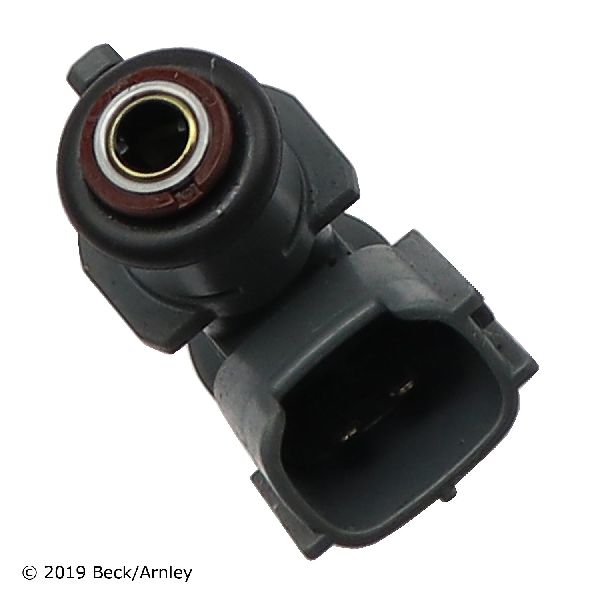
- Faulty Fuel Injector 🔴 High Probability The direct-injection J35Y5 engine is known to have issues with fuel injectors. Acura TSB 22-013 covers the 2016 MDX and identifies that debris from the high-pressure fuel pump or the original injectors' manufacturing can cause them to fail, leading to misfires and lean codes (P0171/P0174). This is a widely acknowledged problem for this engine family. The official fix is to replace all six injectors with an updated part kit.
How to confirm: This is more difficult for a DIYer. A professional can perform a fuel injector balance test. You can also listen to the injector with a mechanic's stethoscope to ensure it's clicking. If codes P0171 (Bank 1 Lean) or P0300 (Random Misfire) are also present, the likelihood of an injector issue increases significantly. A YouTube tutorial for the 2015-2020 MDX shows the replacement process and how carbon can clog the injector tips. 🎬 Watch: How to replace fuel injectors on a 2015-2020 MDX.
Typical fix: Replace the faulty fuel injector. Due to the known issues and the labor involved to access the fuel rail, it is highly recommended to replace all six injectors as a balanced set (Acura part kit #06160-5J6-A00).
Est. part cost: $150-$250 per injector, or $800-$1800 for a full set of six OEM injectors. - Failing Ignition Coil 🟡 Medium Probability Coil-on-plug systems are common failure points on many modern engines as they age. Heat cycles and vibration eventually cause the internal windings to fail.
How to confirm: The easiest way to confirm a bad coil is to swap the ignition coil from cylinder 1 with another cylinder (e.g., cylinder 2). Clear the codes and drive the vehicle. If the code changes to P0302, the ignition coil is faulty. This is a standard diagnostic step recommended across many owner forums.
Typical fix: Replace the faulty ignition coil. It is often recommended to replace all six coils and spark plugs at the same time for preventative maintenance, but only the failed part is strictly necessary.
Est. part cost: $60-$90 per coil - Worn Spark Plug 🟡 Medium Probability Spark plugs are a routine maintenance item. The manufacturer recommends replacement at specific intervals (typically around 100,000 miles), and an old plug with a worn electrode, incorrect gap, or fouling from oil/carbon cannot produce a strong enough spark. VCM operation can sometimes lead to premature fouling on specific cylinders.
How to confirm: After ruling out the ignition coil, remove the spark plug from cylinder 1. Inspect it for wear, carbon fouling, or oil deposits. Compare it to a new plug; the electrode should be intact and the gap should be within specification. You can also swap the plug to another cylinder to see if the misfire follows.
Typical fix: Replace the spark plug in cylinder 1. It is best practice to replace all six spark plugs at the same time to ensure consistent performance. The correct plugs are NGK Laser Iridium type DILZKR7B11G. 🎬 See this walkthrough for removing and replacing your spark plugs.
Est. part cost: $15-$30 per plug
Rare But Worth Checking
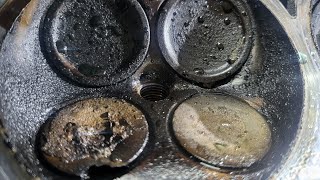
- Carbon Buildup on Intake Valves: Direct-injection engines like the J35Y5 are prone to carbon buildup on the intake valves because fuel is no longer sprayed over them, which would normally keep them clean. This can restrict airflow and cause misfires, especially on cold starts.
- Mechanical Engine Issue: Though uncommon, a misfire can be caused by a loss of compression due to worn piston rings, a bad valve, or a leaking head gasket. A compression test is needed to diagnose this. On J-series engines, tight valve clearances are a common cause of misfires over time and may require a valve adjustment.
- VCM (Variable Cylinder Management) Issues: The VCM system deactivates cylinders to save fuel, which can lead to issues like fouled spark plugs and oil consumption from stuck piston rings over time, particularly in the VCM-managed cylinders. This can contribute to misfire conditions. Many owners on forums like Acurazine discuss installing a 'VCM Muzzler' to disable the system and prevent these long-term problems.
- Faulty Low-Pressure Fuel Pump: Acura issued a recall for the low-pressure fuel pump on 2016-2018 MDX models (NHTSA Campaign 23V858000, Acura TSB 24-006), which can cause stalling or loss of power, mimicking misfire symptoms. It's crucial to check if the vehicle is affected by this recall before diagnosing injectors.
Diagnosis Steps
- Read the trouble codes with an OBD-II scanner. Confirm P0301 and note any other codes present, especially P0300, P0171/P0174, or P219A/B.
- Check VIN for open recalls, specifically the low-pressure fuel pump recall (Acura TSB 24-006), as its symptoms can mimic misfires.
- If the check engine light is flashing, stop the engine immediately to prevent catalytic converter damage.
- Identify cylinder 1 (rear bank, passenger side). 🎬 Watch: Diagnosing a cylinder 1 misfire on the 3.5L engine.
- Swap the ignition coil from cylinder 1 with the coil from cylinder 2 (P0302).
- Clear the codes and drive the vehicle until the check engine light returns.
- If the code is now P0302, the ignition coil is bad and needs replacement.
- If the code remains P0301, the coil is likely good. Proceed to inspect the spark plug.
- Remove and inspect the spark plug from cylinder 1 for wear, damage, or fouling. Replace if necessary. Consider swapping the plug to another cylinder to see if the misfire follows.
- If the coil and plug are good, the issue is highly likely to be the fuel injector, per Acura TSBs. Listen for a consistent clicking sound from the injector. A professional diagnosis with an injector balance test is the definitive confirmation.
- If all else fails, consider a mechanical issue. Perform a compression test on cylinder 1 to check for internal engine problems.
Parts You'll Likely Need
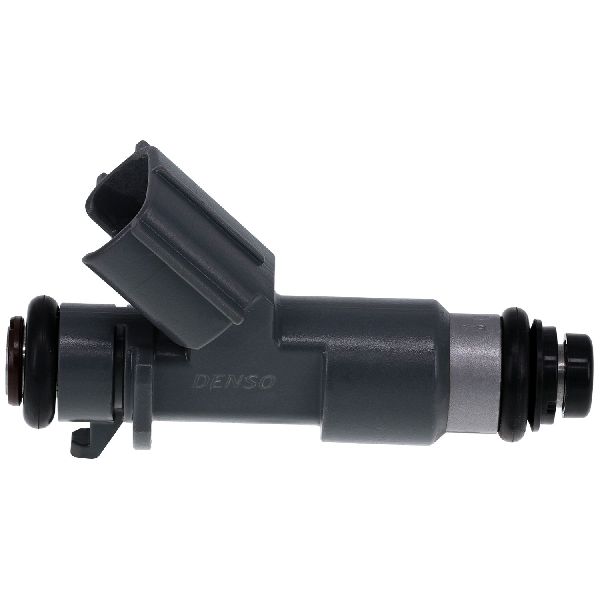
- Fuel Injector Kit (Set of 6)
(OEM #06160-5J6-A00)— Faulty fuel injectors are a documented problem on this specific engine, as noted in TSB 22-013, leading to misfires and lean codes. Replacement as a full set is the recommended procedure.
Trusted brands: Acura (OEM), Bosch
Related Codes That Often Appear With This One
- P0300 — If the misfire is intermittent or affects other cylinders, a P0300 (Random Misfire) may be stored alongside P0301. This often points towards a systemic issue like fuel delivery.
- P0302 - P0306 — Often, the underlying cause (like bad fuel injectors or old spark plugs) will affect multiple cylinders, leading to additional codes like P0306, as seen in NHTSA complaint #11584900.
- P0420 / P0430 — This code for "Catalyst System Efficiency Below Threshold" can appear after prolonged misfiring. Unburnt fuel from the misfiring cylinder overheats and damages the catalytic converter, as noted in NHTSA complaint #11584900.
- P0171 / P0174 — These "System Too Lean" codes are explicitly mentioned in Acura TSB 22-013 as occurring alongside misfire codes due to faulty fuel injectors, a known issue on this engine.
- P219A / P219B — Bank 1 or Bank 2 Air-Fuel Ratio Imbalance. These codes are also listed in TSB 22-013 as being caused by the known fuel injector problem.
Technical Service Bulletins (TSBs) & Recalls
- BPAS04242017901: An investigation by American Honda into 2016 MDX models reporting MIL on with DTCs P0300, P0301, P0302, P0303, P0304, P0305, and/or P0306 stored.
Platform-Specific Known Issues
- Acura TSB #BPAS04242017901: An internal investigation launched by Acura in 2017 to understand the cause of misfire codes P0300-P0306 on 2016 MDX models, confirming manufacturer awareness of the problem.
- Acura TSB #22-013: Specifically for 2016-2020 MDX (and other models), this bulletin identifies failing fuel injectors as the cause for misfires (P030x) and lean codes (P017x), recommending replacement of all six injectors.
- Acura TSB #24-006 (NHTSA #23V858000): A safety recall for the low-pressure fuel pump on 2014-2020 MDX models, which can cause stalling and power loss, symptoms that could be mistaken for a misfire.
- Acura TSB #17-026: A warranty extension for the 9-speed transmission's ATF warmer, which could leak internally and cause major transmission and engine damage, including overheating.
Mechanic-Grade Diagnostic Values
- Ignition Coil Primary Winding Resistance — expected: 0.49 - 0.57 Ω. Failure: A reading outside this range indicates a faulty coil.
- Ignition Coil Secondary Winding Resistance — expected: 9.5 - 11.1 kΩ. Failure: A reading outside this range indicates a faulty coil.
- Fuel Pressure (Low-Pressure System) — expected: 57 - 64 psi. Failure: Pressure below this range can indicate a weak low-pressure fuel pump, which was subject to a recall.
- Live Misfire Count (Mode $06) — expected: 0 counts on a healthy cylinder at idle and under load.. Failure: Any count incrementing on cylinder 1 confirms a real-time misfire is occurring.
Hidden / Shadow Codes Worth Checking
- Mode $06, Monitor ID $A2: This is not a DTC but a monitor for raw misfire count data for Cylinder 1. It can show misfires happening in real-time before they are frequent enough to set a P0301 code. (see via An advanced OBD-II scanner or the Honda HDS (Honda Diagnostic System) that can display Mode $06 data.)
Scan Tool Commands That Help
- Honda HDS (or compatible advanced scanner): CKP Pattern Clear / CKP Pattern Learn — This procedure is critical after replacing a crankshaft position sensor, disconnecting the battery, or sometimes after major engine work. Failure to perform the relearn can cause the PCM to incorrectly interpret crankshaft speed variations, leading to 'ghost' misfire codes like P0301 even when no mechanical misfire is present.
- Honda HDS (or compatible bidirectional scanner): Cylinder Power Balance Test — To actively test for a misfire by sequentially disabling the fuel injector to each cylinder. When cylinder 1 is disabled, if there is little to no change in engine RPM, it confirms that cylinder was not contributing properly.
- Honda HDS: Reset All Learned Values — After replacing fuel injectors or performing a valve adjustment, this function clears long-term fuel trims and other adaptations, forcing the PCM to create new baseline values with the new parts.
Wiring & Ground Locations
- G1 — Left front of the engine compartment.. This is a primary engine ground. A loose or corroded connection at G1 can cause erratic behavior in various engine sensors and actuators, including the ignition coils and fuel injectors, potentially leading to misfire codes.
- G2 — Right front of the engine compartment.. Similar to G1, this is another main engine ground point. Ensuring it is clean and tight is a crucial step in diagnosing electrical issues that could manifest as a misfire.
- Cylinder 1 Ignition Coil Connector — On the ignition coil for cylinder 1 (rear bank, passenger side).. The 3-pin connector provides power, ground, and the trigger signal from the PCM. A voltage test at this connector can determine if the coil is receiving the correct signals. A wiring diagram is needed to identify the specific pin functions for testing.
Real Owner Repair Stories
- YouTube channel 'Pro-Spec Auto' (2012 Acura MDX (similar J-series engine and electronics)) — Misfire codes P0302 and P0306 appeared 20-30 seconds after starting the engine. The issue began after the battery died and the vehicle was jump-started.
❌ Tried (didn't work) Replacing all spark plugs, Replacing all ignition coils
✅ What actually fixed it Performing a Crank Pattern Calibration (CKP Relearn) using an Autel Maxisys Elite scan tool. After the procedure, the misfire issue was resolved completely. - YouTube channel 'FixItPhillip' (2003 Acura MDX 3.5L V6 with 177k miles (older J-series engine, but demonstrates a common mechanical cause)) — Rough running, especially when cold, with misfire codes on all six cylinders (P0300, P0301-P0306).
❌ Tried (didn't work) The video implies standard ignition/fuel checks were not the focus due to the nature of the codes.
✅ What actually fixed it A valve adjustment. The mechanic found the exhaust valve clearances were extremely tight, a common wear pattern on Honda J-series engines that leads to compression loss and misfires. - ScannerDanner Forum user 'JoseG' (2012 Acura MDX) — Persistent P0300, P0302, and P0303 codes.
❌ Tried (didn't work) Replacing all spark plugs, Replacing all ignition coils, Replacing fuel injectors for cylinders 1, 2, and 3, Replacing rear catalytic converter, Replacing EGR valve and cleaning the intake, Performing a CKP relearn procedure
✅ What actually fixed it The user brought the vehicle home after a dealer mechanic suspected a stuck rocker arm but did not confirm the final fix in the thread. This story highlights a scenario where common and even advanced fixes fail, pointing towards a deeper mechanical issue like VCM-related rocker arm problems.
OEM Part Supersession History
16010-R9P-A01 / 16450-R9P-A01→06160-5J6-A00 (Kit of 6 injectors)— The original fuel injectors were identified as a common failure point, causing misfires and lean codes as documented in Acura TSB 22-013. The updated part is sold as a complete kit to ensure all injectors are replaced with the revised design.
Heads up: It is strongly recommended to replace all six injectors as a set with the kit part number to prevent repeat failures and ensure balanced fuel delivery. Mixing old and new design injectors is not advised.
Helpful Videos
![How to Fix P0301 Engine Code in 3 Minutes [2 DIY Methods / Only $4.22]](https://img.youtube.com/vi/3R-0J38Phfc/mqdefault.jpg)
We Have This Part in Stock

The information in this article is provided for general reference and educational purposes only. Vehicle specifications, procedures, and part compatibility can vary by production date, trim level, and region. Always consult your vehicle's factory service manual and verify part numbers before purchasing or performing repairs. Safety-critical components such as airbags, seat belts, and braking systems should be installed by a qualified professional.
- Acura MDX:
- 🎬 Helpful Videos
- 🛍️ Shop This Part
- What's Unique About the 2016-2016 Acura MDX
- Diagnostic Flowchart
- Symptoms You May Notice
- Most Likely Causes
- Rare But Worth Checking
- Diagnosis Steps
- Parts You'll Likely Need
- Related Codes That Often Appear With This One
- Technical Service Bulletins (TSBs) & Recalls
- Platform-Specific Known Issues
- Mechanic-Grade Diagnostic Values
- Hidden / Shadow Codes Worth Checking
- Scan Tool Commands That Help
- Wiring & Ground Locations
- Real Owner Repair Stories
- OEM Part Supersession History
- 🎟️ Get 5% Off