

P0300 on 2017-2022 Volkswagen Jetta: Random Misfire Causes & Fixes
P0300 on a 2017-2022 VW Jetta indicates random cylinder misfires, most often caused by worn spark plugs or failing ignition coils. Replacing all four spark plugs typically costs $40-$80 for parts, and each ignition coil costs $30-$60. These are common and accessible DIY repairs. If these don't solve the issue, suspect carbon buildup or faulty fuel injectors.
- Always start with the basics: P0300 on a Jetta is most often fixed by replacing worn spark plugs and/or failing ignition coils.
- If the check engine light is flashing, pull over. Driving with a severe misfire can cause expensive damage to your catalytic converter.
- For direct-injection (TSI) engines, if new plugs and coils don't solve the issue, the next most likely cause is carbon buildup on the intake valves.
- Be aware of vehicle-specific TSBs; some model years may have software issues that can only be resolved by a dealership.
- A P0300 code means the problem affects multiple cylinders, so look for causes with a wide-ranging impact, like vacuum leaks or fuel pressure issues, rather than a single component.
What's Unique About the 2017-2022 Volkswagen JETTA

The 2017-2022 Jetta models primarily use Turbocharged Stratified Injection (TSI) engines from the EA211 family. These direct-injection engines are known for carbon buildup on the intake valves, which can disrupt airflow and cause misfires, especially on cold starts. Additionally, specific software issues have been documented by VW; a Technical Service Bulletin (TSB) for 2018 models notes that P0300 codes could appear after a specific software update, suggesting the misfire detection was overly sensitive. [NHTSA VIN-4-A-PIN-2018] Another TSB for 2016-2017 models with the CZTA engine also addresses overly sensitive misfire detection that can be fixed with an ECM software update. A TSB for 2021 models links P0300 directly with low fuel pressure codes. [NHTSA VIN4APIN20211116]
Diagnostic Flowchart

Tap your situation to follow the diagnostic path that matches what you're seeing on this vehicle.
Generation note: This range covers two Jetta generations: the A6 (2017-2018) and the A7 (2019-2022). While the primary causes of P0300 are consistent across both, TSBs point to specific software-related issues on 2017-2018 models that can trigger this code. [14, NHTSA VIN-4-A-PIN-2018] The 1.4T EA211 engine used in these models is also shared with the VW Golf and Audi A3, which experience similar misfire problems. The A6 generation typically used the CZTA engine code, while the A7 uses the DGXA engine code.
Symptoms You May Notice
- Rough or shaky engine idle
- Hesitation or stumbling during acceleration
- Noticeable loss of engine power
- Flashing Check Engine Light
- Difficulty starting the engine
- Decreased fuel economy
- Smell of raw fuel from the exhaust
- Misfire is most noticeable on a cold start and may smooth out as the engine warms up
- A high-pitched whistling or sucking sound from the engine bay at idle
- Replacing oxygen (O2) sensors. While a bad O2 sensor can affect the air-fuel mixture, it's rarely the direct cause of a P0300 code and should only be replaced if a specific O2 sensor code is present.
- Replacing the catalytic converter. The catalytic converter can be damaged by a persistent misfire, but it is the victim, not the cause. The root cause of the misfire must be fixed first to avoid damaging the new converter.
Most Likely Causes


- Worn or Fouled Spark Plugs 🔴 High Probability Spark plugs are a regular maintenance item. VW recommends replacement intervals (e.g., every 40k miles for some 1.4T engines) that are sometimes overlooked.
How to confirm: Remove and inspect the spark plugs. Look for worn, rounded electrodes, heavy carbon fouling, or oil deposits. The spark plug gap should also be checked against specifications, which is typically between 0.024 and 0.071 inches.
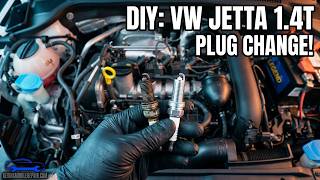
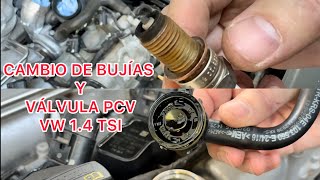
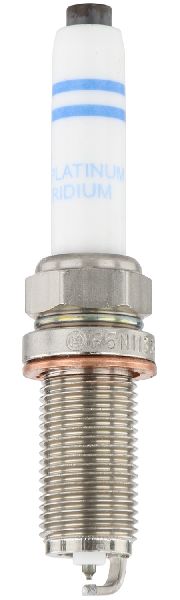
Typical fix: Replace all spark plugs as a set. It is recommended to use OEM-spec plugs from brands like NGK or Bosch. 🎬 See this DIY guide for replacing Jetta 1.4T spark plugs. The original part 04E905602D is often superseded by 04E905612C.
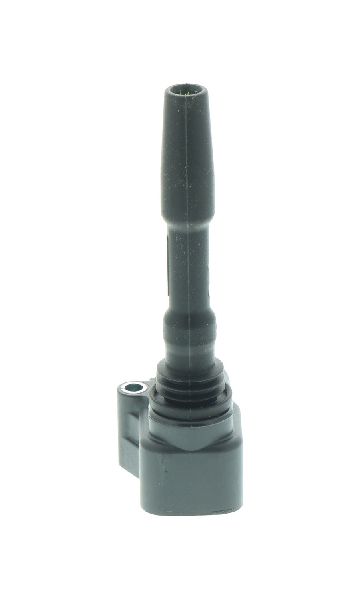
Est. part cost: $40-$80 - Failing Ignition Coils 🔴 High Probability Ignition coil failure is a common issue on many modern Volkswagen engines. Heat and vibration can cause the internal windings or housing to fail over time.
How to confirm: If a specific cylinder misfire code (e.g., P0301) is also present, swap the ignition coil from the misfiring cylinder with one from a working cylinder. If the code follows the coil (e.g., changes to P0302), the coil is bad. A multimeter can also be used to test the coil's primary resistance (expect 0.4-2 ohms) and secondary resistance (expect 6,000-10,000 ohms).
Typical fix: Replace the faulty ignition coil. Many owners choose to replace all coils at once as a preventative measure, as they tend to fail around the same time.
Est. part cost: $30-$60 per coil - Carbon Buildup on Intake Valves 🟡 Medium Probability Because TSI engines use direct injection, fuel is sprayed directly into the cylinder, not over the intake valves. This means gasoline detergents don't clean the valves, allowing oil and carbon deposits from the PCV system to bake onto them over time, restricting airflow.
How to confirm: This requires visual inspection using a borescope inserted into the intake ports after removing the intake manifold. A technician may first use a diagnostic tool like VCDS to monitor misfire counters on a cold start; a high count across multiple cylinders that subsides as the engine warms is a strong indicator.
Typical fix: The intake manifold must be removed, and the valves must be cleaned, typically through walnut shell blasting. Some owners report temporary success with spray-in chemical cleaners, but this is often not a long-term solution.
Est. part cost: $10-$20 for cleaners, $400-$800 for professional walnut blasting service. - Faulty PCV Valve / Vacuum Leak 🟡 Medium Probability The diaphragm inside the Positive Crankcase Ventilation (PCV) valve is made of rubber and can tear, creating a significant unmetered vacuum leak that affects the air-fuel mixture for all cylinders.
How to confirm: A failed PCV diaphragm often creates a loud whistling or sucking noise from a small hole on the valve itself at idle. Another test is to try to remove the oil filler cap while the engine is running; if there is extreme suction making it hard to remove, or if the engine stumbles and dies when it's removed, the PCV valve has likely failed. A smoke test is also effective.
Typical fix: Replace the entire PCV valve assembly. On these engines, it is often called an 'oil separator'. Replacing just the diaphragm is possible but not recommended as other parts of the unit can fail.
Est. part cost: $40-$150 - Clogged or Faulty Fuel Injectors Medium-low Probability While less common than ignition issues, fuel injectors can become clogged or fail electronically. Several owners have reported that after replacing plugs, coils, and even performing a carbon cleaning, the P0300 code was ultimately resolved by replacing one or more faulty fuel injectors.
How to confirm: This is more difficult to diagnose. It may involve using a scan tool to monitor fuel trims, swapping injectors between cylinders to see if a specific misfire code follows, or sending them to a specialist for flow testing and cleaning. After replacement, new injectors must be coded to the ECM using a tool like VCDS.
Typical fix: Replace the faulty fuel injector(s). It's often recommended to replace the seals for all injectors that are removed during testing.
Est. part cost: $50-$150 per injector
Rare But Worth Checking
- ECM Software Glitch: NHTSA TSB VIN-4-A-PIN-2018 specifically mentions that for 2018 models, a P0300 code can appear after an ECM software update to level 0003, indicating the misfire detection may be too sensitive. A similar TSB (V011620) exists for 2016-2017 models with the CZTA engine. A dealership reflash with updated software is the required fix.
- Low Fuel Pressure: A weak high-pressure fuel pump (HPFP), in-tank lift pump, or clogged fuel filter can starve the engine of fuel, causing random misfires under load. TSB #VIN4APIN20211116 specifically groups P0300 with low fuel pressure codes (P0087, P053F) on 2021 models, indicating a known link.
Diagnosis Steps
- Scan for any other fault codes. Specific cylinder misfire codes (P0301-P0304) are extremely helpful for narrowing down the issue.
- Use a scan tool like VCDS to view live misfire counts for each cylinder in the engine measuring blocks. This can reveal which cylinders are misfiring even without a specific P030x code. 🎬 Watch this walkthrough on diagnosing P0300 and P0301 misfire codes.
- Inspect and replace spark plugs if they are due for service or show signs of wear or fouling. Ensure they are gapped correctly.
- If a specific cylinder is identified, swap its ignition coil with another cylinder's coil to see if the misfire code follows the coil.
- Check for obvious vacuum leaks. Listen for a whistling sound from the PCV valve at idle and perform the 'oil cap test' by removing the oil cap with the engine running to check for excessive suction.
- If the vehicle has over 60,000-80,000 miles and experiences misfires mainly on cold starts, suspect carbon buildup on intake valves.
- Test fuel pressure. The low-pressure system should be around 6.6 bar (95 psi), and the high-pressure system should be 140-200 bar (2030-2900 psi).
- If plugs, coils, and vacuum leaks have been ruled out, consider faulty fuel injectors as the cause, as this has been the solution for many owners after other attempts failed.
- As a final step, a compression test can check for mechanical engine problems like worn piston rings or valve issues, though this is a rare cause for this code.
Parts You'll Likely Need

- Spark Plugs (Set of 4)
(OEM #04E905602D / 04E905612C)— This is the most common cause of misfires and a standard maintenance item. Part number 04E905612C often supersedes 04E905602D for the 1.4T engine.
Trusted brands: NGK, Bosch
OEM price range: $60-$100 (set of 4)
Aftermarket price range: $40-$80 (set of 4) - Ignition Coil
(OEM #04E905110P)— Ignition coils are a frequent failure point on VW engines, leading to misfires. This part number is a common application for the 1.4T EA211 engine.
Trusted brands: Bosch, Eldor, NGK
OEM price range: $55-$95 per coil
Aftermarket price range: $30-$60 per coil - PCV Valve / Oil Separator — The internal diaphragm can tear, causing a large vacuum leak and random misfires. It is a common failure item.
Trusted brands: Vaico, Febi, Genuine VW
OEM price range: $120-$180
Aftermarket price range: $40-$150
Related Codes That Often Appear With This One
- P0301, P0302, P0303, P0304 — These codes indicate a misfire on a specific cylinder (1, 2, 3, or 4). They often accompany P0300 and can help pinpoint a bad coil, plug, or injector.
- P0171 — System Too Lean (Bank 1). This indicates too much air or not enough fuel, which is a classic symptom of a vacuum leak from a failed PCV valve—a common source of random misfires.
- P0087, P053F — These codes for low fuel pressure were linked to P0300 in manufacturer TSB #VIN4APIN20211116 for 2021 models, suggesting a fuel delivery issue as the cause of the misfire.
Technical Service Bulletins (TSBs) & Recalls
- VIN4APIN20211116: Groups P0300 with fuel pressure and other engine faults on 2021 models.
- VIN-4-A-PIN-2018: Notes P0300-P0304 codes appearing after a software update on 2018 models.
- V011620 (2045602): Addresses overly sensitive misfire detection software on 2016-2017 1.4T models, recommending an ECM update.
Platform-Specific Known Issues
- A Technical Service Bulletin (NHTSA ID #10184286 / VIN4APIN20201201) from Dec 2020 notes customer complaints of 'MIL-on with Misfire code' among other issues, showing manufacturer awareness.
- NHTSA TSB #VIN-4-A-PIN-2018 specifically calls out 'MIL-on with P0300-P0304 in the ECM AFTER software level 0003' for 2018 models, pointing to a software sensitivity issue.
- NHTSA TSB #VIN4APIN20211116 for 2021 models groups P0300 with low fuel pressure codes like P0087 and P053F, suggesting a fuel delivery problem as a potential root cause.
- Misfires on cold start are a very common complaint for the 1.4T engine, often pointing towards either carbon buildup on the intake valves or faulty fuel injectors.
Mechanic-Grade Diagnostic Values
- High-Pressure Fuel Rail Pressure (G247 sensor) — expected: 140 - 200 bar (2030 - 2900 psi) at idle and under load.. Failure: Significantly lower pressure, especially under acceleration, indicates a failing High-Pressure Fuel Pump (HPFP).
- Low-Pressure Fuel System — expected: Regulated to 6.6 bar (95 psi) before the HPFP.. Failure: Low pressure suggests a weak in-tank fuel pump or a clogged fuel filter.
- Ignition Coil Primary Winding Resistance — expected: 0.4 - 2.0 ohms between the positive and negative terminals on the coil's connector.. Failure: A reading of OL (open loop) or significantly outside this range indicates a bad coil.
- Ignition Coil Secondary Winding Resistance — expected: 6,000 - 10,000 ohms (6-10 kΩ) between the positive terminal and the high-voltage output tower.. Failure: A reading of OL (open loop) or far outside this range indicates a bad coil.
Hidden / Shadow Codes Worth Checking
- Mode $06, Test IDs $A2-$A5: Mode $06 data stores results from non-continuous monitors. For misfires, it contains a raw misfire count for each cylinder from the last drive cycle. Test IDs $A2, $A3, $A4, and $A5 typically correspond to the misfire counters for cylinders 1, 2, 3, and 4, respectively. (see via A generic OBD-II scanner with Mode $06 capability. This can reveal which cylinder is the primary offender even if only a P0300 is stored, helping to guide diagnosis.)
Scan Tool Commands That Help
- VCDS (VAG-COM): Injector Adaptation (Coding) — This is required after replacing a fuel injector. In the '01-Engine' module, go to 'Adaptation - 10' and enter the 6 or 7-digit IMA code from the new injector into the corresponding cylinder's channel (e.g., Channel 71 for Cyl 1). Failure to code the new injector can cause rough running and persistent misfires.
- ODIS (Dealer Tool): Software Version Management (SVM) Update — For 2016-2018 models, if P0300 is present without a clear mechanical cause, a dealer can perform an SVM update to re-flash the ECM with software that has less sensitive misfire detection parameters, as specified in TSB V011620.
- VCDS (VAG-COM): View Misfire Counters — In the '01-Engine' module, go to 'Meas. Blocks - 08' and select the groups for misfire recognition (typically groups 014, 015, 016). This provides a live count of misfires per cylinder, which is the most effective way to see which cylinders are actively misfiring.
Wiring & Ground Locations
- Ground Point 15 — On the cylinder head, often near the ignition coils.. This is a primary ground point for the ignition coils. A loose or corroded connection here can cause a weak spark on all cylinders, leading to random misfires.
- Main Engine/Transmission Ground Strap — A thick braided strap connecting the transmission case or engine block to the vehicle's chassis, often near the battery tray.. A compromised main ground strap can cause a host of electrical issues, including insufficient power for the ignition system, resulting in misfires.
- Ignition Coil Connector — A 4-pin connector on top of each ignition coil (N70, N127, N291, N292).. Check for corrosion or backed-out pins in these connectors. A poor connection at a single coil can cause a specific misfire, while issues in the shared power or ground wires in the harness can cause random misfires.
Real Owner Repair Stories
- Reddit user NASCAR-1 (Volkswagen Jetta, ~138,000 miles) — P0300, P0303, P0304 codes. Thick oil and carbon buildup found on spark plugs.
❌ Tried (didn't work) Replacing spark plugs, Swapping ignition coils
✅ What actually fixed it The final fix involved replacing all fuel injectors and performing a manual carbon cleaning of the intake valves. - Ross-Tech Forums user (2017 Jetta) — Started with P0303. After plug change, got P0300, P0301, P0303, P0304.
❌ Tried (didn't work) Replacing all spark plugs (Bosch), Replacing all ignition coils (OEM), Swapping coil from cylinder 3 to cylinder 2
✅ What actually fixed it The P0303 code remained on cylinder 3 after swapping the coil, correctly ruling out the coil as the cause. The unresolved thread points strongly toward a faulty fuel injector or a mechanical issue specific to cylinder 3 as the next diagnostic step.
"I Checked Everything" — The Actual Cause
- A common scenario for the P0300 code on EA211 engines is for a smoke test to show no vacuum leaks, yet the misfire persists. This often happens when the root cause is carbon buildup on the intake valves. The carbon deposits disrupt airflow into the cylinders, especially during cold starts, but do not create a leak that a smoke test can detect.
When the Usual Fixes Don't Work
- Numerous owner reports on forums indicate that replacing only the spark plugs and ignition coils is often an incomplete fix for a P0300 code on higher-mileage (60k+ miles) Jettas. While these are the most common initial steps, the misfire code frequently returns. The actual, lasting solution for many owners has been a more involved repair, such as a professional intake valve carbon cleaning service or the replacement of one or more faulty fuel injectors, after the initial tune-up parts did not resolve the problem.
OEM Part Supersession History
04E905110B, 04E905110E, 04E905110K→04E905110P— Standard revision and improvement by the manufacturer to increase reliability.
Model Year Variations Within This Range
- 2017-2018: These A6 generation Jettas primarily used the 1.4T engine with the 'CZTA' engine code. TSB V011620 specifically targets the CZTA engine for an ECM software update to correct overly sensitive misfire detection.
- 2019-2022: These A7 generation Jettas use the 1.4T engine with the 'DGXA' engine code. While mechanically very similar to the CZTA, it features different engine management and software, and is not mentioned in the TSBs related to sensitive misfire detection, suggesting the issue was resolved in this newer generation.
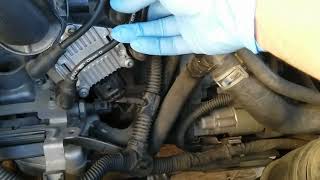
Helpful Videos
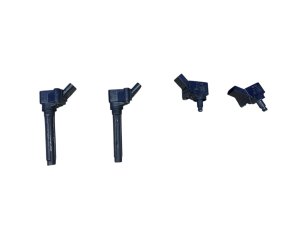
Used OEM Parts in Stock
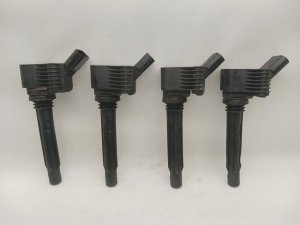
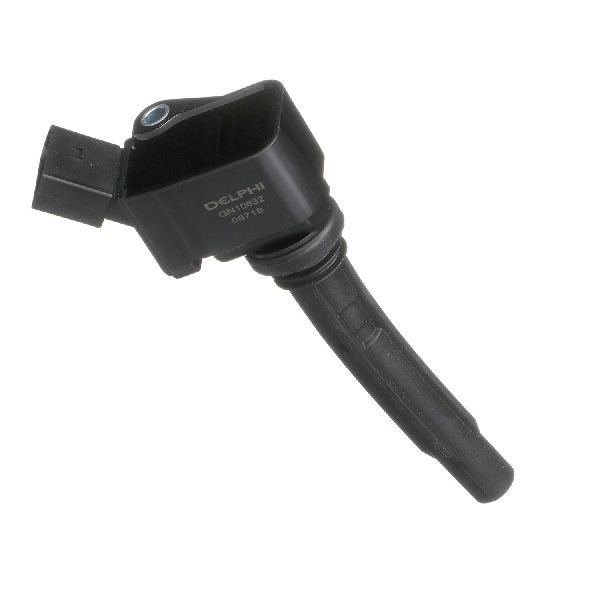
New Aftermarket Parts Available


The information in this article is provided for general reference and educational purposes only. Vehicle specifications, procedures, and part compatibility can vary by production date, trim level, and region. Always consult your vehicle's factory service manual and verify part numbers before purchasing or performing repairs. Safety-critical components such as airbags, seat belts, and braking systems should be installed by a qualified professional.
- Volkswagen JETTA:
- 🎬 Helpful Videos
- 🛍️ Shop This Part
- What's Unique About the 2017-2022 Volkswagen JETTA
- Diagnostic Flowchart
- Symptoms You May Notice
- Most Likely Causes
- Rare But Worth Checking
- Diagnosis Steps
- Parts You'll Likely Need
- Related Codes That Often Appear With This One
- Technical Service Bulletins (TSBs) & Recalls
- Platform-Specific Known Issues
- Mechanic-Grade Diagnostic Values
- Hidden / Shadow Codes Worth Checking
- Scan Tool Commands That Help
- Wiring & Ground Locations
- Real Owner Repair Stories
- "I Checked Everything" — The Actual Cause
- When the Usual Fixes Don't Work
- OEM Part Supersession History
- Model Year Variations Within This Range
- 🎟️ Get 5% Off