

P0300 on 2017 Volkswagen Golf R: Random Misfire Causes and Fixes
On a 2017 VW Golf R, code P0300 is most often caused by worn spark plugs or failing ignition coils. If those are good, the next most likely causes are carbon buildup on the intake valves or a failed PCV valve. Expect to pay $100-$250 for plugs and coils, or $600+ for a professional carbon cleaning service.
- P0300 on a 2017 Golf R means multiple cylinders are misfiring, and you should not ignore it, especially if the Check Engine Light is flashing.
- Always start your diagnosis with the most common and simple fixes: inspect and replace the spark plugs and test the ignition coils.
- Due to the direct-injection engine design (TSI), carbon buildup on the intake valves is a very real and probable cause for misfires, particularly if they occur on cold starts.
- A failed PCV valve is another platform-specific weak point that can cause a vacuum leak and trigger a P0300 code.
- If the issue appeared right after a dealer service, inquire about TSB #VIN-4-A-PIN-2018, as a software update may be related to the fault.
What's Unique About the 2017-2017 Volkswagen GOLF R
The 2017 Golf R uses the 2.0T TSI EA888 Gen 3 engine, which is a direct-injection design. This technology makes it inherently susceptible to carbon buildup on the intake valves, a primary cause of misfires that isn't an issue for port-injected engines because fuel never washes over the valves. Additionally, the PCV (Positive Crankcase Ventilation) valve is a well-documented weak point on this engine platform, with failures often leading to significant vacuum leaks that trigger random misfires. A Volkswagen Technical Service Bulletin also notes that P0300 can appear after a specific ECM software update, indicating a potential link between software and misfire detection sensitivity. [TSB VIN-4-A-PIN-2018]
Diagnostic Flowchart
Tap your situation to follow the diagnostic path that matches what you're seeing on this vehicle.
Symptoms You May Notice
- Rough or unstable idle, sometimes feeling like the engine will stall.
- Hesitation or stumbling during acceleration.
- Noticeable loss of engine power, especially under load.
- Flashing or solid Check Engine Light.
- Increased fuel consumption.
- Loud whistling, sucking, or screeching noise from the engine bay at idle (a strong indicator of PCV failure).
- Misfires that are most pronounced during a cold start and lessen or disappear as the engine warms up (classic symptom of carbon buildup).
- Replacing oxygen (O2) sensors. A bad O2 sensor can affect the air-fuel mixture and potentially cause a P0300, but it is rarely the root cause and should only be replaced if a specific O2 sensor fault code is also present.
- Replacing the catalytic converter. A persistent misfire will damage the catalytic converter, but the converter itself does not cause the misfire. It is the victim, not the cause.
Most Likely Causes
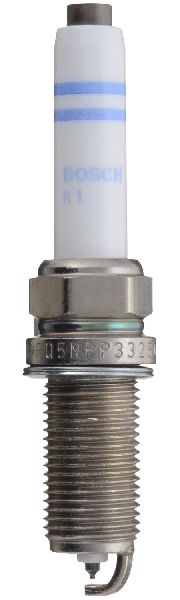
- Worn or Fouled Spark Plugs 🔴 High Probability Spark plugs are a regular maintenance item and a common failure point for any gasoline engine. The high-performance, turbocharged nature of the Golf R can lead to faster wear. Tuned vehicles are especially sensitive to plug condition.
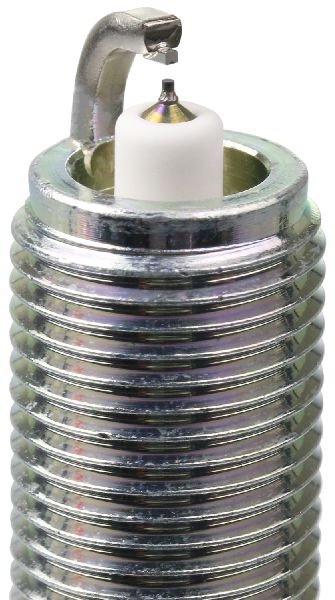
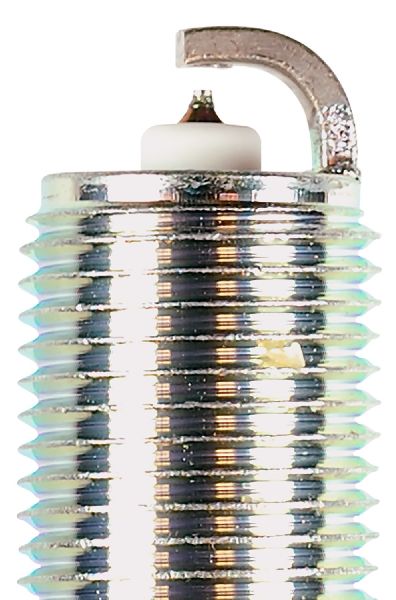
How to confirm: Remove and inspect all four spark plugs. Look for signs of wear on the electrode, heavy carbon deposits, oil fouling, or an incorrect gap. The recommended service interval is typically every 40,000-60,000 miles, but can be shorter on tuned engines.
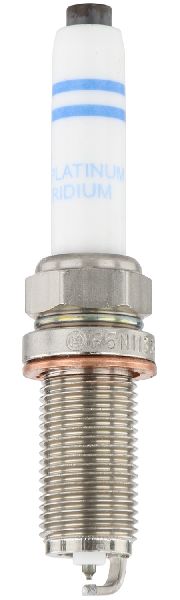
Typical fix: Replace all four spark plugs as a set. 🎬 Watch: Step-by-step guide for replacing ignition coils and spark plugs. Use high-quality OEM-spec plugs from brands like NGK or Bosch. For tuned cars, a colder heat range plug (e.g., NGK R7437-9) may be recommended by the tuner.
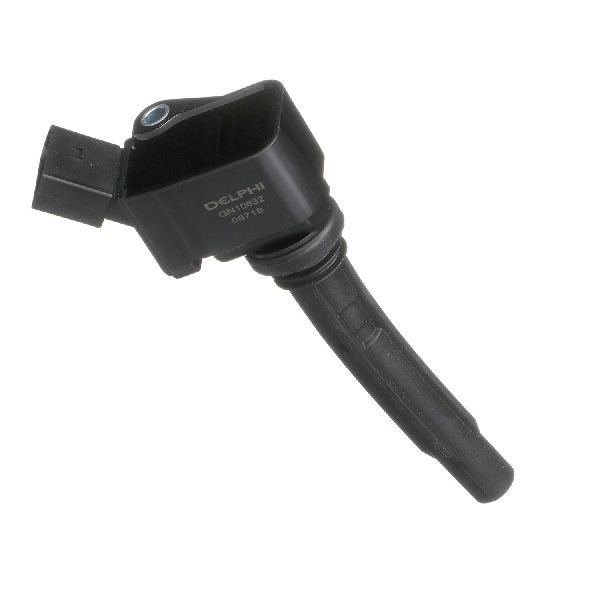
Est. part cost: $60-$120 - Failing Ignition Coil(s) 🔴 High Probability Ignition coils on modern VW/Audi engines are a known common failure item due to high heat and vibration in the engine bay.
How to confirm: Use a scan tool to check if the P0300 is accompanied by a specific cylinder code (e.g., P0302). Swap the ignition coil from the misfiring cylinder with one from a known good cylinder. Clear the codes and see if the misfire code follows the coil to the new cylinder (e.g., P0302 becomes P0301). If it does, the coil is bad.
Typical fix: Replace the faulty ignition coil. It is often recommended to replace all four at the same time for preventative maintenance. Many owners opt for upgraded aftermarket coils from brands like APR or 034Motorsport, which claim higher energy output and better heat dissipation.
Est. part cost: $40-$70 per OEM coil, $150-$250 for a set of four aftermarket coils - Carbon Buildup on Intake Valves 🟡 Medium Probability The EA888 is a direct-injection (TSI) engine. Fuel is injected directly into the cylinder, so it never washes over and cleans the intake valves. Oil vapor from the PCV system bakes onto the hot valves, restricting airflow and causing misfires, especially during cold starts when the carbon is cold and sticky.
How to confirm: This is difficult to confirm without tools. A mechanic will use a borescope inserted into the intake manifold (often through the MAP sensor port) to visually inspect the valves for thick, black carbon deposits. Misfires that consistently occur on cold starts but improve as the engine warms up are a very strong indicator.
Typical fix: The intake manifold must be removed and the valves must be cleaned manually. The most effective method is media blasting with walnut shells, which removes the carbon without damaging the metal surfaces. 🎬 Watch: How to scrape and walnut blast your intake valves. Chemical cleaning sprays are generally considered ineffective for heavy buildup.
Est. part cost: $50-$100 in materials for DIY, $600-$1100 for professional service - Failed PCV Valve (Oil Separator) 🟡 Medium Probability The diaphragm inside the PCV valve assembly is known to tear or fail on the EA888 engine, creating a large, unmetered vacuum leak that the ECU cannot compensate for, leading to a lean condition and random misfires.
How to confirm: A failing PCV often causes a loud whistling or sucking noise at idle. A definitive test is to try removing the oil filler cap while the engine is running; if the cap is held on by a very strong vacuum and is difficult to remove, and the engine idle stumbles or tries to stall when the cap is removed, the PCV has failed. A smoke test can also confirm a leak from the PCV assembly.
Typical fix: Replace the entire PCV valve assembly. The latest OEM revision is generally recommended for reliability. Part numbers have been superseded several times; the latest revision is often 06K103495BM. 🎬 See this walkthrough for PCV diagnosis and DIY installation.
Est. part cost: $120-$200 for an OEM part
Rare But Worth Checking
- Low Fuel Pressure: A failing high-pressure fuel pump (HPFP), in-tank low-pressure fuel pump (LPFP), or a clogged fuel filter can starve the engine for fuel, causing misfires across all cylinders, especially under load. This may be accompanied by code P0087 (Fuel Rail/System Pressure - Too Low). A scan tool can monitor specified vs. actual fuel pressure to diagnose this.
- Faulty Fuel Injectors: While less common than coils or plugs, a clogged or failing fuel injector can cause misfires. In some cases reported by owners, after replacing plugs and coils and performing a carbon cleaning, the misfire was ultimately traced to a single bad injector. This is often the culprit if a misfire stays on one cylinder after swapping the coil and plug.
- ECM Software Issue: As per TSB #VIN-4-A-PIN-2018, misfire codes P0300-P0304 can be triggered after an ECM software update to level 0003. If the code appeared immediately after a dealer service, this could be the cause and may require a further software patch or diagnosis by the dealer.
- Faulty MAP Sensor: A faulty Manifold Absolute Pressure (MAP) sensor can provide incorrect data to the ECU, leading to improper fueling and timing adjustments that cause misfires. This is often accompanied by specific MAP sensor fault codes.
Diagnosis Steps
- Read all fault codes using an OBD-II scanner (like VCDS or OBDeleven for VW/Audi). Note any codes accompanying P0300, especially cylinder-specific misfires (P030x) or lean codes (P0171).
- Inspect the ignition system. Remove and examine all four spark plugs for wear, fouling, and correct gap. If they are old or look worn, replace them as a set.
- Test the ignition coils. If a specific cylinder misfire code is present (e.g., P0303), swap that cylinder's coil with another (e.g., cylinder 1). Clear codes and drive the car to see if the misfire moves to cylinder 1 (now showing P0301). If it does, the coil is bad.
- Check for vacuum leaks. Listen for a distinct hissing or whistling noise at idle. Test the PCV valve by attempting to remove the oil cap with the engine running; extreme suction that makes the cap hard to remove indicates failure. For a definitive test, perform a smoke test on the intake system.
- If misfires are most prominent on cold starts, suspect carbon buildup. Use a borescope to visually inspect the intake valves for heavy deposits.
- Test the fuel system. Use a capable scan tool to monitor fuel rail pressure. Compare the 'specified' vs 'actual' pressure readings under idle and load to check the health of the high-pressure and low-pressure fuel pumps.
- If a single cylinder continues to misfire after the plug and coil have been ruled out, the fuel injector for that cylinder is the next likely suspect.
- If all other tests pass, investigate potential mechanical issues with a compression test and a cylinder leak-down test to check for uniform compression and rule out issues like a bad valve or piston ring.
Parts You'll Likely Need
- Spark Plugs
(OEM #06K905601B)— These are the most common cause of misfires and are a standard maintenance item.
Trusted brands: NGK, Bosch
OEM price range: $20-$30 each
Aftermarket price range: $15-$25 each - Ignition Coil
(OEM #06H905110P)— Ignition coils are a very common failure point on the EA888 engine platform, leading to misfires.
Trusted brands: Bosch (OEM), NGK, APR, 034Motorsport
OEM price range: $50-$75 each
Aftermarket price range: $30-$60 each - PCV Valve / Oil Separator Assembly
(OEM #06K103495BM (Latest Revision))— The diaphragm in this assembly is a known weak point that fails and causes a major vacuum leak, a frequent cause of P0300 on this engine.
Trusted brands: Genuine VW/Audi (OEM)
OEM price range: $120-$200
Aftermarket price range: $70-$140
Related Codes That Often Appear With This One
- P0301, P0302, P0303, P0304 — These codes indicate a misfire on a specific cylinder. They often appear with P0300 when the ECU can detect both random and specific cylinder misfires, which can help narrow the search to a specific coil, plug, or injector.
- P0171 - System Too Lean — This code frequently accompanies a P0300 when the cause is a vacuum leak, such as a failed PCV valve, which allows unmetered air into the engine and disrupts the air-fuel ratio.
- P0087 - Fuel Rail/System Pressure - Too Low — This code points to a fuel delivery problem and can be the root cause of the P0300 misfire, indicating an issue with the HPFP or LPFP.
Technical Service Bulletins (TSBs) & Recalls
- VIN-4-A-PIN-2018: Notes that P0300-P0304 can be triggered in the ECM after a specific software update to level 0003 was performed.
Platform-Specific Known Issues
- A Volkswagen Technical Service Bulletin (TSB #VIN-4-A-PIN-2018) explicitly mentions the potential for P0300-P0304 codes to appear after the ECM software has been updated to level 0003, suggesting a software-related sensitivity in misfire detection.
Mechanic-Grade Diagnostic Values
- High-Pressure Fuel Pump (HPFP) Rail Pressure — expected: Approximately 580 PSI (40 bar) at idle, rising to over 2900 PSI (200 bar) under load for a stock vehicle.. Failure: If the 'Actual' pressure consistently fails to meet the 'Specified' pressure in scan tool logs, especially under acceleration, the HPFP or LPFP may be failing.
- Low-Pressure Fuel Pump (LPFP) Pressure — expected: Supplies the HPFP at approximately 4 to 6 bar (58 to 87 PSI).. Failure: A high duty cycle (90%+) for the LPFP controller in scan data, corresponding with a drop in high rail pressure, suggests the LPFP cannot keep up with demand.
- Mode $06 Misfire Count per Cylinder — expected: A count of zero or very close to zero.. Failure: A significantly higher misfire count on one or more cylinders compared to the others, even without a P030x code, points to an intermittent or developing issue in that specific cylinder.
Hidden / Shadow Codes Worth Checking
- Mode $06, Test IDs $A2-$A5: These are not traditional fault codes but Test IDs within the generic OBD-II Mode $06 data. They correspond to the raw misfire counters for each cylinder (e.g., $A2 for Cylinder 1, $A3 for Cylinder 2, etc.). This allows a technician to see which cylinder is misfiring even if the count is not high enough to trigger a specific P0301-P0304 fault code. (see via A professional scan tool or software like VCDS/OBDeleven that can access Mode $06 data. The tool may translate the hex data into plain language, showing misfire counts per cylinder.)
Scan Tool Commands That Help
- VCDS (VAG-COM): Advanced Measuring Values (UDS) or Measuring Blocks (pre-UDS) — Search for 'misfire' in Advanced Measuring Values to find the live misfire counters for each cylinder. On older controllers, check Measuring Block groups 014, 015, and 016. This is the primary method for identifying which cylinders are contributing to the P0300 count.
- VCDS (VAG-COM): Fuel Rail Pressure Monitoring — In Advanced Measuring Values, log both 'Rail Pressure: specified' and 'Rail Pressure: actual'. Graphing these values during a drive, especially under wide-open throttle, can reveal fuel delivery deficits from a weak HPFP or LPFP.
Wiring & Ground Locations
- Ground Point 15 — On the cylinder head.. This is a primary ground point for engine components. A loose or corroded connection here can cause erratic behavior in sensors and the ignition system, leading to misfires.
- Ground Point on Gearbox — Main earth point with brown wires located on the gearbox, near the battery.. This is a major chassis and engine block ground. Poor contact can lead to a weak spark from the ignition coils, causing incomplete combustion and misfires.
- Ground Point 846 — On ignition coil 1.. A dedicated ground for the ignition coil. While this specific ground is for cylinder 1, checking the integrity of all coil grounds and connectors is critical, as a fault in one can sometimes cause broader issues logged as a random misfire.
Real Owner Repair Stories
- VWROC forum user (VW Golf R Mk7) — Mystery misfire under load.
❌ Tried (didn't work) Replaced all 4 spark plugs (used colder RS3 plugs), Replaced all 4 fuel injectors (under warranty), Replaced all 4 ignition coils
✅ What actually fixed it The user performed a manual carbon cleaning of the intake valves, which resolved the misfire issue and improved engine responsiveness. - Ross-Tech forum user 'ScissorJack' (2017 Golf R (CYFB engine), <26k miles) — Persistent misfires on cylinder 4 on every cold start (20-80 counts), with minor misfires on other cylinders. Rough idle on hot days would trigger a CEL.
❌ Tried (didn't work) Using only top-tier 91-93 octane fuel, Swapping ignition coils, Replacing the spark plug on cylinder 4
✅ What actually fixed it The final resolution was not posted by the user, but the diagnosis from a Ross-Tech expert pointed towards a 'wonky injector on cyl 4' or a mechanical issue requiring a compression and leak-down test, after all common ignition parts were ruled out. - Reddit user in r/Golf_R (2017 Golf R, APR Stage 2 tune) — Random misfire CELs on cold idle starts, rough idle.
❌ Tried (didn't work) Swapping coils and plugs, Replacing battery, Updating APR software
✅ What actually fixed it A carbon cleaning service was performed. While the shop noted buildup was not significant, the owner reported that cold starts became 'very smooth' and the issue was resolved for 3 months before returning, suggesting carbon buildup was the primary cause.
OEM Part Supersession History
Various older revisions (e.g., 06K103495AP, 06K103495BL)→06K103495BM— The PCV (oil separator) assembly is a common failure point on the EA888 Gen 3 engine. Revisions are released to improve the reliability of the internal diaphragm and valve system to prevent vacuum leaks.
Heads up: Always use the latest revision available from the dealer for best results. The part is specific to transverse-mounted engines like the Golf R.
Helpful Videos

We Have This Part in Stock


The information in this article is provided for general reference and educational purposes only. Vehicle specifications, procedures, and part compatibility can vary by production date, trim level, and region. Always consult your vehicle's factory service manual and verify part numbers before purchasing or performing repairs. Safety-critical components such as airbags, seat belts, and braking systems should be installed by a qualified professional.
- Volkswagen GOLF R:
- 🎬 Helpful Videos
- 🛍️ Shop This Part
- What's Unique About the 2017-2017 Volkswagen GOLF R
- Diagnostic Flowchart
- Symptoms You May Notice
- Most Likely Causes
- Rare But Worth Checking
- Diagnosis Steps
- Parts You'll Likely Need
- Related Codes That Often Appear With This One
- Technical Service Bulletins (TSBs) & Recalls
- Platform-Specific Known Issues
- Mechanic-Grade Diagnostic Values
- Hidden / Shadow Codes Worth Checking
- Scan Tool Commands That Help
- Wiring & Ground Locations
- Real Owner Repair Stories
- OEM Part Supersession History
- 🎟️ Get 5% Off