

P0300 on 2012-2016 Toyota Prius V: Random Misfire Causes & Fixes
On a 2012-2016 Prius V, code P0300 is almost always caused by a clogged Exhaust Gas Recirculation (EGR) system, including the cooler, valve, and intake manifold passages. This is a well-documented issue, often starting around 100,000 miles. The fix involves a thorough cleaning of these components, which can cost between $500 and $1,600 at a shop but is a common DIY repair. Ignoring this can lead to head gasket failure.
- For a 2012-2016 Prius V, P0300 is almost certainly caused by a clogged EGR system.
- Do not simply replace spark plugs and coils without first inspecting the EGR valve, cooler, and intake manifold for carbon buildup.
- Addressing the EGR clog promptly is critical preventative maintenance to avoid a much more expensive head gasket failure down the road.
- A rough, shaking engine on a cold start is a major warning sign that could indicate either severe EGR clogging or the beginning of a head gasket leak.
- Referencing Toyota TSB T-SB-0116-15 Rev is key to a correct diagnosis and repair.
What's Unique About the 2012-2016 Toyota PRIUS V

The 2ZR-FXE engine in the Prius V is exceptionally prone to heavy carbon buildup in its Exhaust Gas Recirculation (EGR) circuit. This buildup restricts or blocks the passages in the EGR cooler and intake manifold, leading to uneven air/exhaust gas distribution to the cylinders, causing misfires. This issue is so common that it's the primary cause of P0300, often overshadowing typical misfire culprits. 🎬 Watch this simple fix for the common P0300 misfire code. Toyota acknowledged this with Technical Service Bulletin T-SB-0116-15 Rev, which specifically links P0300 to the EGR system and recommends replacing the intake manifold. A clogged EGR system increases combustion temperatures, which is a leading theory for the platform's high rate of head gasket failure.
Diagnostic Flowchart

Tap your situation to follow the diagnostic path that matches what you're seeing on this vehicle.
Symptoms You May Notice
- Rough or shaking engine, especially at idle or during light acceleration.
- Check Engine Light is on or flashing.
- Hesitation or loss of power when accelerating.
- A distinct rattling, shaking, or knocking noise from the engine for 1-5 seconds on a cold start, which may smooth out as the engine warms. This is the hallmark symptom.
- Noticeable drop in fuel economy.
- Replacing only the spark plugs and/or ignition coils. While these parts can be a contributing factor, they are often not the root cause. If the EGR system is clogged, new plugs and coils will not solve the P0300 code long-term, and the problem will return.
- Assuming the cold start rattle is a minor issue. On this platform, it is often the first and most critical warning sign of either severe EGR clogging or the onset of head gasket failure and should be investigated immediately.
Most Likely Causes

- Clogged EGR System (Cooler, Valve, and Intake Manifold) 🔴 High Probability The design of the 2ZR-FXE engine's EGR system, combined with its hybrid operation, leads to significant carbon buildup over time, especially after 100,000 miles. This restricts flow and causes misfires, as documented in Toyota TSB T-SB-0116-15 Rev.
How to confirm: Visually inspect the EGR pipe, EGR valve, EGR cooler, and the small passages inside the intake manifold. They will be visibly restricted with thick, black carbon deposits. The EGR cooler is often the most severely clogged component. Some owners check by opening the throttle body and looking for a pool of oily gunk below it.
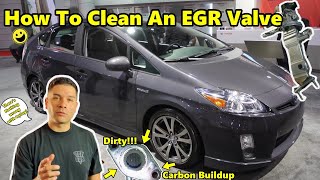
Typical fix: A thorough cleaning of the entire EGR circuit is required. This includes the EGR valve, EGR cooler, and intake manifold passages. Many owners soak the cooler in OxiClean solution or use oven cleaner, followed by pressure washing. 🎬 See a walkthrough on how to remove and clean the EGR. Due to the difficulty of cleaning, the TSB recommends replacing the intake manifold. Many DIYers recommend having a clean, used set of parts ready to swap to minimize vehicle downtime.
Est. part cost: $0 (if cleaning) - $400 (if replacing manifold and gaskets) - Worn or Fouled Spark Plugs 🟡 Medium Probability While a standard maintenance item, spark plugs can become fouled more quickly by the byproducts of an inefficiently operating, clogged EGR system.
How to confirm: Remove and inspect all four spark plugs. Look for signs of wear on the electrode, heavy carbon fouling, or contamination. A resistance test can be performed; it should be 10 MΩ or more.
Typical fix: Replace all four spark plugs as a set. The recommended OEM plugs are Denso SC20HR11 or equivalent Iridium plugs from NGK.
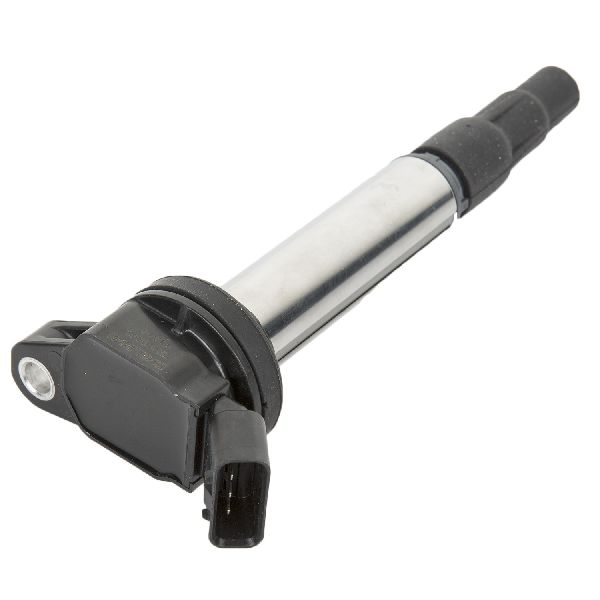
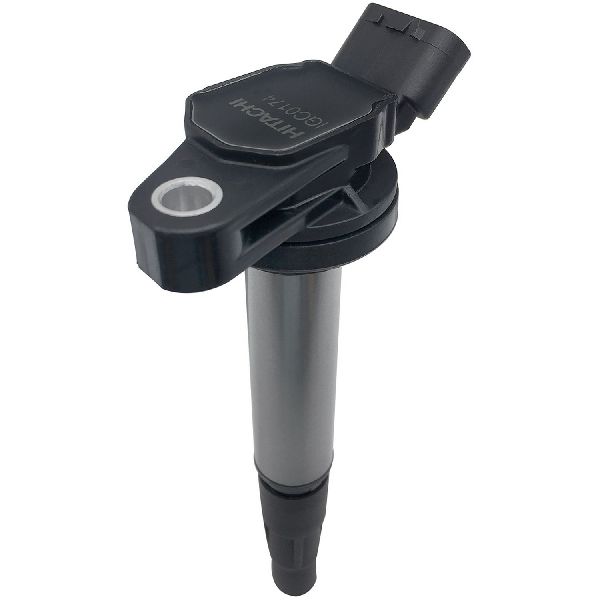
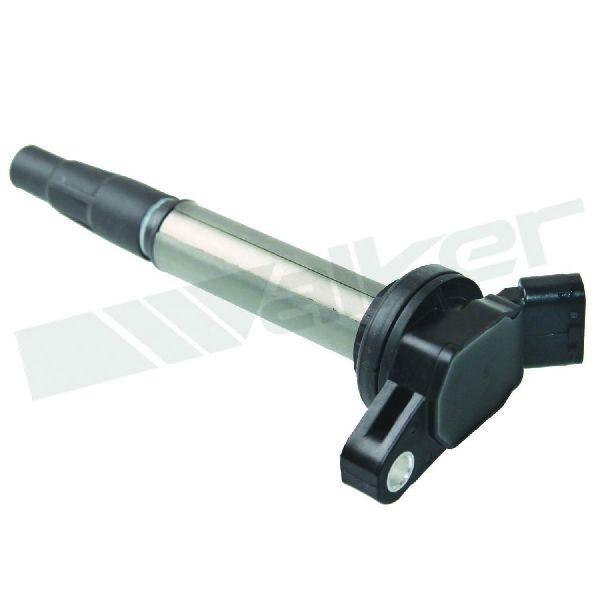
Est. part cost: $40-$80 - Failing Ignition Coil(s) 🟡 Medium Probability
How to confirm: If a specific cylinder misfire code (e.g., P0301) is present, swap the ignition coil from that cylinder with one from a known good cylinder. If the code follows the coil (e.g., changes to P0302), the coil is faulty.
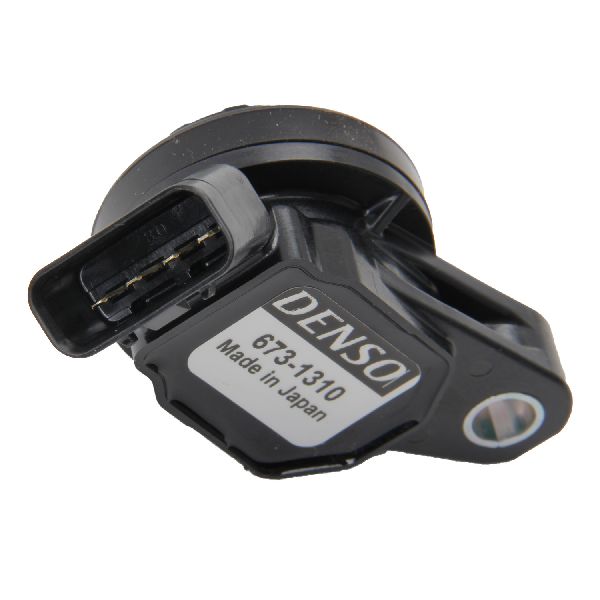
Typical fix: Replace the single faulty ignition coil. It is common to use OEM-supplier brands like Denso.
Est. part cost: $70-$125 - Failing Head Gasket ⚪ Low Probability This engine platform is notorious for head gasket leaks, often occurring between 150,000 and 220,000 miles. The failure is widely believed to be a long-term consequence of increased engine temperatures and stress from an unaddressed clogged EGR system. Coolant seeps into a cylinder overnight, causing the classic 'cold start rattle' as the engine struggles to compress the liquid.
How to confirm: A chemical block test to detect exhaust gases in the coolant is the primary method. Other signs include a steadily dropping coolant level in the reservoir and a sweet smell from the exhaust. A cylinder leak-down test can also confirm a breach. The cold start rattle is a key symptom.
Typical fix: This is a major repair that involves removing the cylinder head to replace the head gasket. It is crucial to also service the entire EGR system at the same time to prevent a repeat failure. Due to the high cost ($3000+), many owners of high-mileage vehicles opt to swap in a lower-mileage used engine instead.
Est. part cost: $250-$650 for a gasket kit and new head bolts.
Rare But Worth Checking
- Dirty Fuel Injectors: Clogged or poorly spraying fuel injectors can create a lean condition and cause misfires. This is less common than EGR issues but possible on higher-mileage vehicles. Some owners try fuel system cleaners before moving to mechanical repairs.
- Faulty Engine Control Module (ECM): TSB T-SB-0147-16 notes that updated ECM logic can address cold-start vibrations and misfires, though a complete hardware failure of the ECM is very rare. This update is typically performed by a dealer.
Diagnosis Steps
- Read all fault codes with an OBD-II scanner. Note if P0300 appears with specific cylinder misfire codes (P0301-P0304) or an EGR-related code like P0401.
- Analyze freeze frame data to see when the misfire occurs (e.g., cold start, light acceleration). A misfire on cold start is a strong indicator of either EGR clogging or a head gasket leak.
- Check for the primary symptom: a distinct engine shake or rattle on cold starts. If present, proceed with high suspicion of EGR or head gasket issues.
- Inspect the ignition system as a preliminary step. Check the condition of all spark plugs (Denso SC20HR11). If a specific cylinder code is present, swap its ignition coil with another to see if the fault follows.
- If plugs and coils are good, the next step is to inspect the EGR system. This is the most likely cause. A simple first check is to remove the EGR pipe that runs to the intake manifold to gauge the level of carbon buildup.
- For a full diagnosis, remove the intake manifold, EGR valve, and EGR cooler. Expect to find significant, hard carbon deposits, especially in the cooler and the small EGR passages in the manifold.
- If the EGR system is severely clogged, a thorough cleaning is necessary. Owners report success soaking the cooler in OxiClean solutions, oven cleaner, or lacquer thinner, followed by extensive rinsing or pressure washing. The small manifold passages must be manually cleared with brushes or picks.
- If the misfire primarily happens on cold starts with a significant engine shake, and you are losing coolant, suspect a head gasket leak. Perform a chemical block test to check for exhaust gases in the coolant reservoir. 🎬 Watch how to professionally diagnose a failing head gasket.
Parts You'll Likely Need

- Intake Manifold
(OEM #17120-37054)— Toyota's official fix per TSB T-SB-0116-15 Rev is to replace the intake manifold, as cleaning the small internal passages can be difficult. This part number is an updated design, but owners report it still clogs over time.
Trusted brands: Toyota (OEM)
OEM price range: $240-$360
Aftermarket price range: $150-$250 - Iridium Spark Plugs (Set of 4)
(OEM #Denso SC20HR11)— Worn or fouled spark plugs are a common maintenance item that can contribute to misfires. They are often replaced during the EGR service.
Trusted brands: Denso (OEM), NGK
OEM price range: $50-$80 (set of 4)
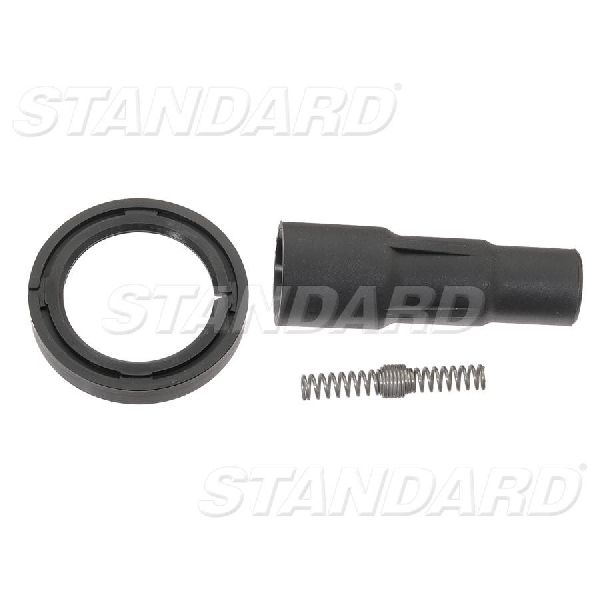
Aftermarket price range: $40-$70 (set of 4) - Ignition Coil
(OEM #90919-02252)— Ignition coils are a primary component of the ignition system and can fail over time, causing misfires. Usually replaced one at a time as they fail.
Trusted brands: Denso (OEM)
OEM price range: $70-$125
Aftermarket price range: $40-$80
Related Codes That Often Appear With This One
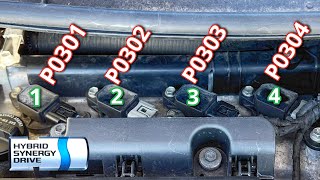
- P0301, P0302, P0303, P0304 — P0300 indicates a random misfire. When the ECM can identify the specific cylinders that are misfiring, it will set these corresponding codes. It is very common to see P0300 accompanied by one or more specific cylinder codes.
- P0401 — This code means 'EGR Flow Insufficient Detected'. It often appears alongside or precedes the P0300 code, as it directly points to the root cause: a clogged EGR system that can no longer flow properly.
Technical Service Bulletins (TSBs) & Recalls
- T-SB-0116-15 Rev: Addresses rough running and misfire codes (P0300-P0304) during light acceleration. Links the issue directly to a clogged EGR system and recommends replacing the intake manifold. The revision includes the 2016 model year.
- T-SB-0147-16: Addresses a vibration/rough idle and tapping noise at cold start, which may be accompanied by P0300-P0304 codes. Recommends an ECM logic update.
- L-SB-0019-16: A Lexus-specific TSB for the mechanically identical CT200h, also linking P0300-P0304 misfires to clogged EGR ports in the intake manifold and recommending replacement.
Platform-Specific Known Issues
- The 2ZR-FXE engine is widely known for significant carbon buildup in the EGR circuit, which includes the EGR valve, EGR cooler, and passages within the intake manifold. This is the leading cause of P0300 on the 2012-2016 Prius V, as documented in Toyota's Technical Service Bulletin T-SB-0116-15 Rev.
- A rough idle or engine vibration on cold starts, accompanied by P0300-P0304 codes, can be related to Engine Control Module (ECM) logic, as noted in TSB T-SB-0147-16.
- This platform suffers from a high incidence of head gasket failure, which typically begins as a cold-start misfire and can escalate, causing P0300. This is widely believed to be a direct long-term consequence of ignoring the EGR clogging issue, which leads to higher combustion temperatures and engine stress.
Mechanic-Grade Diagnostic Values
- Fuel Injector Resistance — expected: 11.6 to 12.4 Ω at 20°C (68°F). Failure: Resistance outside of the specified range.
- Ignition Coil Primary Resistance — expected: 0.55–0.65 Ω. Failure: Resistance outside of this range.
- Ignition Coil Secondary Resistance — expected: 8,500–10,500 Ω (8.5-10.5 kΩ). Failure: Resistance outside of this range.
- Spark Plug Insulation Resistance — expected: 10 MΩ or more. Failure: A reading below 10 MΩ indicates the plug is fouled and may cause misfires even if it appears clean.
- Techstream 'MISFIRE MARGIN' Data — expected: Value should be above 30%. Failure: Values dropping below 30% indicate the engine is approaching the threshold to log a misfire.
Hidden / Shadow Codes Worth Checking
- Misfire Monitor Data (EWMA / Rate): Not a formal code, but a detailed data screen in Techstream. 'EWMA' shows a weighted average of misfires over the last ~10 trips (history), while 'Rate' shows the current, real-time misfire count. This can identify intermittent or low-frequency misfires on specific cylinders before they are frequent enough to set a CEL. (see via Toyota Techstream software, under the 'Monitor' screen, with 'Details' selected for the Misfire monitor.)
Scan Tool Commands That Help
- Toyota Techstream: Active Test: Control the EGR Step Position — Used to command the EGR valve to open and close. The technician watches the Intake Manifold Absolute Pressure; a small or no change indicates a stuck valve or a completely clogged passage.
- Toyota Techstream: Active Test: Control the Select Cylinder Fuel Cut — This function, also known as a power balance test, cuts fuel to one cylinder at a time. A healthy cylinder will cause a noticeable drop in engine RPM. If cutting fuel to a cylinder causes little or no RPM change, that cylinder is not contributing power, indicating a problem with its ignition, fuel, or compression.
- Toyota Techstream: Data List: Misfire Count (Cylinder 1-4) — This is the primary live data to watch when trying to diagnose a random misfire. Watching the counters while driving under specific conditions (like light acceleration) can help pinpoint which cylinder is the primary offender, even if the misfire is not bad enough to set a specific P030x code.
- Toyota Techstream: Utility: Relative Compression Test — This test cranks the engine with fuel and spark disabled and measures the relative speed of the crankshaft as each piston goes through its compression stroke. A cylinder with low compression will offer less resistance, and the crankshaft will speed up as it passes, indicating a potential mechanical issue like a bad valve or head gasket leak.
Wiring & Ground Locations
- Engine Harness Ground Clusters — There are two main ground wire clusters for the engine harness. One bolts to the engine block near the top, and another bolts to the transmission housing area, underneath the coolant reservoir.. A loose or corroded ground connection at these points can cause erratic behavior in the ignition system and sensors, leading to random misfires that are difficult to trace. Ensuring these are clean and tight is a crucial step in eliminating electrical causes.
Real Owner Repair Stories
- Reddit user Dat_Steve (Gen 3 Prius (specific year not mentioned, but same 2ZR-FXE engine)) — P0300, P0301, P0302, P0303 codes and rough cold starts.
❌ Tried (didn't work) Cleaning the EGR system (code returned)., Cleaning the intake manifold (code returned)., Replacing the MAF sensor (code returned).
✅ What actually fixed it A combination of fixes: replacing a leaking water pump and thermostat, replacing a clogged PCV valve, and performing a second, more thorough cleaning of the intake manifold. The head gasket was not replaced. - PriusChat user tidesofthesky (2007 Prius (Gen 2, but diagnostic process is identical)) — Engine stumbling and jolting with no check engine light.
❌ Tried (didn't work) Initial visual inspection revealed nothing.
✅ What actually fixed it Used Techstream to watch live misfire counts, identifying cylinder 3 as the culprit. Swapped the cylinder 3 ignition coil with cylinder 1's coil. The misfire count followed the coil to cylinder 1. Replacing the faulty ignition coil resolved the issue. - PriusChat user robomoto (2010 Prius, 280,000 km) — Hard engine shaking, clunking noises at low acceleration, codes P0301, P0303, and P0300. Misfire codes would sometimes change to other cylinders after clearing.
❌ Tried (didn't work) Adding two different brands of fuel system cleaner to the fuel tank.
✅ What actually fixed it A complete and thorough cleaning of the EGR cooler and all EGR passages within the intake manifold. The user concluded the uneven flow from severe carbon clogging was causing the misfires.
OEM Part Supersession History
17120-37050, 17120-37051, 17120-37052, 17120-37053→17120-37054— Updated design to mitigate the carbon buildup issue, though it is not a permanent solution and the new design can still clog over time.17177-37030, 17177-37050→17177-0T020— Standard part revision for the intake manifold to cylinder head gasket.
Model Year Variations Within This Range
- 2015: The Prius V received a cosmetic facelift for the 2015 model year, including a new front fascia and taillights. However, this did not include any significant changes to the 2ZR-FXE engine or its EGR system, so the causes and fixes for P0300 remain identical across the entire 2012-2016 range.
Helpful Videos
Used OEM Parts in Stock


New Aftermarket Parts Available


The information in this article is provided for general reference and educational purposes only. Vehicle specifications, procedures, and part compatibility can vary by production date, trim level, and region. Always consult your vehicle's factory service manual and verify part numbers before purchasing or performing repairs. Safety-critical components such as airbags, seat belts, and braking systems should be installed by a qualified professional.
- Toyota PRIUS V:
- 🎬 Helpful Videos
- 🛍️ Shop This Part
- What's Unique About the 2012-2016 Toyota PRIUS V
- Diagnostic Flowchart
- Symptoms You May Notice
- Most Likely Causes
- Rare But Worth Checking
- Diagnosis Steps
- Parts You'll Likely Need
- Related Codes That Often Appear With This One
- Technical Service Bulletins (TSBs) & Recalls
- Platform-Specific Known Issues
- Mechanic-Grade Diagnostic Values
- Hidden / Shadow Codes Worth Checking
- Scan Tool Commands That Help
- Wiring & Ground Locations
- Real Owner Repair Stories
- OEM Part Supersession History
- Model Year Variations Within This Range
- 🎟️ Get 5% Off