

P0300 on 2014-2016 Subaru Forester: Random Misfire Causes and Fixes
On a 2014-2016 Forester 2.5L, a P0300 code is frequently caused by a faulty alternator creating electrical noise, which the ECU misinterprets as an engine misfire. Before replacing ignition parts, check for a failing alternator, especially if you also have flickering lights and multiple other warning lights (Hill Start, VDC). The official fix per TSB #07-112-16R is to replace the alternator and belt tensioner with updated parts.
- For a 2014-2016 Forester 2.5L, suspect the alternator first for a P0300 code, especially if you have flickering lights.
- Subaru issued TSB #07-112-16R specifically for this issue; the fix is a new alternator and belt tensioner.
- Don't waste money on ignition parts until you've ruled out the alternator.
- If you also experience rough idle only on warm restarts, an ECM reprogram (TSB #11-161-16) might be the solution.
- Driving with a flashing check engine light can cause expensive damage to your catalytic converter.
What's Unique About the 2014-2016 Subaru FORESTER

For most vehicles, a P0300 code points directly to the ignition system (spark plugs, coils) or fuel delivery. However, on the 2014-2016 Forester with the 2.5L FB25 engine, Subaru issued a Technical Service Bulletin (TSB #07-112-16R) identifying a primary cause as the alternator. Fluctuations in the alternator's current output can create electrical 'noise' or resonance that the Crankshaft Position Sensor signal is susceptible to. The ECM falsely interprets this interference as a random engine misfire, even when no mechanical misfire is occurring. This makes diagnosing a P0300 on this platform unique, as the charging system must be considered a top-tier suspect.
Diagnostic Flowchart
Tap your situation to follow the diagnostic path that matches what you're seeing on this vehicle.
Symptoms You May Notice
- Check Engine Light is on (may be flashing)
- Hill Start Assist, Vehicle Dynamics Control (VDC), and/or ABS warning lights may illuminate simultaneously.
- Rough or unstable idle
- Engine hesitation or stumbling during acceleration
- Reduced fuel economy
- Flickering or dimming headlights/interior lights
- Whining or grinding noise from the engine bay, indicative of a failing alternator.
- Replacing only spark plugs and ignition coils without checking the alternator. Given the specific TSB for this vehicle, the charging system should be a primary suspect, not an afterthought.
- Assuming a rough idle is purely an ignition problem when it could be a vacuum leak or an EVAP system fault.
Most Likely Causes

- Faulty Alternator and/or Belt Tensioner 🔴 High Probability A known issue documented by Subaru in TSB #07-112-16R. Electrical fluctuations from the alternator are misread by the ECM as engine misfires on 2.5L models. The TSB states the resonance originates in the alternator pulley assembly.
How to confirm: With a diagnostic tool (like Subaru's SSM4), monitor the 'Battery Current' value. If it fluctuates more than +/- 3A while the 'Roughness Monitor' value increases, the alternator is the confirmed cause per the TSB. Visually, owners report flickering lights or a battery warning light. The old tensioner has 3 slots in the top portion, while the new one's appearance is changed.
Typical fix: Replace the alternator and the serpentine belt tensioner assembly as a set with updated parts. A new serpentine belt should also be installed at the same time.
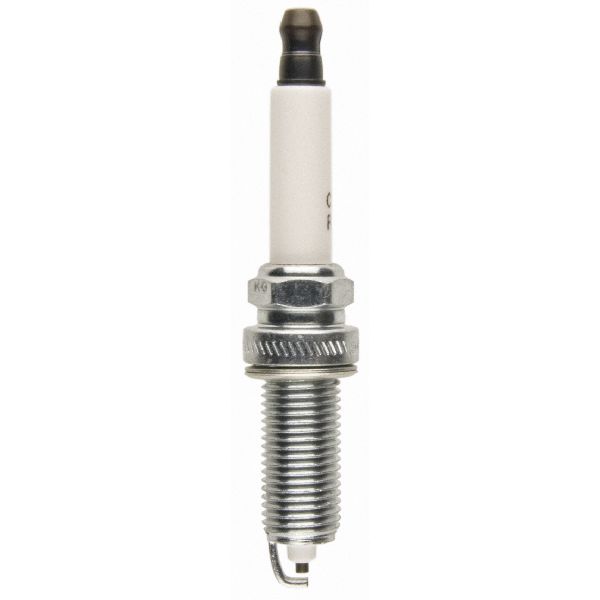
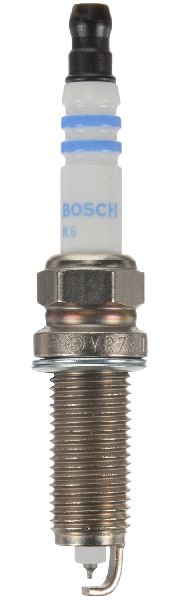
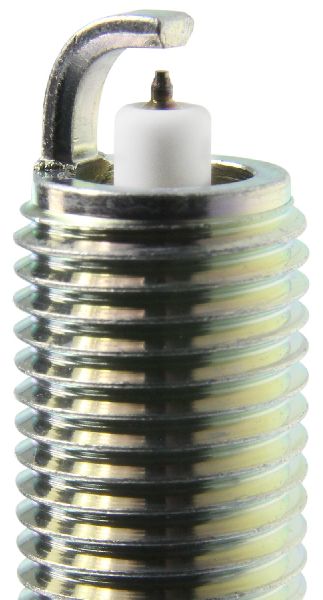
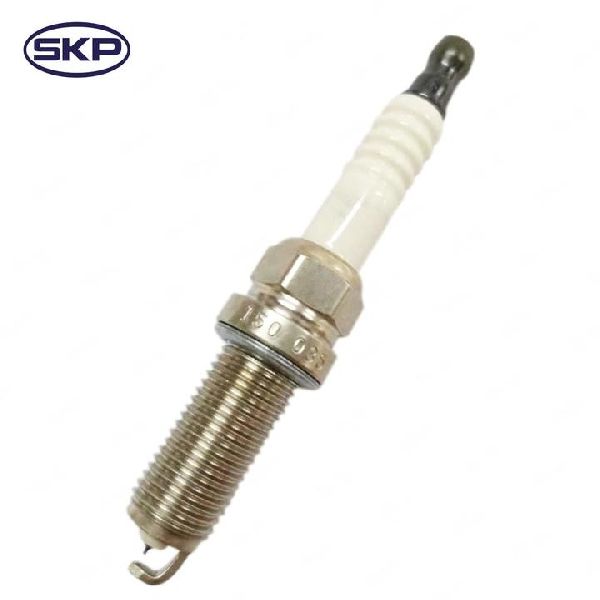
Est. part cost: $350-$600 - Worn or Fouled Spark Plugs 🟡 Medium Probability Spark plugs are a standard maintenance item with a typical service life of 60,000 miles. Worn plugs are a very common cause of misfires on any engine, including the FB25.
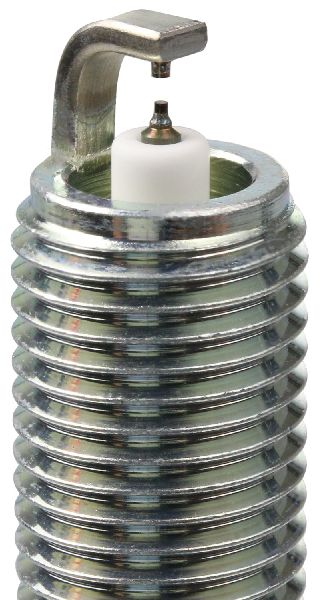
How to confirm: Remove and inspect all four spark plugs. Look for heavy carbon deposits, oil fouling, a worn/damaged electrode, or an incorrect gap. This is more labor-intensive on the boxer engine due to tight side clearance. 🎬 See tips for changing spark plugs in tight spaces.
Typical fix: Replace all four spark plugs. It is recommended to use OEM-spec Iridium plugs from brands like NGK or Denso.
Est. part cost: $40-$80 - Faulty Ignition Coils ⚪ Low Probability Ignition coils can fail with age and heat cycles, leading to insufficient spark energy. While not as common as plugs, a failing coil can cause intermittent misfires.
How to confirm: A mechanic can test coil output. A DIY method is to swap the suspected coil with one from another cylinder and see if a cylinder-specific misfire code (e.g., P0301, P0302) appears. Inspect the coil boot for cracks or burn marks.
Typical fix: Replace the faulty ignition coil. It is often recommended to replace them as a full set if they are original and high-mileage.
Est. part cost: $70-$120 per coil
Rare But Worth Checking
- ECM Reprogramming Needed: According to TSB #11-161-16, a rough idle after a warm engine restart can, in rare cases, trigger a P0300. This is addressed with an ECM software update available at a Subaru dealership. This TSB applies to 2.0L Turbo models but the symptom is relevant.
- Vacuum Leak: A leak in the intake manifold, vacuum hoses, or PCV system can introduce unmetered air, leading to a lean air-fuel mixture and random misfires. A smoke test is the most effective way to find a leak.
- Faulty EVAP Purge Solenoid: A stuck-open EVAP purge solenoid can allow unmetered fuel vapors into the intake manifold, disrupting the air-fuel ratio and causing misfires, sometimes after refueling. It can be tested by removing it and seeing if you can blow through it; it should be closed when not energized.
Diagnosis Steps
- Read all stored DTCs with an OBD-II scanner. Note any other codes, especially cylinder-specific misfires (P0301-P0304) or system codes that can point to a root cause.
- Check for classic alternator failure symptoms: flickering lights, whining noises, or a battery warning light on the dash. Note if the Hill Start Assist and VDC lights are also on, as this is a common pattern for this issue.
- If possible, use an advanced scan tool to monitor alternator current output as described in TSB #07-112-16R. Fluctuations over +/- 3 amps while monitoring the 'Roughness Monitor' strongly suggest a faulty alternator.
- If the alternator tests good, inspect the ignition system. Remove and examine all four spark plugs for wear, fouling, or damage. Replace if they are worn or past their 60,000-mile service interval.
- Inspect the ignition coils for any visible damage, cracks, or signs of arcing on the boots. Test or swap coils to isolate a potential failure.
- Check for vacuum leaks. Perform a visual inspection of all vacuum hoses connected to the intake manifold. For best results, have a smoke test performed to find hard-to-see leaks.
- Test the EVAP purge solenoid. Disconnect it and attempt to blow through it. If air passes, it is stuck open and must be replaced.
- Consider rare causes like the need for an ECM update if all other components check out, especially if symptoms match TSB #11-161-16 (rough idle on warm restart).
Parts You'll Likely Need

- Alternator Assembly
(OEM #23700AB030)— This is the updated part specified in TSB #07-112-16R to fix the electrical noise issue causing false P0300 codes. It replaces older part numbers 23700AA760 and 23700AA761.
Trusted brands: Subaru (OEM), Denso (OEM Manufacturer)
OEM price range: $500-$750
Aftermarket price range: $250-$450 - Serpentine Belt Tensioner
(OEM #23769AA05A)— Must be replaced along with the alternator as per TSB #07-112-16R to resolve the resonance issue.
Trusted brands: Subaru (OEM), Gates, INA
OEM price range: $100-$150
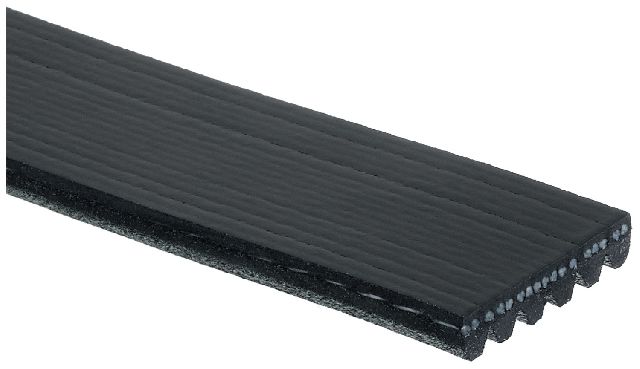
Aftermarket price range: $50-$90 - Serpentine Belt — Should always be replaced when replacing the alternator and/or tensioner as a best practice.
Trusted brands: Subaru (OEM), Bando, Gates, Continental
OEM price range: $30-$50
Aftermarket price range: $20-$40 - Spark Plugs
(OEM #22401AA781)— Standard maintenance item and a common cause of misfires on any vehicle. Should be checked and replaced if worn.
Trusted brands: NGK (SILZKAR7B11), Denso
OEM price range: $15-$25 per plug
Aftermarket price range: $10-$18 per plug - Ignition Coil
(OEM #22433AA690)— A less common but possible cause of misfires if one or more coils are failing.
Trusted brands: Subaru (OEM), Denso, NGK
OEM price range: $115-$165 per coil
Aftermarket price range: $60-$100 per coil
Related Codes That Often Appear With This One
- P0301, P0302, P0303, P0304: If the misfire becomes isolated to a specific cylinder, one of these codes may appear alongside or instead of P0300.
- C1241: In some cases, when multiple warning lights are on, an ABS code related to a wheel speed sensor may be present, though it may be a secondary electrical symptom.
Technical Service Bulletins (TSBs) & Recalls
- 07-112-16R: New Alternator Assembly to Address DTC P0300. This TSB details the diagnosis (monitor
Platform-Specific Known Issues
- A primary documented issue for P0300 on 2014-2016 Foresters with the 2.5L engine is electrical interference from the alternator. Subaru TSB #07-112-16R confirms that current fluctuations can cause the ECM to log a P0300 code when no actual engine misfire is present. The official repair involves replacing both the alternator and the belt tensioner with updated parts.
- TSB #11-161-16 notes that a rough idle on warm restarts can sometimes be accompanied by a P0300 code, which can be resolved by reprogramming the ECM. This TSB officially targets the 2.0L Turbo engine, but the symptom is relevant for diagnosis.
Mechanic-Grade Diagnostic Values
- Ignition Coil Primary Resistance — expected: 0.73 Ω ± 10%. Failure: A reading outside this range indicates a short or open condition in the coil's primary winding.
- Ignition Coil Secondary Resistance — expected: 12.8 kΩ ± 15%. Failure: A reading outside this range indicates the coil has failed and needs replacement.
- Mass Airflow (MAF) Sensor Reading at Warm Idle — expected: ~2.5 g/s. Failure: A significantly different reading can indicate a faulty MAF sensor or a vacuum leak, leading to incorrect fuel calculations and misfires.
- Engine Coolant Temperature (ECT) Sensor Resistance at Operating Temp — expected: Around 300 ohms. Failure: A much higher or lower resistance when the engine is warm suggests a faulty sensor, which can cause incorrect fueling.
- VVT / Oil Control Solenoid Resistance — expected: Typically between 6.9 and 7.9 Ohms (value is generic but a common range for solenoids). Failure: A reading of infinite resistance (open circuit) or zero resistance (short circuit) indicates a failed solenoid.
Scan Tool Commands That Help

- Subaru Select Monitor (SSM) or equivalent advanced scanner: Misfire Count / Roughness Monitor — This live data PID is essential for diagnosing a P0300. It allows a technician to see which specific cylinders are registering misfires in real-time, even if a cylinder-specific code (P0301-P0304) has not been set. This helps isolate whether the issue is truly random or biased towards one bank or cylinder.
- Subaru Select Monitor (SSM) or equivalent advanced scanner: Battery Current Monitor — As per TSB #07-112-16R, this is the primary diagnostic step for the known alternator issue. Monitoring this value while observing the 'Roughness Monitor' can confirm if electrical fluctuations from the alternator (over +/- 3A) are the direct cause of the false misfire counts.
Wiring & Ground Locations
- Main Engine Ground — On top of the intake manifold. The ECU gets its primary ground reference from this point.. A poor ground at the intake manifold can cause a host of strange electrical issues, including erratic sensor readings and false trouble codes like P0300. The ECU's ground reference is critical for accurate sensor data interpretation.
- Alternator Ground — The alternator grounds through its mounting bracket to the engine block.. A poor ground connection at the alternator can contribute to electrical noise and voltage regulation problems, which is the root cause of the issue described in TSB #07-112-16R. Ensuring this connection is clean and tight is crucial.
- Chassis Ground — The main battery negative cable connects directly to the chassis, often on the strut tower or inner fender.. All electrical systems rely on a solid connection between the engine block and the vehicle chassis. Corrosion or a loose connection here can create a voltage differential, leading to unpredictable behavior from various modules.
- Crankshaft Position Sensor Connector (E10) — Located under the intake manifold, near the knock sensor. The sensor signal is transmitted to the ECM via pins 13 (+) and 14 (-) on connector B134.. The P0300 on this vehicle is often caused by electrical noise interfering with the crankshaft position sensor signal. Knowing the connector location and relevant pins is critical for advanced diagnosis, such as checking for signal integrity with an oscilloscope.
Real Owner Repair Stories
- Reddit user WickedGoodBeehrs (2013 2.5X Forester Limited (Similar FB25 engine and symptoms)) — Hard to start, rough idle, CEL/TCL lights on, Cruise Control light blinking, P0300 code.
❌ Tried (didn't work) Oil change, Fuel injector cleaner, New battery, New spark plugs, Cleaning MAF sensor, CAM sensor shim kit, New MAF sensor, New throttle body, Smoke test for vacuum leaks (none found)
✅ What actually fixed it The final cause was a faulty EGR valve. Replacing the valve resolved all symptoms and the P0300 code. - subaruforester.org forum user (2017 Forester (similar generation and known issue)) — P0300 code, multiple warning lights.
❌ Tried (didn't work) Initial diagnosis pointed towards standard ignition issues.
✅ What actually fixed it The issue was resolved by following TSB #07-112-16R, which involved replacing the alternator and belt tensioner with the updated parts. This confirms the TSB is the correct fix for the symptoms.
"I Checked Everything" — The Actual Cause
- In a documented case on a similar FB25 engine, a user performed a smoke test which showed no vacuum leaks, and replaced the MAF sensor, throttle body, and spark plugs to no avail. The ultimate cause of the P0300 and rough running was a faulty EGR valve that was not sealing correctly, disrupting the air/fuel mixture internally.
OEM Part Supersession History
23700AA760, 23700AA761→23700AB030— The original alternators were prone to creating electrical resonance that the ECM would misinterpret as a misfire. The updated part number 23700AB030 resolves this issue as documented in TSB #07-112-16R.
Heads up: Using an old stock or remanufactured version of the original part numbers will not fix the issue and the P0300 code will likely return. It is critical to use the updated part.
Model Year Variations Within This Range
- 2015-2016: For the 2015 model year, the Forester received an updated infotainment system with a touchscreen, which is the most notable change from the 2014 model. However, the 2.5L FB25 engine and its related components for the P0300 issue remained the same across the 2014-2016 range.
Helpful Videos
Used OEM Parts in Stock


New Aftermarket Parts Available

The information in this article is provided for general reference and educational purposes only. Vehicle specifications, procedures, and part compatibility can vary by production date, trim level, and region. Always consult your vehicle's factory service manual and verify part numbers before purchasing or performing repairs. Safety-critical components such as airbags, seat belts, and braking systems should be installed by a qualified professional.
- Subaru FORESTER:
- 🎬 Helpful Videos
- 🛍️ Shop This Part
- What's Unique About the 2014-2016 Subaru FORESTER
- Diagnostic Flowchart
- Symptoms You May Notice
- Most Likely Causes
- Rare But Worth Checking
- Diagnosis Steps
- Parts You'll Likely Need
- Related Codes That Often Appear With This One
- Technical Service Bulletins (TSBs) & Recalls
- Platform-Specific Known Issues
- Mechanic-Grade Diagnostic Values
- Scan Tool Commands That Help
- Wiring & Ground Locations
- Real Owner Repair Stories
- "I Checked Everything" — The Actual Cause
- OEM Part Supersession History
- Model Year Variations Within This Range
- 🎟️ Get 5% Off