

P0300 on 2003-2005 Saturn L200: Random Misfire Causes and Fixes
P0300 on a Saturn L200 with the 2.2L Ecotec engine often points to a failing ignition system, specifically the ignition control module and coil pack assembly. This is a well-documented, high-failure-rate item. Other common causes include worn spark plugs, vacuum leaks from the intake manifold gasket, or clogged fuel injectors. A full ignition system replacement (cassette, module, and plugs) is a common and effective fix.
- For a P0300 on a 2003-2005 Saturn L200, the most probable cause is a faulty ignition cassette, which houses both the coils and the control module.
- Always replace the spark plugs when replacing the ignition cassette to ensure a complete and lasting repair.
- Do not ignore a flashing Check Engine Light, as this signals a severe misfire that can quickly destroy your expensive catalytic converter.
- If a full ignition system tune-up doesn't solve the problem, the next most likely causes are a vacuum leak from the intake manifold gasket or a fuel delivery issue (clogged injector or weak pump).
What's Unique About the 2003-2005 Saturn L200
The 2003-2005 Saturn L200 primarily uses the 2.2L Ecotec (L61) engine. On these GM engines, the ignition system is a common source of misfires. It uses a cassette-style assembly that combines the ignition coils and the ignition control module (ICM) into a single unit that sits on top of the valve cover. Failure of the internal electronics in the module, often due to heat soak, can cause random misfires affecting multiple cylinders, making P0300 a frequent code for this issue. The ICM on the 2.2L Ecotec is also responsible for generating the camshaft position signal, so a faulty module can cause timing-related misfires that might be misdiagnosed as a separate sensor issue. Additionally, issues like jumped timing chains and clogged catalytic converters have been noted by technicians working on these specific cars.
Diagnostic Flowchart
Tap your situation to follow the diagnostic path that matches what you're seeing on this vehicle.
Symptoms You May Notice
- Rough or shaking idle, especially when in gear.
- Noticeable loss of power and poor acceleration.
- Engine hesitation or stumbling.
- Flashing or solid Check Engine Light.
- Hard starting, sometimes requiring a second attempt.
- Engine cooling fans running on high continuously.
- Harsh transmission shifting.
- Misfire worsens as the engine warms up.
- Replacing only the spark plugs when the ignition control module is the root cause.
- Replacing oxygen sensors, which are more likely to report an issue (like a lean condition from a vacuum leak) rather than be the cause of the misfire itself.
- Replacing the Mass Airflow (MAF) sensor when a vacuum leak is present, as both can cause a P0171 lean code.
Most Likely Causes
- Failed Ignition Control Module (ICM) and/or Coil Pack 🔴 High Probability The integrated ignition cassette design on the 2.2L Ecotec engine has a known history of internal electronic failure due to heat and vibration, causing misfires on paired cylinders (1-4 or 2-3). This is the most common failure point for a P0300 on this engine. A recall was issued for earlier models for this issue (NHTSA Campaign ID: 03V231000), highlighting its prevalence. The original TSB #03-T-01 also addressed this failure mode.
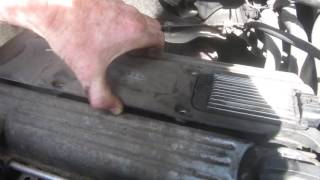
How to confirm: The failure is often intermittent and heat-related, making it difficult to test directly. A scan tool may show misfire counts climbing as the engine reaches operating temperature. After replacing spark plugs, if the issue persists, the ICM/coil assembly is the next logical step. 🎬 Watch: How to replace the ignition control module on this engine. This is often a process of elimination.
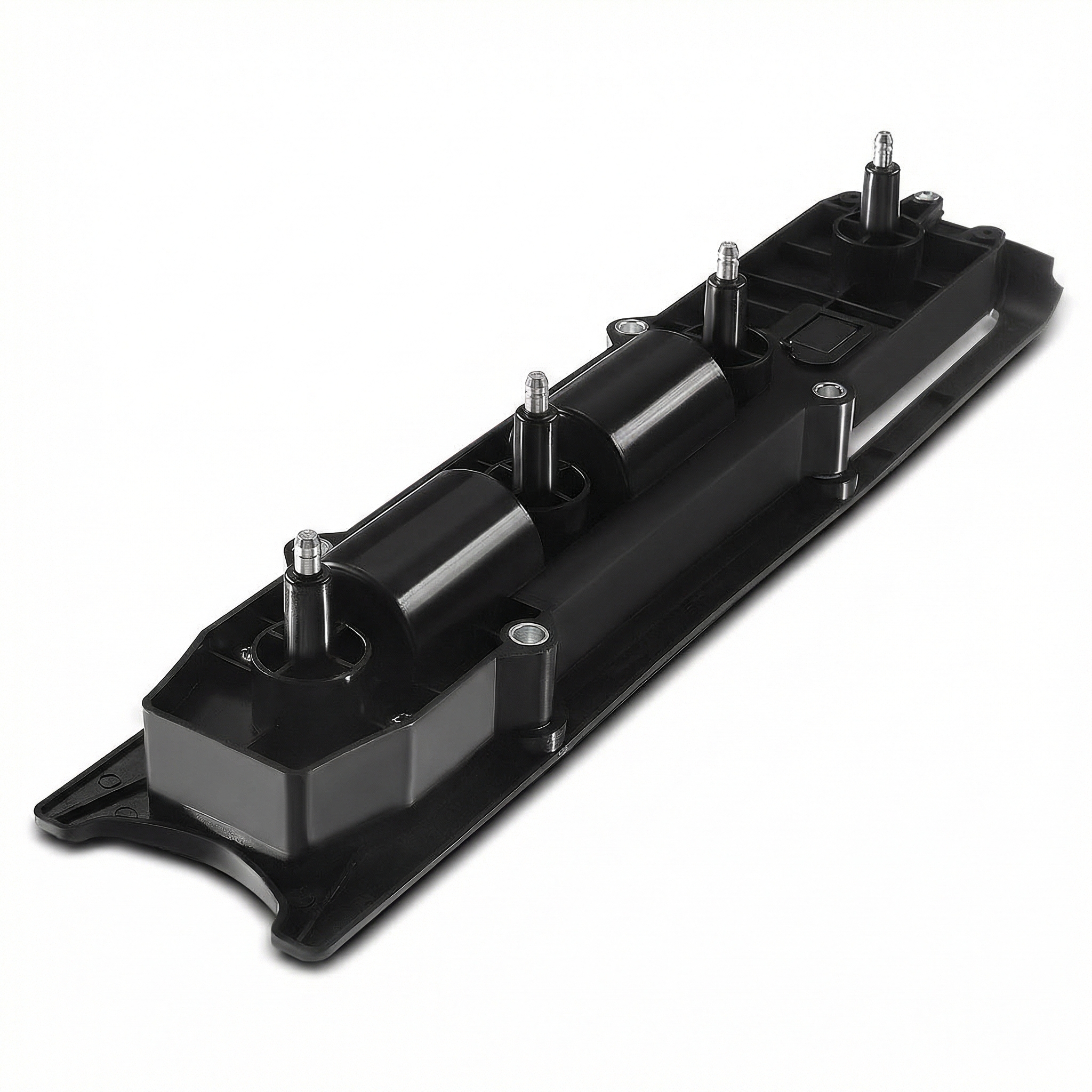
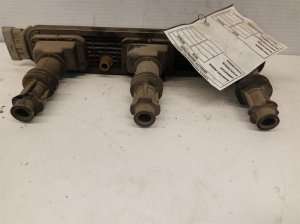
Typical fix: Replace the entire ignition cassette (coil pack and module assembly) and all four spark plugs at the same time. It is highly recommended to replace both the module and coil pack together, as a failure in one can damage the other.
Est. part cost: $75-$200 - Worn or Fouled Spark Plugs 🔴 High Probability Spark plugs are a standard wear item. If they are old, have an incorrect gap, or are of poor quality, they can be a universal cause of misfires on any vehicle. Owners often report using cheap plugs can cause issues.
How to confirm: Remove and inspect the spark plugs for wear (rounded electrodes), carbon fouling, oil, or damage. Check the gap against specifications, which should be 0.040 inches for Iridium plugs.
Typical fix: Replace all four spark plugs. It is recommended to use high-quality Iridium plugs like the specified ACDelco 41-103 or equivalent NGK part. 🎬 See this walkthrough for a Saturn L-Series spark plug tune-up.
Est. part cost: $20-$50 - Vacuum Leak (Intake Manifold Gasket) 🟡 Medium Probability The intake manifold gaskets on these engines can degrade over time, causing unmetered air to enter the engine. This leans out the air-fuel mixture and causes misfires, often triggering a P0171 code alongside the P0300.
How to confirm: Perform a smoke test on the intake system to visually identify leaks. Alternatively, with the engine running, carefully spray carb cleaner or propane around the intake manifold gasket area; a change in idle RPM indicates a leak. Listen for audible hissing sounds.
Typical fix: Replace the intake manifold gaskets.
Est. part cost: $15-$40 - Clogged or Faulty Fuel Injectors 🟡 Medium Probability Injectors can become clogged or fail electronically, especially after high mileage. One owner documented a heat-soak related injector failure causing a misfire only when the engine was warm, after a short stop. This specific issue was resolved by replacing a single faulty injector.
How to confirm: Use a scan tool with bidirectional controls to perform an injector balance test. A 'noid' light can check for an electrical signal, and resistance can be checked with a multimeter. Swapping injectors between cylinders can also isolate a faulty one.
Typical fix: Clean or replace the faulty fuel injector(s). The job takes about 30 minutes for a single injector.
Est. part cost: $40-$100 per injector
Rare But Worth Checking
- Clogged Catalytic Converter: A long-term misfire can damage the catalytic converter, but a clogged converter can also cause a misfire by creating excessive exhaust backpressure. This is often a consequence of ignoring a misfire, not the initial cause. This can be checked with an exhaust backpressure gauge.
- Jumped Timing Chain: The 2.2L Ecotec engine has been known to have issues with timing chain tensioners, which can lead to the chain jumping a tooth. This will cause significant performance issues and misfires. A TSB (#030601017) was issued regarding a timing chain design change. This requires checking the alignment of the timing marks on the cams and crank.
- Low Fuel Pressure: A weak fuel pump or clogged fuel filter can starve the engine for fuel, causing a lean condition and random misfires. Fuel pressure should be tested with a gauge connected to the fuel rail's Schrader valve. The specification for the L-series is 50-60 PSI with the key on, engine off.
Diagnosis Steps
- Read all stored fault codes with an OBD-II scanner. Note any other codes besides P0300, especially P0171 or cylinder-specific misfires.
- If the Check Engine Light is flashing, reduce engine load immediately to prevent catalytic converter damage.
- Inspect the ignition system. This is the highest probability cause. Remove and examine all four spark plugs for wear, fouling, and correct gap (0.040"). If their age is unknown, replace them with quality Iridium plugs (e.g., ACDelco 41-103).
- If plugs are new or replaced and the misfire persists (especially when hot), the ignition cassette (coil pack and module) is the prime suspect. Replacement of the entire assembly is the most common and effective repair.
- Check for vacuum leaks. Perform a smoke test on the intake system. Pay close attention to the intake manifold gasket area and all vacuum hoses.
- Test fuel pressure. Connect a fuel pressure gauge to the fuel rail's service port to ensure the fuel pump is providing adequate pressure (spec is 50-60 PSI).
- Test the fuel injectors, especially if the misfire is heat-soak related (occurs after a hot restart). An injector balance test with a capable scan tool is ideal.
- If all else fails, perform an engine compression test to rule out mechanical issues like a bad valve or head gasket. A mechanic on 2CarPros suggested this as a final step after ignition and timing checks.
- Check for a clogged catalytic converter using an exhaust backpressure gauge.
- Verify cam timing to rule out a jumped timing chain, a known, though less common, issue.
Parts You'll Likely Need
- Ignition Cassette (Coil Pack & Module Assembly)
(OEM #Ignition Control Module: ACDelco D592A; Ignition Coil Pack: ACDelco D585 or D597A)— This is the most common point of failure for random misfires on the 2.2L Ecotec engine used in the L200. It is best practice to replace the module and coil pack as a single unit.
Trusted brands: ACDelco, Delphi
OEM price range: $150-$220
Aftermarket price range: $75-$150 - Spark Plugs
(OEM #ACDelco 41-103 (Iridium))— A fundamental part of a tune-up and a common cause of misfires if worn, fouled, or improperly gapped. Quality Iridium plugs are recommended for this engine.
Related Codes That Often Appear With This One
- P0301, P0302, P0303, P0304 — These are cylinder-specific misfire codes. They may appear alongside P0300 if the misfire is intermittent but more frequent on certain cylinders.
- P0171 — This code means 'System Too Lean (Bank 1)'. It often accompanies P0300 when the cause is a vacuum leak (like a bad intake manifold gasket) or a fuel delivery problem.
- P0420 — This code means 'Catalyst System Efficiency Below Threshold'. It is a common consequence of driving with a P0300 for too long, as unburned fuel from misfires damages the catalytic converter.
Technical Service Bulletins (TSBs) & Recalls
- 03-T-01: This TSB, mentioned in the original article, addresses the ignition control module failure. While the full text is not readily available, its existence is noted in multiple forums as the original bulletin for this common problem.
- PIP5628C: A general GM bulletin from 2020 regarding diagnostic aid for P0300-P0308 codes, showing it's a persistent issue category for GM.
- 030601017: A Saturn TSB from 2003 concerning a 'TIMING CHAIN DESIGN CHANGE AND REVISED SERVICE PROCEDURES' for the 2.2L engine, which supports the 'jumped timing chain' as a known, if rare, cause of misfires.
- 03V231000 (Recall): While technically a recall, it functions like a high-priority TSB. It was issued for early L-series models due to ignition control module failure that could lead to stalling and other damage, confirming the part's high failure rate.
Platform-Specific Known Issues
- Heat-Soak Ignition Failure: The most common vehicle-specific issue is the failure of the ignition control module (ICM) after the engine gets hot. Owners will report the car runs fine when cold, but after reaching operating temperature, or after being shut off for 10-20 minutes and restarted, a severe misfire begins. This is a classic symptom of the ICM's electronics failing under heat stress.
- Cooling Fans Running on High: A common secondary symptom of a severe misfire on this platform is the engine cooling fans running on high continuously. The ECM enters a protective mode when a serious fault like a P0300 is detected, which includes commanding the fans to full speed. An owner in a YouTube video noted the fans would only stop if the code was cleared.
- ICM Provides Cam Signal: Unlike many other engines, the 2.2L L61 Ecotec does not use a separate camshaft position sensor. It relies on the ignition control module to generate this signal from the ion-sensing circuit. A failing ICM can therefore produce symptoms that mimic a bad cam sensor, further complicating diagnosis if one is not aware of this specific design.
Mechanic-Grade Diagnostic Values
- Fuel Injector Resistance — expected: ~12.5 Ohms. Failure: A reading that is significantly different, open (infinite resistance), or shorted (zero resistance) indicates a faulty injector coil.
- Ignition Coil Secondary Resistance (Cassette) — expected: 6,000 - 10,000 Ohms (6kΩ - 10kΩ). Failure: A reading outside this range suggests a failure in the coil pack's internal windings.
- Fuel Pressure (Key On, Engine Off) — expected: 50 - 60 PSI. Failure: Pressure significantly below this range points to a weak fuel pump, clogged fuel filter, or faulty pressure regulator.
- Long-Term and Short-Term Fuel Trims — expected: Ideally close to 0%, within +/- 10%.. Failure: Consistently high positive percentages (e.g., > +15%) strongly suggest a vacuum leak or under-reporting MAF sensor, which can cause a lean misfire (P0300 with P0171).
Hidden / Shadow Codes Worth Checking
- Mode 6 Misfire Counters: The Engine Control Module (ECM) tracks misfire events for each cylinder before they are frequent enough to set a P030x code. This data shows the raw count of misfires for the current and last 10 driving cycles. (see via A capable OBD-II scan tool that supports Mode 6 diagnostics. This can help identify which cylinder(s) are contributing most to a random P0300 code.)
Scan Tool Commands That Help
- Tech2 / Professional Scan Tool: Injector Balance Test / Injector Calibration Test — Extremely useful for diagnosing intermittent, heat-related misfires. This function allows you to command each injector to fire individually while the engine is off (but warm) to confirm it is operating correctly. It can pinpoint a single injector that fails only when hot.
- Tech2 / Professional Scan Tool: Crankshaft Position Relearn (CASE Relearn) — This procedure may be required after replacing the ignition control module, PCM, or crankshaft position sensor. It synchronizes the sensor's signal with the actual position of the crankshaft reluctor wheel. Failure to perform this can sometimes cause persistent misfire codes even after a repair.
Wiring & Ground Locations
- G105 — Left front of the engine compartment, located forward of the battery.. This is a primary ground point for several engine components and modules. Corrosion or a loose connection here can cause erratic behavior in the ignition and fuel systems, leading to misfires.
- G107 — Left front corner of the engine compartment, near the battery.. Another critical chassis ground in the engine bay. A poor connection can affect sensor readings and module performance.
- G118 — On the front of the engine block, above the starter motor.. This is a direct engine block ground. A bad connection here can directly impact sensors grounded to the block, including the crankshaft position sensor, potentially causing misfire detection issues.
- ICM to ECM Cam Signal Wire — In the engine harness between the Ignition Control Module (ICM) and the Engine Control Module (ECM).. On the L61, the ICM generates the camshaft position signal and sends it to the ECM via a Brown/Yellow wire. A break or high resistance in this specific wire can prevent the ECM from timing fuel and spark correctly, leading to misfires.
Real Owner Repair Stories
- YouTube user 'sLOWASSfOCUS' (2003 Saturn L200 2.2L Ecotec) — P0171 (System Too Lean) and a single cylinder misfire code that occurred only after the engine was warmed up, turned off, and restarted about 10 minutes later (heat soak). The engine cooling fans would also run on high speed during the misfire event.
❌ Tried (didn't work) Replaced ignition coil pack, Replaced ignition control module (ICM), Replaced all four spark plugs, Replaced upstream and downstream O2 sensors, Replaced Intake Air Temperature (IAT) sensor
✅ What actually fixed it Replacing a single faulty fuel injector (cylinder 4). The injector was failing electronically only when hot, which was confirmed by running an injector balance test with a scan tool while the problem was occurring.
"I Checked Everything" — The Actual Cause
- A common scenario for a P0300 on the 2.2L Ecotec is for a smoke test to show no vacuum leaks. The technician then chases fuel trims (P0171) and other causes, when the root problem is the electronic failure of the ignition control module (ICM) or coil cassette, which a smoke test cannot detect.
- In cases of heat-soak related misfires accompanied by a P0171 lean code, a smoke test may be negative. The actual cause can be a fuel injector that begins to fail or stick when it gets hot after the engine is shut off, leading to a lean condition and misfire on the next startup.
Model Year Variations Within This Range
- 2003-2005: These models use the 'Compression Sense Ignition' (CSI) system, which integrates the ignition coils and module into a single cassette. This system does not use a separate, dedicated camshaft position sensor; the ICM synthesizes the cam signal from ionization data at the spark plugs. This entire cassette assembly is a known high-failure item.
- Post-2006 (for comparison): Starting in 2007, the L61 engine was updated. It moved away from the cassette to an individual coil-on-plug ignition system and added a dedicated camshaft position sensor with a 4X reluctor wheel on the camshaft itself. These later engines do not share the same common ICM/cassette failure mode for P0300.
Helpful Videos
We Have This Part in Stock

The information in this article is provided for general reference and educational purposes only. Vehicle specifications, procedures, and part compatibility can vary by production date, trim level, and region. Always consult your vehicle's factory service manual and verify part numbers before purchasing or performing repairs. Safety-critical components such as airbags, seat belts, and braking systems should be installed by a qualified professional.
- Saturn L200:
- 🎬 Helpful Videos
- 🛍️ Shop This Part
- What's Unique About the 2003-2005 Saturn L200
- Diagnostic Flowchart
- Symptoms You May Notice
- Most Likely Causes
- Rare But Worth Checking
- Diagnosis Steps
- Parts You'll Likely Need
- Related Codes That Often Appear With This One
- Technical Service Bulletins (TSBs) & Recalls
- Platform-Specific Known Issues
- Mechanic-Grade Diagnostic Values
- Hidden / Shadow Codes Worth Checking
- Scan Tool Commands That Help
- Wiring & Ground Locations
- Real Owner Repair Stories
- "I Checked Everything" — The Actual Cause
- Model Year Variations Within This Range
- 🎟️ Get 5% Off