

P0300 on 2007-2009 Saturn AURA: Random Misfire Causes and Fixes
P0300 on a Saturn Aura indicates random engine misfires, most commonly caused by worn spark plugs and failing ignition coils. For V6 models, especially the 3.6L, a stretched timing chain is a significant and well-documented cause. Low engine oil pressure can also trigger misfires on V6 engines, a unique issue highlighted in GM Technical Service Bulletins.
- P0300 means your engine has random misfires in multiple cylinders.
- Start your diagnosis with the basics: spark plugs and ignition coils are the most likely culprits.
- If you have a V6 engine, you MUST check the engine oil level and consider having the oil pressure professionally tested, as this is a known cause of P0300 on this specific vehicle.
- Do not ignore a flashing check engine light, as it signals a severe misfire that can quickly damage your expensive catalytic converter.
- Checking for vacuum leaks with a smoke test is an effective way to find a common but hard-to-see problem.
What's Unique About the 2007-2009 Saturn AURA
The Saturn Aura was a GM vehicle based on the Epsilon platform, sharing its architecture and engines with the Pontiac G6 and Chevrolet Malibu. For the V6 engine options (3.5L and 3.6L), a unique and well-documented issue is the link between a P0300 misfire code and low engine oil pressure. A specific GM Technical Service Bulletin (TSB #PIP5064C) directly instructs technicians to check oil pressure when diagnosing P0300 on these engines. Furthermore, the 3.6L V6 (LLT) engine is known for premature timing chain stretching, which can cause camshaft correlation codes and random misfires, a repair often discussed in owner forums.
Diagnostic Flowchart
Tap your situation to follow the diagnostic path that matches what you're seeing on this vehicle.
Symptoms You May Notice
- Flashing or solid Check Engine Light
- Rough or shaky engine idle
- Noticeable loss of power and poor acceleration
- Engine hesitation or stumbling
- Reduced fuel economy
- Hard starting
- Fuel smell from the exhaust.
- Replacing only the spark plugs when the underlying issue is a failing ignition coil or a vacuum leak.
- Replacing fuel injectors when the problem is a simple vacuum leak or low fuel pressure.
- On V6 models, chasing ignition or fuel problems for months when the root cause is a stretched timing chain or low oil pressure affecting the VVT system.
Most Likely Causes
- Worn Spark Plugs 🔴 High Probability Spark plugs are a standard wear item and are the most frequent cause of misfires on most gasoline engines. Over time, the electrodes wear down, increasing the gap and requiring more voltage to create a spark.
How to confirm: Remove the spark plugs and inspect them for wear (rounded electrodes), fouling (oily or carbon-covered), or a cracked insulator. The gap should be checked against specifications; for the 3.6L V6, the gap is often specified around 0.043 inches.
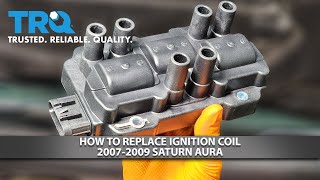
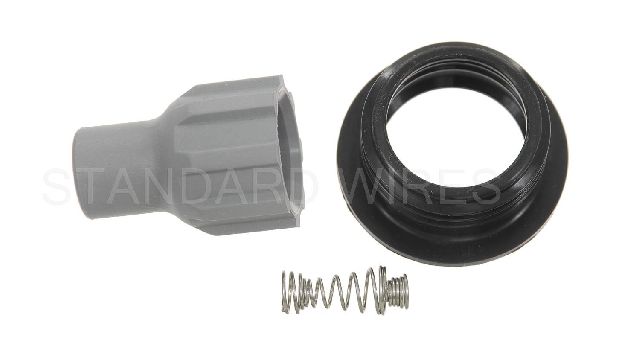
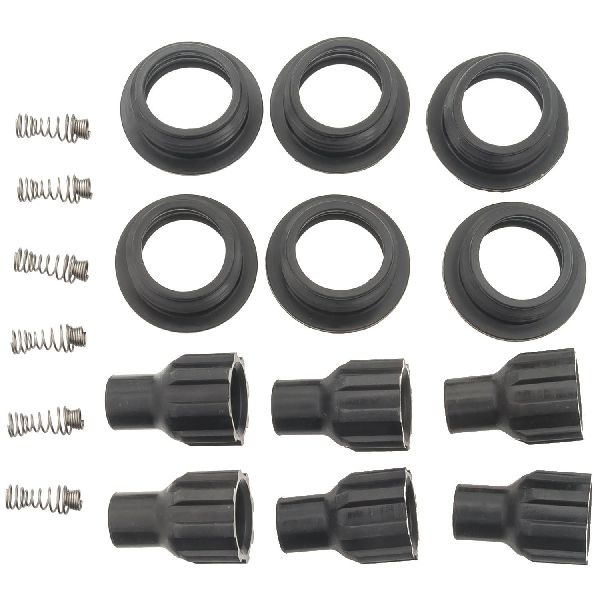
Typical fix: Replace all spark plugs as a set. It is also wise to replace the ignition coil boots at the same time. Using OEM-spec Iridium plugs like ACDelco 41-103 is recommended for longevity. 🎬 Watch: Step-by-step spark plug and coil replacement for the 3.6L.
Est. part cost: $40-$120 - Failing Ignition Coil(s) 🔴 High Probability Coil-on-plug systems are common, and heat cycles can cause the coils to fail over time, leading to a weak or non-existent spark. On V6 models, the rear bank of coils is under the intake manifold, subjecting them to more heat and making replacement more labor-intensive.
How to confirm: With the engine running, carefully unplug the electrical connector to each coil one at a time. A good coil will cause a noticeable drop in engine RPM. If unplugging a coil causes no change, that coil (or its cylinder) is the problem. You can also swap the suspected bad coil with a known good one and see if the misfire follows the coil to the new cylinder.
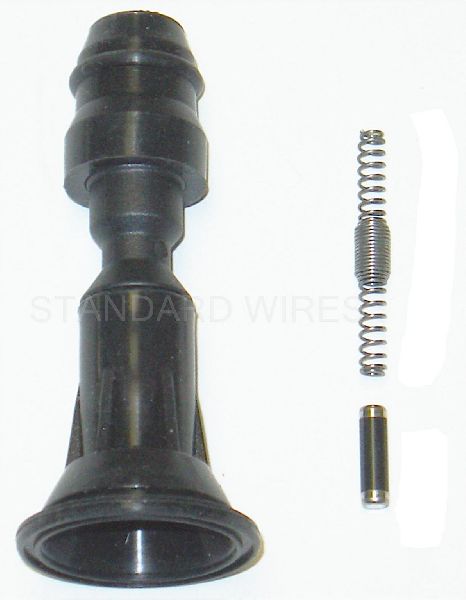
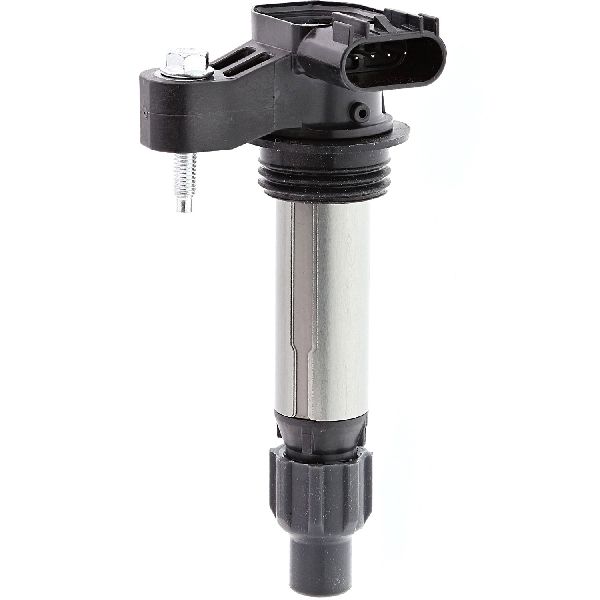
Typical fix: Replace the faulty ignition coil. Many technicians recommend replacing all coils if they are original and high-mileage, especially the rear bank on V6 models due to the labor involved. The ACDelco D510C is a common OEM replacement part.
Est. part cost: $50-$120 per coil - Stretched Timing Chain (3.6L V6) 🔴 High Probability The early GM 3.6L V6 (LLT) engines are widely known for premature timing chain wear. The chains stretch over time, causing the camshaft timing to deviate from the crankshaft timing, which the PCM detects. This leads to poor engine performance and random misfires.
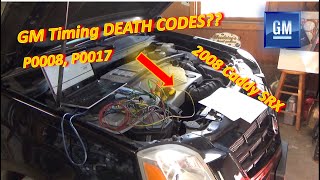
How to confirm: This issue is almost always accompanied by camshaft/crankshaft position correlation codes, such as P0008, P0016, P0017, P0018, or P0019. 🎬 See why these timing codes are critical for GM V6 engines. A mechanic can confirm by measuring timing deviation with a scan tool or by physically inspecting the chain tensioners.
Typical fix: This is a major repair that involves replacing all three timing chains, the tensioners, and the guides. It is a labor-intensive job that requires special tools.
Est. part cost: $400-$800 for a complete kit, with labor costs often exceeding $1000. - Low Engine Oil Pressure (V6 Engines) 🟡 Medium Probability As documented in TSB #PIP5064C, the High Value V6 engines (3.5L, 3.6L) can exhibit misfires when oil pressure is low. This starves the variable valve timing (VVT) system, preventing the camshaft phasers from adjusting timing correctly, which leads to misfires.
How to confirm: First, check the engine oil level and condition. If the level is correct, the actual engine oil pressure must be tested with a mechanical gauge to verify it is within GM's specifications (e.g., >21 psi at 2,000 RPM per the TSB). Normal warm idle pressure can be as low as 20-25 psi.
Typical fix: If oil pressure is low, the cause must be found. It could be a failing oil pump, a clogged oil pump pickup screen, or excessive internal engine wear. A faulty oil pressure sensor can also give false warnings.
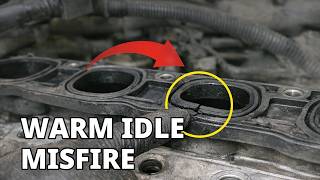
Est. part cost: $30-$80 for a sensor, $200-$500+ for an oil pump and labor. - Vacuum Leak 🟡 Medium Probability Aging rubber hoses and plastic intake manifold gaskets can crack and fail, allowing unmetered air into the engine. This leans out the air/fuel mixture and causes misfires. Common leak points include the PCV hose/system and the intake manifold gaskets.
How to confirm: Perform a smoke test by introducing smoke into the intake system and watching for where it escapes. A DIY method is to carefully spray brake cleaner or starter fluid around the intake manifold and vacuum lines with the engine running; a change in engine idle indicates the location of the leak.
Typical fix: Replace the leaking vacuum hose or gasket.
Est. part cost: $10-$200 depending on the part - Clogged or Failing Fuel Injectors ⚪ Low Probability Fuel injectors can become restricted with carbon deposits over time, leading to poor fuel atomization and an incomplete burn. This is a common issue on many direct-injection and port-injection engines.
How to confirm: Listen to each injector with a mechanic's stethoscope; they should all have a consistent clicking sound. A more advanced method involves measuring fuel pressure and performing a fuel injector balance test with a professional scan tool.
Typical fix: Try a quality fuel system cleaner first (e.g., Techron, Seafoam). If that fails, the specific injector(s) will need to be replaced. On the 3.6L V6, this can be labor-intensive.
Est. part cost: $60-$150 per injector
Rare But Worth Checking
- Low Fuel Pressure: A weak fuel pump or clogged fuel filter can starve the entire engine for fuel, causing random misfires across all cylinders, especially under load.
- Clogged Catalytic Converter: A clogged exhaust can create excessive backpressure, causing the engine to run poorly and trigger random misfires, often accompanied by a P0420 code.
- Faulty Camshaft or Crankshaft Position Sensor: While less common for a random misfire code, a failing cam or crank sensor can provide erratic data to the PCM, disrupting timing and causing misfires. Often, this will set a specific sensor code as well.
Diagnosis Steps
- Read all stored fault codes with an OBD-II scanner. Note any codes accompanying P0300, especially timing or lean codes.
- Check live data for fuel trims (Short Term and Long Term). High positive trims (>10%) suggest a vacuum leak.
- Check the engine oil level and condition. If the vehicle has a V6, this is a critical first step due to the link between oil pressure and VVT timing.
- Inspect the ignition system. Check spark plugs for wear and proper gap. Test ignition coils by swapping a suspected bad coil with a known good one to see if the misfire moves.
- Check for vacuum leaks. Perform a visual inspection of all vacuum hoses and the intake manifold gasket area. A smoke test is the most effective method to find hidden leaks.
- Test fuel pressure. Connect a fuel pressure gauge to the fuel rail to ensure the fuel pump is providing adequate pressure according to manufacturer specifications.
- If it is a 3.6L V6 model with timing codes, assume a timing chain issue is likely. Confirm with a mechanic.
- If it is a V6 model and other tests are inconclusive, have the actual engine oil pressure tested with a mechanical gauge to rule out the issue described in TSB #PIP5064C.
- If all else fails, perform an engine compression test to check for internal mechanical problems like a bad valve or worn piston rings.
Parts You'll Likely Need
- Spark Plugs
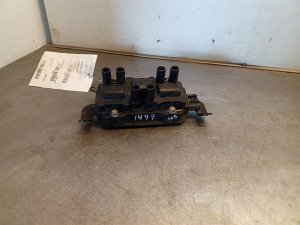
- Ignition Coils
- Intake Manifold Gasket
- Timing Chain Kit (3.6L V6)
Related Codes That Often Appear With This One
- P0301-P0306 — These codes specify which cylinder is misfiring (e.g., P0301 for Cylinder 1). P0300 often appears with one or more of these codes, helping to narrow down the issue.
- P0016, P0017, P0008 — On the 3.6L V6, these camshaft position timing codes are a strong indicator that a stretched timing chain is the root cause of the P0300 misfire.
- P0171, P0174 — These codes indicate a "System Too Lean" condition on Bank 1 and Bank 2, respectively. They often point to a significant vacuum leak that is also causing the P0300 misfire.
Technical Service Bulletins (TSBs) & Recalls
- PIP5064C: Addresses misfires (P0300) linked to low oil pressure on High Value V6 engines.
- PIP5628G: Preliminary information for diagnosing misfire codes P0300-P0308.
- PIP3333C: Addresses intermittent misfires, specifically P0300, P0301, and P0304.
Platform-Specific Known Issues
- 3.6L V6 Timing Chain Failure: The 3.6L V6 (RPO code LLT) used in the Aura XR is notorious for premature timing chain stretching. This causes camshafts to go out of sync with the crankshaft, triggering P0300 along with codes like P0008, P0016, and P0017. This is a very common and expensive repair for this specific engine.
- V6 Rear Ignition Coil Access: On both the 3.5L and 3.6L V6 engines, the rear bank of three ignition coils (cylinders 1, 3, 5) is located underneath the upper intake manifold. Replacing these coils is significantly more labor-intensive than replacing the front three, as the manifold must be removed.
- 3.5L V6 Spark Plug Wires: Unlike the 2.4L and 3.6L engines which use a full coil-on-plug system, the 3.5L V6 (RPO code LZ4) uses a coil pack with traditional spark plug wires for the front bank of cylinders. These wires are a wear item and can be a source of misfires.
Mechanic-Grade Diagnostic Values
- Fuel Pressure (3.6L V6, key on, engine off) — expected: 50-53 psi. Failure: Pressure that drops rapidly after the pump primes (e.g., dropping from 53 psi to 29 psi in 3 minutes) can indicate a leak in the system or a bad check valve in the fuel pump.
- Fuel Pressure (3.6L V6, engine running at idle) — expected: Around 49-53 psi. Failure: A rapidly fluctuating needle on the gauge can indicate issues with the fuel pump or pressure regulator, even if the average pressure seems correct.
- Engine Oil Pressure (3.6L V6, warm idle) — expected: 20-25 psi (minimum). Failure: Pressure significantly below 20 psi at warm idle can starve VVT components and cause misfires.
- Engine Oil Pressure (3.6L V6, under acceleration/cold start) — expected: Can be as high as 110 psi. Failure: This is a normal characteristic; high readings are not necessarily a sign of failure.
- Ignition Coil Primary Winding Resistance — expected: 0.49 - 0.57 ohms. Failure: Readings outside this range indicate a faulty coil.
- Ignition Coil Secondary Winding Resistance — expected: 9.5 - 11.1 kilohms. Failure: Readings outside this range indicate a faulty coil.
Scan Tool Commands That Help
- Tech2 / GDS2: Misfire Data / Misfire Graphic — To monitor live and historical misfire counts for each specific cylinder, which helps identify if the 'random' P0300 misfire is actually biased towards one or two cylinders. This is a critical first step before swapping components.
- Tech2 / GDS2: Cylinder Power Balance — To actively test the contribution of each cylinder. The scan tool deactivates fuel to each cylinder one by one and measures the corresponding drop in RPM. A cylinder with a smaller RPM drop is not contributing as much, pointing to a problem in that cylinder.
Wiring & Ground Locations
- G105 — On the rear of the cylinder head, under the left intake manifold (3.5L); Center rear of the engine (3.6L); Left rear of engine (2.4L).. This is a primary engine ground. A loose or corroded G105 can cause erratic behavior from sensors and the ECM, potentially leading to misfire codes.
- G107 — Right front of the engine.. This ground is used by multiple components, including the Mass Air Flow (MAF) sensor. A poor connection at G107 can cause MAF sensor codes and incorrect air/fuel calculations, leading to misfires.
- Ignition Coil Grounds — Each ignition coil has its own ground connection through the wiring harness, which ultimately leads to a main engine or chassis ground point.. A break or high resistance in the ground wire for a specific coil will prevent it from charging and firing correctly, causing a misfire on that cylinder.
Real Owner Repair Stories
- 2CarPros Forum (2008 Saturn Aura 3.6L V6 with 150,000 miles) — A really bad misfire and shake. Also, hard starting after the engine is hot and has been shut off briefly (like refueling).
❌ Tried (didn't work) The owner performed a fuel pressure test which showed some irregularities but did not identify the root cause.
✅ What actually fixed it The owner found a bad coil-on-plug and swapped it out, which resolved the primary misfire and shaking problem. - SaturnFans.com Forum (2008 Saturn Vue 3.6L (same engine as Aura)) — P0300 code present without a check engine light. Scan tool showed misfire counts only on Bank 1 (cylinders 1, 3, 5).
❌ Tried (didn't work) Replaced all spark plugs.
✅ What actually fixed it The user suspected a MAP sensor issue after a P0106 code appeared temporarily. The discussion pointed towards checking fuel trims and wiring for Bank 1 as the next logical steps, as a one-bank-only misfire often relates to issues specific to that bank (O2 sensor, wiring, fuel rail).
OEM Part Supersession History
Varies→ACDelco 41-103 (or equivalent 12625058)— Represents the OEM Iridium plug specified for many of these engines, offering better longevity and performance over older plug technologies.
Heads up: While many spark plugs will fit, using non-Iridium or incorrectly gapped plugs can lead to shorter service life and potential misfires. The 41-103 is pre-gapped from the factory.
Model Year Variations Within This Range
- 2009: For the 2009 model year, the standard 2.4L LE5 I4 engine was paired with the new 6-speed 6T40 automatic transmission, replacing the 4-speed automatic used in 2007-2008 models. This can affect diagnostics related to torque converter lockup and load calculation by the ECM.
- 2007-2009: The 3.5L V6 (LZ4) was a pushrod engine, while the 3.6L V6 (LY7) was a more modern DOHC engine. Diagnostic procedures, common failures (like the 3.6L's timing chains), and parts are significantly different between these two V6 options.
Helpful Videos

Used OEM Parts in Stock


New Aftermarket Parts Available



The information in this article is provided for general reference and educational purposes only. Vehicle specifications, procedures, and part compatibility can vary by production date, trim level, and region. Always consult your vehicle's factory service manual and verify part numbers before purchasing or performing repairs. Safety-critical components such as airbags, seat belts, and braking systems should be installed by a qualified professional.
- Saturn AURA:
- 🎬 Helpful Videos
- 🛍️ Shop This Part
- What's Unique About the 2007-2009 Saturn AURA
- Diagnostic Flowchart
- Symptoms You May Notice
- Most Likely Causes
- Rare But Worth Checking
- Diagnosis Steps
- Parts You'll Likely Need
- Related Codes That Often Appear With This One
- Technical Service Bulletins (TSBs) & Recalls
- Platform-Specific Known Issues
- Mechanic-Grade Diagnostic Values
- Scan Tool Commands That Help
- Wiring & Ground Locations
- Real Owner Repair Stories
- OEM Part Supersession History
- Model Year Variations Within This Range
- 🎟️ Get 5% Off