

P0300 on 2005-2009 Saab 9-7X: Random Misfire Causes and Fixes
P0300 on a Saab 9-7X means random engine misfires. The most common causes are worn spark plugs or failing ignition coils. Start by replacing the spark plugs with OEM-spec ACDelco Iridium parts; if that doesn't work, suspect the ignition coils. On V8 models, intake manifold gasket leaks are also a very frequent culprit. This is often a simple DIY fix.
- P0300 indicates a random misfire affecting multiple cylinders.
- Start your diagnosis with the cheapest and most common fixes: inspect and replace worn spark plugs with high-quality ACDelco or NGK Iridium parts.
- Failing ignition coils are the next most likely culprit. Swap coils to confirm which one is bad before replacing.
- A flashing check engine light is a serious warning. Stop driving to prevent expensive damage to the catalytic converter.
- Because the 9-7X is based on a GM truck platform, parts are easy to find and many common problems are well-documented in TrailBlazer and Envoy communities.
What's Unique About the 2005-2009 Saab 9-7X
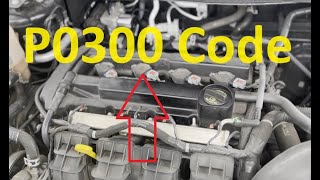
The Saab 9-7X is unique because it's built on the General Motors GMT360 platform, sharing its engines and many parts with the Chevrolet TrailBlazer and GMC Envoy. This is advantageous for owners, as parts from brands like ACDelco and Delphi are widely available and affordable. Common GMT360 issues, such as failing ignition coils due to heat soak over the exhaust manifolds, and intake manifold gasket leaks are the primary culprits for a P0300 code 🎬 Watch: Understanding the common causes and fixes for P0300 codes. on the 9-7X. The 5.3L and 6.0L V8s can also experience misfires related to the Active Fuel Management (AFM) / Displacement on Demand (DOD) system, where lifters can become stuck or fail.
Diagnostic Flowchart
Tap your situation to follow the diagnostic path that matches what you're seeing on this vehicle.
Symptoms You May Notice
- Rough or shaky engine idle.
- Hesitation or stumbling during acceleration.
- Flashing Check Engine Light (especially under load).
- Reduced engine power.
- Noticeable decrease in fuel economy.
- Difficulty starting the engine, sometimes requiring a long crank time.
- A smell of raw fuel from the exhaust.
- Engine stalls at stops.
- Replacing oxygen sensors. While a faulty O2 sensor can contribute to fuel mixture problems, it is rarely the direct cause of a P0300 code and should only be replaced if a specific O2 sensor code is also present.
Most Likely Causes
- Worn or Fouled Spark Plugs 🔴 High Probability Spark plugs are a regular maintenance item with a 100,000-mile service interval. The GM engines in the 9-7X perform best with their original equipment plugs, and many owners on forums report that using only ACDelco Iridium plugs resolves misfire issues.
How to confirm: Remove the spark plugs and inspect them for wear on the electrode, oil fouling, or heavy carbon deposits. A worn plug will have a rounded center electrode and a large gap. Modern Iridium plugs come pre-gapped and should not be adjusted.
Typical fix: Replace all spark plugs. It is highly recommended to use the OEM-spec ACDelco Iridium plugs (41-103 for 4.2L, 41-985 for 5.3L/6.0L).
Est. part cost: $50-$120 - Failing Ignition Coil(s) 🔴 High Probability Ignition coils on the GMT360 platform are a very common failure item due to constant heat soak. Often, one coil will begin to fail intermittently, causing random misfires before it fails completely and triggers a cylinder-specific code like P0301, P0302, etc.
How to confirm: Use a scan tool with live data to monitor misfire counts per cylinder. Swap the suspected bad coil with a known good one from another cylinder. Clear codes and see if the misfire follows the coil to the new cylinder.
Typical fix: Replace the faulty ignition coil. It's often recommended to use OEM brands like Delphi or ACDelco for reliability.
Est. part cost: $40-$80 per coil - Vacuum Leak (Intake Manifold Gasket) 🟡 Medium Probability The intake manifold gaskets on GM's 4.2L, 5.3L, and 6.0L engines of this era are known to become brittle and fail, causing unmetered air to enter the engine. This often causes a rough idle only when the engine is cold, as the shrunken gaskets allow air to leak, and the issue lessens as the engine warms up and the gaskets expand.
How to confirm: With the engine running, spray carburetor cleaner or starter fluid in short bursts around the intake manifold sealing area. If the engine RPM changes, a leak is present. A more advanced method is to watch Short Term Fuel Trims (STFT) on a scan tool at idle; a vacuum leak will cause them to be highly positive (e.g., >15%), but they will drop toward zero when the engine RPM is raised to ~2000 RPM.
Typical fix: Replace the intake manifold gaskets. The updated GM gaskets are a teal green color 🎬 Watch: How to diagnose intake gasket leaks on GM V8 engines., replacing the older, failure-prone orange ones. Fel-Pro is a reliable aftermarket option.
Est. part cost: $30-$90 - Dirty or Failing Mass Airflow (MAF) Sensor ⚪ Low Probability
How to confirm: A dirty MAF sensor can provide inaccurate airflow readings to the ECM, causing an improper air/fuel mixture. Try cleaning the sensor first with a dedicated MAF sensor cleaner spray. Do not touch the sensor wires. If the problem persists, the sensor may need replacement.
Typical fix: Clean or replace the MAF sensor.
Est. part cost: $70-$150 - Low Fuel Pressure ⚪ Low Probability
How to confirm: Connect a fuel pressure gauge to the fuel rail's service port. Check that the pressure is within the manufacturer's specification (typically 55-62 PSI for these GM engines). A simple test for a failing fuel pump or regulator is to cycle the key from 'Off' to 'On' (without starting) 2-3 times to prime the system. If the engine then starts easily when it previously had a long crank time, it points to a fuel pressure bleed-down issue.
Typical fix: Replace the fuel filter first, as it's a maintenance item. If pressure is still low, the fuel pump or fuel pressure regulator likely needs to be replaced.
Est. part cost: $20-$50 (filter), $200-$400 (pump)
Rare But Worth Checking
- Worn Camshaft Lobe / Failed Lifter: A known issue documented in GM Technical Service Bulletin #PIP4138R. This can cause a persistent misfire, sometimes with a chirp or tick noise at half of engine speed. On 5.3L/6.0L V8s, this is often related to a collapsed Active Fuel Management (AFM) lifter. Diagnosis may involve using a stethoscope or applying pressure to rocker arms to isolate the noise.
- Clogged Catalytic Converter: A clogged converter can create excessive exhaust backpressure, leading to misfires. Often, the misfire itself is what damages the converter in the first place. A test can be done by checking the temperature before and after the converter with an infrared thermometer; it should be hotter after. Another test is to temporarily remove the upstream O2 sensor to relieve backpressure; if performance improves, the cat is likely clogged.
- Faulty or Clogged Fuel Injectors: A clogged or leaking fuel injector can cause a misfire. While less common than ignition issues, it can happen, especially on higher-mileage vehicles. A professional cleaning or replacement may be needed. A fuel injector balance test can be performed with a capable scan tool.
- Failing Fuel Pressure Regulator: On some systems, the regulator is on the fuel rail. A classic failure sign is a ruptured diaphragm, which allows raw fuel to be sucked into the intake manifold through the vacuum line attached to it. Pull the vacuum line off the regulator; if fuel is present or it smells strongly of gas, the regulator is bad and must be replaced.
Diagnosis Steps
- Check for any other stored trouble codes with an OBD-II scanner. Codes for specific cylinders (P0301-P0308) or systems (P0171) can provide valuable clues.
- Use a scan tool with live data to view misfire counts for each cylinder to see if the random misfire is actually favoring one or two cylinders. A GM Tech 2 scanner is ideal for this.
- Inspect spark plugs. Replace them if they are worn, fouled, or if it has been over 80,000-100,000 miles. Use ACDelco 41-103 Iridium plugs for the 4.2L or 41-985 for V8s.
- If plugs are new, test the ignition coils. Swap the coil from a misfiring cylinder (if identified via scan tool data) with a non-misfiring cylinder. Clear codes and see if the misfire follows the coil.
- Check for vacuum leaks. Perform a visual inspection of all vacuum hoses. Carefully spray carb cleaner around the intake manifold gasket with the engine running and listen for a change in idle speed. For a more definitive test, monitor short-term fuel trims.
- Clean the Mass Airflow (MAF) sensor using a dedicated cleaner. Do not touch the delicate sensor wires.
- Test fuel pressure. Connect a gauge to the fuel rail and verify it meets specifications (55-62 PSI). Perform the 'key cycle' test to check for pressure bleed-down.
- Check the fuel pressure regulator's vacuum hose (if equipped) for the presence of raw fuel.
- Inspect critical ground connections, particularly G102 (ignition coils) and G108 (ECM on V8s), for corrosion or looseness.
- If all else fails, consider more complex mechanical issues. Perform an engine compression test to check for internal problems. Consult TSB #PIP4138R regarding potential camshaft wear, especially if a ticking or chirping noise is present.
- If the crankshaft position sensor, balancer, or ECM has been replaced, perform a Crankshaft Variation Relearn procedure using a capable scan tool.
Parts You'll Likely Need
- Spark Plugs
(OEM #ACDelco 41-103 (4.2L I6), ACDelco 41-985 (5.3L/6.0L V8))— This is the most common cause of random misfires and is a standard maintenance item. Using the correct OEM plug is critical on these engines.
Trusted brands: ACDelco, NGK
OEM price range: $8-$15 per plug
Aftermarket price range: $6-$12 per plug - Ignition Coil
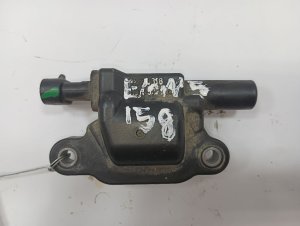
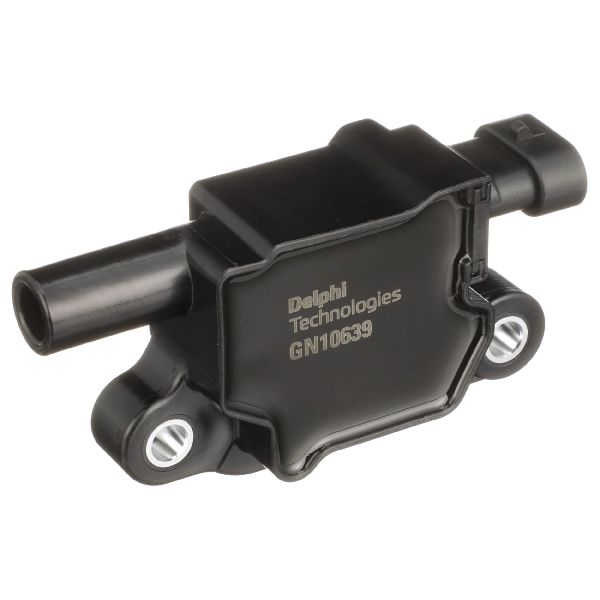
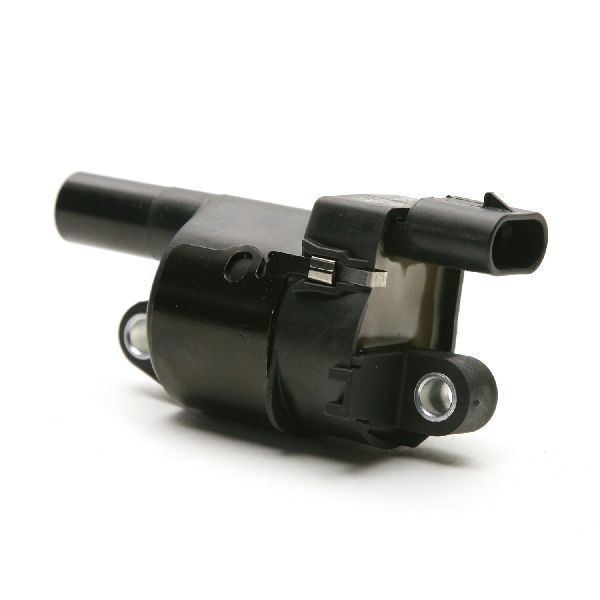
(OEM #ACDelco D585 (V8), ACDelco UF303 (I6))— Heat soak causes ignition coils to fail frequently on this platform, leading to intermittent and random misfires before a complete failure.
Trusted brands: ACDelco, Delphi, NGK
OEM price range: $40-$80 per coil
Aftermarket price range: $25-$50 per coil
Related Codes That Often Appear With This One
- P0301-P0308 — If the computer can eventually identify which specific cylinder is misfiring, it will set a code from P0301 (Cylinder 1) to P0308 (Cylinder 8) in addition to or instead of P0300.
- P0171/P0174 — These codes indicate the engine is running too lean (too much air, not enough fuel). They frequently appear with P0300 when the cause is a vacuum leak, such as a bad intake manifold gasket.
- P0420/P0430 — These codes indicate low catalyst efficiency. A persistent misfire from P0300 can destroy the catalytic converter, leading to these codes appearing later.
- P1336 — This code indicates that the Crankshaft Position (CKP) System Variation learn procedure has not been completed successfully. This procedure is required after certain repairs, and if not performed, can itself be a cause of a P0300 code.
Technical Service Bulletins (TSBs) & Recalls
- PIP5628C: Preliminary information for diagnosing P0300-P0308 and P050D codes.
- PIP4138R: Addresses engine misfire (P0300-P0308) and/or engine noise (chirp, squeak, tick) potentially caused by a worn camshaft lobe or lifter roller, particularly on V8 engines.
- PIP3232C: Addresses cold engine idle misfire with DTCs P0171, P0174, or P0300 due to leaking intake manifold gaskets.
Platform-Specific Known Issues
- V8 Active Fuel Management (AFM/DOD) Lifter Failure: The 5.3L and 6.0L V8 engines feature a cylinder deactivation system. The specialized lifters for this system are a known failure point, which can collapse or get stuck, causing a persistent misfire on one of the AFM cylinders (1, 4, 6, or 7). This is often accompanied by a ticking noise and can be related to TSB PIP4138R.
- Intake Gasket Leaks Causing Warm Idle Misfire: A very common issue on the V8 models is for the intake manifold gaskets to leak, but only cause a noticeable P0300 and rough idle after the engine has reached full operating temperature. This is because the computer leans out the fuel mixture in closed loop, and the unmetered air from the leak becomes significant enough to cause misfires.
- 4.2L I6 Coil-on-Plug Heat Failure: The 4.2L engine uses a coil-on-plug design where the coils sit directly on top of the spark plugs in deep wells. Over time, engine heat degrades the coils, leading to intermittent failures that manifest as a random P0300 code before a specific cylinder code appears.
Mechanic-Grade Diagnostic Values
- Fuel Pressure (Key On, Engine Off) — expected: 55-62 PSI. Failure: Pressure below 55 PSI indicates a weak fuel pump, clogged filter, or faulty regulator.
- Fuel Injector Pressure Drop (via Injector Balance Test) — expected: All cylinders should have a pressure drop within 1.0 PSI of each other after the test.. Failure: A cylinder with a pressure drop significantly less than others indicates a clogged or restricted injector. A drop significantly more indicates a leaking injector.
Hidden / Shadow Codes Worth Checking
- Misfire Counters (Live Data): Before a P0300 or P030x code is officially set, the ECM tracks misfires for each cylinder. These counters are not standard DTCs but are visible in live data. They can reveal if a 'random' misfire is actually biased towards one or two specific cylinders, pointing to a failing coil or injector. (see via A professional-grade scan tool like the GM Tech 2 or equivalent with live data capability.)
- P1336: Crankshaft Position (CKP) System Variation Not Learned. This code sets if the mandatory CKP relearn procedure fails or is not performed after replacing the crankshaft sensor, ECM, or crankshaft balancer. An un-learned CKP sensor can cause the ECM to misinterpret normal crankshaft speed variations as misfires, triggering a P0300. (see via Standard OBD-II scan tool.)
Scan Tool Commands That Help
- GM Tech 2 / GDS2: Crankshaft Variation Relearn (CASE Relearn) — Required after replacing the crankshaft position sensor, ECM, or crankshaft balancer. Failure to perform this can directly cause a P0300 code. The procedure involves accelerating the engine to a specific RPM (approx. 4000) until fuel cut-off to allow the ECM to learn the precise signature of the crankshaft.
- GM Tech 2 / GDS2: Fuel Injector Balance Test — To diagnose a suspected faulty or clogged fuel injector when misfires are present but not clearly isolated. The tool individually fires each injector for a set duration and measures the corresponding drop in fuel rail pressure. This can identify an injector that is flowing less (clogged) or more (leaking) than the others.
Wiring & Ground Locations
- G102 — Located at the left rear of the engine.. This is a primary ground point for the ignition coils. Corrosion or a loose connection here can cause weak or intermittent spark across multiple cylinders, directly leading to a P0300 code.
- G108 — On the lower left side of the engine (for 5.3L V8).. This is a ground point for the Engine Control Module (ECM). A poor ground here can cause a wide range of erratic engine management behavior, including false sensor readings and misfire detection.
- G103 — On the cowl in the engine compartment, above the brake booster.. Grounds the Body Control Module (BCM), Instrument Panel Cluster (IPC), and the Data Link Connector (DLC). While not a direct cause of misfire, a bad ground here can cause communication issues during diagnosis.
Real Owner Repair Stories
- GMTNation forum user 'help-i-own-a-saab' (2009 Saab 9-7X 5.3i) — P0300 and P0420 codes, rattling noise from exhaust.
❌ Tried (didn't work) Replacing spark plugs.
✅ What actually fixed it The catalytic converter had physically broken apart internally. The user confirmed this by unbolting the converter from the exhaust manifold, which resulted in a major increase in performance and elimination of the misfires during a test drive. The final fix was to replace the catalytic converter. - Reddit user 'alanoo' on r/saab (Saab (model not specified, but common GM issue)) — P0300 code.
✅ What actually fixed it The fuel pressure regulator was faulty and leaking fuel through its vacuum line into the intake manifold. Replacing the regulator solved the problem.
"I Checked Everything" — The Actual Cause
- A common scenario for a P0300 on this platform is for a technician to perform a smoke test to check for vacuum leaks and find none. The actual cause is often unrelated to unmetered air, such as a failing ignition coil providing intermittent spark, a poor ECM or coil ground connection (G102/G108), or a mechanical issue like a failing AFM lifter or a cracked flexplate which fools the crank sensor.
When the Usual Fixes Don't Work
- While spark plugs and ignition coils are the most frequent culprits for a P0300, numerous owner reports confirm that these are not always the solution. In cases accompanied by lean codes (P0171/P0174), the cause is very often a vacuum leak from failed intake manifold gaskets, a problem specific to the material used in this engine family. In other cases where no other codes are present, a persistent P0300 after a tune-up may point to deeper issues. Confirmed fixes from owners include replacing a failed fuel pressure regulator that was leaking fuel into its vacuum line, replacing a clogged and internally damaged catalytic converter, and performing a 'Crankshaft Variation Relearn' procedure with a scan tool after other engine work was completed.
OEM Part Supersession History
GM 12570427 (and others)→GM 89060436 / Fel-Pro MS 96440— The original orange/red intake manifold gaskets were prone to becoming brittle and failing, causing vacuum leaks. They were updated to a more durable teal/green polymer material.
Model Year Variations Within This Range
- 2006-2009: The 5.3L V8 engine was equipped with Active Fuel Management (AFM), also known as Displacement on Demand (DOD), starting in the 2006 model year. This system can be a source of misfires if an AFM lifter collapses or becomes stuck, which would not be a factor on the 2005 5.3L model.
- 2008-2009: The high-performance 'Aero' trim was introduced, featuring the 6.0L LS2 V8 engine. This engine has its own specific considerations and does not have AFM like the 5.3L V8.
- 2005: The initial trim levels were 'Linear' (4.2L) and 'Arc' (5.3L). These were renamed to '4.2i' and '5.3i' for the 2006 model year.
Helpful Videos
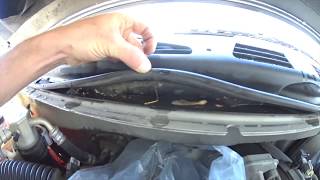
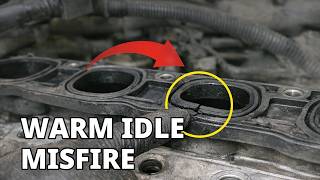
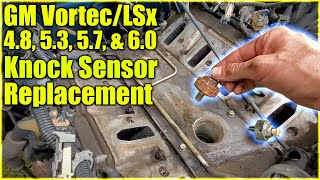
Used OEM Parts in Stock
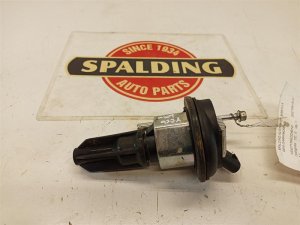

New Aftermarket Parts Available


The information in this article is provided for general reference and educational purposes only. Vehicle specifications, procedures, and part compatibility can vary by production date, trim level, and region. Always consult your vehicle's factory service manual and verify part numbers before purchasing or performing repairs. Safety-critical components such as airbags, seat belts, and braking systems should be installed by a qualified professional.
- Saab 9-7X:
- 🎬 Helpful Videos
- 🛍️ Shop This Part
- What's Unique About the 2005-2009 Saab 9-7X
- Diagnostic Flowchart
- Symptoms You May Notice
- Most Likely Causes
- Rare But Worth Checking
- Diagnosis Steps
- Parts You'll Likely Need
- Related Codes That Often Appear With This One
- Technical Service Bulletins (TSBs) & Recalls
- Platform-Specific Known Issues
- Mechanic-Grade Diagnostic Values
- Hidden / Shadow Codes Worth Checking
- Scan Tool Commands That Help
- Wiring & Ground Locations
- Real Owner Repair Stories
- "I Checked Everything" — The Actual Cause
- When the Usual Fixes Don't Work
- OEM Part Supersession History
- Model Year Variations Within This Range
- 🎟️ Get 5% Off