

P0300 on 2014-2020 Ram 3500: Random Misfire Causes for Hemi & Cummins
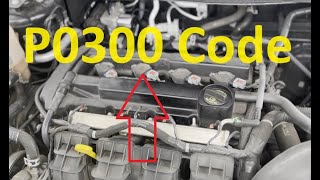
P0300 signifies a random misfire. On a 6.4L Hemi gas engine, the cause is likely worn spark plugs or ignition coils, but could be the infamous 'Hemi tick' from a failed lifter and camshaft. On a 6.7L Cummins diesel, it almost always points to a fuel system issue, like failing injectors or clogged fuel filters, which can lead to fuel diluting the engine oil. A basic tune-up for the Hemi may cost $250-$600, while Cummins injector work can exceed $3,000 and a Hemi camshaft repair can be even more.
- The cause of P0300 on a Ram 3500 depends entirely on whether you have the 6.4L Hemi (gas) or 6.7L Cummins (diesel) engine.
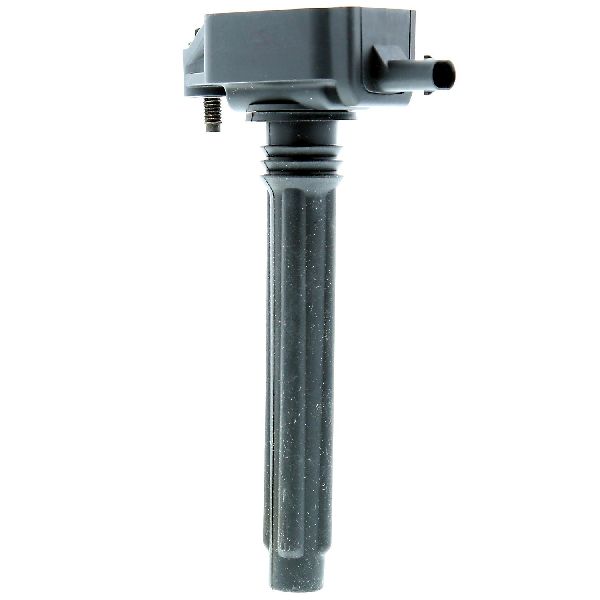
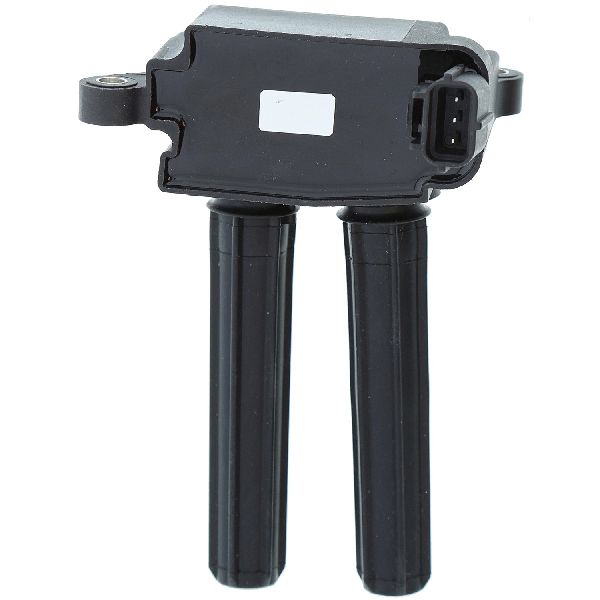
- For Hemi engines, start your diagnosis with the ignition system: the 16 spark plugs and 8 ignition coils are the most likely culprits.
- For Cummins engines, the problem is almost always in the fuel system. Check fuel filters first, but suspect the fuel injectors as the primary cause.
- A flashing check engine light is a critical warning. Stop driving immediately to prevent expensive damage to the catalytic converter or DPF.
- A faulty crankshaft position sensor is a known cause for P0300 on both engines and is cited in multiple manufacturer TSBs.
What's Unique About the 2014-2020 Ram 3500

On the 2014-2020 Ram 3500, the diagnostic path for P0300 is entirely different depending on the engine. For the 6.4L Hemi V8 (gasoline), causes are typically ignition-related (spark plugs, coils) or, more seriously, internal engine problems like lifter failure, known as the 'Hemi tick'. For the 6.7L Cummins I6 (diesel), a P0300 code almost exclusively points to the high-pressure fuel system. Failing injectors are the most common culprit, an issue highlighted in manufacturer TSBs that can cause fuel to enter the crankcase and raise the oil level. For 2019-2020 Cummins models, the failure-prone CP4.2 high-pressure fuel pump was a known cause of fuel starvation and misfires, leading to a major recall.
Diagnostic Flowchart
Tap your situation to follow the diagnostic path that matches what you're seeing on this vehicle.
Generation note: This range covers the fourth generation (2014-2018) and the start of the fifth generation (2019-2020) Ram 3500. The primary engines (6.4L Hemi, 6.7L Cummins) and the common causes for P0300 are largely consistent across these years. Note that fuel filter part numbers for the Cummins engine changed for the 2019 model year. A critical variation exists for 2019-2020 Cummins engines, which were equipped with a failure-prone Bosch CP4.2 high-pressure fuel pump that was subject to a recall, whereas earlier models used the more robust CP3 pump.
Symptoms You May Notice
- Rough or shaking idle
- Hesitation or stumbling during acceleration
- Noticeable loss of engine power
- Flashing or solid Check Engine Light
- Engine ticking noise (especially on Hemi models, indicative of lifter failure)
- White or black smoke from exhaust (especially on Cummins models)
- Smell of diesel in the engine oil or a rising oil level on the dipstick (Cummins injector failure)
- Engine cranks but won't start (can be caused by a failed crankshaft position sensor)
- Replacing only spark plugs on a Hemi when an ignition coil is also bad.
- Replacing oxygen sensors when the root cause is a vacuum leak or fuel delivery issue.
- On the Cummins, replacing the expensive high-pressure fuel pump (CP3/CP4) when the issue is one or more leaking injectors.
- On the Hemi, repeatedly replacing a failed lifter without also replacing the damaged camshaft, which will lead to a repeat failure.
Most Likely Causes

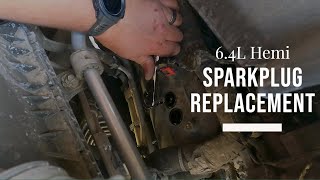
- Worn Spark Plugs or Faulty Ignition Coils (6.4L Hemi) 🔴 High Probability The Hemi V8 uses two spark plugs per cylinder (16 total), increasing the number of potential failure points. Ignition coils are common wear items exposed to significant heat. A single failing coil can cause a random misfire code before it isolates to a specific cylinder. Corrosion on the coil pack springs is also a known issue.
How to confirm: Inspect spark plugs for wear, fouling, or damage. Test ignition coils by swapping a coil from a misfiring cylinder (if identified with a specific code like P030X) to a known good cylinder to see if the misfire follows. A multimeter can be used to check coil resistance; primary resistance should be 0.4-2 ohms and secondary should be 6k-10k ohms.
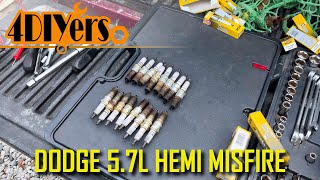
Typical fix: Replace all 16 spark plugs and any faulty ignition coils. It is best practice to replace spark plugs as a complete set. Many owners choose to replace all 8 coils as preventative maintenance.
Est. part cost: $100-$400 for plugs, $40-$100 per coil. - Failing Fuel Injectors (6.7L Cummins) 🔴 High Probability The high-pressure common rail fuel system is sensitive to fuel quality and wear. Injectors can fail internally, leading to excessive fuel delivery or high return flow, causing a misfire. TSB #18-044-26 links P0300 to fuel system issues that can even cause the oil level to rise due to fuel dilution. TSB #05175565A$ for 2016 models mandates replacing the high-pressure connector tube with the injector to prevent repeat failures.
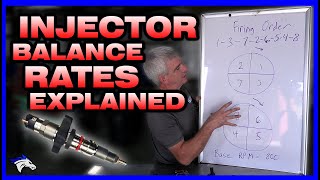
How to confirm: Perform a fuel injector return flow test. The maximum allowable combined leakage is 210 mL in 30 seconds during a Fuel Pressure Override Test. Any single injector contributing more than 40 mL to that total is considered excessive. A scan tool can also perform a cylinder contribution test to identify weak cylinders. Check engine oil for a diesel smell or an overfull level.
Typical fix: Replace the faulty fuel injector(s). It is often recommended to replace all six injectors at once, along with the high-pressure connector tubes to prevent leaks at the junction.
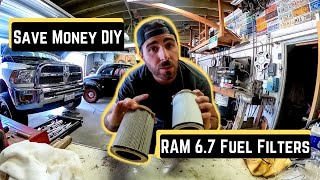
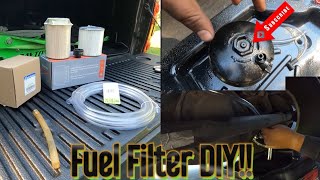
Est. part cost: $400-$2500+ - Clogged Fuel Filters (6.7L Cummins) 🟡 Medium Probability Diesel fuel systems are highly sensitive to contamination. Clogged filters can restrict fuel flow, leading to low rail pressure and causing random misfires, especially under load. This is a common first step in diagnosis for any Cummins performance issue.
How to confirm: Check fuel filter service history. If unknown or overdue, replace both filters. The recommended interval is every 15,000 miles or sooner.
Typical fix: Replace both the chassis-mounted and engine-mounted fuel filters.
Est. part cost: $80-$150 - Faulty Crankshaft Position Sensor 🟡 Medium Probability Multiple TSBs (#1810722REVA, #18-096-16) cite a faulty crankshaft position sensor as a cause for P0300. The sensor provides critical engine speed and position data, and a bad signal can be misinterpreted by the PCM as a misfire, sometimes before throwing a specific sensor code like P0335.
How to confirm: Scan for a companion code like P0335. A common symptom is the engine cranking but the tachometer reading zero. The issue may worsen as the engine warms up.
Typical fix: Replace the crankshaft position sensor. On the Hemi, it's on the passenger side near the rear of the block. On the Cummins, it's on the driver's side near the front.
Est. part cost: $30-$80 - Camshaft/Lifter Failure (6.4L Hemi) ⚪ Low Probability Hemi engines, particularly the 6.4L, are known for a valvetrain issue where the roller on a lifter fails, often due to issues with the MDS (Multi-Displacement System), which then damages the camshaft lobe. This is often preceded by a distinct ticking noise. A Ram 3500 owner on RamForum.com experienced this failure after a misfire code appeared.
How to confirm: Listen for a persistent engine tick that increases with RPM. A P0300 code combined with a tick is a strong indicator. A mechanic can remove the valve covers to inspect for rockers with insufficient movement or use a borescope to inspect the cam lobes. Checking for metal shavings in the oil is also a key diagnostic step.
Typical fix: Requires extensive engine repair, including replacing the camshaft, all lifters (many owners opt for a non-MDS conversion), head gaskets, and related components. The updated lifter part number is 5038785AD. This is not a minor repair.
Est. part cost: $800-$2000 for parts alone.
Rare But Worth Checking
- Vacuum Leak (6.4L Hemi): A leak in the intake manifold gasket or a vacuum hose can introduce unmetered air, leaning out the air/fuel mixture and causing random misfires. This can be diagnosed with a smoke test.
- Low Compression: A mechanical engine issue like a burnt valve or failing piston rings can cause a loss of compression, leading to a misfire. This is less common than fuel or ignition issues and is confirmed with a compression test.
- PCM Software Glitch: TSB #18-072-16 specifically addresses a false P0300 code that can occur on 2014 models when using a block heater in certain temperatures. The fix is a PCM software update.
Diagnosis Steps
- Read all stored fault codes with an OBD-II scanner. Note any codes that accompany P0300, as they provide critical clues.
- Check freeze frame data to see the engine conditions (RPM, load, temperature) when the misfire occurred.
- If driving a 6.7L Cummins, start by replacing the fuel filters. This is routine maintenance and a common, inexpensive fix.
- If driving a 6.4L Hemi, inspect the ignition system. Pull the spark plugs and check for wear or fouling. Test ignition coils by swapping them between cylinders.
- Listen for an engine ticking noise (Hemi) or check the oil for a fuel smell and an overfull dipstick reading (Cummins).
- Test the crankshaft position sensor, especially if code P0335 is present or if the engine stalls when warm.
- If a vacuum leak is suspected on a Hemi, perform a smoke test on the intake system.
- If the above steps do not resolve the issue, more advanced diagnostics are needed. For a Cummins, perform a fuel injector return flow test. For a Hemi with a tick, perform an engine compression test and inspect the camshaft and lifters.
Parts You'll Likely Need

- Spark Plugs (6.4L Hemi)
(OEM #SP138239AC)— These are the most common cause of misfires on the Hemi engine. The engine requires 16 plugs, and they are a primary wear item.
Trusted brands: NGK, Champion - Fuel Injectors (6.7L Cummins)
(OEM #0445120342 (Pickup), R8210105AA (C&C))— The most frequent cause of P0300 on the Cummins. TSBs and owner forums confirm this is a primary failure point.
Trusted brands: Bosch, Mopar - Fuel Filter Kit (6.7L Cummins)
(OEM #68197867AB & 68157291AA (13-18))— Clogged filters are a common cause of low fuel pressure and misfires. It's an inexpensive and critical maintenance item.
Trusted brands: Mopar, Fleetguard - Ignition Coil (6.4L Hemi)
(OEM #68238603AA)— A common failure item that can cause random misfires before failing completely on one cylinder.
Trusted brands: Mopar, Delphi - Camshaft & Lifter Kit (6.4L Hemi)
(OEM #5038785AD (Lifters))— Required for the infamous 'Hemi tick' lifter failure, which is a known, albeit less common, cause of P0300.
Trusted brands: Mopar, COMP Cams, Texas Speed
Related Codes That Often Appear With This One
- P0301-P0308 — These codes specify which cylinder is misfiring (e.g., P0301 for Cylinder 1). They often appear with P0300 and help narrow down the problem.
- P0335 — Indicates a fault in the Crankshaft Position Sensor circuit. Multiple TSBs (#1810722REVA, #18-096-16) link this code directly to P0300, as an erratic sensor signal can be interpreted as a random misfire.
- P00C6 — (Cummins Diesel) This code for 'Fuel Rail Pressure Too Low' is mentioned in TSB #18-044-26 along with P0300, pointing directly to a fuel delivery problem like clogged filters or failing injectors.
- P0456 — (Hemi Gas) This code for an 'EVAP System Small Leak' is mentioned in TSB #1810722REVA with P0300, suggesting a potential shared wiring or PCM software issue that requires an update, though it's not a direct cause of misfires.
Technical Service Bulletins (TSBs) & Recalls

- 18-044-26
- 1813022REVA
- 1810722REVA
- 18-096-16
- 1810722
- 18-072-16
- 05175565A$
Platform-Specific Known Issues

- 6.7L Cummins Fuel Dilution: TSB #18-044-26 highlights an issue where P0300 can be accompanied by a high oil level warning. This is caused by a faulty fuel injector leaking diesel fuel into the crankcase, diluting the engine oil and requiring an immediate oil change and injector replacement.
- 6.4L Hemi 'Tick' / Lifter Failure: A well-documented issue where a lifter's roller bearing fails, causing it to grind against the camshaft. This creates a distinct ticking sound and will eventually cause a P0300 misfire code as the cam lobe is destroyed. Ignoring this leads to catastrophic engine damage.
Mechanic-Grade Diagnostic Values
- 6.7L Cummins Injector Return Flow (Running Test) — expected: Less than 210 mL total for all injectors combined over 30 seconds.. Failure: Total flow exceeds 210 mL, or a single injector is found to contribute more than 40 mL of the total flow.
- 6.7L Cummins Injector Return Flow (No-Start Cranking Test) — expected: Less than 40 mL total in 10 seconds of cranking.. Failure: Total flow exceeds 40 mL, indicating excessive leakage from one or more injectors preventing the rail from building adequate pressure to start.
- 6.4L Hemi Ignition Coil Primary Resistance — expected: 0.4 to 2.0 ohms.. Failure: A reading outside this range (e.g., OL for open or 0 for shorted) indicates a faulty coil.
- 6.4L Hemi Ignition Coil Secondary Resistance — expected: 6,000 to 10,000 ohms (6k-10k Ω).. Failure: A reading significantly outside this range suggests the internal windings are failing.
Hidden / Shadow Codes Worth Checking
- Live Misfire Counters (Mode $06): While not a 'hidden code,' professional scan tools can access Mode $06 data or live data PIDs that show real-time misfire counts for each individual cylinder. This allows a technician to see which cylinders are contributing to a P0300 code, even if they haven't misfired enough to set a specific P030x code. (see via Use a professional-grade scan tool (like FCA's wiTECH) or an advanced aftermarket scanner with live data and Mode $06 capabilities.)
Scan Tool Commands That Help
- wiTECH or advanced aftermarket (e.g., AlfaOBD, Snap-on): Cylinder Contribution Test / Cylinder Performance Test — For a Cummins engine with a P0300, this test commands the ECM to analyze the performance of each cylinder to identify which one(s) are weak. It helps pinpoint a problematic injector or mechanical issue without disassembly.
- wiTECH or advanced aftermarket: Injector Kill Test — On a running Cummins engine with a rough idle, this function allows the technician to disable one injector at a time. If disabling a cylinder causes no change in engine smoothness, that cylinder wasn't contributing, pointing to a bad injector or mechanical problem.
- wiTECH: Fuel Pressure Override Test — This is a required service function to perform a proper injector return flow test on a 6.7L Cummins. It commands the fuel system to a specific high pressure (26,107 PSI) at a set RPM (1200) to allow for accurate leakage measurement under controlled conditions.
Wiring & Ground Locations
- Cummins Injector Harness — The section of the engine harness that routes over the top front of the valve cover on the 6.7L Cummins.. This area is a known chafe point. Engine vibration can cause the harness to rub against brackets or the valve cover, wearing through insulation and causing an intermittent short-to-ground on an injector circuit, leading to a P0300 or specific injector codes.
- G104 / G105 — Main engine compartment grounds. G104 is typically in the left front engine compartment, and G105 is on the right side of the engine near the battery.. These are primary grounds for the PCM and various sensors. A loose or corroded connection at these points can cause erratic voltage signals and false sensor readings, which the PCM may misinterpret as a random misfire.
Real Owner Repair Stories
- RamForum.com user (2014 Ram 3500 6.4L Hemi, 140,000 miles) — Check engine light with a misfire code.
❌ Tried (didn't work) Initial diagnosis
✅ What actually fixed it The misfire was caused by a failed lifter. The repair required replacing the entire valve train (camshaft and all lifters). - RamForum.com user (2014 Ram 1500 5.7L Hemi) — P0300 multiple misfire code and very rough running immediately after a camshaft and lifter replacement.
❌ Tried (didn't work) Double checking all electrical connections., Checking for vacuum leaks.
✅ What actually fixed it After pulling the passenger side valve cover, the owner found that three exhaust pushrods were not seated correctly in the lifter cups. Re-seating the pushrods properly resolved the misfire.
"I Checked Everything" — The Actual Cause
- On a 6.7L Cummins, a P0300 can be caused by the injector wiring harness chafing through on the valve cover. This creates an intermittent electrical short that will not be found with a smoke test (for vacuum leaks) or a fuel pressure test, leading to a difficult diagnosis if the harness isn't inspected carefully.
- A cracked crankshaft reluctor ring (tone ring) can cause a P0300. Standard diagnostics would point to a faulty crankshaft position sensor, but replacing the sensor won't fix it. A smoke test and fuel/ignition system checks would all pass, while the root cause is a mechanical failure of the ring that the sensor reads.
When the Usual Fixes Don't Work
- While a P0300 on a high-mileage Hemi is often due to lifter/cam failure, a misfire code appearing immediately after this extensive repair doesn't necessarily mean a new part is faulty. In one documented case, a P0300 after a cam and lifter swap was ultimately traced to an installation error where several pushrods were not correctly seated in the new lifters. This caused a severe misfire despite the primary 'common cause' having been addressed. This highlights the importance of verifying mechanical assembly before diagnosing new component failure.
OEM Part Supersession History
5038785AC, 5038785AB, 53021726BC (and others)→5038785AD— This is the updated lifter for 5.7L and 6.4L Hemi engines. Forum discussions suggest the update was to incorporate larger, more durable needle bearings in the lifter roller to combat the common 'Hemi tick' failure.
Heads up: The new lifter (5038785AD) is generally considered backward-compatible with older Hemi engines when replacing the full set.
Model Year Variations Within This Range
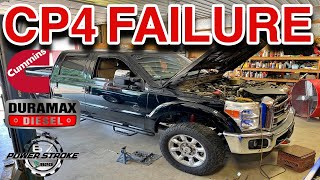
- 2019-2020: Ram 3500 models with the 6.7L Cummins engine were equipped with the Bosch CP4.2 high-pressure fuel pump. This pump is known for a high failure rate where it can self-destruct, sending metal debris throughout the fuel system. This can cause fuel starvation, stalling, and P0300/P0087 codes. A massive recall (NHTSA 21V880) was issued to replace the CP4.2 with the more reliable CP3 pump used in 2014-2018 and 2021+ models.
Helpful Videos
Used OEM Parts in Stock



New Aftermarket Parts Available



The information in this article is provided for general reference and educational purposes only. Vehicle specifications, procedures, and part compatibility can vary by production date, trim level, and region. Always consult your vehicle's factory service manual and verify part numbers before purchasing or performing repairs. Safety-critical components such as airbags, seat belts, and braking systems should be installed by a qualified professional.
- Ram 3500:
- 🎬 Helpful Videos
- 🛍️ Shop This Part
- What's Unique About the 2014-2020 Ram 3500
- Diagnostic Flowchart
- Symptoms You May Notice
- Most Likely Causes
- Rare But Worth Checking
- Diagnosis Steps
- Parts You'll Likely Need
- Related Codes That Often Appear With This One
- Technical Service Bulletins (TSBs) & Recalls
- Platform-Specific Known Issues
- Mechanic-Grade Diagnostic Values
- Hidden / Shadow Codes Worth Checking
- Scan Tool Commands That Help
- Wiring & Ground Locations
- Real Owner Repair Stories
- "I Checked Everything" — The Actual Cause
- When the Usual Fixes Don't Work
- OEM Part Supersession History
- Model Year Variations Within This Range
- 🎟️ Get 5% Off