

P0300 on 2025 Ram 1500 3.0L Hurricane: Random Misfire Causes and Fixes
On a 2025 Ram 1500 with the 3.0L Hurricane engine, a P0300 code is frequently caused by software issues requiring a dealer-installed update to the Ignition System Control Module (ISCM). Before replacing parts, check for open TSBs, as this is a known issue on this new engine platform and is often covered by warranty. Owners on forums like 5thGenRams also report that using 91+ octane fuel can prevent misfires, especially in hot weather.
- P0300 on the 2025 Ram 3.0L Hurricane is very often a software problem, not a hardware failure.
- Your first step should always be to contact a dealer and check for open TSBs for your VIN before attempting any repairs.
- Do not ignore a flashing check engine light, as it indicates a severe misfire that can cause expensive catalytic converter damage.
- The code may be accompanied by lean codes (P0171/P0174), which strongly suggests a vacuum leak, possibly from the purge line mentioned in TSB 09-025-25.
- If software updates don't fix the issue, the most likely culprits are standard ignition components like spark plugs or ignition coils.
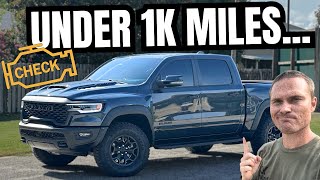
What's Unique About the 2025-2025 Ram 1500 🎬 Watch: A real-world look at misfire issues on the 2025 Ram

The 2025 Ram 1500 is the first model year to feature the new 3.0L Hurricane twin-turbo inline-six engine. As a new platform, it is experiencing some initial production issues, and P0300 is one of the most commonly reported codes. Several Technical Service Bulletins (TSBs) have been released that link this code directly to software glitches in the Ignition System Control Module (ISCM), which means a trip to the dealer for a reflash is often the first and only required step, rather than a mechanical repair. Some owners also report misfires when using lower octane fuel, especially in hot climates, suggesting the engine is sensitive to fuel quality. Forum discussions reveal that some dealers initially suggest using premium fuel as a fix until a software update becomes available.
Symptoms You May Notice
- Check engine light is on (solid or flashing)
- Rough or shaking engine idle, especially on cold start
- Engine hesitation or stumbling during acceleration
- Noticeable loss of power
- Reduced fuel economy 🎬 See this breakdown of common P0300 causes and fixes
- Difficulty starting the engine or stalling
- Engine shutting off after a remote start
- Replacing ignition coils and spark plugs before checking for software updates. Many owners and even dealers have initially replaced hardware, only to find the problem returned until the correct TSB-related software reflash was performed.
Most Likely Causes

- Ignition System Control Module (ISCM) Software Issue 🔴 High Probability As a new engine platform, Stellantis is actively releasing software updates to fix bugs and improve calibration. Multiple TSBs have been issued specifically to address misfire codes with a software reflash. This is the most widely reported cause and fix on owner forums for early production 2025 models.
How to confirm: Check with a Ram dealership for open Technical Service Bulletins (TSBs) related to your vehicle's VIN. TSBs like 08-055-25 Rev A (for High Output engines) and 08-031-25 Rev A (for Standard Output engines) directly address P0300 and are the primary fix.
Typical fix: The dealer will reprogram the ISCM and/or PCM with the latest software. This is typically covered under the vehicle's warranty. Owners on 5thGenRams forum confirm this resolved their issues.
Est. part cost: $0 - Disconnected or Defective Purge Line 🟡 Medium Probability TSB 09-025-25 was issued for the 2025 Ram 1500 with the Hurricane engine, identifying a defect in the purge line connection that can cause a vacuum leak, leading to lean conditions and misfires.
How to confirm: This issue will almost always be accompanied by lean codes P0171 and P0174. A visual inspection near the intake manifold may reveal the disconnected line, but a smoke test is the most effective way to find a vacuum leak. The leak may be on the vapor-side of the purge valve, requiring the valve to be commanded open during the test to be found.
Typical fix: Securely reconnect the purge line and clear the fault codes. If the connection point is damaged, it may need to be replaced.
Est. part cost: $0 - $50 - Low Octane Fuel 🟡 Medium Probability The Hurricane is a high-compression, twin-turbocharged engine. While Ram states 87 octane is acceptable, 91 octane is recommended for best performance. Multiple owners on forums like RamForum.com and Reddit have reported that switching to 91 or 93 octane fuel resolved their P0300 code, especially in hot weather or under load, suggesting the engine's calibration is sensitive.
How to confirm: If you are using 87 or 89 octane fuel, try filling the tank with 91 octane or higher and see if the issue resolves after some driving. A user on the 5thGenRams forum noted their check engine light turned off within 24 hours of switching to 93 octane.
Typical fix: Use premium (91+ octane) fuel. Dealers have acknowledged this is a temporary solution until a robust software update is available.
Est. part cost: $5-$15 extra per fill-up - Faulty Ignition Coils or Spark Plugs ⚪ Low Probability While software is the main culprit on the new Hurricane, ignition components are common failure points on all gasoline engines. A misfire on a brand new truck is less likely to be a worn part, but manufacturing defects are possible. Some owners have had dealers replace these parts, sometimes unnecessarily before a software fix was identified.
How to confirm: Use a scan tool to monitor misfire data on each cylinder. Swap the ignition coil from a misfiring cylinder with one from a non-misfiring cylinder. If the misfire code follows the coil (e.g., changes from P0302 to P0304), the coil is bad. Inspect spark plugs for wear, fouling, or incorrect gap.
Typical fix: Replace the faulty ignition coil(s). It is recommended to replace spark plugs as a full set. This should only be done after verifying software is up to date.
Est. part cost: $40-$80 per ignition coil, $13-$25 per spark plug
Rare But Worth Checking
- Carbon Buildup on Intake Valves: This is a common long-term issue for all gasoline direct injection (GDI) engines like the Hurricane. While unlikely on a new 2025 model, it can cause misfires over time as deposits disrupt airflow into the cylinders.
- Clogged or Faulty Fuel Injectors: A failing fuel injector can disrupt the air/fuel mixture and cause misfires. While less common than ignition or software issues, it's a possibility, especially if misfires are isolated to one cylinder after ruling out ignition components. 🎬 Watch: How to diagnose failing parts causing an engine misfire
- Low Fuel Pressure: A weak fuel pump or clogged filter can starve the engine for fuel, leading to lean conditions and random misfires across all cylinders.
- Loose Ground Connections: A Reddit user reported that their 2025 Limited with a stutter and multiple codes was fixed by the dealer finding and tightening several loose ground connections, including the chassis, battery, and PCM grounds.
Diagnosis Steps
- Check for Technical Service Bulletins (TSBs). Before any other step, contact a Ram dealer with your VIN to see if TSB 08-055-25, 08-031-25, 09-025-25, or another misfire-related bulletin applies to your truck. This is the most common fix.
- Scan for other codes. Look for cylinder-specific (P0301-P0306) or lean (P0171/P0174) codes that can help pinpoint the cause.
- Check freeze frame data. This data shows the engine conditions (RPM, load, temperature) when the misfire occurred. Note if the misfire happens during a cold start, which is a key symptom of the software issue.
- Consider fuel quality. If using fuel with an octane rating below 91, try a tank of premium fuel to see if symptoms improve, as many owners have reported this as a successful workaround.
- Inspect for vacuum leaks. Visually check all vacuum hoses and the air intake system. Pay close attention to the purge line connection mentioned in TSB 09-025-25. A smoke test is the most reliable method.
- Inspect ignition components. If software and vacuum leaks are ruled out, examine the spark plugs for wear or fouling. Test ignition coils by swapping them between cylinders to see if the misfire follows.
- Check Ground Connections. As a final check, inspect major ground straps for the battery, chassis, and PCM to ensure they are clean and tight, as loose grounds have been reported to cause erratic issues.
- Test fuel system. If misfires persist, perform a fuel pressure test to check for a weak fuel pump. Test fuel injectors to ensure they are functioning correctly.
Parts You'll Likely Need

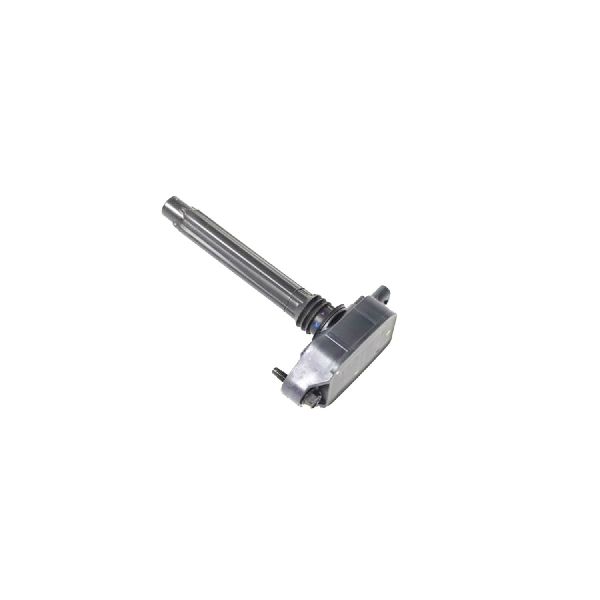
- Ignition Coil
(OEM #68385535AC)— A common hardware failure point for misfires if software updates do not resolve the issue.
Trusted brands: Mopar
OEM price range: $38-$56
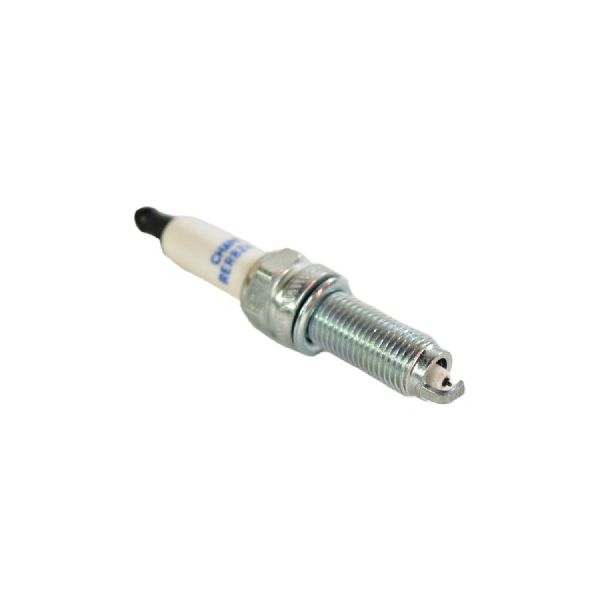
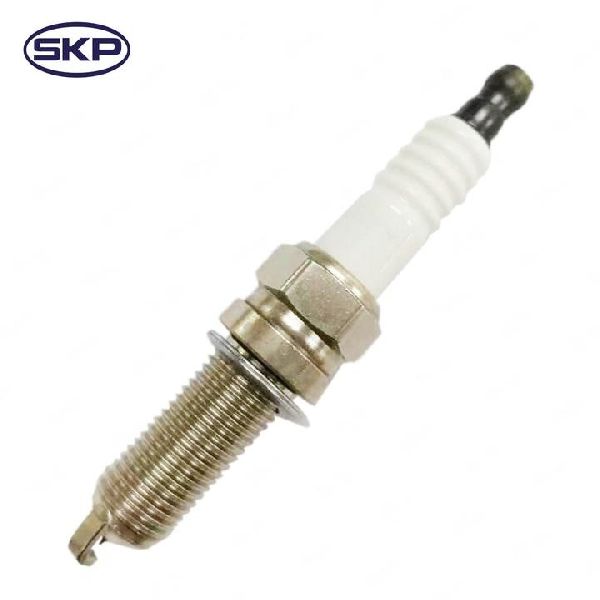
Aftermarket price range: $30-$50 - Spark Plug
(OEM #68265438AB)— A primary wear item in the ignition system. Less likely to be the cause on a new truck, but manufacturing defects are possible.
Trusted brands: Mopar
OEM price range: $13-$25
Aftermarket price range: $10-$20
Related Codes That Often Appear With This One
- P0301-P0306 — These codes specify which cylinder is misfiring. They often appear with P0300 when misfires are frequent but not isolated to a single cylinder. TSB 08-055-25 Rev. A explicitly lists these codes alongside P0300.
- P0171 / P0174 — These 'System Too Lean' codes indicate too much air or not enough fuel. TSB 09-025-25 links them directly to P0300, pointing to a vacuum leak from a disconnected purge line as the root cause.
- P0420 / P0430 — These codes indicate low catalyst efficiency. A misfire dumps unburned fuel into the exhaust, which can trigger these codes and eventually damage the catalytic converters. TSB 08-055-25 Rev. A notes that these codes can appear with P0300 and be fixed by the same software update. One owner on the 5thGenRams forum reported both catalytic converters were destroyed due to persistent misfires.
- P2C30 / P2C31 — These are ignition coil primary circuit fuse codes. TSB 08-055-25 Rev. A includes these codes in the list of DTCs that can be resolved with an ISCM software update, pointing to an electrical control issue rather than a simple fuse failure.
Technical Service Bulletins (TSBs) & Recalls

- TSB 08-055-25 Rev. A: Addresses P0300-P0306, catalyst codes, and ignition fuse codes on 3.0L Hurricane HO engines via an ISCM software reflash.
- TSB 08-031-25 Rev. A: Addresses hesitation, light misfire, and ignition fuse codes on 3.0L Hurricane SO engines via an ISCM and PCM software reflash.
- TSB 09-025-25: Links P0300 with lean codes P0171/P0174, pointing to a disconnected purge line as the cause.
- TSB 21-015-25: Addresses rough shifting and other drivability concerns with the 8HP75 transmission paired with the Hurricane engine via a TCM software update. While not a direct P0300 cause, poor shifting can sometimes be mistaken for a misfire.
Platform-Specific Known Issues
- Early production 2025 models with the 3.0L Hurricane engine are subject to several TSBs for software updates to the Ignition System Control Module (ISCM) and Powertrain Control Module (PCM) to correct false or overly sensitive misfire detection, especially during cold starts.
- A significant number of owners report that using 87 or 89 octane fuel can trigger misfire codes, particularly in hot weather, and that switching to 91+ octane resolves the issue, indicating a sensitive engine calibration.
Mechanic-Grade Diagnostic Values
- High-Pressure Direct Injection Fuel Pressure — expected: Up to 5,075 psi (350 bar) under operation.. Failure: Significantly lower pressure during cranking or under load. A weak pump will starve the engine for fuel, causing lean conditions and misfires.
- Long Term and Short Term Fuel Trims — expected: Within +/- 10% at idle and under steady load.. Failure: Consistently high positive trims (>10%) suggest a vacuum leak (like the TSB-identified purge line) or a weak fuel pump. Consistently negative trims suggest a leaking injector.
- Low-Pressure Fuel Pump (in-tank lift pump) — expected: Approximately 58-62 PSI at the rail before the high-pressure pump.. Failure: Pressure below ~54 PSI indicates a weak lift pump, which can starve the high-pressure pump and cause misfires under load.
Hidden / Shadow Codes Worth Checking
- Misfire Counter Data (per cylinder): This is not a DTC, but a live data parameter showing the number of misfire events for each individual cylinder. It allows a technician to see which cylinders are contributing to a P0300 code even if they haven't crossed the threshold to set a specific P030x code. (see via Accessible via the OEM wiTECH scan tool or some high-end professional scan tools under 'Engine Live Data' or a similar menu. The wiTECH function is sometimes labeled 'Which cylinder is misfiring'.)
Scan Tool Commands That Help
- wiTECH (OEM Dealer Tool): Cylinder Power Balance Test — This is a primary diagnostic step to confirm a misfire. The tool deactivates one cylinder at a time and measures the RPM drop. A cylinder that shows little to no RPM drop is not contributing power, confirming it as a source of the misfire.
- wiTECH (OEM Dealer Tool): Fuel Injector Kill — Used to isolate a specific cylinder's fuel system. If disabling an injector causes no change in engine idle, it confirms that cylinder was not contributing, pointing to a problem with fuel, spark, or compression on that cylinder.
- wiTECH (OEM Dealer Tool): ISCM/PCM Reprogram/Flash — This is the specific function used to perform the software update repair outlined in TSBs 08-055-25 and 08-031-25. A battery charger supplying 13.2-13.5 volts must be connected during this procedure.
- wiTECH or Advanced Scan Tool: Purge Valve Actuation — To diagnose the vacuum leak described in TSB 09-025-25. The purge valve must be commanded open while performing a smoke test to see if the leak is present on the vapor-side of the valve.
Wiring & Ground Locations
- Underhood Power Distribution Center (PDC) — Located in the engine bay, this box contains the main fuses and relays for the ignition system, fuel pump, and engine controllers.. TSBs for the P0300 code reference DTCs P2C30 and P2C31, which are 'Ignition Coil Primary Circuit Fuse' codes. While the TSB fix is a software reflash, not a fuse replacement, a technician would first verify the integrity of the related fuses in the PDC.
Real Owner Repair Stories
- Reddit user in r/ram_trucks (2025 Ram 1500 3.6L eTorque (similar issue, dealer response is relevant)) — P0300 code at 1500 miles.
❌ Tried (didn't work) Initial ECM flash did not work for one user, with the code returning in cold weather.
✅ What actually fixed it Dealer reprogrammed the PCM. For another user, the dealer stated Ram Engineering was aware and a new update was pending EPA approval. This confirms the issue is software-based and being actively addressed by the manufacturer.
"I Checked Everything" — The Actual Cause
- A standard smoke test of the intake manifold for the vacuum leak mentioned in TSB 09-025-25 may come back clean. The TSB points to a disconnected purge line, and the leak may be on the vapor-side of the EVAP purge valve. To find this leak, a technician must use a scan tool to command the purge valve open while the smoke test is being performed.
Model Year Variations Within This Range
- Early Production 2025: Multiple TSBs (e.g., 08-055-25 Rev. A for HO, 08-031-25 Rev. A for SO) apply to vehicles built before specific dates in late 2024 / early 2025. Vehicles manufactured after these dates should have the corrected Ignition System Control Module (ISCM) software from the factory and are less likely to experience this specific software-induced misfire.
Diagnostic Flowchart
Other Known Issues on This Vehicle
Issues unrelated to this code that are worth knowing about as an owner of this generation:
- Uconnect Infotainment Glitches 🟠 Medium — Commonly reported on new 2025 models. Issues include screen lag, random language changes, and the 'Uconnect Box Requires Service' message. (Ref: RSU 25-075 (08-123-25))
- Harsh or Erratic Transmission Shifting 🟠 Medium — Frequently mentioned by new owners, especially at low speeds or when cold. Often described as a 'jerk' or 'clunk'. (Ref: TSB 21-015-25)
- Thermostat Failures / Overheating 🔴 High — Isolated but severe reports of thermostat failures leading to overheating on low-mileage engines.
- Electronic Gremlins / Battery Drain 🟠 Medium — Owners report various electronic issues, from key fob recognition problems to unexplained overnight battery drain.
- Excessive High Idle on Cold Start 🟡 Low — Many owners note an unusually long high-idle period (1500 RPM for over a minute) on cold starts, though this is sometimes corrected with the same PCM flash for misfires.
Used vs. New Parts: Buying Guide for This Vehicle
When a used part is the smart pick: For a 2025 model year vehicle, using used parts is generally not recommended, especially for electronic components. Warranty should cover most failures. The only scenario might be for simple mechanical parts like hoses or connections if they were damaged, but availability is near zero.
Donor-vehicle mileage cap: roughly under 5000 miles for the part to have meaningful remaining life.
What to inspect on the donor part:
- Part must come from a vehicle with a verifiable, low-mileage history.
- No signs of fire, flood, or significant impact damage to the donor vehicle.
- For electronic modules, part numbers must match exactly.
OEM-only on this vehicle (don't cheap out):
- Ignition System Control Module (ISCM)
- Powertrain Control Module (PCM)
- Ignition Coils
- Fuel Injectors
- Any emissions-related sensor
Aftermarket brands forum-validated for this vehicle:
- None yet validated. Given the vehicle's newness and the prevalence of software-related issues, only OEM (Mopar) parts are recommended.
Brands owners have reported issues with on this vehicle:
- All aftermarket electronic components should be avoided at this stage. The system is too new and calibrated specifically for OEM parts.
Real Owner Stories
Aggregated from forums and TSBs cited above. Mileages and costs reflect what owners reported in those sources.
2025 Ram 1500 Laramie 3.0L SST SO
Symptoms: Owner in Phoenix, AZ reported P0300 and P0304 codes while using 87 octane fuel in a hot climate.
What fixed it: The dealer acknowledged it as a known issue requiring an 'engineering update' and recommended using 91 octane fuel as a temporary solution.
Source hint: RamForum.com thread titled '2025 1500 Laramie SST SO throwing P0304 code'
2025 Ram 1500 3.0L Hurricane
Symptoms: Check engine light turned on; owner suspected fuel quality issues.
What fixed it: Switching to 93 octane fuel caused the check engine light to turn off and stay off within 24 hours.
Source hint: 5thGenRams forum thread titled 'Miss fire update for 2025 1500'
2025 Ram 1500 Laramie 4x4 3.0L S.O.
Symptoms: Experienced engine misfires leading to multiple dealer visits.
What fixed it: The dealer performed a PCM software update which resolved the issue.
Source hint: RamForum.com thread titled '2025 Ram 1500 Laramie 4x4 3.0L S.O. Miss Fires'
2025 Ram 1500 3.0L Hurricane
Symptoms: Misfire sensations felt specifically at cruising speeds.
What fixed it: PCM software updates that raised the threshold for Check Engine Light (CEL) activation.
Source hint: 5thGenRams forum thread titled 'Possible Hurricane misfire at cruising speed'
Related OBD-II Codes
Frequently Asked Questions
Which TSB applies to my 2025 Ram 1500 with the 3.0L Hurricane High Output engine for a P0300 code?
Can using 87 octane fuel cause a misfire code on my new Hurricane engine?
My truck is stalling and the engine shuts off after a remote start; is this related to P0300?
Is there a TSB for the Standard Output (SO) Hurricane engine regarding misfires?
Could a vacuum leak be causing my P0300 and lean codes?
Will the dealer charge me to fix the software-related misfire?
Helpful Videos
Used OEM Parts in Stock

New Aftermarket Parts Available


The information in this article is provided for general reference and educational purposes only. Vehicle specifications, procedures, and part compatibility can vary by production date, trim level, and region. Always consult your vehicle's factory service manual and verify part numbers before purchasing or performing repairs. Safety-critical components such as airbags, seat belts, and braking systems should be installed by a qualified professional.
- Ram 1500:
- 🎬 Helpful Videos
- 🛍️ Shop This Part
- What's Unique About the 2025-2025 Ram 1500
- Symptoms You May Notice
- Most Likely Causes
- Rare But Worth Checking
- Diagnosis Steps
- Parts You'll Likely Need
- Related Codes That Often Appear With This One
- Technical Service Bulletins (TSBs) & Recalls
- Platform-Specific Known Issues
- Mechanic-Grade Diagnostic Values
- Hidden / Shadow Codes Worth Checking
- Scan Tool Commands That Help
- Wiring & Ground Locations
- Real Owner Repair Stories
- "I Checked Everything" — The Actual Cause
- Model Year Variations Within This Range
- Diagnostic Flowchart
- Other Known Issues on This Vehicle
- Used vs. New Parts: Buying Guide for This Vehicle
- Real Owner Stories
- 2025 Ram 1500 Laramie 3.0L SST SO
- 2025 Ram 1500 3.0L Hurricane
- 2025 Ram 1500 Laramie 4x4 3.0L S.O.
- 2025 Ram 1500 3.0L Hurricane
- Related OBD-II Codes
- Frequently Asked Questions
- 🎟️ Get 5% Off