

P0300 on 2019-2026 Ram 1500: Random Misfire Causes and Fixes
P0300 on a 2019-2026 Ram 1500 indicates a random or multiple cylinder misfire. Beyond typical spark plugs and coils, common causes on this truck include faulty fuel pumps, specific camshaft and rocker arm issues on the 3.6L V6, and PCM software requiring an update, as documented in manufacturer TSBs. For 5.7L Hemi models, lifter failure can also be a cause.
- P0300 means multiple cylinders are misfiring, and it requires immediate attention, especially if the check engine light is flashing.
- For the 2019-2026 Ram 1500, the cause is often more complex than just spark plugs. Always check for TSBs related to PCM software, fuel pumps, and engine mechanicals.
- On the 3.6L V6 engine, worn camshafts are a known, documented cause of P0300.
- On all engines, a failing fuel pump is a likely culprit and should be tested properly before replacing more expensive parts.
- Start your diagnosis with the cheapest and easiest items: checking for codes, inspecting spark plugs, and testing ignition coils.
What's Unique About the 2019-2026 Ram 1500

The 5th generation (DT) Ram 1500 is susceptible to P0300 for reasons beyond typical tune-up parts. Ram has issued several Technical Service Bulletins (TSBs) for this exact issue, pointing to specific component failures. On the 3.6L Pentastar V6, a known issue involves failing rocker arms which can lead to camshaft damage. For both V6 and V8 models, there are documented problems with high-pressure fuel pumps and PCM software calibrations that can trigger random misfires, especially during cold starts. The 5.7L Hemi is also known for lifter failures that can cause misfires. These platform-specific issues make it crucial to check for TSBs before starting repairs.
Diagnostic Flowchart

Tap your situation to follow the diagnostic path that matches what you're seeing on this vehicle.
Symptoms You May Notice
- Flashing or steady Check Engine Light
- Rough idle or engine shaking
- Hesitation or stumbling during acceleration
- Noticeable loss of power
- Difficulty starting the engine
- Increased fuel consumption
- Ticking or tapping noise from the engine, especially on the 3.6L V6 or 5.7L Hemi, indicating potential rocker arm or lifter failure
- Remote start disabled when CEL is active
- Replacing only oxygen sensors without checking fuel trims and other data. While a bad O2 sensor can contribute to misfires, it's often a symptom of another issue, not the root cause.
- Replacing a single ignition coil or spark plug when the entire set is old. If one has failed due to age, others are likely to fail soon.
- Assuming a ticking noise is normal 'Hemi tick' or injector noise, when it could be a failing rocker arm or lifter, which can lead to catastrophic camshaft damage if ignored.
Most Likely Causes

- Worn or Defective Spark Plugs 🔴 High Probability The 5.7L Hemi engine uses 16 spark plugs, increasing the chance of a failure. TSB #09-013-20 also points to internal cracks in spark plugs on the 3.6L Pentastar engine causing misfires. Owners have also reported moisture in the spark plug tubes causing a short.
How to confirm: Inspect spark plugs for wear, damage, improper gaps, or cracks in the porcelain insulator. Check for oil or moisture in the spark plug wells, which would indicate a separate issue like a leaking valve cover gasket.
Typical fix: Replace all spark plugs as a set. It's recommended to use high-quality OEM-spec plugs. For the 5.7L Hemi, the Mopar part number is often SP143877AB. 🎬 See this walkthrough on changing 5.7L Hemi spark plugs.
Est. part cost: $140-$470 - Faulty Ignition Coil(s) 🔴 High Probability
How to confirm: Use a scan tool with live data to identify misfiring cylinders. Swap the ignition coil from a misfiring cylinder with one from a known good cylinder. If the misfire code follows the coil (e.g., P0302 becomes P0304 after swapping coils from cylinders 2 and 4), the coil is bad.
Typical fix: Replace the faulty ignition coil. If one has failed and others are original, it's wise to replace them as a set, especially on the 3.6L V6 where the driver's side coils are under the intake manifold.
Est. part cost: $107-$160 for a set - PCM Software Update Needed 🟡 Medium Probability TSB 18-031-25 REV. A and its successors mention reprogramming the PCM to address cold start misfires for codes P0300-P0306 by altering fuel pump actuation and other parameters. Another TSB for 5.7L eTorque models also addresses P0300 via a software flash.
How to confirm: A Ram dealership or a properly equipped independent shop can check the current software version against available updates by VIN.
Typical fix: Reprogramming (flashing) the Powertrain Control Module with the latest manufacturer software. Forum users report this is often the first step dealers take for cold-start related P0300 issues.
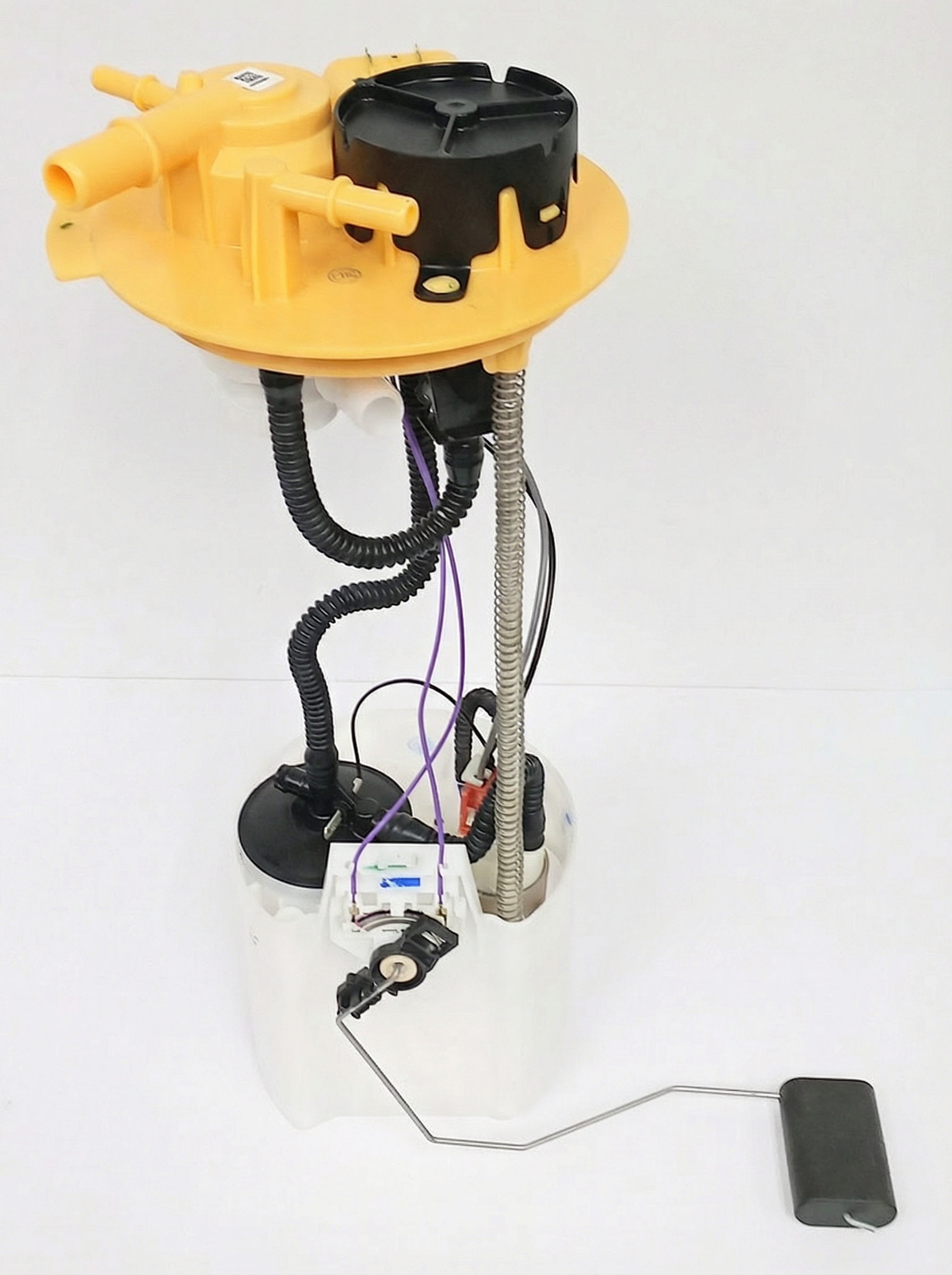
Est. part cost: $0 (if under warranty) - $200 - Failing Fuel Pump or Fuel Delivery Issue 🟡 Medium Probability NHTSA owner complaints and TSBs link P0300 to fuel delivery problems. ODI #11548620 directly cites a failed fuel pump as the cause. TSB #18-044-26 also points to low fuel rail pressure during cranking (P00C6-00) as a related code.
How to confirm: Perform a fuel pressure test. The system should hold steady pressure. A weak or failing pump will not provide adequate pressure, leading to a lean condition and random misfires. Live data on a scan tool can also show fuel rail pressure.
Typical fix: Replace the in-tank fuel pump module or the high-pressure fuel pump, depending on which has failed. Some owners have also had issues with the fuel filler neck causing fueling problems, which could be related to the EVAP system.
Est. part cost: $1500-$1700 for the main fuel pump assembly. - Faulty Camshaft and/or Rocker Arms (3.6L Pentastar V6) 🟡 Medium Probability A very common issue on the 3.6L Pentastar is the 'Pentastar Tick,' caused by failing rocker arm needle bearings. If ignored, the seized rocker arm roller will grind into and destroy the camshaft lobe, causing misfires. TSB #9100143 specifically identifies a problem with the right intake camshaft 🎬 Watch: A full breakdown of a 3.6L Pentastar misfire repair. that can cause a P0300 code.
How to confirm: This often starts as a distinct ticking noise from the top of the engine. Diagnosis requires removing the valve cover to physically inspect the camshaft lobes for scoring and checking the rocker arms for up-and-down play.
Typical fix: If caught early, only the rocker arms need replacement. If the camshaft is damaged, both the affected camshaft and all associated rocker arms/lifters must be replaced. Per TSB #9100143, the camshaft part number is 05047913AA or AB. This part has been superseded by 05047913AC and 5047913AD.
Est. part cost: $200-$400 for the camshaft, plus lifters/rockers. Labor is significant.
Rare But Worth Checking
- Vacuum Leak: A leak in a vacuum hose or intake manifold gasket can introduce unmetered air, throwing off the air-fuel ratio and causing random misfires. This can be difficult to trace without a smoke machine. Re-using old intake gaskets after a repair is a potential cause.
- Clogged or Dirty Fuel Injectors: If multiple injectors are dirty or failing, it can lead to a random misfire pattern. One owner on Reddit reported fixing a P0300 and P0171 by removing and cleaning clogged injectors that were causing a lean condition.
- Faulty Crankshaft Position Sensor (CKP): The CKP sensor tells the PCM the engine's speed and position. A failing sensor can send erratic signals, causing misfires on multiple cylinders. This will usually be accompanied by other codes, such as P0335.
- eTorque System Malfunction (if equipped): While not a direct cause of ignition misfire, problems with the eTorque mild-hybrid system, including software glitches and battery issues, have been reported by owners and can lead to various drivability problems, including stalling and rough running that may be interpreted as a misfire. A PCM update was issued in a recall to address stalling caused by an over-rich fuel condition related to the eTorque system.
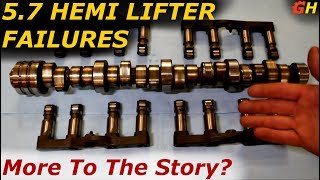
- Failed MDS Lifter (5.7L Hemi): The Multi-Displacement System (MDS) lifters on the 5.7L Hemi are a known failure point. When a lifter seizes, it can fail to properly actuate the valve, and the roller can stop spinning, damaging the camshaft. This will cause a persistent misfire on the affected cylinder and often a P0300 code. One forum user reported needing a new camshaft and lifters for a P0300 code on a 2022 Rebel with 32k miles.
Diagnosis Steps

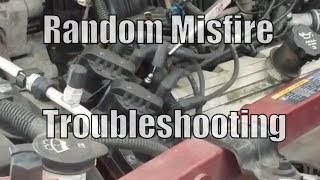
- Scan for Codes: Use an OBD-II scanner to confirm P0300 and check for any other codes (e.g., P0301-P0308, fuel system, or sensor codes). Note the freeze frame data to see the conditions when the code was set. 🎬 Watch: How to diagnose and fix a P0300 random misfire. Pay close attention to accompanying codes as they often point to the root cause.
- Check for TSBs: Given the number of known issues, check for any applicable Technical Service Bulletins for your specific VIN. This is a critical first step for this vehicle, as many issues are resolved with a PCM software update.
- Analyze Live Data: Use a scan tool to monitor misfire counts per cylinder in real-time. This can help narrow down if the misfire is truly random or biased towards certain cylinders. Check during cold starts, idle, and acceleration.
- Listen for Noises: Before diving in, listen for a metallic ticking sound from the valve cover area, especially on the 3.6L V6 and 5.7L Hemi. This is a tell-tale sign of rocker arm/camshaft or lifter/camshaft failure.
- Inspect Ignition System: Start with the basics. Inspect all spark plugs for wear, fouling, or damage. Test ignition coils by swapping them between cylinders to see if the misfire follows the coil.
- Check Fuel System: Relieve fuel pressure and use a fuel pressure gauge to test the fuel pump's output. Compare readings to the manufacturer's specifications. A weak pump is a known cause for P0300 on these trucks.
- Inspect for Vacuum and Exhaust Leaks: Use a smoke machine to check for leaks in the intake manifold, vacuum lines, and PCV system. Also inspect the exhaust manifolds for cracks or broken bolts, as this is a common issue on the 5.7L Hemi and can affect O2 sensor readings, leading to misfires.
- Perform Mechanical Engine Tests: If the basics don't reveal the cause, perform a compression test and a cylinder leak-down test to check for internal engine problems like bad piston rings, head gasket failure, or valve seat issues.
- Inspect Valvetrain: For 3.6L V6 engines with a ticking noise, remove the valve cover to inspect for scored camshaft lobes and failed rocker arms. For 5.7L Hemi engines, this involves checking for collapsed lifters and corresponding camshaft damage.
Parts You'll Likely Need
- Spark Plugs
(OEM #SP143877AB (for 5.7L Hemi))— Spark plugs are a common wear item and a frequent cause of misfires. The 5.7L Hemi has 16, increasing the probability of failure. The 3.6L has a TSB for cracked plugs. - Ignition Coils — Ignition coils can fail with age and heat, leading to a lack of spark. It's a common cause for both specific and random misfires.
- Camshaft and Rocker Arms
(OEM #05047913AA / 05047913AB (for 3.6L V6 Intake Camshaft))— A very common failure on the 3.6L Pentastar engine that directly causes P0300 and other misfire codes. - Fuel Pump — A documented issue on this platform, a failing fuel pump can starve the engine of fuel, causing lean conditions and random misfires.
Related Codes That Often Appear With This One
- P0301-P0308 — These codes specify which cylinder is misfiring (e.g., P0301 for cylinder 1). P0300 often appears with one or more of these, indicating the problem is affecting multiple, but not all, cylinders.
- P0455 / P0456 — These EVAP system leak codes were seen alongside P0300 in an owner complaint that was ultimately traced to a failed fuel pump. This suggests a potential link through the fuel system integrity.
- P00C6-00 — This code for 'Fuel Rail Pressure Too Low - Engine Cranking' is mentioned in TSB #18-044-26 and TSB 18-031-25 REV. C along with P0300, strongly pointing to a fuel delivery issue.
- P0171 / P0174 — These codes indicate a 'System Too Lean' condition on Bank 1 and Bank 2, respectively. A vacuum leak, weak fuel pump, or clogged fuel injectors can cause both a lean condition and random misfires.
Technical Service Bulletins (TSBs) & Recalls
- Involves reprogramming the PCM to address cold start misfires (P0300-P0306). The software update changes high-pressure fuel pump actuation and other parameters to improve cold-start performance.
- Specifically for the 3.6L Pentastar Upgrade (PSU) engine, this TSB addresses a P0300 code caused by a faulty right intake camshaft, providing a specific part number for replacement.
- Links P0300 with other codes like P00C6-00 (Fuel Rail Pressure Too Low - Engine Cranking), pointing towards a fuel delivery problem as the root cause.
- For the 3.6L Pentastar engine, this bulletin involves replacing all six spark plugs due to potential internal cracks that can cause a misfire and illuminate the MIL.
Platform-Specific Known Issues

- TSB #9100143: For the 3.6L Pentastar Upgrade (PSU) engine, this bulletin addresses P0300 caused by a faulty right intake camshaft, requiring replacement.
- TSB #18-031-25 REV. A: Involves a PCM software update to improve cold start behavior and prevent misfire codes (P0300-P0306).
- TSB #18-044-26: Links P0300 with low fuel rail pressure (P00C6-00) and high oil level warnings, suggesting a potential high-pressure fuel pump issue.
- NHTSA ODI #11548620: A real-world owner complaint where P0300 was diagnosed as a failed fuel pump, which was replaced to fix the issue.
- NHTSA ODI #11692267: An owner of a 2025 model reports a persistent P0300 that the dealership acknowledges as a 'known issue' without a current fix, indicating potential ongoing problems with the newest models.
Mechanic-Grade Diagnostic Values
- Crankshaft Position Sensor (CKP) Resistance — expected: 200 to 1000 ohms. Failure: A reading of zero indicates a short circuit; infinite resistance indicates an open circuit.
- Crankshaft Position Sensor (CKP) AC Voltage Output — expected: Around 200 millivolts (mV) while cranking, but varies by vehicle.. Failure: No voltage output or a reading far from the manufacturer's specification indicates a failed sensor.
- Engine RPM on Scan Tool during Cranking — expected: 100 to 500 RPM. Failure: A reading of zero RPM while the engine is cranking strongly suggests a failed crankshaft position sensor.
- Battery Ground Cable Bolt Torque (Engine Block) — expected: 30 N·m (22 ft. lbs.). Failure: A loose bolt can cause a no-start or intermittent electrical issues.
Hidden / Shadow Codes Worth Checking
- Mode $06 Misfire Data: Mode $06 on a generic OBD-II scanner can provide raw data on misfire counts per cylinder, even before they are high enough to set a specific P030x code. This can help identify which cylinders are contributing most to the P0300 count. (see via An advanced OBD-II scan tool with Mode $06 functionality.)
Scan Tool Commands That Help
- wiTECH: Network Topology View — Immediately after connecting to the vehicle, this screen provides a color-coded overview of all ECUs, showing which have DTCs and which are unresponsive, giving a quick system health check.
- wiTECH: ECU View - Data / Graph Data — To view and graph live sensor data (like fuel pressure, O2 sensor readings, and timing advance) to identify anomalies that could cause a misfire.
- wiTECH: Clear Mis-fire TLC function — This function is used to clear the Misfire Trip Level Counter after a repair, which is a necessary step before verifying the fix.
- wiTECH: OBDII Monitors -> Mis-fire Mon SWC screen — Used during diagnosis to watch the misfire monitor status in real-time while performing tests, such as warming the engine to a specific temperature, to see when the misfire occurs.
Wiring & Ground Locations
- Battery Ground Cable to Engine Block — On 2020 models with the 3.0L EcoDiesel, this ground is on the engine block. While not the gas engine, a similar ground point exists and is critical.. A loose or corroded main engine ground can cause erratic behavior from sensors and the ignition system, leading to random misfires. Customer Satisfaction Notification W14 was issued for some 2020 models for an incorrect bolt at this location causing a poor connection.
- Crankshaft Position Sensor Connector — On the passenger side of the vehicle, where the engine meets the transmission bell housing.. This is the primary sensor for detecting misfires. Damage to its wiring or connector can directly cause P0300. Its proximity to the hot exhaust pipe makes the wiring susceptible to heat damage.
Real Owner Repair Stories
- RamForum.com user 'stc315' (2014 Ram 1500 5.7L with 135k miles) — Wicked lifter knock, engine won't stay running, runs very rough, P0300 code.
❌ Tried (didn't work) Replaced cam, lifters, all valvetrain components, and spark plugs. The issue persisted after this major repair.
✅ What actually fixed it After the major parts replacement, the engine still ran rough. The owner removed the valve cover and found that the #4 exhaust rocker arm was misaligned, with its edge caught under the rocker shaft bolt washer. Realigning the rocker arm and re-torquing the bolts resolved the issue completely. - Reddit user 'Saint1226' (2025 Ram 1500 3.6L eTorque) — Persistent P0300 Check Engine Light, especially when the ambient temperature drops below 35°F. The CEL would flash for ~30 seconds on startup.
❌ Tried (didn't work) Dealer performed an ECM flash/reprogram multiple times with no luck.
✅ What actually fixed it The issue was not resolved by the dealer after multiple attempts over 6+ months. The owner was informed that Ram Engineering was aware of the issue and a new update was pending EPA approval. The owner ultimately won a lemon law case against Ram for the unresolved defect.
"I Checked Everything" — The Actual Cause
- A common scenario on the 5.7L Hemi is a P0300 code accompanied by a ticking noise. A technician may perform a smoke test which comes back clean, ruling out vacuum leaks. The actual cause is often an internal engine issue, specifically a failed MDS lifter that has damaged the camshaft lobe. This is not detectable with a smoke test and requires a teardown to confirm.
When the Usual Fixes Don't Work
- While many P0300 codes on the 5.7L Hemi are attributed to the common lifter/camshaft failure, a significant number are also caused by cracked exhaust manifolds or broken manifold bolts. A user on a Ram forum replaced spark plugs, coils, and multiple sensors trying to fix a misfire and sluggish performance. The actual cause was found to be two broken exhaust manifold bolts. This highlights that before assuming the most expensive repair (cam/lifters), a thorough inspection of the exhaust manifolds is critical, as an exhaust leak can alter O2 sensor readings and cause the PCM to create a rich condition, leading to misfires.
OEM Part Supersession History
05047913AA / 05047913AB→05047913AC, which was then superseded by 5047913AD— Part revision to address failures. TSB #9100143 specifically mentions replacing only the 'AA' or 'AB' versions of the right intake camshaft for the 3.6L Pentastar engine when a P0300 code is present.
Heads up: The TSB implies that later versions of the camshaft may not require replacement, or that the issue was resolved in later production. Always use the latest superseded part number for replacement.
Model Year Variations Within This Range
- 2019-2020: The 3.0L EcoDiesel engine was reintroduced for the 2020 model year after being absent in 2019. A specific Customer Satisfaction Notification (W14) was issued for some 2020 EcoDiesel models for a bad battery ground bolt, highlighting the importance of checking grounds.
- 2023-2025: Owner complaints and forum discussions indicate a persistent issue with cold-start P0300 codes on newer models, particularly the 3.6L eTorque. TSB #18-031-25 REV. A specifically targets 2025 models for cold start misfires, indicating software calibration continues to be an issue even on the latest model years. Some owners have reported dealers are waiting on new software updates from Ram engineering pending EPA approval.
Helpful Videos

We Have This Part in Stock




The information in this article is provided for general reference and educational purposes only. Vehicle specifications, procedures, and part compatibility can vary by production date, trim level, and region. Always consult your vehicle's factory service manual and verify part numbers before purchasing or performing repairs. Safety-critical components such as airbags, seat belts, and braking systems should be installed by a qualified professional.
- Ram 1500:
- 🎬 Helpful Videos
- 🛍️ Shop This Part
- What's Unique About the 2019-2026 Ram 1500
- Diagnostic Flowchart
- Symptoms You May Notice
- Most Likely Causes
- Rare But Worth Checking
- Diagnosis Steps
- Parts You'll Likely Need
- Related Codes That Often Appear With This One
- Technical Service Bulletins (TSBs) & Recalls
- Platform-Specific Known Issues
- Mechanic-Grade Diagnostic Values
- Hidden / Shadow Codes Worth Checking
- Scan Tool Commands That Help
- Wiring & Ground Locations
- Real Owner Repair Stories
- "I Checked Everything" — The Actual Cause
- When the Usual Fixes Don't Work
- OEM Part Supersession History
- Model Year Variations Within This Range
- 🎟️ Get 5% Off