

P0300 on 2008-2010 Pontiac G8: Random Misfire Causes and Fixes
P0300 on a Pontiac G8 indicates a random misfire. While common causes like spark plugs or coils should be checked first, this code frequently points to major platform-specific issues: failing AFM/DOD lifters on the 6.0L V8 GT model, or stretched timing chains on the 3.6L V6 model. These are more complex and costly repairs confirmed by numerous owner experiences and technical service bulletins.
- P0300 on a G8 is a serious code that requires prompt attention to avoid expensive catalytic converter damage.
- Always start with the basics: inspect and replace worn spark plugs and test ignition coils first, as these are the simplest and most common fixes.
- For a G8 GT (6.0L V8), a P0300 accompanied by a ticking noise almost certainly points to a failing AFM lifter, a major but common repair.
- For a base G8 (3.6L V6), a P0300, especially with a P0008 code or a startup rattle, strongly suggests stretched timing chains, another significant repair.
- Do not replace oxygen sensors to fix this code; they are reporters of the problem, not the cause.
What's Unique About the 2008-2010 Pontiac G8
The Pontiac G8 was sold with distinct engines that have well-documented, unique failure points leading to a P0300 code. The 6.0L V8 (L76) in the GT model uses Active Fuel Management (AFM), and its hydraulic lifters are a notorious weak point that can collapse or stick, causing misfires. Conversely, the 3.6L V6 (LY7) engine is known for premature timing chain stretching, which disrupts cam/crank correlation and can also result in random misfires. These two issues are far more common on the G8 and its platform mates than on many other vehicles and represent the most serious potential causes for this code.
Diagnostic Flowchart
Tap your situation to follow the diagnostic path that matches what you're seeing on this vehicle.
Symptoms You May Notice
- Rough or shaking idle
- Hesitation or stumbling during acceleration
- Noticeable loss of engine power
- Solid Check Engine Light
- Flashing Check Engine Light (indicates a severe misfire)
- Reduced fuel economy
- Audible ticking or squealing noise from the engine bay
- Rattling noise on a cold start (especially for V6 models)
- Replacing oxygen (O2) sensors. O2 sensors will report the effects of a misfire (like a lean or rich condition), but they are rarely the root cause of the misfire itself.
Most Likely Causes
- Worn or Fouled Spark Plugs 🔴 High Probability Spark plugs are a primary maintenance item. As they wear, the spark weakens, leading to incomplete combustion and misfires. The V8 engines are particularly sensitive to having the correct plug and gap.
How to confirm: Remove and inspect the spark plugs for wear (worn electrode), carbon fouling, or oil contamination. Compare the installed part number to the OEM specification.
Typical fix: Replace all spark plugs as a set. Use high-quality Iridium plugs like the OEM-spec ACDelco. Some owners report issues with aftermarket equivalents and prefer to stick with genuine GM parts. 🎬 Watch: How to replace spark plugs and wires on the GT.
Est. part cost: $60-$120 - Failing Ignition Coil(s) 🔴 High Probability Each cylinder has its own coil (a coil-on-plug system). Heat and age cause them to fail, leading to a weak or no spark. While one failing coil usually gives a specific cylinder code (e.g., P0301), multiple coils failing intermittently can trigger a P0300.
How to confirm: Use a scan tool to monitor misfire counts per cylinder in live data. Swap the ignition coil from a misfiring cylinder with one from a known good cylinder. If the misfire code follows the coil (e.g., P0301 becomes P0305 after swapping coils from cylinder 1 to 5), the coil is bad.
Typical fix: Replace the faulty ignition coil. It is often recommended to replace them as a set if they are all original and high-mileage.
Est. part cost: $40-$80 per coil - Failing AFM/DOD Lifters (6.0L V8 GT Only) 🟡 Medium Probability The Active Fuel Management (AFM) system in the L76 V8 uses special hydraulic lifters that can deactivate cylinders (1, 4, 6, or 7). These lifters are a well-documented, common failure point across many GM V8s. They can collapse, seize, or become stuck, causing a loss of valve motion and a persistent misfire.
How to confirm: Listen for a distinct ticking, chirping, or squealing noise from the top of the engine, which may worsen as the engine warms up. A scan tool can confirm if misfires are isolated to AFM cylinders. A compression test on the affected cylinder will often show low or zero compression. In some cases, a mechanic may remove the valve cover to visually confirm a rocker arm is not moving. 🎬 Watch: Identifying lifter tick and planning a DOD delete.
Typical fix: This is a major and expensive repair. It involves removing the cylinder heads to replace all 16 lifters. The camshaft is often damaged ('wiped lobe') by the failed lifter and must also be inspected and likely replaced. Due to the high failure rate, many owners choose to perform an 'AFM/DOD delete', replacing the problematic AFM lifters with more reliable standard LS7-style lifters, a non-AFM camshaft, and a new valley cover. This requires an ECU tune to disable the AFM system.
Est. part cost: $500-$1500 for parts (lifters, gaskets, camshaft, and/or delete kit) - Stretched Timing Chains (3.6L V6 Only) 🟡 Medium Probability The 3.6L LY7 V6 engine is widely known for premature timing chain stretching. GM acknowledged this issue was exacerbated by long oil change intervals recommended by the original oil life monitor calibration. The stretch causes camshaft timing to deviate from crankshaft timing, leading to poor performance, rough running, and random misfires.
How to confirm: Listen for a rattling noise from the front of the engine, especially on a cold start. A scan tool will almost always show related codes like P0008, P0016, P0017, P0018, or P0019, which are strong indicators of a timing issue. A mechanic can confirm by measuring cam/crank correlation data with an advanced scan tool.
Typical fix: Replace all three timing chains, guides, and tensioners. This is a very labor-intensive job requiring removal of the engine's front cover. GM issued a Special Coverage program (#11340C) for many vehicles with this engine, extending the warranty for this specific repair to 10 years/120,000 miles, though the G8 was not always explicitly included.
Est. part cost: $250-$600 for a complete kit - Vacuum Leak ⚪ Low Probability Rubber hoses and intake manifold gaskets can crack and degrade with age, allowing unmetered air into the engine. This disrupts the air-fuel ratio and can cause random misfires. Common leak points include the PCV hose system and the intake manifold gaskets.
How to confirm: Visually inspect all vacuum lines for cracks or disconnection. Listen for a hissing sound around the engine bay at idle. A professional can perform a smoke test, which fills the intake with smoke to pinpoint the exact location of the leak.
Typical fix: Replace the cracked hose or leaking gasket.
Est. part cost: $10-$200
Rare But Worth Checking
- Broken Valve Springs: While not as common as lifter failure, broken valve springs can and do occur on the V8 engines, even on stock vehicles. This will typically cause a persistent misfire on a single cylinder but could initially present as a P0300. A G8 owner on a forum reported broken intake and exhaust valve springs on cylinder #3 at only 48,000 miles.
- Clogged or Failing Fuel Injectors: Dirty or failing injectors can cause a lean condition and misfire. While less common than ignition issues, it's a possibility if the misfire seems to happen under specific loads or temperatures.
- Low Fuel Pressure: A weak fuel pump or failing fuel pressure regulator can starve the engine of fuel, causing random misfires across all cylinders, often more noticeable under heavy acceleration.
- Worn Camshaft Lobe: Mentioned specifically in GM Technical Service Bulletin #PIP4138R as a potential cause for P0300-P0308 codes if other diagnostics fail. This is often a direct result of a failed lifter on V8 models, where the seized lifter roller grinds down the cam lobe.
Diagnosis Steps
- Read all fault codes with an OBD-II scanner. Note any other codes present, as they provide crucial clues (e.g., P0008 points to timing chains, P0171 to a vacuum leak).
- Using the scanner's live data, monitor the misfire counters for each cylinder. Are the misfires truly random, or are they concentrated on the AFM cylinders (1, 4, 6, 7) in a V8?
- Perform a basic tune-up inspection. Remove and inspect spark plugs for wear, fouling, and correct part number. Inspect ignition coil boots for damage.
- Test the ignition system. Swap the ignition coil and spark plug wire (on V8s) from a frequently misfiring cylinder to a good one. Clear codes and see if the misfire follows the component.
- Listen to the engine. On a V8 GT, listen carefully for a rhythmic ticking or chirping from the valve covers, which strongly suggests a lifter/camshaft issue. On a V6, listen for a chain rattle from the front of the engine on cold startup.
- Check for vacuum leaks. Visually inspect all hoses connected to the intake manifold. A professional smoke test is the most effective way to find elusive leaks.
- If a V8 lifter issue is suspected, perform a compression test on the misfiring cylinders. A significant drop in compression compared to other cylinders points towards a collapsed lifter or other valvetrain damage.
- Check fuel pressure with a gauge to rule out a weak fuel pump or regulator, especially if misfires worsen under load.
Parts You'll Likely Need
- Spark Plugs (V8)
(OEM #ACDelco 41-104 or 41-162)— This is the most common maintenance item to cause a misfire. The 41-104 is a frequently recommended plug. The 41-162 is a later replacement number, though some users prefer the 41-110 (another predecessor) if available.
Trusted brands: ACDelco, NGK
OEM price range: $8-$15 per plug
Aftermarket price range: $6-$12 per plug - Ignition Coil (V8)
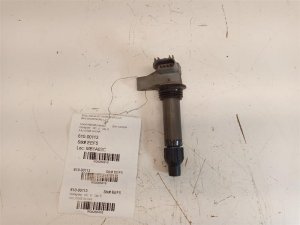
(OEM #ACDelco 12699382 (replaces older numbers))— Coils fail from heat and age, causing weak spark. A P0300 can result from multiple coils failing intermittently.
Trusted brands: ACDelco, Delphi, Duralast
OEM price range: $50-$70 per coil
Aftermarket price range: $25-$50 per coil - AFM/DOD Delete Kit (V8)
(OEM #N/A (Aftermarket Kits))— Used to permanently fix the common AFM lifter failure. Replaces failure-prone components with more robust, standard parts. Requires an ECU tune.
Trusted brands: AMS Racing, COMP Cams, Texas Speed
OEM price range: N/A
Aftermarket price range: $400 - $700 for a complete kit - Timing Chain Kit (V6)
(OEM #GM 12650230 (Chain Package))— Required to fix the stretched timing chain issue on the 3.6L LY7 engine.
Trusted brands: ACDelco, Cloyes
OEM price range: $300-$500 for kit
Aftermarket price range: $200-$350 for kit
Related Codes That Often Appear With This One
- P0301-P0308 — If the random misfire becomes consistent on one cylinder, the ECM will log a specific code for that cylinder (e.g., P0306 for cylinder 6). This is a key diagnostic clue.
- P0171 / P0174 — These 'System Too Lean' codes often accompany a P0300 if the root cause is a significant vacuum leak allowing unmetered air into the engine.
- P0008 / P0017 — On the 3.6L V6, these codes for 'Engine Positions System Performance' are a definitive sign that stretched timing chains are the cause of the misfire.
Technical Service Bulletins (TSBs) & Recalls
- SES Light, Misfire, DTC P0300, And/or A Chirp, Squeak, Squeal, Or Tick Noise: This bulletin advises technicians that if standard diagnostics for a P0300-P0308 misfire code don't find the cause, they should inspect for a worn camshaft lobe and/or a failed lifter roller. It notes the noise will be at camshaft speed (half of engine RPM) and may be accompanied by a consistent misfire count on one cylinder.
- Special Coverage - Timing Chain Wear: This was a special coverage program (an extension of warranty for a specific issue) for vehicles with the 3.6L LY7 engine. It covered the cost of replacing prematurely worn timing chains for 10 years or 120,000 miles. It acknowledged that the original oil life monitor calibration could contribute to the wear. The Pontiac G8 was not explicitly listed, but its platform mates with the same engine were.
- Preliminary Information on Misfire DTCs P0300-P0308: A bulletin communicating that specific diagnostic information needs to be gathered and provided to the Technical Assistance Center (TAC) when a vehicle presents with misfire codes, indicating a structured approach to diagnosing complex misfire issues.
Platform-Specific Known Issues
- 6.0L V8 (L76) AFM Lifter Failure: The most significant issue for G8 GT owners. The complex lifters used for cylinder deactivation are prone to failure, causing misfires, ticking noises, and often requiring camshaft replacement. GM TSB PIP4568S directly addresses this issue, noting it can cause DTC P0300 with misfires on cylinders 1, 4, 6, or 7.
- 3.6L V6 (LY7) Timing Chain Stretch: The base model's V6 engine has a well-known history of timing chains stretching far earlier than expected. This alters engine timing, causing rough running, a P0008 code, and can also manifest as a P0300 random misfire.
Mechanic-Grade Diagnostic Values
- Fuel Pressure (V8 Models) — expected: 380-410 kPa (55-60 psi). Failure: Pressure below 55 psi indicates a weak fuel pump or faulty regulator. Pressure should not drop more than 5 psi in 1 minute after the pump is turned off.
- Ignition Coil Primary Resistance (Typical GM Coil-on-Plug) — expected: 0.4 to 2.0 ohms. Failure: A reading of 0 ohms indicates a shorted coil. A significantly high or infinite reading indicates an open coil.
- Ignition Coil Secondary Resistance (Typical GM Coil-on-Plug) — expected: 6,000 to 15,000 ohms (6kΩ - 15kΩ). Failure: A reading outside this range suggests the internal windings are failing.
Scan Tool Commands That Help
- Tech2, GDS2, HP Tuners, DashHawk: Crankshaft Position Variation Learn (CASE Relearn) — This procedure is required after replacing the crankshaft position sensor, ECM, or making significant engine changes like a timing chain replacement. Failure to perform the relearn can cause a P0300 code and rough running, as the ECM has an incorrect reference for misfire detection.
- Professional Scan Tool (e.g., Tech2, GDS2): Fuel Pump Relay Command — Used during fuel pressure testing to manually turn the fuel pump on without running the engine. This allows for a stable pressure reading to diagnose a weak pump or regulator.
Wiring & Ground Locations
- G103 / G108 — On the passenger side cylinder head (V8 models).. This is a primary engine block to body ground. A loose or corroded connection here can cause unstable voltage to the ECM and ignition system, leading to random misfires and other electrical issues. A forum user reported this being a cause of misfires.
- G112 — On the left rear of the engine block (V8 models).. This ground is for the engine harness, which includes wiring for ignition coils and injectors. A poor connection can directly impact spark and fuel delivery.
- G102 — In the engine compartment on the right (passenger side) frame rail.. This is a main chassis ground. While less direct than engine block grounds, poor chassis grounds can create electrical noise and intermittent issues for sensitive electronics like the ECM.
- G106 — On the right front of the engine block (V6 models).. This is a primary engine ground point for the 3.6L V6 engine, critical for the ignition and fuel systems.
Real Owner Repair Stories
- GRRRR8.net forum user (2008 G8 GT (V8)) — Alternator whine in the stereo system, which can be indicative of grounding issues that may also cause ignition problems.
❌ Tried (didn't work) Checking grounds at the kick panel and near the battery.
✅ What actually fixed it The user was advised to specifically check the ground from the right (passenger) side cylinder head to the body, as another user had a problem there before. This points to G103/G108 as a critical but sometimes overlooked ground location.
OEM Part Supersession History
Original AFM Lifters (e.g., HL-7011)→Newer DFM-style Lifters (e.g., HL-7025, GM 12698946)— GM revised the lifter design for the newer Dynamic Fuel Management (DFM) engines. These newer lifters are backwards compatible with the older AFM systems.
Heads up: The new DFM lifter (HL-7025) will work in older AFM applications, but the original AFM lifter (HL-7011) will ONLY work in AFM applications and not newer DFM engines.Early 3.6L LY7 Timing Chain Kits→Cloyes 9-0753S (and similar aftermarket kits)— Original chains were prone to stretching. Aftermarket and later OEM kits are made with improved materials and designs to increase service life.
Heads up: When replacing chains, it is critical to replace all guides and tensioners as a complete kit. Mixing old and new components can lead to premature failure.
Model Year Variations Within This Range
- 2009.5: A mid-year update in 2009 (often called '2009.5', identifiable by a VIN ending in 300000 or higher) introduced several changes. For the GT model, this included the addition of two catalytic converters which slightly reduced horsepower, and reportedly upgraded lifters were used from the factory. All GXP models are considered 2009.5.
- 2009: For the 2009 model year, the center stack oil pressure and voltage gauges were deleted from the GT model. Bluetooth connectivity became available midway through the model year.
Helpful Videos
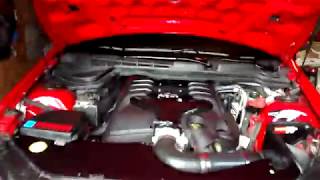

We Have This Part in Stock


The information in this article is provided for general reference and educational purposes only. Vehicle specifications, procedures, and part compatibility can vary by production date, trim level, and region. Always consult your vehicle's factory service manual and verify part numbers before purchasing or performing repairs. Safety-critical components such as airbags, seat belts, and braking systems should be installed by a qualified professional.
- Pontiac G8:
- 🎬 Helpful Videos
- 🛍️ Shop This Part
- What's Unique About the 2008-2010 Pontiac G8
- Diagnostic Flowchart
- Symptoms You May Notice
- Most Likely Causes
- Rare But Worth Checking
- Diagnosis Steps
- Parts You'll Likely Need
- Related Codes That Often Appear With This One
- Technical Service Bulletins (TSBs) & Recalls
- Platform-Specific Known Issues
- Mechanic-Grade Diagnostic Values
- Scan Tool Commands That Help
- Wiring & Ground Locations
- Real Owner Repair Stories
- OEM Part Supersession History
- Model Year Variations Within This Range
- 🎟️ Get 5% Off