

P0300 on 2000-2004 Oldsmobile Silhouette: Random Misfire Causes & Fixes
P0300 on a 2000-2004 Oldsmobile Silhouette is most often caused by a failed fuel pressure regulator or leaking lower intake manifold gaskets. Check for fuel in the regulator's vacuum line first; if it's present, that's the problem. Otherwise, suspect the intake gaskets, a known weak point on the 3.4L V6 engine that was addressed by a GM Technical Service Bulletin.
- P0300 on this vehicle is very frequently caused by either a leaking fuel pressure regulator or failed lower intake manifold gaskets.
- Always check the fuel pressure regulator's vacuum line for raw fuel first; it's a simple, definitive test that can save hours of diagnosis.
- If the regulator is good, suspect the lower intake manifold gaskets, a notorious weak point on the GM 3.4L V6 engine.
- Due to difficult access, the rear spark plugs are often neglected. If performing a tune-up, use high-quality iridium plugs to maximize service life.
- A flashing Check Engine Light indicates a severe misfire that can quickly damage the catalytic converter. Do not continue to drive if the light is flashing.
What's Unique About the 2000-2004 Oldsmobile SILHOUETTE
The Oldsmobile Silhouette and its GM U-body siblings (Chevy Venture, Pontiac Montana) from this era primarily use the 3.4L LA1 V6 engine. This engine is notorious for two specific failures that directly cause a P0300 code: a leaking fuel pressure regulator that floods the engine with excess fuel, and failing lower intake manifold (LIM) gaskets. The LIM gaskets can leak coolant into the engine or create a vacuum leak, both of which disrupt combustion and lead to widespread misfires. GM issued a TSB (03-06-01-010C) acknowledging the gasket issue.
Diagnostic Flowchart
Tap your situation to follow the diagnostic path that matches what you're seeing on this vehicle.
Symptoms You May Notice
- Flashing or steady Check Engine Light
- Rough or shaky idle, especially when the engine is warm
- Engine hesitation or stumbling during acceleration
- Noticeable loss of engine power
- Difficulty starting the engine, extended cranking
- Strong smell of gasoline, especially near the engine or from the exhaust
- Black smoke from the exhaust (indicates a rich condition)
- White smoke from the exhaust (indicates coolant is being burned)
- Poor fuel economy
- Hissing sound from the engine bay, indicating a vacuum leak
- Replacing only the spark plugs without checking the fuel pressure regulator or intake gaskets. Given the high failure rate of these other components, a tune-up may not solve the root problem.
- Replacing an oxygen sensor. While an O2 sensor can be affected by a misfire, it is almost never the cause of a P0300 code.
- Replacing only one or two fuel injectors when the issue is low fuel pressure from the pump or filter affecting all cylinders.
Most Likely Causes
- Leaking Fuel Pressure Regulator 🔴 High Probability The diaphragm inside the regulator is a common failure point on GM's 3.4L V6. When it ruptures, it allows raw fuel to be sucked directly into the engine through a vacuum hose, causing a rich condition and random misfires.
How to confirm: Locate the fuel pressure regulator on the fuel rail. Disconnect the small vacuum hose attached to it. If raw gasoline is present in the hose or drips from the regulator nipple, it has failed and must be replaced. This is a definitive test.
Typical fix: Replace the fuel pressure regulator. Common part numbers include ACDelco FP10300 and Standard Motor Products PR234.
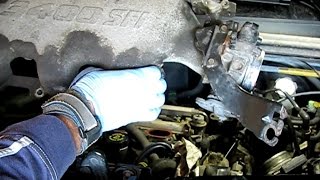
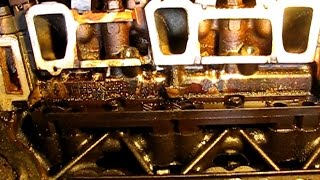
Est. part cost: $40-$90 - Leaking Lower Intake Manifold (LIM) Gaskets 🔴 High Probability The original factory gaskets used on the 3.4L V6 were a plastic-carrier design that are known to degrade, crack, and fail over time due to heat and exposure to Dex-Cool coolant. This allows coolant to leak into the cylinders or oil, and can also create significant vacuum leaks. GM released TSB #03-06-01-010C to address this widespread issue.
How to confirm: Check for signs of coolant loss without an obvious external leak. Look for milky, sludgy residue under the oil cap, which indicates coolant mixing with oil. A hissing sound near the intake manifold or using a smoke machine can confirm a vacuum leak. A scanner showing high positive fuel trims at idle that decrease with RPM is a strong indicator of a vacuum leak from the gaskets.
Typical fix: Replace the lower intake manifold gaskets with an updated metal-carrier design (e.g., Fel-Pro MS 98014 T). This is a labor-intensive job that requires replacing the one-time-use intake bolts as specified in the TSB.
Est. part cost: $60-$150 for an updated gasket set with new bolts - Worn Spark Plugs and/or Wires 🟡 Medium Probability The rear three spark plugs (cylinders 1-3-5) are very difficult to access, located against the firewall. This requires tilting the engine forward using a ratchet strap or removing the upper engine mount 'dog bones'. As a result, they are often neglected during routine maintenance, leading to excessive wear and weak spark.
How to confirm: Inspect spark plugs for wear (eroded electrodes), fouling (black soot or white deposits), or an incorrect gap. Test spark plug wires for proper resistance using a multimeter (should be under 8,000 ohms per foot).
Typical fix: Replace all six spark plugs and the spark plug wires as a set. Use of original equipment AC Delco plugs is recommended, as some owners report issues with aftermarket brands like Bosch.
Est. part cost: $50-$150 for plugs and wires - Faulty Ignition Coil Pack(s) or Ignition Control Module (ICM) ⚪ Low Probability The 3.4L V6 uses a waste-spark system with three coil packs mounted on an Ignition Control Module. While durable, either the module or an individual coil can fail, typically affecting two cylinders at once (e.g., 1-4, 2-5, 3-6). A failure can sometimes be intermittent, triggering a P0300 before a cylinder-specific code appears.
How to confirm: Use a spark tester to check for spark at each wire. Swap a suspected bad coil with a known good one; if the misfire moves to the new cylinders, the coil is bad. If spark is absent on two cylinders fed by one coil and swapping the coil doesn't help, the ICM is the likely cause.
Typical fix: Replace the faulty ignition coil or the entire Ignition Control Module.
Est. part cost: $30-$70 per coil, $80-$200 for the ICM - Clogged or Leaking Fuel Injectors ⚪ Low Probability Over time, fuel injectors can become clogged with deposits, leading to a lean misfire. While less common than the FPR or LIM gaskets, it can cause a persistent P0300 that doesn't respond to other fixes.
How to confirm: Listen to each injector with a mechanic's stethoscope; they should all have a consistent clicking sound. A more advanced method is to perform a fuel injector balance test to measure the flow rate of each injector. Resistance should be between 12-13 ohms for each injector.
Typical fix: Clean or replace the faulty fuel injector(s). It is often recommended to replace them as a set for balanced performance.
Est. part cost: $40-$100 per injector
Rare But Worth Checking
- Low Fuel Pressure: A weak fuel pump or clogged fuel filter can starve the entire engine for fuel, causing random lean misfires. This should be checked with a fuel pressure gauge if ignition and vacuum issues are ruled out. A weak pump was diagnosed on a 2000 Silhouette in a detailed YouTube video.
- Clogged Catalytic Converter: A restricted exhaust can create excessive backpressure, leading to poor engine performance and misfires. This is often accompanied by other codes like P0420 and a noticeable loss of power at higher RPMs, sometimes with a sulfur or 'rotten egg' smell from the exhaust.
- Mechanical Engine Failure: In rare cases, a P0300 can be caused by internal engine problems like a jumped timing chain, a worn camshaft, or low compression on multiple cylinders. A compression test is needed to diagnose this.
- Faulty Crankshaft Position Sensor (CKP): The CKP sensor provides the PCM with the data it uses to detect misfires. A failing sensor can send erratic signals, causing the PCM to incorrectly report a P0300. A CKP sensor relearn procedure may be needed after replacement.
Diagnosis Steps
- Scan for any other stored trouble codes. Codes for specific cylinders (P0301-P0306) or lean/rich conditions (P0171/P0174) can help narrow the search.
- Perform a visual inspection. Look for obvious issues like disconnected vacuum hoses, damaged wiring, or signs of coolant/fuel leaks.
- Check the Fuel Pressure Regulator. Pull the vacuum line off the regulator. If fuel is present, replace the regulator. This is the quickest and most definitive test for this common failure.
- Check Fuel Trims with a Scanner. At idle, observe Short-Term (STFT) and Long-Term (LTFT) fuel trims. If they are highly positive (e.g., >15%) but normalize when RPMs are raised to ~2000, a vacuum leak (likely LIM gaskets) is the probable cause.
- Test Fuel Pressure. If the regulator is fine, connect a fuel pressure gauge to the service port on the fuel rail. Pressure should be within manufacturer specifications (typically 41-47 psi with key on, engine off). A low reading points to a weak fuel pump or clogged filter.
- Inspect for Vacuum Leaks. With the engine running, listen for hissing sounds around the intake manifold. You can also carefully spray carburetor cleaner or unlit propane around the gasket mating surfaces; a change in engine idle indicates a leak.
- Test the Ignition System. Use an in-line spark tester to verify strong, consistent spark from each coil tower. If spark is weak or missing on two cylinders, suspect the corresponding coil pack or the ICM.
- Inspect Spark Plugs and Wires. If you haven't already, remove and inspect all spark plugs, paying close attention to the hard-to-reach rear bank.
- Perform a Compression Test. If all fuel and ignition system tests pass, a compression test can identify mechanical engine problems.
Parts You'll Likely Need
- Fuel Pressure Regulator
(OEM #ACDelco FP10300)— This is a very common failure point on the 3.4L V6, causing a rich condition. It's the first thing to check. - Lower Intake Manifold Gasket Set
(OEM #GM 89017400)— The original plastic gaskets are prone to failure, causing vacuum and/or coolant leaks. An updated metal-frame gasket is required for a permanent fix. - Spark Plugs & Wires — Often neglected due to difficult access to the rear bank, leading to misfires from normal wear.
Related Codes That Often Appear With This One
- P0301-P0306 — These codes indicate a misfire on a specific cylinder (e.g., P0301 for Cylinder 1). A random P0300 may eventually be joined by one of these codes as the PCM isolates the problem.
- P0171 or P0174 — These 'System Too Lean' codes can appear if the misfire is caused by a significant vacuum leak from components like the intake manifold gasket.
- P0420 — This 'Catalyst System Efficiency Below Threshold' code can appear if a persistent misfire has allowed unburnt fuel to enter the exhaust and damage the catalytic converter.
Technical Service Bulletins (TSBs) & Recalls
- 03-06-01-010C: Acknowledges the engine oil or coolant leak from the lower intake manifold gasket on 3.1L and 3.4L V6 engines. It specifies the use of a new design gasket and new bolts with pre-applied threadlocker, along with a revised torque sequence, for the repair.
Platform-Specific Known Issues
- Rear Spark Plug Access: The rear bank of spark plugs (cylinders 1, 3, 5) is notoriously difficult to access due to the proximity of the firewall. Mechanics often need to use ratchet straps to tilt the engine forward to create enough clearance to work, a step that can intimidate DIYers and leads to these plugs being neglected.
- Intake Gasket TSB: The failure of the lower intake manifold gaskets is so common on this engine that GM issued a specific Technical Service Bulletin (03-06-01-010C) with a redesigned part and new torque procedure. This is considered a pattern failure for the 3.4L LA1 V6.
Mechanic-Grade Diagnostic Values
- Ignition Control Module (ICM) Power Supply — expected: 10-12 Volts DC. Failure: No voltage indicates a blown fuse or wiring issue.
- Ignition Control Module (ICM) Ground Circuit — expected: 10-12 Volts DC. Failure: No voltage indicates a bad ground connection, preventing the module from functioning.
- Crankshaft Position Sensor (CKP) AC Signal — expected: 0.3 V AC to 1.0 V AC (fluctuating). Failure: No fluctuating AC voltage while cranking suggests a failed CKP sensor.
- Crankshaft Position Sensor (CKP) Resistance — expected: 700 to 1200 Ohms. Failure: A reading outside this range indicates a faulty sensor.
Scan Tool Commands That Help
- Tech 2 or equivalent professional scan tool: Crankshaft Position (CKP) System Variation Learn Procedure — This procedure is required after replacing the Crankshaft Position Sensor. The PCM must relearn the variations of the new sensor's signal to accurately detect misfires. Failure to perform this can result in a persistent P0300 code even with a new, functioning sensor.
- Tech 2 or equivalent professional scan tool: Misfire Counters — While a basic scanner shows the P0300 code, a professional tool can display live or historical misfire counts for each individual cylinder. This helps pinpoint if the 'random' misfire is actually weighted heavily toward one or two cylinders, guiding diagnosis towards a specific coil, plug, or injector.
Wiring & Ground Locations
- G101 — At the left front of the vehicle, to the right of the left headlight assembly.. This is a primary ground point for the Powertrain Control Module (PCM). A corroded or loose connection here can cause erratic PCM behavior and phantom codes, including P0300.
- G102 — At the right front wheel-well, near the battery.. This ground serves the Ignition Control Module (ICM). A poor connection can lead to weak or inconsistent spark across all cylinders.
- G111 / G113 — Located on the engine block, to the left of the starter motor.. These are critical engine block grounds. Poor connections can affect sensor readings, including the Crankshaft Position Sensor, which is essential for misfire detection.
- ICM Connector — The main electrical connector on the Ignition Control Module, located under the three ignition coils.. This connector provides power (Pin A, Pink wire) and ground (Pin B, Black/White wire) to the module. Verifying voltage here is a key step in diagnosing a no-spark or weak spark condition affecting multiple cylinders.
Real Owner Repair Stories
- Chevrolet Forum user (2000 Chevy Venture 3.4L) — Van suddenly acted like it was running out of fuel, then shut off. Would sputter and backfire on restart attempts, but would not run. Code P0300 was present.
❌ Tried (didn't work) Checking electrical connectors and wiring, attempting to check for intake leaks with carb cleaner.
✅ What actually fixed it Replacing the 7X Crankshaft Position Sensor (CKP). The van started immediately after replacement. However, the problem returned intermittently, suggesting the wiring to the sensor may have also been compromised and temporarily fixed by being moved during the repair. - YouTube video by 'Let's Do It!' (Chevrolet Venture 3.4L (year not specified)) — P0300 random misfire code.
❌ Tried (didn't work) Replacing a visibly cracked PCV hose, replacing the EGR valve, replacing spark plugs and wires, confirming fuel pressure was 50 PSI.
✅ What actually fixed it The final fix was replacing the Ignition Control Module (ICM). The user swapped coil packs first with no change, which isolated the problem to the module underneath them.
OEM Part Supersession History
Original GM plastic-carrier LIM gaskets (e.g., 89017279)→Fel-Pro MS 98014 T (metal carrier design)— The original plastic-frame gaskets were prone to cracking and deforming from heat and chemical exposure (especially Dex-Cool), causing coolant and vacuum leaks. The Fel-Pro updated design uses a rigid aluminized-steel carrier that resists warping and degradation.
Model Year Variations Within This Range
- 2000 vs. 2001-2004: Some sources indicate that post-2000 models of the 3.4L LA1 engine received a slightly less restrictive intake manifold design. While not a major change, it's a minor variation within the generation.
Helpful Videos

Used OEM Parts in Stock

New Aftermarket Parts Available




The information in this article is provided for general reference and educational purposes only. Vehicle specifications, procedures, and part compatibility can vary by production date, trim level, and region. Always consult your vehicle's factory service manual and verify part numbers before purchasing or performing repairs. Safety-critical components such as airbags, seat belts, and braking systems should be installed by a qualified professional.
- Oldsmobile SILHOUETTE:
- 🎬 Helpful Videos
- 🛍️ Shop This Part
- What's Unique About the 2000-2004 Oldsmobile SILHOUETTE
- Diagnostic Flowchart
- Symptoms You May Notice
- Most Likely Causes
- Rare But Worth Checking
- Diagnosis Steps
- Parts You'll Likely Need
- Related Codes That Often Appear With This One
- Technical Service Bulletins (TSBs) & Recalls
- Platform-Specific Known Issues
- Mechanic-Grade Diagnostic Values
- Scan Tool Commands That Help
- Wiring & Ground Locations
- Real Owner Repair Stories
- OEM Part Supersession History
- Model Year Variations Within This Range
- 🎟️ Get 5% Off