

P0300 on 2000-2004 Oldsmobile Alero: Random Misfire Causes and Fixes
P0300 on a 2000-2004 Oldsmobile Alero indicates a random engine misfire. For the 3.4L V6, the most common cause is a failed lower intake manifold gasket, a notorious issue for this engine. For the 2.2L I4, suspect worn spark plugs or a faulty ignition coil/module assembly. A basic ignition tune-up costs $50-$150 in parts, while an intake gasket job can cost $100-$300 in parts.
- P0300 means your Alero's engine is misfiring on multiple cylinders, which requires prompt attention to avoid damaging the catalytic converter.
- For the 3.4L V6 engine, the most likely culprit is a failed lower intake manifold gasket. Check for coolant loss or milky oil.
- For the 2.2L I4 engine, the problem is most often worn spark plugs or a bad ignition coil/module assembly.
- A flashing check engine light signals a severe misfire; pull over and shut off the engine as soon as it is safe to prevent expensive damage.
- Start your diagnosis with the cheapest and easiest fixes: inspecting and replacing basic tune-up parts like spark plugs and (on the V6) plug wires.
What's Unique About the 2000-2004 Oldsmobile ALERO

The Oldsmobile Alero was available with two common engines, the 2.2L Ecotec I4 and the 3.4L V6, and the likely causes for a P0300 code differ significantly between them. The 3.4L V6 is widely known for failures of the lower intake manifold gaskets (LIM). The original nylon/plastic gaskets degrade from heat and exposure to Dex-Cool coolant, causing coolant to leak into the engine oil or into the cylinders, leading to persistent misfires. 🎬 Watch: Diagnosing common misfire causes on the GM 3.4L engine. For the 2.2L Ecotec engine, the issue is more commonly a standard ignition system failure, such as a bad ignition control module or the integrated coil pack assembly which is prone to failure from heat and vibration. 🎬 See the most common fix for 2.2L Ecotec misfires. For the 2000-2001 models with the 2.4L LD9 engine, a common failure point was the integrated ignition coil housing cracking, leading to misfires.
Diagnostic Flowchart

Tap your situation to follow the diagnostic path that matches what you're seeing on this vehicle.
Symptoms You May Notice
- Rough or shaky idle.
- Hesitation or stumbling during acceleration.
- Flashing Check Engine Light (indicates a severe misfire).
- Noticeable loss of engine power.
- Poor fuel economy.
- Smell of raw fuel from the exhaust.
- Engine stalling at stops.
- For 3.4L V6, gradual loss of coolant with no visible external leaks.
- For 3.4L V6, a 'milky' or 'milkshake' appearance on the oil dipstick or oil cap, indicating coolant in the oil.
- Replacing oxygen (O2) sensors. While a bad O2 sensor can affect the air/fuel mixture, it's rarely the direct cause of a P0300 code and is more likely to set its own specific codes.
- Replacing the ignition switch. While the Alero was subject to a major recall for a faulty ignition switch (NHTSA #14V400000) that could cause stalling, this issue typically does not set a P0300 code.
Most Likely Causes

- Leaking Lower Intake Manifold Gaskets (3.4L V6 only) 🔴 High Probability The factory gaskets on the GM 3.4L V6 used a nylon/plastic frame that becomes brittle and cracks over time due to heat cycles and exposure to GM's Dex-Cool coolant. This allows coolant to leak into the intake ports or directly into the engine's crankcase, causing misfires and potential engine damage. GM issued a TSB (03-06-01-010C) detailing an updated repair procedure.
How to confirm: Check for signs of coolant loss, milky-looking oil on the dipstick or oil cap, or white smoke from the exhaust. A cooling system pressure test can confirm a leak, and a chemical block tester can detect exhaust gases in the coolant. A professional smoke test can also reveal vacuum leaks around the gasket area.
Typical fix: Replace the lower intake manifold gaskets with an updated metal-carrier design, such as the Fel-Pro PermaDryPlus set (part number MS 98014 T). It is critical to also replace the intake manifold bolts, which are torque-to-yield and come with pre-applied threadlocker in the revised kits, and follow the new, multi-stage torque sequence.
Est. part cost: $60-$120 - Worn Spark Plugs 🔴 High Probability
How to confirm: Remove and inspect the spark plugs. Look for worn-out electrodes, heavy carbon fouling, or oil/coolant contamination. Worn plugs are a very common cause of misfires and a good starting point for diagnosis.
Typical fix: Replace all spark plugs as a set. Ensure they are gapped correctly for your specific engine. For the Alero, ACDelco and NGK are common OEM-spec choices.
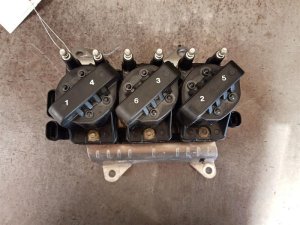
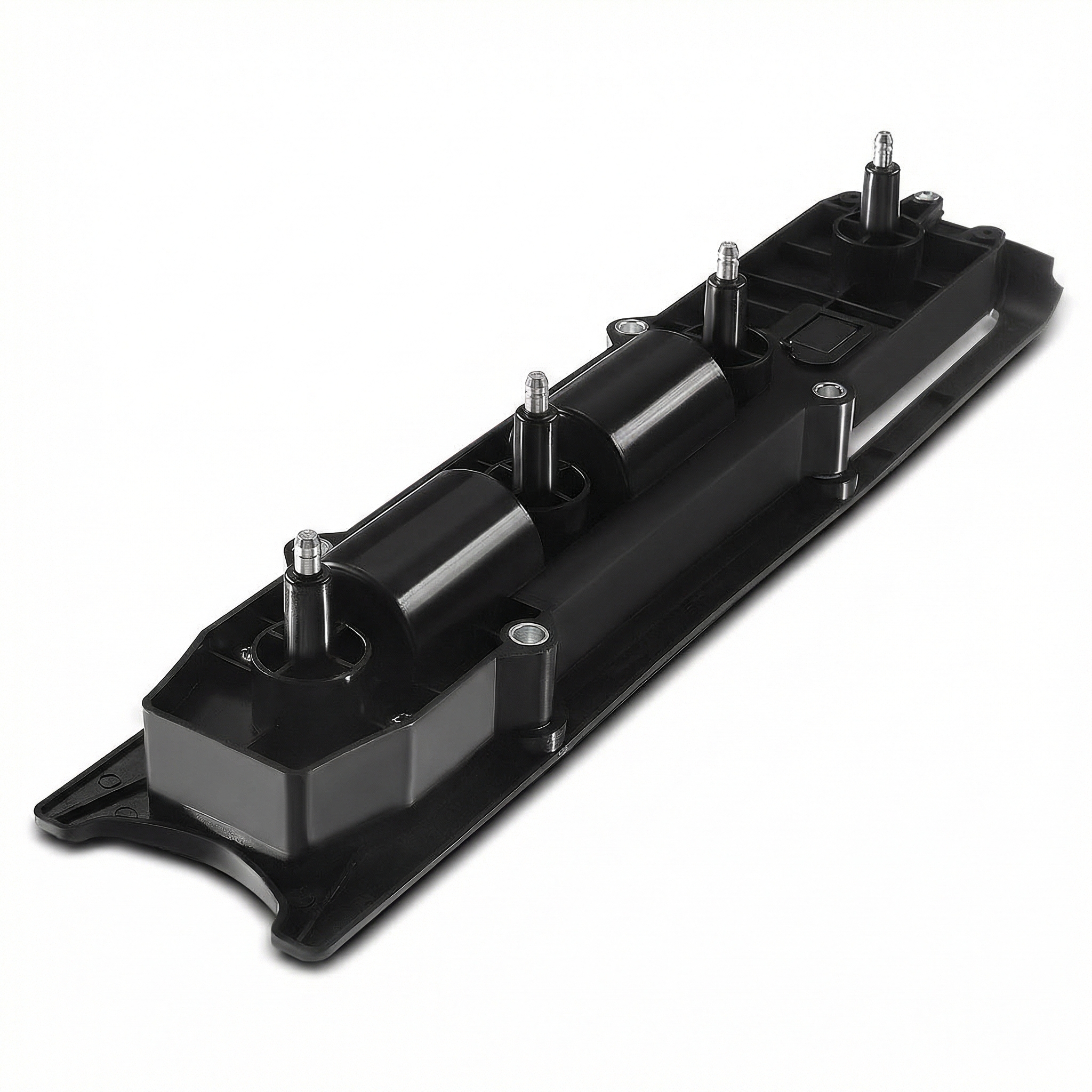
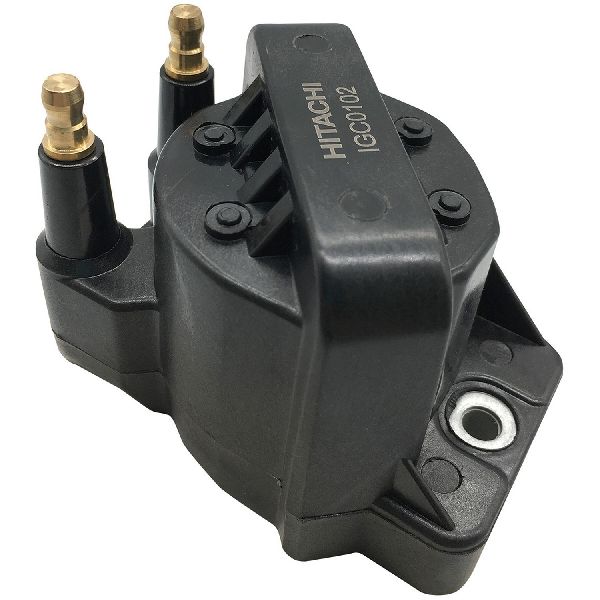
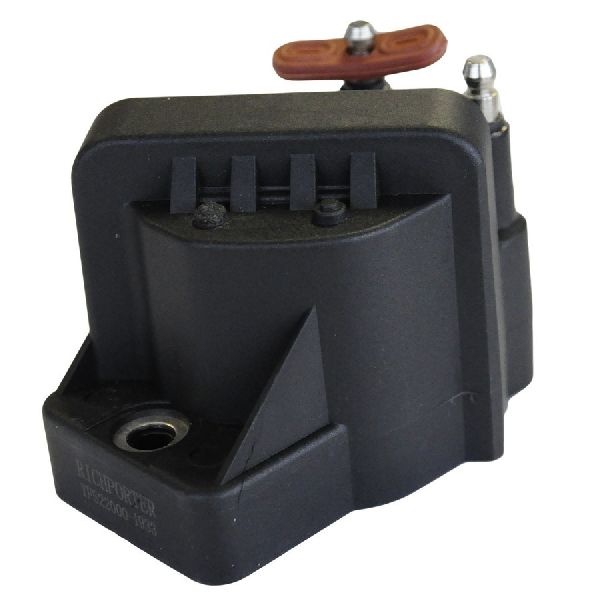
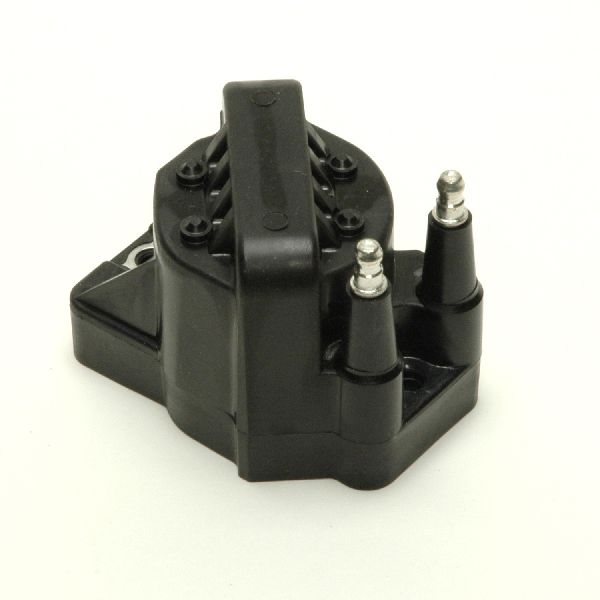
Est. part cost: $20-$60 - Faulty Ignition Coil Pack / Ignition Control Module 🟡 Medium Probability On the 2.2L engine, the coil pack and module are an integrated unit (cassette) that sits on top of the valve cover and can fail from heat and vibration. On the 3.4L, the separate ignition control module (ICM) that fires the three coil packs is a common failure point. On the 2.4L engine, the coil housing itself is prone to cracking, which allows spark to arc to the cylinder head instead of reaching the spark plug.
How to confirm: Use a scan tool with live data to watch for misfire counts on specific cylinders. You can swap coils between cylinders (on the 3.4L) to see if the misfire follows the coil. Testing the module itself often requires specialized tools, so it's often diagnosed by eliminating other possibilities first. A complete failure can also result in a no-start condition.
Typical fix: Replace the faulty ignition coil(s) or the ignition control module. On the 2.2L, the entire coil pack/module assembly is typically replaced (e.g., ACDelco D512A). On the 3.4L, the module (e.g., ACDelco D577) is replaced. Always apply new thermal paste to the back of the new module to ensure proper heat dissipation.
Est. part cost: $70-$200 - Faulty Spark Plug Wires (3.4L V6 only) 🟡 Medium Probability
How to confirm: Inspect wires for cracks, burns, or corrosion on the terminals. With the engine running in the dark, look for any visible arcing from the wires to the engine block. A simple resistance test with a multimeter can also identify a bad wire.
Typical fix: Replace all spark plug wires as a set.
Est. part cost: $30-$70 - Low Fuel Pressure ⚪ Low Probability The fuel pressure regulator, located on the fuel rail, can fail and cause incorrect pressure. A failing fuel pump or clogged filter are also possibilities.
How to confirm: Connect a fuel pressure gauge to the service port on the fuel rail. Check that the pressure is within the manufacturer's specified range (typically 48-55 PSI for these GM vehicles). A weak fuel pump or clogged fuel filter can cause low pressure.
Typical fix: Replace the failing fuel pump, fuel pressure regulator, or clogged fuel filter.
Est. part cost: $20-$250 - Vacuum Leak ⚪ Low Probability
How to confirm: Visually inspect all vacuum hoses for cracks or disconnection. A professional smoke test is the most effective way to find hidden leaks in the intake system. Spraying carburetor cleaner around suspected leak areas while the engine is running can also help; a change in engine RPM indicates a leak.
Typical fix: Replace the cracked or broken vacuum hose or leaking gasket.
Est. part cost: $5-$50
Rare But Worth Checking
- Clogged Fuel Injectors: If a misfire is isolated to one or two cylinders but doesn't respond to ignition part swaps, a clogged injector could be the cause.
- Clogged Catalytic Converter: A clogged converter creates excessive exhaust backpressure, which can cause a random misfire, usually accompanied by a significant loss of power, especially at higher RPMs, and sometimes a 'rotten egg' smell.
- Faulty Crankshaft Position Sensor (CKP): The CKP sensor provides the primary signal for ignition timing and misfire detection. An erratic signal can cause the PCM to incorrectly report a P0300 code. After replacing the CKP sensor on these GM vehicles, a "Crankshaft Variation Relearn" or "CASE Relearn" procedure must be performed with a capable scan tool for the engine to run correctly.
- Low Engine Compression: Internal engine problems like a leaking head gasket, worn piston rings, or bad valves can cause low compression, leading to a misfire. This is less common and usually results in a misfire on specific, adjacent cylinders.
- Cracked Flexplate (Automatic Transmission only): A cracked flexplate can cause the crankshaft position sensor to receive an erratic signal, leading to a P0300 code that is difficult to diagnose. This is often accompanied by a rhythmic ticking or knocking sound that changes with engine RPM.
Diagnosis Steps
- Read the codes with an OBD-II scanner and check for any other stored codes. Note the freeze frame data to see the engine conditions when the code was set. Use the scanner's live data to monitor misfire counts per cylinder.
- If you have a 3.4L V6, perform a thorough visual inspection for signs of a leaking intake manifold gasket (coolant residue around the manifold, low coolant level, milky oil). This is the most likely culprit.
- Inspect the ignition system. For the 3.4L, check the spark plug wires for damage. For all engines, pull the spark plugs and check their condition. Heavily worn or fouled plugs are a common cause.
- If ignition components look old, perform a basic tune-up (new plugs and, for the 3.4L, new wires). This is inexpensive and resolves many P0300 issues.
- Check for vacuum leaks. Visually inspect all hoses. A smoke test is the most reliable method to find hard-to-see leaks.
- Test fuel pressure using a gauge on the fuel rail to rule out a weak fuel pump or clogged filter. Pressure should be 48-55 PSI.
- If the misfire persists, more advanced diagnostics are needed, such as testing ignition coils/module, checking fuel injectors, and performing an engine compression test.
- If the Crankshaft Position Sensor (CKP) is replaced, remember that a 'CASE Relearn' procedure is mandatory using a compatible scan tool.
Parts You'll Likely Need

- Lower Intake Manifold Gasket Set (3.4L V6)
(OEM #89017279 (GM updated kit P/N))— This is the most notorious and probable cause of a P0300 on the 3.4L V6 engine due to a flawed original gasket design.
Trusted brands: Fel-Pro (P/N: MS 98014 T), ACDelco
OEM price range: $90-$150
Aftermarket price range: $60-$120 - Spark Plugs — Worn spark plugs are a primary cause of weak spark and incomplete combustion, leading to misfires on any engine.
Trusted brands: ACDelco, NGK
OEM price range: $6-$12 per plug
Aftermarket price range: $3-$8 per plug - Ignition Coil Pack Assembly (2.2L I4)
(OEM #12590954)— This assembly contains the ignition coils and module in one cassette. It's a common failure item on the 2.2L Ecotec engine due to heat and vibration.
Trusted brands: ACDelco (P/N: D512A), Delphi
OEM price range: $100-$180
Aftermarket price range: $80-$130 - Ignition Control Module (3.4L V6)
(OEM #10489422)— This module, which sits under the three coil packs, is a frequent failure point on the 3.4L V6, causing no-spark conditions on one or more pairs of cylinders.
Trusted brands: ACDelco (P/N: D577), Standard Motor Products
OEM price range: $70-$120
Aftermarket price range: $50-$90
Related Codes That Often Appear With This One
- P0301-P0306 — These codes indicate a misfire on a specific cylinder (e.g., P0301 for cylinder 1). A P0300 may appear first, and then as the problem worsens, the PCM may be able to isolate it to one or more cylinders.
- P0171 or P0174 — These "System Too Lean" codes indicate too much air or not enough fuel. They often accompany a P0300 when the cause is a large vacuum leak (like from an intake manifold gasket) or low fuel pressure.
- U1040 — This code indicates a loss of communication with the EBCM/EBTCM (ABS module). While not directly related to the engine misfire, electrical issues on the vehicle's data bus can sometimes cause spurious codes to appear.
Technical Service Bulletins (TSBs) & Recalls
- 03-06-01-010C: Addresses the engine oil or coolant leak from the intake manifold gasket on 3.1L and 3.4L V6 engines. It specifies the use of new gaskets and new bolts with pre-applied threadlocker, along with a revised torque sequence.
- PIP5628G: A general diagnostic bulletin for various late-model GM engines, including the Alero's, for misfire codes P0300-P0308, indicating a structured diagnostic approach is needed.
- NHTSA #10017032: A service bulletin specifically mentioning a Service Engine Soon (SES) light with severe engine misfire on cylinders 1 & 4 or 2 & 3 for the 2.2L engine, pointing towards a likely ignition module or coil pack issue.
Platform-Specific Known Issues
- Owner Experience: The Inevitable 3.4L Intake Gasket Failure: Numerous owners on forums like AcuraZine and BobIsTheOilGuy report tackling the P0300 code on their 3.4L Aleros only to find the root cause was the lower intake manifold gasket. A common story involves first replacing spark plugs and wires with no improvement, then noticing a slow coolant loss. Upon inspection, milky oil confirms coolant intrusion. The consensus repair is to use the upgraded Fel-Pro MS 98014 T metal-frame gasket set, which permanently solves the problem, whereas replacing with another OEM-style plastic gasket can lead to a repeat failure.
- 2.2L Ecotec Ignition Cassette Diagnosis: For the 2.2L engine, a P0300 code is very frequently traced back to the integrated ignition coil and module assembly (often called a cassette). Owners report that a failure of the module can cause a misfire on a pair of cylinders (e.g., 1 and 4, or 2 and 3), which the PCM logs as a random misfire. Troubleshooting often involves replacing the entire cassette, as separating the module from the coils can be difficult and the parts are often sold as a complete unit. A YouTube video specifically shows this repair on a 2003 Alero, confirming it as a common and effective fix.
Mechanic-Grade Diagnostic Values
- Crankshaft Position Sensor (CKP) Resistance (3.4L V6) — expected: 500 to 900 Ohms. Failure: A reading outside this range indicates a faulty sensor.
- Ignition Control Module (ICM) Power Supply Voltage (3.4L V6) — expected: 12 Volts with Key On, Engine Off. Failure: No voltage suggests a blown fuse or wiring issue before the module.
- Engine Compression (3.4L V6, healthy) — expected: Approximately 150-180 PSI per cylinder. Failure: Significant differences between cylinders or very low readings (e.g., 0 PSI) can indicate bent valves or other mechanical damage, especially after a timing or pushrod error.
Scan Tool Commands That Help
- GM Tech 2 or equivalent high-end scanner: Crankshaft Position Variation Relearn (CASE Relearn) — This procedure is mandatory after replacing the Crankshaft Position Sensor (CKP) or the Powertrain Control Module (PCM). Failure to perform the relearn can result in the PCM incorrectly detecting misfires and setting a P0300 code, even if the engine is mechanically sound.
- GM Tech 2 or equivalent high-end scanner: Injector Balance Test — If a misfire is suspected to be fuel-related but is not responding to ignition parts, this function can be used to individually fire each injector and measure the corresponding pressure drop in the fuel rail, identifying a weak or clogged injector.
Wiring & Ground Locations
- VSS Harness Chafing — In the area of the right-hand (passenger side) axle shaft.. On N-body platforms like the Alero, the Vehicle Speed Sensor (VSS) harness was sometimes too long, allowing it to rub against the axle shaft. This can cause harness chafing, leading to intermittent shorts and erratic signals on the data bus, which can manifest as a variety of seemingly unrelated issues, including drivability problems and spurious trouble codes.
- ICM Ground — The Ignition Control Module on the 3.4L V6 is grounded through its mounting bolts to a bracket on the engine. The main engine-to-chassis ground strap is also critical.. A poor ground connection for the ICM can cause weak or erratic spark, leading to a random misfire. It is crucial that the mounting surface is clean and free of corrosion and that the module bolts are tight. Applying fresh thermal paste is for heat dissipation, not grounding.
Real Owner Repair Stories
- GM Forum user (Vehicle with 3.4L V6 engine (specific model not Alero, but same engine/issue)) — P0300 code with misfires counted on cylinders 3 and 6, but no felt misfire at idle or heavy throttle. Misfires occurred only at light load/highway cruise, causing the Torque Converter Clutch (TCC) to disengage.
❌ Tried (didn't work) Replaced spark plugs and wires, Swapped ignition coils between cylinders (misfire did not move)
✅ What actually fixed it The problem was ultimately a faulty Ignition Control Module (ICM). Even though the ICM is often considered a 'go/no-go' part, in this case, it was failing intermittently under specific load conditions, causing the random misfire code. - Automotive Forums Car Chat user (2000 Oldsmobile Alero with 2.4L Quad 4 engine) — Sudden rough running and misfiring, setting a P0300 code.
❌ Tried (didn't work) Initial diagnosis was confusing due to the random nature of the misfire.
✅ What actually fixed it The cause was a cracked ignition coil housing. The 2.4L uses a 'waste spark' system with two coil housings. When one housing develops a crack, the spark can arc to the cylinder head instead of firing both associated spark plugs, causing a multiple/random misfire code. Replacing the cracked coil housing and ensuring the spark plug boots were in good condition resolved the P0300. - CarGurus / Reddit user reports (GM vehicle with 3.4L V6 engine after intake manifold gasket replacement) — Engine runs rough and sets a P0300 code immediately after completing a lower intake manifold gasket replacement.
❌ Tried (didn't work) Re-checking vacuum line connections., Testing ignition components.
✅ What actually fixed it A common mistake during the intake gasket job is pinching or tearing one of the small O-ring seals on the bottom of a fuel injector when reinstalling the fuel rail. This creates a massive vacuum leak or fuel leak at that specific cylinder, causing it and adjacent cylinders to misfire, logging a P0300. The fix was to remove the fuel rail and replace the damaged injector O-ring.
OEM Part Supersession History
Various GM OEM nylon-carrier gaskets→Fel-Pro MS 98014 T— The original GM lower intake manifold gaskets for the 3.4L V6 used a plastic/nylon frame that would degrade, crack, and fail when exposed to engine heat and Dex-Cool coolant. The Fel-Pro MS 98014 T is an improved design that uses a rigid, aluminized steel carrier with molded rubber seals that is far more durable and resistant to failure.
Model Year Variations Within This Range
- 2000-2001: Base models used a 2.4L LD9 'Twin Cam' I4 engine. A common P0300 cause on this specific engine is a cracked ignition coil housing, leading to a waste spark failure.
- 2002-2004: Base models used the 2.2L L61 'Ecotec' I4 engine. This engine uses a single integrated ignition coil and module assembly (cassette) that sits over the spark plugs. Failure of this entire unit is a common cause of P0300.
- 2000-2004: The 3.4L LA1 V6 was available as an option throughout the entire model run. Its primary P0300 cause, the lower intake manifold gasket failure, is consistent across all years.
Helpful Videos
![How to Fix P0300 Engine Code in 3 Minutes [2 DIY Methods / Only $4.43]](https://img.youtube.com/vi/c5dkTOpzIDs/mqdefault.jpg)
Used OEM Parts in Stock


New Aftermarket Parts Available


The information in this article is provided for general reference and educational purposes only. Vehicle specifications, procedures, and part compatibility can vary by production date, trim level, and region. Always consult your vehicle's factory service manual and verify part numbers before purchasing or performing repairs. Safety-critical components such as airbags, seat belts, and braking systems should be installed by a qualified professional.
- Oldsmobile ALERO:
- 🎬 Helpful Videos
- 🛍️ Shop This Part
- What's Unique About the 2000-2004 Oldsmobile ALERO
- Diagnostic Flowchart
- Symptoms You May Notice
- Most Likely Causes
- Rare But Worth Checking
- Diagnosis Steps
- Parts You'll Likely Need
- Related Codes That Often Appear With This One
- Technical Service Bulletins (TSBs) & Recalls
- Platform-Specific Known Issues
- Mechanic-Grade Diagnostic Values
- Scan Tool Commands That Help
- Wiring & Ground Locations
- Real Owner Repair Stories
- OEM Part Supersession History
- Model Year Variations Within This Range
- 🎟️ Get 5% Off