

P0300 on 2012-2013 Mazda MAZDA3: Random Misfire Causes and Fixes
On a 2012-2013 Mazda3, a P0300 code is most frequently caused by failing ignition coils, a known issue addressed by manufacturer TSB #01-014-16-3208. This TSB specifically identifies original equipment 'YUMEBISHI' brand coils as faulty. Replacing all four coils and spark plugs is the most common and effective DIY fix, with parts costing between $100 and $250.
- For a P0300 code on a 2012-2013 Mazda3, the most likely cause is failing ignition coils, as confirmed by a manufacturer TSB.
- Always replace spark plugs when you replace ignition coils; it's an inexpensive part that is critical for proper ignition.
- If you have a Skyactiv engine, be aware that carbon buildup on the intake valves is another known cause of misfires and may require professional cleaning.
- Do not ignore a flashing check engine light. It signals a severe misfire that can quickly destroy your catalytic converter, leading to a much more expensive repair.
What's Unique About the 2012-2013 Mazda MAZDA3

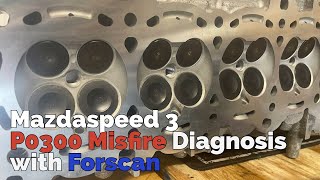
The 2012-2013 Mazda3, particularly models with the Skyactiv engine, has a documented history of ignition coil failures. Mazda issued Technical Service Bulletin #01-014-16-3208 acknowledging that certain original equipment ignition coils—specifically those made by 'YUMEBISHI'—could fail prematurely due to temperature fluctuations, leading directly to P0300 and related misfire codes. 🎬 Watch: Diagnosing random misfire codes on this Mazda generation. The bulletin advises replacement with 'MITSUBISHI' branded coils. Additionally, these direct-injection engines can be susceptible to significant carbon buildup on intake valves, which restricts airflow and is another known cause for misfires on this platform, especially during cold starts.
Diagnostic Flowchart

Tap your situation to follow the diagnostic path that matches what you're seeing on this vehicle.
Symptoms You May Notice

- Rough or shaky idling
- Lack of engine power and poor acceleration
- Hesitation or stumbling during acceleration
- Flashing or solid Check Engine Light
- Reduced fuel economy
- Engine vibrating excessively, especially between 2,000-3,000 RPM
- Burning smell from the engine bay
- Replacing only one ignition coil when others are near the end of their service life, especially if they are the faulty 'YUMEBISHI' brand.
- Replacing oxygen sensors before thoroughly checking the ignition system and for vacuum leaks.
- Replacing the Mass Airflow sensor without first attempting to clean it.
- Assuming fuel injectors are fine without testing, as they have been a confirmed fix in several owner experiences.
Most Likely Causes

- Failing Ignition Coils 🔴 High Probability Mazda TSB #01-014-16-3208 specifically identifies an internal failure of 'YUMEBISHI' branded ignition coils used in 2012-2013 models. These coils are prone to failure due to large differences between cold and warm temperatures. The TSB recommends replacing them with the updated 'MITSUBISHI' brand coils.
How to confirm: If a specific cylinder misfire code (P0301-P0304) is also present, swap the ignition coil from the misfiring cylinder with a coil from a known good cylinder. Clear the codes and drive. If the code follows the coil to the new cylinder (e.g., P0302 becomes P0301), the coil is bad. For a random P0300, it's often best to replace all four coils as a set, especially if they are the original YUMEBISHI coils (identified by a 4-digit lot number).
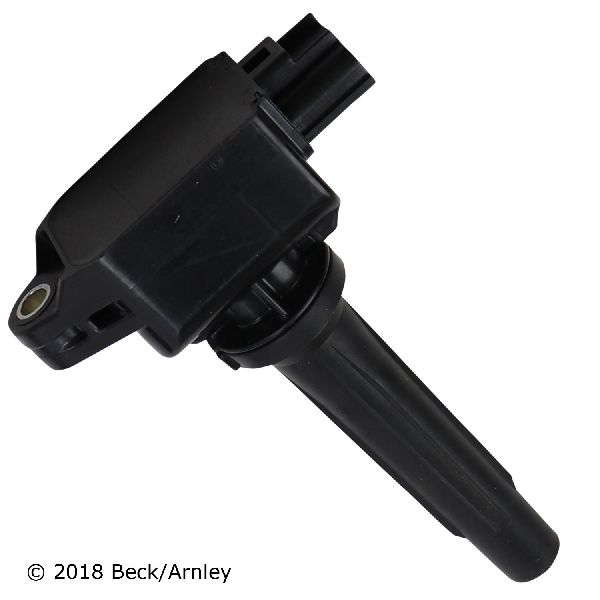
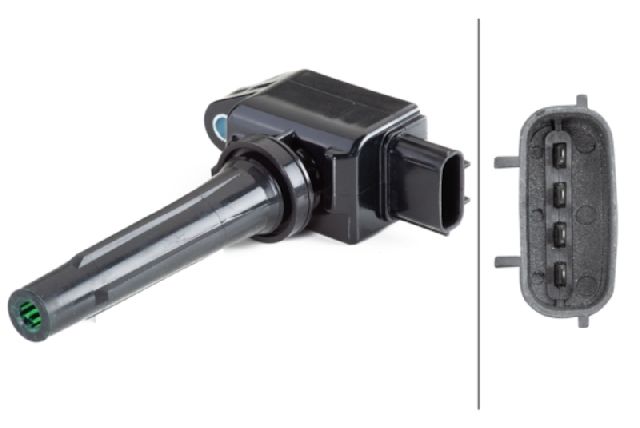
Typical fix: Replace all four ignition coils with the updated OEM or quality aftermarket parts. The updated OEM part number is PE20-18-100A.
Est. part cost: $80-$200 - Worn or Fouled Spark Plugs 🔴 High Probability Spark plugs are a routine maintenance item. Worn electrodes or an incorrect gap prevent a strong spark, leading to misfires. Skyactiv engines are noted to be particularly sensitive to spark plug condition. This is often the first and most affordable place to start.
How to confirm: Remove and inspect the spark plugs. Look for heavy carbon deposits, oil fouling, cracked porcelain, or worn/damaged electrodes. Check the spark plug gap against the manufacturer's specification.
Typical fix: Replace all four spark plugs. It is highly recommended to do this when replacing ignition coils. The OEM part number for Skyactiv engines is PE5R-18-110A.
Est. part cost: $30-$60 - Carbon Buildup on Intake Valves 🟡 Medium Probability The Skyactiv engines in this generation are Direct Injection (DI), meaning fuel is sprayed directly into the cylinder. This design can lead to carbon accumulating on the intake valves over time, as there's no fuel washing over them to keep them clean. This buildup can disrupt airflow and cause misfires, especially on vehicles with higher mileage or a history of short-trip driving.
How to confirm: This requires physical inspection by removing the intake manifold. A borescope can be used to view the valves. A Reddit user with a 2013 Mazda3 confirmed a dealer diagnosed this issue at 42,000 miles due to short-trip driving habits. Freeze-frame data showing the misfire occurs at cold start under load can also point to this issue.
Typical fix: The intake valves need to be cleaned, typically through a process called walnut blasting. Mazda also has a specific decarboning procedure. A dealership may quote upwards of $1700 for this service, as reported by one owner. Independent shops may be cheaper.
Est. part cost: $10-$20 for cleaning chemicals (DIY), $400-$800 for professional walnut blasting service. 🎬 Watch: How to perform a DIY walnut blasting carbon clean.
- Vacuum Leaks ⚪ Low Probability Aging rubber and plastic hoses in the intake system can crack, causing unmetered air to enter the engine. This leans out the air-fuel mixture and can cause random misfires. Common failure points include the PCV valve hose and intake manifold gaskets.
How to confirm: A visual inspection of all vacuum lines and the intake air boot is a start. The most effective method is a smoke test, where smoke is pumped into the intake system to reveal leaks. You may also hear a hissing sound or notice a high, fluctuating idle.
Typical fix: Replace the cracked or broken hose or gasket. A vapor canister purge solenoid has also been identified as a cause for vacuum leak codes in some forum discussions.
Est. part cost: $10-$50
Rare But Worth Checking
- Clogged or Failing Fuel Injectors: While less common than ignition issues, a clogged or failing injector can cause a misfire. On Skyactiv engines, this has been noted in some forum discussions, sometimes leading to a specific cylinder misfire code after initially showing P0300. One Reddit user's P0300 issue on a 2015 model was resolved by replacing one ignition coil and all four fuel injectors.
- Low Fuel Pressure: A weak fuel pump or clogged fuel filter can starve the engine of fuel, causing lean conditions and random misfires under load. A TSB (#01-010/14) was issued for some 2012-13 Mazda3 models for a faulty high-pressure fuel pump that could cause performance issues.
- Dirty Mass Airflow (MAF) Sensor: A contaminated MAF sensor can provide incorrect airflow readings to the PCM, leading to an improper air-fuel mixture and potential misfires. Cleaning the sensor with a dedicated MAF sensor cleaner is a simple and inexpensive diagnostic step.
- Faulty EGR Valve: A stuck or clogged Exhaust Gas Recirculation (EGR) valve can disrupt the air-fuel mixture and cause misfires. One owner on a Mazdas247 forum reported that after replacing plugs and coils, their P0300 was ultimately fixed by replacing the EGR valve for around $400 at a dealership.
Diagnosis Steps
- Read the codes with an OBD-II scanner and check for any other pending or stored codes, as well as freeze-frame data to see conditions when the misfire occurred.
- Inspect the spark plugs for wear, damage, or fouling. Check the gap. Replace if they are due or in poor condition.
- Inspect the ignition coils and their wiring for damage, such as from rodents. Identify the brand of the coils; if they are 'YUMEBISHI' (4-digit lot number), they are suspect per TSB #01-014-16-3208. Consider replacing them as a set.
- Check for vacuum leaks. Visually inspect all hoses connected to the intake manifold and air duct. For best results, perform a smoke test.
- Clean the Mass Airflow (MAF) sensor with a dedicated MAF sensor cleaner.
- If the issue persists, especially on a Skyactiv engine with over 40,000 miles, investigate carbon buildup on the intake valves. This may require a borescope inspection.
- As a final step, check fuel pressure and test fuel injectors to ensure they are functioning correctly.
Parts You'll Likely Need
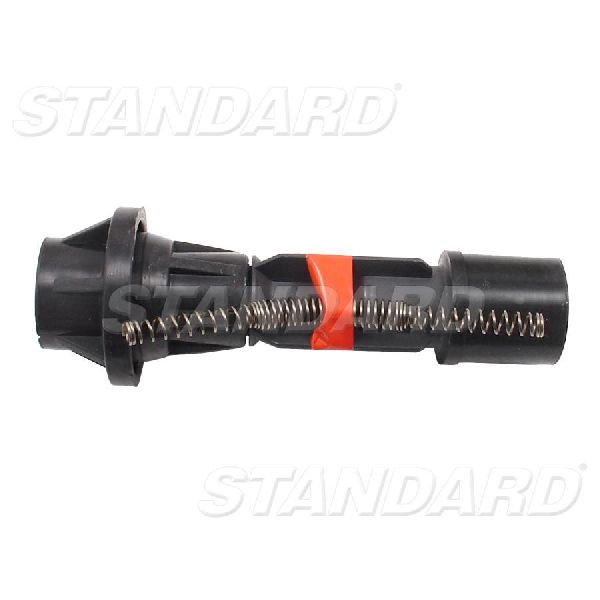
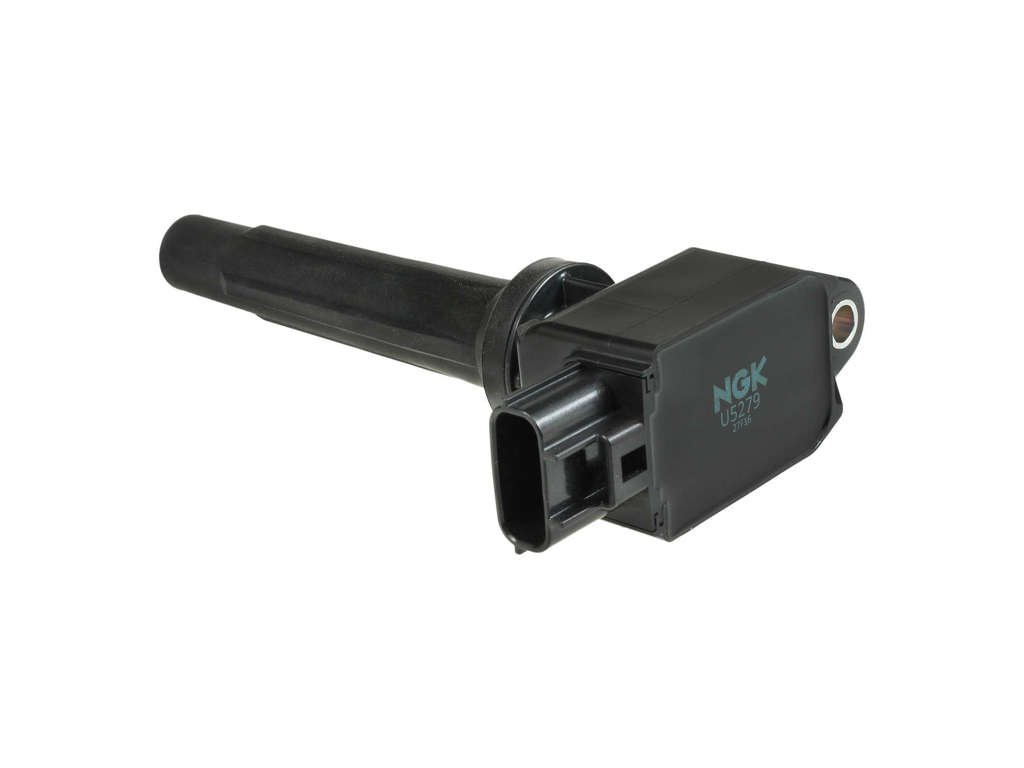
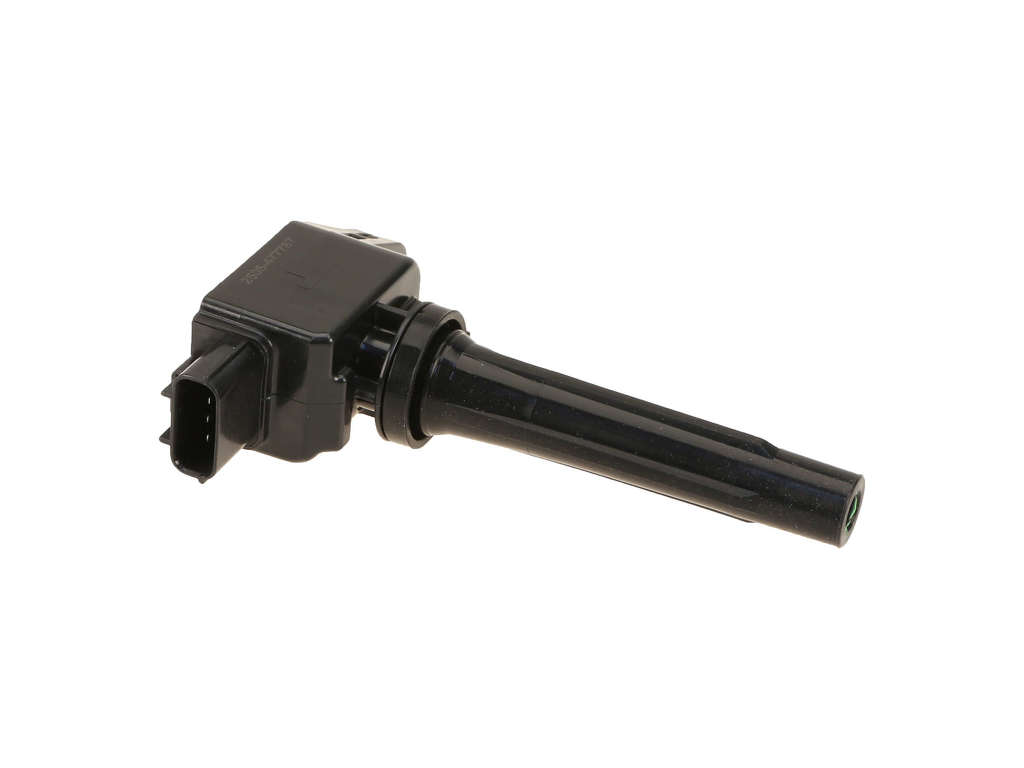
- Ignition Coil
(OEM #PE20-18-100A (replaces faulty coils))— This is the most common cause of P0300 on this vehicle, as documented by Mazda's own Technical Service Bulletin #01-014-16-3208, which points to faulty 'YUMEBISHI' coils.
Trusted brands: NGK, Denso, Bosch, Delphi
OEM price range: $60-$90 per coil
Aftermarket price range: $20-$50 per coil - Spark Plugs
(OEM #PE5R-18-110A (for Skyactiv))— Spark plugs are a critical component for ignition and a common wear item. They should always be replaced with the ignition coils.
Related Codes That Often Appear With This One
- P0301, P0302, P0303, P0304 — These codes indicate a misfire on a specific cylinder. A P0300 may appear first, and as the problem worsens, the PCM may be able to isolate the fault to a single cylinder, triggering one of these codes.
- P0171 — This code means "System Too Lean (Bank 1)". It often accompanies P0300 when the root cause is a vacuum leak, a dirty MAF sensor, or a fuel delivery issue, as these problems affect the air-fuel ratio.
Technical Service Bulletins (TSBs) & Recalls
- 01-014-16-3208: Addresses lack of power, rough idling, and misfire DTCs (P0300-P0304) caused by internal failure of 'YUMEBISHI' ignition coils due to temperature changes.
- 01-012-19-3612: Confirms the definitions for misfire codes P0300, P0301, P0302, P0303, and P0304.
- 01-010/14: Addresses a potential high-pressure fuel pump failure on 2012-13 Mazda3 Skyactiv models which could lead to performance issues and code P0191.
Platform-Specific Known Issues
- A known issue with failing 'YUMEBISHI' branded ignition coils prompted Mazda to release TSB #01-014-16-3208, which applies to 2012-2013 Mazda3 models. The fix is to replace them with 'MITSUBISHI' branded coils.
- For Skyactiv models, another TSB exists that addresses carbon buildup on intake valves causing misfires, particularly on cars with a history of short-trip driving. The fix involves a manual decarboning procedure and sometimes a PCM software update.
Mechanic-Grade Diagnostic Values
- Ignition Coil Primary Resistance — expected: 0.4 to 2.0 ohms. Failure: A reading outside of this range suggests a faulty primary winding.
- Ignition Coil Secondary Resistance — expected: 6,000 to 10,000 ohms. Failure: A reading outside of this range suggests a faulty secondary winding.
- Mode $06 Misfire Counts — expected: Counts should be at or near zero for all cylinders during normal operation.. Failure: Consistently high or incrementing counts on random cylinders, even without a CEL, points toward a developing issue like carbon buildup or a failing component.
Hidden / Shadow Codes Worth Checking
- Mode $06 Misfire Data (TID $A2-$A5, CID $0C): This is not a DTC, but a diagnostic monitor that provides raw misfire counts for each cylinder. It can show misfires occurring before they are frequent enough to trigger a P030x code and illuminate the Check Engine Light. (see via An advanced scan tool or software like FORScan that can access Mode $06 test results.)
Scan Tool Commands That Help
- FORScan: Mode 6 Test — Use this function to view the live misfire counts for each cylinder to identify which cylinders are contributing to the random misfire code, even if they don't have their own specific P0301-P0304 code.
- FORScan / Advanced Scan Tool: Clear DTCs / Reset Misfire Counters — After performing a repair (like swapping coils for diagnosis), clearing the codes will also reset the internal misfire counters, allowing for a clean test to see if the fault has moved or been resolved.
Wiring & Ground Locations
- PCM Grounds — On the main connectors to the Powertrain Control Module (PCM), several pins are dedicated grounds (typically solid black wires).. A poor ground connection at the PCM can cause erratic sensor readings and incorrect outputs to the ignition coils and fuel injectors, leading to random misfires.
- Engine/Transmission Grounds — Key ground straps are located from the passenger side motor mount to the chassis, on the transmission housing (often two), and from the high-pressure fuel pump (HPFP) area to the chassis.. The ignition coils are grounded through the engine block. A corroded or loose engine ground strap can create intermittent and weak spark, causing random misfires under load.
Real Owner Repair Stories
- Reddit user on r/mazdaspeed3 (2015 Mazda 6 (similar Skyactiv platform)) — P0300 code
❌ Tried (didn't work) Not specified, but the fix was unexpected.
✅ What actually fixed it The gasket around the engine air filter was warped from a previous incorrect installation, causing an unmetered air leak. Replacing the air filter and ensuring a proper seal fixed the code. - Reddit user on r/mazdaspeed3 (Mazdaspeed3 (similar P0300 diagnostic path)) — P0300 code
❌ Tried (didn't work) Taking it to multiple dealers and mechanics., Incorrect diagnosis of a leaking turbo.
✅ What actually fixed it The issue was ultimately a single failing fuel injector on cylinder 2. The owner advises DIY diagnosis or using a trusted mechanic to avoid expensive misdiagnosis.
"I Checked Everything" — The Actual Cause
- A P0300 was traced to a warped engine air filter gasket. This type of leak occurs at the airbox, before the throttle body and MAF sensor, and would not be detected by a standard intake smoke test that pressurizes the system from the throttle body onward. The warped gasket allowed unmetered air to enter the system, leaning out the mixture and causing random misfires.
OEM Part Supersession History
PE01-18-100, PE01-18-100A, P51B-18-100→PE20-18-100A— Updated part to address the internal failure issue identified in TSB #01-014-16-3208.
Model Year Variations Within This Range
- 2013: The 2013 model year introduced several non-engine-related updates, including an available 5.8-inch touchscreen infotainment system with navigation, Pandora integration, and dual-zone automatic climate control. The i Grand Touring (i GT) trim also became available with a manual transmission, which was not an option in 2012.
- 2012: The 2012 model year was the first to feature the new Skyactiv-G 2.0L direct-injection engine and the associated Skyactiv-Drive 6-speed automatic or Skyactiv-MT 6-speed manual transmissions, which are the primary platform for this P0300 issue.
Helpful Videos

Used OEM Parts in Stock


New Aftermarket Parts Available


The information in this article is provided for general reference and educational purposes only. Vehicle specifications, procedures, and part compatibility can vary by production date, trim level, and region. Always consult your vehicle's factory service manual and verify part numbers before purchasing or performing repairs. Safety-critical components such as airbags, seat belts, and braking systems should be installed by a qualified professional.
- Mazda MAZDA3:
- 🎬 Helpful Videos
- 🛍️ Shop This Part
- What's Unique About the 2012-2013 Mazda MAZDA3
- Diagnostic Flowchart
- Symptoms You May Notice
- Most Likely Causes
- Rare But Worth Checking
- Diagnosis Steps
- Parts You'll Likely Need
- Related Codes That Often Appear With This One
- Technical Service Bulletins (TSBs) & Recalls
- Platform-Specific Known Issues
- Mechanic-Grade Diagnostic Values
- Hidden / Shadow Codes Worth Checking
- Scan Tool Commands That Help
- Wiring & Ground Locations
- Real Owner Repair Stories
- "I Checked Everything" — The Actual Cause
- OEM Part Supersession History
- Model Year Variations Within This Range
- 🎟️ Get 5% Off