

P0300 on 2014-2019 Mazda CX-5: Random Misfire Causes and Fixes
P0300 on a Mazda CX-5 is most often caused by worn spark plugs or a failing ignition coil. However, several Mazda Technical Service Bulletins (TSBs) point to specific issues like faulty fuel injectors causing fuel to mix with engine oil, or software issues causing misfires in cold weather. In many real-world cases, a P0300 that later becomes a specific cylinder code (e.g., P0301) is resolved by replacing a single ignition coil.
- P0300 on a 2014-2019 CX-5 indicates a random misfire affecting multiple cylinders.
- Start your diagnosis with the basics: inspect and replace worn spark plugs and test the ignition coils.
- Be aware of vehicle-specific issues. Check your oil for signs of fuel dilution (high level, gas smell), which points to faulty fuel injectors per a Mazda TSB.
- If misfires occur primarily in cold weather, the issue could be software-related and require a dealer visit for a PCM update.
- A flashing check engine light signals a severe misfire; pull over safely and avoid driving to prevent expensive catalytic converter damage.
What's Unique About the 2014-2019 Mazda CX-5

The 2014-2019 Mazda CX-5 uses SkyActiv-G direct injection engines. While efficient, these engines can be prone to intake valve carbon buildup, which can cause misfires. More specifically for this platform, Mazda has issued TSBs addressing misfires caused by faulty fuel injectors allowing gasoline to dilute the engine oil (TSB #01-005-15-3030A), and software glitches that cause misfires in cold weather, sometimes under hard acceleration (TSB #01-011-15-3051A). Additionally, 2018-2019 models with the cylinder deactivation feature were subject to a major recall (Mazda #3719F) for a software flaw that could cause a misfire when switching between two and four-cylinder modes.
Diagnostic Flowchart


Tap your situation to follow the diagnostic path that matches what you're seeing on this vehicle.
Generation note: This range covers two generations of the CX-5: the first generation (KE, 2014-2016) and the second generation (KF, 2017-2019). The core SkyActiv-G engines are similar, and the common causes for P0300 are largely the same. However, a significant recall (Mazda #3719F, NHTSA #19V497000) for a PCM software issue specifically affects 2018-2019 models with cylinder deactivation. This flaw in the control logic for the hydraulic valve clearance adjuster could cause a rocker arm to dislodge, leading to misfires and potential engine stall. The second generation, starting in 2017, featured a redesigned body and an increase in base engine power from 155 hp to 187 hp.
Symptoms You May Notice
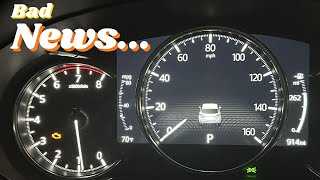
- Flashing or solid Check Engine Light
- Rough or shaky idle
- Engine hesitation or stumbling during acceleration
- Noticeable loss of power, especially during hard acceleration in cold weather.
- Reduced fuel economy
- Engine stalling, sometimes without the ability to restart.
- TCS and TPMS lights may illuminate along with the Check Engine Light.
- Replacing only one spark plug or ignition coil when others are near the end of their service life.
- Replacing oxygen sensors, which are unlikely to be the root cause of a P0300 code.
- Assuming carbon buildup is the cause without performing basic ignition system checks first. A Reddit user with a low-mileage 2018 CX-5 suspected carbon buildup, but others advised checking plugs and coils first.
Most Likely Causes

- Worn or Fouled Spark Plugs 🔴 High Probability Spark plugs are a regular maintenance item. SkyActiv engines are sensitive to spark plug condition and gap. Misfires can occur if plugs are past their service life, have an incorrect gap, or are fouled by carbon or oil. A YouTube repair video for a P0300/P0302 on a CX-5 showed the issue was caused by carbon tracking on the spark plug porcelain, causing the spark to arc to the cylinder head instead of the electrode.
How to confirm: Remove and inspect the spark plugs. Look for worn electrodes, wide gaps, or black/oily deposits. Check the porcelain insulator for thin black lines (carbon tracking), which indicates the spark is shorting out. In one documented case, a dead miss was caused by an internally cracked spark plug porcelain, which was not visually obvious but was confirmed by swapping the plug to another cylinder and seeing the misfire follow.
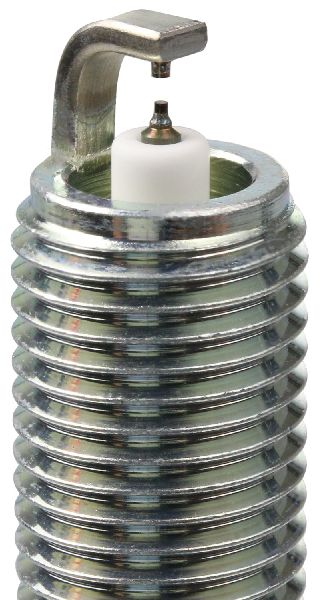
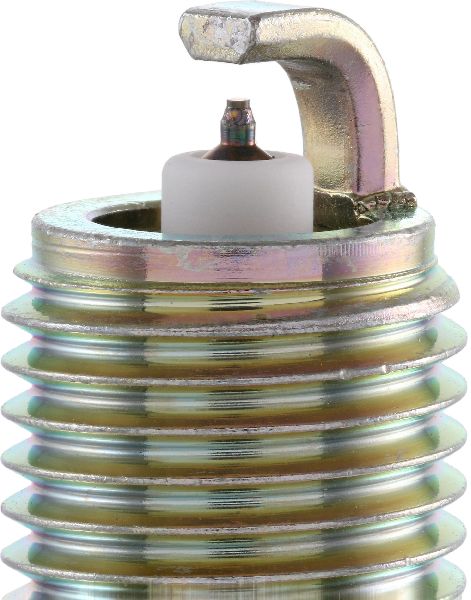
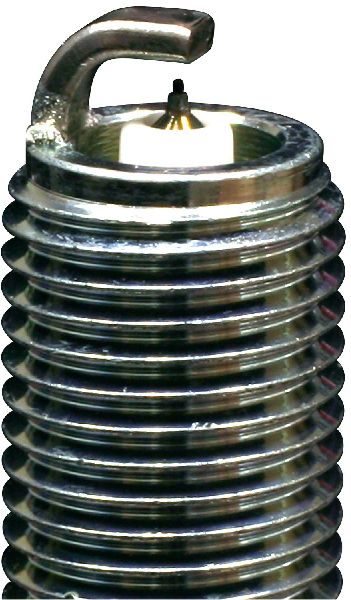
Typical fix: Replace all four spark plugs as a set. 🎬 Watch: Step-by-step guide to changing your CX-5 spark plugs. Use high-quality Iridium plugs (e.g., NGK Laser Iridium) specified for the engine.
Est. part cost: $60-$120 - Faulty Ignition Coil(s) 🔴 High Probability Ignition coils can fail with age and heat cycles, leading to a weak or non-existent spark. Forum discussions frequently cite failing coils as the fix for P0300 on the CX-5. Mazda TSB #01-014-16-3208A specifically notes that an internal failure of the ignition coil can cause misfires.
How to confirm: If a specific cylinder misfire code (e.g., P0301, P0302) is also present, swap the ignition coil from the misfiring cylinder with one from a known good cylinder. Clear the codes and drive the vehicle. If the code follows the coil to the new cylinder (e.g., P0302 becomes P0301), the coil is bad. A simple diagnostic test is to unplug the coil's electrical connector while the engine is idling; if the idle doesn't change, that cylinder is already dead, likely due to the coil.
Typical fix: Replace the faulty ignition coil. It is often recommended to replace them as a set if they are original and high-mileage, though many owners successfully fix the issue by replacing only the failed coil. 🎬 See how to diagnose and fix rough idling and coils.
Est. part cost: $100-$180 per coil - Faulty Fuel Injectors 🟡 Medium Probability Mazda TSB #01-005-15-3030A specifically links P0300-P0304 codes with an *increased engine oil level*. This points to leaking fuel injectors allowing gasoline to seep past the piston rings and into the oil pan, causing fuel dilution and misfires. The TSB states this is due to improper PCM logic in cold weather with repeated short trips.
How to confirm: Check the engine oil dipstick. If the oil level is above the full mark and smells strongly of gasoline, a leaking injector is highly likely. This requires professional diagnosis to confirm which injector is at fault, often followed by a PCM software update as part of the TSB.
Typical fix: Replace the faulty fuel injector(s), perform an oil change, and have the PCM reprogrammed per the TSB. A Reddit user with a 2015 Mazda 3 had a P0300 that ultimately required replacing all 4 injectors and an ignition coil.
Est. part cost: $200-$300 per injector - Intake Valve Carbon Buildup 🟡 Medium Probability As a gasoline direct injection (GDI) engine, the SkyActiv-G sprays fuel directly into the cylinder, so gasoline doesn't wash over and clean the intake valves. Over time, oil vapors from the PCV system can bake onto the valves, restricting airflow and causing misfires, especially on cold starts or with a history of short-trip driving.
How to confirm: This requires a borescope inspection of the intake ports and valves, which usually involves removing the intake manifold. In a documented case on a similar Mazda engine, a smoke test for vacuum leaks was clean, but removing the intake manifold revealed excessive carbon buildup that was the root cause of the P0300.
Typical fix: Professional cleaning of the intake valves, typically via walnut blasting. 🎬 Watch: How to clean carbon buildup from Skyactiv intake valves. A repair shop charged one owner €425 for a manual and chemical cleaning service that resolved their P0300 code.
Est. part cost: $0 (service only) - PCM Software Issue ⚪ Low Probability Multiple TSBs mention cold weather misfires that can be resolved with a PCM software update. Most notably, recall 3719F (NHTSA #19V497000) was issued for 2018-2019 models where improper software logic for the cylinder deactivation feature could cause an intake valve rocker arm to get stuck, leading to misfires and potential engine stall.
How to confirm: A Mazda dealership can check the vehicle's VIN against TSBs and recalls to see if a software update is available and applicable. The recall repair involves reprogramming the PCM.
Typical fix: Reprogramming the PCM with updated software at a dealership. The labor time for the 3719F recall is listed as 0.3 hours.
Est. part cost: $0 if covered by recall/warranty
Rare But Worth Checking
- Vacuum Leak: A leak in the intake manifold, a vacuum hose, or a bad gasket can introduce unmetered air, throwing off the air-fuel ratio and causing random misfires. A Reddit user fixed their P0300 by replacing a warped air filter gasket. A Mazda dealer diagnosed a P0300 and P0171 on a 2014 CX-5 as a leak in the intake manifold, quoting $475 for the repair.
- Low Fuel Pressure: A weak fuel pump can fail to deliver enough fuel to the engine, especially under load, causing lean misfires across all cylinders. A recall was issued for failing low-pressure fuel pumps on some 2018-2019 models.
- Dirty Mass Airflow (MAF) Sensor: A contaminated MAF sensor can send incorrect airflow readings to the PCM, leading to an improper air-fuel mixture and misfires. Cleaning the sensor is a simple and inexpensive diagnostic step that has resolved the issue for some owners.
- Loose Ignition Coil Connectors: On higher-mileage vehicles, the plastic clips on the ignition coil electrical connectors can become brittle and fail to lock securely. Vibrations can cause a poor connection, leading to an intermittent, random misfire. A YouTube video on a Mazda 6 suggested using zip ties to secure the connectors as a low-cost fix.
Diagnosis Steps
- Read all stored fault codes with an OBD-II scanner. Note any specific cylinder misfire codes (P0301-P0304) or lean codes (P0171).
- Check the freeze frame data to see the engine conditions (temperature, RPM) when the code was set. This can help identify if it's a cold-start issue as noted in TSBs.
- For advanced diagnosis, use a scanner that can read Mode $06 data. This will show you the raw misfire count for each cylinder, which can help pinpoint a problem cylinder even if only a P0300 is present.
- Inspect the engine air filter and its housing for a proper seal.
- Inspect all accessible vacuum hoses for cracks or loose connections.
Parts You'll Likely Need
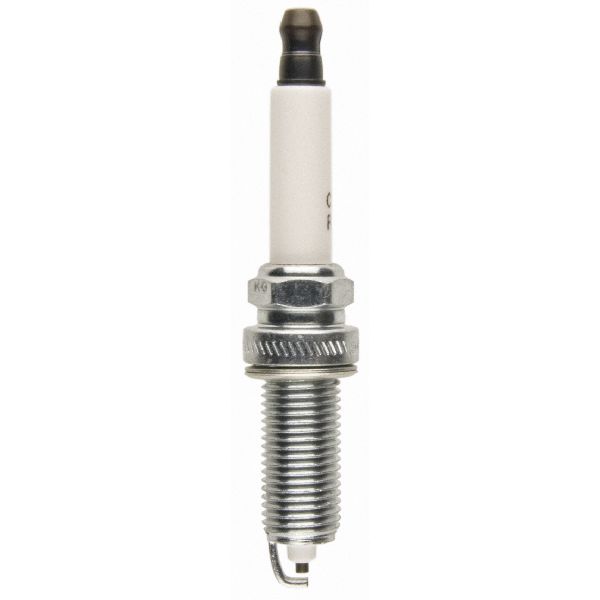
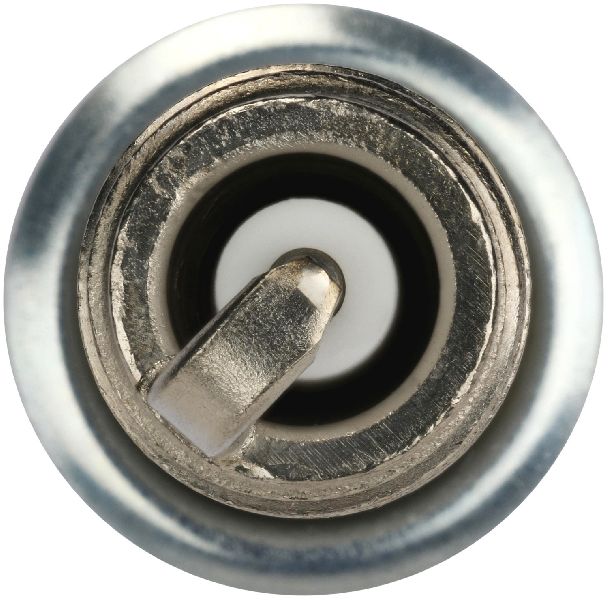
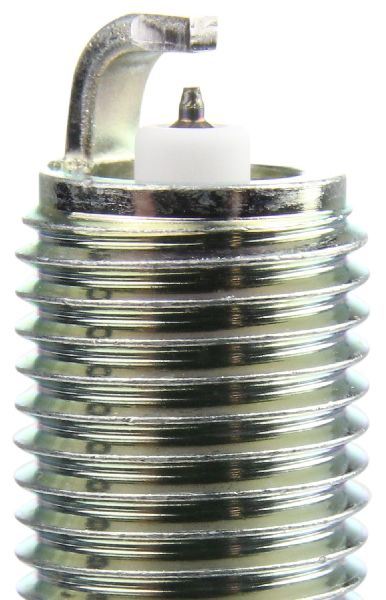
- Iridium Spark Plugs
(OEM #PE5R-18-110A)— Spark plugs are a primary wear item and the most common cause of misfires. The SkyActiv engines require specific Iridium plugs for proper performance.
Trusted brands: NGK, Denso
OEM price range: $25-$35 per plug
Aftermarket price range: $15-$25 per plug - Ignition Coil
(OEM #PE20-18-100A)— Ignition coils are the second most common failure point for a P0300 code, responsible for delivering spark to the plugs. This part number supersedes previous versions like PE01-18-100 and P51B-18-100.
Trusted brands: Mazda (OEM), NGK, Denso, Delphi
OEM price range: $140-$180 per coil
Aftermarket price range: $50-$100 per coil
Related Codes That Often Appear With This One
- P0301, P0302, P0303, P0304 — These codes indicate a misfire on a specific cylinder (1, 2, 3, or 4). They often accompany or follow a P0300 when the misfire becomes frequent enough on one cylinder to be identified. A common owner experience is getting a P0300, clearing it, and then getting a P0301 later, pinpointing the faulty coil or plug.
- P0171 — This code means "System Too Lean (Bank 1)". It can be caused by a vacuum leak, a dirty MAF sensor, or a fuel delivery issue that also causes the P0300 misfire.
Technical Service Bulletins (TSBs) & Recalls
- 01-005-15-3030A
- 01-011-15-3051A
- 01-007-19-3541
- 01-014-16-3208A
- Recall 3719F (NHTSA 19V497000)
Platform-Specific Known Issues
- Real-World Repair Story: P0300 to P0301: A user on Reddit with a 2013 CX-5 experienced a P0300 code with limp mode. After replacing the spark plugs, the code returned as P0300 and P0301 (Cylinder 1 Misfire). After also cleaning the MAF and throttle body with no success, they performed a simple diagnostic: unplugging the ignition coil on cylinder 4 caused the idle to worsen significantly, but unplugging the coil on cylinder 1 caused no change. This confirmed the #1 coil was dead. Replacing just the single faulty ignition coil completely resolved the issue.
- TSB for Cold Weather Misfire & Fuel in Oil: TSB #01-005-15-3030A describes a scenario where, in cold weather (below 14°F / -10°C) with repeated short trips, improper PCM logic can cause excess fuel injection. This unburnt fuel can wash into the crankcase, raising the oil level and causing misfires. The fix involves a PCM software update.
- Recall for Cylinder Deactivation Misfire: Recall 3719F affects 2018-2019 models with cylinder deactivation. A software error can cause an intake valve rocker arm to get stuck when the engine switches from 2-cylinder to 4-cylinder mode, causing a misfire, loss of power, and potential stalling. The fix is a free software update at a Mazda dealer.
Mechanic-Grade Diagnostic Values
- Mass Airflow (MAF) Sensor Signal Voltage — expected: 0.5V - 1.5V at idle, rising to 2.0V - 2.5V at 3000 RPM.. Failure: Voltage that is stuck, unresponsive to RPM changes, or significantly outside the expected range.
- Spark Plug Resistance (Terminal to Electrode) — expected: Approximately 5-6 kOhms.. Failure: While this can be measured, a plug can test within this range and still be faulty due to internal cracks causing it to arc under compression. Swapping plugs between cylinders is a more reliable test.
Hidden / Shadow Codes Worth Checking
- Mode $06 Misfire Counts: This is not a formal trouble code, but a function within advanced OBD-II scanners that displays the raw number of misfire events detected by the PCM for each individual cylinder during the current and previous drive cycles. It can reveal which cylinder(s) are misfiring the most, even when only a general P0300 code is set. (see via Use an advanced scan tool like FORScan or a professional-grade scanner and navigate to the "Mode $06" or "On-Board Monitoring" test results.)
Scan Tool Commands That Help
- FORScan, Advanced OBD-II Scanners: Live Data - Misfire Count per Cylinder (e.g., MISFIRE_CYL1, MISFIRE_CYL2) — This is the primary diagnostic step for a P0300 code. By observing the live counts while driving or power braking the engine, a technician can identify which cylinder is the source of the 'random' misfire without waiting for a specific P030x code to set.
- Standard OBD-II Scanner: Clear/Erase Fault Codes — After performing a repair (like swapping coils or replacing plugs), clear the codes and perform a full drive cycle to see if the code returns or if a new, more specific code (like P0301) appears, which confirms the location of the fault.
Wiring & Ground Locations
- G03 — Located in the left front of the engine compartment.. This is a primary engine compartment ground point. A poor connection here can cause erratic behavior in various electronic systems, including the ignition system, leading to random misfires.
- G09 — Located behind the instrument cluster.. A dashboard-area ground that can affect PCM communication and sensor readings. While less likely to be the primary cause, poor interior grounds can create difficult-to-diagnose electrical issues.
- PCM Ground Pin — On the main PCM electrical connector. The wire is typically black (BLK).. The PCM requires a solid ground to operate correctly. A compromised PCM ground can cause a wide range of issues, including misfire detection faults and incorrect operation of ignition coils and fuel injectors.
Real Owner Repair Stories
- Reddit user in /r/CX5 (2013 Mazda CX-5 Touring) — Loss of power on highway, TCS, TPMS, and CEL lights on. Entered limp mode. Initially P0300, then P0301 after changing plugs.
❌ Tried (didn't work) Replacing all four spark plugs, Cleaning the MAF sensor, Cleaning the throttle body
✅ What actually fixed it Replacing the ignition coil on cylinder 1. The failure was confirmed by unplugging the coil connector while the engine was running and noticing no change in the rough idle. - YouTube channel 'NoNonsenseKnowHow' (2014 Mazda CX-5 2.0L with ~140,000 miles) — Extremely rough running and a dead misfire, though no check engine light was on initially.
❌ Tried (didn't work) Swapping the ignition coil from the misfiring cylinder (#2) to another cylinder did not move the misfire.
✅ What actually fixed it Replacing the spark plug from cylinder #2. The mechanic swapped the suspect spark plug to cylinder #3, and the dead misfire moved with it, proving the spark plug was the single point of failure, likely due to an internal crack in the porcelain insulator. - YouTube channel 'Swimming in the Deep' (2014 Mazda CX-5 with 107,000 miles) — Rough running, limp mode, and a P0304 code (misfire cylinder 4).
❌ Tried (didn't work) Replacing the spark plug in cylinder 4.
✅ What actually fixed it Replacing the ignition coil. The owner confirmed the coil was bad by swapping it from cylinder 4 to cylinder 3. After clearing the codes and running the engine, the code changed to P0303, proving the coil was faulty. The owner then replaced all four coils as a set. - Reddit user in /r/CX5 (2013 Mazda CX-5 with 301,000 miles) — Intermittent P0300 that would eventually become a specific cylinder code and burn out an ignition coil.
❌ Tried (didn't work) Repeatedly replacing the failed ignition coil would fix the issue temporarily for a few months.
✅ What actually fixed it Another user with a similar P0300 issue fixed it by addressing an oil leak. They replaced the VVT solenoid gasket and the valve cover gasket after finding oil on a spark plug, and then replaced all four plugs. This suggests the root cause of the recurring coil failure was oil contamination.
"I Checked Everything" — The Actual Cause
- In a well-documented case on a similar Mazda direct-injection engine, a persistent P0300 was investigated. A smoke test was performed to find vacuum leaks, but the system was perfectly sealed. The mechanic then removed the intake manifold and discovered the true cause was severe carbon buildup in the intake ports, which was restricting airflow and disrupting combustion. The fix was a manual cleaning of the ports.
When the Usual Fixes Don't Work
- While Pass 2 correctly identifies worn spark plugs and faulty ignition coils as the most common causes, deeper diagnosis reveals important nuances. In one real-world case, a dead cylinder was traced to a faulty spark plug with an internal crack, even after swapping the ignition coil showed no change. This contradicts the common assumption that the coil is always the more likely failure point in the ignition system. In another instance, a recurring P0300 that repeatedly destroyed ignition coils was ultimately traced to an oil leak from a failing VVT solenoid gasket fouling the plug and coil. This shows that simply replacing the failed ignition components without investigating the root cause of their failure (e.g., oil contamination) can lead to a misdiagnosis and repeat repairs. Finally, a clean smoke test for vacuum leaks does not rule out airflow problems; in GDI engines like the SkyActiv, the cause can be internal carbon buildup on intake valves, which requires removing the intake manifold to diagnose.
OEM Part Supersession History
PE01-18-100, PE20-18-100, P51B-18-100→PE20-18-100A— Part revision and consolidation for non-cylinder deactivation engines.
Heads up: This part is for 2.0L and 2.5L engines WITHOUT cylinder deactivation.Unknown→PYFS-18-100 (or PX5H-18-100)— Specific part for engines with cylinder deactivation.
Heads up: This part is ONLY for 2.5L engines WITH cylinder deactivation (approx. 2018-2019). Using the standard PE20-18-100A coil on these engines may not work correctly.
Model Year Variations Within This Range
- 2017-2019 (KF Generation): The second-generation CX-5, launched in 2017, featured a major exterior and interior redesign. The base 2.5L SkyActiv-G engine's power was increased to 187 hp from the previous 155 hp.
- 2018-2019: Some 2.5L engines in these years included a cylinder deactivation system. These engines require a different ignition coil (Part #PYFS-18-100) than the non-deactivation engines. They were also subject to a major recall (3719F) for a software issue related to this system that could cause misfires.
Helpful Videos
Used OEM Parts in Stock

New Aftermarket Parts Available

The information in this article is provided for general reference and educational purposes only. Vehicle specifications, procedures, and part compatibility can vary by production date, trim level, and region. Always consult your vehicle's factory service manual and verify part numbers before purchasing or performing repairs. Safety-critical components such as airbags, seat belts, and braking systems should be installed by a qualified professional.
- Mazda CX-5:
- 🎬 Helpful Videos
- 🛍️ Shop This Part
- What's Unique About the 2014-2019 Mazda CX-5
- Diagnostic Flowchart
- Symptoms You May Notice
- Most Likely Causes
- Rare But Worth Checking
- Diagnosis Steps
- Parts You'll Likely Need
- Related Codes That Often Appear With This One
- Technical Service Bulletins (TSBs) & Recalls
- Platform-Specific Known Issues
- Mechanic-Grade Diagnostic Values
- Hidden / Shadow Codes Worth Checking
- Scan Tool Commands That Help
- Wiring & Ground Locations
- Real Owner Repair Stories
- "I Checked Everything" — The Actual Cause
- When the Usual Fixes Don't Work
- OEM Part Supersession History
- Model Year Variations Within This Range
- 🎟️ Get 5% Off