

P0300 on 2013-2016 Mazda CX-5: Random Misfire Causes and Fixes
P0300 on a 2013-2016 Mazda CX-5 most often points to failing ignition coils or worn spark plugs. A specific TSB confirms that original 'YUMEBISHI' ignition coils were prone to failure and should be replaced with updated 'MITSUBISHI' parts. Replacing all four coils and plugs is the most common and effective fix, costing around $150-$300 for DIY parts.
- P0300 on a 2013-2016 CX-5 is very frequently caused by failing ignition coils, a problem acknowledged by Mazda in a TSB.
- Always check for the original 'YUMEBISHI' coils (4-digit lot number) and plan to replace them as a set if found.
- Worn spark plugs are the next most likely cause. Replacing plugs and coils together is a common and effective repair.
- Do not ignore a flashing check engine light, as it signals a severe misfire that can cause expensive catalytic converter damage.
- For higher-mileage cars or those used for frequent short trips, intake valve carbon buildup is a possible cause if ignition components are good.
What's Unique About the 2013-2016 Mazda CX-5
The first-generation CX-5's Skyactiv-G engine is a direct-injection design, which can be prone to intake valve carbon buildup over time, a potential cause of misfires. More significantly, Mazda issued a Technical Service Bulletin (TSB 01-014/16) specifically for these models, acknowledging that original-equipment ignition coils from a particular supplier (YUMEBISHI) were prone to internal failure, especially with large temperature changes, directly causing P0300 and related misfire codes. The Skyactiv ignition coils also contain a unique ion sensor to monitor combustion, making them sensitive to non-OEM parts. This makes ignition coils a primary and well-documented suspect on these vehicles.
Symptoms You May Notice
- Rough idle or shaking engine.
- Hesitation or stumbling during acceleration.
- Noticeable loss of engine power.
- Flashing or solid Check Engine Light.
- Activation of TCS (Traction Control System) and TPMS (Tire Pressure Monitoring System) warning lights simultaneously with the Check Engine Light.
- Replacing only the spark plugs when the underlying issue is a failing ignition coil, as mandated by the TSB.
- Replacing a single ignition coil when all are of the original, failure-prone 'YUMEBISHI' type.
- Assuming carbon buildup is the cause before thoroughly checking the entire ignition system (plugs and coils).
- Using cheap, aftermarket ignition coils that are incompatible with Mazda's ion-sensing ignition system, causing new misfires.
Most Likely Causes
- Failing Ignition Coils 🔴 High Probability A specific TSB (#01-014-16-3208A) was issued for 2013-2016 CX-5s due to internal failure of the original 'YUMEBISHI' brand ignition coils. These coils can fail when exposed to large ambient temperature swings. The TSB notes the faulty coils can be identified by a 4-digit lot number, whereas the updated, reliable MITSUBISHI coils have a 5-digit lot number.
How to confirm: If a specific cylinder misfire code (e.g., P0301) is present, swap the ignition coil from the misfiring cylinder with one from a good cylinder. If the code follows the coil, the coil is bad. For a random P0300, inspect all coils. If they have 4-digit lot numbers, they are the failure-prone type and should be replaced. One owner confirmed a bad coil by unplugging it while running and noticing no change in engine roughness, while unplugging a good coil made it worse.
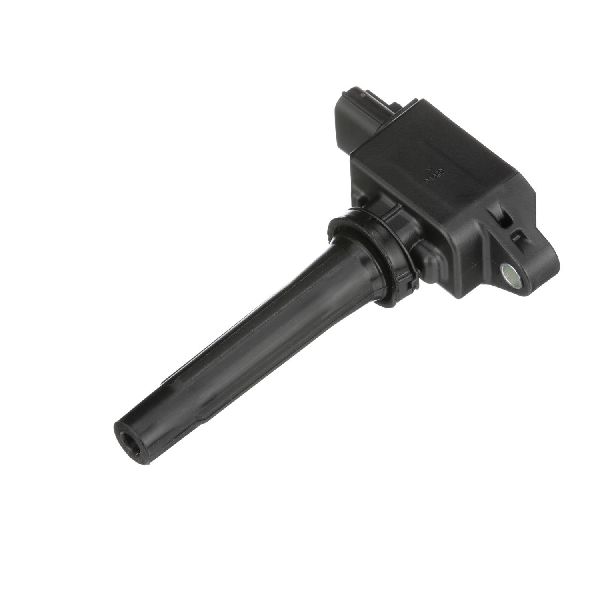
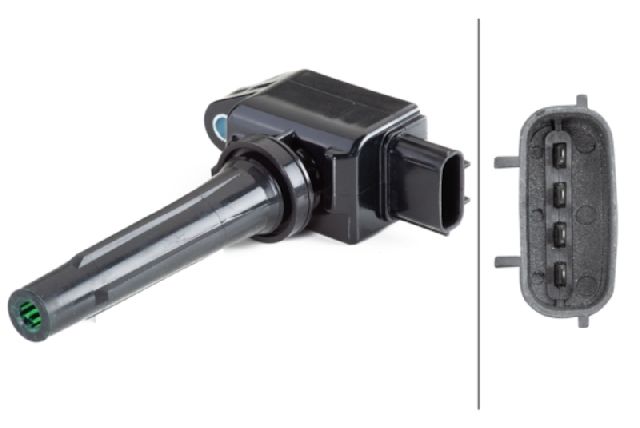
Typical fix: Replace the faulty ignition coil(s). It is best practice to replace all four with the updated MITSUBISHI-made coils (Part No. PE20-18-100A), especially if they are the original YUMEBISHI type.
Est. part cost: $100-$250 for a set of 4 - Worn Spark Plugs 🔴 High Probability Spark plugs are a standard maintenance item with a service interval of 75,000 miles. Worn electrodes or an incorrect gap can cause a weak spark, leading to misfires, especially under load. Skyactiv engines are noted to be sensitive to spark plug condition and type due to the ion-sensing ignition system.
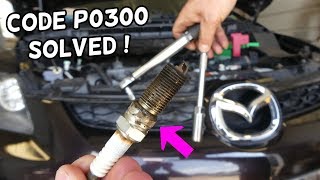
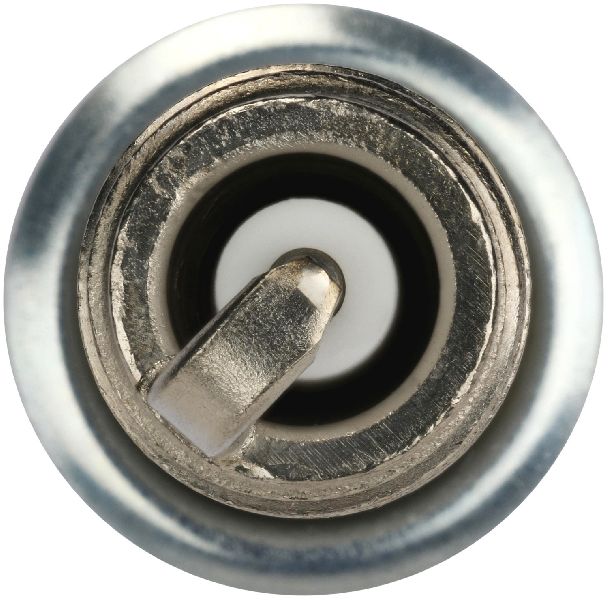
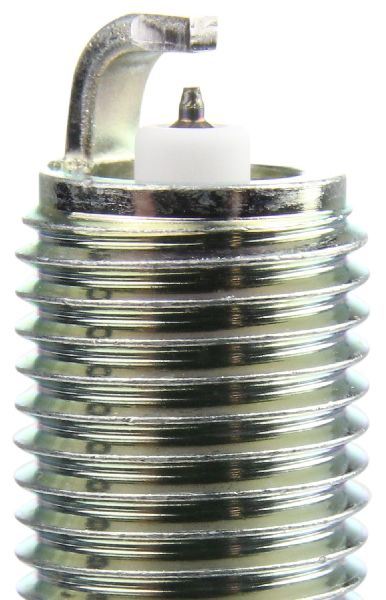
How to confirm: Remove and inspect the spark plugs. Look for worn or fouled electrodes, cracked porcelain, or an incorrect gap. Many owners replace them as a first step when a P0300 code appears, especially if mileage is over 60,000 miles. Resistance should measure between 3.0 and 7.5 kΩ.
Typical fix: Replace all four spark plugs with the correct OEM-spec (NGK or Denso) plugs. The OEM part number is PE5R-18-110.
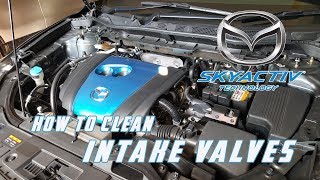
Est. part cost: $40-$80 for a set of 4 - Intake Valve Carbon Buildup 🟡 Medium Probability As a direct-injection (GDI) engine, fuel is sprayed directly into the cylinder, not over the intake valves. This means oil vapors from the PCV system can bake onto the valves over time, restricting airflow and causing misfires. This is more common on vehicles used for many short trips. One owner was quoted £2,800 by a dealer for this service.
How to confirm: This requires visual inspection of the intake valves, which involves removing the intake manifold. It is typically diagnosed after ruling out ignition and fuel system issues. An owner who performed the cleaning described the buildup as 'horrific'. A tell-tale sign can be misfire counts incrementing on a scan tool primarily during engine warm-up.
Typical fix: The intake valves need to be manually or media-blasted (e.g., walnut blasting) to remove the carbon deposits. Some owners have had success using spray-in cleaners like CRC Intake Valve Cleaner. This is a labor-intensive job, with independent shops reportedly charging around $500 or more.
Est. part cost: $20-$40 for gaskets, but labor is high - Vacuum Leak ⚪ Low Probability
How to confirm: Inspect all vacuum hoses, the air intake tube, and intake manifold gaskets for cracks, looseness, or damage. A smoke test is the most effective way to find a leak. A stuck-open purge valve has also been identified by owners as a cause.
Typical fix: Replace the leaking hose, gasket, or component.
Est. part cost: $10-$100
Rare But Worth Checking
- Dirty or Failing Mass Airflow (MAF) Sensor: An incorrect airflow reading can cause the wrong fuel mixture, leading to misfires. Cleaning the MAF sensor with a dedicated cleaner is a simple and inexpensive diagnostic step that some owners perform alongside spark plug changes.
- Clogged or Failing Fuel Injectors: While less common than ignition issues, a dirty or failing injector can cause a lean condition and misfire. This can sometimes be accompanied by a P0171 (System Too Lean) code.
- Increased Engine Oil Level: TSB #01-005-15-3030A links P0300 with an increased engine oil level. This is caused by improper PCM logic in cold weather (below 14°F / -10°C) with repeated short trips, where excess fuel accumulates in the crankcase. The fix involves a PCM software update and an oil change.
- Failing High-Pressure Fuel Pump (HPFP): A failing HPFP can cause a lack of fuel under load, leading to hesitation and misfires. This may be accompanied by code P0192 (Fuel Rail Pressure Sensor Circuit Low). Normal fuel rail pressure at idle should be approximately 300 PSI.
Diagnosis Steps
- Read all stored fault codes with an OBD-II scanner. Note any cylinder-specific codes (P0301-P0304) and freeze frame data.
- Inspect all ignition coils. Check the lot numbers on top. A 4-digit number indicates the failure-prone 'YUMEBISHI' brand; a 5-digit number is the updated 'MITSUBISHI' brand.
- If a specific cylinder is identified (e.g., P0301), swap its ignition coil with a known good cylinder's coil. Clear codes and drive. If the misfire code follows the coil (e.g., changes to P0302), the coil is bad.
- Inspect all spark plugs. Replace them if they are worn, fouled, or past their 75,000-mile service life. Ensure correct OEM-spec plugs are used.
- If coils and plugs are good, inspect the air intake system for vacuum leaks, paying close attention to the intake hose and air filter housing gasket.
- Clean the Mass Airflow (MAF) sensor using a dedicated MAF sensor cleaner.
- Using a capable scan tool, monitor Mode $06 data for misfire counts per cylinder, especially during a cold start and under load, to identify intermittent issues before a hard code sets.
- If misfires persist, especially on a high-mileage vehicle with a history of short trips, consider investigating intake valve carbon buildup.
- Check engine oil level. If it is high and smells of gasoline, reference TSB #01-005-15-3030A regarding fuel dilution and need for a PCM update.
Parts You'll Likely Need
- Ignition Coil
(OEM #PE20-18-100A)— A known failure point on this vehicle, as documented by Mazda TSB #01-014-16. The original YUMEBISHI coils are faulty; this is the updated MITSUBISHI part number.
Trusted brands: Mazda (OEM), NGK, Denso
OEM price range: $60-$90 per coil
Aftermarket price range: $25-$60 per coil - Spark Plug
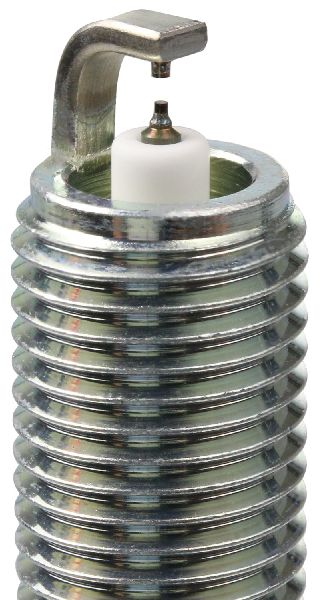
(OEM #PE5R-18-110)— A primary ignition component and a common cause of misfires when worn. A frequent first step in resolving P0300.
Trusted brands: NGK (ILKAR7L11), Denso
OEM price range: $15-$25 per plug
Aftermarket price range: $10-$18 per plug
Related Codes That Often Appear With This One
- P0301, P0302, P0303, P0304 — These codes specify which cylinder is misfiring (P0301 for cylinder 1, etc.). P0300 often appears alongside one of these if the misfire is persistent in one cylinder but also occurring randomly in others.
- P0171 — This code means 'System Too Lean (Bank 1)'. A vacuum leak, dirty MAF, or a fuel delivery problem (like a failing HPFP) can cause both a lean condition and a random misfire.
- P0192 — This code means 'Fuel Rail Pressure Sensor Circuit Low'. It often points to a failing high-pressure fuel pump, which can starve the engine of fuel under load and cause random misfires.
Technical Service Bulletins (TSBs) & Recalls
- 01-014-16-3208A: CHECK ENGINE LIGHT ON WITH DTC P0300-P0304 due to ignition coil failure.
- 01-007-19-3541: Rough idle and P0300 in cold temperatures.
- 01-005-15-3030A: CHECK ENGINE LIGHT ON WITH DTC P0300-P0304 AND INCREASED ENGINE OIL LEVEL.
Platform-Specific Known Issues
- TSB #01-014-16-3208A: Notes that some 2013-2016 CX-5s may experience a lack of power and rough idle with P0300 due to internal failure of YUMEBISHI-made ignition coils (4-digit lot number), especially in areas with large temperature swings. The fix is to replace them with updated MITSUBISHI-made coils (5-digit lot number).
- TSB #01-007-19-3541: Mentions that a rough idle and P0300 can occur in cold weather (around 32°F / 0°C), which may require a PCM software update.
- TSB #01-005-15-3030A: Connects the P0300 code with an increased engine oil level. This is due to a PCM logic issue in very cold weather causing fuel to dilute the oil. The repair involves an oil change and PCM reprogramming.
Mechanic-Grade Diagnostic Values
- Ignition Coil Primary Winding Resistance — expected: 0.49 - 0.57 Ω. Failure: A reading outside this range indicates a faulty coil.
- Ignition Coil Secondary Winding Resistance — expected: 9.5 - 11.1 kΩ. Failure: A reading outside this range indicates a faulty coil.
- Spark Plug Resistance — expected: 3.0 - 7.5 kΩ. Failure: Incorrect resistance can interfere with the ion-sensing system, even if the plug is new.
- High-Pressure Fuel Rail Pressure (at idle) — expected: ~300 PSI. Failure: Significantly lower pressure (e.g., under 100 PSI) indicates a failing high-pressure fuel pump.
- Low-Pressure Fuel System Regulator Pressure — expected: Approx. 62.4 PSI (430 kPa). Failure: Low pressure indicates a problem with the in-tank fuel pump or filter.
Hidden / Shadow Codes Worth Checking
- Mode $06 Misfire Counters: This is not a trouble code, but a function on advanced scan tools that shows raw misfire counts for each cylinder, even if the count is not high enough to trigger a P030x code. It is invaluable for detecting intermittent or developing misfires. (see via Use a scan tool with Mode $06 capabilities, such as a professional-grade scanner or software like FORScan with an OBD-II adapter.)
Scan Tool Commands That Help
- FORScan / Mazda IDS: Power Balance Test — This function allows the technician to disable one cylinder at a time to observe the corresponding drop in RPMs. A cylinder that causes little or no RPM drop when disabled is the one that is misfiring.
- FORScan / Mazda IDS: On-Demand Self Test — Can be used to command modules like the PCM to run an internal diagnostic routine, which may identify issues with sensor inputs or actuator circuits that are not presently active.
- Generic OBD-II Scanner with Live Data: Live Misfire Counters — To diagnose an intermittent misfire, watch the live counters while driving under specific conditions (e.g., low RPM, high load) to see which cylinder is accumulating misfires.
Wiring & Ground Locations
- G01 — Under left headlight assembly.. This is a primary ground point for the PCM. A poor connection here can cause a wide range of erratic engine management issues, including misfires.
- G03 — Left front of engine compartment.. This serves as a ground point for multiple engine components. Corrosion or a loose connection can lead to intermittent electrical problems.
- Ignition Coil Connector — Directly on top of each ignition coil.. Check for secure connection, corrosion, or damage to the wiring harness leading to the coils. A bad connection can mimic a failed coil.
Real Owner Repair Stories
- Mazdas247 user '50jeffrey' (2015 CX-5, 111k miles) — Intermittent P0300 code, engine stumbling.
❌ Tried (didn't work) Replacing spark plugs, Replacing ignition coils
✅ What actually fixed it Using a can of CRC Intake Valve cleaner to remove carbon buildup from the intake valves. The code went away after the cleaning. - Mazdas247 user 'jman1200' (2016 CX-5 Grand Touring 2.5L) — Hesitation/stumbling under acceleration, engine would not rev past 2000 RPM. Codes P0171 and P0192 were present.
❌ Tried (didn't work) Replacing the Mass Airflow (MAF) sensor, which only cleared the P0171 code.
✅ What actually fixed it Replacing the high-pressure fuel pump (HPFP). Live data showed fuel rail pressure was only 69 PSI at idle (well below spec). After replacing the HPFP, pressure returned to a normal ~300 PSI at idle and the issue was resolved.
"I Checked Everything" — The Actual Cause
- A lean condition (P0171) and random misfires (P0300) can be caused by a failing high-pressure fuel pump. A technician might perform a smoke test looking for a vacuum leak to explain the P0171 and find nothing. The actual cause is fuel starvation under load, which a smoke test cannot detect. The key is to check live fuel rail pressure data.
When the Usual Fixes Don't Work
- While the most common fixes are spark plugs and ignition coils, multiple owner accounts confirm that these do not always solve the problem. In a 2015 CX-5, new plugs and coils failed to fix a P0300, which was ultimately resolved by cleaning carbon from the intake valves. In another case with a 2016 model, misfire-like symptoms were caused by a failing high-pressure fuel pump, which was only diagnosed by checking live fuel pressure data after other ignition-related checks would have failed to find the cause.
OEM Part Supersession History
PE01-18-100, PE01-18-100A, P51B-18-100 (YUMEBISHI brand, 4-digit lot code)→PE20-18-100A (MITSUBISHI brand, 5-digit lot code)— Original YUMEBISHI-made coils were prone to internal failure, especially with large ambient temperature changes, as noted in TSB #01-014-16.
Model Year Variations Within This Range
- 2013 only: The 2013 model year was only available with the Skyactiv-G 2.0L engine. The more powerful 2.5L engine was introduced for the 2014 model year. Diagnostic procedures are similar, but parts like intake manifolds may differ.
- 2016: The 2016 model year received a mid-cycle refresh (sometimes called 2016.5) which included updated exterior/interior styling and the Mazda Connect infotainment system. However, the core powertrain and ignition system related to P0300 remained the same as the 2014-2015 models.
Diagnostic Flowchart
Other Known Issues on This Vehicle
Issues unrelated to this code that are worth knowing about as an owner of this generation:
- Failing LED Daytime Running Lights (DRL) 🟠 Medium — Common on 2016 models, leading to a recall. The LED strip flickers or fails completely. (Ref: Recall 4320A / NHTSA Campaign 20V063000)
- Infotainment 'Ghost Touch' 🟡 Low — Widespread issue where the touchscreen registers phantom inputs. Often temporarily fixed by disconnecting a ribbon cable, disabling touch functionality. (Ref: TSB 09-003/22 for later models, but the issue is well-documented on these years.)
- Leaking Hydraulic Drive Belt Tensioner 🟠 Medium — The tensioner's hydraulic damper can leak, causing a rattling noise from the engine bay and oil residue on the component. (Ref: TSB 01-008-23)
- Spontaneously Cracking Windshields 🟡 Low — Some owners report stress cracks forming without any impact, typically near the top of the windshield.
- Excessive Oil Consumption / Valve Seal Failure 🔴 High — Primarily affects 2.5L engines. Faulty exhaust valve seals can cause significant oil consumption, leading to low oil levels and potential engine damage. (Ref: TSB 01-011/22)
Used vs. New Parts: Buying Guide for This Vehicle
When a used part is the smart pick: For major components like a complete engine assembly, a used part from a reputable salvage yard is a cost-effective alternative to a new dealer engine. For individual components, used OEM parts (like ignition coils or sensors) from a low-mileage donor vehicle can be a better choice than new, cheap aftermarket parts.
Donor-vehicle mileage cap: roughly under 80000 miles for the part to have meaningful remaining life.
What to inspect on the donor part:
- Check for signs of front-end collision damage on the donor car, which could have damaged engine accessories.
- Ask for the VIN to check the donor vehicle's history if possible.
- For ignition coils, ensure they are the updated OEM 'MITSUBISHI' brand with a 5-digit lot code.
- Inspect for corrosion, cracks, or oil leaks on the part itself.
OEM-only on this vehicle (don't cheap out):
- Ignition Coils: Strongly recommended due to the integrated ion-sensing system. Aftermarket coils are a very common source of new problems.
- Mass Airflow (MAF) Sensor: OEM or the original supplier (e.g., Denso) is highly recommended as the PCM is sensitive to airflow readings.
- High-Pressure Fuel Pump (HPFP): Given its criticality and the precision required, OEM is the safest choice.
Aftermarket brands forum-validated for this vehicle:
- NGK (for spark plugs and ignition coils)
- Denso (for spark plugs and ignition coils)
Brands owners have reported issues with on this vehicle:
- Unbranded parts from online marketplaces like Amazon or eBay (e.g., 'partszen' brand was cited for immediate failure).
- Generic 'white box' or store-brand coils from large chain auto parts stores have been reported as problematic by forum members.
Real Owner Stories
Aggregated from forums and TSBs cited above. Mileages and costs reflect what owners reported in those sources.
2015 Mazda CX-5
Symptoms: Intermittent P0300 code that persisted even after replacing the spark plugs and ignition coils.
What fixed it: Using a can of CRC Intake Valve cleaner to remove carbon buildup.
Source hint: Mazdas247: 2015 CX-5 Misfire
2016 Mazda CX-5
Symptoms: A misfire-like condition accompanied by a P0192 code; live data showed fuel rail pressure was only 69 PSI at idle.
What fixed it: Replacing the high-pressure fuel pump, which restored pressure to the normal ~300 PSI.
Source hint: Mazdas247: High pressure fuel pump or pressure sensor issue?
2014 Mazda CX-5
Symptoms: P0300 code; owner noted the vehicle was sensitive to ambient temperature changes as described in the manufacturer TSB.
What fixed it: Replacing the ignition coils after identifying they were the failure-prone type.
Source hint: Reddit: 2014 CX-5 P0300 Code
2013-2016 Mazda CX-5 Skyactiv-G
Symptoms: Engine roughness that did not change when a specific coil was unplugged while running, whereas unplugging a good coil made the roughness worse.
What fixed it: Replacing the faulty ignition coil.
Source hint: Article Context
Related OBD-II Codes
Frequently Asked Questions
How can I tell if my 2013-2016 CX-5 has the faulty 'YUMEBISHI' ignition coils mentioned in TSB #01-014-16-3208A?
Why are my TCS and TPMS lights coming on at the same time as the Check Engine Light for a P0300 code?
My CX-5 has a P0300 and the oil level is too high. Are these related?
What is the recommended spark plug service interval to prevent misfires on the Skyactiv-G engine?
Can I use aftermarket ignition coils to fix my P0300 misfire?
Is there a specific TSB for P0300 misfires occurring only in cold weather?
Helpful Videos
Used OEM Parts in Stock


New Aftermarket Parts Available


The information in this article is provided for general reference and educational purposes only. Vehicle specifications, procedures, and part compatibility can vary by production date, trim level, and region. Always consult your vehicle's factory service manual and verify part numbers before purchasing or performing repairs. Safety-critical components such as airbags, seat belts, and braking systems should be installed by a qualified professional.
- Mazda CX-5:
- 🎬 Helpful Videos
- 🛍️ Shop This Part
- What's Unique About the 2013-2016 Mazda CX-5
- Symptoms You May Notice
- Most Likely Causes
- Rare But Worth Checking
- Diagnosis Steps
- Parts You'll Likely Need
- Related Codes That Often Appear With This One
- Technical Service Bulletins (TSBs) & Recalls
- Platform-Specific Known Issues
- Mechanic-Grade Diagnostic Values
- Hidden / Shadow Codes Worth Checking
- Scan Tool Commands That Help
- Wiring & Ground Locations
- Real Owner Repair Stories
- "I Checked Everything" — The Actual Cause
- When the Usual Fixes Don't Work
- OEM Part Supersession History
- Model Year Variations Within This Range
- Diagnostic Flowchart
- Other Known Issues on This Vehicle
- Used vs. New Parts: Buying Guide for This Vehicle
- Real Owner Stories
- 2015 Mazda CX-5
- 2016 Mazda CX-5
- 2014 Mazda CX-5
- 2013-2016 Mazda CX-5 Skyactiv-G
- Related OBD-II Codes
- Frequently Asked Questions
- 🎟️ Get 5% Off