

P0300 on 2016-2017 Lincoln MKX: Random Misfire Causes and 2.7L Engine Fixes
On the 2.7L EcoBoost engine, P0300 is a major warning for a known cylinder head defect causing oil consumption and requiring engine-out repairs. For the 3.7L V6, the cause is more likely standard maintenance items like worn spark plugs and ignition coils, a much less expensive fix.
- For a 2016-2017 Lincoln MKX with a P0300 code, the first step is to identify the engine (3.7L or 2.7L).
- If you have the 2.7L EcoBoost, immediately check for high oil consumption or exhaust smoke, as this code is a strong indicator of a known, serious cylinder head issue detailed in TSB 19-2243.
- If you have the 3.7L V6, the most likely causes are routine maintenance items: worn spark plugs and/or failing ignition coils.
- Do not simply replace spark plugs on a 2.7L with oil consumption issues without confirming the cylinder heads are good; the new plugs will likely fail again quickly.
- A flashing check engine light indicates a severe misfire that can quickly destroy the catalytic converters, requiring an immediate stop to driving.
What's Unique About the 2016-2017 Lincoln MKX
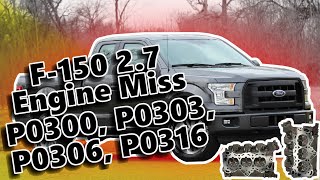
For the 2016-2017 Lincoln MKX, the engine type is critical. While any engine can have a P0300 from bad spark plugs, models with the optional 2.7L EcoBoost V6 are subject to a serious, well-documented engine problem. Manufacturer TSB 19-2243 confirms that misfires, rough idle, and excessive oil consumption 🎬 Watch: See a 2.7L EcoBoost running rough from this issue. on these engines can be due to faulty valve guides, a defect requiring cylinder head replacement. This elevates P0300 from a routine diagnostic to a potential sign of a very expensive, platform-specific failure. The issue was prevalent enough that it also affected the platform-mate Ford Edge.
Diagnostic Flowchart
Tap your situation to follow the diagnostic path that matches what you're seeing on this vehicle.
Symptoms You May Notice
- Rough or shaking idle
- Engine stumbling or hesitating during acceleration
- Flashing or solid Check Engine Light
- Noticeable loss of engine power
- Reduced fuel economy
- White or blue smoke from the exhaust, especially after a hot restart (2.7L EcoBoost)
- Excessive oil consumption, potentially 1 quart in less than 3,000 miles (2.7L EcoBoost)
- Oil pooling in spark plug wells due to leaking valve cover gaskets (3.7L V6)
- Replacing only spark plugs or a single ignition coil on a 2.7L EcoBoost when the root cause is the cylinder head. The new parts will quickly be fouled by oil, and the misfire will return.
- On the 3.7L V6, replacing ignition coils without addressing the leaking valve cover gaskets that are causing them to fail from oil saturation.
Most Likely Causes
- Defective Cylinder Head Valve Guides (2.7L EcoBoost Only) 🔴 High Probability A known manufacturing issue detailed in Ford/Lincoln TSB 19-2243 affects 2.7L engines built between April 1, 2016, and January 1, 2017. Oil passes the valve guides, fouls combustion, and causes misfires, smoke, and rapid oil loss.
How to confirm: Confirm the vehicle's build date against the TSB range. Perform an oil consumption test. A compression and/or cylinder leak-down test will confirm internal engine sealing issues. A borescope may reveal oil fouling on piston tops.
Typical fix: Replacement of both left and right cylinder head assemblies with updated parts. This is a very labor-intensive repair, estimated at over 26 hours by the manufacturer.
Est. part cost: $1500-$4200 - Worn or Fouled Spark Plugs 🔴 High Probability Spark plugs are a standard maintenance item. EcoBoost engines, being direct-injected and turbocharged, can be harder on plugs. Oil fouling from the cylinder head issue on the 2.7L can also ruin new plugs quickly, causing the misfire to return.
How to confirm: Remove spark plugs and inspect for wear on the electrode, carbon tracking, oil fouling, or incorrect gap. A plug that is wet with fuel or black with soot indicates a problem.
Typical fix: Replace all six spark plugs. It is highly recommended to use OEM Motorcraft plugs. For the 3.7L, oil-fouled plugs may also indicate a leaking valve cover gasket.
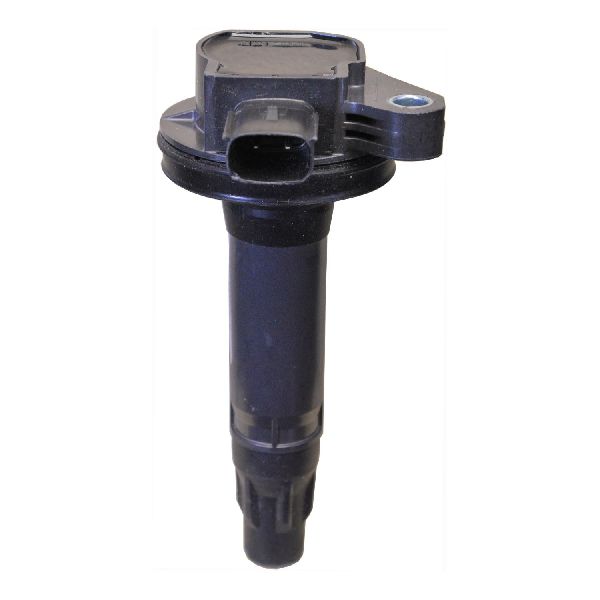
Est. part cost: $60-$120 - Failing Ignition Coils 🟡 Medium Probability Ignition coils are a common failure point on most modern vehicles as they age. Heat cycles eventually cause the internal windings to break down. On the 3.7L V6, oil leaking from the valve cover gasket can saturate the coil boots, causing them to fail.
How to confirm: Use a scan tool with Mode $06 to identify which cylinders have the highest misfire counts. Swap the ignition coil from a misfiring cylinder with one from a cylinder that is firing correctly. If the misfire follows the coil, the coil is bad.
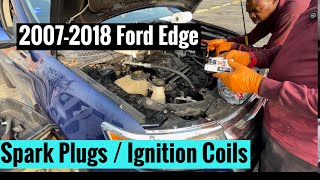
Typical fix: Replace the faulty ignition coil. It is best practice to replace all six coils at the same time as the spark plugs, especially on higher mileage vehicles, due to the labor involved in accessing the rear bank. 🎬 See this walkthrough for replacing MKX spark plugs and coils.
Est. part cost: $40-$90 per coil - Vacuum Leak ⚪ Low Probability
How to confirm: Listen for hissing sounds around the engine bay. Visually inspect all vacuum hoses and the PCV system for cracks. A smoke test is the most effective way to find a leak in the intake manifold, gaskets, or PCV system.
Typical fix: Replace the cracked hose or faulty gasket that is causing the leak.
Est. part cost: $10-$200
Rare But Worth Checking
- Faulty Powertrain Control Module (PCM): In some cases, the driver circuit within the PCM that fires a specific ignition coil can fail. This can mimic a bad coil, but the problem will persist on the same cylinder even after swapping coils. This was noted on the shared Ford Edge/Lincoln MKX platform.
- Clogged or Leaking Fuel Injectors: A dirty or failing fuel injector can disrupt the fuel spray pattern, leading to a lean misfire. This can trigger P0300 alongside specific cylinder codes and fuel trim codes like P0172/P0175.
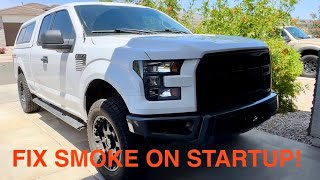
- Faulty Turbocharger Oil Supply Tube (2.7L EcoBoost): On some 2.7L EcoBoost engines, a separate issue can cause a puff of blue/white smoke on startup, which can sometimes be confused with the cylinder head problem. TSB 19-2188 and 20-2207 address this for F-150 models by replacing the left-hand turbo oil supply tube. 🎬 Watch: How to fix EcoBoost smoke on startup via TSB. While not directly for the MKX, it's a known issue on the engine family that could contribute to oil consumption and fouling.
Diagnosis Steps
- Scan for Codes: Use an OBD-II scanner to confirm P0300 and check for any other accompanying codes (e.g., P0301-P0306, P0524). Note if the check engine light is flashing.
- Check Misfire Data: Use a scan tool with live data or Mode $06 to see which specific cylinders are logging the most misfires.
- Assess Engine-Specific Symptoms (2.7L EcoBoost): Check the vehicle's build date. If it's between April 2016 and Jan 2017, be highly suspicious of the cylinder head issue. Check the oil level and condition. Look for signs of excessive oil consumption or blue/white smoke from the exhaust. If these are present, TSB 19-2243 is highly probable.
- Inspect Ignition System: Start with the cylinders identified in step 2. Remove and inspect the spark plugs for wear, damage, or oil fouling. On the 3.7L, check for oil in the spark plug tubes, indicating a valve cover gasket leak.
- Test Ignition Coils: Swap the ignition coil from a known misfiring cylinder with one from a good cylinder. Clear codes and run the engine. If the misfire code changes to the new cylinder (e.g., P0302 becomes P0304), the ignition coil is faulty.
- Check for Vacuum Leaks: With the engine running, listen for hissing noises. Visually inspect all vacuum and PCV hoses. For hard-to-find leaks, a smoke test is the most reliable method.
- Test Fuel System: If ignition and vacuum issues are ruled out, check fuel pressure to ensure the fuel pump is working correctly. Consider having the fuel injectors professionally cleaned or tested.
- Perform Mechanical Engine Tests: If the 2.7L cylinder head issue is suspected, a dealer or qualified shop should perform a compression test and a cylinder leak-down test. Low or inconsistent compression readings point to a serious internal engine problem requiring the TSB repair.
Parts You'll Likely Need
- Spark Plugs
(OEM #Motorcraft SP-594 (for 2.7L), Motorcraft SP-520 (for 3.7L))— This is the most common maintenance item to cause a misfire on any engine. They are a relatively inexpensive first step in diagnosis.
Trusted brands: Motorcraft, NGK
OEM price range: $12-$20 per plug
Aftermarket price range: $8-$15 per plug - Ignition Coil
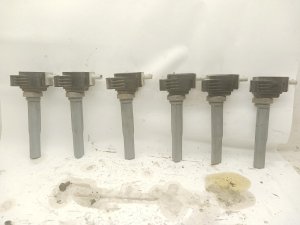
(OEM #Motorcraft DG-543 (for 2.7L), Motorcraft DG-520 (for 3.7L))— A failing coil cannot produce enough voltage to create a strong spark, leading to misfires. They are a common failure item after 80,000-100,000 miles.
Trusted brands: Motorcraft, Denso, Delphi
OEM price range: $70-$100 per coil
Aftermarket price range: $40-$80 per coil - Cylinder Head Assembly (2.7L EcoBoost)
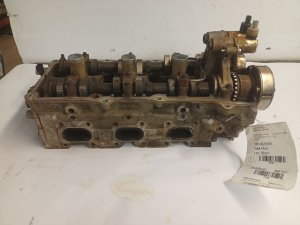
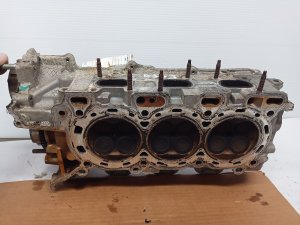
(OEM #FT4Z-6049-E (Left), FT4Z-6049-F (Right))— This is the specific fix for the known valve guide defect detailed in TSB 19-2243 for vehicles built between 4/1/2016 and 1/1/2017.
Trusted brands: Motorcraft (OEM)
OEM price range: $1000-$1500 per head
Aftermarket price range: $800-$1200 per head (Remanufactured) - Valve Cover Gasket Kit (3.7L V6) — On the 3.7L engine, the valve cover gaskets can become brittle and leak oil into the spark plug wells, which damages the ignition coils and causes misfires.
Related Codes That Often Appear With This One
- P0301-P0306 — These are cylinder-specific misfire codes. P0300 often appears with one or more of these, indicating which cylinders are most affected.
- P0316 — Indicates a misfire was detected within the first 1,000 engine revolutions after startup. This is commonly seen with other misfire codes and is specifically mentioned in TSB 19-2243.
- P0524 / P06DD — These codes indicate low engine oil pressure. They are specifically mentioned in TSBs related to the 2.7L EcoBoost's oil consumption and cylinder head issue, making them a strong indicator of the more serious problem.
Technical Service Bulletins (TSBs) & Recalls
- SSM 54504: Mentions P0300 with excessive oil consumption.
- SSM 46363: Links P0300 to oil consumption, smoke, and suspects cylinder heads.
- TSB 19-2243: Supersedes previous bulletins, explicitly details the 2.7L EcoBoost issue with valve guides causing oil consumption and misfires, and lists cylinder head replacement as the fix.
Platform-Specific Known Issues
- TSB 19-2243 documents a significant issue for 2016-2017 MKX models with the 2.7L EcoBoost engine built from April 1, 2016, to January 1, 2017. Symptoms include excessive oil consumption, white/blue exhaust smoke, rough idle, and DTCs including P0300. The cause is identified as faulty valve guides, and the prescribed repair is the replacement of both cylinder heads.
Mechanic-Grade Diagnostic Values
- Low-Pressure Fuel Pump Pressure (3.7L V6) — expected: 60-63 PSI. Failure: Pressure consistently below 60 PSI may indicate a weak in-tank fuel pump, leading to fuel starvation under load and random misfires.
- High-Pressure Fuel Pump Pressure (2.7L EcoBoost) — expected: Up to 2,000+ PSI. Failure: A significant drop from peak pressure, often accompanied by code P0087, indicates a failing high-pressure fuel pump (HPFP). This can cause hesitation, stalling, and misfires.
Hidden / Shadow Codes Worth Checking
- Mode $06 Misfire Data: While not a 'hidden code,' Mode $06 data provides raw misfire counts for each cylinder before they are high enough to trigger a specific P030x code. A technician can use a capable scan tool to view the misfire counters for Component IDs like $A2 through $AD to see which cylinders are starting to fail, even if only a P0300 is present. (see via An advanced OBD-II scan tool with Mode $06 capability.)
Scan Tool Commands That Help
- Ford IDS (Integrated Diagnostic System): Power Balance Test — This is a critical bidirectional test for diagnosing P0300. The Power Balance test graphically displays the power contribution of each cylinder in real-time. A technician can use this to instantly identify which cylinder(s) are weak or not contributing, helping to isolate the issue without having to swap parts.
- Ford IDS / FORScan: Crankshaft Position Sensor Relearn (Crank Relearn) — This procedure is required after replacing a crankshaft position sensor, PCM, or sometimes after major engine work. The PCM learns the specific profile of the crankshaft reluctor wheel to accurately detect misfires. If this profile is not learned or is corrupt, the PCM can falsely report P0300 or fail to identify the correct misfiring cylinder.
Wiring & Ground Locations
- G106 — On the front of the strut tower in the engine bay, to the right of the battery. A large wire runs from this lug to the negative battery terminal.. This is a primary body and engine ground point. Corrosion or a loose connection at G106 can cause insufficient voltage to the ignition coils and other engine sensors, leading to weak spark, erratic sensor readings, and a random misfire code P0300.
- Engine Compartment Fuse Box — In the front left area of the engine bay, near the battery.. This box contains fuses and relays for the Powertrain Control Module (PCM), ignition coils, and fuel injectors. A fault within this box, such as a corroded terminal or a failing relay, can interrupt power to critical components and cause a P0300 code.
Real Owner Repair Stories
- Reddit user on r/f150 (2016 Ford F-150 2.7L EcoBoost (platform-mate engine)) — Rough idle, engine stalling at stops, and CEL with codes P0300, P0304, P0305, P0306, P0019, P0025, and P054D.
❌ Tried (didn't work) Initial diagnosis pointed to multiple potential failures.
✅ What actually fixed it The combination of camshaft position timing codes (P0019, P0025) with the multiple misfire codes (P0300, P0304-P0306) strongly pointed to a failure in the Variable Camshaft Timing (VCT) system. The final fix was replacing the faulty VCT solenoids on Bank 2, which resolved both the timing and misfire issues.
OEM Part Supersession History
FT4Z-6049-B, FT4Z-6049-D→FT4Z-6049-E— Revision and improvement to address the valve guide issues present in the original cylinder heads on the 2.7L EcoBoost engine.
Helpful Videos
Used OEM Parts in Stock


New Aftermarket Parts Available



The information in this article is provided for general reference and educational purposes only. Vehicle specifications, procedures, and part compatibility can vary by production date, trim level, and region. Always consult your vehicle's factory service manual and verify part numbers before purchasing or performing repairs. Safety-critical components such as airbags, seat belts, and braking systems should be installed by a qualified professional.
- Lincoln MKX:
- 🎬 Helpful Videos
- 🛍️ Shop This Part
- What's Unique About the 2016-2017 Lincoln MKX
- Diagnostic Flowchart
- Symptoms You May Notice
- Most Likely Causes
- Rare But Worth Checking
- Diagnosis Steps
- Parts You'll Likely Need
- Related Codes That Often Appear With This One
- Technical Service Bulletins (TSBs) & Recalls
- Platform-Specific Known Issues
- Mechanic-Grade Diagnostic Values
- Hidden / Shadow Codes Worth Checking
- Scan Tool Commands That Help
- Wiring & Ground Locations
- Real Owner Repair Stories
- OEM Part Supersession History
- 🎟️ Get 5% Off