

P0300 on 2011-2015 Lexus CT Hybrid: Random Misfire Causes and Fixes
On a 2011-2015 Lexus CT Hybrid, code P0300 is almost always caused by a clogged Exhaust Gas Recirculation (EGR) system, leading to engine shudder during light acceleration. The most common fix is a thorough cleaning of the EGR valve, cooler, and intake manifold passages. Ignoring this can lead to costly head gasket failure, a well-documented progression for this engine.
- P0300 on a Lexus CT Hybrid is rarely a 'random' misfire; it is a strong indicator of a clogged EGR system.
- The primary symptom to watch for is an engine shudder or vibration under light acceleration.
- The correct fix is a preventative and thorough cleaning of the EGR valve, EGR cooler, and intake manifold passages. Simply replacing spark plugs is not enough.
- Do not ignore this code. A clogged EGR system will eventually lead to a much more expensive head gasket replacement.
What's Unique About the 2011-2015 Lexus CT HYBRID

The Lexus CT Hybrid shares its 2ZR-FXE powertrain with the third-generation Toyota Prius, which is notorious for a specific issue causing this code. The Exhaust Gas Recirculation (EGR) system is prone to significant carbon buildup. This buildup clogs the EGR cooler, the EGR valve, and most critically, the small EGR passages within the intake manifold. This disrupts airflow and cylinder balance, causing misfires, particularly under light acceleration when the EGR system is most active. This is not a predictable pattern for this engine, often leading to head gasket failure if not addressed.
Diagnostic Flowchart
Tap your situation to follow the diagnostic path that matches what you're seeing on this vehicle.
Symptoms You May Notice
- Check Engine Light is on or flashing
- Engine shudder or vibration, especially during light acceleration between 1,200-2,200 RPM
- Rough, shaky, or clattering engine noise on cold starts that may smooth out after a few moments
- Hesitation or stumbling when accelerating
- Reduced fuel economy
- Noticeable loss of engine power
- In advanced cases leading to head gasket issues, unexplained coolant loss or white exhaust smoke on startup
- Replacing only the spark plugs and ignition coils without cleaning the EGR system. The misfire is likely to return as the root cause has not been addressed.
- Assuming the head gasket is the primary failure without first inspecting the EGR circuit. A clogged EGR is often the cause of the head gasket failure.
- Replacing the intake manifold as suggested by TSB L-SB-0019-16 without attempting to clean it first. Many owners have successfully cleaned the original manifold, saving significant cost.
Most Likely Causes

- Clogged EGR System (Cooler, Valve, and Intake Manifold Passages) 🔴 High Probability The 2ZR-FXE engine design allows for heavy carbon accumulation in the EGR circuit, a well-documented issue confirmed by Lexus TSB L-SB-0019-16. This restricts exhaust gas flow, unevenly distributing it among cylinders and causing improper combustion and misfires.
How to confirm: Visually inspect the EGR valve, EGR pipe, and intake manifold ports (especially for cylinder 1) for thick, hard carbon deposits. The symptoms often appear predictably during light throttle. A quick diagnostic is to unplug the EGR valve connector; if the shudder disappears during a test drive (though it will set a new code), the EGR system is almost certainly clogged.
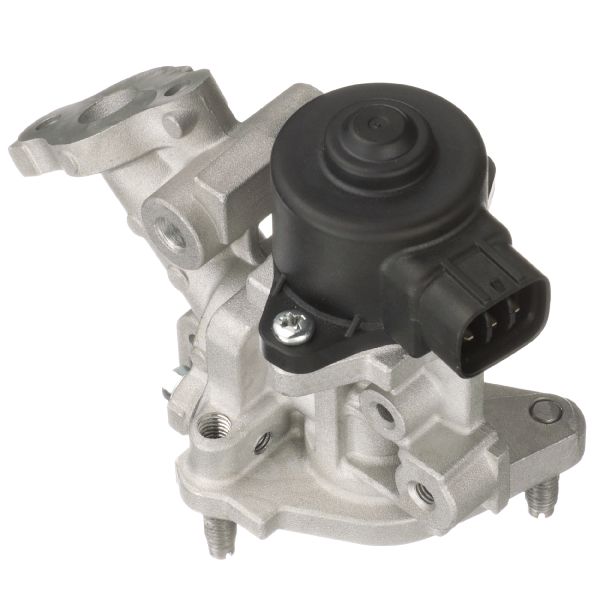
Typical fix: A thorough cleaning of the EGR valve, EGR cooler, and the passages within the intake manifold is required. Many owners recommend soaking the components in carburetor cleaner and using brush kits. All associated gaskets should be replaced during reassembly. Some owners proactively replace the EGR cooler and pipe instead of cleaning them.
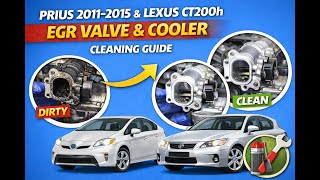
Est. part cost: $40-$80 for gaskets, up to $300+ for a new EGR cooler assembly. 🎬 Watch: Step-by-step guide to cleaning your EGR valve and cooler.
- Failed Head Gasket 🟡 Medium Probability This is often a direct consequence of a clogged EGR system. The blockage creates hotspots and uneven pressure distribution in the cylinder head, causing the head gasket to fail, typically between cylinders. Symptoms include a rough, shaky start-up that smooths out after a few moments as the heat expands the metal to temporarily seal the gap.
How to confirm: Perform a chemical block test (checking for exhaust gases in the coolant) or a cylinder leak-down test. Check for unexplained coolant loss, white exhaust smoke, or use a borescope to look for coolant-cleaned pistons after the engine has sat overnight.
Typical fix: Replacement of the cylinder head gasket and resurfacing of the cylinder head. This is a major repair. It is critical to also clean the entire EGR system at the same time to prevent a repeat failure.
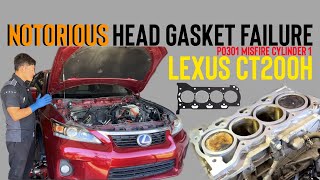
Est. part cost: $200-$500 for a head gasket set and bolts 🎬 See this walkthrough for replacing a failed cylinder head gasket.
- Worn or Fouled Spark Plugs 🟡 Medium Probability
How to confirm: Remove and inspect all four spark plugs. Look for excessive wear on the electrode, carbon fouling, or oil contamination. The recommended service interval is 120,000 miles.
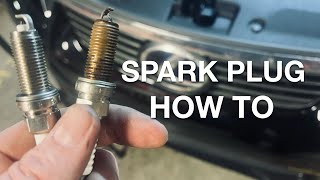
Typical fix: Replace all four spark plugs with high-quality Iridium plugs. Note: Toyota superseded the original Denso SC20HR11 plugs with the hotter SC16HR11 to help combat carbon fouling. Either is acceptable, but the SC16HR11 is the later recommendation. 🎬 Watch: How to properly replace spark plugs on your CT200h.
Est. part cost: $40-$80 - Faulty Ignition Coils ⚪ Low Probability
How to confirm: Using a capable OBD-II scanner, monitor the live misfire data for each cylinder. If misfires are concentrated on one cylinder (even with a P0300 code), swap that cylinder's ignition coil with a known good one and see if the misfire count follows the coil.
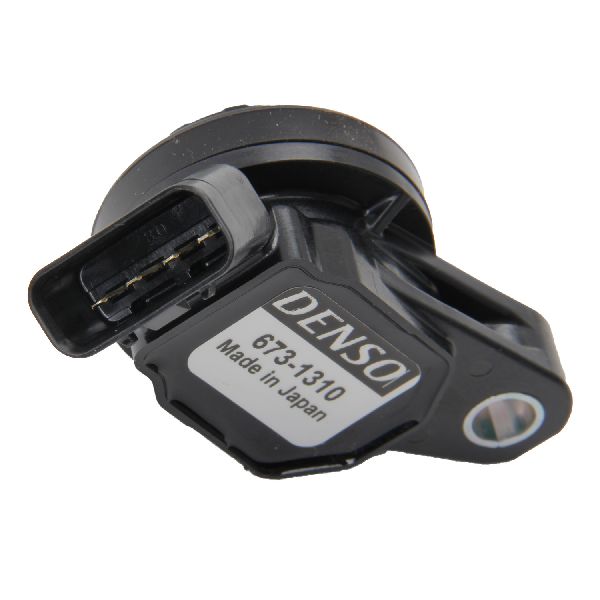
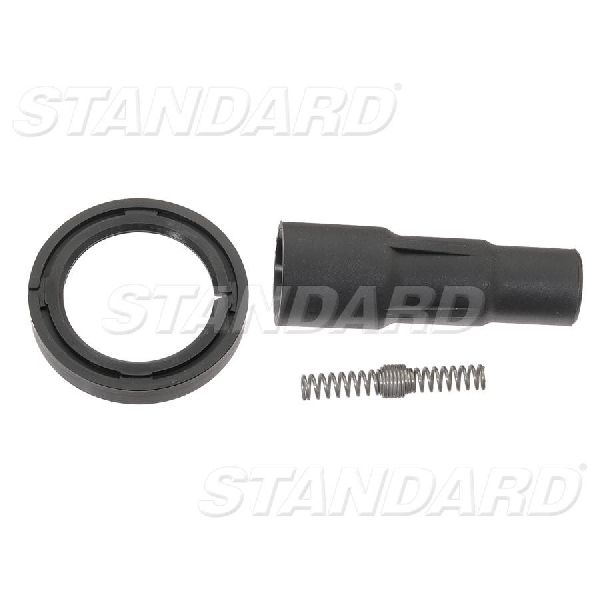
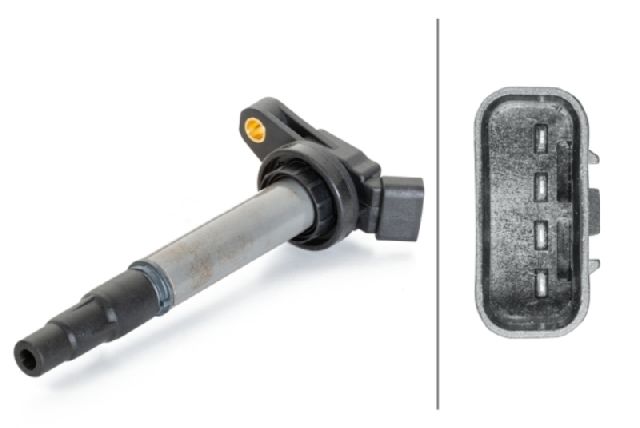
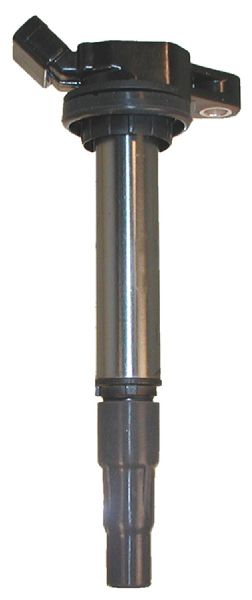
Typical fix: Replace the single faulty ignition coil. It is not typically necessary to replace all four unless they are all old or failing.
Est. part cost: $50-$110 per coil
Rare But Worth Checking
- Clogged or Failing Fuel Injectors: If the EGR system is clean and ignition components are good, dirty injectors can cause a lean condition and misfires. Professional cleaning or replacement may be necessary. A user on a Reddit forum was still getting misfire codes after replacing the head gasket, plugs, and coils, suspecting the injectors were the final culprit.
- Intake Manifold Gasket Leak: A leak in the intake manifold gasket can introduce unmetered air into the engine, disrupting the air-fuel ratio and causing random misfires. This gasket is always replaced during an EGR cleaning service.
- Sticking PCV Valve: A stuck Positive Crankcase Ventilation (PCV) valve can alter crankcase pressure and contribute to oil entering the intake, exacerbating carbon buildup. While there's no scheduled replacement interval, it's an inexpensive part to replace during an EGR service.
Diagnosis Steps
- Read the codes with an OBD-II scanner and note any other codes present, especially cylinder-specific misfires (P0301-P0304), EGR codes (P0401), or air-fuel imbalance codes (P219A).
- Check the freeze frame data to see the engine conditions (speed, load, temperature) when the code was set. Misfires under light acceleration (1200-2200 RPM) strongly point to the EGR system.
- Perform a quick diagnostic: with the engine cool, unplug the electrical connector to the EGR valve. Drive the car and see if the shuddering symptom disappears. If it does, the EGR circuit is clogged. Remember to plug it back in afterwards.
- Inspect the spark plugs for wear, fouling, and correct gap. Replace if they are due (120,000-mile interval) or in poor condition. Consider using the updated, hotter SC16HR11 plugs.
- Inspect the ignition coils. If a specific cylinder is misfiring, swap the coil with another cylinder to see if the misfire follows.
- Crucially, inspect the EGR system. Remove the EGR pipe, valve, cooler, and intake manifold. Expect to find them heavily clogged with hard carbon deposits. This is the most probable cause.
- If the EGR system is clean and ignition parts are good, test for a head gasket failure. Use a block tester to check for exhaust gas in the coolant and perform a cooling system pressure test.
- While the intake manifold is off, consider replacing the inexpensive PCV valve located underneath it.
Parts You'll Likely Need

- Intake Manifold Gasket
(OEM #17177-37030 (replaces 17177-0T020))— This must be replaced when removing the intake manifold for cleaning to ensure a proper seal.
Trusted brands: Lexus/Toyota OE, Fel-Pro (MS 97144)
OEM price range: $25-$40
Aftermarket price range: $15-$25 - Spark Plug
(OEM #90919-01275 (Denso SC16HR11))— Worn or fouled spark plugs are a common maintenance item. Toyota superseded the original SC20HR11 with the hotter SC16HR11 to help burn off carbon.
Trusted brands: Denso (SC16HR11), NGK
OEM price range: $15-$20 each
Aftermarket price range: $7-$15 each - EGR Pipe Sub-Assembly w/ Cooler
(OEM #25601-37010)— This is the core component that clogs. Many owners choose to replace it with a new unit rather than attempting the difficult cleaning process.
Trusted brands: Toyota OE
OEM price range: $370-$550
Aftermarket price range: N/A - Ignition Coil
(OEM #90919-02258)— While less common than EGR issues, an ignition coil can fail and cause misfires.
Related Codes That Often Appear With This One
- P0301, P0302, P0303, P0304 — These codes specify which cylinder is misfiring (1, 2, 3, or 4). They frequently accompany P0300 and help narrow down the diagnostic process. A clogged EGR often affects cylinder 1 most severely.
- P0401 — This code means 'EGR Flow Insufficient Detected.' It is a strong confirmation that a clogged EGR system is the root cause of the P0300 misfire.
- P219A — Bank 1 Air-Fuel Ratio Imbalance. This code often appears alongside the P0300 and EGR-related codes, as the clogged passages lead to an imbalanced air/fuel mixture among the cylinders.
Technical Service Bulletins (TSBs) & Recalls
- L-SB-0019-16: Confirms that a 'runs rough' condition with P0300-P0304 codes during light acceleration can be caused by clogged EGR ports in the intake manifold. The official fix is intake manifold replacement.
- L-SB-0174-17: Mentions that a rough idle and/or tapping noise from the HV transaxle after a cold soak can illuminate the check engine light with P0300-P0304 codes.
Platform-Specific Known Issues
- The 2ZR-FXE engine is known for carbon buildup in the EGR circuit, causing a shudder and setting P0300, especially during light acceleration. This is documented in Lexus TSB L-SB-0019-16, which recommends intake manifold replacement, though cleaning is a viable DIY option.
- If the EGR clogging is ignored, it frequently leads to head gasket failure. This is a widely discussed failure pattern in owner communities for both the CT Hybrid and Toyota Prius.
- Some models may exhibit a rough idle and tapping noise from the HV transaxle after a cold start, which can also trigger a P0300 code, as noted in TSB L-SB-0174-17.
Mechanic-Grade Diagnostic Values
- Fuel Injector Resistance — expected: 11.6 to 12.4 Ω at 20°C (68°F). Failure: Resistance outside the specified range.
- Ignition Coil Primary Resistance — expected: 0.49 to 0.57 Ω. Failure: Resistance outside the specified range.
- Ignition Coil Secondary Resistance — expected: 9.5 to 11.1 kΩ. Failure: Resistance outside the specified range.
- Fuel Pressure — expected: Approximately 40 PSI at idle and when revving.. Failure: Significantly lower pressure (e.g., 24 PSI) indicates a weak fuel pump or clogged filter.
Hidden / Shadow Codes Worth Checking
- Mode $06, Test ID $53 (Ford example, Toyota may vary): Mode $06 provides raw data from the ECM's self-tests, including misfire counts per cylinder for the current and last ten driving cycles. This can reveal intermittent misfires that aren't yet severe enough to set a P030x code. A high count on one or more cylinders points to a developing issue with a plug, coil, or injector. (see via A professional-grade scan tool or an OBD-II app capable of displaying Mode $06 data. The data is often presented in hexadecimal and may require the tool's software to translate it into readable counts.)
Scan Tool Commands That Help
- Toyota Techstream: Active Test: Control the Fuel Pump / Speed — To verify fuel pump operation and check fuel pressure when a fuel delivery issue is suspected as the cause of the misfire.
- Toyota Techstream: Active Test: Control the Injection Volume for A/F Sensor — To manipulate the fuel mixture and observe the reaction of the Air/Fuel ratio sensors, helping to diagnose fuel control issues.
- Toyota Techstream: Data List: Misfire RPM, Misfire Load, Cylinder #X Misfire Count — To view live misfire counts for each cylinder and to check the freeze frame data showing the engine speed and load when the P0300 code was originally set.
- Toyota Techstream: Check Mode — This mode increases the sensitivity of the ECM for detecting malfunctions, including misfires. It can help identify intermittent issues during a test drive that may not be caught in Normal Mode.
Wiring & Ground Locations
- ECM (Engine Control Module) — Located on the left side of the engine compartment.. The ECM is the central computer that monitors all engine sensors, including the crank and cam sensors used to detect misfires. It also controls the ignition coils and fuel injectors. Poor connections or internal faults can cause misfire codes.
- Engine Ground Points — Key grounds are located on the engine block and cylinder head. For example, a main ground point is on the rear of the cylinder head. Another is on the vehicle frame near the front left of the engine compartment.. A poor engine ground connection can cause erratic behavior in the ignition system, leading to weak spark and random misfires. The ignition coils rely on a solid ground path to function correctly.
- Ignition Coil Connector Pins (IGT, IGF) — On the 4-pin connector for each ignition coil. The IGT (Ignition Timing) signal comes from the ECM to fire the coil, and the IGF (Ignition Confirmation) signal is sent back to the ECM to confirm the spark occurred.. A technician can use an oscilloscope to check for proper IGT and IGF waveforms at the coil connector to diagnose issues with the coil itself or the wiring to the ECM.
Real Owner Repair Stories
- CarComplaints.com user report (2013 Lexus CT200h) — Engine rattle and knock on cold start, followed by P0300, P0301, and P0303 codes.
❌ Tried (didn't work) Thorough cleaning of the EGR system (valve, cooler, intake manifold), Replacing ignition coils with new ones, Replacing fuel injectors with new ones, Swapping coils and injectors between cylinders (misfire did not follow the parts)
✅ What actually fixed it A leak-down test confirmed a head gasket leak in cylinder 3. The head gasket was the root cause of the misfire, which persisted even after the more common EGR and ignition system components were addressed. - PriusChat forum user xmaveric (2010 Toyota Prius (same 2ZR-FXE powertrain)) — P0300, P0302, P0304, and P0401 codes.
❌ Tried (didn't work) The user opted to replace parts rather than clean them due to time constraints.
✅ What actually fixed it The user replaced the PCV valve, EGR valve, EGR cooler, and the entire intake manifold with new parts. After the repair, new codes (P2111, P0A0F) and a 'Check Hybrid System' message appeared, suggesting a potential issue with a forgotten connector (like the throttle body) or a problem with reseating the main hybrid battery plug during the repair. This highlights the importance of careful reassembly.
OEM Part Supersession History
Unknown→12204-37010— Standard part number for the PCV valve fitting the 2ZR-FXE engine across multiple Toyota/Lexus models.
Heads up: This part is widely used, but always verify fitment for the specific model year. Aftermarket versions are available but may have lower quality control.
Model Year Variations Within This Range
- 2011-2014: According to Lexus TSB L-SB-0096-16, vehicles produced before VIN JTHKD5BH#E2180953 may experience excessive oil consumption. The piston and piston ring assembly were updated in later production to address this. While not a direct cause of P0300, excessive oil consumption can lead to carbon buildup and fouled spark plugs, contributing to misfires.
Helpful Videos
Used OEM Parts in Stock


New Aftermarket Parts Available


The information in this article is provided for general reference and educational purposes only. Vehicle specifications, procedures, and part compatibility can vary by production date, trim level, and region. Always consult your vehicle's factory service manual and verify part numbers before purchasing or performing repairs. Safety-critical components such as airbags, seat belts, and braking systems should be installed by a qualified professional.
- Lexus CT HYBRID:
- 🎬 Helpful Videos
- 🛍️ Shop This Part
- What's Unique About the 2011-2015 Lexus CT HYBRID
- Diagnostic Flowchart
- Symptoms You May Notice
- Most Likely Causes
- Rare But Worth Checking
- Diagnosis Steps
- Parts You'll Likely Need
- Related Codes That Often Appear With This One
- Technical Service Bulletins (TSBs) & Recalls
- Platform-Specific Known Issues
- Mechanic-Grade Diagnostic Values
- Hidden / Shadow Codes Worth Checking
- Scan Tool Commands That Help
- Wiring & Ground Locations
- Real Owner Repair Stories
- OEM Part Supersession History
- Model Year Variations Within This Range
- 🎟️ Get 5% Off