

P0300 on 2012-2016 Land Rover Range Rover Evoque: Random Misfire Causes & Fixes
P0300 on a 2012-2016 Range Rover Evoque indicates random engine misfires. The most common culprits are worn spark plugs or failing ignition coils. A software update or a faulty high-pressure fuel pump are also known issues documented in Land Rover service bulletins. Less common causes include vacuum leaks from the PCV system or carbon buildup on intake valves.
- P0300 on a 2012-2016 Evoque means random cylinders are misfiring.
- Start your diagnosis with the most common and affordable fixes: spark plugs and ignition coils.
- Be aware of Land Rover-specific issues; the cause could be a software bug (TSB LTB00799NAS1) or a faulty high-pressure fuel pump (TSB LTB00730NAS1).
- If the check engine light is flashing, pull over immediately to prevent expensive damage to the catalytic converter.
- Due to the direct-injection engine, carbon buildup on intake valves is a possible long-term cause of misfires.
What's Unique About the 2012-2016 Land Rover RANGE ROVER EVOQUE
The 2012-2016 Evoque uses a 2.0L turbocharged direct-injection (GDI) engine, a variant of the Ford 2.0L EcoBoost, which can be tough on spark plugs and sensitive to fuel system issues. Land Rover has issued several Technical Service Bulletins (TSBs) for this model that directly link P0300 to specific problems. These include a potential software calibration error that can falsely trigger the code (LTB00799NAS1) and a known issue with the high-pressure fuel pump's metering valve (LTB00730NAS1). These platform-specific issues mean diagnosis shouldn't stop at just spark plugs and coils, as dealership-level software updates or specialized fuel system diagnostics may be required.
Diagnostic Flowchart
Tap your situation to follow the diagnostic path that matches what you're seeing on this vehicle.
Symptoms You May Notice
- Rough or shaky engine idle.
- Hesitation or stumbling during acceleration.
- Noticeable loss of engine power.
- Flashing or solid Check Engine Light.
- Difficulty starting the engine.
- Reduced fuel economy.
- Fuel smell from the exhaust due to unburnt fuel.
- Replacing only spark plugs when the underlying issue is a faulty ignition coil or fuel system problem.
- Replacing oxygen sensors, which can be a cause of misfires but is less common than ignition or fuel delivery issues on this platform. An O2 sensor is more likely to be a symptom of the misfire (due to unburnt fuel) than the cause.
- Replacing the Mass Airflow (MAF) sensor without proper diagnosis. While a faulty MAF can cause misfires, vacuum leaks are a more common source of incorrect air metering.
Most Likely Causes
- Worn or Fouled Spark Plugs 🔴 High Probability Turbocharged engines like the Evoque's 2.0L Si4 place higher demands on spark plugs, leading to a shorter service life. Fouling from oil or carbon can also impede the spark.
How to confirm: Visually inspect the spark plugs for wear, carbon deposits, or oil fouling. The recommended service interval should also be checked. A gap check can also reveal excessive wear.
Typical fix: Replace all four spark plugs as a set. Use high-quality Iridium plugs as specified by the manufacturer, such as NGK ILTR6R8G.
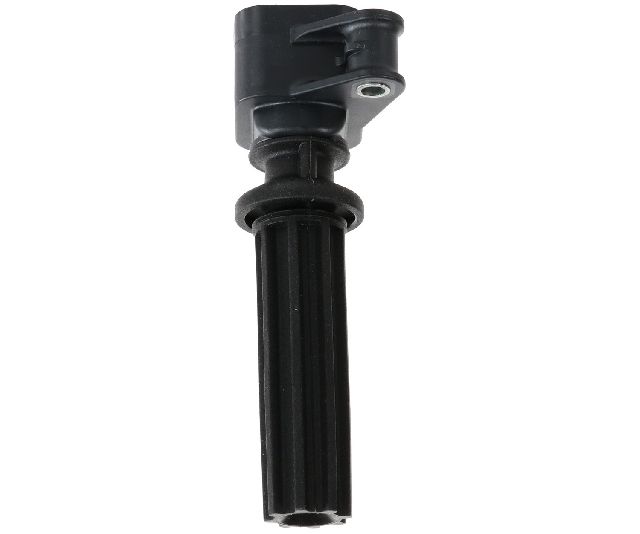
Est. part cost: $60-$120 - Failing Ignition Coils 🔴 High Probability Ignition coils are a common failure point on many modern engines, leading to a weak or non-existent spark. Heat cycles in the compact engine bay contribute to their eventual failure.
How to confirm: If a specific cylinder misfire code (e.g., P0301, P0302) is also present, swap the ignition coil from the misfiring cylinder with one from a known good cylinder. If the code follows the coil, the coil is bad.
Typical fix: Replace the faulty ignition coil. It is often recommended to replace them as a set if they are original and have high mileage. The OEM is often Bosch.
Est. part cost: $40-$90 per coil - PCM Software Calibration Error 🟡 Medium Probability TSB #LTB00799NAS1 explicitly states that P0300 can be stored due to an OBD calibration error with no actual hardware fault present.
How to confirm: A Land Rover dealership or a qualified independent shop with access to Land Rover's diagnostic software (SDD/Pathfinder) can check the current software version and see if an update is available.
Typical fix: Update the Powertrain Control Module (PCM) software to the latest version. This is a dealer or specialist repair.
Est. part cost: $0 (labor cost of $150-$300 will apply if out of warranty) - Faulty High-Pressure Fuel Pump (HPFP) 🟡 Medium Probability TSB #LTB00730NAS1 identifies an internal fault with the HPFP's metering valve as a potential cause for misfires and code P0300. This is a known weak point on this direct-injection engine.
How to confirm: Requires specialized tools to monitor high-side fuel pressure. A professional technician will need to compare requested vs. actual fuel pressure readings under load.
Typical fix: Replacement of the high-pressure fuel pump.
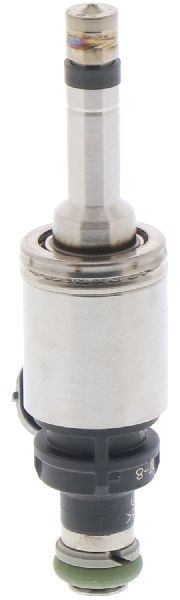
Est. part cost: $350-$700 - Leaking Fuel Injectors ⚪ Low Probability Direct injection (GDI) fuel injectors operate under very high pressure and can fail, leak, or become clogged. A special service message (SSM71894) was issued to investigate misfires on startup related to injectors.
How to confirm: A technician can perform a fuel injector balance test or remove the injectors for flow testing. The diagnostic procedure in SSM71894 involves monitoring misfire counts on a cold start.
Typical fix: Replace the faulty fuel injector(s). It's often recommended to replace them as a set.
Est. part cost: $100-$250 per injector
Rare But Worth Checking
- Vacuum Leak (PCV System): A leak in the intake manifold, vacuum hoses, or PCV system can introduce unmetered air, causing a lean condition and random misfires. A failed PCV valve can cause a whistling sound, rough idle, and oil consumption, all of which can be associated with a P0300 code.
- Carbon Buildup on Intake Valves: As a direct-injection engine, the Evoque is susceptible to carbon buildup on the intake valves over time, which can impede airflow and cause misfires. This typically requires professional cleaning (e.g., walnut blasting) and is not a simple DIY fix.
- Low Engine Compression: Internal engine damage, such as a failing head gasket, worn piston rings, or timing chain issues, can cause a loss of compression, leading to misfires. A forum user reported a P0300/P0305 caused by a head gasket leak confirmed by a compression test. This is a serious mechanical issue requiring significant repair.
Diagnosis Steps
- Use an OBD-II scanner to confirm P0300 and check for any other codes, especially specific cylinder misfire codes (P0301-P0304) and fuel trim codes (P2096/P2097).
- Inspect the ignition system. Remove and examine all four spark plugs for signs of wear, damage, or fouling. Ensure they are the correct type (Iridium) and gapped properly.
- If a specific cylinder is identified, swap its ignition coil with another cylinder's coil to see if the misfire code follows the coil. This is a definitive test for a bad coil.
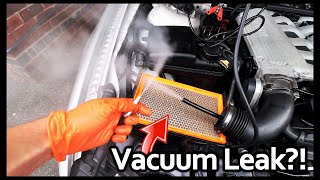
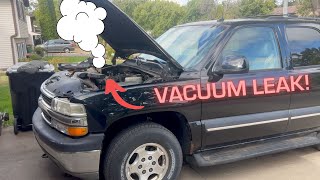
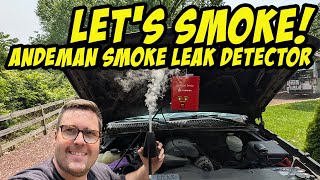
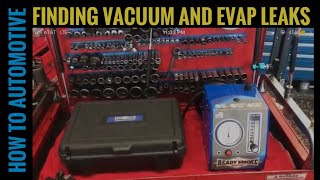
- Check for vacuum leaks. Listen for hissing sounds around the engine bay. A smoke test is the most effective way to find leaks in the intake manifold, PCV hoses, and other vacuum lines.
- Check for available TSBs and PCM software updates. A call to a Land Rover dealer with your VIN can confirm if updates like LTB00799NAS1 are applicable.
- If fuel delivery is suspected, test the fuel pressure on both the low and high-pressure sides to check for a weak fuel pump, as suggested by TSB #LTB00730NAS1. This step typically requires a professional.
- For persistent issues, perform an engine compression test to rule out mechanical problems like a bad head gasket or worn piston rings. A significant loss of compression in one or more cylinders points to a major internal engine fault.
Parts You'll Likely Need
- Spark Plugs
(OEM #LR025605)— Worn spark plugs are the most frequent cause of misfires on turbocharged engines.
Trusted brands: NGK (ILTR6R8G), Bosch, Denso (ITV22)
OEM price range: $25-$35 per plug
Aftermarket price range: $15-$25 per plug - Ignition Coil
(OEM #LR084889 (supersedes LR030637))— Ignition coils provide the spark and are a common failure item that directly causes misfires.
Trusted brands: Bosch (0221604700), Delphi, NGK
OEM price range: $90-$120
Aftermarket price range: $40-$90. - High-Pressure Fuel Pump
(OEM #LR025599 (supersedes LR030860))— Specifically cited in a TSB as a cause for misfires on this vehicle due to an internal metering valve fault.
Trusted brands: Bosch, Genuine Land Rover
OEM price range: $600-$800
Aftermarket price range: $350-$600.
Related Codes That Often Appear With This One
- P0301, P0302, P0303, P0304 — These codes indicate a misfire on a specific cylinder (1, 2, 3, or 4). They often accompany P0300 to help pinpoint the source of the problem, even if the misfire moves between cylinders.
- P1315 — This is a manufacturer-specific code that is frequently listed alongside P0300 in Land Rover TSBs (LTB01101NAS4, LTB00730NAS1) related to misfires, indicating a persistent misfire that could damage the catalyst.
- P2096 / P2097 — These codes indicate a lean fuel mixture ('Post Catalyst Fuel Trim System Too Lean'). TSB #LTB00902NAS2 states that these codes can be stored first, leading to the misfire codes like P0300 as the engine tries to compensate.
Technical Service Bulletins (TSBs) & Recalls
- LTB00799NAS1
- LTB00730NAS1
- LTB00902NAS2
- LTB01101NAS4
- SSM71894
Platform-Specific Known Issues
- Software Glitch: TSB #LTB00799NAS1 notes that P0300 can be triggered by a software calibration error, requiring a PCM update rather than a hardware replacement. This should be an early consideration to avoid unnecessary part replacement.
Mechanic-Grade Diagnostic Values
- Short-Term Fuel Trim (STFT) and Long-Term Fuel Trim (LTFT) — expected: Within ±10%. Failure: Values consistently outside of ±10% indicate the PCM is compensating for a lean (positive values) or rich (negative values) condition, which can lead to misfires.
- Spark Plug Gap — expected: 0.7mm - 0.8mm (approx. 0.028" - 0.031"). Failure: An incorrect or overly large gap due to wear can prevent a strong spark, especially under boost.
Hidden / Shadow Codes Worth Checking
- N/A (Symptom-Based Diagnostics): Land Rover's dealer-level software, SDD (Symptom Driven Diagnostics), does not rely on simple hidden codes. Instead, it prompts the technician to enter vehicle symptoms, then analyzes existing fault codes (like P0300) in context with live data to create a guided diagnostic plan. It can automatically cross-reference TSBs and recommend specific pinpoint tests, acting as an expert system beyond what a standard scanner can do. (see via JLR SDD (Symptom Driven Diagnostics) software, typically used by dealers or specialist shops.)
Scan Tool Commands That Help
- JLR SDD (Symptom Driven Diagnostics): Recommendations / Guided Diagnostics — After reading DTCs, this function suggests a step-by-step diagnostic path based on the specific codes and known issues, often linking directly to relevant TSBs or wiring tests.
- JLR SDD (Symptom Driven Diagnostics): Configure existing module — This is used to apply software updates to a module, such as the PCM. It's the required step to fix the known software calibration error described in TSB LTB00799NAS1.
- JLR SDD (Symptom Driven Diagnostics): Clear adaptions — After replacing a major component like a throttle body, fuel pump, or injectors, clearing the learned engine adaptions forces the PCM to relearn values with the new parts, which can resolve performance issues.
Wiring & Ground Locations
- Engine Ground Point (for jump-starting) — A specific bolt on the engine mounting, located on the right-hand side of the engine bay just behind the windscreen washer filler cap.. While intended for jump-starting, this is a primary engine-to-chassis ground. A loose or corroded connection here can cause unstable voltages for the entire engine management system, including the PCM and ignition coils, leading to erratic behavior and misfires.
- G1D129B — Lower left front of the engine compartment.. This is a major ground point in the engine bay. A fault at this location could affect multiple sensors or actuators related to engine operation.
- G1D130C — Left front of the engine compartment.. Serves as a ground for various components in the front of the engine bay. Poor contact can introduce electrical noise and intermittent faults.
OEM Part Supersession History
LR030637→LR084889— Updated part design or manufacturer change for the ignition coil.LR030860→LR025599— Updated part design for the high-pressure fuel pump.
Heads up: Part numbers are often listed together, indicating the newer part replaces the older one.
Model Year Variations Within This Range
- 2012-2015 vs 2016: For the 2016 model year, Land Rover began introducing its own 2.0L 'Ingenium' petrol engine. While the vehicle in this article is the 2.0L Si4 (Ford EcoBoost variant), a 2016 Evoque owner must verify which engine their vehicle is equipped with, as parts and diagnostics may differ.
- 2012-2013 vs 2014-2016: The 2014 model year introduced a 9-speed ZF automatic transmission, replacing the previous 6-speed automatic. This change affects the Powertrain Control Module's (PCM) software and overall driveline behavior, which could have indirect effects on how misfires are detected and reported.
Helpful Videos


Used OEM Parts in Stock


New Aftermarket Parts Available


The information in this article is provided for general reference and educational purposes only. Vehicle specifications, procedures, and part compatibility can vary by production date, trim level, and region. Always consult your vehicle's factory service manual and verify part numbers before purchasing or performing repairs. Safety-critical components such as airbags, seat belts, and braking systems should be installed by a qualified professional.
- Land Rover RANGE ROVER EVOQUE:
- 🎬 Helpful Videos
- 🛍️ Shop This Part
- What's Unique About the 2012-2016 Land Rover RANGE ROVER EVOQUE
- Diagnostic Flowchart
- Symptoms You May Notice
- Most Likely Causes
- Rare But Worth Checking
- Diagnosis Steps
- Parts You'll Likely Need
- Related Codes That Often Appear With This One
- Technical Service Bulletins (TSBs) & Recalls
- Platform-Specific Known Issues
- Mechanic-Grade Diagnostic Values
- Hidden / Shadow Codes Worth Checking
- Scan Tool Commands That Help
- Wiring & Ground Locations
- OEM Part Supersession History
- Model Year Variations Within This Range
- 🎟️ Get 5% Off