

P0300 on 2017-2020 Kia Forte: Random Misfire Causes & Fixes
For a 2017-2020 Kia Forte with code P0300, the cause is often year-specific and addressed by a Technical Service Bulletin (TSB). Check for TSBs first. 2017-2018 models may need an ECU update (TSB SA285, TSBENG208_R2) or have faulty ignition coils/RFI springs (TSB SA321). 2018 models built from Nov 2017 to Feb 2018 often have defective spark plugs (TSBENG186). 2019-2020 models frequently require an ECU software update (TSB TSB_FUE045, TSBENG204_R1).
- Always check for vehicle-specific TSBs before buying parts. For the 2017-2020 Forte, the fix for P0300 is often a dealer software update.
- If you own a 2018 Forte, your first step should be to replace the spark plugs, due to a known manufacturing defect.
- A flashing check engine light means stop driving as soon as it is safe to do so to prevent catastrophic damage to your catalytic converter.
- If software updates and spark plugs don't solve the issue, the next most likely culprits are ignition coils, followed by vacuum leaks.
What's Unique About the 2017-2020 Kia FORTE

Unlike a generic misfire diagnosis, the 2017-2020 Forte has highly specific, documented issues. Kia released multiple Technical Service Bulletins (TSBs) addressing this exact code. For 2018 models, a batch of spark plugs with cracked porcelain was a known manufacturing defect. For many 2017, 2019, and 2020 models, the problem was in the ECU's software, requiring a logic update rather than a mechanical part replacement. Furthermore, TSB SA321 identifies a known issue with ignition coils or their internal RFI springs on 2017-2018 models, providing a specific repair path. Ignoring these vehicle-specific TSBs can lead to unnecessary and expensive parts replacement.
Diagnostic Flowchart
Tap your situation to follow the diagnostic path that matches what you're seeing on this vehicle.
Generation note: This range covers two generations: the end of the second generation (YD; 2017-2018) and the start of the third generation (BD; 2019-2020). The causes and TSBs are often specific to the year, engine (2.0L MPI vs 1.6L GDI), and generation, making it critical to identify which one you have.
Symptoms You May Notice
- Rough or vibrating idle
- Engine stumbling or hesitating during acceleration
- Flashing or solid Check Engine Light
- Reduced engine power and poor acceleration
- Noticeable decrease in fuel economy
- Difficulty starting the engine
- Smell of raw gasoline from the exhaust
- Replacing all ignition coils and spark plugs on a 2017, 2019, or 2020 model without first checking for the required ECU software update.
- Replacing fuel injectors or oxygen sensors when the primary cause is a known TSB for spark plugs or software.
- Assuming a single bad coil is the root cause on a 2017-2018 model without checking for TSB SA321, which may require replacing all four coils or springs.
Most Likely Causes

- ECU Software Logic Update Needed 🔴 High Probability Kia issued multiple TSBs to improve the ECU's ability to judge misfires, indicating the original software was too sensitive or had flaws. This applies to 2017-2018 2.0L MPI models (TSB SA285, TSBENG208_R2) and 2019-2020 models (TSB TSB_FUE045, TSBENG204_R1).
How to confirm: A Kia dealership or a qualified shop with access to Kia's diagnostic system (KDS) can check your vehicle's VIN against open service campaigns and verify the current software (ROM ID). This is the first step before replacing parts on affected model years.
Typical fix: The ECU is reprogrammed (reflashed) with the updated software. This must be done by a dealer or a specialized shop with KDS access.
Est. part cost: $0-$150 - Defective Spark Plugs 🔴 High Probability TSBENG186 specifically identifies 2018 Forte models (produced from Nov 22, 2017 to Feb 6, 2018) as having spark plugs with porcelain that could crack during manufacturing, leading directly to misfires. The same TSB also applies to the 2018 Kia Rio.
How to confirm: Visually inspect the spark plugs for cracks in the white porcelain insulator. Even without visible cracks, if the vehicle is a 2018 model within the affected production range, replacement is the recommended procedure per the TSB. Worn or incorrectly gapped plugs are also a common cause on any year.
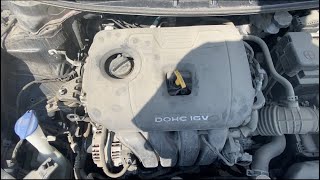
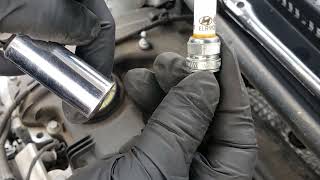
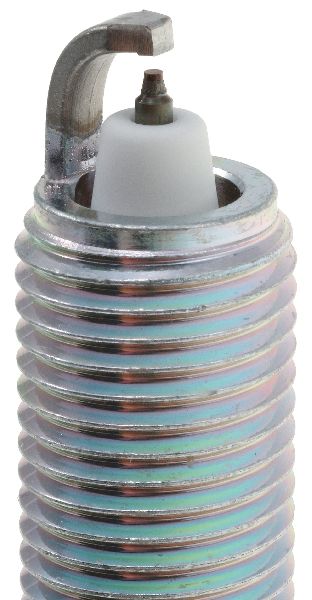
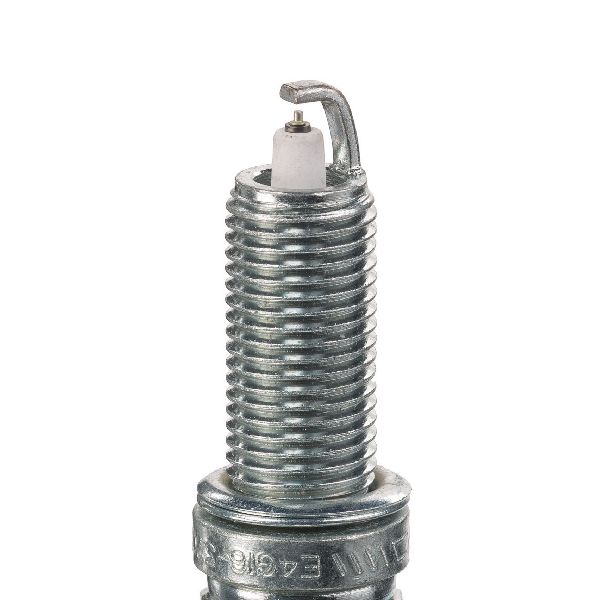
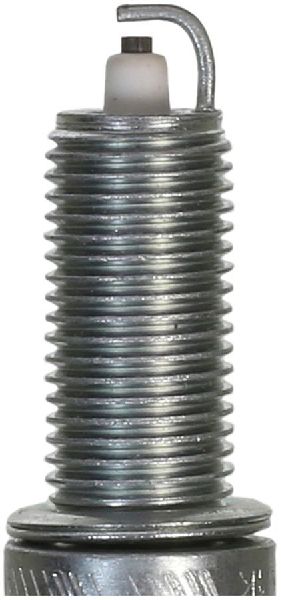
Typical fix: Replace all four spark plugs. It is recommended to use high-quality OEM or Iridium plugs from brands like NGK or Denso. The OEM-recommended NGK plug for many of these vehicles is SILZKR7E11. 🎬 See this DIY walkthrough for replacing spark plugs and coils
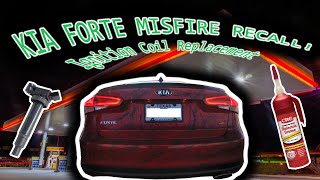
Est. part cost: $40-$80 - Defective Ignition Coils or RFI Springs 🔴 High Probability TSB SA321 (also referenced as TSBENG181_R1) was issued for 2017-2018 Forte 2.0L MPI models produced from May 16, 2016 to Sept 7, 2017. It instructs dealers to replace all four ignition coils if a P030x code is present, or to replace just the internal RFI springs if no misfire code is active, indicating a known hardware issue.
How to confirm: Check VIN against TSB SA321. If applicable, follow the TSB's diagnostic flow. Otherwise, if you can identify a specific misfiring cylinder using a scan tool's live data, swap that cylinder's ignition coil with a known good one. Clear the codes and see if the misfire code 'moves' to the new cylinder.
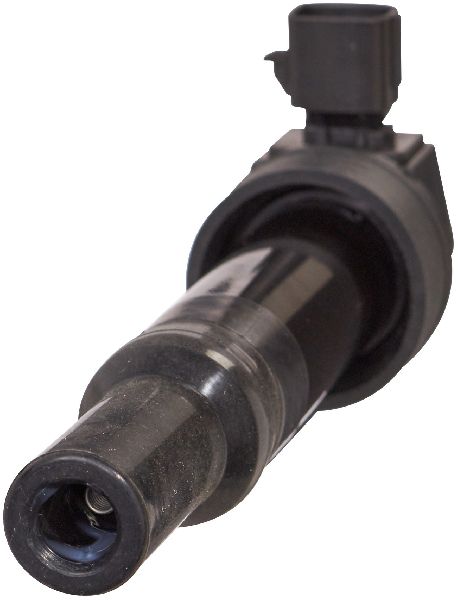
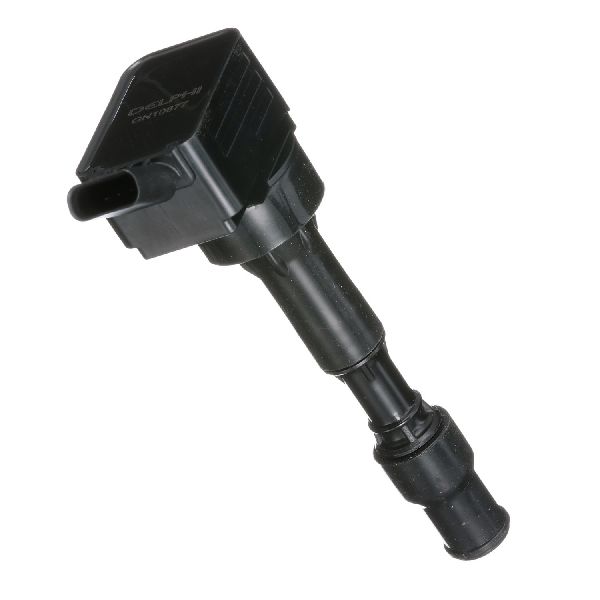
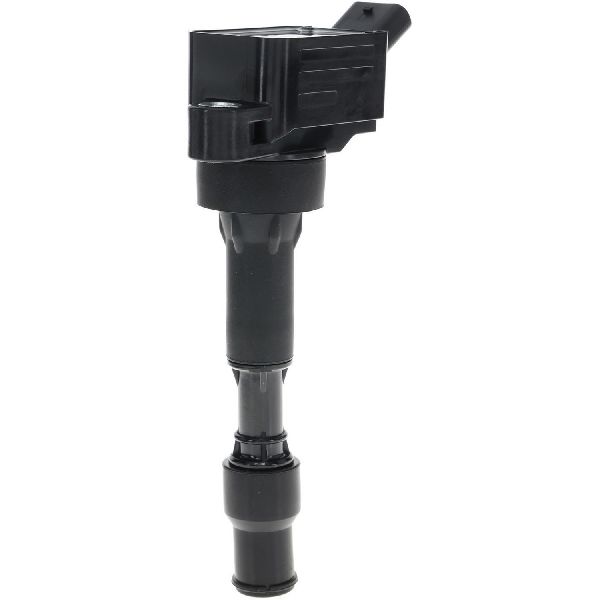
Typical fix: For vehicles under TSB SA321, replace all four ignition coils (Part No. 27300-2E601) or all four RFI springs. For other cases, replace the single faulty ignition coil. Many owners replace all four as a preventative measure.
Est. part cost: $50-$120 per coil - Vacuum Leak ⚪ Low Probability Hoses can become brittle and crack over time. A significant leak in the intake manifold, vacuum hoses, or PCV system can introduce unmetered air, leaning out the air/fuel mixture and causing random misfires.
How to confirm: Perform a visual inspection of all vacuum hoses for cracks or disconnections. Listen for a hissing sound at idle. A smoke test is the most effective method to pinpoint the source of a leak.
Typical fix: Replace the cracked hose or leaking gasket.
Est. part cost: $10-$50
Rare But Worth Checking
- Carbon Buildup on Intake Valves: This is more common on the GDI (Gasoline Direct Injection) engines. Since the fuel is injected directly into the cylinder, it doesn't wash over the intake valves, allowing carbon deposits to form. This can disrupt airflow and cause misfires. A chemical intake cleaning (e.g., Seafoam) or walnut blasting may be required.
- Fuel Delivery Issues: A weak fuel pump, clogged fuel filter, or dirty/clogged fuel injectors can cause a lean condition and lead to random misfires. This is less common than ignition or software issues on this platform but can happen, especially on higher mileage vehicles.
- Clogged Catalytic Converter: A restricted exhaust creates backpressure, which can lead to misfires. This is usually a result of long-term, unaddressed misfires melting the converter's internal structure. You may notice a loss of power at high RPM.
Diagnosis Steps

- Check for Technical Service Bulletins (TSBs). This is the most critical first step. Call a Kia dealer with your VIN or search online for the TSBs mentioned in this article for your specific model year.
- If a TSB for an ECU update applies (common for 2017, 2019, 2020 models), have this performed by a dealer first.
- If you have a 2017-2018 model, check if TSB SA321 applies. If so, follow its procedure for replacing ignition coils or RFI springs.
- If you have a 2018 model, inspect and replace all four spark plugs, especially if the vehicle was produced between Nov 2017 and Feb 2018, as per TSBENG186.
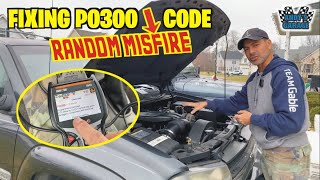
- If no TSBs apply, proceed with standard diagnosis. Use a scan tool 🎬 Watch: How to find and fix your Kia Forte misfire to check for misfire counts on individual cylinders. Swap the ignition coil of a misfiring cylinder with a known good one and see if the misfire follows the coil.
- Inspect the spark plugs for wear, damage, or incorrect gap. Replace if they are worn or if their history is unknown.
- Check for vacuum leaks. Inspect all hoses connected to the intake manifold. A smoke test is the most reliable method.
- Test fuel pressure to ensure the fuel pump and regulator are functioning correctly.
- If you have a GDI engine with high mileage, consider the possibility of carbon buildup on the intake valves.
- As a last resort, check for a clogged catalytic converter or perform an engine compression test to rule out internal mechanical issues.
Parts You'll Likely Need
- Spark Plugs
(OEM #18846-11070 (Example, verify by VIN))— A known manufacturing defect in 2018 models makes these the most likely cause for that year. They are also a regular maintenance item. Recommended aftermarket is often NGK Laser Iridium, e.g., SILZKR7E11.
Trusted brands: NGK, Denso, Autolite
OEM price range: $60-$100
Aftermarket price range: $40-$80 - Ignition Coil
(OEM #27300-2E601 (For 2.0L Nu engine, verify by VIN))— A common failure point for misfires after software and spark plug issues have been ruled out. TSB SA321 specifically calls for their replacement on certain 2017-18 models.
Trusted brands: Bosch, Denso, Delphi
OEM price range: $80-$120
Aftermarket price range: $50-$90
Related Codes That Often Appear With This One
- P0301, P0302, P0303, P0304 — These codes indicate a misfire on a specific cylinder (1, 2, 3, or 4). A random misfire (P0300) may eventually settle on one or more cylinders, triggering these codes alongside it.
- P0128 — TSB_FUE045 mentions that P0128 (Coolant Thermostat - Coolant Temperature Below Thermostat Regulating Temperature) can appear with P0300 on some 2019-2020 models, and the corresponding ECU update (Service Action SA419) addresses both issues.
- P219C00, P219D00, P219E00, P219F00 — These codes for Air-Fuel Ratio Imbalance are mentioned in TSBENG208_R2 and TSBENG204_R1 alongside the P030x codes, as the ECU logic update addresses them simultaneously.
Technical Service Bulletins (TSBs) & Recalls

- TSB_FUE045: SERVICE ACTION: GAMMA 1.6L-T GDI ULEV MIL ON DTC P0128 AND/OR DTC P0300~304 JUDGEMENT LOGIC IMPROVEMENT (SA419)
- TSBENG204_R1: TSB: SERVICE ACTION: ECU LOGIC IMPROVEMENT FOR P0300, P0301, P0302, P0303, P0304 AND/OR P219C00, P219D00, P219E00, P219F00 (SA378)
- TSBENG186: SERVICE ACTION: MIL ON WITH DTC P0300-P0304 (SPARK PLUG REPLACEMENT)
- TSB_ENG208_R2: ECU LOGIC IMPROVEMENT FOR P0300, P0301, P0302, P0303, P0304 AND/OR P219C00, P219D00, P219E00, P219F00
- TSBENG181_R1 / SA321: SERVICE ACTION: IGNITION COIL OR COIL RFI SPRING REPLACEMENT FOR DTC P0300, P0301, P0302, P0303, AND/OR P0304
Platform-Specific Known Issues
- TSB SA285: Addresses P030x codes on some 2017 Forte 2.0L MPI models (produced May 2016 - Feb 2017) via an ECU logic update.
Mechanic-Grade Diagnostic Values
- Low-Pressure Fuel System (MPI & GDI) — expected: Approx. 71.8 PSI for 2.0L engines; 69.6 PSI for 1.6L engines.. Failure: Pressure drops significantly below specification, especially during hesitation events, indicating a weak pump or restricted line.
- High-Pressure Fuel System (GDI Engines) — expected: Can exceed 2,000 PSI under load. Pressure varies significantly with engine RPM and load.. Failure: DTC P0087 (Fuel Rail/System Pressure – Too Low) may be stored if pressure is consistently below the target commanded by the ECU.
- Ignition Coil Primary Resistance — expected: While specific OEM values are not published for DIY testing, aftermarket high-performance coils for the 2.0L Nu engine are engineered to meet OE impedance specifications. A common diagnostic technique is to compare the resistance between all four coils; a significant outlier suggests a failure.. Failure: A reading of infinite resistance (open circuit) or very low resistance (short) compared to the other coils.
- Long-Term Fuel Trim (LTFT) at Idle — expected: Within +/- 5%.. Failure: High positive trims (e.g., +10% to +25%) suggest the ECU is compensating for unmetered air, a common sign of a vacuum leak which can cause random misfires.
Hidden / Shadow Codes Worth Checking
- Mode $06 Misfire Counters: Even when only a P0300 is set, the ECU tracks raw misfire counts for each individual cylinder. Accessing this data can reveal if one or two cylinders are the primary source of the 'random' misfire, helping to pinpoint a failing coil or plug before a specific P030x code is triggered. (see via An advanced OBD-II scan tool with Mode $06 capability or the dealer-level Kia GDS (Global Diagnostic System).)
Scan Tool Commands That Help
- Kia GDS (Global Diagnostic System): Trigger Module (Flight Record) — This function is invaluable for intermittent misfires. It allows a technician to record data from specific sensors (like crank, cam, and O2 sensors) during a drive cycle to capture the exact conditions when the misfire occurs, which is difficult to diagnose in the shop.
- Kia GDS (Global Diagnostic System): Actuator Driving / Actuation Test — Allows a technician to individually command components like fuel injectors to fire. By listening for the injector's click with a stethoscope, a technician can confirm if the injector is mechanically responding to the ECU's command, helping to rule out a dead injector.
- Advanced Scan Tool (e.g., Launch, Autel): Crankshaft Position Sensor Relearn / Cam-Crank Relearn — This procedure may be required after replacing a crankshaft position sensor, camshaft position sensor, or timing components. It synchronizes the sensors with the ECU to ensure accurate ignition timing. Failure to perform this can sometimes lead to misfire codes.
Wiring & Ground Locations
- GC402 — A wiring diagram indicates this ground connection is relevant to the ignition coils. While the exact physical spot isn't detailed, engine grounds are typically located on the cylinder head, engine block, or inner fender near the battery.. A poor ground connection for the ignition coils can cause weak or intermittent spark across all cylinders, leading to a random misfire condition that is difficult to trace to a single component.
- Ignition Coil Connector — On top of the engine, connected to each ignition coil.. The power wire to the ignition coils (often red) should have battery voltage with the key on. The ground wire is typically black. The third wire is the trigger signal from the ECU. Verifying power and ground at the connector is a key step before condemning a coil.
Real Owner Repair Stories
- forteforums.com user (2014 Kia Forte EX 2.0L GDI (similar engine architecture)) — P0300, P0301, P0302, P0303, P0304 - random misfires across all cylinders.
❌ Tried (didn't work) Replacing spark plugs, Replacing ignition coils
✅ What actually fixed it The actual cause was severe carbon buildup on the intake valves, a known issue with GDI engines. A chemical intake valve cleaning (CRC Intake and Turbo Cleaner) was performed, which resolved the misfires. - Daring Motors on YouTube (Kia Forte (year not specified, but similar coil-on-plug setup)) — Check engine light with P0303 (Cylinder 3 misfire).
❌ Tried (didn't work) Initial inspection of spark plugs showed no obvious defects.
✅ What actually fixed it The technician swapped the ignition coil from cylinder 3 to cylinder 4. After clearing codes and running the engine, the code returned as P0304 (Cylinder 4 misfire). This confirmed the ignition coil was the faulty part. Replacing the single bad coil fixed the problem. - Reddit r/ForteGT user (Kia Forte GT (1.6L Turbo GDI engine)) — Check engine light with misfire codes.
❌ Tried (didn't work) Initial diagnosis was uncertain, with many possibilities suggested.
✅ What actually fixed it The dealership identified a bad spark plug and carbon buildup. The final fix was replacing the spark plug and advising the owner to use top-tier 93 octane gasoline with detergents to help clean the carbon deposits.
"I Checked Everything" — The Actual Cause
- In some cases, a P0300 code can be caused by a faulty camshaft position sensor connector or wiring, even if the sensor itself is good and does not set a specific cam sensor code. One owner reported fixing a persistent P0300 by simply unplugging, inspecting, and firmly reconnecting the camshaft position sensor connector, suggesting a poor connection was the root cause.
OEM Part Supersession History
27300-2E000→27300-2E601— This is a common part update for the ignition coil used in the 2.0L Nu engine. Supersessions typically address reliability or performance improvements.
Heads up: The newer part number (27300-2E601) is the correct replacement for the specified 2017-2020 Forte 2.0L models.N/A→27301-2B120 (for 1.6L Turbo GDI)— This is the specified OEM part number for the ignition coil on the 1.6L Turbo GDI engine found in Forte GT models. Aftermarket performance versions are also available.
Model Year Variations Within This Range
- 2017-2018 (YD Generation): Primarily used the 2.0L Nu MPI (Multi-Point Injection) engine. TSBs for this generation focus on hardware failures like faulty ignition coils/RFI springs (TSB SA321) and defective spark plugs (TSBENG186).
- 2019-2020 (BD Generation): Introduced a 2.0L Nu engine running on the more efficient Atkinson cycle, paired with a CVT (IVT). The performance model (Forte GT) uses a 1.6L Turbo GDI engine. TSBs for this generation, like TSB_FUE045, are more focused on ECU logic updates for misfire detection, reflecting the different engine management software.
Helpful Videos
Used OEM Parts in Stock


New Aftermarket Parts Available

The information in this article is provided for general reference and educational purposes only. Vehicle specifications, procedures, and part compatibility can vary by production date, trim level, and region. Always consult your vehicle's factory service manual and verify part numbers before purchasing or performing repairs. Safety-critical components such as airbags, seat belts, and braking systems should be installed by a qualified professional.
- Kia FORTE:
- 🎬 Helpful Videos
- 🛍️ Shop This Part
- What's Unique About the 2017-2020 Kia FORTE
- Diagnostic Flowchart
- Symptoms You May Notice
- Most Likely Causes
- Rare But Worth Checking
- Diagnosis Steps
- Parts You'll Likely Need
- Related Codes That Often Appear With This One
- Technical Service Bulletins (TSBs) & Recalls
- Platform-Specific Known Issues
- Mechanic-Grade Diagnostic Values
- Hidden / Shadow Codes Worth Checking
- Scan Tool Commands That Help
- Wiring & Ground Locations
- Real Owner Repair Stories
- "I Checked Everything" — The Actual Cause
- OEM Part Supersession History
- Model Year Variations Within This Range
- 🎟️ Get 5% Off