

P0300 on 2012-2019 Jeep Wrangler: Random Misfire Causes and Fixes
P0300 on a Jeep Wrangler indicates random cylinder misfires. For 2012-2013 models with the 3.6L V6, this code is a strong indicator of a serious cylinder head issue that was subject to a warranty extension. For other models, the cause is typically worn spark plugs or failing ignition coils, but a growing number of cases on higher-mileage Pentastars point to failed rocker arms and lifters. A flashing check engine light requires immediate attention to prevent catalytic converter damage.
- P0300 means your engine is misfiring on multiple cylinders, which can cause a rough idle, hesitation, and a flashing check engine light.
- For 2012-2013 Wranglers with the 3.6L V6, this code is a major red flag for a known cylinder head defect that requires a leak-down test to diagnose.
- For all other years, start your diagnosis with the basics: inspect and replace worn spark plugs and faulty ignition coils.
- Do not ignore a flashing check engine light, as it indicates a severe misfire that can quickly destroy your expensive catalytic converters.
- Check for specific issues mentioned in TSBs, like oil leaking onto an O2 sensor or low fuel pressure, if the basic tune-up parts don't solve the problem.
What's Unique About the 2012-2019 Jeep WRANGLER

For the 2012-2019 Jeep Wrangler, particularly the JK models (2012-2018) with the 3.6L Pentastar V6, code P0300 is notoriously linked to two significant factory-related issues. Early versions of this engine (2011-2013) were prone to a valve seat and guide wear issue on the left cylinder head, causing persistent misfires. This problem was so widespread that Chrysler issued warranty extension X56, covering the left cylinder head for 10 years or 150,000 miles. As these engines age, a second major issue has emerged: rocker arm and lifter failure. The needle bearings in the rocker arms can fail, causing a distinct ticking sound ('Pentastar Tick'), damaging the camshaft, and leading to misfires. While standard causes like plugs and coils are still common, the high probability of these serious mechanical failures makes P0300 a more concerning code on these Wranglers than on many other vehicles.
Diagnostic Flowchart

Tap your situation to follow the diagnostic path that matches what you're seeing on this vehicle.
Generation note: This range covers two Wrangler generations. The JK (2012-2018) primarily used the 3.6L Pentastar V6, which is the engine most associated with both the P0300 cylinder head issue (2012-2013 models) and rocker arm failures. The JL (2018-2019) introduced a 2.0L Turbo I4 and an updated 3.6L V6. While the updated 3.6L still sees some rocker arm issues, the 2.0L Turbo can also present P0300, sometimes due to internal failures specific to that engine, though less commonly than the Pentastar's known issues.
Symptoms You May Notice

- Rough or shaky idle.
- Hesitation or stumbling during acceleration.
- Noticeable loss of engine power.
- Flashing or solid Check Engine Light.
- Reduced fuel economy.
- Smell of unburned gasoline from the exhaust.
- Audible ticking or tapping sound from the top of the engine, which gets progressively louder (indicative of rocker arm failure).
- Engine stalls or has difficulty starting.
- Replacing only spark plugs when the underlying cause is the known cylinder head issue on 2012-2013 models or a failed rocker arm on a higher mileage engine.
- Replacing O2 sensors without checking for an oil leak from the valve cover that may be contaminating them.
- Assuming a ticking noise is just 'normal' for the engine, when it is a primary symptom of impending rocker arm failure.
Most Likely Causes

- Worn Spark Plugs or Faulty Ignition Coils 🔴 High Probability These are standard maintenance items that wear out over time. The coil-on-plug design of the Pentastar engine means individual coils can fail, leading to misfires. The recommended replacement interval for spark plugs is typically 100,000 miles.
How to confirm: Inspect spark plugs for wear, fouling, or incorrect gap. Swap the ignition coil from a misfiring cylinder (if identified with a more specific code like P030X) with a known good cylinder to see if the misfire follows the coil. A bad coil boot can also be a cause, sometimes showing a small white spot from electrical arcing.
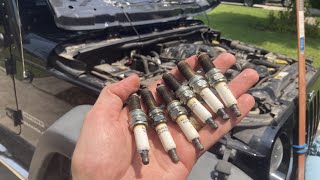
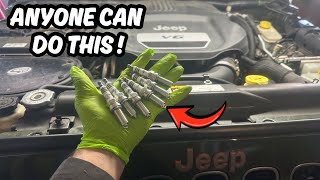
Typical fix: Replace all spark plugs and any faulty ignition coils. 🎬 See this walkthrough for replacing spark plugs on 2012-2018 models. It's best practice to replace plugs as a set.
Est. part cost: $50-$300 - Defective Left Cylinder Head (2012-2013 3.6L Pentastar) 🔴 High Probability A known manufacturing defect in 2011-2013 models caused premature wear of valve guides and seats on the left cylinder head (cylinders 2, 4, 6), leading to loss of compression and misfires. This was covered under warranty extension X56.
How to confirm: Perform a cylinder leak-down test on cylinders 2, 4, and 6. According to TSB 09-002-14, leakage of 25% or greater confirms the failure. This is the definitive diagnostic step.
Typical fix: Replacement of the left-side cylinder head assembly with an updated part (e.g., part numbers ending in 'AC' or later).
Est. part cost: $800-$1500 - Failed Rocker Arms / Lifters (3.6L Pentastar) 🟡 Medium Probability This is a well-documented failure point on Pentastar engines across all years, becoming more common as vehicles exceed 60,000-80,000 miles. The needle bearings in the rocker arm rollers fail, causing the arm to become loose, which can damage the camshaft lobes.
How to confirm: Listen for a distinct ticking/tapping sound from the valve cover area. Remove the valve cover and visually inspect the rocker arms for excessive play and the camshaft lobes for scoring or unusual wear patterns. This issue often starts with a specific cylinder misfire code (e.g., P0302, P0304) before escalating to P0300.
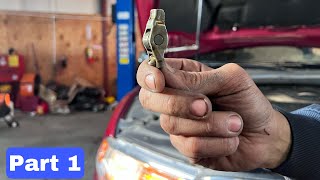
Typical fix: Replace all rocker arms and lifters on the affected cylinder head(s). If the camshaft is damaged, it must also be replaced. It is highly recommended to replace all rockers and lifters on both banks as a preventative measure. 🎬 Watch: Step-by-step guide to replacing Pentastar rocker arms and lifters.
Est. part cost: $200-$1000 (depending on camshaft replacement) - Faulty Fuel Injectors 🟡 Medium Probability Injectors can become clogged or fail electronically over time, causing a lean condition and misfires.
How to confirm: A professional can perform a fuel injector balance test. A DIY method is to listen to each injector with a mechanic's stethoscope; they should all have a consistent clicking sound. You can also swap injectors between cylinders to see if the misfire code follows.
Typical fix: Clean or replace the faulty fuel injector(s).
Est. part cost: $50-$150 per injector - Vacuum Leak (PCV Valve/Hoses) ⚪ Low Probability The plastic intake manifold and various vacuum hoses, especially the PCV valve and its hoses, can develop cracks or leaks over time, allowing unmetered air into the engine and disrupting the air-fuel ratio. A stuck PCV valve is a known issue.
How to confirm: Visually inspect all vacuum hoses for cracks. A smoke test is the most effective way to find hard-to-see leaks in the intake system. Check if the PCV valve rattles when shaken; if not, it's likely stuck.
Typical fix: Replace the leaking hose, gasket, or PCV valve. The PCV valve is part number 68083202AC for many 3.6L models.
Est. part cost: $10-$100 - Oil Leak onto O2 Sensor ⚪ Low Probability TSB S1918000008 notes that an oil leak from the Bank 1 valve cover can drip onto the downstream O2 sensor, causing it to send incorrect data and potentially lead to a P0300 code.
How to confirm: Visually inspect the Bank 1 (passenger side) valve cover for oil leaks, and check the downstream O2 sensor and its wiring for oil contamination.
Typical fix: Replace the valve cover gasket and the oil-contaminated O2 sensor.
Est. part cost: $50-$200
Rare But Worth Checking
- Faulty Crankshaft Position Sensor: TSBs 18-021-16 and 18-041-16 mention that P0300 can appear alongside the crankshaft position sensor code P0335, indicating a potential link.
- Low Fuel Pressure: TSB 18-044-26 links P0300 with code P00C6-00 (Fuel Rail Pressure Too Low), suggesting a weak fuel pump or clogged filter could be the root cause.
- Internal Engine Mechanical Failure: In some cases, forum users have reported that a bent pushrod, damaged lifters, or a failed camshaft can cause P0300, often accompanied by timing codes like P0018. This is often the result of a severe rocker arm failure.
Diagnosis Steps
- Scan the PCM for any other stored trouble codes to get more context. Cylinder-specific codes (P0301-P0306) are a critical clue.
- Listen for a ticking or tapping noise from the engine. A distinct 'Pentastar Tick' is a strong indicator of rocker arm/lifter failure and warrants immediate inspection.
- If on a 2012-2013 3.6L model, strongly consider a cylinder leak-down test on cylinders 2, 4, and 6 to rule out the common cylinder head failure. A result over 25% leakage is confirmation per TSB 09-002-14.
- Inspect all spark plugs for wear, damage, or heavy deposits. Replace if they are worn or past their 100,000-mile service interval.
- Inspect ignition coils and their boots for any signs of damage, corrosion, or arcing. Swap a coil with a known good cylinder 🎬 Watch: A simple trick to diagnose specific cylinder misfires. to see if a specific misfire follows.
- Check for vacuum leaks around the intake manifold, throttle body, and PCV system using a smoke machine. Inspect the PCV valve itself.
- Inspect the Bank 1 valve
Parts You'll Likely Need
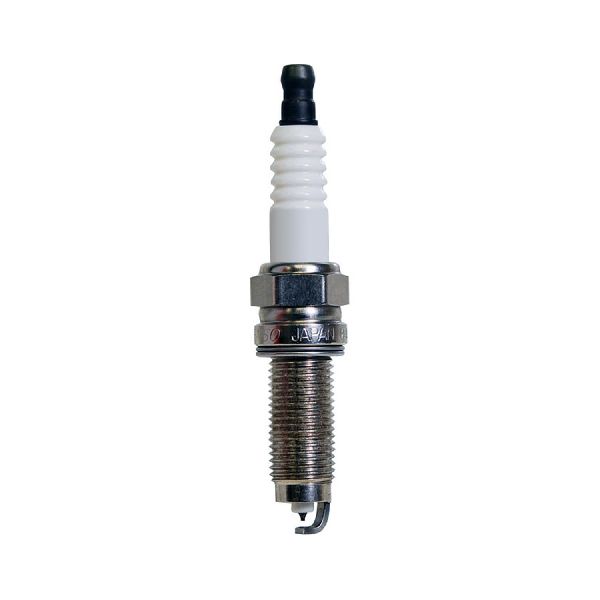
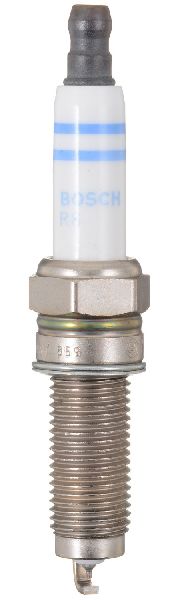
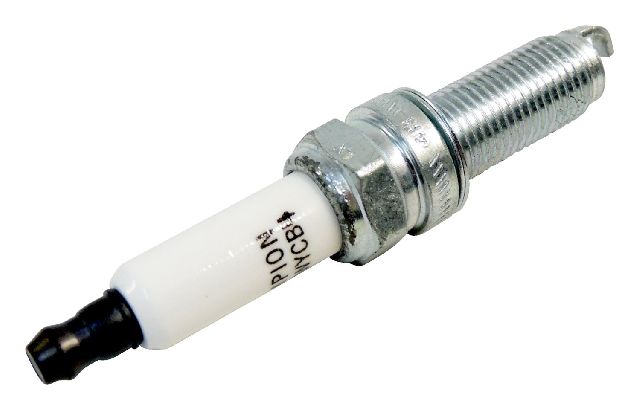
- Spark Plugs
(OEM #Mopar SP149125AE (for 3.6L))— This is the most common and basic tune-up item to address a misfire. They wear out over a set mileage.
Trusted brands: NGK, Champion
OEM price range: $80-$120
Aftermarket price range: $40-$80 - Ignition Coil Pack
(OEM #Mopar 68242285AA (for 3.6L))— Ignition coils provide the high voltage for the spark plugs and can fail with age and heat, causing misfires.
Trusted brands: Mopar, Delphi, Denso
OEM price range: $50-$80 per coil
Aftermarket price range: $30-$60 per coil - Left Cylinder Head Assembly (2012-2013)
(OEM #Mopar 05184445AI (or later revisions like AC, AD))— Required to fix the known valve seat defect on early 3.6L Pentastar engines.
Trusted brands: Mopar
OEM price range: $1000-$1600
Aftermarket price range: $800-$1200 (remanufactured) - Rocker Arms & Lifters Kit
(OEM #Mopar 5184296AH (Rocker Arm), Mopar 5184332AA (Lifter))— Required to fix the common 'Pentastar Tick' caused by failed rocker arm bearings. Usually replaced as a full set for the affected head.
Trusted brands: Mopar, Enginetech, Sealed Power
OEM price range: $250-$400 per head
Aftermarket price range: $150-$250 per head
Related Codes That Often Appear With This One
- P0301-P0306 — These are cylinder-specific misfire codes. P0300 is often a precursor or accompaniment to these codes as the PCM tries to isolate the problem. The cylinder head issue often throws P0302, P0304, or P0306.
- P0335 — Crankshaft Position Sensor Circuit. TSBs indicate this can be set along with P0300, suggesting a potential issue with the sensor providing incorrect timing information to the PCM.
- P00C6 — Fuel Rail Pressure Too Low. A TSB links this to P0300, indicating the misfire may be caused by inadequate fuel supply to all cylinders.
- P2096 — Post Catalyst Fuel Trim System Too Lean Bank 1. TSB S1918000008 lists this code alongside P0300 when an oil leak contaminates the O2 sensor.
- P0018 — Crankshaft/Camshaft Timing Misalignment. This code can appear with P0300 in cases of severe mechanical failure, such as a jumped timing chain or significant damage from a failed rocker arm.
Technical Service Bulletins (TSBs) & Recalls
- 09-002-14 Rev. B
- S1918000008
- 18-044-26
- 18-021-16 Rev. B
- 18-041-16 Rev. A
Platform-Specific Known Issues
- The 2012-2013 Cylinder Head Defect (X56 Warranty): Owners of 2012-2013 models with the 3.6L engine who get a P0300, P0302, P0304, or P0306 should immediately investigate the cylinder head issue. The warranty extension (X56) covered replacement for 10 years/150,000 miles. Even if outside warranty, this is the most likely cause. The official fix is a cylinder leak-down test; if it fails, the head must be replaced.
- The 'Pentastar Tick' and Rocker Arm Failure: Across all years of the 3.6L, but especially in vehicles approaching 100k miles, a ticking sound from the engine is a major red flag. This is almost always a failing rocker arm. As one forum user on jk-forum.com found, ignoring it can lead to camshaft damage and a much more expensive repair. The fix involves replacing all rocker arms and lifters on at least the affected bank.
- The Frustrating Chase for a Fix: A thread on JLWranglerForums.com details a 2020 model that continued to throw P0300 even after a complete long block replacement. The dealer then replaced nearly every sensor, camshafts, and timing components before a second new engine was installed, which *still* had the issue. This highlights that in rare cases, the problem can be incredibly elusive and may relate to software or wiring harnesses.
Mechanic-Grade Diagnostic Values
- Total Fuel Trim (Short Term + Long Term) — expected: Single-digit percentage correction (e.g., -8% to +8%). Failure: Consistent double-digit corrections (e.g., +15% or higher) suggest a lean condition (vacuum leak, fuel delivery issue), while large negative corrections suggest a rich condition. Single-digit corrections often point to an ignition-related misfire.
- Ignition Coil Primary Resistance — expected: Approximately 0.49 - 1.20 Ω (Ohms). Failure: A reading significantly outside this range indicates a faulty coil. Note that specifications can vary slightly by manufacturer.
- Ignition Coil Secondary Resistance — expected: Approximately 9.5k - 15.3k Ω (kilo-ohms). Failure: A reading significantly outside this range indicates a faulty coil.
Hidden / Shadow Codes Worth Checking
- Misfire Counters (per cylinder): The PCM maintains a running count of misfire events for each individual cylinder. While not a 'code' itself, this data is crucial for diagnosing a P0300 by revealing which cylinder(s) are misfiring most, even if it's not enough to set a cylinder-specific P030x code. (see via This data is accessible through the dealer-level wiTECH scan tool under the OBD II monitors, in a function called 'Which cylinder is misfiring'.)
Scan Tool Commands That Help
- wiTECH: OBD II Monitors -> 'Which cylinder is misfiring' — This is a primary diagnostic step when only a P0300 code is present. It allows a technician to see live misfire counts for all cylinders, effectively turning a 'random' misfire code into a targeted diagnosis by identifying the problematic cylinder(s).
Wiring & Ground Locations
- Engine to Firewall Ground Strap — Typically runs from the passenger side of the firewall to the engine block or bellhousing.. This is a common failure point due to engine movement and heat. A poor ground can cause a variety of electrical issues, including weak spark or erratic sensor readings, leading to misfires.
- G300 (JL) — On the JL Wrangler, this ground is located on the left side of the engine block.. This is a primary grounding point for engine components. Corrosion or a loose connection here can affect multiple systems.
- Footwell Grounds (JK) — Grounding studs are located under the kick panels in both the driver and passenger footwells.. These are key chassis grounding points. While less likely to directly cause an engine misfire, a poor ground here can affect the PCM or other modules that rely on a clean ground reference.
Real Owner Repair Stories
- Jeep Wrangler JK Forum (2012 JK Unlimited Sahara, 138k miles) — Sudden loss of power, limp mode, shuddering idle, codes P0300 and P0018.
❌ Tried (didn't work) Replaced spark plugs, Replaced ignition coils, Replaced both camshaft sensors, Replaced crankshaft sensor, Replaced all O2 sensors, Replaced VVT solenoids
✅ What actually fixed it The root cause was internal mechanical failure. A bent pushrod had damaged the valve lifters, the camshaft itself, and the rocker arm, causing the engine to jump timing. - YouTube video (Vehicle unspecified, but general P0300 diagnosis) — Persistent P0300 check engine light.
❌ Tried (didn't work) Compression check was good, Spark plugs and coils were checked, Replaced crankshaft position sensor, Considered replacing camshaft sensor
✅ What actually fixed it The wiring connector for the camshaft position sensor had a poor connection. The wires appeared burnt, and simply manipulating the connector and plugging it back in firmly resolved the P0300 code without replacing the sensor. - Jeep Wrangler JK Forum (Jeep Wrangler with 75,000 miles) — P0306 (Cylinder 6 Misfire), which can escalate to P0300.
❌ Tried (didn't work) Initial diagnosis pointed towards common head gasket issues.
✅ What actually fixed it A combination of two issues: the spark plugs were worn, and a bolt was found snapped off on the lower intake manifold at the port for cylinder 6. Replacing all spark plugs and drilling out and replacing the broken intake bolt resolved the misfire, which was caused by either the worn plug or an intake vacuum leak.
"I Checked Everything" — The Actual Cause
- In cases where a smoke test finds no vacuum leaks, a P0300 can be caused by deep mechanical issues. One owner chased a P0300 by replacing numerous sensors to no avail, but the actual cause was a bent pushrod that damaged the camshaft and lifters, which would not be found by a smoke test.
- Another potential cause that a smoke test would miss is a broken valve spring. This can cause a loss of compression on a single cylinder, leading to a misfire that the PCM may interpret as random (P0300) before isolating it to one cylinder.
OEM Part Supersession History
5184296AD, 5184296AE, 5184296AF, 5184296AG→5184296AH— Updated design to improve durability of the rocker arm and its needle bearings, which are a common failure point.Oil Filter for 2012-2013 3.6L→Different filter for 2014+ 3.6L— The oil filter housing and adapter were redesigned for the 2014 model year.
Heads up: Using the incorrect oil filter for a 2014+ model can lead to catastrophic engine damage. The parts are not interchangeable.
Model Year Variations Within This Range
- 2012-2013: These early 3.6L Pentastar engines are highly susceptible to a left cylinder head failure causing misfires (P0300, P0302, P0304, P0306). This was covered by Chrysler's extended warranty X56.
- 2014: The oil filter and oil cooler/adapter assembly was changed for the 2014 model year. Using an earlier filter on a 2014+ engine can cause severe damage.
- 2016+: An updated 'Pentastar Upgrade' (PUG) engine was introduced, first appearing in the Grand Cherokee and then other models. It features two-stage variable valve lift (VVL), a higher compression ratio (11.3:1), and cooled EGR for improved efficiency and a broader torque curve. The JL Wrangler (2018+) uses this updated engine.
Helpful Videos
Used OEM Parts in Stock



New Aftermarket Parts Available




The information in this article is provided for general reference and educational purposes only. Vehicle specifications, procedures, and part compatibility can vary by production date, trim level, and region. Always consult your vehicle's factory service manual and verify part numbers before purchasing or performing repairs. Safety-critical components such as airbags, seat belts, and braking systems should be installed by a qualified professional.
- Jeep WRANGLER:
- 🎬 Helpful Videos
- 🛍️ Shop This Part
- What's Unique About the 2012-2019 Jeep WRANGLER
- Diagnostic Flowchart
- Symptoms You May Notice
- Most Likely Causes
- Rare But Worth Checking
- Diagnosis Steps
- Parts You'll Likely Need
- Related Codes That Often Appear With This One
- Technical Service Bulletins (TSBs) & Recalls
- Platform-Specific Known Issues
- Mechanic-Grade Diagnostic Values
- Hidden / Shadow Codes Worth Checking
- Scan Tool Commands That Help
- Wiring & Ground Locations
- Real Owner Repair Stories
- "I Checked Everything" — The Actual Cause
- OEM Part Supersession History
- Model Year Variations Within This Range
- 🎟️ Get 5% Off