

P0300 on 2020-2023 Jeep Gladiator: Random Misfire Causes and Fixes
On a 2020-2023 Jeep Gladiator with the 3.6L V6, a P0300 code is most often caused by a known internal engine issue involving the camshafts, lifters, and rocker arms, often preceded by a distinct ticking sound ('Pentastar Tick'). TSB 18-024-21 specifically calls for replacing the right intake camshaft and reprogramming the PCM to fix this code.
- P0300 on a 2020-2023 Gladiator is not a typical random misfire; it is strongly linked to known issues with the 3.6L engine.
- Always check for TSBs first. The solution is often a specific PCM software update and/or camshaft replacement, not just a simple tune-up.
- The most probable cause is a failing right intake camshaft, lifters, and/or rocker arms, a known issue for this engine.
- Symptoms like a ticking noise or a rough idle on cold starts are strong indicators of the mechanical valvetrain issue.
- Due to the complexity of the most common repairs (camshaft replacement, PCM flashing), professional diagnosis and service are highly recommended.
What's Unique About the 2020-2023 Jeep GLADIATOR

The Jeep Gladiator (JT), along with its platform-mate the Wrangler (JL) and other vehicles using the 3.6L Pentastar V6, has a well-documented history of premature valvetrain wear that directly leads to a P0300 code. Multiple Technical Service Bulletins (TSBs) link this code to internal engine problems, specifically with the right-side intake camshaft and associated rocker arms and lifters, as well as software glitches requiring a PCM update. This is different from many other vehicles where P0300 is more commonly caused by simple maintenance items like spark plugs or ignition coils first. On the Gladiator, these items can still be the cause, but the camshaft issue is a highly probable root cause, especially if a ticking noise is present.
Diagnostic Flowchart

Tap your situation to follow the diagnostic path that matches what you're seeing on this vehicle.
Symptoms You May Notice

- Flashing or solid Check Engine Light.
- Rough engine idle, sometimes worse on a cold start or after a hot-soak (sitting for 20-40 mins after being hot).
- Noticeable engine shaking or vibrating.
- Audible engine ticking noise, known as the 'Pentastar Tick', which can be heard from inside the cabin.
- Hesitation or stumbling during acceleration, especially under light load at 1500-2000 RPM.
- Reduced engine power.
- Spark knock or detonation sounds from the engine at idle.
- Poor fuel economy.
- Replacing only spark plugs and coils without checking for TSBs or listening for the 'Pentastar Tick'. Many owners report the issue returns until the underlying mechanical (camshaft/lifters) or software issue is addressed.
- Performing only the PCM software flash mentioned in TSB 18-024-21 without also replacing the right intake camshaft. The TSB explicitly warns that the P0300 may reoccur if the camshaft is not replaced.
Most Likely Causes

- Faulty Camshafts, Lifters, or Rocker Arms 🔴 High Probability The 3.6L Pentastar V6 has a widely documented design issue leading to premature wear on valvetrain components, particularly the right intake camshaft and its associated rocker arms and lifters. This failure is often referred to as the 'Pentastar Tick' and is a frequent topic in owner forums. TSB 18-024-21 directly addresses this by mandating a camshaft replacement when P0300 is present.
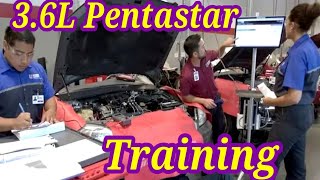
How to confirm: A professional diagnosis is best. Listen for a distinct ticking/tapping noise from the top of the engine. A mechanic will remove the valve covers for a visual inspection of the camshaft 🎬 See a mechanic diagnose a ticking Pentastar engine in detail. lobes and rocker arm rollers for scoring or damage. In some cases, metal flakes from the worn parts can be found in the engine oil filter during an oil change.
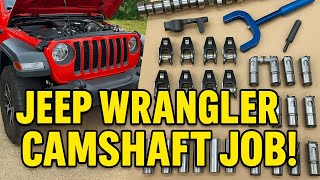
Typical fix: Replacement of the affected camshaft(s), lifters, and rocker arms. TSB 18-024-21 specifically mandates replacing the right intake camshaft. Many owners and mechanics recommend replacing all lifters and rockers on the affected bank at the same time. One owner on JeepGladiatorForum.com documented doing the repair themselves for 🎬 Watch: Step-by-step guide to replacing lifters, rockers, and camshafts. under $1000 in parts.
Est. part cost: $300-$800 - Powertrain Control Module (PCM) Software Update Needed 🔴 High Probability Jeep has released multiple TSBs (e.g., 18-040-24, 18-024-21, 1804222REVC) that explicitly state the fix for a P0300 code is to reprogram the PCM with the latest software. This suggests the original software logic was either too sensitive in detecting misfires or could not properly adapt to minor variations, sometimes related to the cam/crank position learning process.
How to confirm: A Jeep dealership or a qualified shop with a wiTECH scan tool can check the current software calibration ID (CalID) against the latest available version from the manufacturer's database.
Typical fix: Flashing/reprogramming the PCM with the updated software. This is a dealer-level or specialist task. Per TSB 18-024-21, this should be done in conjunction with the camshaft replacement if P0300 is present.
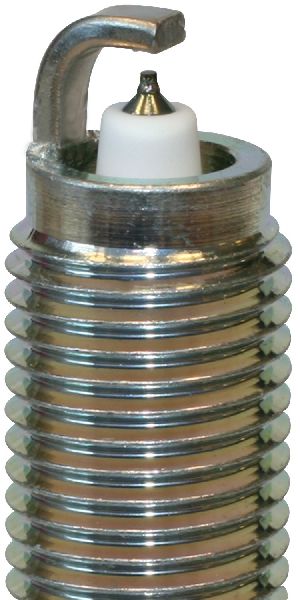
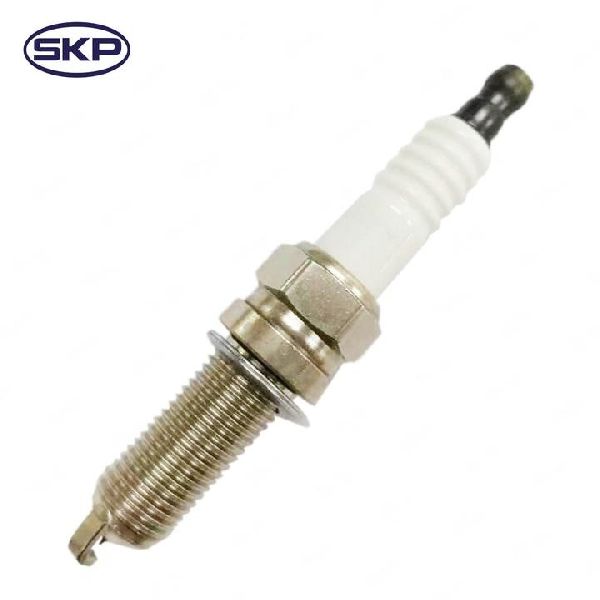
Est. part cost: $0 (if under warranty) - $200 - Worn or Faulty Spark Plugs / Ignition Coils 🟡 Medium Probability While not as platform-specific as the camshaft issue, spark plugs and coils are standard wear items. A failure in one of these can cause a misfire. Some owners report that replacing spark plugs resolved their P0300 issue, particularly on newer models where valvetrain wear is less likely. It's a logical first step if no ticking is present.
How to confirm: Inspect spark plugs for wear (worn electrode), fouling (black, oily, or white deposits), or incorrect gap. Test ignition coils by swapping a suspected bad coil with a known good one from another cylinder to see if the misfire follows the coil (requires a scan tool that can show per-cylinder misfire counts).
Typical fix: Replace all six spark plugs as a set. The OEM recommended plugs are typically from Mopar, Champion, or NGK. Replace only the faulty ignition coil(s).
Est. part cost: $50-$200 for plugs, $40-$100 per coil - Faulty Fuel Injectors ⚪ Low Probability TSB #18-044-26 links P0300 with a fuel rail pressure code (P00C6-00), indicating that fuel delivery issues can be a source of misfires on this platform. A failing injector can cause a lean or rich condition in one cylinder, which the PCM may interpret as a random misfire if it occurs intermittently.
How to confirm: Perform a fuel injector balance test to check flow rates. A professional may also check fuel pressure and monitor fuel trims with a scan tool to identify irregularities.
Typical fix: Clean or replace the faulty fuel injector(s).
Est. part cost: $50-$150 per injector
Rare But Worth Checking
- Leaking Valve Cover or Head Gasket: Some owners have reported that oil from a leaking valve cover or head gasket can drip onto an O2 sensor or its wiring connector, causing it to send incorrect data to the PCM. This can lead to improper fueling and trigger a P0300 code. One owner on JeepGladiatorForum.com had this exact issue on their 2022 model.
- Faulty O2 Sensors: TSB #1804222REVC lists several O2 sensor circuit high codes (P0132, P0152, P0158) alongside P0300, indicating a direct link between faulty oxygen sensors and misfire detection on these vehicles. A lazy or failed O2 sensor can cause the PCM to miscalculate the air-fuel ratio, leading to misfires.
- Leaking Head Gasket (Internal Coolant Leak): In a thread on JLWranglerForums.com, an owner with a persistent P0300 and P0303 eventually discovered a coolant leak into the cylinder, diagnosed via borescope. This required a head gasket replacement to resolve the misfire.
- Restricted Catalytic Converter: While uncommon on newer vehicles, a clogged catalytic converter can create excessive exhaust backpressure, preventing cylinders from expelling exhaust gas efficiently, which can lead to random misfires.
Diagnosis Steps
- Scan for all DTCs. Pay close attention to any other codes that accompany P0300, as they provide critical clues (e.g., camshaft, O2 sensor, or fuel pressure codes). Use a scan tool capable of reading live misfire data per cylinder.
- Check for applicable Technical Service Bulletins (TSBs). This is a mandatory first step. A dealer can check your VIN for open campaigns or relevant bulletins like 18-024-21, 18-040-24, and 1804222REVC.
- Listen for the 'Pentastar Tick'. With the engine running, listen carefully to the top of the engine for a rhythmic ticking or tapping sound that increases with RPM. Its presence strongly suggests a valvetrain issue.
- Inspect the oil. Check the engine oil dipstick and oil filter for signs of metallic debris or glitter, which indicates internal engine wear from the camshafts/lifters.
- If TSB 18-024-21 applies and a ticking noise is present, proceed with the recommended repair: replacement of the right intake camshaft and reprogramming the PCM. This is best left to a professional.
- If no ticking is present and no TSB
Parts You'll Likely Need
- Intake Camshaft Kit (Right Side)
(OEM #68661147AB (replaces 68661147AA))— TSB 18-024-21 specifically calls for the replacement of the right intake camshaft to resolve P0300 on the 2020 Gladiator 3.6L. This is the most common mechanical failure point for this code.
Trusted brands: Mopar
OEM price range: $450-$670
Aftermarket price range: $250-$400 - Lifters / Rocker Arms
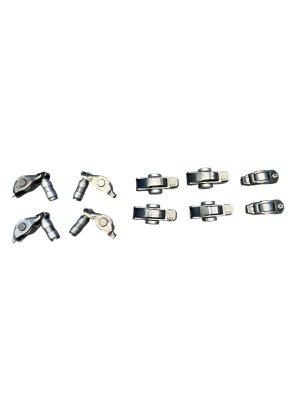
(OEM #Lifter: 5184332AA; Rocker Arm: 5184296AH)— These are typically replaced along with the camshaft as a complete set, as worn rocker arm rollers are often the root cause of the camshaft lobe damage. It is considered best practice to replace all 12 rockers and 12 lifters on the affected cylinder head.
Trusted brands: Mopar, Mahle, Melling
OEM price range: $15-$30 per rocker, $10-$20 per lifter
Aftermarket price range: $100-$250 (per set for one head) - Spark Plugs
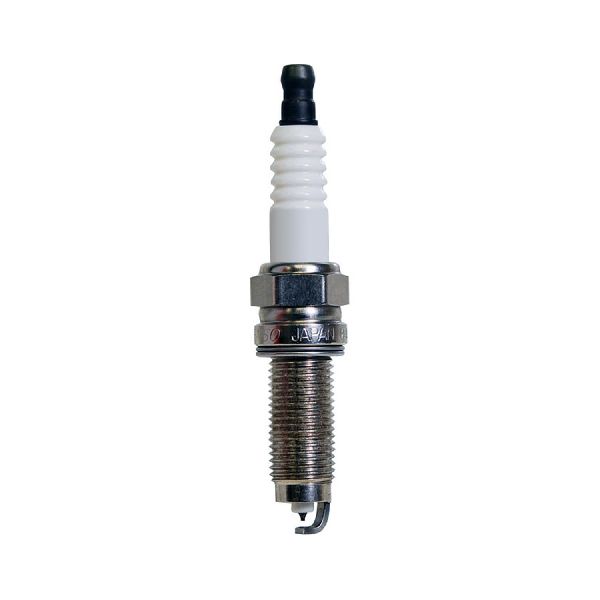
(OEM #SP225755AB (replaces 68225755AA))— A standard maintenance item and a common cause of misfires. It's a good practice to replace them if their age is unknown or as a first diagnostic step if no mechanical noise is present.
Trusted brands: Mopar, NGK, Champion
OEM price range: $15-$25 per plug
Aftermarket price range: $8-$15 per plug
Related Codes That Often Appear With This One
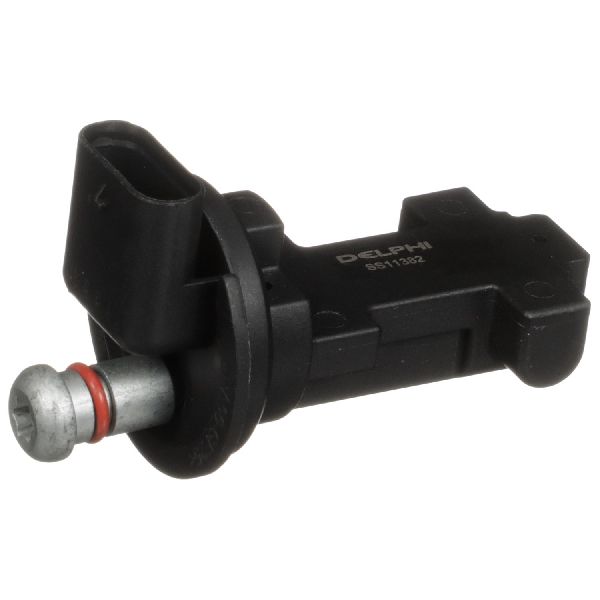
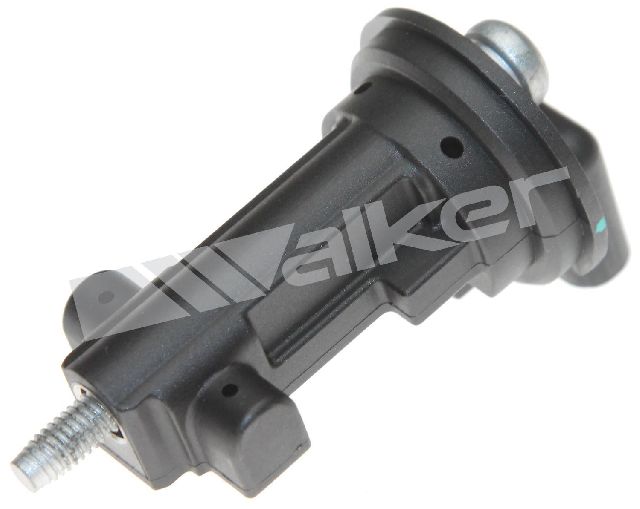
- P000A — This code for 'Bank 1 Camshaft 1 Position Slow Response' often appears with P0300 and strongly points to the common camshaft/phaser issue.
- P0301, P0302, P0303, P0304, P0305, P0306 — Sometimes a random misfire (P0300) will be accompanied by a code for a specific cylinder that is misfiring most frequently. This can help narrow down the issue to a specific bank (Bank 1 is passenger side, Bank 2 is driver side).
- P0132 / P0152 / P0158 — These codes indicate an O2 sensor circuit is reading high voltage. TSB #1804222REVC shows them appearing with P0300, suggesting a fueling issue caused by a faulty sensor or a related problem like an oil leak onto the sensor.
- P00C6-00 — This code for 'Fuel Rail Pressure Too Low - Engine Cranking' is linked to P0300 in TSB #18-044-26, pointing towards a fuel delivery problem as the root cause.
Technical Service Bulletins (TSBs) & Recalls
- 18-024-21
- 18-040-24
- 1804222REVC
- 18-044-26
- 18-006-26 REV.A
Platform-Specific Known Issues
- A recurring theme for the 2020-2023 Gladiator 3.6L is the direct link between P0300 and the need for a PCM software update, a right intake camshaft replacement, or both, as outlined in TSB 18-024-21. Ignoring this TSB and only performing a basic tune-up often leads to the code returning.
- Owner complaints frequently mention a rough idle on cold starts that precedes the P0300 code, pointing towards the mechanical valvetrain issue.
- Multiple TSBs (1804222REVC, 18-044-26, 18-040-24) have been issued for P0300 on this platform, addressing causes from spark knock to fuel pressure, all recommending a PCM software update as part of the fix.
Mechanic-Grade Diagnostic Values
- Upstream O2 Sensor Voltage (at idle, closed loop) — expected: Fluctuating rapidly between 0.1V (lean) and 0.9V (rich).. Failure: A steady voltage, or one that is stuck high (e.g., >0.8V) or low (e.g., <0.2V), indicates a sensor or fueling problem.
- Downstream O2 Sensor Voltage (at idle, closed loop, warm engine) — expected: A relatively steady voltage, typically around 0.45V or higher, with minimal fluctuation.. Failure: If the downstream sensor's voltage begins to fluctuate rapidly, mimicking the upstream sensor, it indicates the catalytic converter is not functioning correctly.
- Mode $06 Misfire Count Threshold — expected: Counts should be at or very near zero for all cylinders during normal operation.. Failure: A count of 50-75 on a cold start may trigger a pending code and disable ESS; a count above 75 will likely set a hard Check Engine Light.
Hidden / Shadow Codes Worth Checking
- Mode $06, Test ID $53 (pre-CANbus) or $A2-$A7 (CANbus): This is not a DTC but a diagnostic monitor for cylinder-specific misfire counts. It allows a technician to see raw misfire data for each cylinder (e.g., $A2 for cylinder 1, $A3 for cylinder 2, etc.) before the count is high enough to trigger a P030x or P0300 code. (see via Requires an advanced scan tool that can access Mode $06 data. The tool will display a list of Test IDs (TIDs) or Component IDs (CIDs) with their current value, a minimum/maximum limit, and a pass/fail status.)
Scan Tool Commands That Help
- wiTECH or advanced aftermarket (e.g., Jscan): Live Misfire Counter — This is the primary tool for diagnosing a P0300. By viewing the live counts for each cylinder, a technician can determine if the misfire is truly random or if it is biased towards one or two specific cylinders, which would change the diagnostic path.
- wiTECH: Small Leak Verification Test (SLVT) — TSB 18-024-21 specifically calls for using this test if P0456 (EVAP System Small Leak) is present alongside P0300, as an EVAP leak can sometimes contribute to fueling issues that cause misfires.
- wiTECH: PCM Relearn/Reset — After replacing major components like a camshaft or the entire PCM, a relearn procedure is necessary for the computer to adapt to the new parts and their specific tolerances. A hard relearn is often done with the dealer tool.
Wiring & Ground Locations
- G907 — A primary ground point for various systems. One owner reported a 'high resistance to the g 907 ground' caused a no-start/no-shift condition, indicating its importance.. A poor ground connection for the PCM or its critical sensors (like crank/cam sensors) can introduce electrical noise or incorrect voltage readings, leading the PCM to misinterpret data and potentially flag a misfire.
- Engine Bay Grounds — Several key ground points are located in the engine bay near the main battery, on the frame behind the front passenger wheel, and on a bridge against the top of the fender.. The PCM, ignition coils, and fuel injectors all rely on solid ground connections to function. Corrosion or looseness at these points can cause intermittent and hard-to-diagnose electrical issues, including misfires.
- PCM Connectors (C1, C2, etc.) — The Powertrain Control Module has multiple large connectors (often designated C1, C2, etc.) that house the wiring for all engine sensors and actuators.. Corrosion on pins or a poorly seated connector can interrupt signals from the crankshaft or camshaft position sensors, directly causing misfire codes. A visual inspection of these connectors is a valid diagnostic step.
- Rear Frame Grounds — Two ground points are located on the frame on either side, accessible after removing the spare tire.. While less likely to be the primary cause for an engine misfire, these grounds are part of the vehicle's overall electrical system. In cases of strange, difficult-to-diagnose electrical issues, ensuring all major grounds are clean and tight is a good practice.
Real Owner Repair Stories
- Jeep Wrangler JK Forum user 'Elteejo' (2012 Jeep Wrangler JK Unlimited (Sahara), 138k miles) — Sudden loss of power, limp mode, flashing CEL, rough idle, codes P0300 and P0018.
❌ Tried (didn't work) Oil change, Transmission fluid change, New spark plugs, New ignition coils, New camshaft sensors (both banks), New crankshaft sensor, All new O2 sensors, New VVT solenoids, Sea Foam in throttle body
✅ What actually fixed it The owner eventually discovered a bent pushrod had caused damage to the valve lifters, the camshaft, and a rocker arm. This mechanical failure was the root cause of the timing jump and misfires.
OEM Part Supersession History
Multiple older revisions→Right Intake Camshaft referenced in TSB 18-024-21— The mandatory replacement of the right intake camshaft when P0300 is present, as per TSB 18-024-21, suggests a design change or improvement in the replacement part to address the wear and timing issues causing the misfire.
Heads up: Failure to replace the camshaft when performing the software flash for P0300 may cause the code to return. The TSB explicitly states the camshaft MUST be replaced.
Model Year Variations Within This Range
- 2024+: For the 2024 model year, the 3.0L EcoDiesel V6 engine option was discontinued. The 3.6L Pentastar V6 remains the sole engine choice, making this P0300 guide relevant for all newer Gladiators until a new powertrain is introduced.
Helpful Videos
Used OEM Parts in Stock
New Aftermarket Parts Available


The information in this article is provided for general reference and educational purposes only. Vehicle specifications, procedures, and part compatibility can vary by production date, trim level, and region. Always consult your vehicle's factory service manual and verify part numbers before purchasing or performing repairs. Safety-critical components such as airbags, seat belts, and braking systems should be installed by a qualified professional.
- Jeep GLADIATOR:
- 🎬 Helpful Videos
- 🛍️ Shop This Part
- What's Unique About the 2020-2023 Jeep GLADIATOR
- Diagnostic Flowchart
- Symptoms You May Notice
- Most Likely Causes
- Rare But Worth Checking
- Diagnosis Steps
- Parts You'll Likely Need
- Related Codes That Often Appear With This One
- Technical Service Bulletins (TSBs) & Recalls
- Platform-Specific Known Issues
- Mechanic-Grade Diagnostic Values
- Hidden / Shadow Codes Worth Checking
- Scan Tool Commands That Help
- Wiring & Ground Locations
- Real Owner Repair Stories
- OEM Part Supersession History
- Model Year Variations Within This Range
- 🎟️ Get 5% Off