

P0300 on 2013-2015 Jaguar XF: Causes for Random Misfire and How to Fix It
P0300 on a 2013-2015 Jaguar XF indicates random cylinder misfires. While common causes include worn spark plugs or faulty ignition coils, this model has specific issues cited in Technical Service Bulletins, such as needing an ECM software update or having a fault in the high-pressure fuel system. On direct-injection engines (all petrol options), carbon buildup on intake valves is also a notable cause. A flashing check engine light requires immediate attention to prevent catalytic converter damag
- P0300 on a 2013-2015 Jaguar XF signifies a random misfire, which is a serious issue that can damage your engine's catalytic converters.
- While you should start with basic checks like spark plugs and ignition coils, be aware that the root cause may be more complex.
- Jaguar has issued specific Technical Service Bulletins (TSBs) that point to an ECM software update or a fault in the high-pressure fuel system as potential fixes.
- A flashing check engine light is a critical warning. Pull over and shut off the engine as soon as it is safe to do so to prevent costly damage.
- Due to the unique potential causes on this vehicle, if basic ignition and vacuum checks don't solve the problem, consulting a professional with Jaguar-specific knowledge is highly recommended.
What's Unique About the 2013-2015 Jaguar XF
While P0300 is a generic code, the 2013-2015 Jaguar XF has specific, documented issues that go beyond typical tune-up parts. All petrol engines in this range are direct-injection, making them susceptible to carbon buildup on intake valves, which doesn't get washed off by fuel. Jaguar also issued Technical Service Bulletins (TSBs) that point to non-obvious causes. One TSB indicates the fix is an Engine Control Module (ECM) software update to protect the engine (JTB00445NAS1). Another points to an internal fault with a metering valve in the high-pressure fuel system as a cause for misfires (JTB00410NAS1). These platform-specific issues mean that simply replacing spark plugs and coils may not resolve the problem.
Diagnostic Flowchart
Tap your situation to follow the diagnostic path that matches what you're seeing on this vehicle.
Symptoms You May Notice
- Flashing or steady Check Engine Light
- Rough engine idle
- Engine hesitation or stumbling during acceleration
- Reduced engine power and poor acceleration
- Hard starting
- Noticeable engine vibrations or shuddering
- Smell of raw fuel from the exhaust
- Replacing oxygen sensors. Faulty O2 sensors can cause fuel trim issues leading to misfires, but it's more common for misfires to cause O2 sensor codes to appear as a secondary effect.
- Replacing only spark plugs when an ignition coil is the true cause.
- Ignoring the possibility of a software issue and repeatedly replacing hardware components.
- Using fuel additives to clean intake valve carbon on a GDI engine; the cleaner never reaches the back of the valves.
Most Likely Causes
- Worn or Fouled Spark Plugs 🔴 High Probability Spark plugs are a standard wear item and are the most common cause of misfires on most gasoline engines. The service interval for the 3.0L V6 is approximately 96,000 miles, but they can fail sooner.
How to confirm: Inspect the spark plugs for wear, carbon buildup, or oil fouling. The recommended service interval should also be checked. A wet plug tip can indicate a non-firing cylinder.
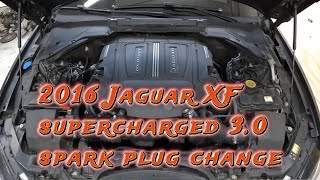
Typical fix: Replace all spark plugs as a set. 🎬 Watch: Step-by-step guide to changing spark plugs on the 3.0L engine. Use high-quality OEM-spec plugs, such as NGK Laser Iridium.
Est. part cost: $80-$200 - Faulty Ignition Coils 🔴 High Probability Ignition coils can fail with age and heat cycles. Jaguar-specific forum discussions frequently cite ignition coils as a primary cause of misfires, sometimes failing on one entire bank.
How to confirm: Use a scan tool with live data to identify which cylinders have the highest misfire counts. Swap the ignition coil from a misfiring cylinder with a known good cylinder and see if the misfire code (e.g., P0301, P0302) follows the coil. 🎬 See how to diagnose and test lean misfires on a Jaguar V8.
Typical fix: Replace the faulty ignition coil. It is often recommended to replace them as a set if they are original and the vehicle has high mileage.
Est. part cost: $50-$150 per coil - Vacuum Leaks 🟡 Medium Probability Plastic and rubber components in the intake system, such as PCV hoses and intake manifold gaskets, can become brittle and crack over time, leading to unmetered air entering the engine and causing a lean condition and misfires. A small hose at the back of the engine, under the fuel rail, is a known but hard-to-find leak source on the 3.0L engine.
How to confirm: Perform a smoke test on the intake system to visually identify any leaks from gaskets, hoses, or seals. Spraying carburetor cleaner near suspected areas while the engine is running and listening for a change in idle RPM is a less precise method.
Typical fix: Replace the leaking hose or gasket. The intake manifold gaskets and various small vacuum lines are common culprits.
Est. part cost: $20-$300 - Engine Control Module (ECM) Software Update Needed 🟡 Medium Probability TSB #JTB00445NAS1 explicitly states that for misfire codes including P0300, the ECM should be reprogrammed to protect the engine. This suggests the original software may be overly sensitive or have logic flaws.
How to confirm: A Jaguar dealership or a qualified independent shop with the correct equipment (like JLR SDD) can check the current software version against available updates.
Typical fix: Reprogramming the ECM with the latest manufacturer software.
Est. part cost: $0 (if under warranty) - $250 - High-Pressure Fuel System Fault 🟡 Medium Probability TSB #JTB00410NAS1 identifies a potential internal fault with the metering valve in the high-pressure fuel pump as a cause for misfires on this platform. Low fuel pressure can also be caused by a failing in-tank pump.
How to confirm: This requires advanced diagnostics, including monitoring fuel rail pressure with a scan tool. A P0087 code (Fuel Rail/System Pressure - Too Low) often accompanies P0300 in this scenario.
Typical fix: Replacement of the high-pressure fuel pump or the in-tank low-pressure pump, depending on diagnosis.
Est. part cost: $500-$1200
Rare But Worth Checking
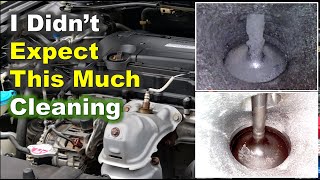
- Intake Valve Carbon Buildup: Because all 2013-2015 XF petrol engines use direct injection (GDI), fuel is not sprayed over the intake valves. Oil vapors from the PCV system can bake onto the hot valves, causing carbon buildup that disrupts airflow at idle, leading to random misfires. This is often worse on cars used for frequent short trips. The fix is a mechanical cleaning process like walnut blasting. 🎬 Watch: How to properly clean carbon buildup from intake valves.
- Clogged or Faulty Fuel Injectors: While less common than coil or plug failure, a dirty or failing injector can cause misfires. In some cases on the AJ133 V8, multiple injectors on one bank have been known to fail simultaneously. Seized injectors can be very difficult to remove.
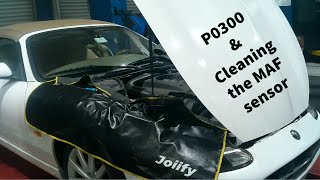
- Dirty Mass Airflow (MAF) Sensor: A contaminated MAF sensor can send incorrect airflow readings to the computer, leading to an improper air/fuel mixture and lean misfires, especially under load. Cleaning the sensor with a dedicated MAF sensor cleaner can sometimes resolve the issue.
- Low Engine Compression: Internal engine issues like worn timing chains/guides, a burnt valve, or worn piston rings can cause a loss of compression, leading to misfires. This is a more serious mechanical issue and should be confirmed with a compression and leak-down test if all other causes are ruled out.
Diagnosis Steps
- Read all fault codes using an OBD-II scanner. Note any codes that accompany P0300, especially cylinder-specific (P030x) or fuel pressure (P0087) codes.
- Check the freeze-frame data to understand the engine conditions (RPM, load, temperature) when the misfire occurred.
- Inspect spark plugs for wear, damage, or fouling. Replace if necessary, ensuring correct OEM part and gap.
- Test the ignition coils. Use a scanner's live data to watch misfire counts per cylinder. Swap a coil from a high-count cylinder with a no-count cylinder and see if the misfire follows the coil.
- If ignition components are good, check for vacuum leaks using a smoke machine. Pay close attention to the intake manifold gaskets, PCV hoses, and all vacuum lines, especially those at the rear of the engine.
- Test fuel pressure. Monitor both low-pressure and high-pressure fuel systems using a capable scan tool to rule out a weak fuel pump or faulty high-pressure pump regulator.
- If the above steps do not reveal the cause, consult a dealer or qualified shop to check for required ECM software updates as per TSB #JTB00445NAS1.
- For GDI engines (all petrol models), if misfires are primarily at idle and other causes are ruled out, use a borescope to visually inspect the intake valves for carbon buildup.
- As a final step, perform an engine compression test and leak-down test to rule out mechanical issues like bad rings, valves, or timing problems.
Parts You'll Likely Need
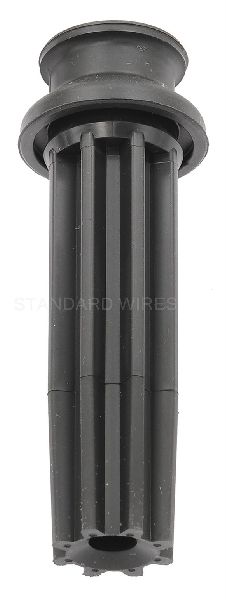
- Ignition Coil
(OEM #C2D28267 (For 3.0L V6/5.0L V8))— Ignition coils are a very common failure item leading to misfires. The V6 and V8 engines in this platform share the same coil design. - Spark Plugs — Worn or fouled spark plugs are a primary cause of misfires and are a regular maintenance item.
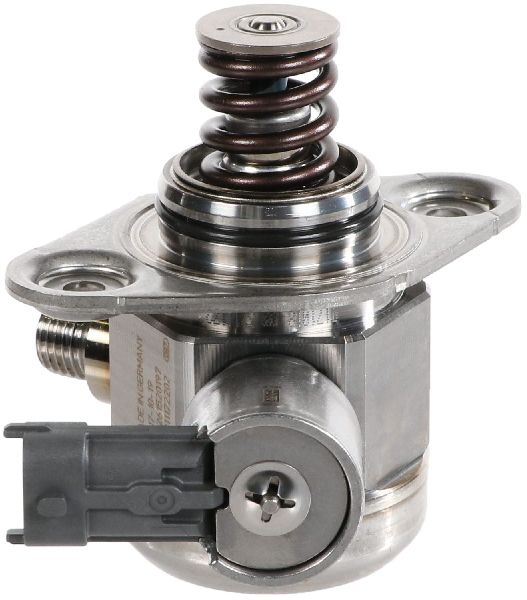
- High-Pressure Fuel Pump
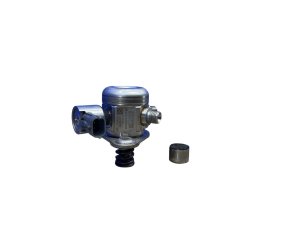
(OEM #C2Z31828 (For 5.0L V8))— TSB JTB00410NAS1 points to faults in the high-pressure fuel system. The 3.0L V6 and 5.0L V8 use two HPFPs, which often fail and cause a P0087 code along with P0300. - Intake Manifold Gaskets — Vacuum leaks from aged intake gaskets are a common source of lean-condition misfires on many platforms, including the XF.
Related Codes That Often Appear With This One
- P0301-P0308 — These codes indicate a misfire on a specific cylinder (e.g., P0301 is cylinder 1). P0300 often appears alongside one or more of these codes, helping to narrow down the issue.
- P0316 — This code indicates a misfire was detected within the first 1,000 engine revolutions on startup. TSB #JTB00533NAS1 links this code directly with P0300 on these vehicles, and it often points to a more persistent issue.
- P1315 — This is a Jaguar-specific code for 'Persistent Misfire'. TSBs #JTB00445NAS1 and #JTB00410NAS1 show this code appearing with P0300, indicating a severe or ongoing misfire condition that could damage the catalytic converter.
- P0087 — Indicates 'Fuel Rail/System Pressure - Too Low'. Seeing this with P0300 strongly points towards a failing high-pressure or low-pressure fuel pump as the root cause.
Technical Service Bulletins (TSBs) & Recalls
- JTB00533NAS1: Misfire codes stored with P0316 (misfire on startup).
- JTB00445NAS1: Recommends ECM reprogramming for P0300 and other misfire codes.
- JTB00410NAS1: Links misfire codes to a potential fault in the high-pressure fuel system's metering valve.
Platform-Specific Known Issues
- TSB JTB00445NAS1: For vehicles with the 3.0L SCV6 or 5.0L V8 engines, an ECM software update is recommended to address misfire detection logic and protect the engine.
- TSB JTB00410NAS1: Points to an internal fault in the high-pressure fuel pump's metering valve as a specific cause for rough running and misfire codes on the 3.0L SCV6 and 5.0L V8 engines.
- TSB JTB00533NAS1: Notes that code P0316 (misfire on startup) is often stored alongside P0300-P0308 codes and may require an ECM software update to resolve.
- Intake Valve Carbon Buildup: As these are all GDI engines, they are prone to carbon deposits on the intake valves, which can cause idle misfires. This is not fixed with fuel additives and requires mechanical cleaning (walnut blasting).
- Hidden Vacuum Leaks: Owners on forums report hard-to-find vacuum leaks from small, brittle hoses at the rear of the engine bay, often under the intake manifold or supercharger, which requires significant disassembly to access.
Mechanic-Grade Diagnostic Values
- Low-Pressure Fuel Pump (In-tank) — expected: 40-75 PSI. Failure: Pressure below 40 PSI indicates a weak in-tank pump.
- High-Pressure Fuel Pump (HPFP) - GDI Engines — expected: Up to 2,900 PSI (approx. 200 bar). At idle, pressure may be around 500-600 PSI, rising to over 2,100 PSI on startup.. Failure: A reading of 525-550 PSI at high RPM (WOT) is very low and indicates HPFP failure, often triggering code P0087.
- Ignition Coil Primary Resistance — expected: ~0.75 Ohms. Failure: An 'open' reading indicates a definitively bad coil, but a reading within spec does not guarantee the coil is good under load.
- Mass Airflow (MAF) Sensor Voltage — expected: Key-on, engine-off: ~0.2-0.3V. Idle: ~0.5-1.5V.. Failure: Incorrect voltage readings or a failure to increase voltage with RPM can indicate a faulty sensor or wiring issue.
- Long Term Fuel Trim (LTFT) — expected: Close to 0%, typically within +/- 10%.. Failure: Sustained positive values, such as +25%, indicate the ECU is adding a large amount of fuel to compensate for a lean condition, often caused by a vacuum leak or weak fuel delivery.
Scan Tool Commands That Help
- JLR SDD (Symptom Driven Diagnostics): ECU Reprogramming / Software Update — Used to apply manufacturer software updates as specified in TSBs JTB00445NAS1 and JTB00533NAS1 to resolve misfire detection logic issues.
- JLR SDD (Symptom Driven Diagnostics): Live Data Monitoring (Misfire Counts, Fuel Rail Pressure) — Essential for initial diagnosis to monitor misfires per cylinder in real-time to identify a specific cylinder, and to check if high and low-pressure fuel systems are meeting commanded values.
Wiring & Ground Locations
- Engine Control Module (ECM) Ground — The ECM is located at the left rear of the engine compartment. A key ground point is G1D108/1.. A poor ECM ground can cause erratic behavior, including miscalculations for fuel and spark, leading to random misfires.
- Main Engine Grounding Strap — Located on the right side (passenger side in US) of the vehicle, connecting the engine/transmission assembly to the frame, often under the starter motor.. A corroded or loose main ground strap can cause a weak spark, poor sensor readings, and other electrical issues that manifest as misfires.
- Ignition Coil Power/Ground — Power is supplied to the coils via the Engine Junction Box (underhood fuse box). The ECM provides the ground path to fire each coil.. A fault in the wiring harness or a poor ground at the ECM can prevent one or more coils from firing correctly.
- G1D124 Ground Point — Located behind the right-hand front wheel arch liner.. This ground point is used for multiple systems, and corrosion in this area from road debris and salt can cause difficult-to-diagnose electrical faults.
Real Owner Repair Stories
- JaguarForums.com (2015 Jaguar XF 3.0 AWD, 75k miles) — Check engine light with misfire, flashing under acceleration. Codes P0300, P0301, P0302, P0303, P0306, P2187, P2189.
❌ Tried (didn't work) Using injector cleaner (temporary improvement)., Initial diagnosis pointed towards common causes like spark plugs or coils.
✅ What actually fixed it The user reported that after inspection, one spark plug had oil on it, pointing towards a valve cover gasket leak. The combination of lean codes (P2187/P2189) and multi-cylinder misfires ultimately led to the conclusion that faulty fuel injectors were the root cause, a common issue on this engine when multiple cylinders on different banks are misfiring.
Model Year Variations Within This Range
- 2013: 2013 was a major update year. The base 5.0L V8 was replaced by a new 3.0L Supercharged V6 (340hp) and a 2.0L Turbo I4 (240hp). A new 8-speed automatic transmission and an optional All-Wheel Drive system (V6 only) were introduced.
- 2013-2015: A recall was issued for 2013-2015 models with the 2.0L Turbo engine. A retaining bolt for the Front End Auxiliary Drive (FEAD) idler pulley could fail, leading to a loss of power steering assist. While not a direct cause of P0300, a failing accessory drive can cause erratic engine behavior.
Helpful Videos

Used OEM Parts in Stock




New Aftermarket Parts Available




The information in this article is provided for general reference and educational purposes only. Vehicle specifications, procedures, and part compatibility can vary by production date, trim level, and region. Always consult your vehicle's factory service manual and verify part numbers before purchasing or performing repairs. Safety-critical components such as airbags, seat belts, and braking systems should be installed by a qualified professional.
- Jaguar XF:
- 🎬 Helpful Videos
- 🛍️ Shop This Part
- What's Unique About the 2013-2015 Jaguar XF
- Diagnostic Flowchart
- Symptoms You May Notice
- Most Likely Causes
- Rare But Worth Checking
- Diagnosis Steps
- Parts You'll Likely Need
- Related Codes That Often Appear With This One
- Technical Service Bulletins (TSBs) & Recalls
- Platform-Specific Known Issues
- Mechanic-Grade Diagnostic Values
- Scan Tool Commands That Help
- Wiring & Ground Locations
- Real Owner Repair Stories
- Model Year Variations Within This Range
- 🎟️ Get 5% Off