

P0300 on 2016-2019 Honda Pilot: Random Misfire Causes and Fixes
On a 2016-2019 Honda Pilot, a P0300 code, especially with P219A/B, is most often caused by faulty fuel injectors due to internal debris. Honda has acknowledged this with a warranty extension to 10 years/150,000 miles and issued TSBs (like 20-100 and 21-010) that call for replacing all six injectors with an updated part. Expect to pay $775-$1150 for a shop to replace the injectors if not covered by warranty.
- P0300 on a 2016-2019 Pilot is very frequently caused by faulty fuel injectors, a known issue acknowledged by Honda.
- Always check for companion codes. The presence of P219A or P219B is a strong clue pointing directly to the injector problem.
- Before paying for repairs, check with a Honda dealer to see if your vehicle's VIN is covered by the warranty extension for this issue (TSB 20-100 or 21-010).
- The correct fix is to replace all six fuel injectors as a set, not just one. A new fuel joint pipe is also required for the job.
What's Unique About the 2016-2019 Honda PILOT

The 2016-2019 Honda Pilot uses a 3.5L direct-injection V6 engine (J35Y6). This engine platform is known for a specific issue where debris from the high-pressure fuel pump or the original injector manufacturing process can clog the fuel injectors. This leads to an air-fuel imbalance and triggers the P0300 code, often accompanied by P219A and P219B. Honda has acknowledged this with multiple Technical Service Bulletins (TSBs), starting with A18-025 and superseded by warranty extensions 20-100 and 21-010, that recommend replacing all six fuel injectors as a set.
Diagnostic Flowchart

Tap your situation to follow the diagnostic path that matches what you're seeing on this vehicle.
Symptoms You May Notice
- Rough or shaking idle
- Hesitation or stumbling during acceleration
- Noticeable loss of engine power
- Flashing or solid Check Engine Light
- Reduced fuel economy
- Engine running rough
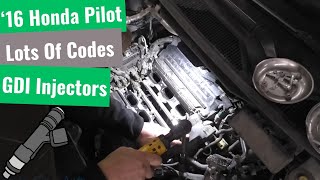
- Smell of gasoline from the exhaust 🎬 Watch: Diagnosing a P0300 random misfire on a Pilot
- Replacing only one ignition coil or spark plug when the root cause is the fuel injectors.
- Replacing oxygen (A/F) sensors when codes P219A/B appear, as these codes are usually symptomatic of the injector issue on this vehicle, not a faulty sensor.
- Performing a tune-up (plugs, coils) without addressing the known fuel injector TSB, leading to the problem returning.
Most Likely Causes

- Faulty or Clogged Fuel Injectors 🔴 High Probability Honda issued TSBs (A18-025, later superseded by 20-100 and 21-010) stating that debris from the high-pressure pump or original manufacturing can clog the injectors. Honda also extended the warranty to 10 years or 150,000 miles for this specific issue on many affected vehicles.
How to confirm: Scan for codes P219A/B, which strongly point to this issue. A dealer can check the vehicle's VIN for eligibility under the warranty extension. The TSB provides a specific diagnostic procedure, which may include a cylinder AF balance test.
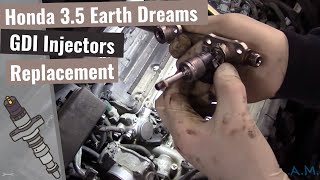
Typical fix: Replace all six fuel injectors as a set with the updated part (16010-RLV-315), along with the one-time-use fuel joint pipe and associated seals. 🎬 See this step-by-step GDI injector replacement walkthrough A PCM software update may also be required per TSB 20-100 for certain vehicles.
Est. part cost: $240-$360 for a Genuine Honda injector set (16010-RLV-315). - Worn or Fouled Spark Plugs 🟡 Medium Probability While a standard maintenance item, spark plugs can become fouled by oil or carbon, especially if other issues like VCM (Variable Cylinder Management) problems exist on some Honda V6 engines, though the injector issue is more prevalent for P0300 on this specific platform.
How to confirm: Remove and inspect the spark plugs. Look for heavy carbon deposits, oil fouling, or worn electrodes. The service interval for the original equipment NGK Iridium plugs is typically around 100,000 miles.
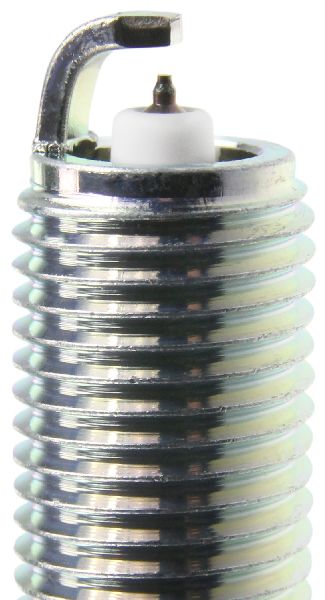
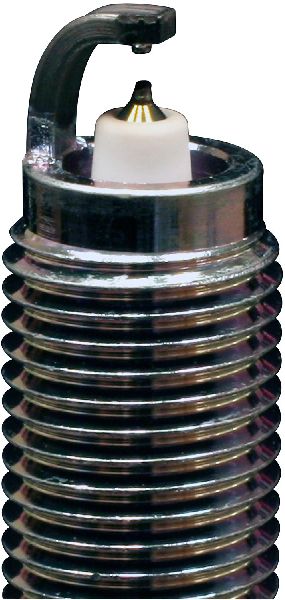
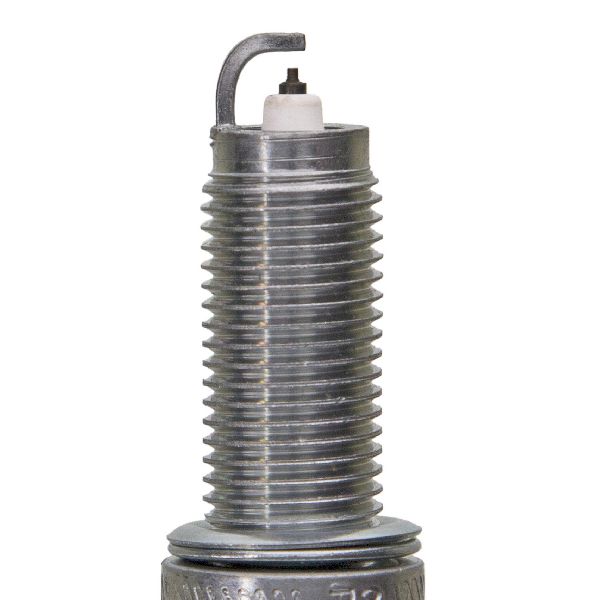
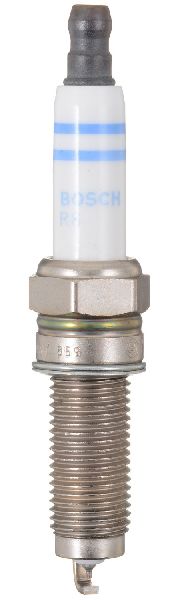
Typical fix: Replace all six spark plugs. Use high-quality Iridium plugs like the NGK originals.
Est. part cost: $60-$120 for a set of six. - Failing Ignition Coils ⚪ Low Probability
How to confirm: While the engine is running, use a scan tool with live data to monitor misfire counts on each cylinder. If a specific cylinder misfire code (e.g., P0304) is present, swap the coil from that cylinder with a known good one and see if the misfire follows the coil to the new cylinder.
Typical fix: Replace the single faulty ignition coil. It is not usually necessary to replace all of them at once.
Est. part cost: $40-$80 per coil.
Rare But Worth Checking
- Carbon Buildup on Intake Valves: Direct injection engines like the J35Y6 can be prone to carbon buildup on the back of the intake valves over time, which can disrupt airflow and cause misfires. This typically occurs at higher mileage (100k+ miles) and may require walnut blasting to clean.
- Vacuum Leak: A leak in a vacuum hose or intake manifold gasket can introduce unmetered air, leading to a lean condition and random misfires. A mechanic can use a smoke machine to find the source of the leak.
- VCM (Variable Cylinder Management) Issues: Though more commonly associated with older Pilot models, issues with the VCM system can sometimes lead to oil consumption and spark plug fouling on specific cylinders, which could contribute to a P0300 code. Many owners install a VCM disabling device as a preventative measure.
- Faulty Rocker Arm Oil Pressure Switch: A stuck or faulty rocker arm oil pressure switch (part of the VTEC system) can cause rough idle and misfires, sometimes logging codes like P3400 or P3497 alongside cylinder misfire codes. This switch monitors oil pressure for the variable valve timing system, and its failure can disrupt proper engine operation.
Diagnosis Steps
- Read all stored Diagnostic Trouble Codes (DTCs) with an OBD-II scanner.
- Check the vehicle's VIN with a Honda dealer or online to see if it is covered under the fuel injector warranty extension (TSB 20-100 or 21-010). This should be the first step if P0300 is accompanied by P219A/B.
- If P219A or P219B are present, the primary suspect is the fuel injectors per Honda TSBs. Proceed with the TSB's corrective action.
- If no other codes are present, inspect the spark plugs. Remove them and check for wear, fouling, or incorrect gap. Replace if they are worn or past their 100,000-mile service life.
- Test the ignition coils. If a specific cylinder misfire is also logged (e.g., P0304), swap the ignition coil from that cylinder with another one to see if the misfire follows the coil.
- If the above steps do not resolve the issue, and especially if P219A/B codes are present, the definitive fix is to replace the set of six fuel injectors and the fuel joint pipe per Honda's procedure.
- Check for vacuum leaks by inspecting all vacuum hoses and listening for a hissing sound around the intake manifold. A smoke test is the most effective method.
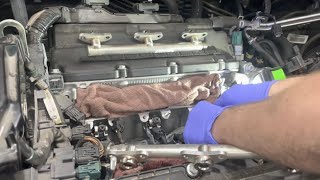
- After repairs, clear the codes and perform a drive cycle to ensure the issue is resolved. If injectors were replaced under TSB 20-100, ensure the PCM software update was also performed. 🎬 Watch: A professional mechanic's guide to the warranty repair A CKP (Crankshaft Position) Pattern Relearn procedure may be necessary using a capable scan tool.
Parts You'll Likely Need

- Fuel Injector Set (Set of 6)
(OEM #16010-RLV-315)— This is the most common cause of P0300 on this vehicle, as documented by Honda's own service bulletins. The fix requires replacing all six injectors. This part number supersedes the older 16010-RLV-305.
Trusted brands: Genuine Honda
OEM price range: $235-$360
Aftermarket price range: $80-$150 - Iridium Spark Plugs (Set of 6)
(OEM #12290-59B-003)— Worn spark plugs are a common maintenance item and a frequent cause of misfires. They should be inspected and replaced if necessary, especially on higher mileage vehicles.
Trusted brands: NGK, Denso
OEM price range: $100-$150
Aftermarket price range: $60-$120 - Fuel Joint Pipe Set
(OEM #16012-R9P-315)— This is a one-time-use part that must be replaced when changing the fuel injectors, per Honda's repair procedure, to prevent dangerous high-pressure fuel leaks. The injector kit 06160-RLV-305 includes this pipe.
Trusted brands: Genuine Honda
OEM price range: $30-$50
Related Codes That Often Appear With This One
- P0301-P0306 — These are cylinder-specific misfire codes that often accompany the general P0300 code, helping to narrow down which cylinders are most affected.
- P219A / P219B — These codes indicate an air-fuel ratio imbalance on Bank 1 or Bank 2. On this Pilot, they are a strong indicator that the fuel injectors are the root cause, as stated in Honda's TSBs.
- P0420 / P0430 — These codes indicate low catalyst efficiency. They can appear after the engine has been misfiring for an extended period, causing damage to the catalytic converters from unburned fuel. The TSBs for the injector issue also address these codes, sometimes requiring a software update in addition to injector replacement.
Technical Service Bulletins (TSBs) & Recalls

- A18-025: The original TSB identifying the fuel injector issue as the cause for P0300 and P219A/B codes. It has been superseded for most vehicles.
- 20-100: Warranty Extension for certain 2016-17 Pilots (and other models) that require both fuel injector replacement AND a PCM software update.
- 21-010: Warranty Extension for certain 2017-19 Pilots (and other models) that require fuel injector replacement but DO NOT require a PCM software update.
Platform-Specific Known Issues
- Honda has issued multiple Technical Service Bulletins (TSBs), including A18-025 and its successors 20-100 and 21-010, regarding a combination of codes P0300-P0306 and P219A/B. The cause is identified as potential clogging of the fuel injectors from debris.
- Honda extended the warranty for this specific fuel injector issue to 10 years or 150,000 miles from the original date of purchase for many affected vehicles. Owners must check with a Honda dealer for eligibility based on their VIN, as not all vehicles are covered.
Mechanic-Grade Diagnostic Values
- Ignition Coil Primary Winding Resistance — expected: 0.49 - 0.57 ohms. Failure: A reading outside this range indicates a faulty coil.
- Ignition Coil Secondary Winding Resistance — expected: 9.5 - 11.1 kilohms. Failure: A reading outside this range, or an open circuit (OL), indicates a faulty coil.
Scan Tool Commands That Help
- Honda HDS (or equivalent professional scanner): Cylinder AF Test — This test is specified in TSB 21-010 to confirm a fuel injector issue when only P0420 or P0430 codes are present. It helps determine if an air-fuel imbalance is the root cause before replacing injectors.
- Honda HDS (or equivalent professional scanner): CKP Pattern Clear / CKP Pattern Learn — This procedure is required after repairing a misfire or replacing the crankshaft position (CKP) sensor. It erases the old crankshaft position data from the PCM and learns the new pattern, which is crucial for accurate misfire detection and timing.
- Honda HDS (or equivalent professional scanner): PCM Reset — A PCM reset clears all stored DTCs, freeze data, and learned values except for the CKP pattern. This is a more comprehensive reset than a simple DTC clear and may be needed after certain repairs.
Wiring & Ground Locations
- Main Engine Ground — On the chassis near the battery. From the factory, this is often a small 4-gauge wire connected to a painted surface.. A poor main ground can cause a host of electrical issues, including erratic sensor readings and weak spark, which can contribute to misfires. Some owners report that upgrading this 'Big 3' ground wire and ensuring a clean metal-to-metal connection can improve charging voltage and electrical stability.
Real Owner Repair Stories
- NHTSA ODI Complaint #11586475 (2019 Honda Pilot) — Vehicle stored multiple diagnostic trouble codes (P0430, P0300, P0304, P0306, and P219A) and required towing.
✅ What actually fixed it The failure of three of the six fuel injectors was diagnosed as the cause. The owner noted that despite Honda having a warranty extension for this exact issue on many similar vehicles, their specific VIN was not covered, and they had to pay for the repair.
OEM Part Supersession History
16010-RLV-305→16010-RLV-315— The original injectors were prone to clogging from debris from the high-pressure fuel pump or the manufacturing process itself, as documented in Honda's TSBs. The new part number is the updated replacement.
Heads up: TSB A18-025 notes a different injector set for 2019 Pilot Touring and Elite models (16010-RLV-306), suggesting a potential incompatibility between trims. The primary replacement kit for most models is 06160-RLV-305, which includes the updated injectors and required seals/pipes.
Model Year Variations Within This Range
- 2016-2017: Vehicles in this range requiring the fuel injector replacement under warranty extension TSB 20-100 also require a PCM software update.
- 2017-2019: Vehicles in this range requiring the fuel injector replacement under warranty extension TSB 21-010 do NOT require a PCM software update. Note: There is an overlap in the 2017 model year, making a VIN check with a dealer essential.
- 2019: The 2019 model year was a mid-cycle refresh. While the 3.5L V6 engine remained the same, Touring and Elite trims received an updated 9-speed automatic transmission with new hardware and software to address complaints about shift quality. TSB A18-025 also lists a different fuel injector part number (16010-RLV-306) specifically for 2019 Touring and Elite trims.
Helpful Videos
Used OEM Parts in Stock

New Aftermarket Parts Available


The information in this article is provided for general reference and educational purposes only. Vehicle specifications, procedures, and part compatibility can vary by production date, trim level, and region. Always consult your vehicle's factory service manual and verify part numbers before purchasing or performing repairs. Safety-critical components such as airbags, seat belts, and braking systems should be installed by a qualified professional.
- Honda PILOT:
- 🎬 Helpful Videos
- 🛍️ Shop This Part
- What's Unique About the 2016-2019 Honda PILOT
- Diagnostic Flowchart
- Symptoms You May Notice
- Most Likely Causes
- Rare But Worth Checking
- Diagnosis Steps
- Parts You'll Likely Need
- Related Codes That Often Appear With This One
- Technical Service Bulletins (TSBs) & Recalls
- Platform-Specific Known Issues
- Mechanic-Grade Diagnostic Values
- Scan Tool Commands That Help
- Wiring & Ground Locations
- Real Owner Repair Stories
- OEM Part Supersession History
- Model Year Variations Within This Range
- 🎟️ Get 5% Off