

P0300 on 2016-2018 Honda Civic: Random Misfire Causes and Fixes
P0300 on a 2016-2018 Civic with the 1.5L Turbo engine is very often related to a known oil dilution issue. This happens when unburned fuel gets into the engine oil, especially in cold weather or on short drives, causing misfires. The primary fix, covered by Honda's warranty extension and TSB A19-033, is a software update and possibly replacing the A/C control unit to help the engine warm up faster. If that doesn't solve it, the most common causes are fouled spark plugs or faulty/leaking fuel inj
- For a 2016-2018 Civic 1.5T, P0300 is not a typical random misfire. Your first step should always be to check with a Honda dealer about TSB A19-033.
- The root cause is often an oil dilution problem that Honda addresses with a software update, which may be covered by a warranty extension.
- If the software fix has been done or doesn't apply, the next most likely causes are fuel-fouled spark plugs or failing fuel injectors.
- A flashing check engine light indicates a severe misfire that can quickly destroy your catalytic converter, requiring an immediate stop to driving.
- Check your oil level and smell. A high oil level that smells like gas is a tell-tale sign of the oil dilution problem.
What's Unique About the 2016-2018 Honda CIVIC

The 10th generation Civic with the 1.5L direct-injected turbo engine (L15B7) is known for a specific issue where unburned fuel can dilute the engine oil. This problem, particularly in colder climates or with frequent short trips, prevents the engine from getting hot enough to vaporize all the injected fuel, allowing it to seep past piston rings into the crankcase. This thins the oil, reduces lubrication, and leads to the random misfires that trigger a P0300 code. Honda acknowledged this by issuing technical service bulletins (A19-033) and extending the vehicle's warranty to cover software updates and part replacements to mitigate the problem.
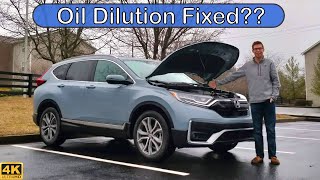
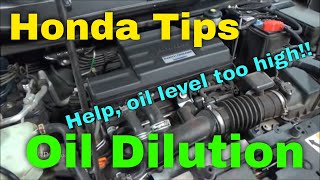
🎬 Watch: Exploring the oil dilution issue and common myths.Diagnostic Flowchart

Tap your situation to follow the diagnostic path that matches what you're seeing on this vehicle.
Symptoms You May Notice

- Rough or unstable engine idle
- Hesitation or stumbling during acceleration
- Noticeable loss of engine power
- Flashing Check Engine Light (in severe cases)
- Reduced fuel economy
- Smell of gasoline from the exhaust or inside the cabin
- Engine oil level is over the full mark on the dipstick and smells of fuel.
- Whirling noise from the engine compartment, as specifically mentioned in TSB A19-033.
- Replacing only spark plugs or ignition coils without addressing the underlying software/injector issue. As noted in owner complaints and forum discussions, simply replacing tune-up parts often provides only a temporary fix, with the misfire returning until the oil dilution and/or injector problem is solved.
Most Likely Causes

- ECU Software Calibration (Oil Dilution Issue) 🔴 High Probability The 1.5L Turbo engine's control logic in early models could allow fuel to mix with engine oil, causing misfires. Honda issued TSB A19-033 to fix this with a software update for the engine and A/C control units. The A/C control unit is replaced to alter climate control logic, allowing the engine to warm up faster and burn off excess fuel.
How to confirm: A Honda dealership can check your vehicle's VIN to see if the warranty extension (6 years/unlimited miles) and TSB A19-033 apply and have been completed.
Typical fix: Dealer performs a software update for the Powertrain Control Module (PGM-FI) and A/C unit, and changes the engine oil. This is often covered under Honda's warranty extension.
Est. part cost: $0 (if covered under warranty extension) - Faulty Fuel Injectors 🔴 High Probability Leaking fuel injectors are a widely known issue on this platform and are a primary contributor to both oil dilution and misfires. Many owners report that even after the TSB software fix, the P0300 code returned and was only resolved by replacing the injectors. Honda has released an updated part number for the injector set.
How to confirm: This is difficult to confirm without professional tools. A mechanic can perform a fuel injector balance test. Another sign is if spark plugs are consistently fuel-fouled. Some owners have identified having the old-style injectors by part number.
Typical fix: Replace all four fuel injectors with the updated OEM part number (16010-59B-315). It is strongly recommended to replace them as a set.
Est. part cost: $450-$650 for a set of four OEM injectors. - Fouled or Worn Spark Plugs 🟡 Medium Probability Spark plugs are a regular maintenance item. The oil dilution and/or leaking injector issue can cause them to become fouled with fuel or carbon more quickly than usual, leading to weak or no spark.
How to confirm: Remove the spark plugs and inspect them for wear, carbon tracking, or signs of being wet and black with fuel or oil. TSB A19-033 includes specific photo examples of fouled plugs to look for.
Typical fix: Replace all four spark plugs. It is recommended to use the OEM-spec NGK or Denso plugs.
Est. part cost: $80-$120 - Failing Ignition Coils ⚪ Low Probability Ignition coils are a common failure item on most modern engines as they age, but are less likely to be the root cause on this platform compared to injectors or software.
How to confirm: While the engine is idling, unplug one ignition coil at a time. If unplugging a coil causes no change in the idle, that coil's cylinder is likely misfiring. You can also swap the suspected bad coil with a known good one and see if the misfire code follows the coil to the new cylinder (e.g., P0301 moves to P0302).
Typical fix: Replace the faulty ignition coil.
Est. part cost: $50-$80 per coil
Rare But Worth Checking
- Clogged EGR Passages: While less common on this specific model, a clogged Exhaust Gas Recirculation (EGR) system can disrupt the air-fuel mixture and cause random misfires. Some owners on forums have reported cleaning the EGR valve as part of their diagnosis.
- Vacuum Leak: A leak in a vacuum hose or intake manifold gasket can introduce unmetered air into the engine, leading to a lean condition and misfires across all cylinders. This can be checked with a smoke test.
- Low Fuel Pressure: A weak high-pressure fuel pump (HPFP) can starve the engine for fuel, causing lean misfires that may appear random. This is less common than injector failure but possible.
- Incorrect Valve Clearance: While Honda engines are known for requiring valve adjustments over their life, it's a less common cause for P0300 on the L15B7 compared to older Honda engines. However, some specialty shops have noted seeing incorrect valve lash on L15B7 engines with mileage as low as 10k-50k miles. This can cause compression loss and lead to misfires.
Diagnosis Steps
- Check Vehicle History First: Contact a Honda dealer with your VIN to determine if TSB A19-033 or other related warranty extensions apply and have been completed. This is the most critical first step as the repair may be free.
- Check Oil Level and Smell: Pull the engine oil dipstick. If the level is noticeably above the 'full' mark and has a strong smell of raw gasoline, this is a classic sign of the oil dilution issue.
- Scan for Other Codes: Use an OBD-II scanner to check for other codes. The presence of P0172 (System Too Rich) is a very strong indicator that you are dealing with the oil dilution/injector issue described in Honda's TSBs.
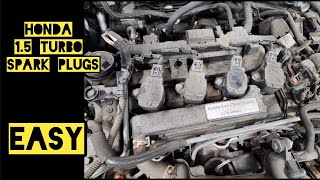
- Inspect Spark Plugs: Remove and inspect all four spark plugs. Look for heavy black, sooty carbon fouling or plugs that are wet with fuel. Compare them to the images of fouled plugs in TSB A19-033 if possible. Replace if they are in poor condition.
- Test Ignition Coils: If a specific cylinder misfire code (e.g., P0301) is also present, swap that ignition coil with one from a known good cylinder. Clear the codes and drive. If the code 'follows' the coil (e.g., you now have a P0302), the coil is bad.
- Professional Diagnosis for Injectors: If the TSB has been performed and new plugs/coils do not fix the issue, the problem is very likely the fuel injectors. Confirming this requires a professional fuel system diagnosis. Many owners opt to proactively replace the injectors with the updated part number at this stage.
- Check for Vacuum Leaks: A less common cause, but worth checking. Listen for a hissing sound around the intake manifold at idle or have a mechanic perform a smoke test to find leaks.
Parts You'll Likely Need
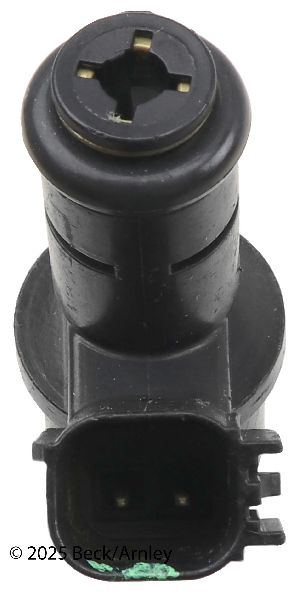
- Fuel Injector Set
(OEM #16010-59B-315)— Faulty/leaking injectors are a known primary cause of misfires and oil dilution on the 1.5T engine. Honda updated the part to this number, and it is sold as a kit of four. This is often the final fix when spark plugs and software updates are not enough.
Trusted brands: Honda (OEM)
OEM price range: $420-$650 for a set of four.
Aftermarket price range: Not Recommended - Spark Plugs
(OEM #12290-59B-003)— These are a primary wear item and are often fouled due to the platform's oil dilution and injector issues. They are often replaced as the first step in diagnosis or as part of the TSB procedure.
Trusted brands: NGK, Denso
OEM price range: $25-$35 per plug
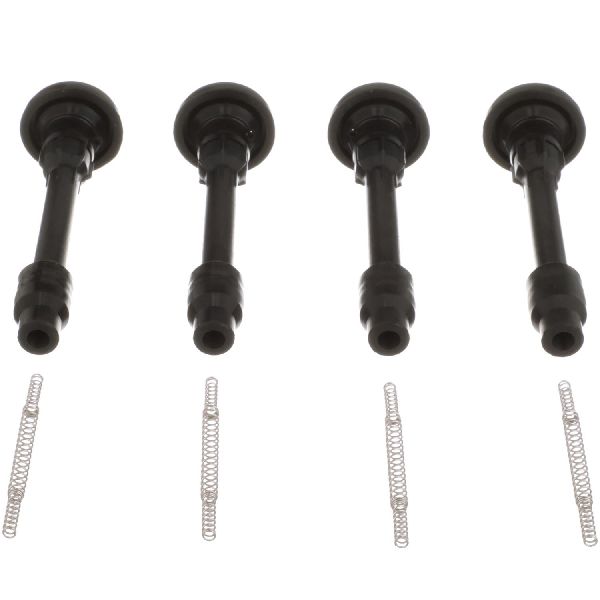
Aftermarket price range: $20-$30 per plug - Ignition Coil
(OEM #30520-59B-023)— A single faulty ignition coil can cause a random misfire code, though it's more common for it to set a specific cylinder code. They are a common wear item.
Trusted brands: Honda (OEM), Hitachi, NGK, Denso
OEM price range: $70-$100 per coil
Aftermarket price range: $40-$80 per coil
Related Codes That Often Appear With This One
- P0172 — Stands for 'System Too Rich'. This code is explicitly mentioned in Honda's TSB A19-033 alongside P0300, as leaking injectors or oil dilution cause an overly rich fuel mixture that the ECU detects.
- P0301, P0302, P0303, P0304 — These are cylinder-specific misfire codes. They often accompany P0300 when the random misfires start to occur more frequently on certain cylinders, helping to pinpoint a failing injector or coil.
Technical Service Bulletins (TSBs) & Recalls
- A19-033: The main TSB and warranty extension for the oil dilution issue, covering software updates, A/C control unit replacement, and potential damage to other engine components for 2016-18 Civics.
- A19-012: An earlier version of the bulletin which was superseded by A19-033.
- A18-137: A precursor TSB also addressing drivability and misfire codes.
Platform-Specific Known Issues
- Oil Dilution: The most significant issue for the 2016-2018 Civic 1.5T is fuel contaminating the engine oil. This is caused by a combination of direct injection, software parameters that don't allow the engine to warm up quickly enough in certain conditions (cold weather, short trips), and potentially leaking fuel injectors. Honda addressed this with TSB A19-033, which includes a software update for the engine and A/C control unit (to increase engine load and warm-up speed), and an oil change. A warranty extension to 6 years/unlimited miles was also issued for related failures.
Mechanic-Grade Diagnostic Values
- Fuel Injector Resistance — expected: High Impedance (High-Z): 8-16 Ohms. Failure: A reading outside of the 8-16 Ohm range indicates a faulty injector coil.
- Ignition Coil Primary Resistance — expected: ~0.41 - 0.46 Ohms. Failure: A significant deviation from this value suggests a problem with the coil's primary winding.
- Ignition Coil Secondary Resistance — expected: ~9.81K - 15.70K Ohms. Failure: A reading outside this range indicates a problem with the coil's secondary winding.
- High Pressure Fuel Pump (HPFP) Boost Pressure — expected: 16.5 psi (standard) to 20.3 psi (Si model). Failure: Pressure significantly below the expected value under load can cause lean misfires.
- Long Term Fuel Trim (LTFT) — expected: +/- 3% at idle. Failure: Values consistently above +/- 10% suggest a problem such as a vacuum leak (positive trim) or leaking injectors (negative trim).
Scan Tool Commands That Help
- Honda HDS (Honda Diagnostic System): CKP Pattern Learn / Crank Pattern Clear — This procedure should be performed after certain repairs to clear the learned crankshaft position sensor pattern from the PCM. An incorrect pattern can cause the PCM to misinterpret normal crankshaft speed variations as misfires, leading to 'ghost' misfire codes.
- Honda HDS (Honda Diagnostic System): Misfire Data List (CYL1 MISFIRE, etc.) — To view live misfire counts per cylinder. This is essential for confirming if misfires are actively occurring and on which cylinders, even before a DTC is officially set.
- Honda HDS (Honda Diagnostic System): On-Board Snapshot Data — To review the engine conditions (freeze data) that were present at the moment the first misfire or malfunction was detected. This helps in recreating the fault during a test drive.
Wiring & Ground Locations
- G101 — Typically located on or near the thermostat housing on the cylinder head.. This is a primary power ground for the ECU and multiple sensors. A loose or corroded G101 can cause a host of electrical issues, including erratic sensor readings and weak spark, leading to random misfires.
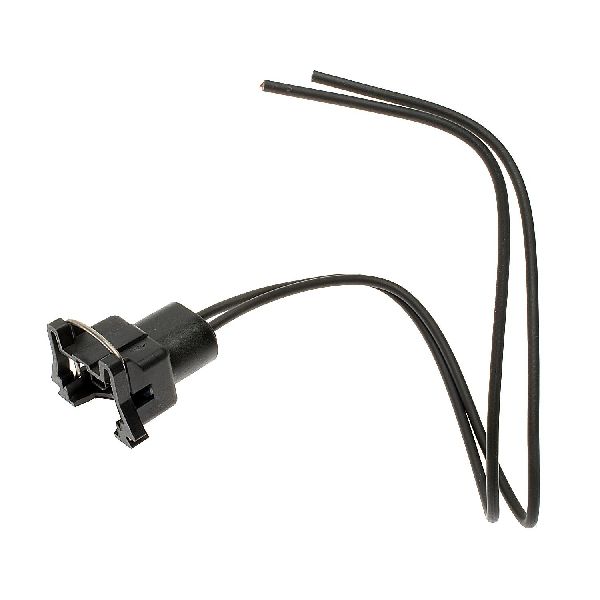
- ECU Connector C (Pins C5, C6, C7, C8) — At the main Engine Control Unit (ECU/PCM).. These are the specific pins that control the fuel injectors (INJ1, INJ2, INJ3, INJ4). Testing for signal at these pins can help diagnose a wiring issue between the ECU and the injectors.
Real Owner Repair Stories
- Reddit user in /r/MechanicAdvice (2016 Honda Civic 1.5T) — Recurring misfire issue, check engine light.
❌ Tried (didn't work) Replaced spark plugs (fixed it temporarily), Confirmed ignition coils were not the issue
✅ What actually fixed it Replacing the fuel injectors resolved the issue for a month or two until the turbo failed (potentially from prolonged oil dilution). The misfire returned, and the user was then considering a valve lash adjustment or head gasket issue as the next step. This story highlights that injectors are a key failure point, but if the issue is prolonged, other components can be affected. - Honda-Tech forum user (2016 Honda Civic) — Intermittent misfire on cylinder 3 (P0303), rough running primarily on cold starts.
❌ Tried (didn't work) Checked spark plugs and coils (swapped positions with no change), Cleaned fuel injectors
✅ What actually fixed it The user noted a very strange symptom: filling the gas tank would temporarily resolve the misfire. The final resolution was not posted, but the symptoms strongly pointed towards a fuel delivery issue that was sensitive to fuel tank pressure or volume, possibly related to the fuel pump or EVAP system interacting with the misfire detection.
OEM Part Supersession History
16010-59B-305→16010-59B-315— This is the updated fuel injector set from Honda, released to address the leaking and poor performance issues of the original injectors that contributed to oil dilution and misfires.
Model Year Variations Within This Range
- 2016-2018: These model years were the primary focus of Honda's oil dilution-related TSBs (A19-033, A18-137) and the associated warranty extension. Later models (2019+) received factory software and hardware updates to mitigate the issue, making the severe misfires less common.
Helpful Videos
Used OEM Parts in Stock


New Aftermarket Parts Available


The information in this article is provided for general reference and educational purposes only. Vehicle specifications, procedures, and part compatibility can vary by production date, trim level, and region. Always consult your vehicle's factory service manual and verify part numbers before purchasing or performing repairs. Safety-critical components such as airbags, seat belts, and braking systems should be installed by a qualified professional.
- Honda CIVIC:
- 🎬 Helpful Videos
- 🛍️ Shop This Part
- What's Unique About the 2016-2018 Honda CIVIC
- Diagnostic Flowchart
- Symptoms You May Notice
- Most Likely Causes
- Rare But Worth Checking
- Diagnosis Steps
- Parts You'll Likely Need
- Related Codes That Often Appear With This One
- Technical Service Bulletins (TSBs) & Recalls
- Platform-Specific Known Issues
- Mechanic-Grade Diagnostic Values
- Scan Tool Commands That Help
- Wiring & Ground Locations
- Real Owner Repair Stories
- OEM Part Supersession History
- Model Year Variations Within This Range
- 🎟️ Get 5% Off