

P0300 on 2008-2015 Honda Civic: Random Misfire Causes and Fixes
Code P0300 on a 2008-2015 Honda Civic means random cylinders are misfiring. The most common causes are worn spark plugs and valves that need adjustment. Start by replacing the spark plugs; if that doesn't work, a valve adjustment is likely needed.
- P0300 means your engine is misfiring on random cylinders.
- Do not ignore a flashing check engine light, as it can lead to costly catalytic converter damage.
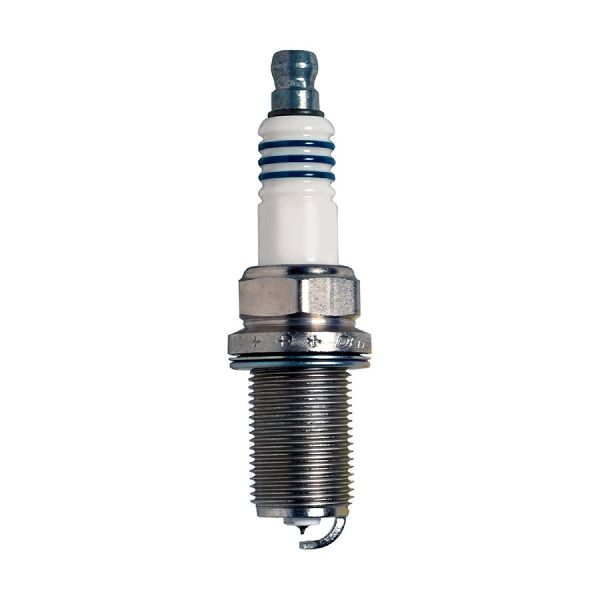
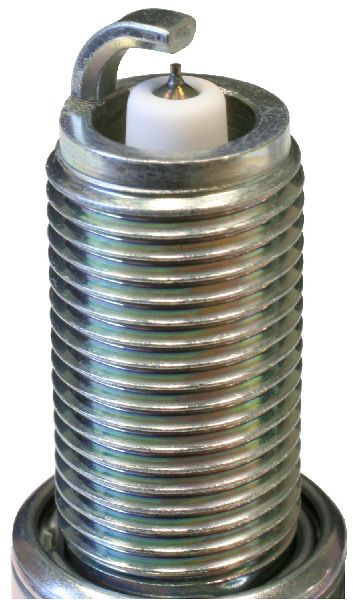
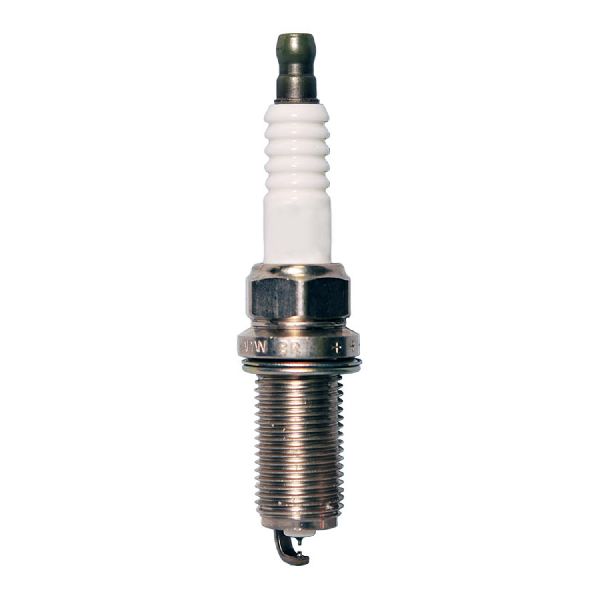
- For the 2008-2015 Civic, always start with the basics: replace the spark plugs with high-quality NGK or Denso parts.
- If new spark plugs don't solve the issue, a valve adjustment is the next most likely solution, especially if the car has over 80,000 miles.
- Testing ignition coils by swapping them is a free and effective way to diagnose a bad coil before spending money on replacements.
What's Unique About the 2008-2015 Honda CIVIC

The Honda Civic engines from this era (primarily the R18 1.8L) are known for their reliability, but they are also known for requiring periodic valve adjustments. Over time, the clearance in the valvetrain tightens, which can prevent valves from seating properly, leading to compression loss and random misfires. While spark plugs and coils are common culprits on any car, the need for a valve adjustment is a very frequent, and often overlooked, cause for a P0300 code on these specific Civic models as they accumulate mileage.
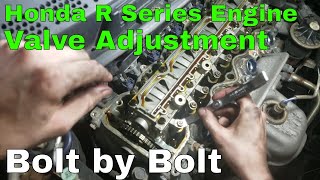
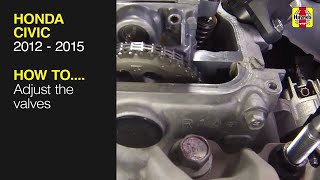
🎬 Watch: Step-by-step valve adjustment for the 1.8L engine.Diagnostic Flowchart

Tap your situation to follow the diagnostic path that matches what you're seeing on this vehicle.
Generation note: This range covers two Honda Civic generations: the 8th generation (2008-2011) and the 9th generation (2012-2015). The 8th gen typically has the R18A1 1.8L engine, while the 9th gen uses the updated R18Z1 1.8L. Si models used the 2.0L K20Z3 (8th gen) and 2.4L K24Z7 (9th gen). The fundamental causes for P0300 are consistent across these generations, with valve adjustments being a key maintenance item for all non-Si models.
Symptoms You May Notice
- Rough or vibrating idle
- Hesitation or stumbling during acceleration
- Flashing or solid Check Engine Light
- Reduced engine power
- Poor fuel economy
- Engine stalling
- Noticeable engine shaking
- Replacing only ignition coils when a valve adjustment is needed.
- Replacing oxygen sensors, which are unlikely to be the root cause of a random misfire, although a misfire can damage them over time.
Most Likely Causes


- Worn or Fouled Spark Plugs 🔴 High Probability Spark plugs are a standard maintenance item. Using incorrect plugs or extending the replacement interval can easily lead to weak spark and misfires.
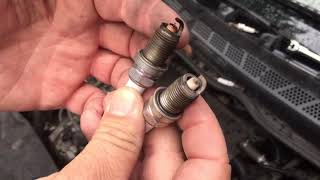
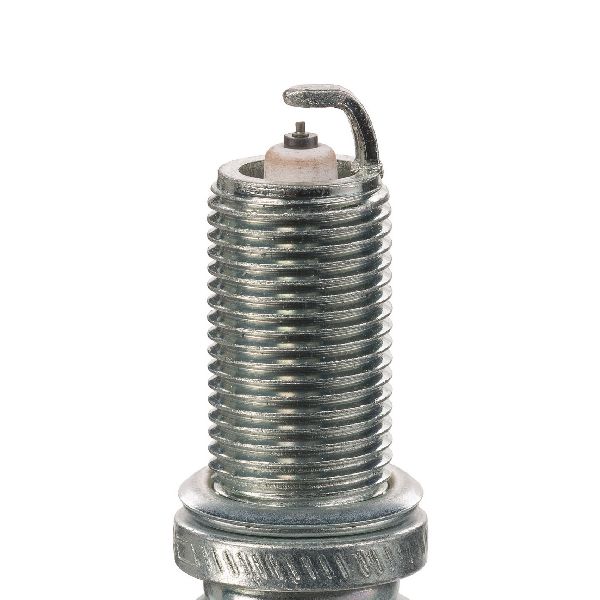
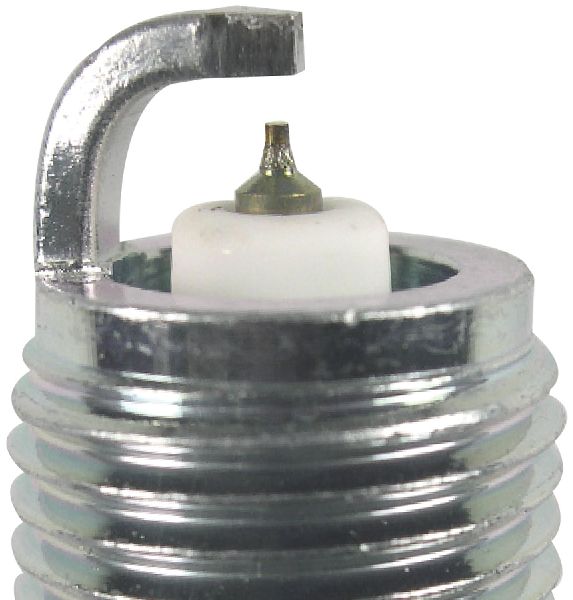
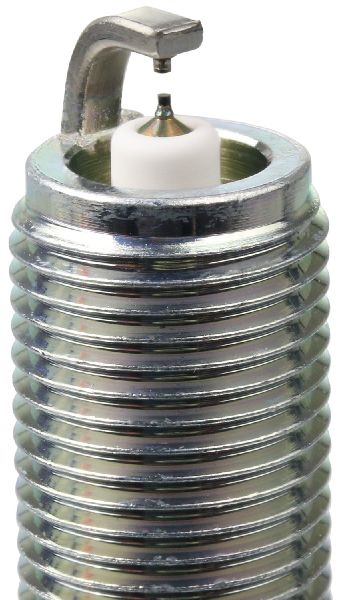
How to confirm: Inspect the spark plugs for wear, carbon buildup, or oil fouling. A plug with a worn electrode or cracked insulator needs replacement.
Typical fix: Replace all four spark plugs with OEM-spec plugs (typically NGK or Denso).
Est. part cost: $20-$50 - Incorrect Valve Clearance 🔴 High Probability Honda R-series (1.8L) and K-series engines use a mechanical valvetrain that requires periodic adjustment. Over time, valve clearances tighten, especially on the exhaust side, leading to a loss of compression and misfires when the engine is warm.
How to confirm: Perform a valve clearance check with the engine completely cold using a feeler gauge. Compare measurements to the manufacturer's specifications.
Typical fix: Adjust the valve clearances to the specified range. This is a precise but DIY-friendly job for many owners.
Est. part cost: $20-$40 (for a new valve cover gasket) - Failing Ignition Coils 🟡 Medium Probability Ignition coils are subjected to high heat and voltage and can fail over time. Hairline cracks can form, allowing spark to arc to the cylinder head instead of the spark plug.
How to confirm: If you also have a code for a specific cylinder (e.g., P0302), swap the ignition coil from that cylinder with one from a known good cylinder. If the code follows the coil (e.g., changes to P0301), the coil is bad.
Typical fix: Replace the faulty ignition coil. It is often recommended to replace them as a set if they are original and high-mileage.
Est. part cost: $40-$80 per coil - Dirty or Clogged Fuel Injectors ⚪ Low Probability While Honda fuel systems are generally robust, using low-quality fuel or the accumulation of deposits over many miles can restrict fuel flow, leading to a lean condition and misfires.
How to confirm: This is harder to confirm without professional tools. A mechanic can perform a fuel injector balance test. Sometimes, running a quality fuel system cleaner can show improvement.
Typical fix: Clean the fuel injectors professionally or replace them if they are clogged beyond cleaning.
Est. part cost: $50-$150 per injector
Rare But Worth Checking
- Vacuum Leak: A leak in a vacuum hose or intake manifold gasket can introduce unmetered air, throwing off the air-fuel ratio and causing random misfires.
- Clogged EGR Passages: On some models, the Exhaust Gas Recirculation (EGR) system passages can become clogged with carbon, leading to rough running and misfires.
- Low Fuel Pressure: A weak fuel pump or clogged fuel filter can starve the engine of fuel, causing misfires across all cylinders, especially under load.
Diagnosis Steps
- Read the freeze frame data with an OBD-II scanner to understand the engine conditions (speed, temperature, load) when the code was set.
- Check for any other accompanying codes (e.g., P0301-P0304) to see if the misfire is more frequent on certain cylinders.
- Inspect and replace the spark plugs. This is an inexpensive and fundamental first step. Use NGK or Denso plugs as specified by Honda.
- If the misfire persists, test the ignition coils. Swap a coil from a misfiring cylinder (if identified) to a good cylinder and see if the misfire code follows the coil.
- If plugs and coils are good, the next logical step for a Civic of this vintage is to perform a valve adjustment. This should be done on a completely cold engine.
- If misfires continue, check for vacuum leaks by inspecting all hoses connected to the intake manifold for cracks or disconnections.
- Check fuel pressure to rule out a weak fuel pump or clogged filter.
- As a final step, a compression test can be performed to check for serious mechanical engine issues like a bad head gasket, though this is less common.
Parts You'll Likely Need
- Spark Plugs — This is the most common and basic maintenance item that causes misfires when worn.
Trusted brands: NGK, Denso
OEM price range: $30-$50
Aftermarket price range: $20-$40 - Ignition Coil
(OEM #30520-RNA-A01)— Coils are the second most common ignition-related failure point after spark plugs.
Trusted brands: Hitachi, Denso, NGK
OEM price range: $70-$100
Aftermarket price range: $40-$80 - Valve Cover Gasket Set
(OEM #12341-RNA-A01)— This gasket must be replaced when performing a valve adjustment to prevent oil leaks.
Trusted brands: Honda (OEM), Fel-Pro, Mahle
OEM price range: $25-$40
Aftermarket price range: $15-$30
Related Codes That Often Appear With This One
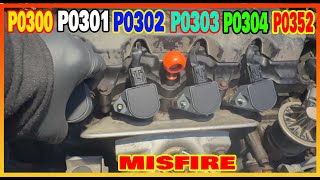
- P0301, P0302, P0303, P0304 — These codes indicate a misfire on a specific cylinder (1, 2, 3, or 4). P0300 is often set alongside one or more of these codes when the misfire is not isolated to a single cylinder.
- P1399 — This is a Honda-specific code that often indicates a random misfire that the ECU has detected but hasn't yet pinpointed to a specific cylinder or met the full criteria to set a P0300. It's a precursor code.
Technical Service Bulletins (TSBs) & Recalls
- APaS06132017901: Investigation into rough idle or MIL on with misfire DTCs P0300 through P0304 on 2008 Civic CNG models.
Platform-Specific Known Issues
- A Technical Service Bulletin (TSB), #APaS06132017901, was issued for the 2008 Civic CNG model specifically to investigate rough idle and misfire DTCs P0300 through P0304, indicating a known issue on that specific variant.
Mechanic-Grade Diagnostic Values
- Valve Clearance (R18A/R18Z 1.8L Engine, Cold) — expected: Intake: 0.18-0.22 mm (0.007-0.009 in). Exhaust: 0.23-0.27 mm (0.009-0.011 in).. Failure: Measurements outside this range, particularly tight exhaust valves, will cause misfires when the engine is warm.
- Valve Clearance (K20Z3/K24Z7 2.0L/2.4L Si Engine, Cold) — expected: Intake: 0.008-0.010 in. Exhaust: 0.010-0.011 in.. Failure: Clearances outside the specified range can cause ticking noises, power loss, and misfires.
- Ignition Coil Primary Resistance — expected: Approximately 0.4 to 2.0 ohms.. Failure: A reading of infinity (open circuit) or significantly outside the expected range indicates a faulty coil.
- Ignition Coil Secondary Resistance — expected: Approximately 6,000 to 15,000 ohms (6k-15k Ω).. Failure: A reading outside this range indicates a failure in the secondary windings of the coil.
- Long-Term and Short-Term Fuel Trims (Live Scan Data) — expected: Within +/- 10% at idle and under steady load.. Failure: Consistently high positive fuel trims (e.g., > +15%) strongly suggest a vacuum leak, as the PCM is adding fuel to compensate for unmetered air.
- Fuel Pressure (1.8L R18 Engine) — expected: 330–380 kPa (3.4–3.9 kgf/cm², 48–55 psi). Failure: Pressure below the specified range can cause lean conditions and random misfires under load.
Scan Tool Commands That Help
- Honda Diagnostic System (HDS) or equivalent professional scan tool: Cylinder Misfire Counter (Live Data) — To isolate a 'random' P0300 misfire. Even if only P0300 is set, the live misfire counters for each cylinder (Cyl 1, Cyl 2, etc.) can reveal if one cylinder is misfiring more frequently than others, helping to focus diagnostic efforts on a specific coil, plug, or injector.
- Honda Diagnostic System (HDS) or equivalent professional scan tool: Injector Cut-Off Test (Bidirectional Control) — After ruling out ignition issues. This test allows the technician to disable one fuel injector at a time. If disabling an injector causes no change in engine RPM, that cylinder was not contributing, confirming a problem with that specific injector or cylinder.
Wiring & Ground Locations
- G101 — On the right rear of the engine for non-Si models, and the left rear for Si models. It is typically a group of wires with an eyelet terminal bolted to the thermostat housing or nearby on the cylinder head/engine block.. G101 is a critical ground point for the PCM/ECM and multiple engine sensors. A loose or corroded G101 connection can cause erratic sensor readings and intermittent misfires that are difficult to diagnose, mimicking failures of other components.
- PCM Connectors A, B, C — In the engine bay, next to the battery.. These are the main connection points for the Powertrain Control Module. When diagnosing complex issues, technicians may need to test for voltage, resistance, or continuity at specific pins on these connectors (e.g., for crank sensor, cam sensor, or ignition coil signals) to identify wiring faults between the PCM and the component.
Real Owner Repair Stories
- YouTube - 'Toyota Time with Timmy the Toolman' (Vehicle shown is a Toyota, but the diagnostic principle is universal and directly applicable to a Honda with similar symptoms.) — Rough start in the morning that would smooth out after running for a while, accompanied by a P0300 general misfire code.
❌ Tried (didn't work) The owner was chasing a general misfire without a specific cylinder code, leading to confusion.
✅ What actually fixed it The root cause was a failed head gasket leaking coolant into a cylinder overnight. This was confirmed using a cylinder leak-down tester in conjunction with a cooling system pressure tester; pressurizing the cylinder caused the cooling system pressure to rise, proving a breach between the combustion chamber and coolant jacket.
OEM Part Supersession History
30520-RNA-A01→This part number remains the current OEM number for the 2006-2011 Civic 1.8L ignition coil.— N/A
Heads up: Many aftermarket parts are available under different numbers (e.g., UF582, C1580). While many work, using genuine OEM or high-quality OE-supplier parts (Hitachi, Denso) is recommended to avoid premature failure or weak spark issues.
Model Year Variations Within This Range
- 2008-2011 vs 2012-2015: The 8th generation (2008-2011) uses the R18A1 engine, while the 9th generation (2012-2015) uses the R18Z1. While mechanically very similar, the R18Z1 has a slightly higher compression ratio (10.6:1 vs 10.5:1) and different i-VTEC tuning for improved fuel economy. The 9th gen also switched to electronic power steering. These differences do not fundamentally change the common causes for P0300, but part numbers for some components may differ.
Helpful Videos

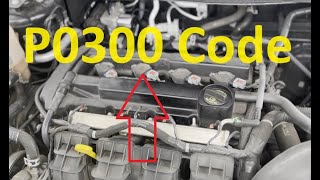
Used OEM Parts in Stock


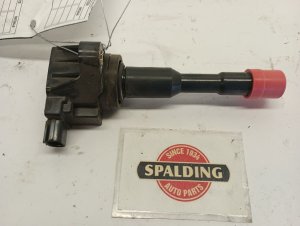

New Aftermarket Parts Available

The information in this article is provided for general reference and educational purposes only. Vehicle specifications, procedures, and part compatibility can vary by production date, trim level, and region. Always consult your vehicle's factory service manual and verify part numbers before purchasing or performing repairs. Safety-critical components such as airbags, seat belts, and braking systems should be installed by a qualified professional.
- Honda CIVIC:
- 🎬 Helpful Videos
- 🛍️ Shop This Part
- What's Unique About the 2008-2015 Honda CIVIC
- Diagnostic Flowchart
- Symptoms You May Notice
- Most Likely Causes
- Rare But Worth Checking
- Diagnosis Steps
- Parts You'll Likely Need
- Related Codes That Often Appear With This One
- Technical Service Bulletins (TSBs) & Recalls
- Platform-Specific Known Issues
- Mechanic-Grade Diagnostic Values
- Scan Tool Commands That Help
- Wiring & Ground Locations
- Real Owner Repair Stories
- OEM Part Supersession History
- Model Year Variations Within This Range
- 🎟️ Get 5% Off