

P0300 on 2020-2021 GMC Yukon XL: Random Misfire Causes & Fixes
P0300 on a 2020-2021 Yukon XL most often indicates a random cylinder misfire. While basic ignition issues like spark plugs or coils are possible, the most probable and serious cause is a failed valve lifter related to the Dynamic Fuel Management (DFM) system. This is a known, widespread issue documented in GM Technical Service Bulletins that often requires significant engine repair, sometimes at very low mileage.
- P0300 on a 2020-2021 Yukon XL means multiple cylinders are misfiring.
- The most likely serious cause is a failed valve lifter from the Dynamic Fuel Management (DFM) system, often indicated by an engine ticking noise.
- Always check basic, inexpensive parts like spark plugs and ignition coils first before assuming a major engine repair is needed.
- A flashing check engine light is a critical warning to stop driving to prevent catastrophic damage to the catalytic converters.
- Several GM Technical Service Bulletins (TSBs) exist for this issue, confirming that lifter failure is a known problem.
What's Unique About the 2020-2021 Gmc YUKON XL
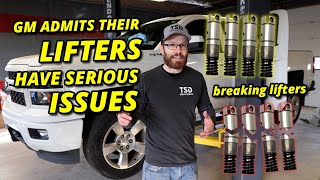
For this generation of GMC Yukon XL with the 5.3L L84 and 6.2L L87 V8 engines, the P0300 code is notoriously linked to failures in the Dynamic Fuel Management (DFM) system. This system deactivates cylinders to save fuel, but the specialized valve lifters are a common failure point, leading to misfires. Multiple Technical Service Bulletins (TSBs) and a flood of owner complaints point directly to collapsed or stuck lifters as the root cause, with failures sometimes occurring at extremely low mileage (under 10,000 miles). This makes it a much more common and severe issue on this platform than on many other vehicles.
Diagnostic Flowchart
Tap your situation to follow the diagnostic path that matches what you're seeing on this vehicle.
Generation note: The 2020 model is the final year of the K2XX generation, while the 2021 model is the first year of the all-new T1XX generation. However, both model years can be equipped with the 5.3L (L84) and 6.2L (L87) V8 engines which share the problematic Dynamic Fuel Management (DFM) system. The primary issue of DFM lifter failure is common to both generations, with TSB 23-NA-043 specifically addressing this concern across these models.
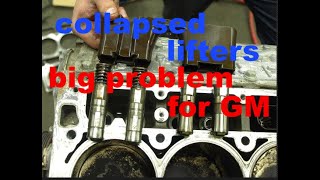
🎬 Watch: GM service bulletin details for L84 and L87 lifter issuesSymptoms You May Notice
- Flashing or solid Check Engine Light.
- Rough or unstable idle.
- Engine shaking, shuddering, or vibrating.
- Hesitation or stumbling during acceleration.
- Noticeable loss of engine power.
- Engine ticking or tapping noise, which can be a key sign of a collapsed lifter.
- White smoke and/or coolant odor from the exhaust on a cold start, indicating a possible cracked cylinder head.
- Replacing only spark plugs and coils without investigating the possibility of a DFM lifter failure, especially if a ticking noise is present.
- Replacing fuel injectors when the issue is actually related to the ignition or mechanical engine components.
- Assuming the problem is solved after it goes away temporarily. Owners report the misfire can be intermittent before a complete lifter failure.
Most Likely Causes
- Failed DFM Valve Lifters 🔴 High Probability The Dynamic Fuel Management (DFM) lifters in the L84 and L87 engines are a well-documented, widespread failure point. The internal locking pins or springs can fail, causing the lifter to collapse or become stuck, which prevents the valve from opening and results in a misfire. This issue is so prevalent that it has prompted multiple TSBs and class-action lawsuits. Failures are particularly noted in engines built between September 2020 and March 2021.
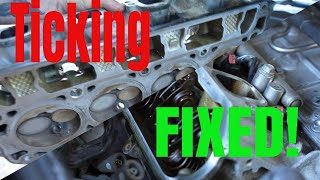
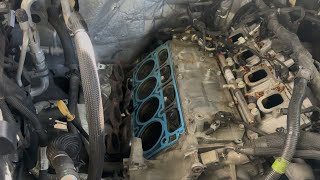
How to confirm: Listen for a distinct ticking or tapping noise from the engine. A technician can perform a cylinder deactivation test with a scan tool to isolate the faulty lifter. Physical inspection requires removing the cylinder head(s) to access the lifters and camshaft. 🎬 Watch: Full walkthrough on removing cylinder heads and replacing lifters
Typical fix: Replace all valve lifters and guides on the affected cylinder bank, or both banks depending on vehicle mileage, as per TSB #23-NA-043. If the lifter failure damaged the camshaft (a common occurrence), the camshaft must also be replaced. Due to repeat failures, many owners and dealers now replace all 16 lifters regardless of which one failed.
Est. part cost: $400-$1200 - Worn or Fouled Spark Plugs 🟡 Medium Probability Spark plugs are a standard maintenance item. While not a specific vehicle flaw, they are often the first and easiest part to check for any misfire condition and should not be overlooked before assuming a major engine issue.
How to confirm: Remove and visually inspect the spark plugs for wear, carbon fouling, oil deposits, or incorrect gap.
Typical fix: Replace all spark plugs as a set. It is recommended to use OEM-spec ACDelco iridium plugs, part number 41-162.
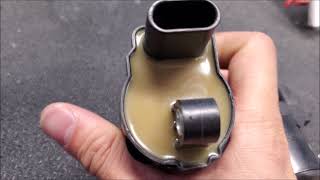
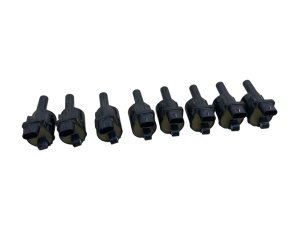
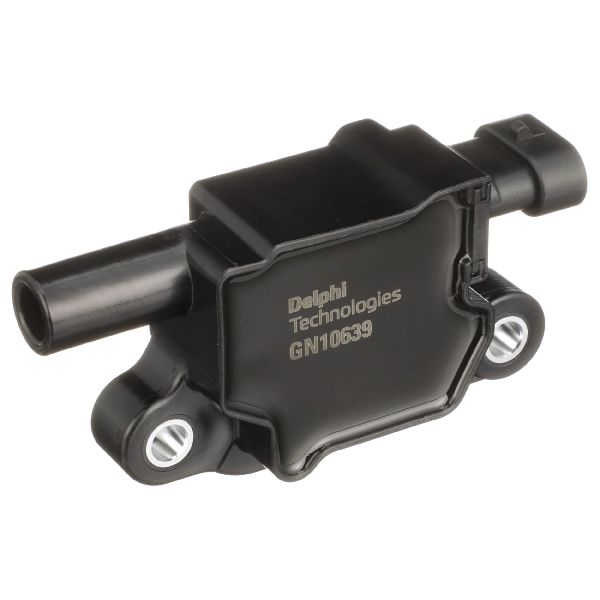
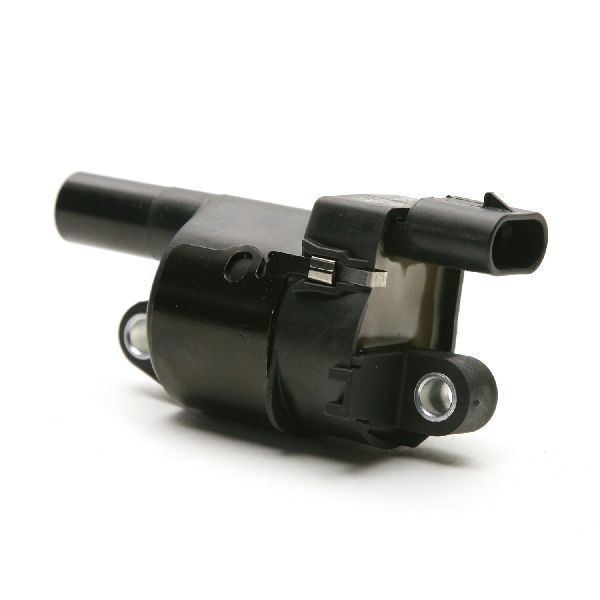
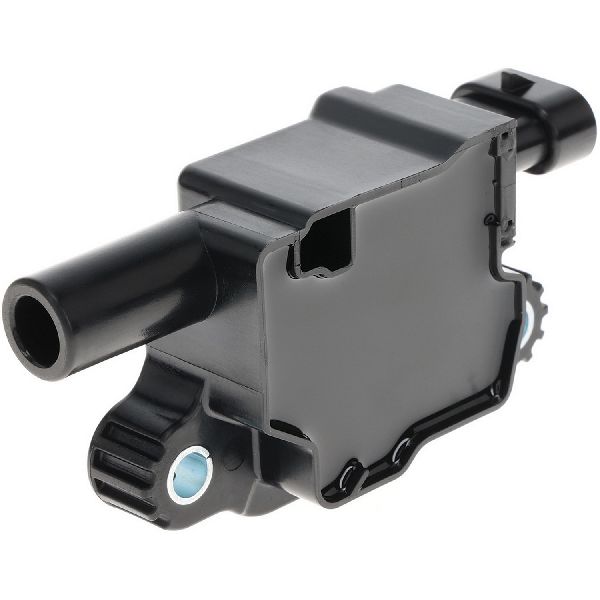
Est. part cost: $80-$150 - Faulty Ignition Coils 🟡 Medium Probability Ignition coils are a common wear item that can fail over time, leading to a weak or non-existent spark.
How to confirm: Use a scan tool to see if misfires are more common on one cylinder. Swap the ignition coil from the suspect cylinder with a known good cylinder and see if the misfire code follows the coil.
Typical fix: Replace the single faulty ignition coil. Many owners choose to replace them as a full set if the vehicle has high mileage.
Est. part cost: $50-$90 per coil - Wiring Harness Issues ⚪ Low Probability TSB #PIP5724 indicates that various engine performance issues, including a P0300, can be caused by wiring harness problems, such as poor pin connections in jumper harnesses.
How to confirm: Visually inspect engine wiring harnesses for damage, corrosion, or loose connections, particularly grounds and connectors to sensors and coils.
Typical fix: Repair or replace the damaged section of the wiring harness.
Est. part cost: $20-$500 depending on the extent of damage
Rare But Worth Checking
- Internal Coolant Leak (Cracked Cylinder Head): TSB #20-NA-166 (which supersedes #PIP5498M) notes that a P0300 code on cold start, sometimes with white smoke, can be caused by coolant leaking into a cylinder from a cracked cylinder head. A technician can confirm this by adding dye to the coolant and using a borescope to inspect the cylinders after the engine has cooled.
- Faulty Fuel Injectors: While less common than lifter failure, a stuck or failing fuel injector can cause a persistent misfire. In one owner's experience, after a lifter replacement, a P0300 was ultimately traced to a bad injector.
Diagnosis Steps
- Check for other stored DTCs with a quality OBD-II scanner. Pay close attention to any cylinder-specific misfire codes (P0301-P0308) and freeze-frame data.
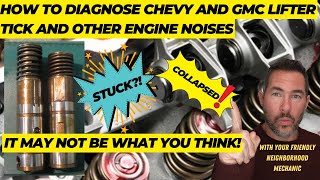
- Listen carefully for an engine ticking or tapping noise, a strong indicator of lifter failure. The noise may be more pronounced on startup. 🎬 See how to diagnose lifter tick versus other engine noises
- Perform basic ignition system checks. Remove and inspect all spark plugs for wear and fouling. Test ignition coils by swapping a suspect coil with one from a non-misfiring cylinder to see if the problem moves.
- Check for vacuum leaks. A smoke test is the most effective method to find leaks in hoses or intake gaskets.
- If a lifter failure is suspected, a professional should perform a cylinder deactivation test and/or a compression test to confirm internal engine mechanical problems. Physical inspection of the camshaft for lobe damage is critical during lifter replacement.
- If symptoms align with TSB #20-NA-166 (cold start misfire, white smoke), have a technician perform a cooling system pressure test and inspect cylinders with a borescope for coolant.
Parts You'll Likely Need
- Valve Lifter and Guide Kit
(OEM #12669184 (Guide))— This is the most common major failure causing a P0300 code on these engines due to the DFM system. TSB #23-NA-043 provides a procedure for replacement. It is highly recommended to replace lifters and guides together.
Trusted brands: ACDelco, GM Genuine Parts
OEM price range: $300-$600
Aftermarket price range: $200-$450 - Camshaft
(OEM #12672469 (L8T, a common non-DFM replacement))— A collapsed or damaged lifter often scores or flattens the corresponding lobe on the camshaft, requiring replacement of both components. Some owners opt for a non-DFM camshaft to prevent future issues, which requires ECU tuning.
Trusted brands: ACDelco, GM Genuine Parts, Brian Tooley Racing (BTR)
OEM price range: $350-$600
Aftermarket price range: $250-$500 - Spark Plugs
(OEM #ACDelco 41-162)— Worn or fouled spark plugs are a common cause of misfires and are a standard tune-up item that should be checked first.
Trusted brands: ACDelco, NGK
OEM price range: $8-$15 per plug
Aftermarket price range: $6-$12 per plug - Ignition Coil — A faulty ignition coil can cause a misfire on a single cylinder, which may contribute to a random misfire code over time.
Trusted brands: ACDelco, Delphi, NGK
OEM price range: $50-$90 per coil
Aftermarket price range: $35-$70 per coil
Related Codes That Often Appear With This One
- P0301-P0308 — These are cylinder-specific misfire codes. A P0300 may be accompanied by one or more of these, which can help pinpoint which cylinders are most affected, often pointing towards a specific bank with failing lifters.
- P050D — This code for 'Cold Start Rough Idle' is often seen with P0300 when the cause is an internal coolant leak into a cylinder, as described in TSB #20-NA-166.
Technical Service Bulletins (TSBs) & Recalls
- 23-NA-043: Poor Engine Performance, Engine Misfires, Malfunction Indicator Lamp (MIL) Illuminated - DTC P0300 Set
- 20-NA-166: Information on Malfunction Indicator Lamp (MIL) Illuminated - DTCs P050D and/or P0300 Setting on A Cold Start
- PIP5724: SES Lamp with Misfire or Other Various DTCs, Possible Crank No Start or Stall
- 15-06-01-002I: Engine Misfire/Tick Noise, Malfunction Indicator Lamp (MIL) on, DTC P0300 Set
Platform-Specific Known Issues
- DFM Lifter Failure: The most critical issue for the 2020-2021 Yukon XL. Failures can happen with very low mileage. TSB 23-NA-043 outlines the repair, which was updated to recommend replacing lifters on both banks if the vehicle has under 16,000 miles.
- Bad Batch of Parts (2021): A specific batch of lifters with improperly heat-treated lock pin springs is believed to be a primary cause for the high failure rate in 2021 models built before March 2021.
- Repeat Failures: Some owners on forums report repeat lifter failures even after the dealer has performed the repair, leading to frustration and skepticism about the long-term durability of the fix.
Mechanic-Grade Diagnostic Values
- Ignition Coil Primary Winding Resistance — expected: Approximately 0.8 to 1.2 Ohms. Failure: A reading of OL (open loop) or significantly outside the expected range indicates a faulty coil.
- Ignition Coil Secondary Winding Resistance — expected: Approximately 6,000 to 13,000 Ohms (6-13 kOhms). Failure: A reading of OL (open loop) or far outside the specified range points to a failure in the secondary coil winding.
- High-Pressure Fuel System Operating Pressure — expected: Up to 36,250 psi (2500 bar). Failure: This is a system specification, not a direct diagnostic test for P0300. However, significant deviation could indicate issues with the high-pressure fuel pump.
Hidden / Shadow Codes Worth Checking
- Mode $06 Misfire Counters: This is not a DTC but a function within the OBD-II system that tracks misfire events per cylinder, even if they are not frequent enough to set a specific P030x code. It allows a technician to see which cylinder(s) are contributing to a P0300 count. (see via Requires a professional-grade scan tool that can access Mode $06 data. The data will show misfire counts for each cylinder over the current and previous drive cycles.)
Scan Tool Commands That Help
- GDS2 (Global Diagnostic System 2): Cylinder Power Balance Test — This is a primary diagnostic step for a P0300 code. The function allows a technician to disable each cylinder one by one and observe the corresponding drop in engine RPM. A cylinder that causes little or no RPM drop when disabled is identified as the weak or non-contributing cylinder, helping to pinpoint the source of the misfire (e.g., lifter, injector, coil) without major disassembly.
- GDS2 (Global Diagnostic System 2): Injector Balance Test — Similar to the power balance test, this function specifically tests the fuel injectors to see if they are contributing evenly. It can help differentiate a fuel-related misfire from a mechanical or ignition-related one.
Wiring & Ground Locations
- Engine Wiring Harness Chafe Points (per TSB 21-NA-149) — 1) The corner of the ECM/TCM bracket. 2) The driver's side upper control arm. 3) The driver's side shock tower bolt.. Vibration can cause the engine harness to rub through at these specific points, causing shorts in various circuits. A short in an ignition coil or injector circuit can directly cause misfires and trigger a P0300 code.
- G304 — In the body harness, located under the passenger seat.. While not a primary engine ground, poor body grounds can cause erratic behavior in various control modules, potentially including the ECM or Fuel Pump Control Module, leading to difficult-to-diagnose issues.
- Frame Grounds — Two grounds are located on the vehicle frame, visible just under the driver's side door area.. These are major chassis ground points. Corrosion or looseness here can create widespread electrical problems, affecting fuel pump operation or ignition system stability, which can lead to random misfires.
Real Owner Repair Stories
- Reddit user in r/gmcsierra (2021 GMC Sierra with 5.3L L84 engine, 26,000 km) — Intermittent P0300 code that would appear and then resolve itself.
❌ Tried (didn't work) Initial assumption was the common DFM lifter failure.
✅ What actually fixed it The dealership diagnosed the issue as faulty fuel injectors. They replaced all injectors to resolve the misfire, noting that injector failure is another known problem on these engines. - Tahoe Yukon Forum user (2002 Yukon XL 5.3L (Note: Older model, but demonstrates a key diagnostic principle)) — P0300 code, rough running, and engine shaking immediately after replacing the passenger side valve lifters.
❌ Tried (didn't work) Replacing the intake manifold gasket and smoke testing (no leaks found)., Replacing MAP sensor., Swapping spark plugs and wires.
✅ What actually fixed it Diagnosis via a compression test revealed the true cause. Cylinders #2, #6, and #8 on the side where the lifters were just replaced had extremely low or zero compression. This confirmed a catastrophic mechanical failure from the repair itself (e.g., improperly installed head, faulty new lifters, or bent valves), not a separate issue like a vacuum leak.
"I Checked Everything" — The Actual Cause
- In a documented case, a P0300 code appeared immediately after a lifter replacement job. The technician performed a smoke test on the intake manifold gaskets, which came back clean, ruling out a vacuum leak. The actual cause was only found after performing a compression test, which showed zero compression on multiple cylinders on the bank that was just repaired. This indicated a severe mechanical sealing issue (e.g., bent valves, bad head gasket seal, or failed new lifters) that a smoke test would not identify.
When the Usual Fixes Don't Work
- While the high probability of DFM lifter failure is the primary focus for a P0300 code on this vehicle, it should not be the only consideration. A documented repair on a 2021 model with the same engine family showed that an intermittent P0300 was caused by faulty fuel injectors. The dealership that performed the repair acknowledged that injector failure is another known, albeit less publicized, issue. This serves as a critical reminder to perform comprehensive diagnostics, including checking fuel system components, before concluding the issue is the more severe and costly lifter failure.
OEM Part Supersession History
GM AFM Lifter (e.g., Elgin HL-7011)→GM DFM Lifter (e.g., Elgin HL-7025)— GM released a revised lifter design for the newer Dynamic Fuel Management (DFM) engines.
Heads up: The newer DFM lifter IS backward-compatible and can be used in older AFM applications. However, the original AFM-only lifter CANNOT be used in the newer DFM engines found in the 2020-2021 Yukon XL. Using the wrong part will lead to immediate failure.Stock DFM Camshaft→GM 12672469 (L8T Camshaft)— This is not a direct supersession but a common modification. When deleting the DFM system to prevent future lifter failure, owners often replace the stock camshaft with the non-DFM camshaft from the heavy-duty L8T engine.
Heads up: This modification is not a direct swap. It MUST be accompanied by replacing all DFM lifters with standard lifters and requires reprogramming the ECM to disable the DFM system logic.
Model Year Variations Within This Range
- 2020-2021: According to TSB #23-NA-043, vehicles equipped with the 5.3L L84 and 6.2L L87 engines built between September 1, 2020, and March 31, 2021, are specifically highlighted as being prone to the valve lifter failure that causes P0300. While other years can be affected, this production window is considered a high-risk period.
Helpful Videos
Used OEM Parts in Stock

New Aftermarket Parts Available


The information in this article is provided for general reference and educational purposes only. Vehicle specifications, procedures, and part compatibility can vary by production date, trim level, and region. Always consult your vehicle's factory service manual and verify part numbers before purchasing or performing repairs. Safety-critical components such as airbags, seat belts, and braking systems should be installed by a qualified professional.
- Gmc YUKON XL:
- 🎬 Helpful Videos
- 🛍️ Shop This Part
- What's Unique About the 2020-2021 Gmc YUKON XL
- Diagnostic Flowchart
- Symptoms You May Notice
- Most Likely Causes
- Rare But Worth Checking
- Diagnosis Steps
- Parts You'll Likely Need
- Related Codes That Often Appear With This One
- Technical Service Bulletins (TSBs) & Recalls
- Platform-Specific Known Issues
- Mechanic-Grade Diagnostic Values
- Hidden / Shadow Codes Worth Checking
- Scan Tool Commands That Help
- Wiring & Ground Locations
- Real Owner Repair Stories
- "I Checked Everything" — The Actual Cause
- When the Usual Fixes Don't Work
- OEM Part Supersession History
- Model Year Variations Within This Range
- 🎟️ Get 5% Off