

P0300 on 2012-2019 GMC Yukon XL: Random Misfire Causes & Fixes
P0300 on a GMC Yukon XL most often points to worn spark plugs, wires, or coils. However, a very common and more serious cause on these V8 engines is a failed lifter due to the Active Fuel Management (AFM) system, which is a more complex and expensive repair. Disabling AFM via a tuner or replacing the system entirely is a common long-term solution discussed by owners.
- P0300 indicates a random misfire affecting multiple cylinders, pointing to a shared system problem.
- While standard ignition parts (plugs, wires, coils) are a common cause, do not overlook more serious platform-specific issues.
- The Active Fuel Management (AFM) system is a primary suspect; listen for engine ticking, which is a strong indicator of lifter failure.
- For 2015 and newer models, issues with the direct injection system (injectors, high-pressure fuel pump) are also possible causes.
- A flashing check engine light signifies a severe misfire that can quickly damage your catalytic converters, requiring immediate attention.
What's Unique About the 2012-2019 Gmc YUKON XL

The 2012-2019 Yukon XL spans two generations (GMT900 and K2XX) with V8 engines prone to specific issues causing a P0300 code. Across both generations, the Active Fuel Management (AFM) system is a notorious source of problems, where the specialized lifters used to deactivate cylinders can collapse or get stuck, leading to misfires. The fourth generation (2015-2019) introduced direct injection, which brought new potential causes like high-pressure fuel pump failures and carbon buildup on intake valves, issues not seen on the earlier models.
Diagnostic Flowchart
Tap your situation to follow the diagnostic path that matches what you're seeing on this vehicle.
Generation note: This range covers the third generation (2012-2014, GMT900 platform) and the fourth generation (2015-2019, K2XX platform). The 2015+ models introduced direct injection and often an 8-speed or 10-speed transmission. These newer models have unique P0300 causes like high-pressure fuel pump (HPFP) issues and intake valve carbon buildup, in addition to the shared AFM lifter problems.
Symptoms You May Notice
- Rough or shaky idle.
- Hesitation or stumbling during acceleration.
- Flashing Check Engine Light (a sign of a severe misfire).
- Reduced engine power.
- Poor fuel economy.
- Engine stalling.
- Audible ticking or tapping noise from the engine, indicative of a collapsed lifter.
- Replacing oxygen (O2) sensors without diagnosing a root cause like a vacuum leak or fuel delivery issue.
- Replacing only one spark plug or coil when the issue is systemic, such as a fuel pressure problem or a failing AFM lifter.
- Assuming a simple tune-up will fix the issue when a more serious mechanical problem, like a worn camshaft or failed lifter, is the actual cause.
- Chasing a misfire when the actual problem is a faulty crankshaft position sensor signal requiring a relearn procedure.
Most Likely Causes

- Failed Active Fuel Management (AFM/DFM) Lifters 🔴 High Probability The AFM system deactivates cylinders to save fuel, but the specialized lifters are a known weak point across all Gen IV and Gen V GM V8s. They can become stuck, collapse, or fail to properly re-engage, causing a misfire that often starts on a single cylinder (like P0301, P0307, etc.) and can lead to a general P0300 code.
How to confirm: Listen for a distinct ticking or tapping noise from the engine bay. A mechanic can perform a cylinder deactivation test with a scan tool or, more definitively, remove the valve covers to visually inspect for rocker arms that are not moving while the engine is running or being cranked. Zero compression on an AFM cylinder is a strong indicator.
Typical fix: Requires replacing the faulty lifter(s), lifter guides, and often the camshaft if it has been damaged by the failed lifter, which is a common occurrence. Many owners and independent shops recommend a full 'AFM delete', replacing the AFM lifters, camshaft, and valley cover (VLOM) with standard, non-AFM components and reprogramming the ECU. This is considered a permanent fix.
Est. part cost: $400-$1500 for either OEM replacement parts or a full AFM delete kit. - Worn Spark Plugs, Wires, or Ignition Coils 🔴 High Probability These are standard wear-and-tear items. As they age, they fail to deliver a consistent spark, leading to incomplete combustion and misfires. Owners have reported counterfeit ACDelco plugs purchased online wearing out extremely quickly, causing a P0300. It's crucial to use quality parts from a reputable source.
How to confirm: Inspect spark plugs for wear, fouling, or excessive gap. The recommended gap for the common ACDelco 41-162 Iridium plug is 0.040 inches. Test ignition wires for resistance and coils for proper function. Swapping a suspect coil with a known good one to see if the misfire moves is a common diagnostic step.
Typical fix: Replace all spark plugs and/or ignition wires as a set. Use OEM-spec plugs like ACDelco 41-162 and do not re-gap them as they are pre-set. Replace only the faulty ignition coil(s).
Est. part cost: $50-$400 - Faulty Fuel Injectors 🟡 Medium Probability Injectors can become clogged with deposits over time, leading to a poor spray pattern or insufficient fuel delivery. On 2015+ direct injection models, leaking injectors can cause cold start misfires and, in severe cases, hydrolocking.
How to confirm: A fuel injector balance test can identify underperforming injectors. On direct injection models, a leak-down test can check for leaking injectors after the engine is shut off. Monitoring fuel trims with a scan tool can also point to injector issues.
Typical fix: Clean or replace the faulty fuel injector(s). For direct injection, it's often recommended to replace them in banks.
Est. part cost: $70-$300 per injector - Vacuum Leak (e.g., Intake Manifold Gasket, PCV hose) 🟡 Medium Probability Gaskets and rubber hoses degrade over time, allowing unmetered air into the engine. This leans out the air-fuel mixture and can cause random misfires across multiple cylinders, often accompanied by P0171/P0174 codes.
How to confirm: A smoke test is the most effective way to find the source of a vacuum leak. Spraying carburetor cleaner around suspected areas and listening for a change in engine idle is a less precise but common method.
Typical fix: Replace the leaking gasket or hose.
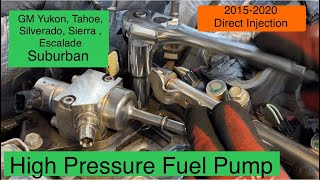
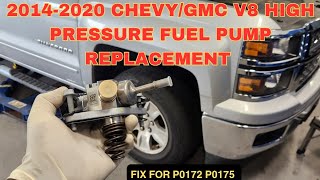
Est. part cost: $20-$150 - High-Pressure Fuel Pump (HPFP) Failure (2015+) ⚪ Low Probability TSB #PIP5642 specifically identifies a failure of the 'HPFP lifter' (the roller bearing for the pump) as a cause for P0300 on 2018 models, particularly on Bank 1. The failure can cause a tapping noise and lead to the ECM retarding timing, which is then registered as misfires.
How to confirm: Requires specialized tools to test the high-pressure side of the fuel system. A noticeable tapping noise from the rear of the engine can be an indicator. Diagnosis should be performed by a qualified technician.
Typical fix: Replacement of the high-pressure fuel pump and/or its roller lifter.
Est. part cost: $400-$800
Rare But Worth Checking
- Worn Camshaft Lobe: Mentioned in TSB #PIP4138R (superseded by 19-NA-219). This is a major mechanical failure, often a direct consequence of a failed AFM lifter roller, that prevents valves from opening correctly and can cause a persistent tick or squeak.
- Internal Coolant Leak: TSB #PIP5498K links P0300 with DTC P050D (Cold Start Rough Idle), coolant odor, and white smoke. The cause can be a cracked cylinder head or a porous block, allowing coolant into the combustion chamber. Diagnosis involves a cooling system pressure test and using a borescope to look for coolant.
- Clogged Catalytic Converter: A severe exhaust restriction can create backpressure, leading to poor engine performance and random misfires, especially under load. One owner on a forum diagnosed a P0300 after heavy acceleration as a failed catalytic converter.
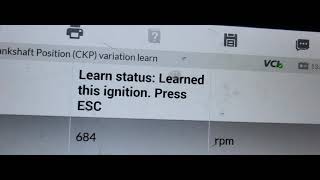
- Faulty Crankshaft Position Sensor (or needs relearn): An erratic signal from this sensor can disrupt ignition and fuel timing, causing the ECU to report random misfires. In some cases, the sensor is fine but a 'crankshaft variation relearn' procedure is needed, especially if there are no felt misfires.
Diagnosis Steps

- Read all stored fault codes. Note if any other codes are present alongside P0300, as they can provide valuable clues.
- Use a scan tool with live data to monitor misfire counts for each cylinder. This can reveal if the 'random' misfire is actually more frequent on specific cylinders, even if it hasn't triggered a cylinder-specific code yet.
- Listen for engine noises. A distinct ticking or tapping sound, especially on a cold start, is a strong indicator of a failed AFM lifter.
- Perform a basic ignition system inspection. Check the condition and gap of all spark plugs (should be 0.040"), and inspect wires and coils. Consider replacing plugs and wires as a set if they are old.
- Check for vacuum leaks using a smoke machine, which is the most reliable method.
- Test fuel pressure. For 2012-2014 models, check the low-pressure pump. For 2015+ models, both the low-pressure and high-pressure systems must be evaluated.
- If AFM/DOD lifter failure is suspected, confirm by inspecting the valve train for non-moving rocker arms or perform a compression test on suspect cylinders.
- If no other cause is found, consider the need for a Crankshaft Variation Relearn procedure, especially if the crank sensor or PCM has been replaced or if the vehicle has high mileage.
Parts You'll Likely Need
- Spark Plugs
(OEM #19417055 / ACDelco 41-162)— Worn or fouled spark plugs are a primary cause of misfires and are a routine maintenance item.
Trusted brands: ACDelco, NGK
OEM price range: $8-$15 per plug
Aftermarket price range: $5-$12 per plug - Active Fuel Management (AFM) Lifter Kit — AFM lifter failure is a very common cause of P0300 on these GM V8 engines.
Trusted brands: GM Genuine, ACDelco, Melling
OEM price range: $300-$600 for a set
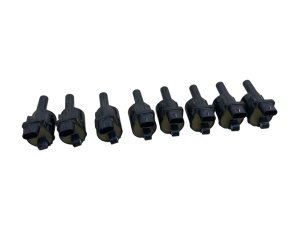
Aftermarket price range: $200-$450 for a set - Ignition Coil — A failing ignition coil provides weak or no spark, directly causing misfires.
Trusted brands: ACDelco, Delphi, NGK
OEM price range: $60-$90 per coil
Aftermarket price range: $30-$60 per coil - Intake Manifold Gasket Set — A leaking intake manifold gasket is a common source of a vacuum leak that leads to random misfires.
Trusted brands: Fel-Pro, ACDelco
OEM price range: $60-$120
Aftermarket price range: $30-$80
Related Codes That Often Appear With This One
- P0301-P0308 — These codes indicate a misfire on a specific cylinder. A random P0300 may eventually become isolated to one or more cylinders as a component (like a lifter) completely fails, triggering these codes as well.
- P050D — This code for 'Cold Start Rough Idle' is mentioned alongside P0300 in TSBs #PIP5498K and #PIP5628C, often pointing to issues like coolant intrusion or direct injector problems on the 2015+ models.
- P0171 / P0174 — These 'System Too Lean' codes often appear with P0300 when the cause is a vacuum leak, as the unmetered air affects the air/fuel ratio for an entire cylinder bank.
- P219B — On 2015+ models, this 'Fuel Trim Imbalance' code can point toward a faulty direct injector or carbon buildup issue that is also causing the misfire.
Technical Service Bulletins (TSBs) & Recalls

- PIP5642: Addresses a P0300 on Bank 1 caused by a failed High-Pressure Fuel Pump (HPFP) roller lifter, primarily on 2018 models.
- PIP5498K: Links P0300 and P050D on cold starts to internal coolant leaks from a cracked cylinder head or porous engine block casting.
- PIP4138R (and successor 19-NA-219): Details diagnostics for misfires and engine noises (chirp, squeak, tick) caused by worn camshaft lobes, often related to lifter issues.
- PIP5159C: Points to a loose spark plug wire, potentially from a missing 'C' clip on the wire end, as a simple cause for misfires.
- 15-06-01-002F: Describes how a mechanically collapsed or stuck AFM lifter, possibly due to oil aeration, can cause a P0300 and ticking noise.
Platform-Specific Known Issues
- The AFM Lifter Failure Saga: The most-discussed major failure for the P0300 code on these trucks is the Active Fuel Management (AFM) system. Owners report a sequence of events often starting with a slight engine tick, progressing to a specific cylinder misfire (e.g., P0301, P0307), and then a general P0300 code as the problem worsens. The failure of the specialized lifter often damages the camshaft, turning a top-end repair into a much more involved and expensive job. Many owners who have experienced this strongly advocate for a full AFM delete kit, which replaces the failure-prone components with more robust, standard lifters and a new camshaft, as a permanent solution.
- The 'Phantom Misfire' and Crankshaft Relearn: A notable issue reported by some owners is a flashing check engine light and a P0300 code without any noticeable engine roughness or performance loss. This often occurs under specific conditions, like coasting downhill. In several documented cases on forums, the solution was not a mechanical repair but a simple and inexpensive 'crankshaft position sensor variation relearn' performed with a dealership or high-end independent shop scan tool. This recalibrates the sensor's readings to the PCM, eliminating the false misfire detection.
- Direct Injection Woes (2015+): For the K2XX generation (2015-2019), the introduction of direct injection created new failure points. TSB PIP5642 points directly to the high-pressure fuel pump's roller lifter failing and causing misfires on Bank 1. Additionally, TSB PIP5498K discusses a scenario where a P0300 code on a cold start, accompanied by white smoke, can be caused by an internal coolant leak into a cylinder from a porous cylinder head casting—a problem specific to these newer engines.
Mechanic-Grade Diagnostic Values
- Low-Pressure Fuel System (In-Tank Pump) — expected: 84 to 90 PSI for 2015-2019 models.. Failure: Pressure below this range indicates a weak in-tank fuel pump or clogged filter.
- Ignition Coil Primary Resistance — expected: 0.4 to 2.0 ohms.. Failure: A reading outside this range (e.g., open loop or zero resistance) indicates a failed coil.
- Ignition Coil Secondary Resistance — expected: 6,000 to 10,000 ohms (6k-10k Ω).. Failure: A reading significantly outside this range suggests the coil's secondary winding has failed.
- Exhaust Backpressure (Tested at O2 Sensor Port) — expected: Typically under 1.5 PSI at idle and under 3 PSI at 2,500 RPM.. Failure: One diagnostic video showed a clogged converter causing 7 PSI at idle and 21 PSI at 2000 RPM, confirming a severe restriction.
Hidden / Shadow Codes Worth Checking
- Misfire History Counters (Mode $06): While not a hidden code, professional scan tools can access historical and current misfire counters for each individual cylinder. A P0300 may be the only stored DTC, but this data can reveal that the vast majority of misfires are occurring on one or two specific cylinders, pointing to a localized issue like a failing coil or injector rather than a systemic one. (see via Use a professional-grade scan tool (e.g., Tech2, Snap-on, Autel) and navigate to the engine live data or Mode $06 test results.)
Scan Tool Commands That Help

- GDS2, Tech2, or equivalent professional scanner: Crankshaft Position System Variation Learn (Crank Relearn) — Required after replacing the crankshaft sensor, PCM, or engine. It can also resolve a false P0300 on high-mileage engines caused by timing chain stretch, where the PCM's stored crankshaft profile no longer matches the actual signal.
- GDS2 or equivalent bidirectional scanner: Injector Balance Test — Used to identify a clogged or failing fuel injector. The tool commands each injector to fire for a set duration while monitoring the fuel pressure drop. An injector with a significantly different pressure drop is faulty.
- GDS2 or equivalent bidirectional scanner: Cylinder Deactivation / Power Balance — Allows the technician to disable one cylinder at a time. If disabling a cylinder causes little to no change in engine RPM or smoothness, that cylinder was not contributing properly (misfiring) to begin with.
Wiring & Ground Locations
- G102 — Located at the left rear of the engine, grounds the 8 ignition coils.. A poor connection at this specific ground can cause a weak or intermittent spark across all cylinders, leading to a random misfire.
- G103 / G104 — Located on the cylinder heads (G103 often on passenger side head, G104 on driver side head). The exact location can vary by year.. These are primary engine grounds. A loose or corroded ground on the cylinder head is a known cause of random misfires on Gen V (2015+) engines.
- Main Engine Harness Ground Strap — Often a braided strap from the rear of the passenger side cylinder head to the firewall.. Corrosion or looseness of this main ground can create a host of electrical issues, including erratic sensor readings and misfires.
Real Owner Repair Stories
- Tahoe Yukon Forum (GMC Yukon with 5.3L V8) — P0300 code, with misfires concentrated on cylinder 5. Erratic oil pressure gauge.
❌ Tried (didn't work) Replaced oil pressure sensor, Replaced spark plugs and wires, Used fuel system cleaner, Replaced #5 ignition coil, Replaced crankshaft sensor
✅ What actually fixed it The owner discovered the misfire only occurred when the AFM system activated. A $50 mail-in ECU tune to disable the AFM system permanently solved the P0300 code. - AnthonyJ350 on YouTube (2015 Chevrolet Tahoe (K2XX Platform)) — Initially a P0305 (Cylinder 5 Misfire), which later became a P0301 after swapping coils, and then a general P0300.
❌ Tried (didn't work) Clearing codes without addressing the root cause.
✅ What actually fixed it The misfire followed the ignition coil when moved from cylinder 5 to 1, confirming a bad coil. The final fix was replacing the faulty ignition coil and cleaning the main engine ground located on the front of the cylinder head as a critical preventative measure. - YouTube (GMC Yukon (model year not specified, but post-2007)) — Persistent P0300 and multiple cylinder misfire codes after replacing transmission and cylinder heads.
❌ Tried (didn't work) Major engine and transmission work did not resolve the misfire.
✅ What actually fixed it Using a pressure transducer in the cylinder 1 oxygen sensor port, a technician found excessive exhaust backpressure (7 PSI at idle, 21 PSI at 2000 RPM). This confirmed a clogged catalytic converter on Bank 1 was the true cause of the misfires. - Tahoe Yukon Forum (2003 Yukon XL 2500 with 245k+ miles) — Flashing check engine light with P0300 at highway speeds, and the torque converter would not lock up.
❌ Tried (didn't work) Driving with the issue for 50,000 miles while it progressively worsened.
✅ What actually fixed it A GM technician suggested that timing chain stretch at high mileage can cause the cam/crank sensor phasing to fall out of spec, triggering a false P0300. Performing a 'Cam/Crank phasing relearn' with an advanced scan tool resolved the P0300 code and allowed the torque converter to function correctly.
"I Checked Everything" — The Actual Cause
- A user on a forum reported getting a P0300 immediately after replacing lifters on the passenger side of the engine. They performed a smoke test to check for vacuum leaks from the intake manifold gasket they had just replaced, but found no leaks. The actual cause was discovered with a compression test, which revealed multiple cylinders on the side they worked on had near-zero compression, indicating a catastrophic mechanical failure (e.g., bent valves, incorrect head installation) from the lifter replacement job itself.
OEM Part Supersession History
Various OEM AFM Lifters→N/A - Aftermarket Warning— Forum users and mechanics strongly warn against purchasing AFM lifters from non-reputable online sources like Amazon or eBay. These are often counterfeit parts that fail prematurely.
Heads up: When performing an AFM delete, only specific, trusted non-AFM lifter part numbers like GMPP 12499225 or Morel 5315 should be used, purchased from a verified dealer or parts supplier to avoid knockoffs.N/A→12625817 (or equivalent)— This is a common part number for the high-pressure fuel pump (HPFP) used on the 2015-2019 Gen V direct-injected engines.
Heads up: This part is only for 2015+ models with direct injection and will not fit earlier 2012-2014 models.
Model Year Variations Within This Range
- 2015-2019 (K2XX) vs. pre-2015 (GMT900): A critical engine ground point that can cause misfires was moved. On older platforms, a problematic ground was located on the back of the engine block, under the intake manifold. On 2015+ models, a similar ground wire (black with white stripe) is located on the front of the cylinder head, which is much more accessible but still a known failure point.
- Late-model (approx. 2019+) vs. early-model: The Crankshaft Variation Relearn procedure may differ. Older models typically require revving the engine to the fuel cut-off RPM to complete the learn process. Some newer GM vehicles can complete the relearn procedure at idle using the scan tool, making the process faster and simpler.
Helpful Videos

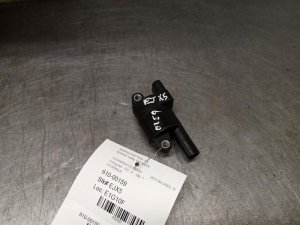
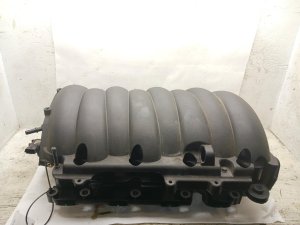
We Have This Part in Stock



The information in this article is provided for general reference and educational purposes only. Vehicle specifications, procedures, and part compatibility can vary by production date, trim level, and region. Always consult your vehicle's factory service manual and verify part numbers before purchasing or performing repairs. Safety-critical components such as airbags, seat belts, and braking systems should be installed by a qualified professional.
- Gmc YUKON XL:
- 🎬 Helpful Videos
- 🛍️ Shop This Part
- What's Unique About the 2012-2019 Gmc YUKON XL
- Diagnostic Flowchart
- Symptoms You May Notice
- Most Likely Causes
- Rare But Worth Checking
- Diagnosis Steps
- Parts You'll Likely Need
- Related Codes That Often Appear With This One
- Technical Service Bulletins (TSBs) & Recalls
- Platform-Specific Known Issues
- Mechanic-Grade Diagnostic Values
- Hidden / Shadow Codes Worth Checking
- Scan Tool Commands That Help
- Wiring & Ground Locations
- Real Owner Repair Stories
- "I Checked Everything" — The Actual Cause
- OEM Part Supersession History
- Model Year Variations Within This Range
- 🎟️ Get 5% Off