

P0300 on 2005-2009 GMC Yukon Denali: Random Misfire Causes & Fixes
P0300 on a Yukon Denali most often points to worn spark plugs, faulty ignition coils, or a vacuum leak from a bad intake manifold gasket. For 2007-2009 models with the 6.2L engine, failed Active Fuel Management (AFM) lifters are also a very common and more serious cause. A basic ignition tune-up costs $150-$300 in parts, while an AFM lifter repair can cost over $2,000.
- P0300 means multiple cylinders are misfiring, pointing to a shared problem.
- Start with the cheapest and easiest fixes: inspect spark plugs and ignition coils.
- A vacuum leak from the intake manifold gasket is a very common cause on these GM V8s and should be checked early in your diagnosis.
- If you have a 2007-2009 model with the 6.2L engine, be highly suspicious of a failed AFM lifter, especially if you hear an engine tick.
- A flashing check engine light is a serious warning. Stop driving immediately to prevent catastrophic damage to your catalytic converters.
What's Unique About the 2005-2009 Gmc YUKON DENALI

This year range covers two generations of the Yukon Denali with different V8 engines. The 2005-2006 models (GMT800) use the 6.0L LQ4, a robust engine where P0300 is often tied to standard ignition or fuel system issues like intake gaskets. The 2007-2009 models (GMT900) introduced the 6.2L L92 engine with Active Fuel Management (AFM), a system designed to improve fuel economy by deactivating cylinders. This AFM system, specifically its valve lifters, is a well-documented, common point of failure that directly causes P0300 misfires, making diagnosis on these later models unique. A failing AFM lifter can become stuck, leading to a persistent misfire and engine noise.
Diagnostic Flowchart

Tap your situation to follow the diagnostic path that matches what you're seeing on this vehicle.
Generation note: Yes, this range covers two generations. The 2005-2006 models are part of the GMT800 platform and typically have the 6.0L LQ4 V8 engine. The 2007-2009 models are on the GMT900 platform and feature the 6.2L L92 V8 with Active Fuel Management (AFM). The most significant difference regarding P0300 is the high failure rate of AFM lifters on the 6.2L engine, which is not a concern for the earlier 6.0L models. The AFM system's complexity adds a major diagnostic path that doesn't exist on the simpler LQ4 engine.
Symptoms You May Notice
- Rough or shaking idle.
- Hesitation or stumbling during acceleration.
- Noticeable loss of engine power, especially under load.
- Solid or flashing Check Engine Light.
- Poor fuel economy.
- Hard shifting in lower gears.
- Engine ticking or chirping noise, especially on 2007-2009 models.
- Black smoke from the tailpipe if running excessively rich.
- Replacing only one spark plug or coil when a full tune-up is needed.
- Replacing oxygen sensors when lean codes (P0171/P0174) are actually caused by a vacuum leak.
- Assuming a simple tune-up will fix a misfire on a 2007-2009 model when the root cause is a failed AFM lifter.
- Replacing the fuel pump without first verifying low fuel pressure with a gauge.
Most Likely Causes

- Worn Spark Plugs or Faulty Ignition Coils 🔴 High Probability These are standard maintenance items that wear out over time. Given the age of these vehicles, they are often the original source of a misfire. Oil consumption on AFM engines can also foul spark plugs prematurely.
How to confirm: Inspect spark plugs for wear, fouling, or incorrect gap. Use a scan tool to identify misfiring cylinders and swap the corresponding ignition coil with a known good one to see if the misfire follows the coil.
Typical fix: Replace all spark plugs and any faulty ignition coils. It's recommended to replace plugs as a set. Use of quality OEM parts like ACDelco is recommended.
Est. part cost: $80-$300 - Vacuum Leak (especially Intake Manifold Gasket) 🔴 High Probability The intake manifold gaskets on these GM V8 engines are made of plastic and rubber, which are known to degrade, crack, and flatten over time from heat cycles, allowing unmetered air into the engine. This disrupts the air-fuel ratio and causes random misfires, often worse when the engine is warm.
How to confirm: Perform a smoke test on the intake system to see if smoke escapes from the gasket area. Alternatively, carefully spray carburetor cleaner or brake cleaner around the intake manifold gasket with the engine running; a change in engine idle indicates a leak. A scanner showing high positive short-term fuel trims (STFT) at idle that decrease with RPM is a strong indicator.
Typical fix: Replace the intake manifold gaskets. The OEM part number for the gasket set on many of these V8s is GM #89060413.
Est. part cost: $50-$120 - Failed Active Fuel Management (AFM) Lifters (2007-2009 6.2L L92 only) 🔴 High Probability The AFM system uses special lifters that can collapse to deactivate cylinders. These lifters are a known, widespread failure point, often getting stuck due to internal pin damage or oil aeration, causing a persistent misfire, ticking noise, and a P0300 code. This is one of the most common serious failures on the GMT900 Denali.
How to confirm: Listen for a distinct ticking or tapping noise from the engine's top end, which may not be eliminated by disabling individual fuel injectors. A mechanic can confirm by removing the valve covers to inspect for collapsed lifters, bent pushrods, or by using a scan tool to command AFM on and see if the noise changes.
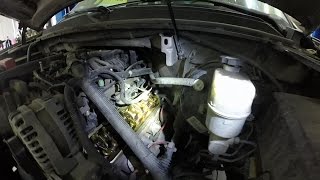
Typical fix: This is a major repair. The minimum fix is replacing the Valve Lifter Oil Manifold (VLOM) and the affected bank of lifters. Many owners opt for a more permanent solution by installing an 'AFM Delete Kit', which replaces the AFM lifters with standard LS7-style lifters, a non-AFM camshaft, and a new valley cover. This requires ECU reprogramming to disable AFM. 🎬 See this step-by-step AFM lifter replacement walkthrough
Est. part cost: $500-$1500 - Clogged or Failing Fuel Injectors 🟡 Medium Probability
How to confirm: Use a scan tool to monitor fuel trims. A professional can perform a fuel injector balance test. Sometimes, using a quality fuel system cleaner like Techron in a concentrated dose can temporarily improve symptoms, pointing towards dirty injectors.
Typical fix: Professionally clean or replace the faulty fuel injectors. It is often recommended to replace them as a set if they are original and high-mileage.
Est. part cost: $50-$150 per injector - Low Fuel Pressure 🟡 Medium Probability
How to confirm: Connect a fuel pressure gauge to the fuel rail's service port. Check that the pressure is within the manufacturer's specified range at idle and under load. A weak fuel pump is a common cause.
Typical fix: Replace the failing fuel pump or clogged fuel filter. Some models may have a Fuel Pump Control Module (FPCM) that can also fail.
Est. part cost: $200-$500
Rare But Worth Checking
- Worn Camshaft Lobe: Manufacturer TSB #PIP4138R specifically calls out checking for a worn camshaft lobe if other diagnostics don't isolate the cause of a P0300 code. This is a significant internal engine problem often accompanied by a consistent ticking or squeaking noise and can be a direct result of a collapsed lifter.
- Corroded or Broken Coil Pack Ground Wire: A poor ground connection for an entire bank of ignition coils can cause multiple cylinders on that side to misfire, triggering a P0300. This can be difficult to diagnose as the ground may test good intermittently but fail under load. The ground for the ignition coils is G102, located at the left rear of the engine.
- Crossed Fuel Injector Connectors: According to TSB #PIP5169, if a P0300 code appears immediately after engine repairs, it's possible the connectors for cylinders 5 & 7 or 6 & 8 have been swapped. This is a human error issue during reassembly.
- Failing Crankshaft Position Sensor: A faulty crankshaft position sensor can send erratic signals to the ECM, leading it to incorrectly report random misfires. A 'crankshaft position sensor relearn' procedure using a bidirectional scan tool is often required after replacement.
- Clogged Catalytic Converter: A restricted catalytic converter can cause excessive exhaust backpressure, leading to a random misfire, especially under load. A technician can test for this by measuring backpressure with a gauge in the upstream oxygen sensor port.
Diagnosis Steps
- Read all stored fault codes with an OBD-II scanner. Note any codes accompanying P0300.
- Use a scanner with live data to view the misfire counters for each cylinder 🎬 Watch: Professional misfire diagnostic steps for GM engines (Mode $06). This can help identify if certain cylinders are misfiring more than others, even with a P0300 code.
- Inspect the basics: Check spark plugs for wear, fouling, and proper gap, and inspect ignition coils for cracks or damage.
- Test for ignition spark on multiple cylinders. If a cylinder shows no spark, swap its ignition coil with a known good one and see if the problem moves with the coil.
- Check for vacuum leaks. Perform a smoke test or carefully spray starting fluid/carb cleaner around the intake manifold gaskets, vacuum hoses, and throttle body. A change in engine RPM indicates a leak. Check short-term fuel trims at idle; high positive numbers suggest a vacuum leak.
- Test fuel pressure at the fuel rail to rule out a weak fuel pump or clogged filter.
- For 2007-2009 models, listen carefully for a top-end engine tick, a classic sign of a failed AFM lifter.
- If injectors are suspected, a professional can perform a fuel injector balance test using a bidirectional scan tool.
Parts You'll Likely Need
- Spark Plugs
- Ignition Coils
- Intake Manifold Gasket Set
- AFM Lifters (2007-2009)
- Valve Lifter Oil Manifold (VLOM) (2007-2009)
- AFM Delete Kit (2007-2009)
- Cylinder Head Gasket
Related Codes That Often Appear With This One
- P0301-P0308 — These codes indicate a misfire on a specific cylinder (e.g., P0301 for cylinder 1). They often accompany P0300 when the misfire is frequent on certain cylinders but also occurs randomly on others.
- P0171 / P0174 — These codes mean 'System Too Lean' on Bank 1 and Bank 2, respectively. They frequently appear with P0300 when the cause is a vacuum leak, such as a bad intake manifold gasket, which allows too much unmetered air into the engine.
- P050D — This code for 'Cold Start Rough Idle' is mentioned in TSB #PIP5628C alongside P0300, indicating they can be related in complex diagnostic situations.
Technical Service Bulletins (TSBs) & Recalls
- PIP5628C: Preliminary information for diagnosing P0300-P0308 and/or P050D.
- PIP4138R: Guides technicians to check for worn camshaft lobes, stuck valves, or collapsed AFM lifters when P0300 is present with engine noise.
- PIP5169: Warns of crossed fuel injector connectors (5-7 and 6-8) as a possible cause for P0300 immediately following engine repairs.
- 15-06-01-002H: Details diagnosis and repair for stuck/collapsed AFM lifters causing P0300, often involving replacement of lifters and the VLOM.
Platform-Specific Known Issues
- AFM Lifter Failure (2007-2009 6.2L L92): The most notorious issue for the GMT900 Denali. The Active Fuel Management lifters are prone to failure, causing a distinct ticking noise and a persistent P0300 misfire. The repair is labor-intensive and costly, leading many to install an 'AFM delete kit' for a permanent fix.
- Intake Manifold Gasket Degradation (All Years): A very common issue on both the 6.0L LQ4 and 6.2L L92 engines. The gaskets harden and crack, creating a vacuum leak that triggers P0300 and lean codes (P0171/P0174). Symptoms are often worse at idle and when the engine is warm.
- Coil Pack Harness Ground (All Years): The ground wire for an entire bank of ignition coils can become corroded or loose where it attaches to the cylinder head. This can cause an entire bank of cylinders to misfire intermittently, especially under load, making it a tricky-to-diagnose cause for P0300.
Mechanic-Grade Diagnostic Values
- Fuel Pressure (Key On, Engine Off) - GMT800 (2005-2006) — expected: 55-62 PSI (non-Flex Fuel) or 48-54 PSI (Flex Fuel). Failure: Pressure below the specified range indicates a weak fuel pump or clogged filter.
- Short-Term Fuel Trims (STFT) at Idle — expected: Close to 0% (+/- 5%). Failure: Consistently high positive values (e.g., +15% or higher) that decrease as RPM increases strongly suggest a vacuum leak.
- Ignition Coil Secondary Resistance — expected: Approximately 2.0k Ohms to 7.1k Ohms (varies by manufacturer). Failure: A reading far outside this range or an open circuit (infinite resistance) indicates a faulty coil.
- Spark Plug Gap — expected: 1.0mm - 1.1mm (0.039 in. - 0.043 in.). Failure: An incorrect gap can cause weak spark and lead to misfires.
Hidden / Shadow Codes Worth Checking
- Mode $06, TID $0A-$0F: These are not hidden codes, but rather raw data from the onboard diagnostic monitoring tests. Specifically, Test ID (TID) $0A through $0F typically correspond to misfire counts for each cylinder (e.g., Cylinder 1 through Cylinder 6, etc.). (see via A professional scan tool or an advanced OBD-II app that can access Mode $06 data. This allows a technician to see which cylinders are starting to misfire even if the count is not yet high enough to set a specific P0301-P0308 trouble code.)
Scan Tool Commands That Help
- Tech2 / GDS2 or equivalent: Crankshaft Position Sensor Relearn — This procedure is mandatory after replacing the crankshaft position sensor to calibrate the new sensor's signal to the ECM, preventing false misfire detection.
- Tech2 / GDS2 or equivalent: AFM Enable/Disable — To diagnose if the P0300 misfire is directly related to the Active Fuel Management system. A technician can command the system on and off to see if the misfire appears or disappears with AFM activation.
- Tech2 / GDS2 or equivalent: Fuel Injector Balance Test — To identify a clogged or weak fuel injector by measuring the pressure drop across each injector as it is fired by the scan tool.
Wiring & Ground Locations
- G102 — Located at the left rear of the engine block.. This is the primary ground point for all eight ignition coils. A loose or corroded connection here can cause random misfires across multiple cylinders, directly leading to a P0300 code.
- G103 — Located on the front of the right (passenger side) cylinder head.. This is a major engine ground. While not directly for the coils, a poor connection here can introduce electrical noise and cause issues with sensors and the ECM, contributing to misfire detection problems.
- G104 — Located on the front of the left (driver side) cylinder head.. Similar to G103, this is a critical engine ground. Ensuring all main engine grounds are clean and tight is a crucial step in diagnosing elusive electrical issues that can cause a P0300.
Real Owner Repair Stories
- Tahoe Yukon Forum user RAFJR (2012 Yukon Denali 6.2L, 65,000 miles) — P0300 code, erratic oil pressure gauge, random misfire on cylinder #5.
❌ Tried (didn't work) Replaced oil pressure sensor, Replaced spark plugs and wires, Used Techron fuel cleaner, Replaced #5 ignition coil, Replaced crankshaft sensor
✅ What actually fixed it The owner discovered the P0300 code only appeared when the vehicle went into AFM mode. A specialist suggested a faulty solenoid in the VLOM. The final, successful fix was sending the ECM to be reprogrammed to disable the AFM system entirely, which cost $50. - Tahoe Yukon Forum user (2003 Z71 (GMT800 platform, similar to 2005-06 Yukon)) — Flashing CEL and P0300 on the highway, rough idle. High long-term fuel trims (+10% to +14%).
❌ Tried (didn't work) Spraying starter fluid to find a vacuum leak did not reveal the source.
✅ What actually fixed it The owner found the PCV valve had popped out of its hole in the valve cover, creating a large, unmetered vacuum leak. Reinserting the PCV valve fixed the vacuum leak, and fuel trims returned to normal (-2% to -4%).
"I Checked Everything" — The Actual Cause
- A common scenario is a smoke test showing no leaks at the intake gaskets, but the actual cause is a dislodged PCV valve or a cracked PCV hose allowing unmetered air to enter the crankcase and then get pulled into the intake, creating a lean condition that the smoke test might miss.
- During a smoke test, seeing smoke come from the oil dipstick tube can be normal if an engine valve is open, but it can also indicate an intake manifold gasket that has failed internally, leaking directly into the engine's valley without showing an external leak.
OEM Part Supersession History
e.g., 12571595, 12639516, 12619820 (various original AFM lifter numbers)→GM DFM Lifter (Elgin HL-7025 is an aftermarket equivalent)— The original Active Fuel Management (AFM) lifters have a high failure rate due to internal pin damage and collapsing.
Heads up: The newer DFM-style lifter (e.g., Elgin HL-7025) can be used in older AFM engines as an upgrade. However, the original AFM-only lifter (e.g., Elgin HL-7011) can ONLY be used in AFM applications and not in newer DFM engines.
Model Year Variations Within This Range
- 2007-2008: These model years primarily used the 6.2L L92 engine, which has VVT and AFM hardware.
- 2009: The 6.2L L9H engine was introduced. It is fundamentally the same as the L92 but adds Flex Fuel (E85) capability. This means it has different fuel injectors and ECM tuning to accommodate the different fuel type.
Helpful Videos
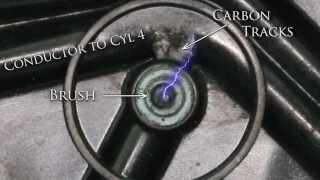
Used OEM Parts in Stock



New Aftermarket Parts Available


The information in this article is provided for general reference and educational purposes only. Vehicle specifications, procedures, and part compatibility can vary by production date, trim level, and region. Always consult your vehicle's factory service manual and verify part numbers before purchasing or performing repairs. Safety-critical components such as airbags, seat belts, and braking systems should be installed by a qualified professional.
- Gmc YUKON DENALI:
- 🎬 Helpful Videos
- 🛍️ Shop This Part
- What's Unique About the 2005-2009 Gmc YUKON DENALI
- Diagnostic Flowchart
- Symptoms You May Notice
- Most Likely Causes
- Rare But Worth Checking
- Diagnosis Steps
- Parts You'll Likely Need
- Related Codes That Often Appear With This One
- Technical Service Bulletins (TSBs) & Recalls
- Platform-Specific Known Issues
- Mechanic-Grade Diagnostic Values
- Hidden / Shadow Codes Worth Checking
- Scan Tool Commands That Help
- Wiring & Ground Locations
- Real Owner Repair Stories
- "I Checked Everything" — The Actual Cause
- OEM Part Supersession History
- Model Year Variations Within This Range
- 🎟️ Get 5% Off