

P0300 on 2000-2004 GMC Yukon Denali: Random Misfire Causes and Fixes
Code P0300 on a 2000-2004 GMC Yukon Denali indicates a random or multiple cylinder misfire. The most common causes are failing intake manifold gaskets, worn spark plugs and wires, or a faulty ignition coil. For the 2001-2004 models with the 6.0L V8, replacing the intake manifold gaskets is a very common repair that often resolves the issue, especially if accompanied by lean codes (P0171/P0174). Other frequent culprits include poor grounding straps and low fuel pressure from a weak fuel pump.
- P0300 means multiple cylinders are misfiring, and on a 2000-2004 Yukon Denali, the first suspect should be a vacuum leak.
- The most common source of a vacuum leak on this truck is a failed intake manifold gasket.
- If the check engine light is flashing, stop driving as soon as safely possible to prevent expensive damage to the catalytic converter.
- Don't neglect basic maintenance. Worn spark plugs and wires are another frequent cause.
- Check for other codes. If you also have P0171 and P0174, a vacuum leak is almost certain.
What's Unique About the 2000-2004 Gmc YUKON DENALI

The GMT800 platform (2000-2006), which includes the 2001-2004 Yukon Denali with the 6.0L V8, is well-known for issues with its plastic-carrier intake manifold gaskets. These gaskets degrade from heat cycles and exposure to ethanol in fuel, causing vacuum leaks that lead to a lean air/fuel mixture and trigger a P0300 code, often with P0171 and P0174. The 2000 Denali, a GMT400 holdover with the 5.7L V8, is more prone to issues with its Central Port Injection (CPI) system, often called the "spider injector," and distributor cap/rotor failures. Additionally, poor engine block and frame grounds are a known plague on GMT800 trucks, causing a variety of difficult-to-diagnose electrical issues, including random misfires.
Diagnostic Flowchart

Tap your situation to follow the diagnostic path that matches what you're seeing on this vehicle.
Symptoms You May Notice
- Flashing or solid Check Engine Light
- Rough or shaking idle, sometimes described as the truck bouncing side-to-side.
- Engine hesitation or stumbling during acceleration.
- Reduced engine power, especially under load or when accelerating past 25% throttle.
- Poor fuel economy
- Difficulty starting the engine, particularly when cold.
- A gasoline smell from the exhaust or under the hood.
- Replacing oxygen (O2) sensors. While a faulty O2 sensor can contribute to fuel trim issues, it's rarely the root cause of a P0300 code. The O2 sensor is more often correctly reporting a problem that originates with the fuel, air, or ignition systems.
- Replacing only one spark plug or coil. A P0300 indicates a random misfire, suggesting a problem affecting the whole engine. While one very weak component can contribute, it's often a sign of a systemic issue like low fuel pressure or a vacuum leak.
Most Likely Causes


- Leaking Intake Manifold Gaskets (2001-2004 6.0L V8) 🔴 High Probability The original GM gaskets use a plastic carrier that becomes brittle and cracks from engine heat and exposure to ethanol in fuel, causing vacuum leaks. This is a very common failure on GMT800 trucks. Symptoms often include a misfire that is worse when the engine is cold and may seem to improve as it warms up and the gaskets expand.
How to confirm: Perform a smoke test on the intake system. Alternatively, with the engine running, carefully spray carb cleaner or a propane torch (unlit) around the intake manifold sealing surfaces where it meets the cylinder heads; a change in engine RPM indicates a leak. The presence of lean codes P0171 and P0174 alongside P0300 is a strong indicator.
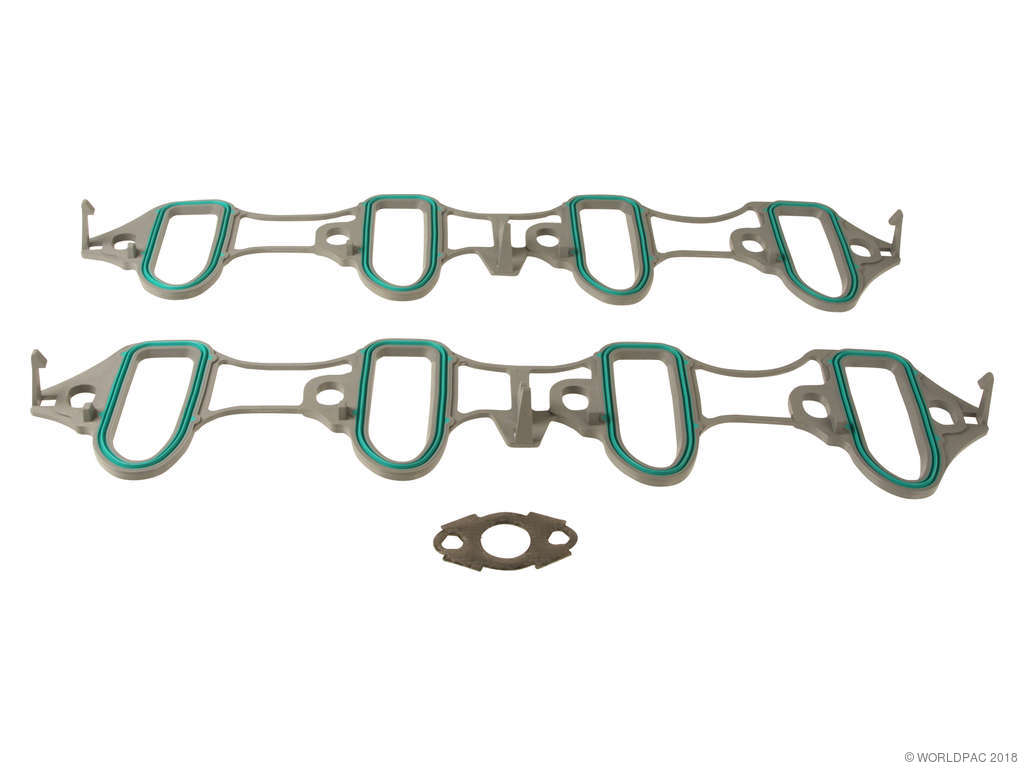
Typical fix: Replace the intake manifold gaskets. It is highly recommended to use an aftermarket set with a metal carrier, such as the Fel-Pro MS98016T, which is designed to be more durable than the OEM plastic version. While the intake is off, it is wise to inspect or replace the knock sensors and their wiring harness underneath, as they are prone to damage from moisture.
Est. part cost: $50-$120 - Worn Spark Plugs and/or Wires 🔴 High Probability As standard maintenance items, spark plugs and wires wear out. On a high-mileage V8, they are a primary suspect. Worn plugs with an excessive gap require more energy to fire, stressing the coils and wires and leading to misfires.
How to confirm: Visually inspect the spark plugs for wear (worn electrode), fouling, or damage. Inspect wires for cracks, burns, or corrosion. A simple tune-up is often the first step in diagnosing a P0300.
Typical fix: Replace all eight spark plugs and spark plug wires as a set. Use of quality OEM-style parts is recommended. For the 6.0L V8, ACDelco 41-962 (Platinum) or 41-110 / 41-162 (Iridium) are common choices. The factory gap is typically 0.040" for these replacements, a change from the 0.060" gap on some original plugs.
Est. part cost: $80-$200 - Low Fuel Pressure (Weak Fuel Pump) 🟡 Medium Probability The in-tank fuel pumps on GMT800 trucks are a common failure item. They can weaken with age, failing to provide the consistent pressure needed for proper combustion, especially under load, which can cause a random misfire across all cylinders.
How to confirm: Connect a fuel pressure gauge to the service port on the fuel rail. With the key on and engine off (KOEO), pressure should be within the manufacturer's specification (typically 55-62 PSI for 2001-2004 models and 60-66 PSI for 2000 models). Watch for pressure that drops significantly under load or bleeds off quickly after the pump primes.
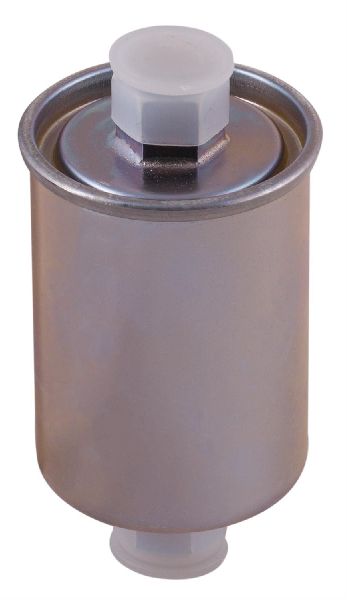
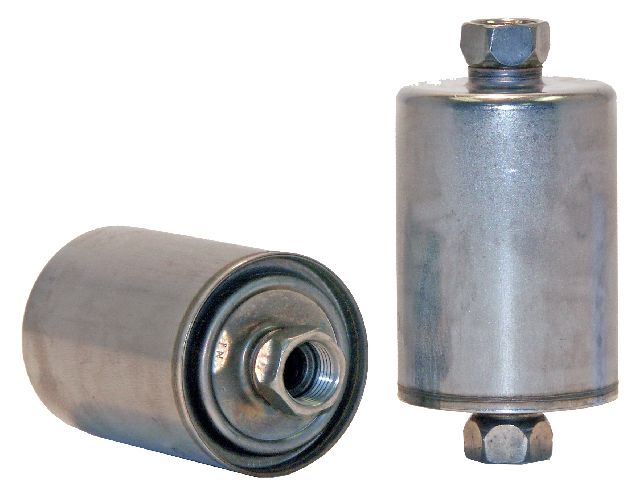
Typical fix: Replace the in-tank fuel pump module. It is critical to also replace the fuel filter at the same time, as a clogged filter can strain a new pump.
Est. part cost: $200-$400 - Faulty Ignition Coil(s) 🟡 Medium Probability These engines use a reliable coil-on-plug system, but individual coils can fail with age and heat exposure. A weak coil may not provide enough energy to fire the plug consistently, especially under load, contributing to random misfires before it fails completely on a single cylinder.
How to confirm: Use a scan tool with live data to see if misfire counts are higher on a particular cylinder. Swap the suspected faulty ignition coil with one from a known good cylinder. If the misfire code follows the coil (e.g., P0305 becomes P0301 after swapping coils from cylinder 5 to 1), the coil is bad.
Typical fix: Replace the faulty ignition coil. It is often recommended to replace the corresponding spark plug at the same time.
Est. part cost: $30-$70 per coil - Poor Engine/Chassis Grounds 🟡 Medium Probability GMT800 trucks are known for having issues with grounding straps corroding or breaking. A poor ground for the PCM or the ignition coil harnesses can cause erratic behavior and random misfires that are very difficult to diagnose. Key locations are the main ground on the frame under the driver's door and the grounds at the back and front of the cylinder heads.
How to confirm: Visually inspect all major ground straps from the engine to the frame and from the battery to the chassis. Look for corrosion, looseness, or frayed wires. A voltage drop test across the ground connections can confirm a poor connection. In some cases, a bad ground may test fine when cold but fail when hot.
Typical fix: Clean all grounding points to bare metal, apply dielectric grease, and re-secure them. In some cases, owners add redundant ground wires from the coil pack harness directly to a solid chassis ground to solve persistent issues.
Est. part cost: $5-$30
Rare But Worth Checking
- Worn Camshaft Lobe(s): A known issue documented in TSB #PIP4138R. A worn cam lobe will not lift the valve sufficiently, causing a persistent misfire on that cylinder that the PCM may log as a P0300. This is often accompanied by a distinct chirp, squeak, or tick noise from the valve cover area. Diagnosis can involve measuring valve lift or, ultimately, physical inspection of the camshaft. This can be caused by poor lubrication or high mileage.
- Crossed Fuel Injector Connectors: Specifically mentioned in TSB #PIP5169, this can occur after engine repairs like an intake gasket replacement. The bulletin warns technicians to ensure the connectors for cylinders 5 and 7, and cylinders 6 and 8 are not swapped, as this will cause immediate misfires.
- Clogged Catalytic Converter: A clogged or failing catalytic converter creates excessive exhaust backpressure, which chokes the engine and can lead to random misfires, especially under load. This is often a consequence of long-term, unaddressed misfires dumping raw fuel into the exhaust, not the initial cause.
- Dirty Mass Airflow (MAF) Sensor: A dirty MAF sensor can provide incorrect airflow readings to the PCM, leading to an improper air/fuel mixture and causing misfires. Cleaning the sensor with a dedicated MAF sensor cleaner is a simple and inexpensive diagnostic step.
- Faulty Fuel Pressure Regulator: On return-style fuel systems (common on the 2000-2003 models), a failing fuel pressure regulator can cause either too high or too low fuel pressure. A common failure is the internal diaphragm rupturing, allowing raw fuel to be sucked into the intake manifold through the vacuum line, causing a rich condition and misfires. Checking the vacuum line for the presence of fuel is a key diagnostic step.
- Crankshaft Position Sensor (CASE) Relearn Needed: Sometimes, after repairs or due to timing chain stretch over many miles, the correlation between the crankshaft and camshaft sensors can drift. A "CASE Relearn" procedure using a bi-directional scan tool may be needed to recalibrate the sensor's readings and eliminate a false P0300 code.
Diagnosis Steps
- Check for any other stored DTCs. Codes like P0171/P0174 strongly point towards a vacuum leak.
- Use a scan tool with live data to monitor misfire counts for each cylinder. Even with a P0300, the live data can often show which cylinder(s) are the primary offenders.
- Inspect the basics: Check the air filter for cleanliness and the intake tube for cracks.
- Perform a thorough visual inspection of all vacuum hoses for cracks or disconnections. A dry-rotted hose on the fuel rail is a known culprit.
- Inspect engine and frame grounds for corrosion and tightness. This is a known issue on GMT800 trucks.
- Test fuel pressure at the fuel rail. Pressure should be 55-62 PSI and hold steady.
- Conduct a vacuum leak test, preferably with a smoke machine, focusing on the intake manifold gaskets.
- Inspect spark plugs and wires for age and condition. If their service history is unknown, replacing them is a good baseline step.
- If misfires are concentrated on one or two cylinders, swap the ignition coil(s) with a known good cylinder and see if the misfire follows.
- If all else fails, consider more complex mechanical issues like a compression test or inspecting the camshaft per TSB #PIP4138R.
Parts You'll Likely Need
- Intake Manifold Gasket Set
(OEM #89060413)— The most common cause of P0300 on the 6.0L V8 due to the failure-prone design of the original plastic gaskets. - Spark Plugs
(OEM #ACDelco 41-962 or 41-110)— Standard maintenance item and a primary suspect for any misfire condition. - Spark Plug Wires — Wear item that degrades over time, causing weak spark.
- Fuel Pump Module — Common failure item on high-mileage GMT800s, leading to low fuel pressure.
Related Codes That Often Appear With This One
- P0171 — System Too Lean (Bank 1) - Often appears with P0300 when a vacuum leak (like from the intake manifold gasket) is the cause, allowing unmetered air into the engine.
- P0174 — System Too Lean (Bank 2) - Often appears with P0300 when a vacuum leak (like from the intake manifold gasket) is the cause, allowing unmetered air into the engine.
- P0301-P0308 — These are cylinder-specific misfire codes. The PCM may store a P0300 first, and then as the misfire becomes more consistent on certain cylinders, it will log one of these more specific codes, which can help pinpoint the issue.
Technical Service Bulletins (TSBs) & Recalls
- PIP5628C: Preliminary information for diagnosing P0300-P0308 and P050D codes.
- PIP5169: Warns technicians to check for crossed fuel injector connectors for cylinders 5-7 and 6-8 after engine repairs, which can cause a P0300 code.
- PIP4138R: Details diagnosis for a worn camshaft lobe or lifter, which can cause a P0300 code accompanied by a distinct engine chirp, squeak, or tick noise.
Platform-Specific Known Issues
- Intake Manifold Gasket Failure: The plastic/rubber intake manifold gaskets are a well-documented weak point on the 5.3L and 6.0L Vortec engines, frequently causing vacuum leaks that trigger P0300, P0171, and P0174 codes.
- Worn Camshaft Lobes: TSB #PIP4138R notes that a worn camshaft lobe can be a cause for P0300-P0308 codes if other diagnostics don't find the issue.
- Crossed Injector Wiring: TSB #PIP5169 points out that after engine repairs, the fuel injector connectors for cylinders 5 & 7 and 6 & 8 can be accidentally swapped, leading to a P0300 code.
Mechanic-Grade Diagnostic Values
- Fuel Pressure (2001-2004 6.0L V8) — expected: 55-65 PSI (Key On, Engine Off). Failure: Pressure below 55 PSI or that bleeds off rapidly indicates a weak pump or leak.
- Fuel Pressure (2000 5.7L V8) — expected: 60-66 PSI (Key On, Engine Off or at Idle). Failure: Pressure below 60 PSI suggests a failing fuel pump or faulty regulator.
- Ignition Coil Resistance (Primary Winding) — expected: 0.4 to 2.0 ohms. Failure: A reading outside this range indicates a faulty coil.
- Ignition Coil Resistance (Secondary Winding) — expected: 6,000 to 10,000 ohms. Failure: A reading outside this range indicates a faulty coil.
- Long-Term Fuel Trims (LTFT) — expected: Between -10% and +10%. Failure: Sustained positive values above +15% at idle that drop towards 0% at higher RPM strongly suggest a vacuum leak (like intake gaskets).
Hidden / Shadow Codes Worth Checking
- Mode $06 Misfire Counters: This is not a specific code but a data monitoring function within the OBD-II system. Advanced scan tools can access Mode $06 to view raw misfire counts for each individual cylinder, even before they are high enough to set a specific P030x code. This is invaluable for seeing which cylinder(s) are contributing most to a P0300. (see via An advanced OBD-II scan tool with live data or Mode $06 monitoring capabilities, such as a GM Tech2 or equivalent professional scanner.)
Scan Tool Commands That Help
- GM Tech2 / Professional Bidirectional Scanner: Crankshaft Position (CKP) System Variation Learn (CASE Relearn) — Use after major engine work (timing chain, crankshaft sensor replacement) or as a diagnostic step when a persistent P0300 cannot be solved by other means. It recalibrates the PCM's reference for the CKP sensor to account for minor mechanical tolerances and wear, which can resolve false misfire detection.
- GM Tech2 / Professional Bidirectional Scanner: Cylinder Power Balance Test — This function allows the technician to disable fuel injectors one by one while monitoring the RPM drop for each cylinder. A cylinder that shows little or no RPM drop when its injector is disabled is not contributing power, helping to isolate the source of the misfire.
Wiring & Ground Locations

- G103 / G104 — On the GMT400 (2000 Denali), G104 is a critical ground on a stud at the rear of the passenger side cylinder head. On the GMT800 (2001-2004), G103 is a key ground located on the front of the left (driver's side) engine block, often part of the main negative battery cable harness.. These grounds are essential for the PCM, ignition system, and various sensors. A corroded or loose connection at these points can cause erratic voltage, leading to weak spark, incorrect sensor readings, and a difficult-to-diagnose P0300 code.
- PCM Grounds — On the GMT800 PCM (Blue connector C1), pins 1 and 41 are both PCM grounds (wire color typically Black/White).. A poor connection or break in these specific ground wires can cause the PCM to malfunction, leading to numerous issues including random misfires. Verifying continuity to ground at these pins is a critical electrical diagnostic step.
- Frame Ground under Driver's Door — On GMT800 trucks, there is a major chassis ground on the frame rail directly below the driver's side door.. This is the primary ground point for the fuel pump. Corrosion here is extremely common and can cause low voltage to the pump, resulting in reduced fuel pressure and a P0300 code, especially under load.
Real Owner Repair Stories
- Reddit user in r/ChevyTrucks (2004 Suburban 5.3L (Similar GMT800 platform)) — Persistent P0300, P0174 (Lean Bank 2), and P1153.
❌ Tried (didn't work) Fuel pressure regulator, MAP sensor, Upstream O2 sensors, Intake manifold gaskets, Throttle body gasket, All spark plugs and wires, Fuel pump
✅ What actually fixed it A user suggested a "crankshaft position sensor relearn" procedure, which is a 5-minute fix with the right scan tool. This was reported to solve similar, otherwise unsolvable P0300 issues.
"I Checked Everything" — The Actual Cause
- A leaking brake booster diaphragm can cause a significant vacuum leak that leads to a P0300 code. This type of leak is often missed during a standard smoke test because the smoke is introduced into the intake manifold, and the leak is on the other side of the booster's check valve. The symptom is often a lean condition and misfire that may worsen when the brakes are applied at idle.
OEM Part Supersession History
17113557, 89017367, 89017589→89060413— Standard part consolidation and updates over time for the intake manifold gasket kit.
Heads up: The aftermarket Fel-Pro MS98016T with a metal carrier is widely considered a superior upgrade to the OEM plastic design.ACDelco 41-985 (Iridium), 41-110 (Iridium)→ACDelco 41-962 (Platinum) for pre-2007 models— ACDelco issued a technical bulletin recommending the 41-962 Platinum plug for 2006 and older V8 engines, superseding the previous iridium plugs for this application.
Heads up: While the 41-110 Iridium plug may still function, the official recommendation for the 2000-2004 model years is now the 41-962 Platinum plug, gapped to 0.040". Using the older spec 0.060" gap can cause issues.
Model Year Variations Within This Range
- 2000: The 2000 Yukon Denali was a holdover on the older GMT400 platform, using the 5.7L Vortec V8 with a distributor and a central 'spider' injection system (CSFI). P0300 causes are more likely related to the distributor cap/rotor, ignition module, or the CSFI fuel pressure regulator located under the intake.
- 2001-2004: These models are on the newer GMT800 platform with the 6.0L Vortec V8, featuring a distributorless, coil-on-plug ignition system. The most common cause of P0300 is leaking intake manifold gaskets, a signature failure for this platform.
- 2003-2004: The all-wheel-drive system was changed in 2003. While not directly related to P0300, some later models (approx. 2004+) may have a 'returnless' fuel system where the fuel pressure regulator is integrated into the in-tank fuel pump module, unlike earlier models where it was on the fuel rail.
Helpful Videos
Used OEM Parts in Stock


New Aftermarket Parts Available


The information in this article is provided for general reference and educational purposes only. Vehicle specifications, procedures, and part compatibility can vary by production date, trim level, and region. Always consult your vehicle's factory service manual and verify part numbers before purchasing or performing repairs. Safety-critical components such as airbags, seat belts, and braking systems should be installed by a qualified professional.
- Gmc YUKON DENALI:
- 🎬 Helpful Videos
- 🛍️ Shop This Part
- What's Unique About the 2000-2004 Gmc YUKON DENALI
- Diagnostic Flowchart
- Symptoms You May Notice
- Most Likely Causes
- Rare But Worth Checking
- Diagnosis Steps
- Parts You'll Likely Need
- Related Codes That Often Appear With This One
- Technical Service Bulletins (TSBs) & Recalls
- Platform-Specific Known Issues
- Mechanic-Grade Diagnostic Values
- Hidden / Shadow Codes Worth Checking
- Scan Tool Commands That Help
- Wiring & Ground Locations
- Real Owner Repair Stories
- "I Checked Everything" — The Actual Cause
- OEM Part Supersession History
- Model Year Variations Within This Range
- 🎟️ Get 5% Off