

P0300 on 2000-2007 GMC Yukon: Random Misfire Causes and Fixes
P0300 on a 2000-2007 GMC Yukon most often indicates worn-out spark plugs and wires or a significant vacuum leak from failed intake manifold gaskets. A basic ignition tune-up may cost $150-$300 in parts. If intake gaskets are the cause, expect to pay around $100 for an upgraded part set (e.g., Fel-Pro MS98016T), but the repair involves several hours of labor. For 2007 models, a failed AFM lifter is also a primary suspect.
- For a 2000-2006 Yukon, a P0300 code is most likely caused by failed intake manifold gaskets or a need for new spark plugs and wires.
- For a 2007 Yukon, in addition to the above, a failed Active Fuel Management (AFM) lifter is a very common cause, often identified by a distinct engine ticking noise.
- Do not drive the vehicle if the Check Engine Light is flashing, as this can quickly destroy the catalytic converters, leading to a much more expensive repair.
- Always check for vacuum leaks and test fuel pressure before replacing more expensive parts like ignition coils or fuel injectors.
What's Unique About the 2000-2007 Gmc YUKON

The Vortec V8 engines in this generation of GMC Yukon are well-known for a few specific issues that directly cause a P0300 code. The most prominent is the failure of the intake manifold gaskets, which become brittle and cause a large vacuum leak, often 🎬 Watch: Step-by-step guide to replacing these intake gaskets. triggering lean codes P0171 and P0174 as well. For the 2000-2006 models, some were built with 'Castech' cylinder heads that are prone to cracking and causing coolant to leak internally, leading to misfires. For the 2007 model year, which introduced the new GMT900 platform, Active Fuel Management (AFM) became a factor. The specialized lifters used in the AFM system (cylinders 1, 4, 6, and 7) are a known failure point and can get stuck or collapse, leading to misfires.
Diagnostic Flowchart
Tap your situation to follow the diagnostic path that matches what you're seeing on this vehicle.
Generation note: This range covers two Yukon generations. The 2000-2006 models are the GMT800 platform. The 2007 model year introduced the new GMT900 platform, which brought Active Fuel Management (AFM) to the 5.3L and 6.0L V8s. This makes AFM-related lifter failure a possible cause for P0300 on 2007 models, an issue not present in the earlier years. Note that a 'Classic' GMT800 body style was sold alongside the new GMT900 in 2007.
Symptoms You May Notice
- Rough or shaky idle
- Hesitation or stumbling during acceleration
- Flashing Check Engine Light
- Reduced engine power
- Poor fuel economy
- Engine backfiring or sputtering
- Exhaust smells like rotten eggs, indicating unburned fuel damaging the catalytic converter.
- Audible ticking or tapping noise from the engine, a strong sign of a potential AFM lifter issue (2007 models).
- Replacing oxygen (O2) sensors. O2 sensors will often report issues (like lean codes P0171/P0174) as a result of the misfire condition, but they are rarely the root cause of the P0300 itself.
- Replacing only one spark plug or coil. A P0300 indicates a problem affecting multiple cylinders, so a single component is less likely to be the sole cause unless it's an intermittent failure moving around. A full tune-up is a better diagnostic step.
Most Likely Causes

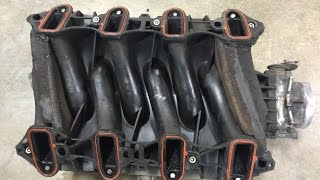
- Leaking Intake Manifold Gaskets 🔴 High Probability The original plastic-carrier intake manifold gaskets on Vortec V8 engines are notorious for degrading over time, becoming brittle and failing to seal properly. This allows a large amount of unmetered air into the engine, leaning out the air-fuel mixture and causing misfires across multiple cylinders, often accompanied by P0171 and P0174 codes.
How to confirm: With the engine running, spray brake cleaner or short bursts of carb cleaner around the area where the intake manifold meets the cylinder heads. A noticeable change in engine RPM or tone indicates a leak. A professional smoke test is the most definitive method. Sometimes the leak is only apparent on a cold start before the gaskets expand with heat.
Typical fix: Replace the intake manifold gaskets. It is highly recommended to use an updated gasket design with a metal carrier, such as Fel-Pro P/N MS98016T, which is more durable and provides a better seal. While the intake is off, it is common practice to also replace the two knock sensors and the wiring harness located in the valley of the engine.
Est. part cost: $60-$120 - Worn Spark Plugs and/or Wires 🔴 High Probability These are standard maintenance items that wear out over time. With the high mileage common on these vehicles, original or old plugs and wires are often unable to produce a strong enough spark for complete combustion, leading to misfires. This is often the simplest fix for a P0300.
How to confirm: Visually inspect the spark plugs for wear, fouling, or an incorrect gap. The original spec was a 0.060" gap, but GM later revised this to 0.040" for better performance and longevity. Inspect spark plug wires for cracks, burns, or corrosion on the terminals. If maintenance history is unknown, replacement is a good starting point.
Typical fix: Replace all eight spark plugs and spark plug wires as a set. Use quality OEM-equivalent parts like ACDelco Iridium or Platinum plugs (e.g., P/N 41-962) and new wires.
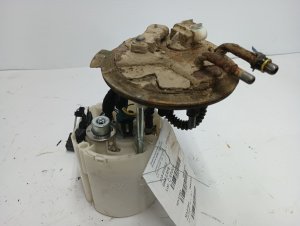
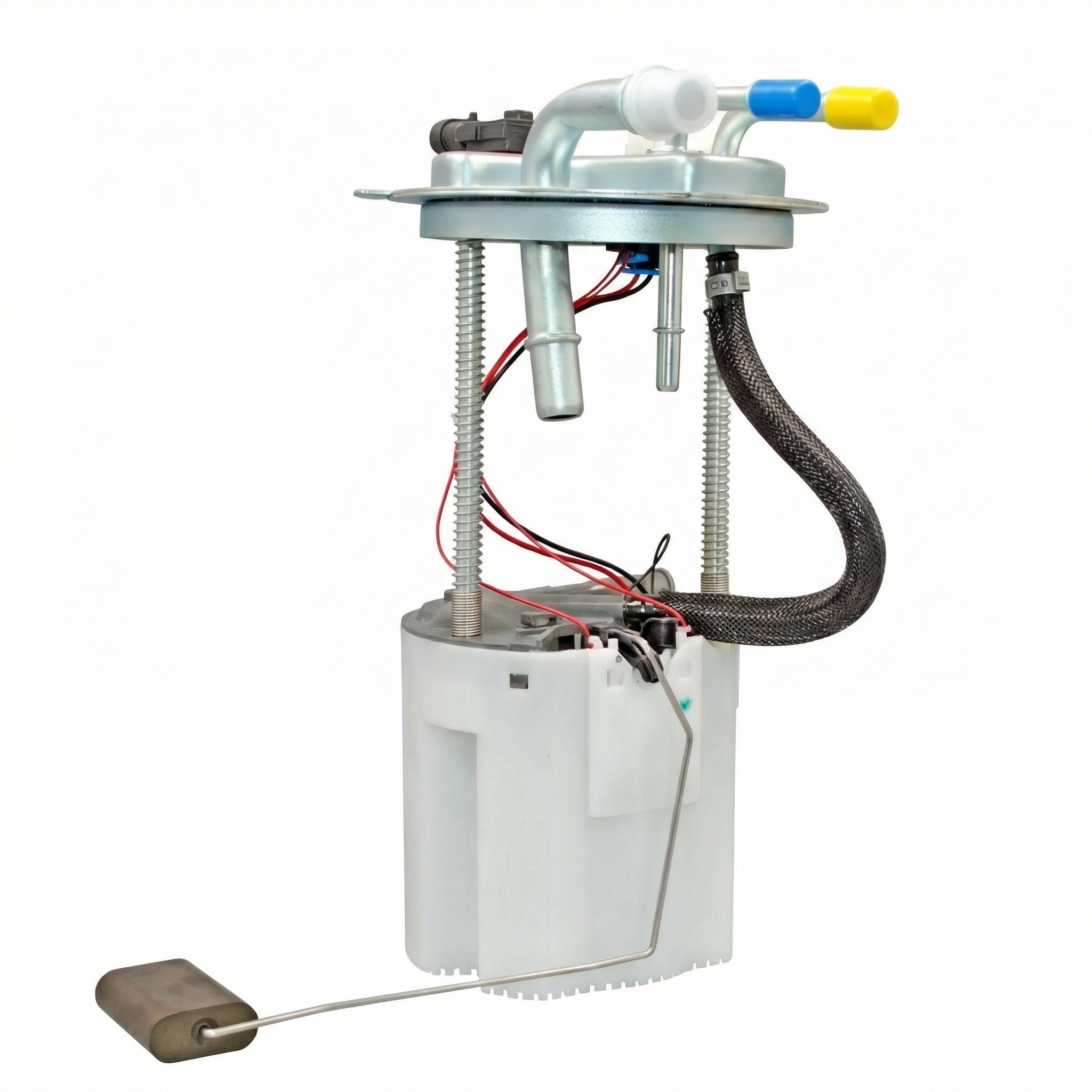
Est. part cost: $100-$250 - Weak Fuel Pump or Clogged Fuel Filter 🟡 Medium Probability The fuel pump is a common failure item on high-mileage GM trucks of this era. A weak pump cannot supply adequate pressure to the fuel rail, starving all cylinders of fuel and causing a lean condition with random misfires.
How to confirm: Connect a fuel pressure gauge to the Schrader valve on the fuel rail. With the key on and engine off (KOEO), pressure should be within the specification of 55-62 PSI (or 60-66 PSI for the 2000 5.7L). If pressure is below 55 PSI, or if it bleeds off quickly, a failing pump or clogged filter is likely. Note that the fuel pressure regulator is on the fuel rail for early models (return-style) and in the tank for later models (returnless, 2004+).
Typical fix: Replace the fuel pump module, which is located inside the fuel tank. It is also wise to replace the fuel filter at the same time, as a clogged filter can overwork a new pump.
Est. part cost: $200-$400 - Failed Active Fuel Management (AFM) Lifter (2007 models) 🟡 Medium Probability On 2007 models with the 5.3L or 6.0L V8, the AFM system deactivates cylinders 1, 4, 6, and 7 to save fuel. The specialized lifters for this system are a known weak point and can collapse or become stuck, preventing the valve from opening and causing a persistent misfire on one of those cylinders, which can present as a P0300.
How to confirm: A distinct ticking or tapping noise from the engine is a primary symptom. A diagnostic check involves removing the valve cover of the affected bank and observing if all rocker arms are moving while the engine is running or being cranked. A collapsed lifter will result in a rocker arm that is stationary.
Typical fix: This is a complex repair that involves removing the cylinder head(s) to replace the failed AFM lifters and the lifter guides. Many owners also opt to replace the camshaft if it has been damaged by the failed lifter. Some owners choose to install an 'AFM Delete Kit' to permanently remove the system and prevent future failures.
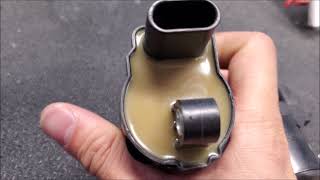
Est. part cost: $400-$1000+ - Faulty Ignition Coil(s) ⚪ Low Probability While the individual coil-on-plug packs (e.g., ACDelco D585) are generally reliable, they can fail with age and heat exposure. A single failing coil can sometimes cause a P0300 before it's isolated to a specific cylinder, especially if the failure is intermittent.
How to confirm: Using a scan tool with live data, identify which cylinder(s) have the highest misfire counts. Swap the ignition coil from a misfiring cylinder with one from a cylinder that is firing correctly. If the misfire follows the coil, the coil is bad.
Typical fix: Replace the single faulty ignition coil. Many owners choose to replace them in banks or as a full set on high-mileage vehicles for preventative maintenance.
Est. part cost: $40-$80
Rare But Worth Checking
- Cracked 'Castech' Cylinder Head: Some 2001-2006 trucks with 4.8L and 5.3L engines were built with cylinder heads from a supplier named Castech that are prone to cracking near a head bolt passage, causing a slow, internal coolant leak into the crankcase. This can lead to misfires, milky oil, and eventual engine damage. GM issued TSB #06-06-01-019B to address this, which involves inspecting for the Castech logo on the head casting.
- Dirty or Faulty Mass Airflow (MAF) Sensor: A MAF sensor contaminated with dirt and oil can send incorrect airflow data to the ECM, upsetting the air/fuel mixture and causing misfires. Cleaning it with a dedicated MAF sensor cleaner is an easy and inexpensive diagnostic step.
- Clogged Catalytic Converters: If a long-term misfire has been ignored, the catalytic converters can become clogged with unburned fuel. This creates excessive exhaust backpressure, which chokes the engine and can lead to random misfires, often accompanied by a significant loss of power and a 'rotten egg' smell.
- Crankshaft Position Sensor Relearn Needed: In some cases, especially after a battery replacement or other repairs, the ECM can lose its learned crankshaft position variation. This can cause the computer to falsely detect misfires, particularly when coasting downhill, even when the engine is running smoothly. A shop with a capable scan tool can perform a 'crank relearn' procedure to fix this.
Diagnosis Steps

- Check for a flashing Check Engine Light. If it's flashing, limit driving to prevent catalytic converter damage.
- Scan for any other accompanying codes. Codes like P0171/P0174 strongly point towards a vacuum leak.
- Use a scan tool to view live misfire data to see if the misfires are truly random or concentrated on specific cylinders (e.g., AFM cylinders 1, 4, 6, 7 on 2007 models).
- Inspect the ignition system. If plugs and wires are over 80,000 miles old or their history is unknown, replace them as a first step.
- Test fuel pressure. It should be 55-62 PSI with the key on, engine off. Low pressure indicates a failing pump or clogged filter.
- Perform a vacuum leak test. Spray carb cleaner around the intake manifold gaskets with the engine running and listen for a change in idle speed. A smoke test is more definitive.
- For 2007 models, listen for a distinct ticking noise from the top of the engine, which is a strong indicator of a failed AFM lifter.
- Check for poor engine grounds. The main engine-to-chassis grounds (G102, G103, G104) are located at the rear of the cylinder heads and can cause erratic electrical issues, including misfires, if corroded or loose.
Parts You'll Likely Need
- Intake Manifold Gasket Set
- Spark Plugs
- Spark Plug Wire Set
- Ignition Coil
- Fuel Pump Module Assembly
- Fuel Filter
Related Codes That Often Appear With This One
- P0171 / P0174 — These 'System Too Lean' codes for Bank 1 and Bank 2 frequently accompany a P0300 when the cause is a vacuum leak, such as from the intake manifold gaskets, which allows unmetered air into both cylinder banks.
- P0301 - P0308 — If the random misfire begins to happen more frequently on a particular cylinder, the ECM may log a cylinder-specific code in addition to the P0300. This is common with failing AFM lifters or a single bad coil/injector.
Technical Service Bulletins (TSBs) & Recalls
- TSB #06-06-01-019B: Addresses gradual coolant loss from cracked 'Castech' cylinder heads on 4.8L and 5.3L engines, a known cause of misfires.
- TSB #PIP5628G: A general diagnostic aid for technicians dealing with P0300-P0308 misfire codes, outlining a template for data collection before contacting technical assistance.
Platform-Specific Known Issues

- Intake Manifold Gasket Failure: Extremely common on the 2000-2006 Vortec engines, leading to vacuum leaks and lean codes (P0171/P0174) along with P0300.
- AFM Lifter Failure (2007): The introduction of Active Fuel Management on GMT900 trucks brought with it the common issue of collapsed or stuck lifters, causing misfires often accompanied by a ticking sound.
- Cracked Castech Cylinder Heads: A known manufacturing defect in some heads used between 2001-2006 can cause coolant to leak internally into the oil, leading to misfires and potential engine damage. This was documented in TSB #06-06-01-019B.
Mechanic-Grade Diagnostic Values
- Fuel Pressure (Key On, Engine Off) — expected: 55-62 PSI for most models, 60-66 PSI for 2000 5.7L. Failure: Pressure below 55 PSI, or pressure that bleeds off quickly after the pump primes.
- Injector Pulse Width at Idle — expected: ~2.5 ms. Failure: Intermittent jumps to over 8 ms without changes in other sensor data can indicate an electrical or computer issue causing the misfire.
- Engine Compression — expected: 160-175 PSI per cylinder, with minimal variation between cylinders.. Failure: A cylinder with significantly lower pressure than others may indicate a mechanical issue like a burnt valve or bad head gasket.
Scan Tool Commands That Help
- GM Tech2 / GDS2: Crankshaft Position Variation Learn — Required after replacing the crankshaft position sensor, engine, or PCM. Failure to perform the relearn can result in a P0315 code and cause the ECM to falsely detect misfires, logging a P0300, especially during deceleration.
- GM Tech2 / GDS2: Injector Balance Test — To identify a clogged or failing fuel injector that may be contributing to random misfires. This function allows the technician to fire each injector individually and measure the corresponding pressure drop in the fuel rail to see if one is flowing less than the others.
Wiring & Ground Locations
- G102 — Located at the left rear of the engine.. This is the primary ground for all eight ignition coils. Corrosion or a loose connection at this point can cause weak or intermittent spark across all cylinders, leading directly to a P0300 code.
- G103 / G104 — Located on the rear of the passenger side (G103) and driver side (G104) cylinder heads.. These are main engine-to-chassis grounds. A poor connection here can cause a host of electrical issues, including erratic sensor readings and problems with the Engine Control Module (ECM) itself, which can manifest as a random misfire code.
- G101 — Located at the lower front of the engine block.. This ground is for the Engine Control Module (ECM) and Transmission Control Module (TCM). A bad connection here can cause unpredictable behavior from the ECM, including false misfire detection.
Real Owner Repair Stories
- CorvetteForum user 'slvr05vette' (Vehicle with LS engine (similar architecture)) — P0300 and no compression in cylinder #1 after reinstalling the intake manifold.
❌ Tried (didn't work) Checking injector O-rings.
✅ What actually fixed it The owner had broken one of the intake manifold bolts during installation. The resulting improper seal caused a massive leak, leading to a loss of compression on the adjacent cylinder and triggering the P0300. Replacing the broken bolt and properly torquing the manifold resolved the issue. - YouTube user 'Nathan's DIY Garage' (GM vehicle with P0300) — Persistent P0300 check engine light.
❌ Tried (didn't work) Compression check (passed), Spark plug inspection (passed), Ignition system check (passed), Fuel pressure check (was low, but replacing regulator did not fix P0300), Replacing Camshaft Position Sensor
✅ What actually fixed it While reinstalling the old Camshaft Position Sensor, the owner noticed the wiring harness connector looked suspect. After simply unplugging and replugging the connector, effectively re-seating the connection, the P0300 code did not return, suggesting a poor connection or intermittent short in the sensor's wiring was the root cause.
"I Checked Everything" — The Actual Cause
- A cracked flexplate can cause the crankshaft position sensor to generate an erratic signal, which the ECM interprets as a misfire, triggering a P0300. All fuel and ignition system tests, including a smoke test for vacuum leaks, will appear normal because the issue is mechanical and related to engine rotation speed sensing.
- On 2007 models with AFM, a clogged filter screen inside the Valve Lifter Oil Manifold (VLOM) can restrict oil flow to the AFM lifters, causing them to malfunction and create misfires when the engine tries to switch to V4 mode. This issue will not present as a vacuum leak and will pass a smoke test.
OEM Part Supersession History
GM 10457730→ACDelco D585— Standard part lifecycle and branding updates.
Heads up: Genuine ACDelco D585 coils are stamped with the number '19005218' on the metal bracket. Coils without this stamp may be counterfeit or a lower-quality aftermarket version, even if sold in ACDelco packaging.
Model Year Variations Within This Range
- 2000-2003: These earlier models typically used a return-style fuel system, which includes a fuel pressure regulator and a return line located on the fuel rail in the engine bay.
- 2004-2007: GM transitioned to a returnless fuel system around 2004. On these models, the fuel pressure regulator is integrated into the fuel pump module inside the fuel tank, and there is no return line from the engine. This changes the diagnostic procedure for fuel pressure issues.
- 2002-2007: Models could be equipped with the L59 engine, a flex-fuel version of the 5.3L LM7. The L59 has larger fuel injectors (approx. 33-36 lb/hr vs 22-28 lb/hr) and different fuel injector connectors (EV6 vs Minitimer) to accommodate E85 fuel. Swapping components between an L59 and LM7 requires ensuring the injectors and PCM tune are compatible.
Helpful Videos
Used OEM Parts in Stock




New Aftermarket Parts Available


The information in this article is provided for general reference and educational purposes only. Vehicle specifications, procedures, and part compatibility can vary by production date, trim level, and region. Always consult your vehicle's factory service manual and verify part numbers before purchasing or performing repairs. Safety-critical components such as airbags, seat belts, and braking systems should be installed by a qualified professional.
- Gmc YUKON:
- 🎬 Helpful Videos
- 🛍️ Shop This Part
- What's Unique About the 2000-2007 Gmc YUKON
- Diagnostic Flowchart
- Symptoms You May Notice
- Most Likely Causes
- Rare But Worth Checking
- Diagnosis Steps
- Parts You'll Likely Need
- Related Codes That Often Appear With This One
- Technical Service Bulletins (TSBs) & Recalls
- Platform-Specific Known Issues
- Mechanic-Grade Diagnostic Values
- Scan Tool Commands That Help
- Wiring & Ground Locations
- Real Owner Repair Stories
- "I Checked Everything" — The Actual Cause
- OEM Part Supersession History
- Model Year Variations Within This Range
- 🎟️ Get 5% Off