

P0300 on 2007-2011 GMC Sierra Denali: Random Misfire Causes and Fixes
A P0300 code on a 2007-2011 GMC Sierra Denali indicates a random engine misfire. Common causes are worn spark plugs (ACDelco 12683541) and ignition coils (ACDelco 12570616). However, a significant number of cases are due to failing Active Fuel Management (AFM) lifters, a known issue with the 6.2L V8 engine. A basic tune-up with plugs and wires can cost $150-$300 in parts, while an AFM lifter repair is a major job costing over $2,500, often exceeding $5,000 at a dealership.
- P0300 means multiple cylinders are misfiring, not just one.
- Start with the basics: inspect and replace worn spark plugs and wires first, as this is the most common and affordable fix.
- Listen for a ticking or tapping noise from the engine. This is a strong indicator of the common but expensive AFM lifter failure.
- If the check engine light is flashing, stop driving as soon as safely possible to prevent catastrophic damage to your catalytic converters.
- If you've recently had engine work done, double-check that the injector wiring for cylinders 5, 6, 7, and 8 is not crossed, as per TSB #PIP5169.
What's Unique About the 2007-2011 Gmc SIERRA DENALI
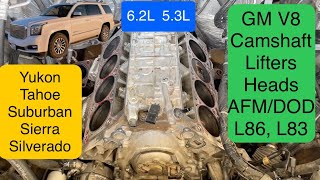
The 2007-2011 Sierra Denali is equipped with a 6.2L V8 engine (L92/L9H) featuring Active Fuel Management (AFM), also known as Displacement on Demand (DOD). This system deactivates four cylinders under light load conditions to save fuel by using special, hydraulically-actuated lifters. These AFM lifters are a well-documented source of problems, prone to mechanical collapse, getting stuck in the lifter bore, or internal failure of their locking pins. This failure prevents the valve from opening correctly, directly causing misfires and often triggering a P0300 code. 🎬 Watch: How AFM lifter failure causes loss of compression and misfires. The failure is often linked to the Valve Lifter Oil Manifold (VLOM), which controls oil flow to these lifters. This mechanical issue is so prevalent that it's a primary suspect after basic ignition and fuel system checks have been exhausted. Furthermore, GM has issued technical service bulletins (TSBs) like #PIP4138R that point to worn camshaft lobes as another potential cause, often as a direct result of a failed lifter roller.
Diagnostic Flowchart
Tap your situation to follow the diagnostic path that matches what you're seeing on this vehicle.
Symptoms You May Notice
- Rough or shaking idle
- Hesitation or stumbling during acceleration
- Noticeable loss of engine power
- Flashing Check Engine Light (indicates a severe misfire detrimental to the catalytic converter)
- Reduced fuel economy
- Engine ticking or chirping noise, which can be a sign of lifter or camshaft failure
- Strong fuel smell from the exhaust due to unburnt fuel
- Replacing oxygen sensors. While a faulty O2 sensor can contribute to fuel trim issues, it's rarely the direct cause of a P0300 and is more often a symptom of the misfire itself.
- Replacing only one spark plug or coil when a full tune-up is needed.
- Assuming a fuel injector is the root cause when a mechanical issue like a collapsed lifter is present. A collapsed lifter will show a misfire on one cylinder, but the underlying AFM system problem can cause random misfires over time.
Most Likely Causes
- Worn Spark Plugs and/or Faulty Spark Plug Wires 🔴 High Probability Spark plugs and wires are regular maintenance items that wear out over time, leading to a weak or inconsistent spark. The manufacturer specifies iridium plugs for a long service life and consistent performance.
How to confirm: Inspect the spark plugs for wear (worn electrode), fouling (black, oily, or white deposits), or incorrect gap. Note that ACDelco Iridium plugs are pre-gapped and should not be adjusted. Inspect wires for cracks, burns, or corrosion at the terminals.
Typical fix: Replace all eight spark plugs and spark plug wires as a set. Use high-quality Iridium plugs as specified for the engine, such as ACDelco 41-156 or 12683541.
Est. part cost: $80-$200 - Failing Ignition Coil(s) 🟡 Medium Probability While generally reliable, the individual coil-on-plug units (ACDelco 12570616 or superseded part numbers like 12611424) are exposed to significant heat and can fail with age, causing misfires.
How to confirm: Use a scan tool with live data to identify which cylinders have the highest misfire counts. Swap the coil from a misfiring cylinder with a known good cylinder. Clear codes and run the engine to see if the misfire follows the coil to the new cylinder.
Typical fix: Replace the faulty ignition coil. It is often recommended to replace them in sets if they are original and high-mileage, though they can be replaced individually.
Est. part cost: $40-$80 per coil - Active Fuel Management (AFM) Lifter Failure 🔴 High Probability The AFM system in the 6.2L V8 is a known weak point. The specialized lifters can become mechanically stuck or collapsed, often due to oiling issues or internal pin failure, preventing the valve from opening correctly. This is a very common high-mileage failure on this platform.
How to confirm: This is a complex diagnosis. It often starts with a distinct ticking or chirping noise from the top of the engine. A technician will confirm by removing the valve covers to check for pushrods that are not moving or are bent. A compression test on the suspect cylinder will often show low or zero compression. Final confirmation requires removing the cylinder head to inspect the lifters and camshaft.
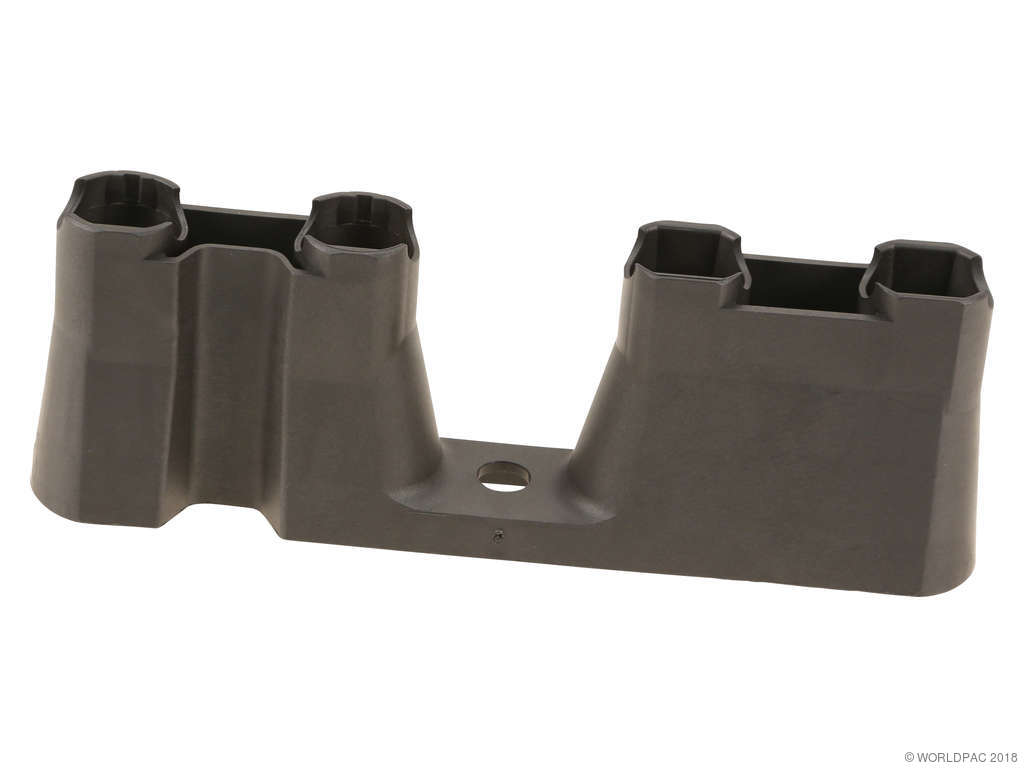
Typical fix: Replace the failed AFM lifters, lifter guides, and the Valve Lifter Oil Manifold (VLOM, GM P/N 12571609). The camshaft must be inspected for damage, as a failed lifter roller often damages the corresponding lobe, requiring camshaft replacement (per TSB PIP4138R). Many owners opt to install an AFM-delete kit at this time, which includes a non-AFM camshaft, standard lifters, a new valley cover, and requires an ECU tune to disable the system.
Est. part cost: $500-$2000+ - Dirty or Clogged Fuel Injectors ⚪ Low Probability Fuel deposits can build up over time, restricting fuel flow and causing a lean condition that leads to misfires. Ethanol in fuel can also contribute to injector deposits.
How to confirm: A fuel injector balance test can identify injectors with poor flow. An injector's resistance can be tested with a multimeter; it should be between 11-18 ohms. Swapping injectors between cylinders can also help isolate a faulty one.
Typical fix: Professional fuel system cleaning may work. More often, the clogged or failed injector(s) must be replaced.
Est. part cost: $50-$150 per injector - Vacuum Leak ⚪ Low Probability The intake manifold gaskets and various vacuum hoses (like the PCV hose) can degrade and crack over time, allowing unmetered air into the engine and disrupting the air-fuel ratio, leading to lean misfires.
How to confirm: A smoke test is the most effective method. A technician forces low-pressure smoke into the intake system with the engine off and looks for where it escapes. Listening for hissing sounds at idle can also sometimes locate a large leak.
Typical fix: Replace the leaking gasket or hose. The intake manifold gasket is a common failure point.
Est. part cost: $20-$200
Rare But Worth Checking
- Worn Camshaft Lobe: Mentioned in TSB #PIP4138R, this is a serious mechanical failure. If an AFM lifter fails, its roller can seize and grind down the camshaft lobe, requiring both to be replaced. The diagnosis involves measuring cam lobe lift or physically inspecting the camshaft.
- Low Fuel Pressure: A weak fuel pump or clogged fuel filter can starve the entire engine for fuel, causing random misfires across all cylinders, especially under load.
- Crossed Injector Connectors: Specifically mentioned in TSB #PIP5169 for cylinders 5-7 and 6-8. This is a human error that can occur after engine repairs, where the wiring harnesses for adjacent injectors are swapped, causing an immediate P0300.
- Failed Valve Lifter Oil Manifold (VLOM): The VLOM (GM P/N 12571609) sits in the engine valley and contains solenoids that direct oil to the AFM lifters. If it fails, it can cause the lifters to malfunction, leading to misfires. GM released an updated version to improve reliability.
Diagnosis Steps
- Read all stored fault codes with an OBD-II scanner. Note any other codes besides P0300 and check freeze frame data to see the conditions when the code was set.
- Use the scanner's live data function to monitor misfire counts for each cylinder. This can help narrow down the problem to a specific cylinder or bank even if no cylinder-specific codes are present.
- Perform a visual inspection of the ignition system. Check for worn, damaged, or incorrectly installed spark plugs and wires.
- Test the ignition coils. Swap a coil from a frequently misfiring cylinder with one from a cylinder that is firing correctly. If the misfire moves, the coil is bad.
- Check fuel pressure and delivery. Ensure the fuel pump is providing adequate pressure according to spec. Test fuel injectors for proper resistance (11-18 ohms) and spray pattern if possible.
- Check for vacuum leaks. A smoke test is the most reliable method. Pay close attention to the intake manifold gasket and PCV system hoses.
- If the above steps do not reveal the cause, the issue is likely mechanical, such as AFM lifter failure. This requires more advanced diagnostics like a compression test and physical inspection of valvetrain components.
Parts You'll Likely Need
- Iridium Spark Plugs
(OEM #12683541)— These are a primary wear item and a leading cause of misfires. The 6.2L engine requires high-quality iridium plugs for proper performance. Also known as ACDelco 41-156.
Trusted brands: ACDelco, NGK
OEM price range: $10-$15 per plug
Aftermarket price range: $8-$12 per plug - Ignition Coil
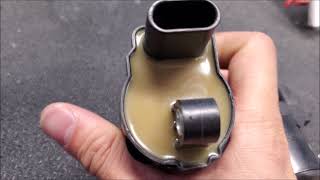
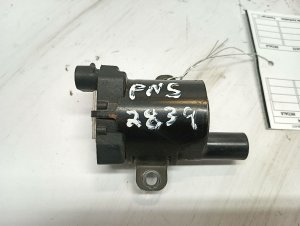
(OEM #12570616)— Coils provide the high voltage for the spark plugs and can fail with age and heat exposure, causing misfires. This part is often superseded by P/N 12611424.
Trusted brands: ACDelco, Delphi
OEM price range: $60-$90
Aftermarket price range: $40-$70 - Active Fuel Management (AFM) Lifter Kit
(OEM #12698946)— A very common mechanical failure point on this specific engine that directly causes a P0300 code. A full repair kit often includes 8 AFM lifters, 8 standard lifters, gaskets, and bolts.
Trusted brands: ACDelco, Enginetech
OEM price range: $400-$800 for lifters
Aftermarket price range: $250-$500 for lifters - Valve Lifter Oil Manifold (VLOM)
(OEM #12571609)— This manifold controls oil flow to the AFM lifters and is a common failure point. It is highly recommended to replace it during a lifter job.
Trusted brands: ACDelco
OEM price range: $150-$250
Aftermarket price range: $80-$150 - AFM/DOD Delete Kit — For owners who want to permanently eliminate the problematic AFM system. Kits typically include a non-AFM camshaft, standard lifters, new lifter trays, a valley cover, gaskets, and bolts. Requires ECU reprogramming.
Trusted brands: Texas Speed & Performance, AMS Racing
OEM price range: N/A
Aftermarket price range: $500-$1200
Related Codes That Often Appear With This One
- P0301-P0308 — If the random misfire begins to occur more frequently on specific cylinders, the PCM will log a cylinder-specific code (e.g., P0304 for Cylinder 4). This is common when an AFM lifter fails on a specific cylinder.
- P0171 / P0174 — These codes indicate a lean condition on Bank 1 and Bank 2, respectively. They often appear with P0300 if the root cause is a large vacuum leak or a fuel delivery issue affecting the whole engine.
- P050D — This code for 'Cold Start Rough Idle' is mentioned alongside P0300 in TSB #PIP5628E, indicating they can be related during diagnosis, often pointing towards injector or carbon buildup issues.
- P3400 — This code for 'Cylinder Deactivation System Bank 1' directly points to a problem within the AFM system, often appearing alongside a P0300 when a lifter has failed.
Technical Service Bulletins (TSBs) & Recalls
- Advises technicians that if standard diagnostics for P0300-P0308 misfires don't find a cause, they should inspect for a worn camshaft lobe and/or a failed lifter roller. It details how a worn cam can cause a consistent tick or chirp noise.
- Warns technicians that after engine repairs, a P0300 code can be caused by accidentally swapping the fuel injector electrical connectors for cylinders 5 and 7, or 6 and 8.
- Provides preliminary diagnostic information for technicians to gather when a vehicle presents with misfire codes P0300-P0308 and/or P050D (Cold Start Rough Idle).
- Though for a later generation, this bulletin describes the same failure mode: an AFM lifter that is mechanically collapsed or stuck, potentially causing a bent pushrod and a P0300 code. It confirms this is a long-standing issue with the AFM design.
Platform-Specific Known Issues
- AFM Lifter Failure: The most significant issue for this platform. The Active Fuel Management system's lifters are known to collapse or stick, leading to a P0300 code, often accompanied by a distinct engine ticking sound. GM has released service bulletins related to this issue.
- Worn Camshaft Lobes: TSB #PIP4138R specifically calls out checking for worn camshaft lobes as a cause for P0300-P0308 codes. This is often a direct result of a failed lifter scraping against the cam.
- Crossed Injector Wiring: TSB #PIP5169 highlights a potential installation error after engine repairs where the injector connectors for cylinders 5 & 7 and 6 & 8 can be swapped, causing a P0300 code.
Mechanic-Grade Diagnostic Values
- Fuel Injector Coil Resistance — expected: 12.0 - 12.5 Ohms. Failure: Readings significantly outside this range indicate a faulty injector coil.
- Fuel Pressure (Key On, Engine Off) — expected: 50-60 PSI. Failure: Pressure below this range indicates a weak fuel pump, clogged filter, or faulty regulator.
- AFM/DOD Solenoid Resistance (VLOM) — expected: 20-30 Ohms. Failure: A reading outside this range suggests a failed solenoid within the Valve Lifter Oil Manifold.
- Live Data Misfire Counters — expected: Zero or very few counts at idle on all cylinders.. Failure: A specific cylinder rapidly accumulating counts points to a localized issue (plug, wire, coil, injector, lifter), even with a general P0300 code.
Scan Tool Commands That Help
- GDS2 / Tech2 or equivalent professional scanner: Cylinder Power Balance Test — Used to identify which specific cylinder(s) are contributing less power, helping to pinpoint the source of a random misfire when only a P0300 is present. This is done by sequentially disabling fuel to each cylinder and measuring the RPM drop.
- GDS2 / Tech2 or equivalent professional scanner: Fuel Injector Balance Test — To confirm a suspected faulty fuel injector. The tool commands the injector to fire for a set duration and measures the corresponding drop in fuel rail pressure, which should be consistent across all injectors.
- GDS2 / Tech2 or equivalent professional scanner: AFM Solenoid Control — A technician can command the AFM solenoids in the VLOM on and off to check for response. This helps determine if a failure is electrical (solenoid) or mechanical (lifter) without immediate disassembly.
Wiring & Ground Locations
- G103 / G104 — The primary engine-to-chassis ground straps are typically located on the front or side of the cylinder heads, bolted to the frame.. A corroded or loose ground strap for the engine bank containing the misfiring cylinders can cause a weak or intermittent spark, leading to a P0300. In one documented case, a corroded ground on one bank caused a no-spark condition on all four cylinders of that bank.
- Ignition Coil Connector — Connector on each individual ignition coil.. The ground wire for each bank of four ignition coils is often bundled and terminates at a single ground point on the cylinder head. A break or corrosion at this point can disable an entire bank of coils, causing a severe misfire and a P0300 code.
Real Owner Repair Stories
- YouTube channel 'Burnin Gas' (GMC Sierra with a V8 engine (similar LS-family architecture)) — Flashing check engine light, truck would barely pull itself up the road, horrible cold starts, strong fuel smell.
❌ Tried (didn't work) Initially suspected a clogged fuel injector, a common issue on these engines.
✅ What actually fixed it The Bank 1 upstream oxygen (O2) sensor had failed. Live data showed it was reading lean, causing the computer to command a rich fuel mixture to that bank. This created a rich misfire so severe it mimicked a major mechanical or ignition failure. Unplugging the faulty O2 sensor made the truck run perfectly (in open loop), confirming the diagnosis. Replacing the O2 sensor resolved the P0300 code. - YouTube channel 'Axle's Garage' (GMC Sierra 5.3L (similar GMT900 platform)) — Flashing check engine light, severe misfire, P0300 code. Scan tool showed misfires on cylinders 1 and 3, but further testing revealed no spark on the entire driver's side bank.
❌ Tried (didn't work) Swapping ignition coils did not resolve the issue.
✅ What actually fixed it The main ground wire for the driver's side bank of ignition coils was corroded and broken inside the ring terminal where it bolted to the cylinder head. This single point of failure cut the ground path for all four coils on that bank. Repairing the ground connection by installing a new ring terminal restored spark and fixed the misfire.
"I Checked Everything" — The Actual Cause
- In many high-mileage cases on the 6.2L engine, a P0300 will persist after the ignition system is confirmed good and a smoke test shows no vacuum leaks. The root cause is frequently internal and mechanical, related to the Active Fuel Management (AFM) system. A collapsed AFM lifter or a worn camshaft lobe from a failed lifter will not be detected by a smoke test but will cause a persistent misfire that can appear random as the system deteriorates.
OEM Part Supersession History
12570616→12611424, D510C— Standard part evolution for improved reliability and manufacturing consistency.
Heads up: These are square-shaped Melco-Mitsubishi coils. While other GM coils may physically fit the bracket, using the wrong coil type can lead to improper dwell times and weak spark. It is critical to use the specified square coil.12571609 (VLOM)→12698755— The original Valve Lifter Oil Manifold (VLOM) was prone to solenoid failure and sealing issues. The updated part number features design improvements for better long-term reliability.
Heads up: The new part is a direct replacement. When replacing a failed VLOM, it is critical to use the updated part number to prevent repeat failures.
Model Year Variations Within This Range
- 2007-2008 vs 2009-2011: The engine code may be L92 (2007-2008) or L9H (2009-2011). The primary difference is that the L9H engine is Flex Fuel capable. This means the L9H has different fuel injectors (4-hole nozzle vs 2-hole on the L92) and a different fuel composition sensor and ECU tuning. While both engines feature AFM, some very early 2007 L92s had the AFM hardware installed but not enabled in the software.
Helpful Videos
Used OEM Parts in Stock

New Aftermarket Parts Available



The information in this article is provided for general reference and educational purposes only. Vehicle specifications, procedures, and part compatibility can vary by production date, trim level, and region. Always consult your vehicle's factory service manual and verify part numbers before purchasing or performing repairs. Safety-critical components such as airbags, seat belts, and braking systems should be installed by a qualified professional.
- Gmc SIERRA DENALI:
- 🎬 Helpful Videos
- 🛍️ Shop This Part
- What's Unique About the 2007-2011 Gmc SIERRA DENALI
- Diagnostic Flowchart
- Symptoms You May Notice
- Most Likely Causes
- Rare But Worth Checking
- Diagnosis Steps
- Parts You'll Likely Need
- Related Codes That Often Appear With This One
- Technical Service Bulletins (TSBs) & Recalls
- Platform-Specific Known Issues
- Mechanic-Grade Diagnostic Values
- Scan Tool Commands That Help
- Wiring & Ground Locations
- Real Owner Repair Stories
- "I Checked Everything" — The Actual Cause
- OEM Part Supersession History
- Model Year Variations Within This Range
- 🎟️ Get 5% Off