

P0300 on 2001-2008 GMC Sierra 3500: Random Misfire Causes & Fixes
A P0300 code on a 2001-2008 GMC Sierra 3500 most often points to a vacuum leak from failed intake manifold gaskets or basic ignition system wear (spark plugs, wires). Before replacing parts, check for vacuum leaks with a smoke machine and test fuel pressure (should be 55-62 PSI). An upgraded metal-frame intake gasket set (Fel-Pro MS98016T) is a common and durable fix.
- P0300 on a 2001-2008 Sierra 3500 is most commonly caused by a vacuum leak from failed intake manifold gaskets.
- Before buying parts, perform a vacuum leak test and check fuel pressure to properly diagnose the issue.
- Always start with the basics: inspect spark plugs and wires for wear or damage.
- If the check engine light is flashing, avoid driving to prevent expensive damage to the catalytic converters.
- Be aware that in rare cases, this code can point to a serious mechanical issue like a worn camshaft, as documented in a GM TSB. [Bulletin #PIP4138R]
What's Unique About the 2001-2008 Gmc SIERRA 3500
For the GMT800 generation of Sierra trucks (2001-2007 Classic), the P0300 code is very commonly associated with vacuum leaks caused by failing intake manifold gaskets. The original gaskets used a plastic frame that would crack and degrade from heat and exposure to ethanol in fuel, causing unmetered air to enter the engine and disrupt the air-fuel ratio. Additionally, GM has issued Technical Service Bulletins (TSBs) for these engines, like #PIP4138R, warning that a hard-to-diagnose P0300 can be caused by a worn camshaft lobe, a significant mechanical issue often accompanied by a ticking or chirping noise.
Diagnostic Flowchart
Tap your situation to follow the diagnostic path that matches what you're seeing on this vehicle.
Generation note: This range covers the first-generation 'GMT800' (2001-2007 Classic) and the start of the second-generation 'GMT900' (2007.5-2008). The most common causes, like intake gasket leaks and ignition faults, apply to both, but the engines and electrical systems differ slightly. The GMT800 used the LQ4 6.0L V8, while the GMT900 introduced the LY6 6.0L V8 with variable valve timing.
Symptoms You May Notice
- Flashing or solid Check Engine Light
- Rough or shaking idle
- Engine hesitation or stumbling during acceleration
- Noticeable loss of engine power
- Difficulty starting the engine
- Poor fuel economy
- Smell of raw fuel from the exhaust
- Replacing oxygen (O2) sensors. Faulty O2 sensors can cause misfires, but more often, they are correctly reporting the lean/rich conditions that are symptoms of another problem, like a vacuum leak or fuel delivery issue.
- Replacing only one spark plug or coil when the issue is a systemic problem like low fuel pressure or a vacuum leak.
- Replacing the ECM/PCM. Computer failure is extremely rare and should only be considered after all other possibilities have been exhaustively tested.
Most Likely Causes
- Vacuum Leak from Intake Manifold Gaskets 🔴 High Probability The original gaskets on Vortec V8 engines use a plastic carrier that is notorious for cracking and degrading over time from engine heat and fuel exposure, causing leaks where the intake manifold meets the cylinder heads.
How to confirm: With the engine running, spray a flammable fluid like brake cleaner or unlit propane around the intake manifold sealing surfaces; a change in engine idle confirms a leak. A professional smoke test is the most definitive method. On a scan tool, live data will show high positive short-term fuel trims (STFT) at idle that improve (move closer to zero) as RPMs increase, because the leak becomes less significant relative to the total air intake.
Typical fix: Replace the intake manifold gaskets. It is highly recommended to use an upgraded set with a metal frame, such as Fel-Pro P/N MS98016T, for improved durability and a better seal.
Est. part cost: $50-$100 - Worn Spark Plugs and/or Defective Spark Plug Wires 🔴 High Probability These are standard maintenance items that wear out. High mileage, oil fouling, or excessive heat can degrade them, leading to a weak or inconsistent spark. A cracked porcelain on a single spark plug can be enough to cause a random misfire code.
How to confirm: Visually inspect the spark plugs for wear on the electrode, cracks in the porcelain, or heavy carbon/oil deposits. Test spark plug wires with a multimeter; resistance should be within manufacturer specifications (e.g., under 8,000 ohms per foot).
Typical fix: Replace all spark plugs and spark plug wires as a set. Use of OEM ACDelco Iridium (P/N 41-110 or its successor 41-162) or Platinum plugs is recommended. Plugs typically come pre-gapped to 0.040 inches.
Est. part cost: $100-$200 - Low Fuel Pressure 🟡 Medium Probability The in-tank fuel pump can weaken with age, or the inline fuel filter can become clogged with debris. This starves the engine of fuel, affecting all cylinders and causing a lean misfire condition.
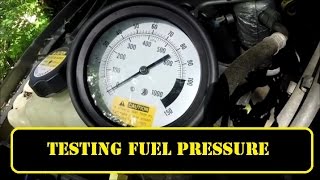
How to confirm: Connect a fuel pressure gauge to the Schrader valve service port on the fuel rail. 🎬 See how to find the test port and check fuel pressure. With the key on and engine running (KOER), the pressure should be stable within the manufacturer's specification of 55-62 PSI. A pressure drop under load indicates a problem.
Typical fix: Replace the clogged fuel filter first (a common part is ACDelco GF822), as it's inexpensive and easy. If pressure is still low, the entire fuel pump assembly in the tank will likely need to be replaced.
Est. part cost: $20-$50 (filter), $200-$400 (pump) - Failing Ignition Coil(s) 🟡 Medium Probability Heat and vibration can cause ignition coils to fail over time. While one failing coil usually causes a cylinder-specific code (e.g., P0301), a weak or intermittently failing coil can contribute to a random P0300 before it fails completely.
How to confirm: Use a scan tool to view live misfire data to see if misfires are more frequent on one cylinder. Swap the suspected bad coil with a known good one from another cylinder. If the misfire follows the coil (e.g., a P0302 becomes a P0304 after swapping coils from cylinders 2 and 4), the coil is faulty.
Typical fix: Replace the faulty ignition coil. It is often wise to replace the corresponding spark plug at the same time.
Est. part cost: $40-$80 per coil
Rare But Worth Checking
- Worn Camshaft Lobe(s) and Lifters: A GM Technical Service Bulletin (#PIP4138R) specifically calls this out as a cause for P0300 when other diagnostics fail. This mechanical failure prevents valves from opening fully, causing a misfire. It often produces a distinct ticking or squeaking noise at half engine speed.
- Corroded Ignition Coil Ground Wire: A known issue on GMT800 trucks where the main ground wire for an entire bank of ignition coils corrodes, causing a loss of spark to four cylinders at once. This ground is typically located on a bolt at the rear of the driver's side cylinder head.
- Faulty Crankshaft Position Sensor (CKP): The sensor itself can fail or send erratic data, causing the PCM to incorrectly flag misfires. Often, this won't set a specific CKP sensor code. After replacing the sensor, a 'Crankshaft Variation Relearn' procedure must be performed with a capable scan tool for the PCM to recognize the new sensor correctly.
- Dirty or Clogged Fuel Injectors: While a single clogged injector usually gives a specific cylinder code, multiple dirty injectors can lead to a random misfire condition. This can sometimes be resolved with a professional fuel system cleaning service or by using a high-quality fuel additive like Seafoam.
- Clogged Catalytic Converter: A blocked exhaust creates excessive backpressure, preventing the engine from expelling exhaust gases efficiently, which leads to misfires. This is often accompanied by a significant loss of power, especially at higher RPMs, and may be preceded by a glowing red converter.
Diagnosis Steps
- Scan for all DTCs. Note any other codes besides P0300, as they provide crucial clues (e.g., P0171/P0174 point to vacuum leaks).
- Check freeze frame data to see the engine conditions (RPM, load, temperature) when the code was set. This can help replicate the issue.
- Analyze live data with a scan tool. Watch Short-Term Fuel Trims (STFT) at idle. High positive numbers (e.g., +15% or more) that decrease with RPM strongly suggest a vacuum leak.
- Test fuel pressure. Connect a gauge to the fuel rail's service port. Pressure should be 55-62 PSI at idle and hold steady under acceleration.
- Perform a vacuum leak test, preferably with a smoke machine. Focus on the intake manifold gaskets, PCV hoses, and the brake booster line and grommet.
- Inspect the full ignition system: pull spark plugs to check for wear, cracks, or fouling. Test plug wires for resistance.
- If misfires are isolated to one bank (e.g., all odd or all even cylinders), inspect the coil pack ground wire on that cylinder head for corrosion. It's typically at the rear of the driver's side head.
- If a new Crankshaft Position Sensor was installed, perform the 'Crankshaft Variation Relearn' procedure with a compatible scan tool. Failure to do this is a common cause of a persistent P0300.
- If all else fails, perform a mechanical engine health test, including a compression test and cylinder leak-down test, to check for internal issues like a worn camshaft or poor valve sealing, as mentioned in TSB #PIP4138R.
Parts You'll Likely Need
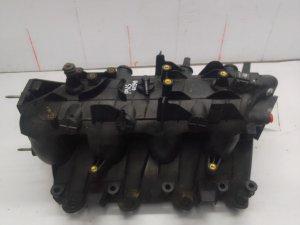
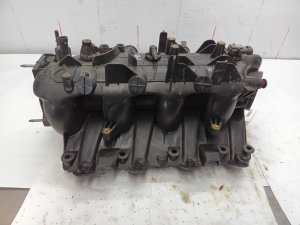
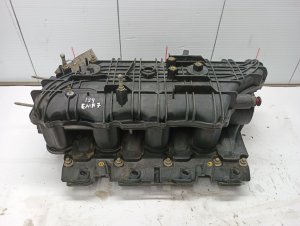
- Intake Manifold Gasket Set
(OEM #ACDelco 89017825)— This is the most common cause of vacuum
Related Codes That Often Appear With This One
- P0171 / P0174 — These 'System Too Lean' codes for Bank 1 and Bank 2 frequently appear with P0300 when a significant vacuum leak is the root cause, as unmetered air is being detected by the oxygen sensors.
- P0301 - P0308 — A random P0300 misfire may eventually be isolated by the PCM to one or more specific cylinders, which can help narrow the diagnosis to a component like a single coil, wire, or injector.
Technical Service Bulletins (TSBs) & Recalls
- PIP4138R: Warns that a difficult-to-diagnose P0300, sometimes accompanied by a chirp or tick noise, can be caused by a worn camshaft lobe or lifter.
- PIP5628G: A preliminary information bulletin indicating that data may need to be provided to GM's Technical Assistance Center (TAC) to help diagnose P0300-P0308 codes.
Platform-Specific Known Issues
- The original plastic-carrier intake manifold gaskets are a known failure point that commonly causes vacuum leaks and a P0300 code.
- Corrosion of the ignition coil bank ground wire, typically located on the front of the driver's side cylinder head, can kill spark to four cylinders simultaneously.
- Per TSB #PIP4138R, persistent P0300 codes that are not resolved by typical ignition or fuel system diagnostics may be caused by a worn camshaft lobe, a serious internal engine problem.
Mechanic-Grade Diagnostic Values
- Ignition Coil Primary Resistance — expected: 0.4 - 2.0 Ohms. Failure: A reading outside this range, or a fluctuating reading, indicates a failing coil winding.
- Ignition Coil Secondary Resistance — expected: 8,000 - 11,500 Ohms (8.0k - 11.5k Ω). Failure: A reading significantly outside this range suggests the secondary coil winding is compromised.
- Fuel Pressure (Key On, Engine Off) — expected: 55-62 PSI for VIN 'T' & 'U' engines; 48-54 PSI for VIN 'Z' engines. Failure: Pressure below the specified range indicates a weak fuel pump, clogged filter, or faulty regulator.
- Mode $06 Misfire Counts — expected: Zero or very low counts per cylinder during a drive cycle.. Failure: High counts on multiple cylinders confirm a random misfire is occurring, even if the Check Engine Light is not currently on.
Hidden / Shadow Codes Worth Checking
- P1336: Crankshaft Position (CKP) System Variation Not Learned. This code indicates that the mandatory CKP relearn procedure has not been completed or failed after replacing the CKP sensor or PCM. (see via This code is set in memory and can be read by most standard OBD-II scan tools if the relearn procedure fails.)
Scan Tool Commands That Help
- Tech 2 / GDS2 or equivalent professional scan tool: Crankshaft Variation Relearn (or CASE Relearn) — This procedure is mandatory after replacing the crankshaft position sensor, the engine control module (ECM/PCM), or performing major engine work. Failure to perform the relearn will result in inaccurate misfire detection and can cause a persistent P0300 code.
- Tech 2 / GDS2 or equivalent professional scan tool: Fuel Pump Relay Command — This bidirectional command allows the technician to manually turn the fuel pump on and off to verify the pump's operation and check for stable fuel pressure without the engine running.
- Tech 2 / GDS2 or equivalent professional scan tool: Misfire Graphic — Viewing live misfire data for each cylinder helps determine if the 'random' misfire has a pattern, such as being concentrated on one bank, which could point to a bank-specific issue like a clogged catalytic converter or a bad ground.
Wiring & Ground Locations
- G102 / G104 — Located on the rear of the driver's side cylinder head. G104 is a strap from the head to the firewall, and G102 is for the ignition coils.. This is the primary ground point for the ignition coil harnesses. Corrosion or looseness at this stud is a well-documented cause of misfires on one or both banks, leading to a P0300.
- G103 — Located on the front of the passenger's side cylinder head on many GMT800 trucks.. This serves as a major engine ground point. While less directly tied to ignition than G102/G104, a poor connection here can introduce electrical noise and cause various sensor-related issues that may contribute to a P0300.
- PCM Ground — A critical ground wire runs from the PCM wiring harness to a bolt on the top front of the engine block.. This is the main ground for the Powertrain Control Module. A poor connection here can cause erratic PCM behavior and faulty sensor readings, leading to misdiagnosis of a P0300.
- Frame Ground near Fuel Pump — Under the driver's side of the vehicle, a ground wire from a harness connects directly to the frame rail.. This is often the ground for the fuel pump. Corrosion here, common in rust-belt areas, can cause intermittent low fuel pressure, leading to a lean misfire condition and a P0300 code.
Real Owner Repair Stories
- GMTNation forum user (2005 Sierra 1500 4.8L with 370k miles) — Starts, runs, and drives but has all the symptoms of needing a crank relearn after an engine reseal.
❌ Tried (didn't work) Snap-On Verus and Maximus 2.0 scanners could not complete the relearn procedure, giving an error that the transmission was not in Park, despite the dash showing it was.
✅ What actually fixed it A broken ground wire within the transmission range switch harness. The broken wire caused the ECM to see an invalid gear position (reading 12v on all four signal wires), which prevented the relearn procedure from initiating. Repairing the wire allowed the crank relearn to complete successfully. - PerformanceTrucks.net forum user (GMT800 Truck) — Flashing check engine light with a P0300 code.
❌ Tried (didn't work) The user notes that online advice pointed to spark plugs, fuel system, etc.
✅ What actually fixed it A mechanic diagnosed and repaired a 'harness wiring issue leading up to the pcm'. - YouTube video comment (2000 to mid-2003 GM Truck/SUV) — P0300 random misfire, hard starting, and smell of fuel from the exhaust.
✅ What actually fixed it The fuel pressure regulator was leaking fuel into the vacuum line. Replacing the regulator resolved all symptoms.
"I Checked Everything" — The Actual Cause
- In some cases, a smoke test for vacuum leaks will come back clean, and ignition components will test good, but the P0300 is caused by a failing fuel pressure regulator. On early GMT800 models (pre-2004), the regulator is on the fuel rail. If its diaphragm ruptures, it can leak raw fuel directly into the intake via its vacuum line, causing a rich misfire that affects multiple cylinders. This can be confirmed by pulling the vacuum line off the regulator and checking for the presence of liquid fuel.
- A P0300 can be set with no vacuum leaks if the engine has severe carbon buildup on the intake valves. This is more common on engines that are frequently driven for short trips. The carbon disrupts airflow at idle, causing a lean misfire that jumps between cylinders. GM has issued a service bulletin (16-NA-383) regarding this issue, which can be diagnosed with a borescope.
OEM Part Supersession History
ACDelco 41-985→ACDelco 41-110, then ACDelco 41-162— Supplier changes (from Denso to NGK or vice-versa) and minor design changes.
Heads up: The 41-162 is physically shorter than the 41-110. While GM lists it as the correct replacement for many applications, some users report better idle quality by sourcing and using the older 41-110 plugs. All are Iridium plugs designed for these engines.
Model Year Variations Within This Range
- 2001-2003: These model years typically feature a fuel pressure regulator mounted on the fuel rail with a vacuum line connection. A failure of this part can leak fuel directly into the intake.
- 2004-2008: These models use a returnless fuel system where the fuel pressure regulator is integrated into the fuel pump assembly inside the fuel tank. This eliminates the possibility of the regulator leaking fuel into the intake manifold.
- 2007.5-2008 (GMT900): The introduction of the LY6 6.0L V8 brought Active Fuel Management (AFM) and Variable Valve Timing (VVT). While P0300 causes are similar, these systems add complexity. A failing AFM lifter can cause a misfire, though it usually sets a cylinder-specific code.
Helpful Videos
We Have This Part in Stock



The information in this article is provided for general reference and educational purposes only. Vehicle specifications, procedures, and part compatibility can vary by production date, trim level, and region. Always consult your vehicle's factory service manual and verify part numbers before purchasing or performing repairs. Safety-critical components such as airbags, seat belts, and braking systems should be installed by a qualified professional.
- Gmc SIERRA 3500:
- 🎬 Helpful Videos
- 🛍️ Shop This Part
- What's Unique About the 2001-2008 Gmc SIERRA 3500
- Diagnostic Flowchart
- Symptoms You May Notice
- Most Likely Causes
- Rare But Worth Checking
- Diagnosis Steps
- Parts You'll Likely Need
- Related Codes That Often Appear With This One
- Technical Service Bulletins (TSBs) & Recalls
- Platform-Specific Known Issues
- Mechanic-Grade Diagnostic Values
- Hidden / Shadow Codes Worth Checking
- Scan Tool Commands That Help
- Wiring & Ground Locations
- Real Owner Repair Stories
- "I Checked Everything" — The Actual Cause
- OEM Part Supersession History
- Model Year Variations Within This Range
- 🎟️ Get 5% Off