

P0300 on 2014-2017 GMC Sierra: Random Misfire Causes and Fixes
P0300 on a 2014-2017 GMC Sierra indicates random engine misfires. While basic issues like spark plugs or wires are possible, this code frequently points to more significant platform-specific problems like failed Active Fuel Management (AFM) lifters or faulty fuel injectors. A flashing check engine light requires an immediate stop to prevent catalytic converter damage.
- A P0300 code on a 2014-2017 Sierra is serious. If the check engine light is flashing, stop driving immediately to prevent expensive catalytic converter damage.
- Listen for a ticking or tapping noise. This is a very common symptom of a failed Active Fuel Management (AFM) lifter, a known major issue with these V8 engines.
- Always start with the basics: check spark plugs for wear and ensure spark plug wires are securely attached, as this is a simple and common fix mentioned in a TSB.
- Be aware of other known issues like failing direct fuel injectors, carbon buildup on intake valves, and internal coolant leaks, especially if the misfire occurs on a cold start.
- Due to the complexity of the AFM and direct injection systems, if basic ignition system checks don't resolve the issue, professional diagnosis is strongly recommended.
What's Unique About the 2014-2017 Gmc SIERRA

The 2014-2017 GMC Sierra, with its EcoTec3 V8 engines (5.3L L83 and 6.2L L86), has specific technologies that are common sources of a P0300 code. The Active Fuel Management (AFM) system, designed to save fuel by deactivating cylinders (specifically cylinders 1, 4, 6, and 7), uses specialized valve lifters that are a well-documented failure point. These lifters can collapse or stick due to oil pressure problems, often linked to a faulty Valve Lifter Oil Manifold (VLOM), leading to misfires. Additionally, as direct-injection engines, they can be prone to carbon buildup on intake valves and high-pressure fuel injector issues, which also contribute to random misfires, often on cold starts.
Diagnostic Flowchart
Tap your situation to follow the diagnostic path that matches what you're seeing on this vehicle.
Symptoms You May Notice
- Rough or shaking idle.
- Engine stumbling or hesitating during acceleration.
- Flashing Check Engine Light, especially under load.
- Noticeable loss of engine power.
- A distinct ticking or tapping noise from the upper engine, often indicating a lifter issue.
- Reduced fuel economy.
- White smoke and/or a sweet coolant smell from the exhaust on cold starts, pointing to a possible internal coolant leak.
- Replacing only one spark plug or coil when a full set is needed.
- Replacing oxygen sensors when they are correctly reporting a problem caused by the misfire, not causing it.
- Assuming a fuel pump is bad without first testing fuel pressure and checking for leaking injectors.
Most Likely Causes

- Failed Active Fuel Management (AFM) Lifters 🔴 High Probability The AFM system deactivates cylinders 1, 4, 6, and 7 to improve fuel economy, but the specialized lifters are a notorious failure point. They can collapse or get stuck due to oiling issues, often caused by a faulty Valve Lifter Oil Manifold (VLOM), or internal wear, causing a persistent misfire on one or more of those cylinders.
How to confirm: Listen for a distinct ticking or tapping sound from the engine's top end. A mechanic can perform a compression test and inspect the valvetrain with the valve cover removed to confirm if a lifter has failed, often finding a bent pushrod as a result.
Typical fix: This is a major repair that involves replacing all lifters (both AFM and standard), the lifter guides, and the Valve Lifter Oil Manifold (VLOM). The camshaft is often damaged ('wiped lobe') and requires replacement as well. Many owners opt for an 'AFM delete' during this repair, using a non-AFM camshaft and lifters to prevent future failure.
Est. part cost: $400-$1800 - Worn Spark Plugs or Faulty Ignition Wires/Coils 🟡 Medium Probability These are standard maintenance items. A loose spark plug wire is a specifically cited issue in GM Technical Service Bulletin #PIP5159C, where the internal 'C' clip that secures the wire to the coil is missing or damaged. Oil fouling from consumption issues can also ruin plugs.
How to confirm: Visually inspect spark plugs for wear, fouling, or damage. Check that spark plug wires are securely connected at both the coil and the plug; a loose wire may be missing its internal 'C' clip. Coils can be tested with a multimeter or swapped between cylinders to see if a specific misfire code (e.g., P0301, P0302) appears.
Typical fix: Replace all spark plugs and/or spark plug wires. The OEM recommended spark plug is the ACDelco 41-162 Iridium plug. Replace the faulty ignition coil(s).
Est. part cost: $50-$350 - Faulty Fuel Injectors 🟡 Medium Probability The direct injection fuel injectors on these engines can become clogged or fail, sometimes leaking fuel into the cylinder after shutdown. This can cause a variety of issues, including cold start misfires (P050D) and a fuel-washed cylinder. This is a very common issue on the 2014-2015 models.
How to confirm: A mechanic can perform a fuel injector balance test. A key diagnostic is to monitor fuel rail pressure with a scan tool after the engine is shut off; a rapid drop in pressure indicates a leaking injector. A strong smell of fuel from the oil dipstick can also indicate a leaking injector.
Typical fix: Replace the faulty fuel injector(s). Due to the labor involved in removing the intake manifold, it is often recommended to replace them as a complete bank or a full set of eight.
Est. part cost: $200-$1000 - Vacuum Leaks ⚪ Low Probability Intake manifold gaskets and various vacuum hoses (like the PCV tube or brake booster hose) can degrade, crack, or become dislodged, allowing unmetered air into the engine. This leans out the air-fuel mixture and can cause random misfires.
How to confirm: A smoke test is the most effective way to find the source of a vacuum leak. A technician will fill the intake system with smoke and look for where it escapes.
Typical fix: Replace the leaking gasket or hose.
Est. part cost: $20-$250 - Carbon Buildup on Intake Valves ⚪ Low Probability As direct injection engines, fuel is sprayed directly into the cylinder, not over the back of the intake valves. This means there's no fuel to wash away carbon deposits from the PCV system, which can build up and restrict airflow, causing misfires, especially on cold starts.
How to confirm: Requires visual inspection by removing the intake manifold. Severe buildup will be obvious on the valve stems and can be inspected with a borescope.
Typical fix: The valves must be manually cleaned, often through a process called walnut blasting. This service is typically performed by a specialized shop.
Est. part cost: $0 (if DIY cleaning) - $700 (for professional service)
Rare But Worth Checking
- Internal Coolant Leak: TSB #20-NA-166 (supercedes PIP5498L) describes how P0300 with a cold start rough idle (P050D) can be caused by coolant entering a cylinder overnight. This can be from a porous cylinder head casting or a leak at the cylinder liner, and is a very serious issue that may require cylinder head or engine replacement.
- Worn Camshaft Lobe: A more severe mechanical failure where a lobe on the camshaft wears down ('wipes'), preventing a valve from opening correctly. This is almost always a direct result of a failed lifter. TSB #PIP4138R points to this as a possible cause if other diagnostics don't find the issue.
- Internal ECM Fault: In rare cases, the Engine Control Module itself can be the cause, creating false misfire signals. TSB #PIP5582 suggests this as a possibility, especially for misfires on paired cylinders.
- Corroded Ignition Coil Ground Wire: The ignition coils for each cylinder bank share a common ground wire bolted to the cylinder head. On Bank 1 (driver's side), the ground is on the front of the head. On Bank 2 (passenger's side), it's on the rear. If this connection corrodes or breaks inside the ring terminal, an entire bank of cylinders can lose spark 🎬 Watch: Diagnosing a P0300 caused by a bad ground wire., triggering a P0300.
Diagnosis Steps

- Scan for all DTCs. Note any codes that accompany P0300, as they provide critical clues (e.g., P050D, P030X).
- Check for a flashing check engine light. If flashing, avoid driving to prevent catalytic converter damage.
- Using a scan tool with live data, monitor misfire counts per cylinder (Mode $06) to see if the misfires are truly random or concentrated on the AFM cylinders (1, 4, 6, 7).
- Listen for a ticking noise from the engine, which strongly suggests a failed AFM lifter.
- Inspect the ignition system. Check for loose spark plug wires as per TSB #PIP5159C. Pull spark plugs and inspect for wear, oil, fuel, or coolant fouling.
- Check ignition coil ground wires. Inspect the ring terminal on the front of the driver's side cylinder head and the rear of the passenger's side head for corrosion or breaks, especially for corrosion inside the crimped part of the terminal.
- Check for leaking fuel injectors by monitoring fuel rail pressure bleed-down after shutdown with a scan tool. A rapid pressure drop points to a leak.
- Conduct a smoke test to check for vacuum leaks in the intake system.
- If an AFM lifter failure is suspected, a professional should perform a compression test and inspect the valvetrain, looking for collapsed lifters or bent pushrods.
- If coolant loss is present, perform a cooling system pressure test and check for combustion gases in the coolant to diagnose a potential head gasket or cylinder head issue per TSB #20-NA-166.
Parts You'll Likely Need
- Active Fuel Management (AFM) Valve Lifters
(OEM #12680871)— This is the most common major failure causing P0300 on these V8 engines due to a known design weakness.
Trusted brands: ACDelco, Melling
OEM price range: $40-$60 per lifter
Aftermarket price range: $25-$45 per lifter - Spark Plugs
(OEM #ACDelco 41-123)— Standard maintenance item and a frequent cause of misfires. Often the first and most affordable part to replace.
Trusted brands: ACDelco, NGK
OEM price range: $8-$15 per plug
Aftermarket price range: $5-$10 per plug - Spark Plug Wires — Wires can degrade or become loose, causing a weak or intermittent spark. TSB #PIP5159C specifically calls out checking for loose wires.
Trusted brands: ACDelco, NGK
OEM price range: $60-$100 per set
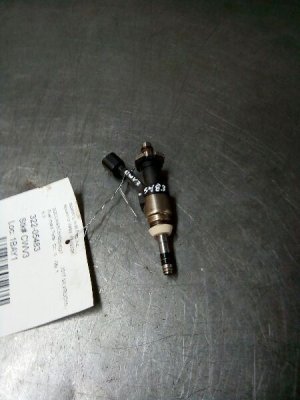
Aftermarket price range: $40-$80 per set - Fuel Injector — Direct injectors on this platform are known to fail, either by clogging or leaking, leading to misfires.
Trusted brands: ACDelco, Bosch
OEM price range: $80-$150 per injector
Aftermarket price range: $50-$100 per injector
Related Codes That Often Appear With This One
- P0301-P0308 — These codes indicate a misfire on a specific cylinder (e.g., P0301 for cylinder 1). A P0300 may appear alongside these if the misfire is happening on multiple specific cylinders, or if the ECM hasn't isolated it to just one.
- P050D — This code for 'Cold Start Rough Idle' is often seen with P0300. GM TSBs indicate this combination strongly points towards leaking fuel injectors or an internal coolant leak.
- P0171/P0174 — These 'System Too Lean' codes for Bank 1 and Bank 2 can be caused by a vacuum leak, which is also a common cause for random misfires.
Technical Service Bulletins (TSBs) & Recalls

- PIP5498L / 20-NA-166: Cold start misfire (P0300/P050D) due to internal coolant leak into cylinders.
- PIP5159C: Misfire codes P0300-P0308 caused by loose spark plug wire due to missing 'C' clip.
- PIP4138R / 19-NA-219: Engine noise and misfire related to worn camshaft lobes or failed AFM lifters.
- PIP5582: Rare cases of P0300 on paired cylinders caused by an internal ECM fault.
- PIP5628: Diagnostic aid for technicians when dealing with misfire codes P0300-P0308.
- 15-06-01-002F: Misfire and ticking noise related to collapsed/stuck AFM lifters.
Platform-Specific Known Issues
- AFM Lifter Failure: The most prominent issue for the 5.3L and 6.2L V8s. A collapsed lifter is a very common cause of P0300, often preceded by a ticking noise.
- Loose Spark Plug Wires: TSB #PIP5159C highlights that a missing 'C' clip on the spark plug wire boot can cause it to come loose, leading to a misfire.
- Internal Coolant Leaks: TSB #PIP5498L describes a scenario where P0300 and P050D can be caused by coolant entering the cylinders, potentially from a porous block or cylinder head, requiring engine replacement in some cases.
- Carbon Buildup: As direct-injection engines, the intake valves are prone to heavy carbon deposits that don't get washed off by fuel, leading to airflow issues and misfires.
Mechanic-Grade Diagnostic Values
- Ignition Coil Primary Winding Resistance — expected: 0.49 - 0.57 ohms. Failure: A reading outside this range indicates a faulty coil.
- Ignition Coil Secondary Winding Resistance — expected: 9.5 - 11.1 kOhms (9,500 - 11,100 ohms). Failure: A reading outside this range indicates a faulty coil.
- Low-Pressure Fuel Pump Module Resistance (Sender) — expected: ~40 ohms (Full) to ~250 ohms (Empty). Failure: Incorrect or erratic readings can cause inaccurate fuel gauge readings but do not directly cause a misfire.
- Low-Pressure Fuel System Pressure — expected: Up to 85 PSI (Maximum pressure). Failure: Low fuel pressure from a weak in-tank pump can starve the high-pressure pump, leading to lean conditions and misfires.
- Mode $06 Misfire Counts (Current/Last Drive Cycle) — expected: Counts should be at or very near zero for all cylinders.. Failure: A significantly higher count on one or more cylinders compared to others, even without a specific P030x code, indicates an intermittent misfire that needs investigation.
Hidden / Shadow Codes Worth Checking
- Mode $06, OBDMID $A2-$A9, TID $0C: Provides raw misfire counts for the current or last driving cycle for each cylinder (A2=Cyl 1, A3=Cyl 2, etc.). This allows a technician to see which cylinders are misfiring before the count is high enough to set a specific P0301-P0308 code. (see via A professional scan tool capable of displaying Mode $06 data.)
Scan Tool Commands That Help
- GDS2 / Tech2 or equivalent professional scan tool: Injector Balance Test — To identify a clogged or poorly flowing fuel injector by measuring the pressure drop for each injector as it's commanded to fire.
- GDS2 / Tech2 or equivalent professional scan tool: Cylinder Deactivation (AFM) System Test — To manually command the AFM system on and off to test the functionality of the VLOM solenoids and observe engine response. This can help diagnose a stuck solenoid or lifter.
Wiring & Ground Locations
- Bank 1 (Driver Side) Ignition Coil Ground — A single black wire with a ring terminal bolted to the front of the driver's side cylinder head.. This is the common ground for all four ignition coils on Bank 1. The wire can corrode and break inside the ring terminal, causing a complete loss of spark to the entire bank and triggering a P0300. The failure is often not externally visible.
- Bank 2 (Passenger Side) Ignition Coil Ground — A single black wire with a ring terminal bolted to the rear of the passenger's side cylinder head.. This is the common ground for all four ignition coils on Bank 2. A failure here would cause the passenger side bank of cylinders to misfire, triggering a P0300.
Real Owner Repair Stories
- YouTube channel 'The G Automotive and More' (GMC Sierra 5.3L (year not specified, but within K2XX generation)) — Flashing check engine light, running very badly, P0300 code.
❌ Tried (didn't work) Initial scan showed misfires on cylinders 1 and 3, but further testing revealed the entire driver's side bank had no spark., Swapping coils did not resolve the issue.
✅ What actually fixed it The common ground wire for the Bank 1 (driver's side) ignition coils was corroded and broken inside the ring terminal where it bolts to the cylinder head. Replacing the ring terminal and re-securing the ground restored spark to the entire bank and fixed the misfire. - YouTube channel 'Bahamian Mechanic' (2015 GM Truck 5.3L) — P0300, P0304, P0172, P0324, and a significant engine ticking noise.
❌ Tried (didn't work) The vehicle had previously had injectors replaced and intake valves walnut blasted for a prior misfire issue.
✅ What actually fixed it The ticking noise and misfire were caused by a bent exhaust pushrod on cylinder #4. The pushrod was found dislodged from the rocker arm. Replacing the single bent pushrod and the valve cover gasket resolved the ticking and misfire codes.
"I Checked Everything" — The Actual Cause
- In cases where a P0300 is present and an entire bank of cylinders is misfiring (e.g., 1, 3, 5, 7), a smoke test for vacuum leaks will come back clean. The root cause is often electrical, such as the common ignition coil ground wire for that bank failing due to internal corrosion at the ring terminal. This is missed because the connection can look secure externally.
When the Usual Fixes Don't Work
- While torque converter shudder is a known cause of misfire-like symptoms, simply replacing the torque converter may not be a guaranteed fix. One owner of a 2014 Sierra 5.3L reported that after replacing a failed transmission and later experiencing a severe shudder, a brand new OEM torque converter and fluid flush did not solve the problem; the shudder returned immediately. This suggests other driveline issues, like a warped or cracked flexplate, could be the true root cause, even when symptoms point directly to the converter.
OEM Part Supersession History
12571595, 12619820, 12639516→Current GM AFM/DOD Lifters (multiple PNs exist)— Ongoing revisions to address high failure rates.
Heads up: Many suppliers note that new AFM lifters carry no warranty, as the root cause of failure is often low oil pressure or issues with the VLOM, which will cause the new lifters to fail as well.N/A (for stock engine)→12689035 (Non-AFM Camshaft)— This part is not a direct supersession but is the go-to camshaft for 'AFM Delete' kits, where the failure-prone AFM system is removed entirely.
Heads up: Using this camshaft requires disabling the AFM system in the ECM via tuning and replacing all AFM lifters with standard lifters.N/A→12668390— OEM fuel injector for 2014-2017 5.3L engines.
Model Year Variations Within This Range
- 2014: Some early 2014 models were equipped with a belt-driven vacuum pump on the lower driver's side of the engine to assist the power brakes. While not a direct cause of P0300, it is a unique component on early models.
- 2015-2017: The 8-speed (8L90) automatic transmission was introduced and became more common alongside the 6-speed (6L80). The 8-speed is specifically noted in lawsuits and TSBs for torque converter shudder issues that can be misdiagnosed as an engine misfire.
- 2016-2017: An 'eAssist' mild hybrid version of the 5.3L V8 became available, initially in California and then expanding. These models paired the engine with an 8-speed automatic transmission.
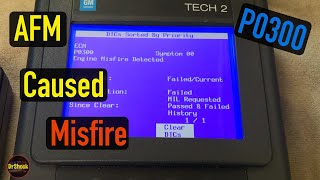
Helpful Videos
Used OEM Parts in Stock

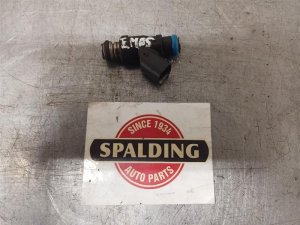
New Aftermarket Parts Available


The information in this article is provided for general reference and educational purposes only. Vehicle specifications, procedures, and part compatibility can vary by production date, trim level, and region. Always consult your vehicle's factory service manual and verify part numbers before purchasing or performing repairs. Safety-critical components such as airbags, seat belts, and braking systems should be installed by a qualified professional.
- Gmc SIERRA:
- 🎬 Helpful Videos
- 🛍️ Shop This Part
- What's Unique About the 2014-2017 Gmc SIERRA
- Diagnostic Flowchart
- Symptoms You May Notice
- Most Likely Causes
- Rare But Worth Checking
- Diagnosis Steps
- Parts You'll Likely Need
- Related Codes That Often Appear With This One
- Technical Service Bulletins (TSBs) & Recalls
- Platform-Specific Known Issues
- Mechanic-Grade Diagnostic Values
- Hidden / Shadow Codes Worth Checking
- Scan Tool Commands That Help
- Wiring & Ground Locations
- Real Owner Repair Stories
- "I Checked Everything" — The Actual Cause
- When the Usual Fixes Don't Work
- OEM Part Supersession History
- Model Year Variations Within This Range
- 🎟️ Get 5% Off