

P0300 on 2009-2013 GMC Sierra: Random Misfire Causes and Fixes
P0300 on a 2009-2013 GMC Sierra indicates random engine misfires. While common tune-up items like spark plugs and ignition coils are frequent culprits, V8 models are known for Active Fuel Management (AFM) lifter failures, a more serious and costly repair. Also, check for vacuum leaks from the PCV system, as noted in GM Technical Service Bulletin #PIP5161, and corroded ignition coil ground wires.
- A P0300 code on a 2009-2013 Sierra is serious and should be addressed promptly, especially if the check engine light is flashing, to avoid catalytic converter damage.
- For V8 models, a failed Active Fuel Management (AFM) lifter is a very common and significant cause, often accompanied by a ticking engine noise.
- Always check the simple and inexpensive items first: inspect spark plugs for wear or oil fouling, and test ignition coils.
- Be aware of GM Technical Service Bulletin #PIP5161, which points to a faulty driver-side valve cover causing oil consumption and misfires.
- If a vacuum leak is suspected, a professional smoke test is the most effective way to find it.
What's Unique About the 2009-2013 Gmc SIERRA

The 2009-2013 GMC Sierra, particularly models with the 5.3L and 6.2L V8 engines, has a well-documented weakness in its Active Fuel Management (AFM) system. The specialized lifters used in this system are prone to collapsing or getting stuck, leading directly to misfires and the P0300 code. This is not a rare occurrence; it is the most notorious issue for this platform. Additionally, GM has issued technical bulletins for this specific generation regarding other unique causes of P0300, such as oil being pulled into the intake from a faulty PCV valve cover design (TSB #PIP5161) and worn camshaft lobes from lifter issues (TSB #PIP4138L), making diagnosis more complex than a simple tune-up.
Diagnostic Flowchart

Tap your situation to follow the diagnostic path that matches what you're seeing on this vehicle.
Symptoms You May Notice
- Rough or shaky idle
- Engine hesitation or stumbling during acceleration
- Flashing Check Engine Light
- Reduced engine power
- Poor fuel economy
- Engine ticking, chirping, or squealing noise, especially on cold starts
- Service Stabilitrak / Service Traction Control messages on the driver information center
- Noticeable smell of unburned fuel from the exhaust
- Blueish smoke from exhaust on startup (indicative of PCV oil pullover)
- Replacing only oxygen sensors without first checking for vacuum leaks, fuel delivery issues, or ignition system problems. While a bad O2 sensor can contribute to misfires by causing incorrect fuel trims, it's often not the root cause of a P0300 on this platform.
- Replacing only spark plugs and coils when the root cause is a mechanical issue like a collapsed AFM lifter. The new plugs on the affected cylinder will quickly foul, and the misfire will return.
Most Likely Causes

- Collapsed or Stuck Active Fuel Management (AFM) Lifter 🔴 High Probability The V8 engines in this generation use AFM lifters that are a known, widespread failure point. They can collapse or get stuck due to issues with oil pressure, oil aeration, or internal mechanics, causing a persistent misfire on AFM cylinders (1, 4, 6, and 7). The failure is often linked to the Valve Lifter Oil Manifold (VLOM) which controls them.
How to confirm: Listen for a distinct ticking or tapping noise from the engine that increases with RPM. A mechanic can confirm by removing the valve covers to observe if a rocker arm is stationary 🎬 Watch: How to diagnose and replace a collapsed AFM lifter while the engine is cranked. A compression test on the suspect cylinder will often show low or zero compression.
Typical fix: Requires replacing the failed lifter(s), lifter guides, and often the camshaft if it has been damaged by the failed lifter. Many owners opt for a permanent 'AFM delete' kit (approx. $300-$700 for parts) to prevent future failures. This involves replacing the AFM lifters with standard lifters, replacing the VLOM with a valley cover, and reprogramming the ECU. This is a labor-intensive repair.
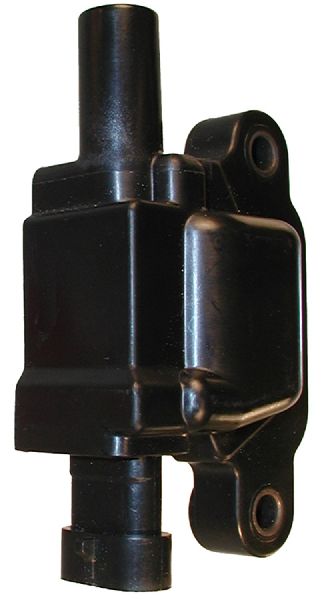
Est. part cost: $400-$1200 - Worn Spark Plugs or Faulty Ignition Coils/Wires 🔴 High Probability These are standard maintenance items that wear out. Given the age of these trucks, it's a very common cause. Oil fouling from other issues (like the PCV problem) can also ruin new plugs quickly.
How to confirm: Inspect spark plugs for wear, fouling, or damage. The recommended gap is typically 0.040 inches. Ignition coils can be tested by swapping a coil from a misfiring cylinder (identified with a scan tool's live data) with one from a known good cylinder to see if the misfire code follows the coil.
Typical fix: Replace all spark plugs and any faulty ignition coils or wires. It's recommended to use high-quality OEM-spec parts like ACDelco Iridium plugs (41-110 or the superseding 41-162). Applying dielectric grease to the inside of the coil boots is also recommended.
Est. part cost: $80-$400 - PCV System Vacuum Leak / Faulty Valve Cover 🟡 Medium Probability GM issued TSB #PIP5161 specifically for these trucks, noting that a leak in the PCV baffle on the driver's side valve cover can cause oil to be pulled into the intake, fouling spark plugs (especially #1 and #7) and causing a P0300 code.
How to confirm: Inspect spark plugs #1 and #7 for heavy oil fouling. A key symptom can be blue smoke on startup. A mechanic can perform a smoke test or test the valve cover directly for leaks by applying low-pressure air to the PCV port and spraying the baffle seam with soapy water, as described in the TSB.
Typical fix: Replace the faulty driver's side valve cover with the updated part (GM P/N 12642655). 🎬 See this walkthrough for replacing the faulty PCV valve cover It is recommended to test the new cover for leaks before installation.
Est. part cost: $50-$150 - Low Fuel Pressure or Clogged Fuel Injectors 🟡 Medium Probability An aging fuel pump, clogged fuel filter, or failing Fuel Pump Control Module (FPCM) can reduce fuel pressure, causing a lean condition and random misfires. Injectors can also become clogged or stick over time.
How to confirm: Test the fuel pressure using a fuel pressure gauge; it should be within 55-62 psi at idle for the 5.3L V8. Clogged injectors can sometimes be identified by reading spark plugs; a very clean or white plug can indicate a lean condition in that cylinder.
Typical fix: Replace the fuel pump, fuel filter, or clean/replace faulty fuel injectors. Sometimes, running a quality fuel system cleaner can help with minor clogging.
Est. part cost: $50-$500
Rare But Worth Checking
- Worn Camshaft Lobe: Referenced in TSB #PIP4138L. This is almost always a direct result of a failed lifter (especially the roller). If a persistent ticking or chirping noise is present and a specific cylinder misfire is identified, a worn camshaft lobe is highly likely, requiring significant engine disassembly to replace both the cam and lifters.
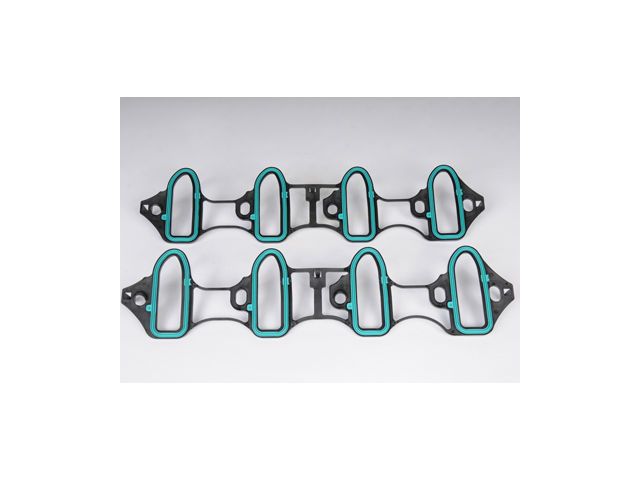
- Intake Manifold Gasket Leak: The intake manifold gaskets can degrade, becoming hard and brittle, creating a vacuum leak. This often causes a rough idle that gets worse as the engine warms up and enters 'closed loop' operation. A smoke test is the best way to confirm this. The fix is to replace the gaskets with an updated metal-frame design, like Fel-Pro MS 98016 T.
- Faulty Crankshaft Position Sensor: The PCM relies on the crankshaft position sensor to detect misfires. An erratic signal from a failing sensor can cause the PCM to incorrectly report a P0300 code when no true misfire exists. After replacement, a 'Crankshaft Position Variation Relearn' procedure must be performed with a scan tool.
- Corroded Ignition Coil Ground Wire: A single ground wire, typically bolted to the front of the driver's side cylinder head, provides the ground path for all four ignition coils on that bank. This wire's ring terminal can corrode and break, causing a complete loss of spark to one side of the engine and triggering a P0300. 🎬 Watch: Troubleshooting random misfires caused by bad ignition grounds
Diagnosis Steps
- Check for any other stored trouble codes that could point to a specific system (e.g., fuel system, sensor faults). Note the freeze frame data to see engine conditions when the code was set.
- Using a scan tool with live data, monitor the misfire counters for each cylinder. Even with a P0300, one or two cylinders will often show significantly more misfires, pointing you to a specific location.
- Perform a basic tune-up inspection: check the condition of all spark plugs, spark plug wires, and ignition coils. Look for oil-fouled plugs, especially on cylinders 1 and 7, which points to the PCV issue.
- Test for vacuum leaks using a smoke machine, paying close attention to the intake manifold gasket, PCV hoses, and the driver's side valve cover per TSB #PIP5161.
- Check the main ground wire for the ignition coils (GM ground designator G102), located at the left rear of the engine. Inspect for corrosion or breaks.
- Test fuel pressure to ensure the fuel pump and filter are functioning correctly. The pressure should be stable and within the 50-75 psi range, and capable of reaching at least 73 PSI during a scan-tool commanded test.
- If a V8 engine has a persistent misfire on an AFM cylinder (1, 4, 6, 7) and a ticking noise, suspect an AFM lifter failure. This requires a compression test and removal of the valve covers for visual inspection of the valvetrain.
- If all else fails, consider the possibility of a worn camshaft lobe as outlined in TSB #PIP4138L, which requires more in-depth mechanical inspection.
Parts You'll Likely Need
- Active Fuel Management (AFM) Valve Lifters
- Spark Plugs
- Ignition Coils
- Driver Side Valve Cover
- Intake Manifold Gaskets
- Fuel Pump
Related Codes That Often Appear With This One
- P0301-P0308 — If the random misfire starts to happen more consistently on a particular cylinder, a cylinder-specific code will be stored. This is common when an AFM lifter begins to fail on one of the AFM cylinders (1, 4, 6, or 7).
- P0171 / P0174 — These codes indicate the engine is running too lean on Bank 1 and Bank 2. They frequently accompany P0300 if the cause is a major vacuum leak (like an intake manifold gasket) or a fuel delivery problem affecting the entire engine.
Technical Service Bulletins (TSBs) & Recalls

- PIP5161: Addresses oil consumption and P0300, particularly on cylinders #1 and #7. Instructs technicians to check for oil fouling on these plugs and test the PCV baffle inside the driver's side valve cover for leaks using soapy water and regulated air pressure.
- PIP4138L: Pertains to engine noise (chirp, squeak, tick) and P0300-P0308 codes. It guides technicians to inspect for a worn camshaft lobe and/or lifter roller if standard diagnostics for misfires do not find a cause.
- 10-06-01-008K: Details an issue of high oil consumption (more than 1 quart per 2000 miles) that can lead to plug fouling and P0300. It points to oil spray from the AFM pressure relief valve and a PCV system issue, recommending an updated valve cover for certain vehicles.
- 15-06-01-002H: Describes P0300 with a misfire/tick noise caused by a mechanically collapsed or stuck AFM lifter, potentially due to internal pin damage from oil aeration. It advises inspecting the camshaft for damage when replacing lifters.
Platform-Specific Known Issues
- AFM Lifter Failure: The Active Fuel Management system on 5.3L and 6.2L V8s is a notorious failure point. The lifters for cylinders 1, 4, 6, and 7 are designed to deactivate, but can become stuck or collapse, causing a misfire and often a P0300 code. This is a major repair that requires removing the cylinder heads.
- PCV Oil Consumption: TSB #PIP5161 describes how a faulty PCV baffle in the driver's side valve cover can cause excessive oil consumption, leading to oil-fouled spark plugs (especially #1 and #7) and a P0300 code. The fix is an updated valve cover.
- Worn Camshaft Lobes: TSB #PIP4138L notes that if other diagnostics fail, a worn camshaft lobe could be the cause of a persistent misfire and associated noise.
Mechanic-Grade Diagnostic Values
- Low-Pressure Fuel Pump — expected: 50-75 PSI at idle. Must be able to achieve at least 73 PSI (500 kPa) during a scan tool-commanded test per GM recall 13370A.. Failure: Pressure below 50 PSI, or failure to reach 73 PSI during a commanded test, points to a weak in-tank pump, clogged filter, or faulty FPDM.
- Ignition Coil Resistance (Round Style, e.g., D514A) — expected: Primary Resistance: ~0.820 ohms; Secondary Resistance: ~7.10k Ohms.. Failure: Readings significantly outside of these values indicate a faulty coil.
- Crankshaft Position Sensor (2-wire type) — expected: 200 to 1000 ohms between the two pins.. Failure: A reading of zero indicates a short circuit; an open circuit (infinite resistance) indicates a break in the coil.
Scan Tool Commands That Help
- GDS2 / Tech2 or equivalent: Crankshaft Position Variation Relearn — This is a mandatory procedure after replacing the crankshaft position sensor to calibrate the new sensor to the engine's reluctor wheel. Skipping it can cause persistent misfires or a P0300 code even with a good sensor.
- GDS2 / Tech2 or equivalent: Fuel Pump Enable / Relay Command — To test the low-pressure fuel system. This command manually runs the in-tank fuel pump, allowing a technician to check for proper fuel pressure (73+ PSI) without the engine running, isolating the pump for diagnosis.
- HP Tuners or similar ECU programmer: AFM/DOD Disable — Used to permanently turn off the Active Fuel Management system in the ECU. This can be a final solution if a P0300 is triggered by faulty AFM solenoids or electronics when the mechanical components (lifters) are still functional, or after a mechanical AFM delete kit has been installed.
Wiring & Ground Locations

- G102 — Located at the left rear of the engine.. This is the primary ground connection for all eight ignition coils. Corrosion or a loose connection here can cause weak or no spark to multiple cylinders, directly leading to a P0300 code.
- G103 — Located on the cowl in the left rear of the engine compartment, above the brake booster.. This grounds several critical modules, including the Engine Control Module (ECM) and the Data Link Connector (DLC). A poor connection here can cause erratic ECM behavior and a wide range of false trouble codes, including P0300.
Real Owner Repair Stories
- Tahoe Yukon Forum user RAFJR (2012 Yukon Denali 6.2L with 65,000 miles) — P0300 code, erratic oil pressure gauge, random misfire on cylinder #5.
❌ Tried (didn't work) Replaced oil pressure sensor, Replaced spark plugs and wires, Ran fuel system cleaner, Checked battery and grounds, Replaced #5 ignition coil, Replaced crankshaft position sensor
✅ What actually fixed it The owner discovered the P0300 code was only set when the vehicle entered AFM mode. The final fix was sending the ECM to be reprogrammed to disable the AFM system, which cost $50 and solved the problem. The suspected root cause was a faulty solenoid in the VLOM.
OEM Part Supersession History
Multiple, starting with 12569256→12740071 (latest known)— Multiple revisions by GM to address the high failure rate of the AFM lifters.
Heads up: The supersession chain is long: 12569256 -> 12571595 -> 12619820 -> 12632143 -> 12639516 -> 12645725 -> 12680871 -> 12698946 -> 12740071. It is critical to use the latest available part number when replacing.ACDelco 41-110→ACDelco 41-162— Design change and/or supplier change (from NGK to Denso or vice-versa).
Heads up: Both plugs work, but the 41-162 reportedly has a slightly longer threaded portion to better center the electrode in the combustion chamber. Some mechanics and owners report that the older 41-110 plugs had higher manufacturing quality.
Model Year Variations Within This Range
- 2009+: Starting in the 2009 model year, the 4-speed 4L60-E automatic transmission was fully replaced by the 6-speed 6L80 automatic transmission in 1500-series trucks. This does not directly affect the P0300 diagnosis but is a significant platform change within the 2009-2013 range.
Helpful Videos
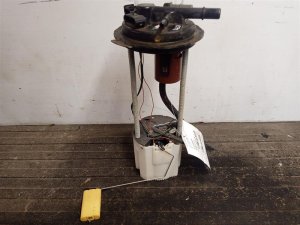
Used OEM Parts in Stock



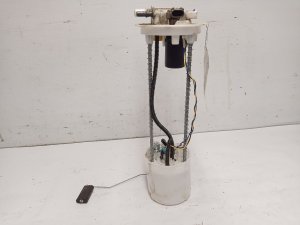

New Aftermarket Parts Available
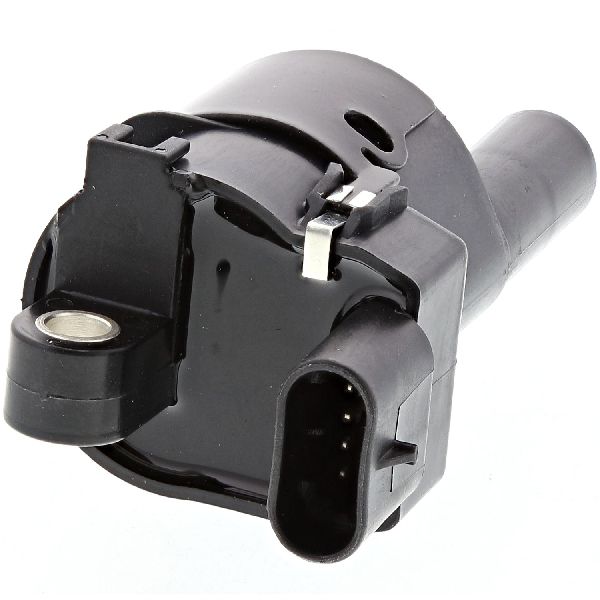



The information in this article is provided for general reference and educational purposes only. Vehicle specifications, procedures, and part compatibility can vary by production date, trim level, and region. Always consult your vehicle's factory service manual and verify part numbers before purchasing or performing repairs. Safety-critical components such as airbags, seat belts, and braking systems should be installed by a qualified professional.
- Gmc SIERRA:
- 🎬 Helpful Videos
- 🛍️ Shop This Part
- What's Unique About the 2009-2013 Gmc SIERRA
- Diagnostic Flowchart
- Symptoms You May Notice
- Most Likely Causes
- Rare But Worth Checking
- Diagnosis Steps
- Parts You'll Likely Need
- Related Codes That Often Appear With This One
- Technical Service Bulletins (TSBs) & Recalls
- Platform-Specific Known Issues
- Mechanic-Grade Diagnostic Values
- Scan Tool Commands That Help
- Wiring & Ground Locations
- Real Owner Repair Stories
- OEM Part Supersession History
- Model Year Variations Within This Range
- 🎟️ Get 5% Off