

P0300 on 2004-2008 GMC Sierra: Random Misfire Causes and Fixes
P0300 on a 2004-2008 GMC Sierra indicates a random engine misfire. The most common causes are simple maintenance items like worn spark plugs and wires or a vacuum leak from failed intake manifold gaskets. If the check engine light is flashing, stop driving to prevent costly catalytic converter damage.
- P0300 means a random misfire is occurring; it's not tied to a single cylinder.
- Always start diagnosis with the most common and affordable fixes: spark plugs, wires, and checking for vacuum leaks around the intake manifold.
- If the check engine light is flashing, pull over and stop driving to avoid destroying your catalytic converters.
- On 2007-2008 models with V8 engines, be aware of potential Active Fuel Management (AFM) lifter failure.
- If basic ignition and fuel system checks don't solve the problem, a serious mechanical issue like a worn camshaft could be the cause, as noted in a GM TSB.
What's Unique About the 2004-2008 Gmc SIERRA

On this generation of GMC Sierra, the P0300 code is extremely common and has a wide range of causes. For the GMT800 trucks (2004-2007 Classic), the original plastic-framed intake manifold gaskets are a frequent failure point, causing vacuum leaks. On later GMT900 models (2007-2008) with Active Fuel Management (AFM), collapsed lifters can cause persistent misfires. Furthermore, a GM Technical Service Bulletin (TSB) warns that a hard-to-diagnose P0300 can be caused by a worn camshaft lobe, a much more serious mechanical problem.
Diagnostic Flowchart

Tap your situation to follow the diagnostic path that matches what you're seeing on this vehicle.
Generation note: This range covers two generations. The 2004-2006 models and the 2007 "Classic" are the GMT800 platform. The new body style introduced in 2007 and the 2008 model are the GMT900 platform. GMT900 trucks introduced Active Fuel Management (AFM) on some V8s (e.g., 5.3L), which can be a source of misfires due to lifter failure.
Symptoms You May Notice
- Rough or shaking idle
- Hesitation or stumbling during acceleration
- Flashing Check Engine Light
- Reduced engine power
- Poor fuel economy
- Engine noise (ticking or chirping)
- Replacing oxygen (O2) sensors. While a faulty O2 sensor can contribute to fuel mixture problems, it is less commonly the direct cause of a P0300 code compared to vacuum leaks or ignition issues.
- Replacing only one spark plug or coil when the issue is systemic, like a vacuum leak or fuel pressure problem.
Most Likely Causes

- Worn Spark Plugs and/or Spark Plug Wires 🔴 High Probability These are standard maintenance items that wear out over time. With the high mileage common on these trucks, they are often the original source of a misfire.
How to confirm: Visually inspect spark plugs for wear, fouling, or incorrect gap. Inspect wires for cracks, burns, or corrosion.
Typical fix: Replace all spark plugs and spark plug wires as a set. Use dielectric grease on the boots for a good seal.
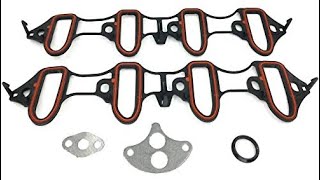
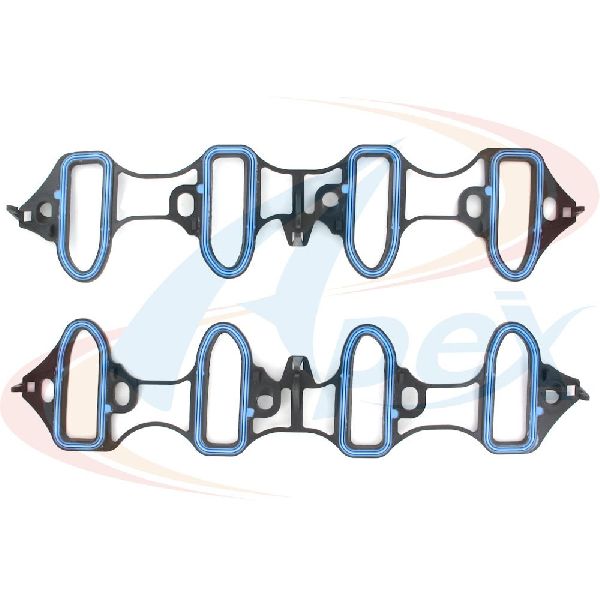
Est. part cost: $50-$150 - Vacuum Leak (Intake Manifold Gaskets) 🔴 High Probability The original intake manifold gaskets on the Vortec V8 engines used a plastic frame that is known to crack and degrade over time, causing unmetered air to enter the engine. This disrupts the air-fuel ratio and causes lean misfires.
How to confirm: Perform a smoke test to find the source of the leak. Alternatively, carefully spray carb cleaner around the intake manifold gasket area while the engine is idling; a change in idle speed indicates a leak.
Typical fix: Replace the intake manifold gaskets. Upgraded gaskets with a metal frame (e.g., Fel-Pro MS98016T) are recommended for a more durable repair.
Est. part cost: $40-$100 - Faulty Ignition Coil(s) 🟡 Medium Probability While generally reliable, individual coils can fail with age and heat cycles. A weak coil can cause an intermittent spark that contributes to a random misfire.
How to confirm: If a specific cylinder misfire code (P0301-P0308) is also present, swap the ignition coil from the misfiring cylinder with one from a known good cylinder. If the code follows the coil, the coil is bad.
Typical fix: Replace the faulty ignition coil. It is often recommended to replace the spark plug at the same time.
Est. part cost: $30-$70 per coil - Low Fuel Pressure or Clogged Fuel Filter 🟡 Medium Probability Fuel pumps can weaken over time, and fuel filters can become clogged, starving the engine of fuel and causing a lean condition that leads to misfires.
How to confirm: Connect a fuel pressure gauge to the fuel rail's service port. At idle, pressure should be between 55-62 PSI.
Typical fix: Replace the fuel filter first, as it is a simple maintenance item. If pressure is still low, the fuel pump likely needs to be replaced.
Est. part cost: $20-$50 (filter), $200-$400 (pump)
Rare But Worth Checking
- Worn Camshaft Lobe: A GM Technical Service Bulletin (PIP4138L) specifically calls this out as a potential cause for P0300 if other diagnostics fail. This is a major mechanical failure requiring significant engine work.
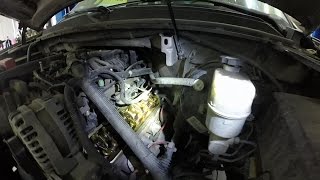
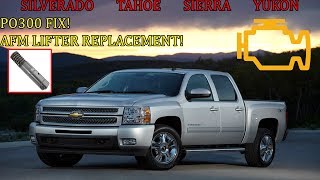
- Failed AFM/DOD Lifters: On 2007-2008 models with Active Fuel Management (AFM), the specialized lifters can collapse or get stuck, preventing the valve from opening and causing a persistent misfire on that cylinder. This often requires removing the cylinder head to replace the lifters. 🎬 See how to replace failed AFM lifters on these engines.
- Dirty or Faulty Mass Airflow (MAF) Sensor: A dirty MAF sensor can provide incorrect airflow readings to the computer, leading to an improper air-fuel mixture and random misfires. Cleaning with a dedicated MAF sensor cleaner can sometimes resolve the issue.
- Clogged Fuel Injectors: One or more dirty fuel injectors can fail to deliver the proper amount of fuel, leading to a lean misfire.
Diagnosis Steps
- Scan for all stored trouble codes. Pay close attention to any other codes, like P0171/P0174 or specific cylinder misfires (P0301-P0308).
- Inspect the basics: Check that the air filter is clean and all intake ducting is secure.
- Perform a thorough visual inspection of all spark plugs and spark plug wires for wear, damage, or corrosion.
- Test for vacuum leaks. The most effective method is with a smoke machine. A less precise but common DIY method is to spray short bursts of carb cleaner around the intake manifold gaskets and vacuum hoses with the engine idling, listening for any change in engine RPM.
- Check fuel pressure. Connect a fuel pressure gauge to the test port on the fuel rail. The pressure should be stable and within the 55-62 PSI range at idle.
- If a specific cylinder is misfiring, swap the ignition coil with a known good cylinder and see if the misfire code follows the coil.
- If fuel and ignition systems check out, consider a clogged catalytic converter by checking the temperature before and after the converter with an infrared thermometer. A significant drop in temperature may indicate a blockage.
- If all else fails, a mechanical issue is likely. Perform a compression test on all cylinders. If compression is low on one or more cylinders, investigate internal engine problems like failed lifters or a worn camshaft, as noted in TSB PIP4138L.
Parts You'll Likely Need
- Intake Manifold Gasket Set — This is one of the most common failure points on this platform leading to vacuum leaks and a P0300 code.
Trusted brands: Fel-Pro, ACDelco
OEM price range: $60-$100
Aftermarket price range: $40-$80 - Spark Plugs — Worn or fouled spark plugs are a primary cause of weak spark and misfires. They are a fundamental part of a tune-up.
Trusted brands: ACDelco, NGK
OEM price range: $6-$12 per plug
Aftermarket price range: $4-$8 per plug - Spark Plug Wire Set — Wires degrade over time, causing high resistance or spark to arc to the engine block, resulting in a misfire.
Trusted brands: ACDelco, Delphi
OEM price range: $60-$100
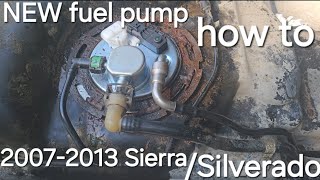
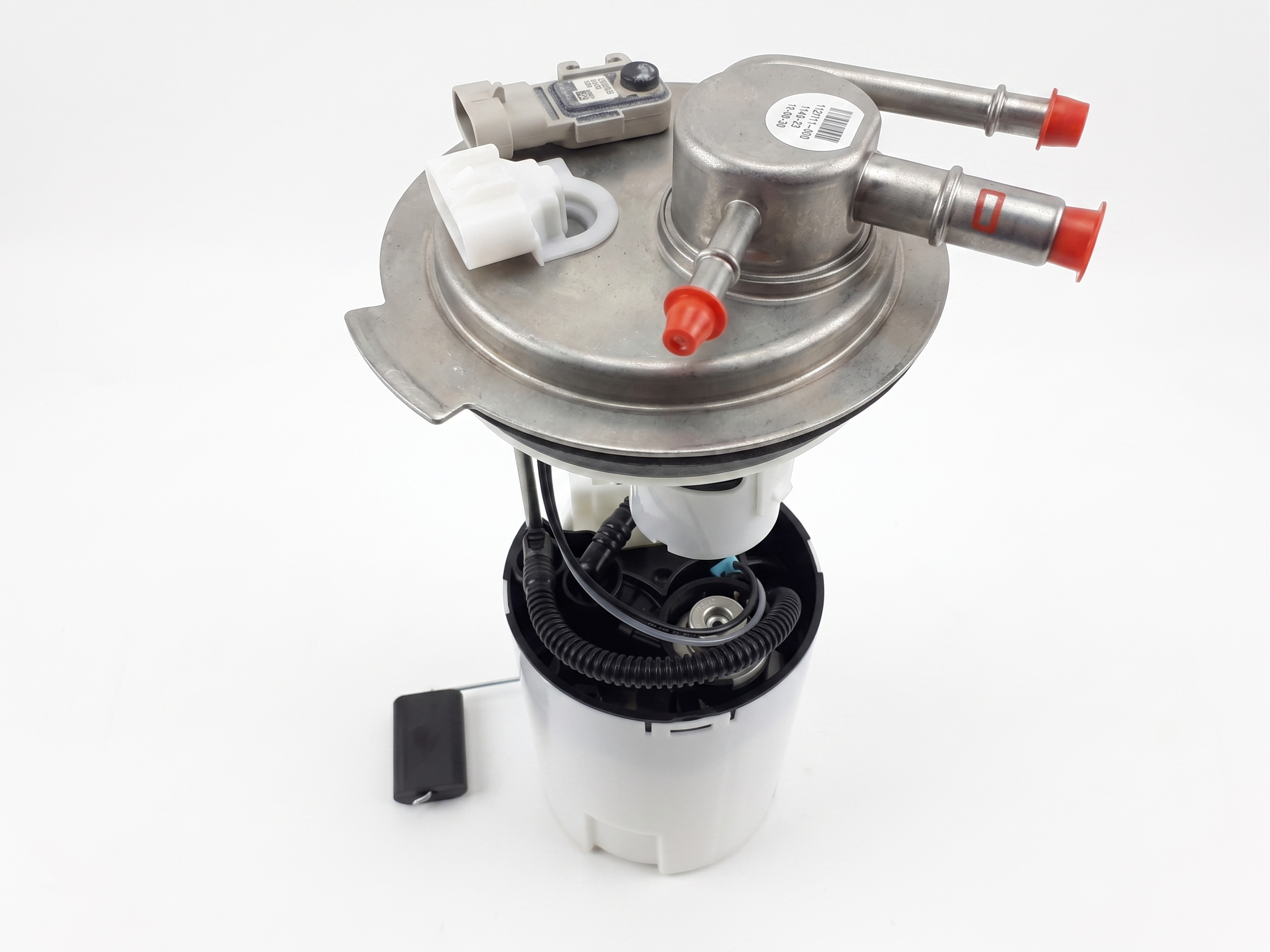
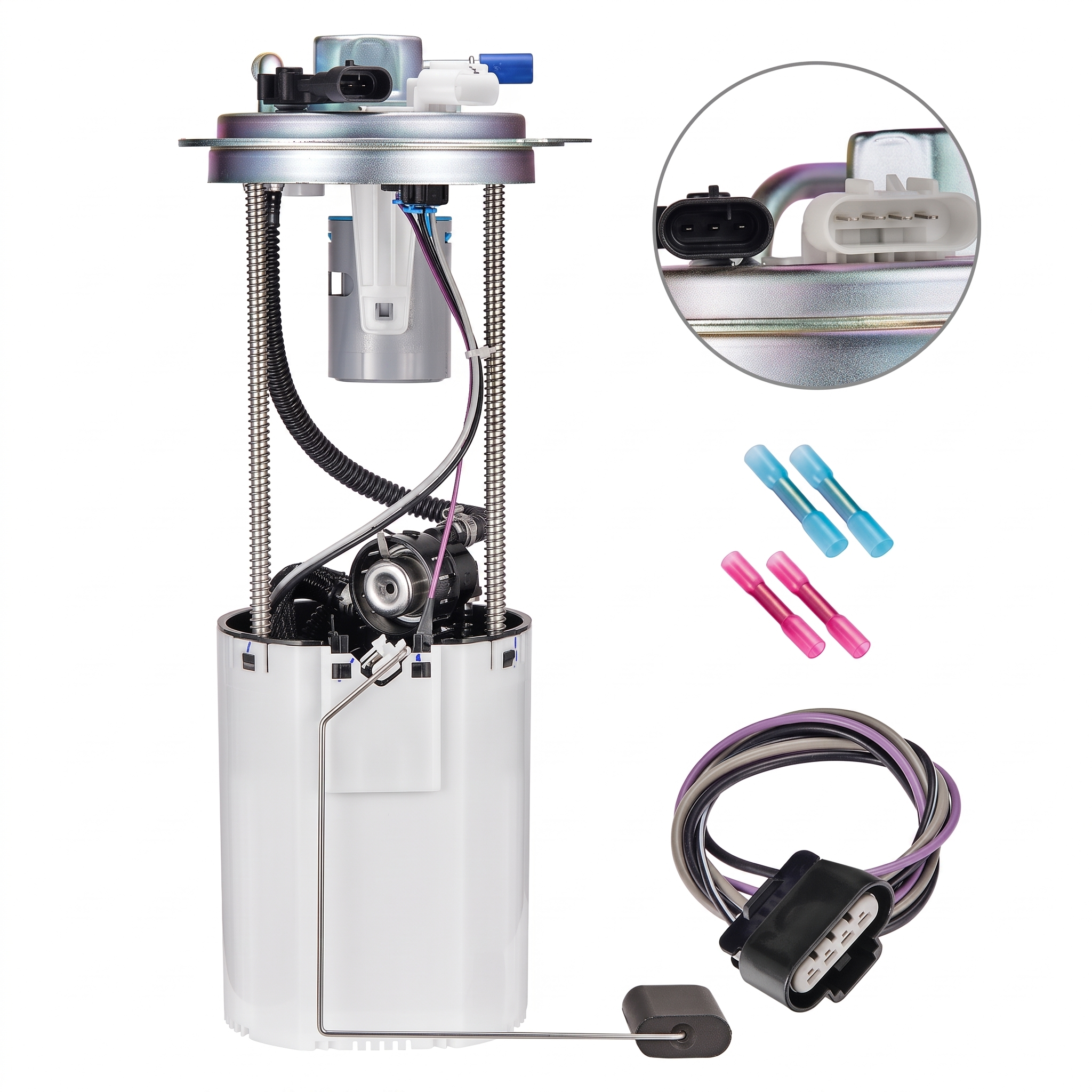
Aftermarket price range: $40-$70 - Fuel Pump Module Assembly — A weak fuel pump fails to provide the required 55-62 PSI, causing a lean condition and misfires across all cylinders.
Trusted brands: Delphi, ACDelco
OEM price range: $300-$450
Aftermarket price range: $150-$300
Related Codes That Often Appear With This One
- P0171 / P0174 — These "System Too Lean" codes frequently accompany P0300 when the root cause is a significant vacuum leak, such as from the intake manifold gaskets.
- P0301 - P0308 — If the random misfire begins to happen more consistently on certain cylinders, the computer may log specific cylinder misfire codes in addition to the general P0300.
Technical Service Bulletins (TSBs) & Recalls
- PIP4138L: Warns that a Service Engine Soon lamp with P0300-P0308 codes may be caused by a worn camshaft lobe if other diagnostics do not isolate the issue.
Platform-Specific Known Issues

- TSB #PIP4138L: General Motors issued this bulletin for various vehicles, including the Sierra, with P0300-P0308 codes. It advises that if standard diagnostics don't find the cause, technicians should inspect for a worn camshaft lobe and/or a collapsed lifter.
- Active Fuel Management (AFM) Lifter Failure: On 2007-2008 models with the 5.3L or other AFM-equipped engines, the lifters used to deactivate cylinders can fail, becoming stuck or collapsed. This results in a misfire and often a ticking noise from the engine.
- Cracked Plastic Intake Manifold Gaskets: The original gaskets from the factory are prone to failure from heat and age, causing vacuum leaks that are a very common cause of P0300 on these trucks.
Mechanic-Grade Diagnostic Values
- Fuel Pressure (Key On, Engine Off) — expected: 55-62 PSI. Failure: Pressure below 55 PSI indicates a weak fuel pump, clogged filter, or failing regulator.
- Total Fuel Trims (Short Term + Long Term) at Idle — expected: Within +/- 10%. Failure: Consistently positive double-digit fuel trims (e.g., +15% or higher) at idle that decrease as RPMs increase strongly suggest a vacuum leak.
- Ignition Coil Primary Resistance — expected: 0.4 - 2.0 Ohms. Failure: A reading outside this range indicates a failing coil winding.
- Ignition Coil Secondary Resistance — expected: 8,000 - 11,500 Ohms (8.0k - 11.5k Ω). Failure: A reading significantly outside this range suggests the secondary coil winding is compromised.
- Fuel Injector Resistance — expected: 11 - 14 Ohms. Failure: A reading significantly outside this range indicates a failed injector coil.
Hidden / Shadow Codes Worth Checking
- Mode 6, Test ID $A2-$A7: These test IDs correspond to misfire counts for each individual cylinder (Cylinder 1 is $A2, Cylinder 2 is $A3, etc.). Even if a cylinder-specific P030x code is not set, viewing Mode 6 data on an advanced scanner can show elevated misfire counts on certain cylinders, helping to pinpoint a weakening component before it fails completely. (see via Advanced OBD-II scanner with Mode 6 functionality.)
Scan Tool Commands That Help
- Tech2 / GDS2 or equivalent professional scanner: Crankshaft Position (CKP) Variation Relearn — This procedure is necessary after replacing a crankshaft position sensor, flexplate, or making major internal engine repairs. If not performed, the PCM's misfire detection can be inaccurate, leading to a false P0300 code. It recalibrates the PCM to the minor variations of the new or disturbed components.
- Tech2 / GDS2 or equivalent professional scanner: Fuel Injector Balance Test — This test individually fires each fuel injector and measures the corresponding drop in fuel pressure. It can identify a clogged or weak injector that isn't flowing enough fuel, which might be causing a lean misfire on one cylinder contributing to the P0300.
- Tech2 / GDS2 or equivalent professional scanner: Reset Fuel Trims — After a repair for a vacuum leak or fuel system fault (like replacing intake gaskets or a fuel pump), resetting the fuel trims forces the PCM to immediately start learning new long-term fuel correction values. This helps confirm if the repair was successful, as trims should quickly return to near 0%.
Wiring & Ground Locations
- G103 / G104 — On the rear of the passenger's side cylinder head, near the firewall. Another critical ground is on the front of the driver's side engine block.. These are primary ground points for the ignition coil harnesses and the PCM. Corrosion or a loose connection at these points can cause intermittent, random misfires across one or both banks of cylinders, as the coils lose their ground path. This is a frequently overlooked cause of a P0300 that won't be solved by replacing parts.
- Ignition Coil Harness Connector — The main harness connector that feeds each bank of four ignition coils.. The black wire in this harness is the shared ground for the coils on that bank. A poor connection at this single point can disable all four cylinders on that side, leading to a P0300. Technicians have fixed the issue by running a new, redundant ground wire directly from the black wire in the harness to a clean chassis ground.
Real Owner Repair Stories
- YouTube user 'GMC and Chevy 5.3L Trucks P0300 Random Misfire and Sometimes No Spark' (GMC Sierra 5.3L) — Check engine light flashing, running very badly, P0300 code. Scan tool showed misfires on cylinders 1 and 3, but there was no spark on the entire driver's side bank.
❌ Tried (didn't work) Swapping ignition coils from the dead bank to the working bank; the coils were good.
✅ What actually fixed it The main ground wire for the entire bank of ignition coils was bad. Repairing the ground connection restored spark to the entire bank and fixed the misfire. - YouTube user 'How to Replace Lifters on a 07-13 DOD AFM Sierra / Silverado' (2013 GMC Sierra 5.3L with AFM/DOD) — Engine ticking noise, misfire on cylinder 4. Owner could physically wiggle the rocker arm on cylinder 4, indicating no tension from the pushrod.
❌ Tried (didn't work) Initial diagnosis confirmed the issue was mechanical, not ignition or fuel.
✅ What actually fixed it The AFM lifter for cylinder #4 had collapsed. Upon disassembly, it was discovered that three of the four AFM lifters on that bank had failed. Replacing all AFM lifters on the affected bank resolved the issue. - iATN (International Automotive Technicians Network) (Vehicle was a Chrysler, but the principle applies to any vehicle using a crank sensor for misfire detection.) — P0300 Random Misfire and P0016 Cam/Crank Correlation codes.
❌ Tried (didn't work) Standard fuel and ignition system checks.
✅ What actually fixed it A cracked flexplate (flywheel). The crack was barely visible but was enough to alter the crankshaft's rotation speed slightly, which the Crankshaft Position Sensor interpreted as a random misfire. A tell-tale sign was a fine rusty powder near the inspection area of the transmission bellhousing.
"I Checked Everything" — The Actual Cause
- In some cases, a smoke test may not reveal a leak if the leak only opens up under specific thermal conditions (engine fully hot). A common hidden leak source is the brake booster vacuum hose or the PCV hose/system, which can crack on the underside and be difficult to see or reach with smoke.
- A faulty fuel pressure regulator (on pre-2004 models with the regulator on the fuel rail) can have a ruptured internal diaphragm. This will not show up on a smoke test but will leak raw fuel directly into the intake manifold through its vacuum line, causing a rich misfire and P0300. This can be confirmed by pulling the vacuum line off the regulator and checking for fuel.
When the Usual Fixes Don't Work
- In one documented case for a 2004 GMC Sierra 2500 HD with 227,000 miles, the owner replaced the fuel pump, throttle body, all plugs, wires, coils, intake manifold gasket, and both upstream O2 sensors without fixing the P0300 that occurred under load. A technician suggested the root cause could be a stretched timing chain or a failed Crankshaft Position Variation Relearn procedure, both of which would not be fixed by the common tune-up parts.
OEM Part Supersession History
GM 12571595, 12619820, 12632143→GM 12645725, 12680871, 12698946— Updated design to improve the reliability of the internal locking mechanism in Active Fuel Management (AFM) lifters to prevent collapse.
Heads up: When replacing failed AFM lifters, it is highly recommended to replace all four AFM lifters on that bank with the latest part number to ensure consistent operation and prevent future failures of the older design lifters.Original GM plastic-frame intake manifold gasket→Fel-Pro MS98016T (Aftermarket Upgrade)— The aftermarket Fel-Pro gasket uses a rigid, aluminized steel carrier that resists cracking from heat and exposure to ethanol in fuel, unlike the OEM plastic design. It also includes locating tabs that hook onto head bolts for easier installation.
Model Year Variations Within This Range
- 2004-2007 (Classic): These GMT800 models (especially pre-2004) may have a return-style fuel system with the fuel pressure regulator on the fuel rail. A failure of this regulator can leak fuel directly into the vacuum line, causing a P0300. Later models have a returnless system with the regulator in the tank.
- 2007 (New Body Style) - 2008: These GMT900 models introduced Active Fuel Management (AFM) on 5.3L and 6.0L V8s. This system is a primary source of P0300 codes on these specific years due to collapsed or stuck AFM lifters, an issue not present on earlier, non-AFM engines.
Helpful Videos
Used OEM Parts in Stock



New Aftermarket Parts Available


The information in this article is provided for general reference and educational purposes only. Vehicle specifications, procedures, and part compatibility can vary by production date, trim level, and region. Always consult your vehicle's factory service manual and verify part numbers before purchasing or performing repairs. Safety-critical components such as airbags, seat belts, and braking systems should be installed by a qualified professional.
- Gmc SIERRA:
- 🎬 Helpful Videos
- 🛍️ Shop This Part
- What's Unique About the 2004-2008 Gmc SIERRA
- Diagnostic Flowchart
- Symptoms You May Notice
- Most Likely Causes
- Rare But Worth Checking
- Diagnosis Steps
- Parts You'll Likely Need
- Related Codes That Often Appear With This One
- Technical Service Bulletins (TSBs) & Recalls
- Platform-Specific Known Issues
- Mechanic-Grade Diagnostic Values
- Hidden / Shadow Codes Worth Checking
- Scan Tool Commands That Help
- Wiring & Ground Locations
- Real Owner Repair Stories
- "I Checked Everything" — The Actual Cause
- When the Usual Fixes Don't Work
- OEM Part Supersession History
- Model Year Variations Within This Range
- 🎟️ Get 5% Off