

P0300 on 2008-2015 GMC Sierra 1500: Random Misfire Causes and Fixes
Code P0300 on a 2008-2015 GMC Sierra 1500 indicates a random engine misfire. Common causes include worn spark plugs, faulty ignition coils or wires, and vacuum leaks from the intake manifold gasket. More serious issues can involve failed Active Fuel Management (AFM) lifters, a known problem on the 5.3L and 6.2L V8 engines, which can lead to a ticking noise and require extensive engine work.
- P0300 means your engine is misfiring on random cylinders, and you should not ignore it, especially if the check engine light is flashing.
- Start with the basics: check for worn spark plugs, loose or damaged spark plug wires, and failing ignition coils.
- A vacuum leak from a bad intake manifold gasket is a very common cause on these trucks and should be tested for.
- Be aware of the common Active Fuel Management (AFM) lifter failure on 5.3L/6.2L V8s. An engine tick and a persistent misfire on one cylinder are strong indicators.
- If you have a 2014+ model with a P0300 and P050D on cold starts, suspect faulty fuel injectors or a coolant leak per TSBs.
What's Unique About the 2008-2015 Gmc SIERRA 1500

On this generation of GMC Sierra, particularly those with the 5.3L or 6.2L V8 engines, a P0300 code is frequently linked to the Active Fuel Management (AFM) system. This system deactivates cylinders 1, 4, 6, and 7 to improve fuel economy, but its specialized valve lifters are a known failure point. A collapsed or stuck AFM lifter, often due to oiling issues or internal pin damage, can cause persistent misfires that may initially present as a random P0300 code before settling on a specific cylinder. The Valve Lifter Oil Manifold (VLOM), which controls oil flow to these lifters, can also fail. While standard ignition and fuel system issues are still common, the possibility of an AFM lifter failure is a significant, and more costly, concern for these trucks.
Diagnostic Flowchart

Tap your situation to follow the diagnostic path that matches what you're seeing on this vehicle.
Generation note: This range covers two generations: the GMT900 (2008-2013) and the K2XX (2014-2015). Both generations use V8 engines with Active Fuel Management (AFM) and are susceptible to similar issues like lifter failure and ignition component wear. The 2014+ K2XX models feature the newer EcoTec3 engine family with direct injection, which can also suffer from carbon buildup on intake valves and issues with the high-pressure fuel system, particularly leaking injectors. TSB 20-NA-166 (superseding #PIP5498M) specifically notes cold start misfires (P050D) and potential coolant intrusion on 2014+ models.
Symptoms You May Notice

- Flashing or solid Check Engine Light.
- Rough or shaking idle.
- Engine stumbling, hesitating, or losing power during acceleration.
- Noticeable engine ticking, chirping, or knocking sounds, especially from the valve cover area.
- Reduced fuel economy.
- White smoke and/or a coolant smell from the exhaust, particularly on a cold start (may be seen with code P050D).
- Replacing only spark plugs when the underlying issue is a failing AFM lifter. The new plug will quickly become fouled by oil or unburnt fuel, and the misfire will return.
- Replacing an oxygen sensor. While a bad O2 sensor can affect the air-fuel mixture, it's less likely to be the root cause of a P0300 than ignition system faults, vacuum leaks, or AFM issues on this platform.
- Replacing ignition coils and plugs when the actual problem is a large vacuum leak from the intake manifold gaskets, which typically causes misfires only when the engine is warm.
Most Likely Causes

- Worn Spark Plugs or Faulty Ignition Wires 🔴 High Probability Spark plugs and wires are regular maintenance items that wear out over time. Oil fouling from oil consumption issues inherent to AFM engines can also ruin spark plugs. GM issued a TSB (#PIP5159C) regarding loose spark plug wires due to missing retaining clips, which is a specific and easy-to-check issue on these trucks.
How to confirm: Inspect spark plugs for wear, fouling (oil or carbon), or incorrect gap. A gap that has widened significantly can cause a weak spark. Check spark plug wires for a secure fit, cracks, or corrosion. A scan tool may show misfire counts concentrated on one or two cylinders even with a P0300 code.
Typical fix: Replace all spark plugs (e.g., ACDelco 41-162 Iridium) and/or spark plug wires as a set.
Est. part cost: $50-$150 - Faulty Ignition Coil(s) 🟡 Medium Probability
How to confirm: Use a scan tool to identify which cylinder(s) have the highest misfire counts. Swap the ignition coil from a misfiring cylinder with one from a known good cylinder. If the misfire code follows the coil (e.g., P0300 changes to P0302 after moving the coil to cylinder 2), the coil is bad.
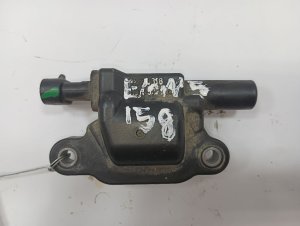
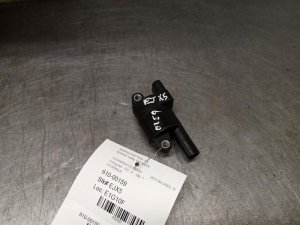
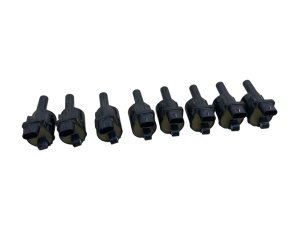
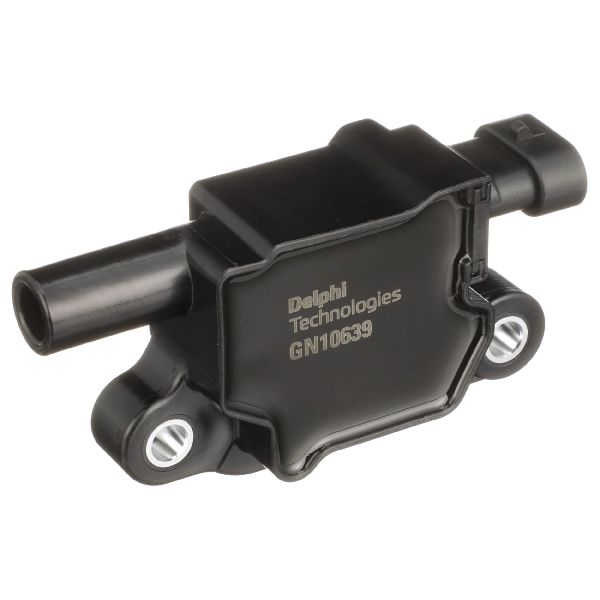
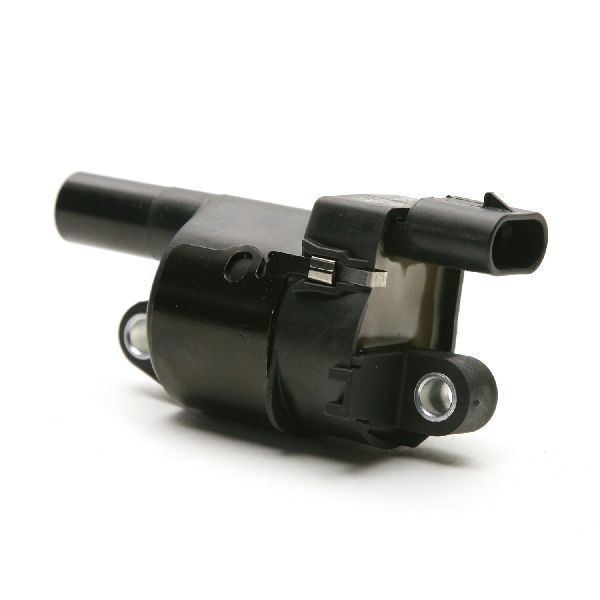
Typical fix: Replace the faulty ignition coil. A common OEM part is the ACDelco D585 (or equivalent cross-references like UF262).
Est. part cost: $40-$80 per coil - Vacuum Leak (Intake Manifold Gasket, PCV, etc.) 🟡 Medium Probability The intake manifold gaskets on these V8 engines are known to degrade over time, allowing unmetered air to enter the engine. This leans out the air-fuel mixture and causes misfires, often when the engine is warm and in closed-loop operation. The plastic intake manifold itself can also warp, preventing a good seal.
How to confirm: Perform a smoke test to see if smoke escapes from the intake manifold area or PCV hoses. Alternatively, carefully spray brake cleaner or starting fluid around the intake manifold with the engine running; a change in engine RPM indicates a leak. 🎬 Watch: An easy trick to find vacuum leaks on GMC trucks. On a scan tool, high positive short-term fuel trims (STFT) at idle that decrease with RPM strongly suggest a vacuum leak.
Typical fix: Replace the intake manifold gaskets (OEM part number for the valley cover gasket is 12598832). The intake manifold should be checked for warpage.
Est. part cost: $30-$100 for a gasket set - Failed Active Fuel Management (AFM) Lifter 🟡 Medium Probability The AFM system in the 5.3L and 6.2L engines uses special lifters (cylinders 1, 4, 6, 7) that can collapse or become stuck due to oiling issues, aeration, or internal failure. This is a widely documented problem leading to misfires, often accompanied by a ticking noise. Low oil levels or poor oil quality can contribute to this failure.
How to confirm: Diagnosis often starts with a specific cylinder misfire code (e.g., P0301, P0304) but can begin as a P0300. A key diagnostic step is to remove the valve cover of the suspect bank and run the engine, watching for a rocker arm that isn't moving, which indicates a collapsed lifter. A compression test will also show zero or very low compression on the affected cylinder.
Typical fix: This is a major repair requiring replacement of all AFM lifters (e.g., ACDelco 12645725) on the affected bank, the valve lifter oil manifold (VLOM), and often the camshaft if it has been damaged by the failed lifter. Many owners opt for an 'AFM delete kit' to prevent future failures. 🎬 Watch: How to diagnose and replace a collapsed AFM lifter. One owner on 2CarPros reported replacing lifters and the VLOM, but the misfire persisted, indicating potential wiring or deeper mechanical issues.
Est. part cost: $400-$1200 for parts. Labor can be extensive, with total repair costs often exceeding $2,000. - Dirty or Leaking Fuel Injectors ⚪ Low Probability On 2014+ models with direct injection, fuel injectors are a common failure point. They can leak fuel into the cylinder after the engine is shut off.
How to confirm: Test fuel pressure. On 2014+ models, a key test is to monitor fuel rail pressure with a scan tool after shutting the engine off. If the pressure bleeds down rapidly instead of holding steady (e.g., dropping from over 1,000 PSI to under 200 PSI in minutes), it indicates one or more injectors are leaking. 🎬 See this walkthrough for fixing P0300 and P050D misfire codes. This is a primary suspect when P0300 is paired with P050D.
Typical fix: Clean the fuel injectors or replace the faulty ones. For the 2014+ direct injection models, it is often recommended to replace the entire bank of injectors if one is found to be leaking.
Est. part cost: $50-$100 per injector for port injection, higher for direct injection models.
Rare But Worth Checking
- Internal Coolant Leak: Mentioned in TSB 20-NA-166 (superseding PIP5498M), this can cause a P0300 and/or P050D on cold starts, sometimes with white exhaust smoke. The cause can be a cylinder head or block casting issue allowing coolant into a cylinder overnight, fouling the spark plug.
- Faulty Crankshaft Position Sensor: The PCM uses this sensor to detect misfires by monitoring crankshaft rotational speed. An erratic signal can cause the PCM to incorrectly report a P0300 code.
- Low Fuel Pressure: A weak fuel pump or clogged fuel filter can reduce fuel pressure to all cylinders, causing a lean condition and random misfires.
- Blocked PCV System / Clogged Valve Cover: On 5.3L engines, the driver's side valve cover has an integrated PCV baffle that can become clogged, leading to excessive oil consumption, which in turn fouls spark plugs (especially on cylinder #1) and causes misfires.
Diagnosis Steps
- Scan for all DTCs. Note any codes accompanying the P0300, as they provide critical clues (e.g., P030X, P050D, P0171, P34XX).
- Use a scan tool's live data to monitor misfire counts per cylinder. This can help narrow down the problem even if only a P0300 is present. Note if misfires are concentrated on AFM cylinders (1, 4, 6, 7).
- Perform a full visual inspection of the engine bay. Look for disconnected vacuum hoses, loose electrical connectors, or obvious damage.
- Inspect the ignition system. Pull spark plugs and check for wear, damage, or fouling (oil or coolant). Inspect wires for a tight fit and signs of arcing or damage, paying attention to the TSB about missing 'C' clips.
- Test for vacuum leaks using a smoke machine or by carefully spraying brake cleaner around the intake manifold gaskets when the engine is warm and idling rough.
- Check fuel pressure. For 2014+ models, monitor fuel rail pressure after shutdown to check for a rapid bleed-down, which indicates leaking injectors.
- If a specific cylinder is misfiring and ignition/fuel checks are inconclusive, perform a compression test. Zero or low compression on a cylinder points to a mechanical issue.
- If a mechanical issue is suspected, remove the appropriate valve cover and run the engine briefly. Watch the rocker arms for movement. A stationary rocker arm confirms a collapsed/stuck lifter.
Parts You'll Likely Need
- Spark Plugs
(OEM #19417055 / ACDelco 41-162)— Worn or fouled spark plugs are a primary cause of misfires and are a standard maintenance item.
Trusted brands: ACDelco, NGK
OEM price range: $8-$12 per plug
Aftermarket price range: $4-$8 per plug - Spark Plug Wires
(OEM #ACDelco 748UU)— Wires degrade over time and can cause a weak spark. TSB #PIP5159C specifically identifies loose wires as a potential cause.
Trusted brands: ACDelco, Delphi
OEM price range: $60-$100 for a set
Aftermarket price range: $40-$70 for a set - Ignition Coil — An intermittently failing coil can cause random misfires before failing completely.
Trusted brands: ACDelco, Delphi, Bosch
OEM price range: $60-$90
Aftermarket price range: $30-$60 - AFM Valve Lifter Kit — This is the definitive fix for the common AFM lifter failure, which is a major cause of P0300 on these engines.
Trusted brands: ACDelco, Melling
OEM price range: $300-$500 for lifters and guides
Aftermarket price range: $200-$400 - Intake Manifold Gasket Set — Fixes vacuum leaks from the intake manifold, a common source of lean conditions and random misfires.
Trusted brands: Fel-Pro, ACDelco
OEM price range: $60-$100
Aftermarket price range: $30-$60
Related Codes That Often Appear With This One
- P0301-P0308 — These codes indicate a misfire on a specific cylinder (e.g., P0301 for Cylinder 1). A P0300 is often accompanied by one or more of these codes, which helps pinpoint the location of the problem. If the misfire is on 1, 4, 6, or 7, an AFM lifter is a strong possibility.
- P050D — This code for 'Cold Start Rough Idle' is often seen with P0300 on 2014 and newer models. According to TSB 20-NA-166, this combination strongly points to leaking direct fuel injectors or, less commonly, an internal coolant leak.
- P0171 / P0174 — These codes for 'System Too Lean' on Bank 1 and Bank 2, respectively, often indicate a vacuum leak affecting the entire engine, which is a common cause of a P0300 misfire, especially when the engine is warm.
- P3400 / P3401 / P3441 / P3449 — These codes relate to the Cylinder Deactivation System. For example, P3400 is 'Cylinder Deactivation System Bank 1'. Seeing these alongside a P0300 strongly implicates a failure in the AFM system, such as a faulty VLOM or lifter.
Technical Service Bulletins (TSBs) & Recalls
- TSB #20-NA-166: Supersedes PIP5498M. Addresses P0300 and P050D on cold starts for 2014+ models, pointing to potential coolant intrusion or, more commonly, leaking fuel injectors.
- TSB #PIP5159C: Notes that a P0300-P0308 misfire can be caused by a loose spark plug wire due to a missing 'C' clip on the wire boot.
- TSB #15-06-01-002F: Details engine misfires and ticking noises related to collapsed or stuck AFM lifters, potentially caused by oil aeration.
- TSB #PIP4568P: Discusses misfires on AFM cylinders (1, 4, 6, 7) and ticking noises resulting from a collapsed or stuck AFM lifter due to oil pressure issues or component wear.
Platform-Specific Known Issues
- Active Fuel Management (AFM) Lifter Failure: The most notorious issue for this platform. The specialized lifters used on cylinders 1, 4, 6, and 7 are prone to collapsing or getting stuck. This is often caused by the Valve Lifter Oil Manifold (VLOM) failing or by oil pressure/quality issues. The result is a dead cylinder, causing a misfire (P030X) that can present as a random P0300, often with a distinct ticking sound. Repair is engine-intensive.
- Leaking Direct Fuel Injectors (2014+ EcoTec3): On the K2XX generation (2014-2015) with direct injection, leaking fuel injectors are a very common cause for a P0300, especially when paired with a P050D (Cold Start Rough Idle). The injectors leak fuel into the cylinders after shutdown, causing a rich misfire and rough running on the next cold start. Diagnosis involves watching for a rapid drop in fuel rail pressure after the engine is turned off.
- Intake Manifold Gasket Leaks: The gaskets sealing the plastic intake manifold to the cylinder heads are known to fail, creating a vacuum leak. This typically causes a lean misfire (P0300) that is worse or only present when the engine is fully warmed up. The plastic manifold itself can also warp, contributing to the leak.
Mechanic-Grade Diagnostic Values
- Ignition Coil Primary Resistance — expected: 0.4 to 2.0 ohms (typical for GM coils). Failure: A reading of infinity (open circuit) or zero ohms (short circuit).
- Ignition Coil Secondary Resistance — expected: 6,000 to 10,000 ohms (6k-10k Ω). Failure: A reading significantly outside this range, or an open/shorted circuit.
- Fuel Pressure (2008-2013, Port Injection) — expected: 55-62 PSI with key-on, engine-off (KOEO).. Failure: Pressure below 50 PSI can cause lean conditions and random misfires.
- Fuel Rail Pressure Bleed-Down (2014-2015, Direct Injection) — expected: Pressure should hold steady after the engine is shut off.. Failure: A rapid drop in pressure (e.g., from over 1,000 PSI to under 200 PSI in minutes) indicates leaking fuel injectors.
- Scan Tool Fuel Trims (Short Term + Long Term) — expected: Within +/- 10% at idle.. Failure: Sustained positive double-digit values (e.g., +25%) indicate a lean condition (likely a vacuum leak), while sustained negative double-digits indicate a rich condition.
Hidden / Shadow Codes Worth Checking
- Mode $06 Misfire Data: This mode on generic OBD-II scanners can show misfire counts per cylinder even if a specific P030x code has not been set. It allows a technician to see which cylinders are contributing to the P0300 count before the issue becomes hard-faulted to one cylinder. (see via Any advanced OBD-II scan tool with Mode $06 functionality.)
Scan Tool Commands That Help
- Tech2 (for 2008-2013) or GDS2 (2014+): Misfire Graphic Display / Misfire Data List — To view live and historical misfire counts for each individual cylinder, helping to isolate the source of a P0300.
- Tech2/GDS2: Crankshaft Position (CKP) Variation Learn — After replacing a crankshaft sensor, PCM, or flexplate, or if false misfires are suspected due to road vibrations or timing chain wear. This procedure re-calibrates the PCM's reference for crankshaft speed variations to improve misfire detection accuracy.
- Tech2/GDS2: Cylinder Deactivation (AFM Control) — To manually command the AFM system on and off to test the functionality of the VLOM solenoids and lifters. This can help confirm if the misfire is related to the AFM system.
- Tech2/GDS2: Fuel Injector Balance Test — To command each injector to fire for a set duration and measure the corresponding pressure drop in the fuel rail. A cylinder with a smaller pressure drop may have a clogged injector.
Wiring & Ground Locations
- G102 / G103 — Located at the rear of the driver's side (left-hand) cylinder head/engine block.. G102 is a dedicated ground for the ignition coils. G103 grounds the ECM and other critical modules. A loose or corroded connection here can cause weak spark, no spark on an entire bank, or erratic ECM behavior, leading to a P0300.
- G218 — For 2014+ models, located behind the driver's side kick panel, under the dash.. This is a major interior body ground. While less likely to cause a P0300 directly, poor grounding here can cause a host of strange electrical issues in the BCM and instrument panel that can sometimes accompany engine problems. One owner reported fixing numerous electrical gremlins by tightening this ground.
- Engine Harness (Driver's Side) — On 2014+ models, the harness can chafe on the ECM/TCM bracket, the upper control arm, and the shock tower bolt.. GM has issued bulletins (e.g., 21-NA-149) regarding this harness chafing, which can short out various sensor and actuator circuits, potentially causing a P0300 or other DTCs.
Real Owner Repair Stories
- YouTube channel 'The G Automotive and More' (GMC Sierra 5.3L (GMT900 platform)) — Check engine light flashing, running very badly, P0300 code. Scan tool showed misfires on cylinders 1 and 3, but testing revealed the entire driver's side bank had no spark.
❌ Tried (didn't work) Swapping ignition coils from one cylinder to another did not resolve the no-spark condition.
✅ What actually fixed it The main ground stud for the ignition coils, located on the cylinder head, was loose and corroded. Wiggling the connection caused the other bank to lose its ground as well, preventing the truck from starting. The final fix was to cut off the old corroded terminal, clean the stud, and install a new ring terminal for the ground wire. - YouTube channel 'HR Repair' (2013 GMC Sierra) — Customer reported a misfire shortly after having the throttle body replaced. The truck set a P0300 code and a fuel trim balance code for bank 1.
❌ Tried (didn't work) Initial diagnosis focused on the recent throttle body work, but that was unrelated.
✅ What actually fixed it After identifying the misfire was isolated to cylinder #3 using a scan tool, the technician pulled the spark plug. The plug's porcelain insulator was found to be cracked, causing the spark to ground out. Replacing the single broken spark plug resolved the misfire.
"I Checked Everything" — The Actual Cause
- In some cases, a P0300 with lean codes (P0171/P0174) that appears to be a vacuum leak may pass a smoke test. The actual cause can be a cracked or warped plastic intake manifold that only leaks under specific thermal conditions (when the engine is hot) and doesn't show up during a cold smoke test.
When the Usual Fixes Don't Work
- While AFM lifter failure is a very common cause for P0300 on these trucks, it is not always the case. In one documented repair on a 2013 Sierra, a persistent misfire on cylinder #3 was ultimately traced to a simple cracked porcelain on the spark plug, a fix that cost less than $10. In another case, a bank-wide misfire that appeared to be a major ECM or wiring fault was caused by a single corroded ground stud for the ignition coils on the cylinder head. These instances highlight the importance of performing fundamental diagnostic steps—inspecting plugs and checking grounds—before assuming a costly AFM-related repair is necessary.
OEM Part Supersession History
Various older AFM lifter part numbers→ACDelco 12645725— Improved design to address failure rates of the original AFM lifters.
Heads up: This is the standard OE replacement for failed AFM lifters in Gen IV V8s. When replacing, it is highly recommended to replace all AFM lifters (and often the non-AFM lifters as well) and the lifter guide trays.12571609 (and others)→GM 12698755— Updated design of the Valve Lifter Oil Manifold (VLOM) assembly, which includes the solenoids, gasket, and filter screen.
Heads up: This is the current replacement for a failed VLOM on Gen IV 5.3L engines. A failing VLOM can cause AFM lifter issues and should often be replaced along with the lifters.
Model Year Variations Within This Range
- 2008-2013 (GMT900): These models use port fuel injection and are primarily susceptible to ignition faults, vacuum leaks, and AFM lifter failure. The ignition coils are typically the round 'D585' style. Grounding issues often trace back to studs on the engine block/heads.
- 2014-2015 (K2XX): These models introduced the EcoTec3 engine family with Direct Injection (DI) and a redesigned PCV system integrated into the valve cover. While still prone to AFM lifter failure, they are also commonly affected by leaking high-pressure fuel injectors and carbon buildup on intake valves. A P0300 paired with P050D on these trucks strongly points to a leaking injector. The ECM/PCM and grounding locations also differ from the previous generation.
Helpful Videos
Used OEM Parts in Stock



New Aftermarket Parts Available


The information in this article is provided for general reference and educational purposes only. Vehicle specifications, procedures, and part compatibility can vary by production date, trim level, and region. Always consult your vehicle's factory service manual and verify part numbers before purchasing or performing repairs. Safety-critical components such as airbags, seat belts, and braking systems should be installed by a qualified professional.
- Gmc SIERRA 1500:
- 🎬 Helpful Videos
- 🛍️ Shop This Part
- What's Unique About the 2008-2015 Gmc SIERRA 1500
- Diagnostic Flowchart
- Symptoms You May Notice
- Most Likely Causes
- Rare But Worth Checking
- Diagnosis Steps
- Parts You'll Likely Need
- Related Codes That Often Appear With This One
- Technical Service Bulletins (TSBs) & Recalls
- Platform-Specific Known Issues
- Mechanic-Grade Diagnostic Values
- Hidden / Shadow Codes Worth Checking
- Scan Tool Commands That Help
- Wiring & Ground Locations
- Real Owner Repair Stories
- "I Checked Everything" — The Actual Cause
- When the Usual Fixes Don't Work
- OEM Part Supersession History
- Model Year Variations Within This Range
- 🎟️ Get 5% Off