

P0300 on 2014-2018 GMC Savana: Random Misfire Causes and Fixes
Code P0300 on a 2014-2018 GMC Savana indicates a random misfire affecting multiple cylinders. Common causes are worn spark plugs, faulty ignition coils, or bad plug wires. However, be aware of GM-specific issues like worn camshafts or problematic Active Fuel Management (AFM) lifters, which are more serious potential causes that require immediate attention to prevent catastrophic engine damage.
- P0300 signifies a random misfire; do not ignore it, especially if the check engine light is flashing.
- Start your diagnosis with the basics: inspect spark plugs, ignition coils, and plug wires for wear or damage.
- Be aware of common GM-specific issues like intake manifold gasket leaks and corroded ignition coil ground wires.
- If basic tune-up parts don't fix the issue, the problem could be more severe, such as a faulty fuel injector, a stuck AFM lifter, or even a worn camshaft.
- Due to the potential for serious mechanical faults, seeking a professional diagnosis is recommended if the cause is not immediately obvious.
What's Unique About the 2014-2018 Gmc SAVANA

While P0300 is a generic code, 🎬 Watch: EricTheCarGuy explains what a random misfire code means. on this generation of GM trucks and vans, it can be a precursor to significant mechanical issues beyond typical tune-up parts. Technical Service Bulletins (TSBs) for similar GM engines point to problems like stuck Active Fuel Management (AFM) lifters and, notably, worn camshaft lobes as a potential cause for a P0300 code. These lifters can get stuck due to issues like oil aeration or internal sludge, leading to misfires and potential camshaft damage. This makes a thorough diagnosis critical, as simply replacing spark plugs may not resolve the underlying issue.
Diagnostic Flowchart
Tap your situation to follow the diagnostic path that matches what you're seeing on this vehicle.
Symptoms You May Notice
- Rough or shaky engine idle, sometimes described as a stutter at stoplights.
- Hesitation or stumbling during acceleration.
- Flashing Check Engine Light (indicates a severe misfire that can damage the catalytic converter).
- Reduced engine power and poor acceleration.
- Poor fuel economy.
- Engine noise, such as a rhythmic ticking or tapping that increases with RPM.
- A noticeable fuel odor from the exhaust.
- Appearance of a "Service StabiliTrak" message along with the Check Engine Light, which can be triggered by the power imbalance from a misfire.
- Replacing only spark plugs without inspecting coils, wires, and for vacuum leaks.
- Replacing oxygen sensors, as they are more likely to report a problem caused by the misfire rather than be the cause of it. However, a faulty O2 sensor *can* cause a P0300 in some cases by creating an improper air/fuel ratio.
- Assuming it's a simple tune-up when a more serious mechanical issue like a worn camshaft or failed AFM lifter is the root cause.
- Replacing the Crankshaft Position Sensor (CKPS) without proper diagnosis. While a faulty CKPS can cause a P0300, it's less common than ignition or fuel system issues.
Most Likely Causes

- Worn or Fouled Spark Plugs 🔴 High Probability Spark plugs are a regular maintenance item. On engines with Active Fuel Management (AFM), oil consumption can sometimes lead to fouled plugs on specific cylinders. Worn electrodes on iridium plugs can create too large a gap for a consistent spark.
How to confirm: Visually inspect the spark plugs for wear, carbon buildup, oil fouling, or damage. A broken center insulator is a known issue on some GM engines. Compare the electrode gap to a new plug; a visibly worn down iridium electrode is a clear sign of failure.
Typical fix: Replace all spark plugs as a set. Use high-quality OEM-spec plugs like ACDelco Iridium plugs (e.g., 41-114 or 41-162 depending on the specific engine). It is critical not to gap modern iridium plugs as they are pre-gapped and can be damaged.
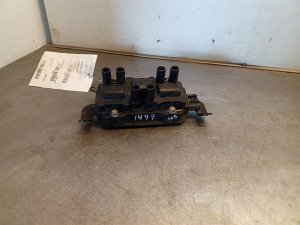
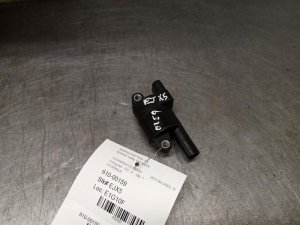
Est. part cost: $60-$120 - Faulty Ignition Coils or Spark Plug Wires 🔴 High Probability Heat and age cause ignition coils and wires to degrade, leading to weak or no spark. Wires can also chafe against engine components, causing the spark to arc to ground.
How to confirm: With the engine running, carefully pull the plug wire from the coil pack; a healthy coil will produce a visible, audible spark. A more advanced method is to use a scan tool to monitor misfire counts per cylinder, then swap a suspected bad coil with a known good one to see if the misfire follows the coil.
Typical fix: Replace the faulty ignition coil(s) or the complete set of spark plug wires. Using OEM brands like ACDelco is highly recommended for reliability.
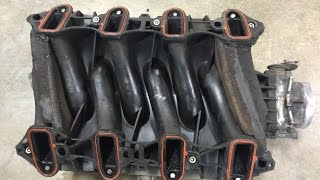
Est. part cost: $50-$150 per coil, $50-$120 for a wire set - Vacuum Leak 🟡 Medium Probability Intake manifold gaskets are a very common failure point on GM V8 engines. The original plastic carrier gaskets can degrade from heat and fuel exposure, causing unmetered air to enter the engine and create a lean condition. This issue is often more noticeable when the engine is warm.
How to confirm: Perform a smoke test to find the source of the leak. Another method is to use a scan tool to watch Short Term Fuel Trims (STFT) at idle; high positive numbers (e.g., +15% or more) that drop to near zero when the engine is revved indicate a vacuum leak.
Typical fix: Replace the leaking gasket or hose. For intake manifold gaskets, upgraded replacements with a metal carrier, like Fel-Pro PermaDryPlus MS 98016 T, are recommended over the OEM plastic design.
Est. part cost: $30-$100 for gaskets - Clogged or Faulty Fuel Injectors 🟡 Medium Probability
How to confirm: Listen to the injectors with a mechanic's stethoscope for a consistent clicking sound. A professional can perform a fuel injector balance test. In some cases, a bottle of high-quality fuel injector cleaner (like Techron or a GM-branded product) can temporarily resolve the issue, helping to confirm the diagnosis.
Typical fix: Clean or replace the faulty fuel injector(s). Sometimes running a concentrated cleaner through the fuel system is enough to solve minor clogging.
Est. part cost: $60-$200 per injector - Worn Camshaft Lobe ⚪ Low Probability This is often a direct result of a failed AFM lifter that has seized and ground down the corresponding camshaft lobe. TSB #PIP4138R specifically calls out worn camshaft lobes as a cause for P0300-P0308 codes on these engines if standard diagnostics don't find the issue.
How to confirm: This is a complex diagnosis. It requires removing the valve covers to measure valve lift or, more definitively, removing the lifters and visually inspecting the camshaft for scoring and wear.
Typical fix: Requires replacing the camshaft, all lifters (especially AFM lifters), and often other related components like the valve lifter oil manifold (VLOM). This is a major and expensive engine repair.
Est. part cost: $500-$1500+
Rare But Worth Checking
- Faulty Active Fuel Management (AFM) Lifters: GM has issued service bulletins for trucks with the same engines (5.3L, 6.0L, 6.2L) regarding AFM lifters getting stuck or collapsing. This can be caused by oil aeration or sludge. Symptoms include a persistent ticking noise and misfires often isolated to AFM cylinders (1, 4, 6, 7 on a V8). If not addressed, this will lead to camshaft damage.
- Low Fuel Pressure: A weak fuel pump or clogged fuel filter affects all cylinders and can cause a random misfire, especially under load. A fuel pressure test at the rail is needed to confirm.
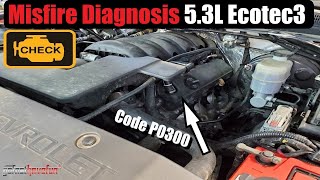
- Bad Ground Connection: On some GM trucks, a corroded or broken ground wire for the ignition coil banks can cause an entire bank of cylinders to misfire, triggering a P0300. These grounds are often located on the cylinder heads or the engine block and are exposed to the elements.
- Internal Coolant Leak: A GM service bulletin (#PIP5498M, superseded by #PIP5498N) mentions that P0300, especially when paired with P050D at cold start, can be caused by coolant entering the cylinders. This could indicate a porous cylinder head casting or a failing head gasket, which can be diagnosed by adding dye to the coolant and checking the cylinders with a borescope.
Diagnosis Steps
- Read all stored DTCs with an OBD-II scanner that can view live data. Note any other codes present besides P0300.
- Check the freeze frame data to see the engine conditions (speed, load, temperature) when the misfire occurred.
- Check live data for misfire counts on each cylinder to see if the misfire is truly random or concentrated on specific cylinders.
- Perform a thorough visual inspection of the engine bay. Look for cracked vacuum hoses, loose electrical connectors, and damaged or arcing spark plug wires.
- Inspect the ignition system. Remove and check spark plugs for wear and proper gap. Test ignition coils and wires.
- Check fuel pressure at the fuel rail to rule out a weak fuel pump or clogged filter.
- Perform a smoke test to check for vacuum leaks, paying close attention to the intake manifold gasket area.
- If equipped with AFM, listen for ticking noises indicative of lifter issues. A professional may need to remove the valve covers for inspection.
- If all else fails, a compression test or cylinder leak-down test may be necessary to identify internal engine mechanical problems.
Parts You'll Likely Need
- Spark Plugs
(OEM #ACDelco 41-114 or 41-162)— These are a primary wear item and the most frequent cause of misfires. Fouled or worn plugs are extremely common.
Trusted brands: ACDelco, NGK
OEM price range: $8-$15 per plug
Aftermarket price range: $5-$12 per plug - Ignition Coil
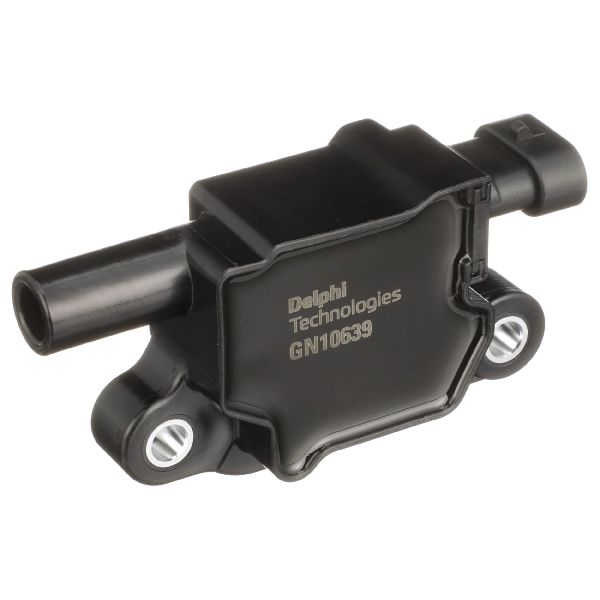
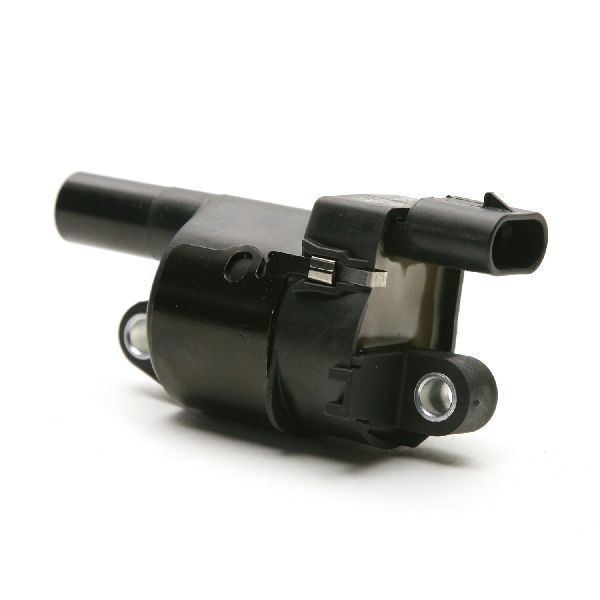
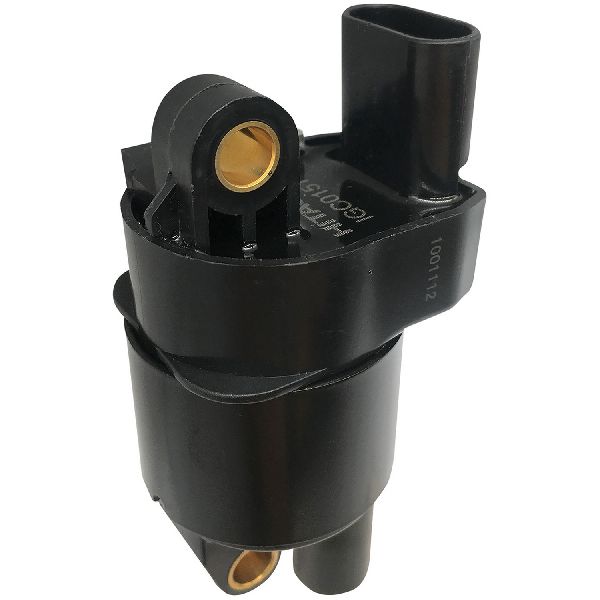
(OEM #ACDelco D521C (varies by engine))— Coils fail from heat and age, leading to a lack of spark. A single faulty coil can contribute to a random misfire.
Trusted brands: ACDelco, Delphi
OEM price range: $70-$120
Aftermarket price range: $40-$80 - Spark Plug Wires — The insulation on wires breaks down over time, allowing spark to arc to ground instead of reaching the plug.
Trusted brands: ACDelco, Delphi
OEM price range: $80-$150
Aftermarket price range: $50-$100 - Intake Manifold Gasket Set
(OEM #Fel-Pro MS 98016 T (upgraded design))— A very common source of vacuum leaks on GM V8 engines, causing a lean condition and misfires, especially when the engine is warm.
Trusted brands: Fel-Pro, ACDelco
OEM price range: $60-$90
Aftermarket price range: $30-$70
Related Codes That Often Appear With This One
- P0301-P0308 — If the PCM can eventually isolate the misfire to a specific cylinder, a P030X code (e.g., P0301 for cylinder 1) will be stored alongside P0300.
- P050D — This code for 'Cold Start Rough Idle' is often seen with P0300. TSBs #PIP5628G and #PIP5498M link these two codes, sometimes pointing towards complex diagnostics or internal coolant leaks into a cylinder.
- P06DD — This code for 'Engine Oil Pressure Control Solenoid Valve Stuck Off' can appear alongside a P0300. Low oil pressure can contribute to AFM lifter failure, which in turn causes misfires.
Technical Service Bulletins (TSBs) & Recalls

- PIP5628G: Notes that diagnosing P0300-P0308 may require gathering specific information for GM's Technical Assistance Center (TAC).
- PIP4138R: Directly links P0300-P0308 codes to a potential worn camshaft lobe if other diagnostics do not isolate the cause.
Platform-Specific Known Issues
- AFM Lifter and Camshaft Failure: The most severe and well-documented issue for the 5.3L and 6.0L V8s is the failure of Active Fuel Management (AFM) lifters. A lifter can become stuck, causing a misfire on that cylinder (often cylinders 1, 4, 6, or 7). If not addressed, the stuck lifter will destroy the camshaft lobe, turning a top-end repair into a full engine-out service. Early symptoms are a distinct ticking noise and a P0300 code.
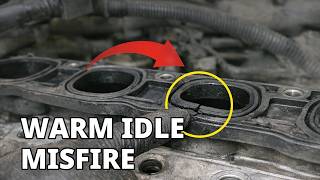
- Intake Manifold Gasket Leaks When Warm: Many owners report a rough idle and P0300 code that only appears after the engine has fully warmed up. This is a classic symptom of failing intake manifold gaskets. As the aluminum engine components heat up and expand, the old, brittle plastic gaskets can no longer maintain a seal, creating a large vacuum leak.
- Corroded Coil Pack Ground Wires: A known failure point is the ground wire that provides ground for an entire bank of ignition coils. This wire is typically bolted to the cylinder head. Corrosion at this connection can cause intermittent or total loss of spark to one side of the engine, resulting in a P0300 code and very rough running. One owner fixed their issue by cutting off the old corroded connector, crimping on a new one, and re-securing it to the block.
Mechanic-Grade Diagnostic Values
- Ignition Coil Primary Winding Resistance — expected: 0.4 to 2.0 ohms. Failure: A reading outside this range, or an open circuit (infinite resistance), indicates a faulty coil.
- Ignition Coil Secondary Winding Resistance — expected: 6,000 to 10,000 ohms. Failure: A reading significantly outside this range suggests the coil's internal windings are compromised.
- Fuel Pressure (V8 engines) — expected: 55-62 PSI at idle. Failure: Pressure significantly below this range indicates a weak fuel pump or clogged filter. Pressure significantly above (e.g., 72 PSI) could indicate a faulty fuel pressure regulator.
- Short Term Fuel Trims (STFT) at Idle — expected: -10% to +10%. Failure: Consistently high positive trims (e.g., +15% or higher) that decrease with RPM strongly suggest a vacuum leak.
Scan Tool Commands That Help
- GDS2 (GM Dealer Software): Misfire Data / Misfire History — This is the first step in diagnosis. It shows current and historical misfire counts for each individual cylinder, which helps determine if a 'random' P0300 is actually biased toward one or two cylinders.
- GDS2 (GM Dealer Software): Cylinder Power Balance — Used to actively test cylinder contribution. The tool deactivates injectors one by one and measures the RPM drop for each. An equal drop across all cylinders indicates they are firing correctly. A cylinder with little to no RPM drop when deactivated is not contributing properly.
- GDS2 (GM Dealer Software): AFM Cylinder Deactivation / Active Fuel Management Control — For vehicles with AFM, this allows a technician to command the AFM system on and off to test the functionality of the VLOM (Valve Lifter Oil Manifold) solenoids and help diagnose stuck lifters.
Wiring & Ground Locations

- Engine to Chassis Ground Strap — On many GM V8s of this era, a primary ground cable runs from the negative battery terminal to the front of the engine block on the passenger side. A secondary strap often connects from that same point on the block to the vehicle's chassis/frame rail.. A corroded or loose engine ground can cause insufficient voltage to the ignition coils, leading to weak spark and random misfires across multiple cylinders.
- Cylinder Head Ground Strap — There is typically a smaller ground strap located on the back of the driver's side cylinder head.. This ground is critical for the ignition system and various sensors. If it becomes corroded or broken, it can cause erratic behavior and trigger a P0300 code.
- Underhood Fuse Block — Located in the engine compartment on the driver's side, near the battery.. This block contains fuses and relays for the fuel pump, ignition system, and ECM. A poor connection or corroded terminal in this block can cause intermittent power loss to critical components, resulting in a P0300.
Real Owner Repair Stories
- The Car Doctor YouTube Channel (2007 GMC Yukon XL 5.3L with AFM (similar platform/engine)) — Flashing check engine light, rough running, P0300 and P0304 (Cylinder 4 misfire) codes, zero compression on cylinder 4.
❌ Tried (didn't work) Initial diagnosis included checking spark, fuel injector, and coil on the misfiring cylinder, all of which were functioning.
✅ What actually fixed it Diagnosis revealed a collapsed AFM lifter on cylinder 4. After removing the valve cover and cranking the engine, it was visually confirmed that one of the rocker arms was not moving. The final recommendation was a complete engine replacement due to the high mileage and potential for further damage from the failed lifter. - Chevy/GMC P0300 Forum Discussion (2017 GMC Savana with V8) — Engine running badly, stumbling, and a P0300 code was present. A ticking sound was also noted.
❌ Tried (didn't work) The owner did not list specific attempted repairs, but noted the issue was not a simple tune-up.
✅ What actually fixed it The root cause was a collapsed AFM lifter which then damaged the camshaft. The issue was covered under powertrain warranty and required a new engine. The owner noted this happened to two of their 2017 vans with less than 30,000 miles.
Model Year Variations Within This Range
- 2018: In 2018, the base engine was changed from the 4.8L V8 (L20) to the new direct-injected 4.3L V6 (LV3). This LV3 engine is part of a different engine family (EcoTec3) and has its own unique potential failure points, such as high-pressure fuel system components and different AFM lifter designs, that can also lead to a P0300 code.
Helpful Videos
Used OEM Parts in Stock




New Aftermarket Parts Available


The information in this article is provided for general reference and educational purposes only. Vehicle specifications, procedures, and part compatibility can vary by production date, trim level, and region. Always consult your vehicle's factory service manual and verify part numbers before purchasing or performing repairs. Safety-critical components such as airbags, seat belts, and braking systems should be installed by a qualified professional.
- Gmc SAVANA:
- 🎬 Helpful Videos
- 🛍️ Shop This Part
- What's Unique About the 2014-2018 Gmc SAVANA
- Diagnostic Flowchart
- Symptoms You May Notice
- Most Likely Causes
- Rare But Worth Checking
- Diagnosis Steps
- Parts You'll Likely Need
- Related Codes That Often Appear With This One
- Technical Service Bulletins (TSBs) & Recalls
- Platform-Specific Known Issues
- Mechanic-Grade Diagnostic Values
- Scan Tool Commands That Help
- Wiring & Ground Locations
- Real Owner Repair Stories
- Model Year Variations Within This Range
- 🎟️ Get 5% Off