

P0300 on 2009-2013 GMC Savana: Random Misfire Causes and Fixes
P0300 on a 2009-2013 GMC Savana indicates random cylinder misfires. Common causes include worn spark plugs, faulty ignition coils, vacuum leaks, and fuel delivery problems. A flashing check engine light signals a severe misfire that requires immediate attention to prevent catalytic converter damage. For V8 models with Active Fuel Management (AFM), this code can also be an early sign of a collapsed lifter, a serious mechanical issue.
- P0300 means multiple cylinders are misfiring randomly, pointing to a problem affecting the whole engine, not just one cylinder.
- A flashing check engine light is a critical warning. Stop driving as soon as safely possible to prevent expensive damage to the catalytic converter.
- Start diagnosis with the basics: check for other codes, inspect spark plugs, wires, and look for obvious vacuum leaks.
- On these specific GMC vans, pay special attention to fuel pressure and the ignition coil ground wires, as these are known failure points.
- If common fixes don't work, a more serious mechanical issue like a worn camshaft lobe could be the cause, as noted in a manufacturer TSB.
What's Unique About the 2009-2013 Gmc SAVANA

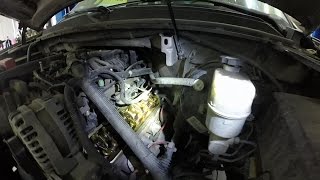
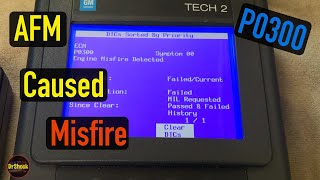
For the GMC Savana and its platform-mate, the Chevrolet Express, with V8 engines (4.8L, 5.3L, 6.0L), a P0300 code often points to issues beyond a simple tune-up. A primary concern is the Active Fuel Management (AFM) system, where specialized lifters can collapse or get stuck, causing a persistent misfire and ticking noise. This can lead to camshaft damage if not addressed. TSB #PIP4138R specifically calls out worn camshaft lobes and collapsed AFM lifters as a cause for P0300 codes when standard diagnostics fail. 🎬 Watch: Diagnostic walkthrough for AFM lifter and misfire issues. Additionally, corroded or broken ground wires for the ignition coil banks are a known weak point. These grounds are typically located on the cylinder heads (e.g., G103 on the rear of the engine) and can cause an entire bank of cylinders to misfire, triggering a P0300.
Diagnostic Flowchart
Tap your situation to follow the diagnostic path that matches what you're seeing on this vehicle.
Symptoms You May Notice
- Rough or shaky engine idle.
- Hesitation or stumbling during acceleration.
- Flashing or solid Check Engine Light.
- Noticeable loss of engine power.
- Increased fuel consumption.
- Smell of unburned fuel from the exhaust.
- Engine ticking or tapping noise that increases with RPM (indicative of lifter/camshaft issues).
- Whistling or sucking sound at idle (indicative of a vacuum leak).
- Replacing only one spark plug or coil when others are in similar poor condition.
- Replacing oxygen sensors when the root cause is a vacuum leak or fuel delivery issue causing a lean condition.
- Replacing fuel injectors when the issue is actually low fuel pressure from a weak pump or a clogged fuel filter.
- Replacing the Crankshaft Position Sensor (CKP) without proper diagnosis. While a bad CKP can cause P0300, it's less common than ignition, fuel, or vacuum issues. A crank relearn procedure may be needed after other repairs, but the sensor itself is often not the root cause.
Most Likely Causes

- Worn or Fouled Spark Plugs 🔴 High Probability Spark plugs are a standard wear item. On the 5.3L and 6.0L V8s with Active Fuel Management (AFM), oil consumption is a known issue that can lead to premature fouling of spark plugs, especially in the AFM cylinders (1, 4, 6, and 7).
How to confirm: Inspect the spark plugs for wear, excessive gap, oil, or carbon fouling. A worn electrode or cracked porcelain is a clear sign of failure. The recommended gap for the common ACDelco 41-110 Iridium plug is 0.040 inches; they are pre-gapped and should not be adjusted.
Typical fix: Replace all 8 spark plugs as a set. Use high-quality OEM-spec plugs like ACDelco Iridium (P/N: 41-162 is a common replacement for 41-110).
Est. part cost: $60-$120 - Faulty Ignition Coils or Wires 🟡 Medium Probability Heat and age cause ignition coils and wires to fail. While a single coil usually causes a specific cylinder code (e.g., P0301), multiple weak components or a failing ignition module can contribute to a random P0300 code.
How to confirm: Use a scan tool with live data to watch misfire counters while swapping a suspected bad coil with a known good one. If the misfire follows the coil, the coil is bad. Inspect wires for cracks, corrosion, or damage. A simple test is to pull each plug wire off the coil pack with the engine running; a good coil will produce a strong spark, while a bad one will show no spark or a weak one.
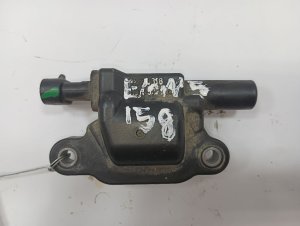
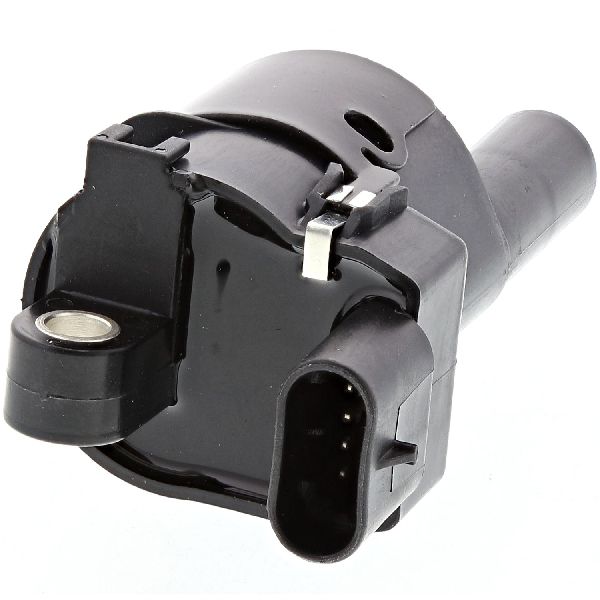
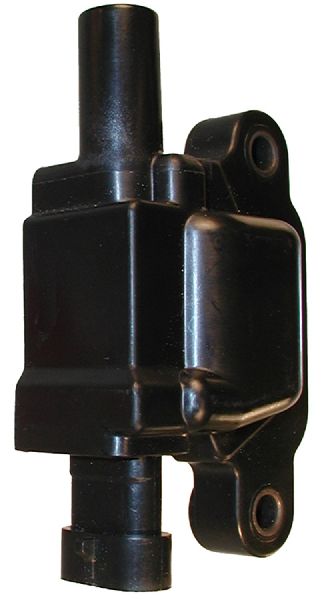
Typical fix: Replace the faulty ignition coil(s) and/or the full set of spark plug wires. It's often recommended to replace all wires at once. An example OEM part number for an ignition coil is ACDelco 12713668.
Est. part cost: $40-$80 per coil, $50-$120 for a wire set - Vacuum Leak 🟡 Medium Probability The intake manifold gaskets are a very common failure point on the GM 5.3L and 6.0L engines. The gaskets, made of plastic and rubber, harden over time from heat cycles and crack, allowing unmetered air into the engine. This causes a lean condition and misfires that are often worse at idle when the engine is warm.
How to confirm: With the engine running, carefully spray brake cleaner or unlit propane around the intake manifold gasket area; a change in engine idle indicates a leak. A professional will use a smoke machine. A scan tool showing high positive short-term fuel trims (STFT) at idle (e.g., > +15%) that decrease significantly when RPMs are raised to ~2000 is a strong indicator of a vacuum leak.
Typical fix: Replace the intake manifold gaskets. It is highly recommended to also replace the throttle body gasket at the same time.
Est. part cost: $50-$150 - Low Fuel Pressure / Weak Fuel Pump 🟡 Medium Probability The fuel pump is a common failure item on many vehicles as they age. A weak pump can't supply enough fuel to all cylinders under load, causing random misfires.
How to confirm: Connect a fuel pressure gauge to the fuel rail's test port (Schrader valve). For the common 5.3L V8, pressure should be around 55-62 PSI with the key on, engine off. If pressure is low or drops under load, suspect the fuel pump or a clogged fuel filter.
Typical fix: Replace the fuel filter first as it's cheaper. If pressure is still low, the fuel pump module needs to be replaced. In some cases, the Fuel Pump Driver Module (FPDM) can also be at fault.
Est. part cost: $200-$500 for a fuel pump module - Dirty or Faulty Mass Airflow (MAF) Sensor ⚪ Low Probability The MAF sensor can become contaminated with dirt and oil over time, causing it to send inaccurate airflow readings to the ECM, which then calculates an incorrect fuel mixture.
How to confirm: Unplug the MAF sensor with the engine running. If the idle smooths out, the sensor is likely faulty. It can also be carefully cleaned with a dedicated MAF sensor cleaner spray. Do not touch the sensor wires. A scan tool should show a reading of approximately 4.8-6.0 g/s at idle for a 4.8L, 5.3L or 6.0L engine; a significantly lower or higher reading indicates a problem.
Typical fix: Clean the sensor with MAF cleaner. If the problem persists, replace the sensor.
Est. part cost: $70-$150
Rare But Worth Checking
- Collapsed or Stuck AFM Lifter: A very common and serious issue on 5.3L and 6.0L engines. The Active Fuel Management (AFM) lifters can fail, getting stuck in the collapsed position. This results in a valve not opening, causing a dead misfire on that cylinder (e.g., P0301, P0304, P0306, P0307) which contributes to a P0300. This is often accompanied by a distinct ticking noise. If not repaired, a failed lifter will destroy the camshaft lobe.
- Worn Camshaft Lobe(s): Referenced in TSB #PIP4138R. This is a known, serious mechanical issue, often resulting from a failed lifter roller. If standard diagnostics for fuel, spark, and air don't solve the misfire, a worn cam lobe should be investigated. This causes a valve not to open fully, leading to a persistent misfire.
- Broken or Corroded Ignition Coil Ground Wire: On GM trucks of this era, the ground wires for the ignition coil banks are bolted to the cylinder heads or block. These wires can corrode and break, causing an entire bank of cylinders to lose spark and triggering a P0300. Check the ground strap located on the rear of the driver's side cylinder head, often designated as G103. 🎬 Watch: How to troubleshoot random misfires and ground wire issues.
- Clogged Catalytic Converter: A clogged catalytic converter creates excessive exhaust backpressure, which can choke the engine and cause random misfires, especially at higher RPMs or under load. This is often accompanied by a P0420 or P0430 code and may be preceded by a flashing CEL from prior misfires.
Diagnosis Steps
- Read all stored trouble codes with an OBD-II scanner. Note any codes accompanying P0300, especially lean codes (P0171/P0174) or specific cylinder misfires.
- Check for a flashing check engine light, which indicates a severe, catalyst-damaging misfire.
- Use a scan tool with live data to monitor misfire counts for each cylinder. This helps determine if misfires are truly random or concentrated on one bank or specific cylinders.
- Monitor Short-Term (STFT) and Long-Term (LTFT) Fuel Trims. High positive numbers at idle (e.g., >15%) that drop toward zero at higher RPMs strongly suggest a vacuum leak.
- Perform a thorough visual inspection. Look for cracked vacuum hoses (PCV system), disconnected electrical connectors, and signs of corrosion, especially on ignition coil ground wires at the back of the cylinder heads.
- Inspect the ignition system. Remove and check spark plugs for wear, fouling, and correct gap (0.040" for ACDelco 41-110). Inspect spark plug wires for damage.
- Test the fuel system. Check fuel pressure at the fuel rail to ensure it is within specification (typically 55-62 PSI). A weak pump may show acceptable pressure at idle but fail under load.
- Check for vacuum leaks using a smoke machine or by carefully spraying carburetor cleaner around the intake manifold gaskets and vacuum lines while listening for a change in engine RPM.
- If misfires are isolated to one bank, inspect the ground wire for that bank's ignition coils.
- If a specific cylinder is misfiring consistently and spark/fuel are good, suspect a mechanical issue. Listen for a ticking noise. Perform a compression test. If compression is low, it could be a stuck/collapsed AFM lifter or worn camshaft, as noted in TSB #19-NA-219.
Parts You'll Likely Need
- Spark Plugs
(OEM #ACDelco 41-110 or 41-162)— These are the most common wear item related to misfires. Oil consumption on some V8 models can foul them prematurely. - Intake Manifold Gasket Set — A very common failure point on GM V8s of this era, causing vacuum leaks and lean misfires.
- Ignition Coil
(OEM #ACDelco 12713668)— Coils fail from heat and age, leading to weak or no spark. - Spark Plug Wire Set — Insulation breaks down over time, causing spark to arc to ground instead of reaching the plug.
- Fuel Pump Module — A weak fuel pump is a common cause of random misfires under load.
Related Codes That Often Appear With This One
- P0301-P0308 — These codes indicate a misfire on a specific cylinder (e.g., P0301 for Cylinder 1). They often appear with P0300 when the misfire is frequent on certain cylinders but also occurs randomly on others, which can point towards a developing mechanical issue like a failing lifter.
- P0171 / P0174 — These codes indicate a "System Too Lean" condition on Bank 1 or Bank 2. They are commonly caused by vacuum leaks (especially intake manifold gaskets) or fuel delivery problems, which are also primary causes of random misfires.
- P050D — This code for "Cold Start Rough Idle" is often seen alongside P0300. TSB #PIP5628G groups these codes together for diagnostic purposes, suggesting they share common causes related to fuel, ignition, or mechanical faults from startup.
Technical Service Bulletins (TSBs) & Recalls
- PIP4138R
- PIP5628G
- 19-NA-219 (Supersedes PIP4138R)
- 15-06-01-002M
Platform-Specific Known Issues

- Active Fuel Management (AFM) Lifter Failure: The 5.3L and 6.0L V8 engines are equipped with AFM (also called DOD), which deactivates cylinders to save fuel. The special lifters used for this system are a notorious failure point. They can become stuck or collapse, causing a constant misfire on one or more cylinders, which triggers a P0300 code. This is often accompanied by a ticking noise and can lead to camshaft destruction. Repair is labor-intensive and involves removing the cylinder heads.
- Intake Manifold Gasket Leak: The factory intake manifold gaskets are prone to hardening and cracking from heat cycles, creating a significant vacuum leak. This is a very common cause for a P0300, often paired with P0171/P0174 lean codes. The misfire is typically worse at idle when the engine is fully warmed up.
- Ignition Coil Bank Ground Wire Corrosion: A key ground strap for the ignition coil banks is located on the back of the cylinder head(s). This ground is exposed to the elements and can corrode or break, causing a loss of spark to an entire bank of four cylinders, resulting in a severe random misfire and a P0300 code.
Mechanic-Grade Diagnostic Values
- Ignition Coil Primary Resistance — expected: 0.4 to 2.0 ohms (typical, example value 0.660 ohms). Failure: A reading outside of the specified range indicates a faulty coil.
- Ignition Coil Secondary Resistance — expected: 6,000 to 10,000 ohms (6k-10k Ω). Failure: A reading outside of this range suggests the coil's secondary winding is failing.
- Mass Airflow (MAF) Sensor Reading at Idle — expected: Approximately 4.8 to 6.0 grams/second (g/s) for a 4.8L, 5.3L, or 6.0L V8 engine at normal operating temperature.. Failure: Readings significantly lower than the engine displacement in liters (e.g., < 4.0 g/s) can indicate a vacuum leak, while significantly higher readings can indicate a faulty sensor.
- Short-Term Fuel Trim (STFT) at Idle — expected: Between -10% and +10%. Failure: Sustained positive values greater than +15% at idle that drop toward zero when RPMs are raised to ~2000 RPM strongly indicate a vacuum leak.
- Fuel Pressure (Key On, Engine Off) — expected: 55-62 PSI. Failure: Pressure below this range indicates a weak fuel pump, clogged filter, or faulty regulator.
Hidden / Shadow Codes Worth Checking
- Mode 6 Misfire Data: Professional scan tools (like the Tech2/GDS2 for GM) can access Mode 6 data, which provides raw misfire counts per cylinder, even for cylinders that haven't misfired enough to set a specific P030x code. This is invaluable for determining if the 'random' misfire is actually biased toward certain cylinders. (see via Use a scan tool with Mode 6 capabilities. Navigate to the misfire monitor test IDs (e.g., Test ID $A2 through $AB for cylinders 1-8 on many GM vehicles).)
Scan Tool Commands That Help
- Tech2 / GDS2 or equivalent professional scanner: Crankshaft Position (CKP) System Variation Learn — This procedure should be performed after any repair that could affect the rotational signal of the crankshaft, such as replacing the crankshaft sensor, flexplate, or performing major engine work. An inaccurate CKP variation value can cause the ECM to misinterpret slight rotational speed changes and falsely report misfires. Running this relearn procedure can resolve a P0300 code if the root cause was a calibration mismatch.
- Tech2 / GDS2 or equivalent professional scanner: Fuel Injector Balance Test — This test allows the technician to individually command each fuel injector to fire while monitoring the fuel pressure drop on a connected gauge. A smaller pressure drop for one injector compared to others indicates it is clogged or failing, which could cause a misfire on that cylinder contributing to a P0300.
Wiring & Ground Locations

- G103 — On the right rear of the engine for 4.8L, 5.3L, & 6.0L engines.. This is a primary engine ground. A loose or corroded G103 connection can cause a host of issues, including misfires and other transmission-related DTCs. A service bulletin mentions ensuring this ground is clean and tight to resolve erratic issues.
- G102 — Located at the left rear of the engine.. This ground is specifically for all 8 ignition coils. A failure at this single point can cause an entire bank or multiple random cylinders to lose spark, directly causing a P0300 code.
- Underhood Fuse Block (UBEC) — Located in the engine compartment, typically on the driver's side.. Corrosion on the underside of the fuse block due to water intrusion is a known issue. This can cause poor connections for critical relays and fuses, including those for the ignition system and fuel pump, leading to intermittent and random misfires.
Real Owner Repair Stories
- YouTube channel 'Jimmy, Making it work' (GMC Savana Van (year not specified, but within platform)) — P0300, P0174, and a specific misfire on cylinder 2.
❌ Tried (didn't work) The owner suspected a fuel injector. The technician initially considered ignition components but decided to verify with diagnostics.
✅ What actually fixed it Using a scan tool to watch fuel trims while spraying brake cleaner, the technician identified a vacuum leak. The cause was a cracked intake manifold runner for cylinder #2. Replacing the intake manifold and gaskets resolved the issue. - YouTube channel 'The Car Doctor' (5.3L GM Truck (similar platform)) — Flashing check engine light, P0300, running very poorly.
❌ Tried (didn't work) N/A, direct diagnosis.
✅ What actually fixed it The technician found that the entire left bank (bank one) was not firing. The cause was a bad main ground wire for the ignition coils on that bank. Repairing the ground connection restored spark and fixed the misfire.
"I Checked Everything" — The Actual Cause
- In some cases, a P0300 can be caused by a cracked flexplate (the part connecting the engine to the torque converter). The crack can cause the crankshaft position sensor to get erratic readings, which the ECM interprets as a misfire. This will not be found with a smoke test and is often misdiagnosed as an ignition or fuel problem.
OEM Part Supersession History
e.g., 12571595, 12619820, 12639516→12645725 (for AFM), HL-7025 (Elgin aftermarket, fits both AFM/DFM)— The original Active Fuel Management (AFM) lifters were prone to premature failure (collapsing/sticking). Newer part numbers represent revised designs intended to improve durability.
Heads up: The newest DFM (Dynamic Fuel Management) lifters are backward compatible with older AFM engines, but the original AFM-only lifters cannot be used in newer DFM engines.
Model Year Variations Within This Range
- 2010+: Starting in 2010, many Savana models with V8 engines were equipped with Flex Fuel (E85) capability. A failing or inaccurate flex fuel sensor can report an incorrect ethanol percentage to the ECM (e.g., reporting 22% alcohol when the tank is 10%). This causes the ECM to adjust fuel trims and injector pulse width incorrectly, leading to a lean or rich condition that can cause random misfires. A scan tool can show the reported alcohol content.
Helpful Videos
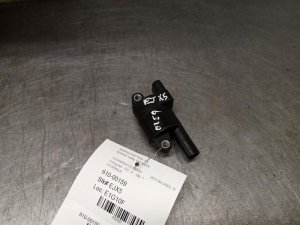
Used OEM Parts in Stock



New Aftermarket Parts Available


The information in this article is provided for general reference and educational purposes only. Vehicle specifications, procedures, and part compatibility can vary by production date, trim level, and region. Always consult your vehicle's factory service manual and verify part numbers before purchasing or performing repairs. Safety-critical components such as airbags, seat belts, and braking systems should be installed by a qualified professional.
- Gmc SAVANA:
- 🎬 Helpful Videos
- 🛍️ Shop This Part
- What's Unique About the 2009-2013 Gmc SAVANA
- Diagnostic Flowchart
- Symptoms You May Notice
- Most Likely Causes
- Rare But Worth Checking
- Diagnosis Steps
- Parts You'll Likely Need
- Related Codes That Often Appear With This One
- Technical Service Bulletins (TSBs) & Recalls
- Platform-Specific Known Issues
- Mechanic-Grade Diagnostic Values
- Hidden / Shadow Codes Worth Checking
- Scan Tool Commands That Help
- Wiring & Ground Locations
- Real Owner Repair Stories
- "I Checked Everything" — The Actual Cause
- OEM Part Supersession History
- Model Year Variations Within This Range
- 🎟️ Get 5% Off